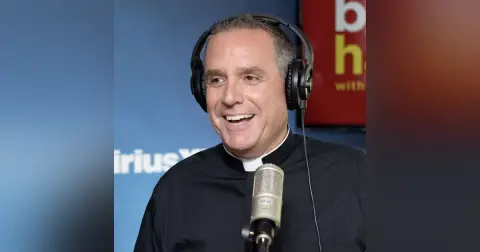
From MTV to the Priesthood: Father Dave Dwyer’s Unexpected Calling

 Apple Podcasts
 Spotify
 Castro
 RSS Feed
 Youtube Music
 What if the career you spent years building was actually preparing you for a completely different calling?
Father Dave Dwyer was directing live broadcasts at MTV and Comedy Central when he began to feel pulled toward something he'd never seriously considered: the priesthood. The turning point came in Denver in 1993, when hearing Pope John Paul II speak forced him to reconsider what fulfillment and purpose really meant.
As Father Dave began exploring the priesthood, people introduced him to the Paulist Fathers — a Catholic order known for its focus on media and communication. But what ultimately drew him in wasn't television or radio. It was the feeling that he had found a community, mission, and way of life that truly fit who he was becoming.
And yet, the experiences he thought he might be leaving behind eventually came full circle. The storytelling instincts, broadcasting experience, and communication skills he developed throughout his media career became central to his work as a priest, helping him build Busted Halo into one of the country’s most recognizable faith-based media platforms and become a daily voice on SiriusXM’s Catholic Channel.
Father Dave also offers a fascinating and deeply human look inside the process of becoming a priest — including years of discernment, philosophy and theology training, mentorship, hospital rotations, and the emotional challenge of knowing whether a calling is truly right for you.
It's a conversation about purpose, identity, faith, reinvention, and the unexpected ways our experiences shape the paths we ultimately choose.
To discover more episodes or connect with us:
00:00 - Welcome And Guest Introduction
01:10 - Vocation Versus Job Description
06:40 - The Tape Recorder Origins
19:00 - MTV Intern To Real Career Steps
32:10 - The Comedy Boom And Channel Wars
42:40 - World Youth Day And The Paulists
55:30 - Priest Training And Pastoral Reality
01:01:10 - Busted Halo And SiriusXM Breakthrough
01:07:10 - Audience Impact And How To Listen
Welcome And Guest Introduction
Larry Samuels
Hello and welcome to the Career Journey Podcast No Wrong Choices. This episode features Father Dave Dwyer, host of Busted Halo on Sirius XM and one of the most recognizable voices in Catholic media. I'm Larry Samuels, and I'll be joined in just a moment by Larry Shay. Before we begin, please be sure to like, follow, or subscribe to the show wherever you're listening right now. Let's get started. Now joining No Wrong Choices is Father Dave Dwyer. Father Dave is a Paulist Priest, the executive director of Busted Halo Ministries, host of the Busted Halo show on Sirius XM, and author of Mass Class, Your Questions Answered. Father Dave, thank you so much for joining us.
Fr. Dave Dwyer
Great to be here. Great to see you guys again. We worked in radio back in the day. It seems like it's so long ago. It was quite a while ago. Long, but well, I guess so sort of around the beginning of podcasting, right? Like we were competing then. I don't know what we're doing now. No, now we're one big happy family. We're a unit.
Larry Samuels
That's exactly right. That's exactly right. Great to see you. Well, Father Dave, I can go through a list uh to tell people who I think you are,
Vocation Versus Job Description
Larry Samuels
but nobody knows who you are better than you. So if you would please set the stage. Who is Father Dave and what do you do? Oh, okay. Both of those things.
Fr. Dave Dwyer
Who am I? What do I do? I am a Catholic priest. That's both who I am and what I do. It's uh more than a job, it's a vocation. It's it's a vocation that I had a little later in life. I was when I was in first grade playing with a tape recorder, pretending I was a radio host. And so it goes all the way back uh that far. And then in college, majored in television and radio production, was working for MTV and HBO after college as a director. Um, did did radio really in college. I'd never done radio professionally after I graduated. I did host a morning show. That was the last time I was a morning person, did host a morning show in college. But when I had the call to priesthood, I was about 28 years old. And uh somehow I was sort of a little confused because I really thought, I it wasn't like I had not been a person of faith or a practicing Catholic before that. I really thought God kind of wanted me to do that, that whole thing, be a television director, to be in the media and all that. And so I was a little confused. I'm sort of like, well, what do I do with this? Is this the right way? And when I started articulating that, many people pointed me toward a particular group within the Catholic Church. We call them a religious order, religious community. Some people may have heard of Jesuits because they got a lot of basketball schools, so kind of like the Jesuits, but one that does a lot with media called the Paul's Fathers. And so after discerning and spending some time, you know, praying and then being immersed and deciding and being trained and all that, I was ordained a priest 25 years ago, coming up on 26. So I've been a priest for 25 years. Now, the what do I do question that I've got a whole PowerPoint on that.
Larry Samuels
I should just send that to you guys. This is a pretty good story because I do have It's probably 19 pages.
Fr. Dave Dwyer
It's a lot of pages. I have several jobs. My job is a little different than a typical priest. And I remember when I was bumping into you guys at the halls of the Rockefeller Center studios of Sirius XM Radio, a lot of people would say, This guy's walking around, he's got like a priest scholar on him. That's gotta don't you have to go to work? Don't you have a parish and people? So my community, the Paul's fathers, has designated that my primary ministry can be this media ministry. So while I do work at a church and I celebrate mass, if there's any Catholics listening, they know Mass, that's where we go on Sunday and such, holidays. So I do that and I do baptisms and weddings and uh all that kind of stuff and hear confessions, but not full time. I kind of do that a little less full time than a normal priest would, because you know, if you've seen headlines, there's not as many priests as there used to be. So any priest that's working today is working overtime. So I do a little less of that piece and uh a lot of radio. We have a website that we do with Bus Busta Taylor where I've got a whole staff there, and I kind of consult and let the experts in print journalism deal with that. And and I also was elected and appointed to leadership in my religious community. So what I was doing all day today had nothing to do with uh media or uh well, I did celebrate the sacraments. I did have mass earlier today. So I had the noon mass and then a lot of conference calls and Zoom meetings about various, you know, structural stuff and institutional stuff and all that kind of this kind of stuff that you don't when you're having that warm and fuzzy moment like 30 years ago, ooh, God wants me to be a priest. It wasn't this stuff that I did today that I was really looking forward to, like budgets and you know, lawyers and all that kind of stuff. So that's a little bit about what I do.
Larry Shea
Yeah, all of that sums up to I always describe you as the coolest priest in the entire world. I swear, that's how I describe it.
Fr. Dave Dwyer
So, yes. Um Larry, you may remember who was it? Scott, his name was Scott, he worked in promotions um tall, thin guy. Scott Scott. Yeah, okay. I'm forgetting. But anyway, he he once told me that because occasionally, because it is radio, and most of the time, unlike here we are in Zoom, people don't really see you. There would be occasionally like a day that I would come in and I wouldn't be wearing like the full-on priest collar outfit. I'd be a little more of a casual, and I'm like, well, nobody's gonna see that. But he told me once that he was always worried whenever he saw me like that, because, in your words, I was such a cool priest that he thought that I was kicked out because I was too cool. So from then on, ever since he said that, I would come in every day. I gotta wear the uniform just to make sure people don't think I'm kicked out.
Larry Shea
I love it. I love that so much. Um cool. So let's start at the beginning, because you you know, we're gonna talk about all of the stuff that you just just went through. Um so media was the initial goal. So you said you were a young boy playing with the tape recorder. I was and what was what was what was the goal back then? You wanted to be a producer and work in TV?
Fr. Dave Dwyer
Or we figured I don't know if I had too many, I didn't have too many goals in first grade, but the goal was like having fun with my across the street neighbor instead because neither of us were sports, we weren't playing the sports teams. So after school, we'd be like, okay, my mom had who was she a big fan? Oh, Herb Alpert and the Tijuana Brass on vinyl. Oh wow. And so we'd use that as like the theme song, like ba-da-pa-ba-ba-da-ba-and and it was hi, welcome to whatever it was we called the show. So we were just goofing around, and that was fun. And then I kind of realized as I got into like high school, it's like, no, I this, I really enjoy this. I'm passionate about this, I want to do this. My my public school had like a TV station with these cameras that look like like ray guns they would use on the Millennium Falcon. It wasn't like uh any kind of normal TV-looking cameras. And so in high school,
The Tape Recorder Origins
Fr. Dave Dwyer
I really got the bug. And so when I started looking for colleges, it was communications colleges like Syracuse University, where I eventually went, and Ithaca, Northwestern, and uh Emerson and those kind of places. And, you know, then I uh kept pursuing and pursuing. And in college, I did both radio and television, so I was behind the scenes, more on the producing, directing side. And at Syracuse, you really could there was a pretty professional school, so we could actually do stuff. And we had a radio station that I was working at that was had ratings in the market, and I had the morning show. And um so yeah, it was definitely fun all throughout college, and then I I believed I was gonna dive into that kind of as my professional work, and I did. I worked for probably six or seven years before I became a priest, kind of working in television.
Larry Shea
So was religion a part of your life back then?
Fr. Dave Dwyer
Or not really? Yeah, yes, no, it definitely was. So my experience of the call to the priesthood was not a from sex, drugs, and rock and roll, even though I was working for MTV. So I could see how you would think that that would be the case. No, in fact, I was one of these fairly, I would say fairly religiously practicing guy, even when I was working in quote, the industry of media. And I I remember because I was still uh my final job I'd worked at MTV. I directed for Comedy Central when it launched, worked with Jon Stewart, in fact, at Comedy Central before the big daily show. Um and then things ended there, and I was back at MTV. I think I was directing just kind of like studio stuff with the VJs and some musical performances. Um I directed the my first time I was ever directing live television was the day that Kurt Cobain died. Oh, wow. And MTV had to kind of go live emergency, and I happened to be the guy in the studio. I wasn't one of their top directors, but I was the guy that was there. Everybody else was out doing like, you know, club MTV or spring break or something. Wow. And uh and that was that was a moment. But that was also right around the time that I began having these little sort of nudges and inklings of discerning the priesthood. And in fact, it was after I had my major kind of vocational experience in Denver, Colorado. Pope John Paul II came for what they call World Youth Day. So it's a lot of young people, people in their 20s or their teens, and the Pope kind of like riles them up and goes, Hey, be good Catholics and whatnot. And a lot of people at these experiences do have sort of like, ooh, maybe I should do this with my whole life or whatnot. Um, and so it it was, I'd had that, and I started to think about priesthood, and then I had this experience of of directing live television, which I had never done before. That was kind of a milestone, career milestone. And yet I uh everything went well. It uh it couldn't have gone better in terms of my career. And I just really had this sense that it was not the fulfillment that I was being attracted to in this other avocation/slash vocation. And one of the people what when I started began discerning the priesthood, began discerning the priesthood, one of the people that I went to for advice is like, how do I know? Because I'm good at this and I like this, but now it seals feels like almost a different direction. Sure. How do I know? And one of the words that really kind of surfaced was fulfillment.
Larry Samuels
Right.
Fr. Dave Dwyer
And I look back at times that in high school that I was helping out with youth groups, you asked if I'd always been all along. So yes, I'd always been all along involved in my faith. Um, going to church and being involved in youth group and in college running retreats and always be kind of being the guy up there giving talks and whatnot. But I always thought that, you know, that's what people do when they're done with their job. Like, of course I'm not gonna be a priest. That's you know, only strange people do that. I'm gonna be a normal person. And then when I'm done with my job, I'll help out at church because church is cool. Um, and then it was really reflecting on some of those moments, even from like high school youth group that I was part of, or running retreats in college, that I looked back and I thought, you know, that kind of stays with me more. It makes more a difference to me that I made a difference in somebody's life on a college retreat than I could pat myself on the back about my my TV resume. So it was really right around that time that I started pushing more towards this. It's been great. It's been a great run. It was fun. Maybe I'll never do anything like this again. How little did I know? And then and then kind of launched into more of the priesthood career and really thought that that would be sort of left behind. Uh it wasn't it wasn't God's plan. No, not at all.
Larry Shea
No, do you re let's reflect on that 1993 listening to the Pope speak? I mean, because it obviously changed your life. Do you ever reflect on what would have happened if you hadn't gone to Denver? What, you know, what would have what your life would have been like? Would it have been different? Would you have found this perhaps, or would it have just been completely different?
Fr. Dave Dwyer
I think probably I I I would have stumbled on it on in a different way because it was really I now look back and I can see a lot of things moving towards that. In the same way that I can look back and say, there was a reason why I was playing with a tape recorder when I was in first grade and why I was leading retreats and youth group in high school, and those all kind of came together. So I think so. I mean, in really religious speak, we talk about it being God's plan, and uh that was all kind of in the works, and I just had to discern and listen to it. But I I I do think so. I mean, I think eventually I would have gotten here.
Larry Samuels
When you were younger, were there ever any thoughts of the priesthood at all?
Fr. Dave Dwyer
No, no, in fact, it was it was weird because when I was in seminary, most of the other guys were telling me stories that like blew my mind. Like they grew up pretending to play mass, like at home, where you've got like a little card table and you're like putting on you know mom's smock or something like that. And I'm like, uh, no. That and that was never me. No, that was never me. Okay.
Larry Samuels
So when you look back at your time in college, um, you're at the radio station, your your happy Dave is is that what I re what what I read? You did really morning guys.
Fr. Dave Dwyer
So this is an interesting origin story, if we could do like Peter Parker Spider-Man sitch. Oh so there was a freshman year in college. I was on an all guys' floor. The dorm was like mixed, so like the next floor up was the girls' room, take the elevator. Okay. But it was the back of those, you know, this is the 80s, so we're still pretty traditional on the guys sleep over here and the girls sleep over here. So it was all guys' floor, and it was a pretty big dorm. So on my floor, I forget how many total rooms or or number of guys there was. I'm gonna say maybe it was like 30. But there were five guys named Dave. Oh, geez. So my You were the happy one. Yep. My roommate, ever since he even before he came to college, he admitted this, he was always the person in anybody's friend circle that would bestow the nicknames. And he did. So there was, I thankfully I didn't get this one. Crazy Dave. That was one of the one of the guys. So Crazy Dave was one. One other guy we called Andy, I'm not sure why, even though his name was Dave. And then my roommate just started calling me Happy Dave.
Larry Shea
That's great.
Fr. Dave Dwyer
So, and that's and the only people that knew that were the people on the floor, and primarily for the purpose of distinguishing which Dave we're talking about. Not that this is suddenly gonna be a lifelong brand, you know. So then I joined the campus uh radio station, one of three actually at Syracuse University. This was the student one run, and we did at the time you'd probably call it like 80s alternative music. And I was uh you have to start when you're, you know, first, when you're a freshman getting involved, you gotta start like with overnight. You but guys have brought they probably done both the overnight shifts.
Larry Samuels
I did for sure.
Fr. Dave Dwyer
So this was one to four in the morning, and the summer before I arrived at uh college, Syracuse University, there was some issue with the broadcast antenna that they was making like holes in the roof or flooding in the roof or one of the dorms, and they had taken the antenna down. So we were only live to people on cable television on the channel that had the channel, the guide, the channels. Right. That's the only place where we were heard. And so, you know, it's two in the morning. We later in life, I might think, you know, this is really a good use of my time. But you know, you're dumb and you're 18 and whatnot. And you're learning. I mean, whatever, right? And when I first signed up, I remember s meeting the program director, and he says, you know, what's your name? Dave Dwyer. And he goes, This is literally what he said, and I remember it still. Dave Dwyer, that's a great radio name. Don't ever change it. Because it's got the alliteration, you know, the punchy, the Ds. Dave Dwyer. And so up until that point, there I am, putting the little needle on the record and playing Rick Springfield. I remember that. And uh, and then I would say, Hey, this is Dave Dwyer with you. And then one night at probably two or three in the morning, the Happy Dave thing that they all called me at the dorm, all of a sudden just came to the fore. And it was like, do you guys ever remember? You're both roughly my generation, so you might remember the classic sitcom Taxi. Of course.
Larry Samuels
Of course, Reverend Jim.
Fr. Dave Dwyer
So, Reverend Jim, they did an origin story of Reverend Jim. Do you remember the origin story? They flashback and he's in college and he has a brownie that's kind of whatever.
Larry Samuels
That's right.
Fr. Dave Dwyer
So, so Reverend Jim is like this really stay buttoned up kind of guy and very formal, and he takes one bite and his whole face changes into that standard Reverend Jim face. And it was that was the moment. That's the moment that I felt like that. Happy day, because once I said happy Dave, I was no longer the nerdy, inexperienced freshman. Suddenly I was like a radio professional all of a sudden at two o'clock. Totally fit. Hey, it's happy Dave with you.
Larry Shea
That's right.
Larry Samuels
So I'm curious when you look back at that time. So you're in college, it's it's the 80s, people are going out, you're at a radio station, et cetera, et cetera. The crew of people that you were hanging out with, I guess there was Angry Dave, there was I don't know how many other Dave there were, there was Party Dave. Yeah. So would that crew of people be surprised that you wound up where you did and and and that you're doing what you're doing?
Fr. Dave Dwyer
Well, I do remember that my roommate, this is not exactly the answer to your question, but my roommate remember I said he was the one that gave me the nickname. So after I started using it on the air, and then later on was like DJing in clubs, and I was actually advertised in the local newspaper, like, come here, happy Dave on Friday night. He's like, Oh God, I created a monster. Like he never saw that coming. And uh I mean, I think I was involved very much, so I got I wait got way too involved when I got to college. I would join too many clubs and auditioned for plays, and then realized, oh, uh, suddenly there's not enough time in the day. So I was very involved in what is oftentimes on college campuses called the Newman Club or Newman Association, which is like the Catholic Catholic Club. So I was very involved with them, and they knew that I was on the radio, and that was those are just like two of my main paths. I was also doing TV too. So I was like producing directed TV uh on the on the student-run TV station. I was on the air, the radio station, and uh volunteering and running retreats at the I guess I was always pretty busy. Now that you mention that, Larry. I guess I don't like moss to grow on my feet, so it's very busy. So I think all like both of those constituencies knew of the other, so they neither of them were surprised. I mean, we used to this is nerd central right now. So a f another friend of mine from the Newman Club, we were both on the radio. And by the way, once I started using Happy Dave, then I'm not I'm not gonna pat myself on the back, but then suddenly everybody needed an adjective. So there was then there was jumping John, and there was you know I started a trend. So I did, I mean, obviously I didn't not in radio, I didn't, but there I did. So there was a lot of lot of adjectives, and there was other Dave's too on the radio. So there was Baby Dave, there was Dancing Dave. I mean, it's the common name. So Baby Dave. Baby Dave. He was like, when I was a senior, he was a freshman, and he was like, I want to be like him. Baby Dave. Yeah, exactly. So um, so no that oh, so I was talking about the nerdiness. So one I remember one evening that we're hanging out at the uh the Catholic Club, Newman Association, and this are a bunch of our uh church friends, and these are people that we, you know, I go to mass with and run the retreats with, and I popped in a cassette of what we call my air check, you know, that's like when you record yourself on the air, but you take out all the music, so it's just a tape of you talking. Sure. And I'm like, ooh, listen to that, ooh, listen to me talking up that song. Hey, wow, that's takes some kind of gall to subject other people to that, other than someone that's hiring you for a job. Yeah, you're trying to get work. Yeah, yeah, cool. Yeah, great. Yeah, that's cool. Can we talk
MTV Intern To Real Career Steps
Fr. Dave Dwyer
about mass now?
Larry Shea
That we'd really prefer so so that I mean it sounds like you got a lot of experience then in college. So, what happens after college? How did you get your first job? Was it at MTV or somewhere else?
Fr. Dave Dwyer
Yeah, so my after my junior year, I interned at MTV. They got a lot of good internships at Syracuse. It's close to New York, and it's there's a lot of connections, a lot of alums. And every time I'm watching any kind of sports game, I say, oh look, there's McDonough, there's Tariq, there's everybody with Syracuse. So, so yeah, I interned at MTV. Back then, I mean, this is summer of 85, so it's still the original VJs, and it's still music television with videos and intros and some other stuff. I I I interned in the in the department that at the time they called special programming, which now of course it all has turned into. But even then it was more it was more music and rock bass. It was like the what they called the rockumentaries. Remember those? Sure. So I worked on some of those. I uh I remember my very first task as an intern, it was right after Live Aid had happened. So Live Aid was the first big one of these fundraiser concerts, and it was multi, I was like 13 hours or something like that. It was the one, it was the one where Phil Collins flew from you know, on the Concord. He flew on the Concord, he performed in London and then he flew to Philadelphia and performed in Philadelphia. So uh MTV had just done that, so I wasn't around for that. But what apparently and this was this was in the early days of MTV. So this was before this, like their first real big event. Because prior to that, it was like, let's go spring break. All right, let's run around in bikinis and let's give them some t-shirts and stuff. So this was a major undertaking and part of this special programming department. So my task, because apparently they hadn't done this, was to log the entire thing, meaning what happens at like 10:02, the host comes out and introduces Madonna and she wriggles around on the stage for a couple of minutes, and then she does another song. So I had to watch all of Live Aid and with like a pen and a you know, loose leaf pad, and and write down what it was so that we would know from like nine in the morning until whatever time is. I'm like a junior in college. I'm sitting there at the office at the headquarters of MTV. Like I'm like using somebody else's uh desk and TV, and I'm like putting my feet up looking at the skyline, going, this is pretty cool. I like this industry.
Larry Shea
That's cool, Dave.
Fr. Dave Dwyer
Yeah. So that was cool, Dave. That was cool, Dave, doing that. So I did logged all that, and then that prepared me for my first professional job when MTV hired me after uh scholars, because that was my first job after college, because I went back and it was a little easier, like if you'd already worked there for a summer, they don't have to like vet you from scratch, like, oh, we know this guy. So I went back, and my job was to be in the tape library. So anytime they did an interview, and again, it was the spec it was MTV News and the special production. So it wasn't much to do with the videos or the uh M VJs or whatever, but it was like anytime they interviewed some star and they Like did of the name would cut them up into little bits and air them all over the place. So I was the one who literally with a Sharpie would put a number on the side of the tape and say, Oh, the George Michael interview. That's 5735. It's right over here on the shelf. And that was my first job in the industry. Putting numbers on the side of tapes.
Larry Samuels
Wow. But you ran from there. I mean, you had some really big jobs after that, right?
Fr. Dave Dwyer
Yeah, at the time.
Larry Samuels
What was the first like big, big gig that you were excited about?
Fr. Dave Dwyer
So I would say because it was still mid-80s and MTV was still very much in the nascent years, it was a company where you could really move up fast and you could go from putting numbers on the side of tapes to producing comedy programs in about six months, which is about what I did. So I worked in some of the special things. I mean, because uh uh I mentioned Live Aid, so I missed Live Aid because I I wasn't working there yet. But the next big concert that they did was the Amnesty International. That was another big one with all the stars like U2 and all that kind of stuff. And I was there at that and just like backstage and seeing seeing like the police and you two, and I'm like, there they all are, and I'm just can I get you another coffee, Mr. Sting? Here you are. Um, so that that was that was probably a big uh a big to-do.
Larry Samuels
I have a memory of Peter Gabriel doing Biko at that stadium. The entire crowd just pumping along. It was just this incredibly powerful moment.
Fr. Dave Dwyer
Yeah. So that was fun. That was and again, still pretty low in the totem pole. I remember when I got my first promotion at MTV because I had been like technically my title was production assistant, but again, it was such a small company and a creative company, and just whoever's doing it, just do it. And I would get like producer credit on a particular show. Like I worked on that show and I produced and all that, but I was still a production assistant. I remember my very first production uh my first promotion, there was no good news because up until then I was for some reason being paid hourly. And of course, like I said, sometimes they're 10 o'clock at night and screening tapes and stuff. And then there was going of going from that to salary, and I was like, I was gonna be at my same desk, I was gonna get the same credits on the shows, I was just gonna be paid less.
Larry Samuels
That was my first big promotion benefits. Did you get health insurance on the other side? You know, back in the day, I don't know. It's probably still on my parents' program at that point.
Larry Shea
Hey, it's something, right? Um, so let's get the the career trajectory right then. So, how many years are you out of Syracuse and in that world working in the MTV world? I think you also worked for Comedy Central, correct, for a little while?
Fr. Dave Dwyer
Right. So uh at in 1989, two things pretty simultaneously launched. Two different cable back then it was just cable. It was before direct TV, it was all the streaming, cable, two cable channels exclusively devoted to comedy. One was called uh the Comedy Channel, and one was called Ha, the TV Comedy Network. The latter was owned and uh created by MTV Networks, which was Viacom. Comedy Channel was HBO and Time Warner, both at the time very rival big media companies that wanted nothing to do with each other. And they both essentially launched not the same format, but they were both 24-hour comedy channels. Now, today we think, well, Cirus XM, how many do we have on there? We probably got like a ton of them. But back then there was such limited what we call bandwidth because it was just the number of cable channels. Like at my when I went home at night, I had a cable TV that had like 36 channels.
Larry Shea
Right. That that was it.
Fr. Dave Dwyer
That was what the box had. And it had it was the wooden box and it had those press the buttons. Of course.
Larry Samuels
And it was had a long and the dial that you could turn up and a long tether.
Fr. Dave Dwyer
Yeah, three things on the dial and then the buttons, and that me equaled 36, because it was like three things and eight. Yeah.
Larry Samuels
Three rows of twelve.
Fr. Dave Dwyer
Three rows of twelve. So uh so I mean, really at that time, and what we heard about it as these two independent channels that had launched, um the individual cable operators, which were not owned necessarily by these big conglomerates, they sort of ruled the roost. So if, like in Cleveland, Ohio, the local cable company there wanted to add you as a channel, then you get added. If they didn't, then you didn't. And so the issue was because there was such limited space out of the 36. Well, we've got one for music, we've got one, you know, one for sports, you got the ESPN, you got CNN. We don't need two different channels just for comedy. Who would want all that comedy? So uh so we were there was really kind of like a standoff where neither channel was getting added to a lot of cable systems, and the cable companies were essentially saying, we're just gonna wait for one of you to fold or for the two of you to merge.
Larry Samuels
Right.
Fr. Dave Dwyer
And they were both such stubborn, huge media conglomerates that they refused to fold and they merged into Comedy Central. So that's what is now Comedy Central, it was originally the Comedy Channel and Ha. Interesting and they merged together. And they part of it was the it's kind of like when Sirius XM merged, similarly in terms of some of the staff and some of the programming merged and all that. And so, but before that, when it was Comedy Central, I left MTV because I was on sort of on the more producing and behind the scenes side, and I really my ever ever since college. So when I was in college, I did directing, and I really that was multi-camera directing, live directing is what I really was kind of looking forward to. So I had the opportunity to do that at the comedy channel, and I left. Oh, this is one of my claims to fame. If you guys are, I don't want to be too New York centric with the podcast. It's okay. Page six is the gossip column in the New York Post. I was in page six because I was one of several people that had jumped ship from MTV owned by Viacom to create this new comedy channel owned by HBO and Time Warner, and everybody was sort of getting sick of it. And so I was I was at the tail end of that when people are starting to get ticked off that everybody was poaching all these folks. And then, of course, a year later they end up merging because gotta make it work.
Larry Shea
I hope you kept I hope you kept that newspaper.
Fr. Dave Dwyer
I do have a clipping. I do have the page six, yeah, Dave Dwyer, among others. So, but I was working at I was working on comedy anyway at MTV. Um, this great guy I worked with who died way too young in his 30s, called the named Bill Aiken. And he was really, he was one of their producers in the special program department that I was working at that sometimes would do these kind of documentary things, but he really kind of took to the comedy piece. And we created a show called the Half Hour Comedy Hour. I should say he created it, I shouldn't say we created. I was working with him, but um it was called the Half Hour Comedy Hour. And this was like in the 80s when they used to use the phrase that comedy is the rock and roll of the 80s, that it was really having this huge boom of stand-up comedy. And people that were working clubs, but again, because there wasn't the pro prolific nature of television, they hadn't been on TV yet. So people that were on this show that I like placed and lit and got cameras of like Ray Romano, Chris Rock, David Spade, Adam Sandler, I mean, this was like, and we were scouting these people. I would go to clubs and I go, oh, Paulie Shore, he's he's kind of funny. I'll write that down.
Larry Samuels
Oh my goodness.
Fr. Dave Dwyer
I mean, this is what the the the sort of advent of the big uh stand-up comedy boom. Of course, there was, you know, like anything else. There were there was a bubble burst after that.
Larry Samuels
Yeah.
Fr. Dave Dwyer
But I mean, if I go down through that, if I probably look back at those the people that we were, and they had never done TV, so we shot them doing their stand-up set, but then we also would have them in little interviews and little skits with the hosts and stuff like that. And I and I was I didn't do the the live and this comedy club stuff, but all the other stuff with these names that are now just like huge Jerry Seinfeld, you know, these huge household names. That's incredible. Yeah, and it was just like this little show at MTV in the late 80s, it was like 87, 88, something like that. And then so when myself and a couple other people that were working on that show went to go and be part of the launch of the comedy channel, which became Comedy Central, and the concept of it when it first launched was kind of like MTV with comedy clips. So, whereas Ha went with showing like old sitcoms, like here's Mary Tyler Moore for that's not what everybody does now, like for 12 hours straight. But the idea of the comedy channel was mostly stand-up. So they would have little bits of stand-up, occasionally like movies, funny bits for movies, but it's sort of like when you're hanging out with your friends and you just remember like one bit, and then you all laugh together, and then you move on to something else. So it was kind of like that. So it was like little, as if they were music videos. It was a roughly three to five minute clip of either stand-up or some classic comedy movie, and they rotated them all and they play them all in a big jumble, like a jukebox. And then the hosts that they refused to call VJs, because these were, you know, professional comedians, we're not VJs, of course, we're essentially VJs, throwing to these clips. And uh and it's it's one thing because if you're Mark Goodman and you're in this in the studio, and obviously, not to burst anybody's bubble, but most of that isn't like on radio live where they actually play the music. They just record all of the stuff that goes in between the videos and then they put it all together later. So if you're Mark Goodman saying, Boy, how about this new clip from Madonna? Look at her with that outfit. Okay. But if you're if you're doing like comedy clips, you're like, okay, now here's that famous bit from uh Ray Romano that everybody knows. You know, let's go to that now. Right. But the problem is we were trying to do create more creative stuff in the in-between than just kind of a straight up VJ segment. So those things eventually blossomed into the to their own show. And so what I was directing when I when I left the industry was a show called Night After Night with Alan Havey. Went on to do, he was still did did some stand-up, but went on to do a lot of um uh acting like breaking bad and stuff. So um, but I mean essentially it was like a David Letterman show without the audience and without the ratings, you know. But it was that kind of late night feel, and we did have by the end, we I mean we had big name guests and stuff, and I was directing that show, and it was it was pretty much live to tape. We did it during the day, during the workday, actually just like they do the tonight show and all those, I mean, those aren't live either, except after the State of the Union address. But um, so but I mean it was like that, and it was great. It was I got to get paid to get laugh to laugh for a living and say, well, this would be kind of a funny angle for that, you know, prop comedy bit. Oh, let's do that. And that was my job, and it was fun, and I thought it was new every day, and then so your career was
The Comedy Boom And Channel Wars
Fr. Dave Dwyer
was soaring.
Larry Samuels
I mean, it seems like you I mean, I mean you were very much on the rise, you're in the middle of a whole new industry. And then I believe the next part of the story is you head out to Denver in 1993 and and have an epiphany. Talk to us about that. I mean, that that moment and what what took you away from this industry.
Fr. Dave Dwyer
Yeah, I mean, I will well, that is lovely. That's probably the memoir version. But I I was to be fair, when I went to World New Think, I was, as we say in freelancing work, I was between gigs, you know. Okay, okay. So the so the uh Night of Night show had ended. I'd been doing some freelancing and some other things working out. We did some we did live television commercials for Prodigy Internet. Remember Prodigy before AOL became the big dog?
Larry Samuels
Yep, yeah.
Fr. Dave Dwyer
I did. And and their big selling point, and they they hadn't done live commercials since like Jackie Gleason, you know, like uh cutting up the apple. Kenneth Corey. Interesting, you know, and so they decided to do live um TV commercials, dropping into like sports games, into like the news and stuff. So we were there, like at night, just like sitting around waiting, and like the talent would be on the set, and they're like rehearsing that ready, okay. Here goes, okay, here we come. That's gotta be nerve-wracking, too. Oh my gosh.
Larry Samuels
Like improv, like exactly.
Fr. Dave Dwyer
And you one of so one of the people that was the hosts of that, they had three different hosts. They had one who would appeal to women, their name was Desi, I think, and one uh a guy who still does sports here in uh in New York area, Bruce Beck. Sure. Uh he still does NBC sports. So he did he did the sports stuff, and then um uh from Seinfeld, Elaine's boss, John O'Hurley, who was what was his name?
Larry Samuels
Okay, Mr. Peterman. Mr. Peterman Peterman.
Fr. Dave Dwyer
Mr. Peterman, who was actually my first cousin's college roommate at Providence College. Oh wow. John O'Hurley. So John O'Hurley, and and but again, doing and he has of course he's got that great like voice. Now he does all the dog shows, right? He still does the dog shows. Yep. So, but he's got, and he was just like 30 seconds, and there was copy that they rehearsed and rehearsed and rehearsed, and they had little graphics that would come in and out like live on Prodigy right now. So we did so we were doing that in kind of the in-between and the freelance gig work, but I was really not with a big home run regular full-time work, and that's why I had enough time to go to World Youth Day, and I spent a couple extra days. It was Colorado, and I was like, hey, I've never seen those mountains. Let's go for a hike, you know. And I and again, I had really been very much involved in church and faith and you know, prayed and I lectured at mass and I was still running retreats. I mean, again, it's what I thought people did when they got home from work, you know. And it was the first time that I really had the sense that this is what God wanted me to do more with all of me, not just full time, but you know, all of who I am and all that. And I really, one of my first reactions was like, wait, I thought you wanted me to do this. I've been doing this pretty hard. You know, right. So so what's interesting is when I would articulate that to people, like, I think God wants me to pre be a priest, but I've been doing all this, it would seem like that would be a waste. God doesn't seem to be all that frivolous. I mean, maybe we could look at some aspects of human history and go, maybe you might uh come to that conclusion. But at least in my life, it didn't had seemed like God would be so capricious to just change his mind and be like, ha ha, now do this, my puppets. So it seemed like there was some kind of purpose or for all of that that was that was to come. And when I would articulate that the way I just did to you, a lot of people would say, Oh, hey, you know, I've heard of this small community of of priests called the Paul's fathers, and they do what you do. Like they do television, they do radio, they do films and stuff. So you should check them out. I'm like, oh, wait, you mean you mean I could do both? That seems cool. Yeah. And I now know that that's much more by reputation. We're a very small community. We're founded, we're the first uh American community of priests, founded by a New Yorker who was a convert to Catholicism in the in the 1850s. And it was when, you know, that's only about a hundred years of America, not even. And so it was very at the time, not to get into look historical or religious uh history or whatnot, but it was very mostly Protestant comp uh country. And if if you like watch Gangs in New York, for instance, you see how like the Irish and the Italians were like lower class citizens, so the Catholics were not. And it was not very so Isaac Hecker, our founder, had this great vision that, like, no, Catholicism is a great match for what this new experiment of America is. And we should kind of try to, you know, we should spread the word and we should uh staff parishes and give parish missions. So his vision was really to to kind of Catholicize America, if you will. And then, but also he realized the effectiveness of using sort of modern means, which at the time was like magazine track publishing, like little little pamphlets, like you'd see, you know, somebody handed out in the subway. Some other denominations still do this. But I mean, he he really was had this belief that while we have ancient truths, we need to tell them in new ways and using new forms and new technology and whatever. So so he said that in 1858 and started what we still is, and I had a board meeting today about this, um, Paulus Press, the the the uh oldest uh independent Catholic publishing company in the United States. So we still do books and and now, of course, now audiobooks and everything, podcasts and everything else. Um, but that that was his that was his baby. And so over the course of like the 20th century, we started doing radio. Where I'm standing right now, literally was one of the first AM radio licenses given in the United States to the Paul's fathers. A little AM radio station called WLWL was broadcast from actually the physical place where I'm standing right now, in the basement of our residence on 59th Street in Manhattan. So we had a little radio station, and it's it was kind of like the old school where there's the master control room. You got the guy with the old clunky headphones and almost like those little plugs like the operators had and whatnot. And then in the other room, you had like the big stand mic, and somebody just standing there with a piece of paper in their hand, and through the glass, you know, somebody would point and go, I know, here's the nude. All right, coming to now from Del Yo. Sure. So I am literally standing where that happened. That's amazing, which is pretty cool. Yeah. And I'm looking at I'm looking at the little window that would go through to what used to be the engineering room, but now since we need much less smaller size equipment, it's now our exercise room for the Paul's priests. Okay. So it's no longer the control. But I we we retained this little kind of uh the uh voiceover studio as the studio where I do the podcast and the radio show. So the Pauls were into radio and then in the 60s got into television, a show that was on all over back before, as long as we're talking about the 80s, but before the deregulation of the Reagan era, where almost every publicly operated broadcast, TV or radio, was required by the FCC to have what they called educational programming. Usually they'd stick that on on a Sunday morning when everybody's either sleeping in or going to church. And just like on your regular radio dial, but back uh in the terrestrial days, where the below the 90, all those, that's where all your NPRs are, that was all kind of required. And so every television station in the country was supposed to have a certain amount of hours of programming, and like they'll take it from wherever they can get it. And so the Paul's father started producing this half-hour show that was not overly preachy or churchy, it was kind of like little morality plays. But because they were based, the the priest that was doing that was based in Hollywood, it was people like Carol Burnett and Martin Sheen and Ben Vereen and John Amos and these Marian Ross and these big stars that were in these little kind of half-hour plays, and they would do it for like, you know, oh, I'll do it for Father Bud, sure. But they were they got to be bigger names, but they were still big names at the time. And people would tune in on Sunday morning to see like Carol Burnett, like working out some theological issue or some moral conundrum that she had in the little script that they wrote.
Larry Samuels
So interesting.
Fr. Dave Dwyer
And he did it kind of like Twilight Zone, where at the end he would be sort of the moral, like he would kind of give you the moral of the story, the priest guy. And so that show aired for for years and years. And people still come up to me and say, Oh, I remember the Paul's fathers because you guys had insight, and it was always on on Sunday morning. So we did that, and then they got into film. They did a film about uh Archbishop Oscar Romero, who was assassinated in El Salvador, starring Raul Julia. That was our big kind of feature film in the late 80s, early 90s. Did a film about uh Dorothy Day uh as well, who's on track for St. So I mean, because the Pauls had done all of this before I even heard of who they were, but other people did. When I said this kind of stuff about becoming a priest, a lot of people said, Well, I should check out the Paulists. I mean, they do radio, they do TV. I'm like, oh, that's amazing. Interesting. Yeah. And we're a very small, small community that because of the impact of media, as we all know, it's only three of us, but how many people are listening? Lots of people. So uh we've always been able to what we call punch above our weight. So, like the Jesuits, there's tens of thousands of Jesuits. There's there's only only ever been, as at most at any one time, 200 or so Paulists. And right now we're down around 80. So, but we still make a big impact through Paul's press. Through we still have Paul's productions that still do things. Uh we just did a uh documentary on baseball and a documentary on the military chaplains that were airing on PBS. Um, so still do all this kind of stuff and still kind of get our word out there about our small little band of men because we use mass media.
Larry Shea
So kind of cool. I mean, this is amazing though, because you find out that this exists. You've had your own epiphany by listening to the Pope speak, and it's now resonating with you. You find out it it exists. I mean, here's a question most people don't know, including myself. You find this out, you seek them out. What is the process to becoming a priest? Like, what do you do? You write them a letter, give them a call, like, I don't even know what you do.
Fr. Dave Dwyer
Oh, there's there's even more involved now than there used to be.
Larry Samuels
I'm sure there is.
Fr. Dave Dwyer
I mean, it would be in some ways akin to applying to either grad school or some sort of program. You know, in in, you know, you have to get references and uh this is your priest growing up. He's like, I always thought he'd become a priest, you know, that kind of and then obviously these days we have to do some psychological testing and background checks and all that kind of stuff. But then there's then there's training. So it's essentially, it's roughly depends on which diocese or which religious community, somewhere around five, six, seven years of part of that is like schooling and learning, like studying the Bible and theology. But part of it is also continuing to prayerfully discern, is this really what it's kind of like
World Youth Day And The Paulists
Fr. Dave Dwyer
being engaged. So you haven't made the full life commitment yet. You've you put a ring on it, but uh, and you know, these days, most times engagement moves forward. But I mean, there was certainly a time in our history where people would court and engagement would be kind of oh, okay, let's, you know, let's part our separate ways. So, really, some of the guys that'll discern after a year, a couple years is just like, this is great. Love you guys, but just not for me, or I feel called to something else or whatever. And then, and then part of it is essentially like a double master's. So it's four or five years of school of philosophy and theology and and and various other things. They also have to teach us like how to do stuff. Where do you stand when you say what do you do with your hands? Process, right? Yeah. What does it say in the book? Okay, what does that mean? So we learn, you know, kind of the why and the stuff behind, but also the procedural stuff. Right. And you're also trained what we call pastoral lately. Like one of the things that we will do at roughly the midpoint of a five-year seminary, get out of the classroom, and for in in our case, we take a full year where we're not doing the academics, but we go and work at a church somewhere, not fully as a priest, because there's some things you can't do, but you're kind of like you're on the staff, you're working along with them, and they're like, Oh, he's like the baby seminary, and he's like an internship, essentially. Like so you do like a year of an internship, essentially. Okay. And then part of that is also discerning because. You know, uh if you have a a call to seminary, you may not have a call to the priesthood, and vice versa. So I mean it's kind of like medical school. Not a lot of doctors say I really was looking forward to medical school. So, you know, you gotta make sure that you like what you're gonna be doing and not just, you know, I love the studying part. Great, go be an academic. And then it doesn't mean you should be a priest. So this internship year is probably getting your feet wet, getting you know what uh what it does. But one of the other things we do that year is essentially like a hospital rotation. Forgive me, I'm completely addicted to the pit right now. I don't know why they don't dump all the episodes at once. I want a pinch! I want a pinch. So they put they put us as like a chaplain, even though you're not even ordained yet. They put you as a chaplain in a situation like that. Like I went to a level one trauma hospital for my the hospital rotation, they call it CPE clinical pastoral education. Because the idea is you're not just learning like the, you know, just like on any of those good shows, you're not just learning the procedure you're learning about what it what it is for you. So when we say pastoral education, it's kind of like just because you know the Bible or are a good orator doesn't mean you have the skills to like accompany somebody when they're going through a really difficult time. Like that those aren't necessarily all the same skill sets. So you you try to kind of get trained on all that stuff. And uh yeah, so my my first night on call, there was uh three, it was it was like it was it was a level one trauma hospital in in Tennessee. So they would medevac people in from like the hinterland that had shot each other with like uh shotguns and their like husbands and wives and stuff laying open on the table. And there I am, and I got like a little beeper. This is you know, back in the days of like, okay, hi, I'm the chaplain. And I and it turns out I was in eastern Tennessee, which is at the time was like less than one percent Catholic. So they see somebody walk in because you're wearing the little collar, you know, the little chaplain outfit, and they would assume that it's like the worst, like the best. Last rights. Well, yeah, they don't assume that you're they don't assume you're coming to give them comfort. And I remember walking into a room and this woman just like, don't you tell me my daddy's dead. I don't want to hear it. She's like covering her ears. Don't you tell me? I mean, I don't, I don't know that he is. I was just seeing if you're okay, just wanted to pray or something. You know, here I am, a little wet behind the ears kid, not even a priest yet. And that so part of the process is those kind of things. So it's not merely like doing a PhD in theology. I mean, that the a master's is part of that, but it's also those kind of human elements. In the same way that if you were a social worker, you would need, in fact, my co-host on the radio show is get is God is MSW, mastering social work. So he does all the academia, but then he's got like something like 3,000 hours of supervised ministry where he's learning on the job and he's got somebody mentoring him and saying, Well, I wouldn't have said it that way, that kind of stuff.
Larry Samuels
Right.
Fr. Dave Dwyer
So it's it's somewhat similar to that process as well.
Larry Samuels
So you're learning, I'm I this is actually one of my questions. So you're learning from reps, you're learning from experience versus like, are there psychology courses uh through this process? Like, how do you get that training to be compassionate, which might just be human nature, but to to listen and to be able to advise and guide, et cetera, et cetera?
Fr. Dave Dwyer
Yeah, I mean, there's enough that people can choose to sort of specialize, like electives in college or whatever. Yeah. So I mean, there's or in med school, they're like, I want to do pediatrics. So there would be some people that would kind of more get a little more training and education in something like spiritual direction, or um, if somebody really thinks they want to be a professor of Bible, then they'll probably learn Greek and Hebrew and all that. So there's enough leeway that some people would have. But I mean, the point you bring up, Larry, is a good one that many people in the pews expect every single priest who's wearing a white collar to be equally skilled at all of these things, and that is not necessarily the case. I mean, some people are just more gifted at some the other. When we were talking about my time in high school as a high school, you know, youth, I was one of the volunteer kids that would like run some of the stuff. And my very good friend Warren was also very involved. But the way Warren described it is that he was the one-on-one guy that people that would come to if they're like, you know, their boyfriend broke over them. And I was the one on 30 guy. I was the one that gave the talks that riled everybody up. It was like, yay, God. And he was the more and it's like, and honestly, both of those things are somewhat expected of a priest. So I would say I don't think I am, even to this day, as good as at the kind of like really sit-down and active listening and all that as somebody else who's more experienced and more trained in spiritual direction. I don't think I'm as good at that, but then I I would say, in all humility, there's probably some priests that are not as good at the orator stuff.
Larry Samuels
Got it. Yeah. Did you ever have any doubts going through that process? Were there any moments where you asked the question, is this really for me?
Fr. Dave Dwyer
That's ideally what they're wanting you to ask all the time. I mean, and they do prod that. So it's not just kind of a presumption. And even though there's what might cut one might call a shortage of priests, it's not just like, well, let's uh let's just move them through. So yeah, that that question is kind of underlying everything for the better part of that five or six years. I would say for me, whether it's kind of a unique blessing or whatever, it was always a matter of further or more deeply affirming the call rather than a is this or not. One of, but to give an example, one of my classmates who I started with in the novitiate, which is our first year, even before you do any academic study, you do kind of like a year of prayer. It's kind of like a year-long retreat and discernment. So I started with him, and we were coming up on what what we term our final profession or final vows, where we make our final commitment. It's not kind of like getting married. In fact, even distinct from ordination. So when we make our commitment to the religious community, the Paulists or Jesuits or Franciscans, that is more equivalent to getting married in that that is our commitment for life that we've committed to this this community. Because some communities do have some guys that are brothers and monks and aren't priests, and so making that life commitment. So that's about five years into the well, yeah, five years into the process. And my classmate, who had started at the same time as I, we were literally submitting to the printer the names to put on the invitation for our final profession, and he hadn't decided yet. There you go. And he was, I mean, we called him Hamlet. It's like every day I was like, to be or not to be. And God bless him. I I I I sympathize with how difficult that must have been. Yeah. And that it's and it's almost always a choice between goods. It's not like, am I gonna choose to be a you know, an axe murderer or Florence Nightingale. It's usually both of these things are good for me and would be uses of my gifts, but I don't know which one. And that's and and I would say not to mock him, but probably more to compliment him. People that have a lot of gifts have more of a difficult time with that. If there's one thing you're good at, well then there you go. That's pretty easy. So he was honestly, I mean, we really had to kind of say, we gotta call the printer tomorrow. Are you in or out in or out, buddy?
Larry Samuels
After five years. What did he decide? Was he in? No. Did he go forward? No, he did not. He walked away.
Larry Shea
Yeah, you did. Uh, we're we got about 10 minutes left here. So we'd be missing if we didn't talk about busted Halo. So let's talk about Busted Halo and how that came about with Sirius. And uh let's talk about all of that. I mean, because you're obviously you're happy, Dave, the priest, you know, and things are going well for you, but like this other amazing thing happens in your life. Talk about it. How did it come about?
Fr. Dave Dwyer
Yeah, I had to I had to tack on Father. So it was Father Happy Dave. Father Happy Dave. Or is it happy father Dave?
Larry Shea
I don't know.
Fr. Dave Dwyer
Well, it's a small uh inner circle that uses that moniker. So I mean it does actually have to do with that because um when people introduced me to the Paul's fathers, it was largely because, hey, this kid does TV and these guys do that. Let's put them together. But once that handshake was made, really my discernment was much more about wow, this is a band of guys that I want to ho hitch my wagon to. I feel a kinship to how they look at life and church, and I wouldn't mind growing old and here we are in the Paulus nursing home together. And and but also the particular mission that gets this gets really pretty unside baseball in terms of, yeah, the Catholic Church is we've got a catechism that says this is what we believe, and we have got theology that has been honed by Thomas Aquinas a thousand years ago. But there's there's a lot of different approaches and a lot of different ways. And so, like, would I have joined the Franciscans? I thought about that for a while, but discerned no, not because they're bad or because I disagree with any of their theology. It's just like it's a little different, it's just not quite the right fit. And so that's really what happened during my entire um time of seminary discernment, and even my first couple of years after being ordained a priest, was that oh, I'm so glad that it was kind of like God's little way of you know making me do TV and radio so that I would find this great group that's great for me. But honestly, even since my first the first couple of months with discerning and doing the process that I just described with the Paul's fathers, I really didn't have the desire to also do media. I really just thought that was what got me to the door. That was God's way of kind of, you know, the winding road. And here I am. And I was working as a campus ministry priest in Boulder, Colorado, a place that I would still be living today. And most people that move there don't ever move away. And uh and yet they say, shh, don't tell anybody. We don't want everyone to come here. It's so beautiful. Uh it was a great congregation. It was my first day. We would say, you know, your first church, your first assignment that you're gonna have a special uh affinity for. Of course. Love being a priest. I was just doing kind of your basic stuff. It was like baptisms and weddings and preaching every Sunday and retreats with the college kids, and nothing that had anything to do with television or radio. I was fine with that. I was loving that. And then I get the call from the headquarters. And this ministry that uh at the time wasn't called Busted Halo was started about uh for about the same year that I got got ordained. So we're celebrating the 25th birthday of Busted Halo. Happy birthday. Because the Paul's fathers decided to provide something for the American church that would particularly resonate with younger people, young adults, 20s and 30s, which at the in the 90s there was a big push from the American bishops. It's like we're losing all this demographic. What are we gonna do, fellas? Let's go. Somebody think of something. So we're like, okay, uh, we Paulus, we'll try it. We'll try to do this. So a couple of our guys got together and they asked some young people. They asked, get together a couple focus groups, you know, like we do when we're starting a media entity. Got some focus groups together and said, you know, what do you think we should do? And they said, Oh, we should really have a website. Mind you, this is 1999, 2000. Website. Oh, okay. How do you do a website? Let's do that.
Larry Shea
Let's do a website.
Fr. Dave Dwyer
So, and then uh it was one of the focus groups of people in like their college age or 20s that came up with the name Busted Halo. Okay, which essentially says that, you know, it sometimes seems like people in religion are the holier than now, and they're all the ones with the halos, but the reality is none of us are saints until we get to be with God in heaven. So we've all got these busted halos that we're walking around with and working on maybe polishing up or repairing, but they're not gonna be perfect in this life anyway. Sure. So so
Priest Training And Pastoral Reality
Fr. Dave Dwyer
they they just loved that concept and it was more approachable, and it's it's kind of admitting that, you know, the the church is not uh a divinely perfect institution. It's made up of us humans, and yeah, we're all kind of busted and and wounded healers and all that. So they came up with that name. They were doing the ministry, which was almost entirely at the time a website. They launched the website about an uh a year after starting that. So the website was only about two or three years old when I got that infamous call in Colorado saying, please leave me here for the rest of my life. I love it, love being a priest, I'll just stay at this parish and then like, no, I want you to come to New York. I'm like, New York! Oh, I can't breathe there. It's a higher calling. It's uh no, it was lower, 5,000 feet lower calling. So uh so I lowered myself five by 5,000 feet to accept this. And honestly, I was saying to myself, you know, I don't know, if I still wanted to be doing media, I would have stayed in media. Like, okay, I'll give this like two years and see how it goes. And this was 2004, which was really right around the advent, the real advent of podcasts. They were really just kind of being invented a thing of somebody who wrote, I think, the original definitive book for somebody wanting to get started out with podcasting. And again, this is like 2004 or 2005, was uh one of the guys that I did morning radio with at Syracuse, and who I just, in fact, had lunch in LA with uh last week. So, I mean, this was like nobody even knew what it was, or what do you uh where do you buy a microphone? And uh, how do you do what's a what's a you know, uh stream or a syndicated thing, or how do we get it out there? How's it going? The feed and all that kind of stuff. And so we just decided that this was, you know, these guys that were doing the website, when they hired me, I'm like, I'm not like a print editor kind of guy, I'm more like with the people. Uh and so I was about a year into this experiment that I was saying, well, I don't know if I want to do this or go back to being a regular old priest at a parish. We started up this podcast that we called the Busted Alo Podcast, and we're doing it for less than a year when I heard that at the time Sirius Radio before the merger. Yeah, yeah, before the merger of Series M. Serious Radio. It was soon after they hired Howard, uh, they approached the Archdiocese of New York to start a Catholic channel. And as we all know, the business model is that you get like a niche audience and you have a channel just for that, and there you got subscribers out of that. So when they see, for instance, NASCAR, when they teamed with NASCAR, you got 80 million NASCAR fans, that's 80 million subscriptions. I want to hear that guy inside the car going, ooh, coming around the bend. And when they see when they see 60 million Catholics, just as a demographic, they go, Well, if we've got a channel that they can't get anywhere else, we got some subscribers. So they approached the Archdiocese of New York, which is where I was living at the time, having just moved back from Colorado, and started up this little teeny podcast, like a half hour once a week or something. And I heard that they were starting this, and because I had been a part of the launch of Comedy Central and some other things that got off the ground, I know that when you're starting up something, at first you don't have all the stuff to fill in the two o'clock in the morning and the three in the morning stuff. Right. So I sent over a CD and I said, if you guys want, you just put this on at two in the morning, and as long as it plays the busted halo name, that might be good for us. We'll get a few hits on the website. And then they called. That was another phone call that I got and said, We want you to do a show every day on the Catholic channel. And I was like, Don't that's not exactly what but then as you can see, like it's always clear in the rear view mirror. Right. I can now see, like, okay, oh, that's how all of this fits together. That's what God was having me do when I was in first grade, and that's why I was attracted to Paul's fathers, but then love being a priest. So I mean, one of the things I said uh when they first offered that, as let's do a show every day, is like, okay, but to be fair, if you guys want a priest on the radio, I also still need to be a priest. So I'm not gonna like leave all the ministry that I do, and I'm still gonna celebrate Mass and you know, and they say, But yeah, yeah, sure, that's what we want. So essentially it was just like, okay, you can handle it. It's essentially two jobs. I'm like, okay, I'll do two jobs.
Larry Shea
Yeah.
Fr. Dave Dwyer
With a massive audience. When we first went on, it was 7 to 10 p.m. Okay. At night. And the Catholic Channel, when they launched the Catholic Channel in 2006, right? Yeah, it'll be 20 years this year. So when they uh they launched in 2006, in December 2006, it was live original program from 6 a.m. to midnight. Different shows, different hosts, so they were really, really like ramping it up. And so they had me do kind of like the evening here on the east coast, but it would have been afternoon drive for folks in the west and a little bit in between and all the other all those other time zones that there apparently are in the middle, yeah, aside from the two on the edge. So uh so they asked me to do that. And the people that we were working with, who all got very good at their jobs, but nobody had ever done live radio before. I had never done that talk radio before. I didn't I did music radio. You talk for like a minute, and then you play 10 minutes of songs, you like Exactly filing. You know, reading the liner notes on the back of the. I wasn't talking for 52 minutes an hour. Right. So nobody had done this before. And I was really one of the few that had any sort of media production experience. So even though we were on at 7 o'clock, I was getting to the studios over Rockefeller Center at our offices like two in the afternoon. So I really did have pretty much two full-time jobs because I was doing the other thing from nine in the morning until two, and then bye, gotta
Busted Halo And SiriusXM Breakthrough
Fr. Dave Dwyer
go over there to my other office over there at Rockefeller Center. And then we'd go on from seven to ten. So thankfully, after 11 years, I did the Johnny Carson negotiating. I'm like, we need to cut this down a little bit. Um, a few fewer hours, maybe a different time. So thankfully now we're on from six to eight. I get done with my day at 8 p.m. instead of 10 p.m., which is a big difference in terms of life. Even for a priest, you know, yes, I would occasionally have friends and go out to dinner, socialize. Didn't do any of that for 11 years. Can you feel the impact that you made? I mean, we we hear of it. Um people tell us all the time. In fact, when I first got that call about, hey, let's not just hand them a half hour podcast, let's really move into this full time. One of the questions that we had in our mind is would this programming really just be for the what we call the pew potatoes? People that are already there and are already have buy-in to Catholicism and are just the real Dyed-in-the-wolf folks. And there's there is a lot of programming out there. I mean, it's kind of like a lot of our we didn't even realize this this 20 years ago, but it's a lot of how our siloed media now is just kind of an echo chamber and reinforces what everybody thinks and believes anyway. So it's nothing really new. We were concerned that it would really we'd just be talking to the front row of pews. And pretty much every week for the last 20 years, we've heard of people who say, I got a new car, I was flipping around the dial, and I found your channel. I'm like, this can't be right. Is this really a priest on here? And I've had people coming back to the practice of the faith, returning to church for the first time in a long time, going to confession for the first time, and that's why I do it. Yes, I love the people that already love the church. We'll give them a hug. But really, what is my passion and what motivates me and the Paul's fathers and why we do the media and what we do, what our founder would have envisioned back in 1858 is reaching people that are not there every Sunday. And maybe after hearing one show, they're not instantly converted to being a regular church going Catholic. But we're definitely making an impact. And only I know that because people tell us that all the time. It's very humbling and moving.
Larry Samuels
Of course. And I can say that, you know, over the years, I have listened from time to time. I love listening to Father Dave. Your stories, your energy, the the way that you're animated, and it relates. You make the content relatable. Um, and in the times that I have listened, I have genuinely, genuinely enjoyed it. So I do thank you for doing what you do. Thank you. And thanks for having me.
Fr. Dave Dwyer
So thanks for having me about my little story.
Larry Samuels
Yeah. Well, it's fascinating and so incredibly unique, which is why we wanted to have you on. So, Father Dave Dwyer, you could check out his show, the Busted Halo show, Sirius XM from six to eight Eastern, Monday to Friday. Unless it's changed, did I get that right?
Fr. Dave Dwyer
Also available. Yeah, that is correct. Also available for free. Because if people don't have subscription to Sirius XM, we podcast a couple of half hours a week on bustedhalo.com. Perfect. Perfect.
Larry Shea
Yeah.
Larry Samuels
Check that out. Father Dave, thank you so much for joining us today. Sure. Thank you guys for having me. Great to see you guys again. So that was Father Dave of Busted Halo Ministries and Sirius XM, who just gave us an unbelievably modern look at career journeys, media, and faith. That was such a unique and different conversation and great conversation. Larry Shea, what are your key takeaways?
Larry Shea
Yeah, I mean, we've been over a lot of professions at this point, I feel like, right? We've we've talked to a lot of people and we often talk about how we finish an interview and we say, you know, that person's just built for this, right? Like they're doing exactly what they need to be doing in life. And is there any doubt in anybody's mind that Father Dave is doing exactly what he should be doing in life? I mean, I feel like I'm a better person just for knowing. Let me be real about that. Um, he's just, he's just such a joy to talk to, and you could tell how much he enjoys helping others and being a priest and being able to help people on a day-to-day basis. He's in the exact automobile, going down the exact road, in the exact place he needs to be. And I just I don't know, I I get so much out of it every time I talk to him. And um just a cool story about a great person who's doing exactly what they need to be doing in life and enriching the lives of everybody that he touches. And I just I I I learned so much about it. I had no idea the process of becoming a priest. He called it like he called it like getting a double master. You know, that's kind of you see it now because it is easy to see that somebody who can Speak in front of others may not be great helping someone in their moment of need. Um, somebody who does who manages all the services, you know, may do that better than the one-on-one stuff. Like it's just there are specialties and there are things that different priests do. And um, I just want to thank him for kind of sharing all of that. And uh, yeah, he's exactly doing what he needs to be doing. We love it.
Larry Samuels
Absolutely. And yeah, for me, it's such a great testament to, and this is a selfish comment I'm about to make, but but to our show, because he's he's living proof that you know there are no wrong choices, you know, on the pathway to success. Because if you believe in yourself and if you put yourself out there and if you keep moving your feet and if you keep gravitating towards your passions and keep those a part of your life and a part of your story, organically, sometimes things can really work out and you can wind up in the place that you were always meant to be. And I think we've seen that several times in the stories that
Audience Impact And How To Listen
Larry Samuels
we've been able to explore as part of this podcast, but but nobody personifies that better than Father Dave. It's like he wound up exactly where he was meant to be. And it's just such an incredible story. And, you know, as you talk about him helping other people, you know, I didn't know him well. I knew him a little bit from the time that I was at Sirius XM, but he was always smiling. He was always up. The presence that he brought to any room that he was in was not only positive, but it was also a word that we use a lot on this podcast: authentic. It was real, it was genuine. And uh, you know, it was a great pleasure for me to get to know Father Dave during my time at Sirius XM.
Larry Shea
Yeah, same. And um, yeah, he's like that, right? You'd see him in the hallway and you couldn't help but smile with him, you know, just for seeing him and talking to him. And um, and I thought it was really interesting that he said, you know, I asked him, Do you think you would have gone to this vocation had you not seen the Pope speak? And he says, you know, I was kind of on that path anyway. And I thought that was really interesting. That, you know, I do feel that even if he hadn't gone on that particular trip and seen the Pope speak on that particular day, and that it moved him so much that he would have found a way to this anyway. For sure. Right? It you you just get that feeling because of of how he lives his life and how he enriches others and brings this amazing gift of of storytelling and uh connection to the microphone. And he's able to share not just you know his faith, but a real sense of humanity. And I just I want to thank him for that because he's a great listen. Go listen to his show, he's amazing and just a wonderful person to know.
Larry Samuels
Absolutely. And if you do want to listen to his show, make sure you check out Busted Halo, 6 to 8 Eastern on Sirius XM's The Catholic Channel. It's a great listen. I've checked it out. And uh, you know, it whether you're a person of faith or not, it is an absolutely fascinating learning uh listen that you will take something away from. So, Father Dave, thank you so much for joining us on this episode of No Wrong Choices. We also thank you for joining us. If this episode made you think of somebody who could be a great guest, please let us know via the contact page of our website, which can be found at NorongChoices.com. You can also connect with us on LinkedIn, Instagram, Facebook, and YouTube. On behalf of Larry Shay, Tushar Saxena, and me, Larry Samuels, thank you again for joining us.
