World Cup Replay: Dave Sarachan on Coaching, Leadership, and Team Building
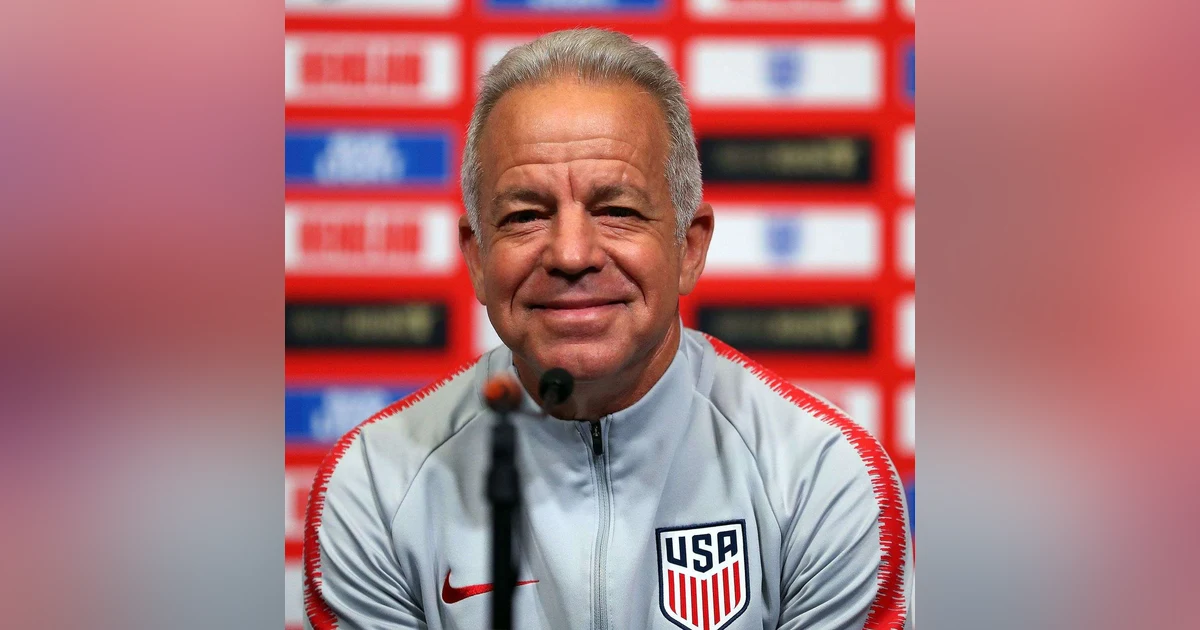
As the World Cup captivates fans across North America, we're revisiting one of the most popular conversations in the history of No Wrong Choices. Dave Sarachan has spent more than four decades helping shape American soccer as a player, coach, mentor, and leader. His remarkable career includes playing professionally in the NASL, coaching at Cornell and the University of Virginia, leading the Chicago Fire, coaching stars such as David Beckham and Landon Donovan with the LA Galaxy, serving as i...

 Apple Podcasts
 Spotify
 Castro
 RSS Feed
 Youtube Music
 As the World Cup captivates fans across North America, we're revisiting one of the most popular conversations in the history of No Wrong Choices.
Dave Sarachan has spent more than four decades helping shape American soccer as a player, coach, mentor, and leader. His remarkable career includes playing professionally in the NASL, coaching at Cornell and the University of Virginia, leading the Chicago Fire, coaching stars such as David Beckham and Landon Donovan with the LA Galaxy, serving as interim head coach of the U.S. Men's National Team, and helping guide the U.S. squad during its memorable run to the quarterfinals of the 2002 World Cup.
In this conversation, Dave reflects on his unlikely path from a young athlete in Rochester, New York, to the highest levels of the sport. Along the way, he shares lessons about leadership, mentorship, communication, building high-performing teams, managing world-class talent, and taking calculated risks when opportunity presents itself.
Whether you're a soccer fan, a leader, a coach, or simply someone navigating your own career journey, Dave's insights offer a fascinating look at what it takes to succeed at the highest levels while staying grounded and true to yourself.
We hope you enjoy this special No Wrong Choices Best Of edition featuring Dave Sarachan.
To discover more episodes or connect with us:
00:00 - Welcome And Guest Setup
01:10 - Soccer Or Football Debate
04:40 - Discovering Soccer In The Neighborhood
08:40 - High School Breakthrough And College Path
15:00 - Captaincy And Leadership Lessons
19:30 - Getting Drafted Into The NASL
26:50 - Pelé Stories And Playing Legends
33:40 - Transitioning From Player To Coach
40:20 - Leaving College Safety For MLS
48:30 - Managing Stars And Building Trust
56:10 - National Team Challenges And Interim Role
01:03:20 - Advice For Young Coaches And Wrap
Welcome And Guest Setup
Larry SamuelsHello and welcome to An All Wrong Choices Best of Edition. With the World Cup taking place here in North America, we thought it was the perfect time to revisit one of the most popular conversations in the history of our show. Our guest is Dave Sterriken, former head coach of the U.S. men's national team and current assistant coach of the San Jose Earthquakes. Few coaches have spent more time helping shape American soccer at the collegiate, professional, and international levels than Dave. We hope you enjoy the conversation. Here he is. Please welcome Dave Sterikin. Dave, thank you so much for joining us.
Dave SarachanWell, it's great to be here with you guys. It's an honor to be uh involved in a nice conversation today. So thank you.
Tushar SaxenaUh don't feel too honored about it, uh, to be quite honest with you. Um so Dave, first question. Uh this is Tushar, by the way. Uh, is it football? Should we refer should we refer to it properly to you as football or soccer? Which do you prefer?
Dave SarachanOh boy, here we go. Good question right out of the box. I think for the purposes of today and our listeners, let's just call it soccer.
Soccer Or Football Debate
Tushar SaxenaGood enough. Good enough.
Dave SarachanAnd then off the air, we can talk about foot football.
Tushar SaxenaGood enough. Good enough. Okay, so my first question to you, or I guess my next question will be all right, so as a child, you must uh because like a lot of us, you know, our sometimes the first sport we play is not always going to be baseball. My first sport as a kid in in little league and PAL leagues growing up was soccer. I'm assuming probably the same, you have probably have the same experience. So as a child, did you was that the your first introduction to the game? And when you started to play as a kid, did you know that this is what you wanted to do for the rest of your life?
Dave SarachanAbsolutely not. No. My generation, uh, and you alluded to it, you know, my my dad was played baseball. Uh, I have an older brother that played baseball and basketball. Nobody played soccer in my family. Um, and you know, during the time when I was young, under 10, uh, soccer was really very minimal around in the country. I wasn't really exposed to it. So I, you know, I did all sports as a kid, uh, baseball, little league baseball like you. I I was believe it or not, for a five foot five-inch guy, I was really good at basketball. Um, but I was introduced to soccer uh more or less in my it really in the neighborhood I grew up. There were some older guys a couple houses down that played for the high school soccer team, and uh they would have the ball out on the yard. And uh I kind of got introduced to it there, um getting to know them, going up and watching their practices and so on. And and then obviously I I I started to play it. I was too small for pop warner football. That was a big deal back in the day, and my parents weren't thrilled about me playing football. So uh I was very athletic and I was able to be pretty good at it. So I was introduced to soccer really, you know, through the people in my neighborhood and the high school.
Larry SheaSo you really learned from not organized soccer. You you learned from a couple guys down the street, and you guys would get together. And is that where you kind of applied your skill to be uh, you know, a good athlete, a good player? Because you obviously became a very good player.
Dave SarachanYeah, I uh I got exposed to it through some older guys, as I said, that uh had a ball in the neighborhood. Uh we did start kicking. I was I was very athletic as a as a kid. Um, I was very quick and fast. You know, when we in our neighborhood, we'd play touch football and running bases and all the things that young American kids would do. And I was I was a little guy, but I was really quick. And and when soccer got thrown out there a ball, um I was I was pretty good at it early. And um I kind of fell in love with it uh based on their reaction and and the interaction I had with some of the older guys. Um and then obviously I was kind of introduced to our local professional team, um, getting to know that we had a team in town and started to watch them. Uh and as I got through junior high school and now kickball became soccer, I just sort of latched onto it because it just was a perfect fit for me.
Discovering Soccer In The Neighborhood
Larry SamuelsWhen did you know that uh you know you were something special and you were a standout and it was something you wanted to chase and pursue?
Dave SarachanYeah, I uh you know, you you get validation a little bit when you when you now try out for teams and you get selected by teams. Um you know, up through eighth grade, you it's more recreational. But when once I got to high school, um my varsity coach at the time uh took me and one other player up from as a freshman to play varsity, which back then was very unheard of. And the light bulb kind of went on going, okay, if he thinks I'm ready for that, uh, then you know, maybe maybe I am pretty good at this game. So that that gave me a real positive feeling about the sport, and I succeeded uh in high school as a young guy, as a freshman, and then by the time I sort of finished, uh our team was the sectional champions, and I was a high school all-American. And each year uh the soccer got a little better, my I started to get a little stronger, and I kind of knew then that you know I can I I can certainly get into a college and play college soccer, and who knows from there.
Larry SheaWhat was that next step? Was it getting scholarship offers at that point and and working into the collegiate level?
Dave SarachanI found ways to improve my skill uh kind of on my own. I didn't, you know, back then we didn't have personal coaches. So, and my dad and mom didn't know anything about soccer. So I I I honed it uh a lot by just a lot of repetition. And and I guess the outcome when I finished my high school career was I had speed, uh, I had the ability to use both feet, and I developed a soccer IQ. And I think having those three things uh alerted coaches in at the college level to start scouting and recruiting. My challenge was, and I I was halfway kidding about the academics, I really didn't put a lot of time into academics. So uh although I ended up at Cornell, uh I had to go to a junior college uh before Cornell, and I'm really thrilled thrill thrilled that I did because A, academically, it helped me uh get my act together, but also the soccer was fantastic. I mean, back then junior college competition was incredible. Uh we were we weren't national champions, but we were always in the national tournament, and that exposed me to even more coaches that recruited me. So uh that that that pathway was uh important for me.
Larry SamuelsSo you went from junior college to Cornell. Why Cornell? Why did you pick there?
Dave SarachanWell, I you know, I grew up in Rochester, I knew uh I knew Cornell, um uh its reputation, but I also knew its soccer program. And uh through a a crazy twist of fate, when I was in high school at Brighton, one of my English teachers was the best friend of the head coach at Cornell, the soccer coach, Dan Wood. And this guy's name was Bruce Musgrave, and Bruce said to Dan, You gotta check this kid out. Uh he called me the bouncing bean of Brighton. And uhliteration, I like that. Yeah, yeah, say that fast. And um, and uh I I I wasn't I my grades weren't good enough to get into Cornell, but when I finished at Monroe Community, uh Dan heavily recruited me to go to Cornell and I knew the reputation. I knew, and my mom uh and dad knew look, if you can get to an Ivy League school, uh it'd be crazy not to consider it. Yeah. And there were no academic
High School Breakthrough And College Path
Dave Sarachanuh athletic scholarships, but that's irrelevant. And uh luckily my I was able to get admitted. I was recruited, I knew all about the academic institution, but the soccer, they were national, nationally ranked in the top three uh Ivy League soccer at that time was fantastic. So uh I was able to get admitted and have a great uh two-year career at Cornell.
Larry SamuelsSo, Dave, you're you're at Cornell. Um, tell us a little bit about your run there. I mean, it clearly you did very well. You became a professional player. What were some of the highlights of that experience?
Dave SarachanWell, Cornell was fantastic. First and foremost, I uh I had a great coach, Dan Wood. Unfortunately, he passed a couple years ago, but Dan, um, he was really an intellect. Uh I learned a lot about the game through him. He he he wasn't the greatest communicator, but boy, he knew his soccer. And we had such a good team. We were really diverse, international. Uh, we had a player from China, from from uh back then it was called Yugoslavia, uh from Peru. So we were very international. Uh and we were we were ranked in the top 10 in the country. Uh and during my time at Cornell, we we won the Ivy League championship. And and and soccer, college soccer back then, you know, pro soccer really hadn't completely taken off. The NASL was alive, but uh soccer was was at a pretty good level back then, and the Ivy League especially. So I was fortunate enough to uh gain the trust of my team. They named me captain um uh uh in a team that was quite talented, and uh we had great success. And I was fortunate by the end uh where I was sort of, you know, I made all Ivy and I was an all-American. It uh it put me on a platform to get exposure for the next level, which was the North American Soccer League. So I I owe I owe so much. And I graduated, by the way, fellas. I want to I want to make that clear. I made I made I made my parents very happy because I came home with an Ivy League, uh an Ivy League degree, which uh if if you were a betting, if you were a betting man, Dave Sarakin was not going to an Ivy League college as a junior and senior in college.
Tushar SaxenaI alone graduating from one.
Larry SamuelsAnd having grown up in a similar environment, I'm sure that your parents told every single human being that they knew that their son graduated from Cornell. You got it. You got it. So so Dave, what did you learn from being a captain? You know, you eventually became a coach, uh, which is so much about leadership and management and dealing with conflict and things of that nature. Like, what did you take away from the experience of being the captain of that team?
Dave SarachanWell, I I guess I was fortunate prior to that experience in high school and in junior college, I was named captain. So somewhere there was a thread of trust within the group that I was gonna uh be a guy that was somewhat selfless, that that uh took the group and put the group as an important piece above kind of my own personal sort of uh desires. And um I took that very seriously, and and I I kind of got an early sense way back in high school sports uh how teams should should work in order to be successful. And I I guess I accumulated those experiences so that when I was captain at Cornell, because if you think about it, the players that were on that team, there were some other junior college players, but a lot were freshmen, sophomores, juniors, all the way through their college experience at Cornell. So here's a guy that came in as a junior. Uh and and I I guess earning their trust early, um and and and taking it seriously, as I said, that that making sure that uh it wasn't just about me, that that uh I would communicate with everybody and and and form a relationship with with the group and kind of keep the temperature of the group throughout the ups and the downs. So it it it was a great experience that uh uh opened my eyes to you know how how good you can be uh with the right leadership and the right people that that uh sort of all buy in.
Tushar SaxenaWas that maybe the the germination point where you said to yourself, you know what, at some point in the future I could coach?
Dave SarachanI I knew that if I wasn't gonna coach, I was gonna either teach or counsel, but something that involved uh being a people person and having uh forming relationships. But I I I caught the soccer bug and you know, I was very focused on being a professional. Uh so I didn't think about what am I gonna do when that's done. But throughout my professional career, I knew when toward the end, I said, no, I I this is too I love this game uh and and I felt I wanted to be a part of it uh and learn how to be uh a coach.
Tushar SaxenaSo you're getting close to your end of your college career at this point. Yeah the North American Soccer League, I mean, it's not baseball, it's not football, it's not basketball, even and actually it's actually probably a better comparison, maybe to basketball, because pro-basketball was was still something of an effledgling state. You're still dealing with the ABA, you know, the professional NBA itself is still kind of floundering about. Granted, North American soccer is is trying to take off in the United States, but there's still no real viable, I guess, grassroots or foundation here in America. What were you thinking about trying to play, you know, be obviously beyond your college years? Or was there, okay, once college is over, I have to go into the workforce. What was the plan at that point? What was it? What were you going to actually become if not a professional soccer player?
Dave SarachanWell, uh let's go back to part of the earlier
Captaincy And Leadership Lessons
Dave Sarachanpart of the question. What by the time I was a senior at Cornell, I was very well aware of the North American Soccer League. There were previous Cornell players that were drafted and playing in the North American Soccer League. I was driven in my head to try to uh have the opportunity to play in in the NASL, specifically for my hometown team, which was the Rochester Lancers, which is, you know, we didn't speak about that, but part of part of what drove me to think that, hey, this is possible was when I was old enough to go to those games, I would watch uh the Lancers, and they had a player, Carlos Meditieri, he was a five foot five Brazilian who was tearing it up. He was the MVP at one point of the league. And I said, Well, there's a little guy that can play. So I was very aware of the NASL. And my coach, Dan Wood, at the time, uh, had said to me, Look, I I'm very well connected with a lot of these younger American coaches who are playing in the league. You're, I think you're gonna get drafted, and you know, I'm gonna try to help you, help you, you know, you know, fulfill your dream. And uh I was fortunate enough uh to to be drafted um by my Rochester Lancer team. So I was pretty driven to give that a shot, a big time shot.
Larry SheaSo you're drafted, you go to Rochester home, basically. And at that point, is it about earning a spot on the team? Do you know you're gonna be on the team and you'll be a a bench player, a role player, or are you thrust into the into the fire right there?
Dave SarachanI was drafted in January of uh 76, and I was still a senior at Cornell. So I wasn't gonna just quit. I was too close to getting a degree. So what I was doing was I was I was yeah, I was try traveling to Rochester three days a week, which is 90 miles, in the winter because we had indoor training. So I tried to make an impression for my coach. He was a Yugoslavian coach. Uh, and uh by the end of the indoor training, then we had to go to San Diego for an outdoor training. And to make this long story short, I I put myself in a position where they felt that I could uh play at that level and they signed me to a contract. And my first contract uh was non-negotiable. It was $2,000 uh for the season. And uh all the all the all the Americans uh basically signed the same contract. So we would we would um uh practice in the morning and paint houses in the afternoons to make extra money. Yeah. But but I was a pro and I played in the NASL. It was at a time when the NASL uh was in the limelight because of players like Pelé and Kinaya and the Cosmos. Let's face it, they they helped propel the league into more of the forefront than the front than behind the scenes. So I uh my timing was good. Uh it didn't allow me a lot of playing time, nor a lot of the Americans, because a lot of foreign players were coming in, but the experience was fantastic.
Larry SamuelsWhat was it like to play with against those guys, with those guys? Tell us some some Pele and Canalia stories.
Dave SarachanWell, it it it was surreal. I mean, so here I am, a 22-year-old kid in 1976, and and I I was I was fortunate because you know, I used to get soccer was not ex had the did not have the exposure it does today. There there isn't anything that there wasn't anything like uh, you know, T where it was on TV all the time or whatever. But I I would subscribe to magazines. I followed international soccer, I knew about Pelea and Kenalia and Beckenbauer, George Best, Johan Cruff. These are names, these are legends in the game.
Tushar SaxenaLegendary names are playing legendary figures, yeah.
Dave SarachanLegends, legends. I mean, and they and here I am with Rochester, uh, and I'm on the same field with these guys. So you can imagine I was 22. I mean, I, you know, Pelé, unfortunately, we just lost, and that's been in the in the news lately, and it you know conjures up some incredible memories. But my my favorite was when he came to Rochester with the Cosmos my first year, and we had a player on our team, Frank O'Doy, who was from Ghana, who who actually knew Pelé, and he said, Hey, I'm going to introduce you guys. When he said you guys, he meant
Getting Drafted Into The NASL
Dave Sarachanthe American guys. So before the day before, you know, they're on the practice field. And I remember taking a photo. I have it, in fact, I've been trying to dig it up in my boxes of stuff, but uh, and I will, where I put my arm around Pele, and we have this photo, and I remember his lower back was like marble, and uh, and he was 36 at the time. And just to be in his presence, I mean, it's it was hard to describe. Uh, I remember going out to LA and George Best walks by me. And if you remember, you know, you guys may not, but he he was like a matinee idol. And when you when you looked at him, it's like, my God. I mean, this guy, you you get a man crush on a guy like this. And and um, and uh, but but you know, when we went to play the Cosmos in in New York, that was just just incredible because the place was packed. You had Beckenbauer, who I loved, you had Kinaya, Stevie Hunt. I could go through all the names, and then of course Pele. So you you were a little, I was a little starstruck, no question. But you know, uh to be able to see their skill level up up close, it it it it was daunting, really.
Larry SheaIt's so interesting because I wanted to ask you if at any point in your professional career you wanted to maybe pursue European soccer or maybe South America or somewhere else to kind of immerse yourself in that world where it's much more appreciated. But it sounds like all of those stars were here making a good paycheck because, right? It was a draw and it was it was a way for them to play in America and get exposure. It's such a different scene now than it was then. Talk a little bit about that.
Dave SarachanYeah, yeah. Well, back then there was there there weren't any Americans that were going over to play in Europe from my memory. Not not during my era. That that changed obviously in the 90s and 2000s and and so on. Because they weren't good enough, Dave? I don't think I think that's a big part of it. Uh and and the other thing.
Tushar SaxenaJohn Hark in the whole course where I can really remember who got a chance.
Dave SarachanJohn Harks, yep. John Harks, who I coached, by the way, at uh at UVA and uh have known John, yes, he was one of the first to go over and play uh in England. Uh he had a dual he had a dual um passport. Uh yeah, there were a lot of layers to why it wouldn't happen, but basically the the American player wasn't. Ready for European soccer, nor was the you know that there wasn't even that much exposure to it back then. Uh, and to your point, a lot of these guys in their later years would come to America to make a final paycheck and grow the game. Eventually it did in the NASL, the Cosmos, because these other markets couldn't afford to pay players like uh Steve Ross and Warner Brothers could with the Cosmos. So that's a that's a different story. Uh but for me personally, no, I never I never uh would it wasn't in my realm of thought to say, boy, I'd like to go to play in England because yeah, that back then it w it was it was the NASL really.
Larry SheaSo if you're making 2,000, I mean, how much are these international players making coming over here? Because that seems like that's where all the salary went to.
Tushar SaxenaIt's Pele making 3,000.
Larry SheaSeriously, like what you know, what could what could obviously they wrote him a big fat check to get him to come here. Do you remember roughly what we were talking about?
Dave SarachanNo, I think there's documentation about that. I mean, i if I get you know, it might it might have been a million dollars, which doesn't sound like anything today, but back then it was it was a lot. It was a lot. Uh, but it was true for all those guys. And and honestly, guys, for me, it I it wasn't about the money. I didn't think about, man, I want to be a pro because I want to drive a nice car and make a lot of money. I I honestly didn't. I I I my maybe I was too naive. I just I wanted to have that experience. And obviously, you know, when I got actually when I played indoor soccer, my brother, who's an attorney, did my contract, and I was making a pretty good living as an indoor soccer player, but it wasn't really about the money. For these older guys that came over, it sure was about the money. Um, but you know, everybody has their own way of being motivated.
Tushar SaxenaSo when did we now move to the when did we say to ourselves, okay, the playing career is over? I want to move to the sideline. At what point did we say we're now ready to transition to the sideline?
Dave SarachanThat was yeah, that was at the end of my indoor career in uh in '82. I finished playing and um the the coach that was uh working at Cornell at the time needed an assistant. And I came, I moved back to upstate New York to Rochester. Um Dan Wood at the time. No, no. This Dan was gone. Uh, this was uh another coach, Jack Ryder, was the coach at Cornell. And so I uh I knew that I wanted to get some experience coaching, and there was an opportunity. So I I went back there in '83.
Tushar SaxenaAnd how old were you?
Dave SarachanAnd uh at that point, I was oh boy, I was born in 54. Let's do the maths. 29? Is that right?
Tushar SaxenaI was gonna say, but you're like right around 30. Okay.
Dave SarachanYeah, yeah, close to 30. That's right. Uh, and had a couple seasons there. Uh uh, and then uh Bruce Arena, who was the head coach at UV at UVA, and those that know soccer know about Bruce Arena.
Tushar SaxenaMy God.
Dave SarachanUh he was he was a Cornelian, but we we didn't play together because he was a transfer. So I didn't really know Bruce, but he knew me and I knew him. And there was an opportunity to uh join him uh as a full-time first assistant at UVA, which at that time was in the ACC in a very good program. So I left uh being sort of a JV uh part-time coach at Cornell to join Bruce in '84. And that was really the springboard to an accelerated uh learning curve of collegiate soccer, uh, learning how to how to coach, what it takes, forming relationships, recruiting, scheduling. Uh, and then from there, I, you know, was off the opportunity to be the head coach at Cornell, and there it went. So 80, 82, and three and four were the beginnings of knowing that, okay, this is gonna be my profession.
Larry SheaSo is it fair to say that it was a relationship that got you to this point? Or it was it was obviously your alma mater, so it was easy to go back to to Cornell, right? Um, but is it is it is it then knowing Bruce and him kind of taking you along and saying, I have this opportunity and you're gonna come along too? Is it a relationship thing, or is it what at this point early in the coaching career?
Dave SarachanYeah. Early, you know, life is uh about timing and opportunity and and recognizing it. And I
Pelé Stories And Playing Legends
Dave Sarachanguess, you know, my mom was right. You get an get a Cornell degree because I believe one way or another. Yeah, uh, you know, she because my you know, Bruce knew about me because of Cornell. He followed the teams, he knew I was a good player. Uh, people that knew me recommended me. Anyway, the Cornell connection absolutely got me in the door with Bruce. And then by working with Bruce and having success, uh, now five years into my UVA experience, the Cornell job opens. And here I have five years under my belt at an ACC uh championship team, national ranked team. So the connection that Cornell played again uh got me an interview and got helped get me the position as the head coach at Cornell to go back in '89. And uh that was just a wonderful uh reintroduction to go back to Cornell, having been a player, now being the head coach. Uh so yes, the relationship uh and the experience, you know, dotted one I and crossed one T and uh got me that opportunity.
Larry SamuelsSo, Dave, you you had a a lot of success in college, UVA, going to Cornell. And then you went to the MLS. What what was the desire um to jump? Meaning, uh could you have stayed in college, uh risen to the top of those ranks and and been content? Why was the MLS compelling to you?
Dave SarachanYeah, that's a really good question. Um, you know, you you you alluded to it. I the collegiate setting uh is a pretty much you're working with a uh a safety net. Very rarely in in our sport of soccer were you're gonna lose a job. I could have stayed at Cornell for 20, 25 years. Um but I I again an opportunity came where Bruce Arena uh was the head coach at DC United, which was in Major League Soccer. And early on, the the the league started in '96, but in '97, the assistant there was Bob Bradley, who left. Uh, and there was an opening. And Bruce called me while I was at Cornell and said, I want to offer you this position. Think about it. And I had a young family at the time. Um, and I I felt as though I left the last couple years at Cornell in a really good spot. We we were we were Ivy champs, we went to the NCAA tournament, and I just felt the leap of faith. I I wanted to challenge myself, what is the next level like? And uh to be able to now push myself professionally to another level, work with a guy that I'm familiar with, get into a team that I feel um has good ownership and a good roster that can win because they had one. Um when the when I added it all up, I just felt in my gut if you're gonna push yourself to be as good as you can be, you've got to take this opportunity, knowing that in professional sports, it could last a year. Uh but I had the right support uh internally, and my gut told me, you you gotta do this. And uh and I did it. And thank goodness I did.
Tushar SaxenaDave, I've always thought that coaches, especially on the college level, are teachers. They're first and foremost teachers. And you spoke to you, you said, you know, you said yourself that your first coach in college, Jack Wood, was a very influential person on you. And, you know, how much did he influence your style as a coach? And then, you know, moving forward, Jack Ryder, Bruce Arena, how much have they influenced your style of coaching? And then how has that turned and how has that then given you your own style? And then have you been able to then give that to other assistants under you? How has it then you then mentor other younger players and other younger coaches?
Dave SarachanYou know, I I've taken I've taken all my experiences and a little piece of all the coaches I had, starting back in high school. My junior college coach was not a particularly sophisticated soccer mind, but he was an incredible human being, an incredible empathetic guy, uh, the way he treated us. Dan Wood uh was a good guy, but socially it was a challenge for him. But he was he had he literally had an IQ of like 160. He was brilliant. So I took a little bit of the tactical side, I took a little bit of the humanistic side. With Bruce, you know, it's let's face it, he's arguably the most decorated American coach in American soccer.
Tushar SaxenaOf all time, yeah.
Dave SarachanAbsolutely. And and I took a lot of the details that are needed to succeed in man management. So um all the coach and even the coach that that coached me at in Rochester, who at the time I disliked because he never played me or the Americans. We used to make fun of him. And but but as an adult, I can kind of think back to some of the things that I could take from him. So it's like comedians, you know, you take a little, you take jokes and and routines from everybody, and now you formulate your own way. And the one learning thing that I can share with you is that when I when I uh did get my opportunity to be the head coach at Chicago with the Chicago Fire, you know, at the beginning, um I I try I I I copied too much of Bruce. I was his assistant for such a long period of time. And I realized very quickly that I have to have my own voice and I have to do it my way, which I did. And luckily, you know, I was successful. But to answer your question in a long-winded way, I I've taken a little bit of all those experiences and and sort of molded into how I now can uh mentor and teach and get the point across. Because at the end of the day, uh you've got to be able to communicate. Um and if you don't mind, I can share one other kind of fun quick story. When I was at UVA, yeah, you know, what I when I was at UVA during the winter, Bruce and I, we went to all the basketball games. Ralph Sampson was there, they were great. ACC basketball was incredible. Sure. So every every home game at halftime, we would go into our soccer office, which was about 200 square feet, but the
Transitioning From Player To Coach
Dave Sarachanvent above us led into the visiting team's basketball locker room. So we we would yeah you were the mole. Yeah, yeah. Now, full disclosure, I we never once went back to Terry Holland, the head coach of UVA's basketball, to say, hey, by the way, here's what they're talking about. No, the whole idea was I want to hear how Jim Valvano talks to his team. I want to hear how Lefty Drizell talks to his team. I want to hear how Bobby Cremens. Can you imagine? And so I use that example because I'm always looking at even other sports and leaders in other sports, uh, and how they talk and communicate. And when they have to put the hammer down, okay, you got to do it this way. Or uh when you got to soften the message. And so it was an incredible learning experience. And to this day, I still do that. You know, I I I am you I love Steve Kerr and the way he operates his team and the way he carries himself and how he communicates. Greg Popovich. So, you know, I think you take a little bit of all that all the time, uh, but you still have to be yourself.
Larry SamuelsYou know, as you as you bring that up, you know, one of the the questions that that I'd wanted to get to during this conversation was about managing, you know, world-class athletes, leading world-class athletes. Um, I know you had the opportunity to coach uh David Beckham, for example. Um, like how do you deal with people at that level and get them to buy into your philosophy and get them to take direction? I mean, what's it like to deal with those looking from the outside, egos are those types of people?
Dave SarachanYeah. Yeah, no, look, it's um when I when when Bruce when when Bruce uh asked me to join him with the Galaxy, he he and I were hired together at the same time. They let go the previous staff, and that was 2008, and we inherited a very dysfunctional locker room. Uh David Beckham was there, Landon Donovan was there. There was a myriad of mishmash kind of personalities within that locker room. This was August of 2008, and um even back with DC United, we had uh Marco Echeveri and Jaime Moreno, these were big, big, big people. So my first exposure to high-level pros started at DC. And and look, my daughter had a a poster of Beckham on her wall the day I accepted to join Bruce. So, you know, I was I gotta admit, you know, you walk in and there's Beckham and it's like, holy smokes, you know, this is the real deal. But but my where I'm going with all this is uh my success with these kinds of people has always started from the humanistic side first, not the soccer side. Now, of course, they have to get your trust and you you have to gain their trust and respect for you to have for them to trust that, hey, you know what you're talking about from the soccer sense. And I I didn't put that ahead of getting to know them first as people, uh, so they begin to, you know, sort of crack that shell of, okay, here's my coach, but he's got a family too. He's got young kids too. He he's dealing with LA traffic, um, and so on. And so, you know, it starts that way. And and then not being a fan, you you are their coach, and and I'm not trying to be a friend of David Beckham's. I don't want to join him for a beer uh in Beverly Hills on the weekend, you know. You have to know where to draw the line. Um, and I think I was fortunate with my personality and the way I communicate and and sort of handle that end of it the right balance that I gained their trust pretty quickly. And once you've done that, now you can say, first of all, I'm not gonna teach David Beckham how to strike a ball. Let's face it, guys. Yeah. So let's let's cross that thing off the list. But we can we can show them video of team stuff. And and the other way I would say it too is because I respect where they've been. So I had you know, David Beckham, Robbie Keene, Landon Donovan, Ashley Cole, Steven Girard. I would I would enable them and encourage them to be have their voice in a lot of this. And even if I disagreed, they felt invested that way. They felt respected that way. Because I'll be honest with you, the the bigger the star, in many ways, they're they're very sensitive and they're very got their insecurities, and they still want to be recognized. So you gotta find the right balance, but it still starts with the right communication and building that trust that way. That's kind of how I've always done it, and it it's kind of worked for me.
Tushar SaxenaIt's a perfect way to lead into my next question, then. So is there is is there a big difference between the the ego of the European, Latin American player, those who are obviously playing soccer on a much higher level than the American player. So is there a huge difference in terms of the ego of and of uh of dealing with a David Beckham than there is with dealing with a Landon Donovan?
Dave SarachanYou know, that's an individual, that's kind of an individual evaluation. I I'd say I would answer it that this way. Certainly early on in Major League Soccer, let's say, when when Europeans or South Americans came to our league, uh they felt they were coming into an environment where they were just going to dominate, they were gonna be the best, this league's secondary. They they they had an attitude and an ego that um, you know, the American game can't be as challenging as where I'm coming from early on. But I think through time and through improvements and and better quality, whether it's coaching, facilities, players, I don't think there's a big difference now. Uh and and again, here's another good example. Here's David Beckham with the big galaxy, uh arguably the the the greatest the biggest name on the planet in terms of soccer at the time. Arguably. And but he he played for Alex
Leaving College Safety For MLS
Dave SarachanFerguson at Manchester United.
Tushar SaxenaYeah.
Dave SarachanAnd Alex Ferguson took no crap from any player. He managed he he managed players in a way where those players would then come into the next environment knowing how to treat coaches with respect, how to treat rookies with respect. There was an incident that happened with me, and you know, I'm a mild-mannered guy. I never I I rarely get into confrontation, but there was a a moment in one of the practices with LA where one of the American guys uh uh argued with me over something silly. I don't know. You know, I was refing and he was just being unbelievably disrespectful. And I was about to get back after him, and Beckham was standing there and he didn't say a word, he pulled this player, just pulled him away, walked 20 yards, and had a conversation with him. And about 15 minutes later, the guy came up and apologized to me. And I know what David, I know why David did that, because he was brought up the right way in in an environment where you you don't do that, you just don't do that. And so it it depends on the person in the player, honestly, and and the environment you've brought in. So because there's plenty of Americans that have an ego, let me tell you.
Larry SheaYeah, I can't wait to talk about the American game and where we are now. But uh curious, you know, is it easier to work with a younger player because you can mold them into what you want them to be, or are you prefer to work with a veteran because you don't have to teach them how to strike a ball? You can work on the finer points of the game. Obviously, I'm sure you love to work with both, but which is more challenging for you?
Dave SarachanUm I I I really enjoy teaching. You've alluded to that. I teaching and and coaching and and mentoring. If I had to pick, you know, the the I love the relationships that I formed with a lot of these veterans. Like Robbie Keane, you know, we talk two, three times a month, you know, we've we've become friends. Uh, and he was he was really a legendary guy and a real pro. Uh and I love those relationships. But as far as if you're asking, getting in the weeds of really getting on the field and coaching and teaching, the young guys are great because um uh they are more malleable. They are still clay at that point.
Tushar SaxenaThey're still clay, right?
Dave SarachanYeah, exactly. Exactly. And uh uh it it's more frustrating because they're not accomplished yet, and and and it can be you have to have patience, which I think I do have, but I do enjoy that part. And and you know, the year I had the national team before this uh this last cycle, we had a lot of young guys, and it was really some of the most gratifying work I've had. So I I I would say the young guys is really uh uh something I really do enjoy.
Larry SamuelsYou know, your experience with the American team, you were there. Was it 2002 your first time through with the World Cup and the men's national team? Is that right?
Dave SarachanYeah, yeah. I I started in 2000 with with the national team and and uh was part of the 2002 World Cup team, which was uh extraordinary. That was my first experience. So, what was that?
Larry SamuelsYeah, like like what is that experience like? Is it are you teaching young guys? Are you dealing with veterans? Is it a blend of both? You know, it you know, the guys are off doing other things at different times of the year. It's like how do you you meld that type of a team together and what is that experience?
Dave SarachanExperience like well, national teamwork is is unique because to your point, you don't have them daily. And you need you need a lot of opportunities throughout the year in each year leading up to the World Cup to bring that group together uh to make sure that uh you convey how we do things, uh what's expected, the style of play, so on and so forth. So it's a real challenge. People from the outside can never really know, but it's it's a challenge. And uh when I had uh the experience I had, excuse me, leading up to 2002, um, it's a lot of trial and error. Guys come in, guys come out, guys can be hurt, guys might not be available, you have to be adaptable as a coach, you have to have patience, um, and then you have to have a good sort of program so that you're playing a lot of good competition. And building a roster for a national team, in my opinion, uh it's been proven, I think, that you need the right blend of veterans and young players. And at that time, we had incredible veterans, uh, and we had two young players named DeMarcus Beasley and Landon Donovan. Uh, and so 2002 was the perfect blend. Uh, but you're not guaranteed that. So national teamwork is really a challenge when it comes to that.
Tushar SaxenaHow many coaches were on that staff, aside from you and Bruce?
Dave SarachanUh there was um there were two other coaches, and uh the rest were sort of support staff like trainers and so on. So there was probably well, we had a goalkeeper coach, so there was probably five coaches on staff, five of us.
Tushar SaxenaSo so the notion of obviously building the proper mix of players on on your team, how important then is it to then build not simply the proper mix of players on a team, but a proper mix of coaches and support staff on a team? And and how much of an input do you have on that? Because obviously a guy like Bruce Arena, he's gonna be more like the CEO. And obviously, you're gonna be like one of his lieutenants. So, how much of a of a role and an input do you have in building a staff like that? And how much has your experience worked to recruit and to mentor those folks who come along?
Dave SarachanLove that question. Love it because um I think what's what's really overlooked in mentoring and um in in our profession is the importance of staffing and the importance of an assistant coach. Um the the quick answer is it's massively important for a head coach to build his team. And when I say team, I'm talking about the staff now, uh, with with the right personalities. Um, one of the reasons I think Bruce and I, you know, I guess, you know, we're arguably the most successful duo in U.S. soccer, or I should, well, in American soccer, we've been successful everywhere because, you know, there's things he offers that I don't, and vice versa. And and I think a big part of it is to be able to challenge one another, uh, to be able to uh uh have the trust of the players so that if Stephen Girard comes to me because he doesn't want to go to Bruce, I'm not just gonna rat out Steven. I'm gonna have a real conversation on my own terms and have the right way to communicate uh and building that trust because many players go to the assistant rather than the head coach or the assistants plural. So it's really important that you get the right mix. Uh you need intelligence, but you need the way you communicate and deal with players uh that sometimes the head coach isn't able to do. And so I've seen it uh not in a good light, but I've seen it more in a really good light. And I think our my experience now as a as a head coach and leader, that's one of the most important pieces is making sure that I can build my staff uh that uh where we can have real, honest, open interchange. And and look, a lot of it is ego. I, you know, uh a lot of head coaches have too much of an
Managing Stars And Building Trust
Dave Sarachanego. They don't want their staff to have too much input. Uh I think that's crazy. You got to have enough security in your own abilities to say, you know what, if the assistant wants to take a group now, do it. You know, you want to have a conversation, do it. As long as we're all on the same page. So it's massively important.
Larry SamuelsSo, Dave, when you look at American soccer today, and I'm sort of jumping uh ahead a little bit, but but you know, having been the head coach of the U.S. men's national team for you know a period of time, you know, A, you know, I come to this because what was it like to be the interim coach? What is that dynamic and and how do you work your way through that? Um, and then B, you know, we're we're very curious to hear your thoughts on on the future of American soccer.
Dave SarachanWell, yeah, I mean, so obviously two 2017 is going down as a is a difficult period of time for U.S. soccer when we didn't qualify for the World Cup and that loss in Trinidad. Uh and then, you know, I uh I didn't set out to be the the the the next coach, but by sort of default, uh we had a game a month later uh and we needed a head coach and Bruce had stepped down and the Federation said, you know, Dave, you're you need to take the team, uh, which you know I was I was very uh glad to do for so many reasons we could talk about. But uh and then the next event was January, and they needed a coach, and I was the guy. And um at that point, there was no, you know, U.S. soccer was in squ was in shambles, really. The the the men's team was looked upon as a failure. Sunil Galati, who was the president at the time, was was up for re-election, and uh his job was on the line. Uh the guy it was a mess. And uh but it was an honor for me to uh have the opportunity, A, to be the head coach of the national team, regardless of the situation. But it was I also took it upon myself to say, okay, they're giving me the keys to this ship, they haven't given me a map, I don't know where I'm going, I don't know what the waters are gonna be like. Uh good luck. And so I just sort of took it upon myself to go, look, this may be interim, this may be lead to full time, but that's not the issue. The issue is we've got these games. We've got we've got a January camp, we've got games in March, we have this unbelievable 10-game schedule in 2018 where we're playing Paraguay, Ecuador, Brazil, England, Ireland, France, you know, because the idea was we no, these are the this was the greatest schedule in U.S. soccer's history. And it was such a yeah, this are these are real teams. And these were real opportunities for young guys to experience. And so the interim part it I didn't really, you know, the experience of being the head coach was important for me. Uh the need for sort of a uh calm head and and an experienced guy with with these players was was needed. So I didn't think of it like this is an audition or I don't know where this is gonna lead. I just took it and it just kind of rolled. And by the end, when you know, I wasn't gonna be named the head coach and they eventually went with Greg. Um I I looked back and and felt very proud of, you know, the work that we put in to uh allow these players these experiences that I think they hopefully would be able to cash in on uh in 2022. And um it it was a little weird when you asked me, you know, what was that like, but I didn't look at it that way. Uh these were just opportunities, and uh it was it was a great experience. And to the second part of your question, you know, we've never been in a as a country, as individual players are concerned, we've never had the amount of talent, potential talent that's available to us than now because of the exposure so many of these guys have had to our pro league and MLS and then the opportunities to get over to Europe. Um, and you know, everybody wants to fast forward this and win a World Cup, but it's not that easy. And uh, you know, we saw based on Qatar that there's a lot of great potential. So I think we're heading in a really good position. Certainly, I've in all my years, I've I've haven't been a part of um a generation of players quite with this much uh to offer.
Larry SamuelsWhy do you think it it's taken so long to get to this point? You know, I often think about you know the number of kids that grew up playing soccer and the great amateur programs and the great college programs and and the number of really great athletes that play the sport. Like, why has it taken us so long to catch up to the rest of the world?
Dave SarachanHmm. I don't know. I don't know. I I you know there are some ideas that I would throw out there, and and one of them you you alluded to as far as college. I I'm a big believer of college soccer, but if you think about the rest of the world, uh players are exposed to a pro club very early. They're identified very early. Education is many times bypassed, and if you think about those players throughout the you know, all these years in South America and Europe that had as much repetition and training, uh it's hundreds of times more than players back in the day during the generations where players were playing high school soccer, some club soccer, but then going to college. Um there were a lot of steps missed along the way where it ramped up these, you know, the the players from outside of the US and we're now just closing that gap. Uh where, and I'm not I'm not advocating player uh young players to not go to college. What I'm saying is many more now at a young age are being identified uh like they used to be in Europe, where an academy team or a local team would would would train them and then they'd play for pro the local uh pro amateurs and then be offered a pro contract and bypassing college altogether. And uh I think we're now uh getting more of those players who are very serious. One sport people, not three like I was, uh committed to it early. So I think that's what's delayed a lot of this, to be honest.
Tushar SaxenaGive me a couple, give me a couple of pieces of uh of advice for young coaches out there. They want to get in, they want to get into the profession of coaching, whether it be on the sideline, whether it be on the soccer pitch, whether it be hell, whether it be on the sideline for basketball. Because as you said, you take your advice, you'll take your advice from whoever, wherever you can get it. So, what's that one or two pieces of advice you want to give to a young coach, uh to someone who is aspiring to be a coach?
Dave SarachanWell, I I I would say this, um, you know, and I'll use my own experiences, but I think I think the there's a few things I would tell a young coach. One is um there is so much available to you out there, whether it's
National Team Challenges And Interim Role
Dave Sarachanvideos, watching every weekend premiership games or Bundesliga games, watching other coaches, watching, watching, watching, uh, and and absorbing uh how how coaches behave and how they sort of how they communicate, because communication is so key. So I would say take in as much as you can, um accept the fact that you are going to fail. You you are going to fail. Um it is part of the process. And and knowing that, really trust your instincts um in how you uh teach and and and how you absorb information and communicate that information and and know that it's just not gonna, it's you're not gonna reach everybody. And because you can beat your as a young coach, you can really beat yourself up to go, boy, I I blew that one. Well, you're gonna blow it, but trust your process and and stay with it. Uh and and and then the last piece is because I I'm I'm an older coach now and I've done this a long time, but I will never concede that I've figured it all out. I still watch games and pick out new things all the time. So you just gotta keep an open mind uh throughout your process. And uh uh those would be three things right off the top of my head.
Tushar SaxenaAll right, so I have a couple of quickies before I know that the I know that the uh that uh both the Larry's have a couple of questions for you, but I got a couple of quickies. We should have asked you this early on. Who's your favorite all-time soccer player?
Dave SarachanOh boy. Oh boy. Um, my favorite all-time uh Johan Kreis.
Tushar SaxenaFavorite soccer movie.
Dave SarachanOh God, it's gotta be uh whatchamacallit. Um you know you know what I'm trying to think of with Pele.
Tushar SaxenaIf it's not victory, if it's not victory, it's the wrong answer. It's victory. No, no, that's the if it's not victory, it's the wrong answer.
Dave SarachanHey, I was getting to that. You took the word out of my mouth. It was victory, of course.
Tushar SaxenaOf course. You're a guy who played with Pele, Canalia, and Beckenbauer. Two of those three guys are in that movie.
Larry SheaI know, I know. Victory for sure. For sure. And you're a Ted Lasso fan, we have to assume, correct?
Tushar SaxenaThat was the other question we had too. Yeah, absolutely.
Dave SarachanI love an absolute fan of Ted Lasso. Absolute fan.
Larry SheaAll right, I love to always ask the question because and I love what you said before, you're gonna make mistakes. We're all human, right? What is the the worst decision, the worst mistake you made where you're like, I can't believe I just did that? What is there a is there a moment that sticks out to you that boy, that was boneheaded. What was I thinking there, or anything like that? Or if you can't think of one, the best decision you made in your career path, the journey, the journey for your career.
Dave SarachanWell, I alluded to the best decision, and that was taking the leap of faith uh and leaving the comforts and safety of a collegiate position to jump to the pros. Um uh the worst decision. Well, I would say this about the besides coming on this podcast. Yeah, besides coming on this podcast.
Tushar SaxenaThat's right.
Dave SarachanWell, then I'm done. I don't have another answer. No. Um, the I would say one of well, I'll you I'll I'll phrase it a little differently. One of the great lessons I learned, which turned out to be one of the worst things I did, but it's not that terrible. But one of the great lessons I learned as a coach was early on when I when I had to tell players they weren't starting, uh, first of all, the dynamics of a team, you have 11 players in soccer that start, and then you have usually 12 others that don't like you because they're not playing. And and that's just, you know, and and I learned early on, A, you're just not pleasing everybody. And don't worry about it. This is all part of it as long as you're honest and open. But but the one big mistake I made early on, and uh and I don't do it anymore, is I had to tell a player he wasn't starting, and he had been a starter for me. This is when I was coaching in Chicago. But I said to him, uh, here's the reasons you're not starting, but you're gonna play in the next game. Okay. And I never should have said that because when the next game came, I really didn't want to make any changes to the team that had just won. And and I committed to something, and here's a young man that's going home going, okay, uh, he gave me his word, he's gonna play me. And I learned a lesson from that because then I had to tell him again, by the way, I'm not using you. And he's he's gonna say, Well, wait, you told me you were gonna play me. Well, so one big lesson I learned is uh well, too, you you there's you've got to be able to communicate very clearly and be honest and open, put especially pros, but everybody, they want the truth. Don't BS anybody. Tell me the truth. You don't want to play me, fine. Tell me why. And then don't promise me you're gonna play me and don't play me, because when that happens, you lose their trust. So I would say that lesson really has stood out.
Larry SamuelsWell, you're you're very lucky because many people um aspire to find that thing that fills them up and gives them purpose, which is also tied to a career and a passion, and you quite clearly figure that out. So uh congratulations for that. And Dave, thank you. Thank you so much for spending the time with us today.
Dave SarachanI appreciate the kind words, and this has been a blast. I think you guys do a great job, and um thanks for having me on.
Larry SamuelsWhat a wonderful opportunity that was for us to A, talk to a world-class coach and B, get to see Tushar act maybe like he was seven. He he was really falling back to his childhood quite that interview.
Tushar SaxenaI did a lot. Yeah, I will say this. I will say this about Coach. He he did have the right answer when he said when he talked about his favorite soccer movie. If he did not say victory and he said bend it like Beckham, the the interview would have ended. I'm just telling you. We would have ended it right there.
Larry SheaIt was the end of the interview. It would have ended at the end of the interview.
Tushar SaxenaI would have just said, look, we can't talk anymore. I'm sorry. We don't talk anymore, sir. But look, uh I uh what a great interview that was. I mean, I gotta tell you, I mean, I you know, uh even when we even when we stopped to record, we talked for a few minutes longer, and I'm hoping when the next time he comes to the East Coast, we all have a chance to get together, because I'd just love to meet him in person and just pick his brain a little bit more. First of all, this is a guy who played who was actually on the same soccer field with guys like Pelene, Tony Kenalia, you know, Zamuda, Birkenauer. I mean, you know, these are some of the most legendary people of all time to ever play soccer.
Advice For Young Coaches And Wrap
Tushar SaxenaAnd, you know, just to even have that moment to just say, hey, what was it like to watch them play live on the field level? I can't imagine that. I mean, I'm sitting up on the stands as a kid with my dad, but to see that on the field level must have just been incredible. And he's so humble. One thing I took away, just how humble he is. He's like a really humble guy. And how he was able to like, and I I, you know, one thing I've one thing, you know, we've had the chance to speak to coaches and managers over the years in our own interviews. And the one thing I always enjoy hearing is how every coach develops a style. And it's not specifically their own style to start with, obviously. They pick the best parts from everyone who's ever mentored them through along their journey. And then that's where when they come to a point of their own maturity as a coach, they say, okay, this is who I am as a coach and a person. And that's really where that journey kind of, I don't, I don't want to say ends, but maybe, but maybe that's the middle point or where, or maybe really that's where the journey begins for for many of them. And that's what really what this story was all about.
Larry SheaI really, really enjoyed it. Yeah, I think most great coaches are probably players first, you know, and Dave, I think is that that's the case with him. I don't think it has to be. I think you just have to have a passion for whatever you want to go into in the in the coaching realm. Yeah, and and Dave, you know, he it's still, you know, somewhat ambiguous to me. Like, how do you get these jobs? Well, I think it was relationships, right? It was Bruce, it was other people kind of recognizing his talent, recognizing his ability, and saying to him, like, you could kill this job. You you would knock it out of the park, you're coming with me. And just because you're given that opportunity, we say it all the time, doesn't mean you're gonna hit a home run, right? He obviously has that, that intellect, the communication skills, everything that you look for in a great leader of people to get the job done. And you hear it with all of his anecdotes, all his stories, and everything he talks about.
Tushar SaxenaThe one thing he always gets the one thing we always talk about here is that the idea that, you know, a Dave Serikin or anybody else we speak to is that, hey, what's it like for you to be a mentor? The notion is the notion of the reality is that mentors need mentors, right? So that all these guys that we speak to, they all talk about, well, I was mentored by XYZ, like he was mentored by Dan Wood and mentored by Bruce Arena. So now he takes those elements and mentors other coaches. That's really what this is all about a lot of times, right? Mentors need mentors.
Larry SamuelsAbsolutely. And you know, the the part that I was so eager to hear was, you know, how do you manage these huge personalities? How do you connect with folks who are world-class athletes, who may be difficult, may have egos, may have attitudes. Like, like, how do you lead people like that? And, you know, to hear him talk about connecting with folks on a human level and trying to find ways to relate, but to also make sure that there's a bit of a wall-up to let them know that I am still the coach, I am still the authority here. I I thought that was a very interesting thing.
Larry SheaI thought that was a great moment. And, you know, talking about David Beckham pulling aside a young player and having a coach like, you know, a player coach, even, you know, someone who can handle the guys on his own team and empowering those people to do that, right? And to do the right thing. So I thought that was a great moment for sure.
Larry SamuelsSo just uh an incredible conversation. I I feel fortunate that we had the opportunity to spend time with Dave today and and obviously we wish him uh the the the the the best of luck going forward with all of his future endeavors. On behalf of two stars taxing up, Larry Shea, and me, Larry Samuels, thank you so much for listening to this No Wrong Choices Best of Edition. If the conversation inspired you to think of somebody who could be a great guest, please let us know via the contact page of our website at NorongChoices.com. While you're there, be sure to check out our blog, which provides a deeper look into all of our guests. You can also connect with us on LinkedIn, Instagram, Facebook, and YouTube. Thank you again for joining us.
