Turning Tragedy into Purpose: Rick and Jane Howe’s Journey with SIDS


 Apple Podcasts

 Spotify

 Castro

 RSS Feed

 Youtube Music
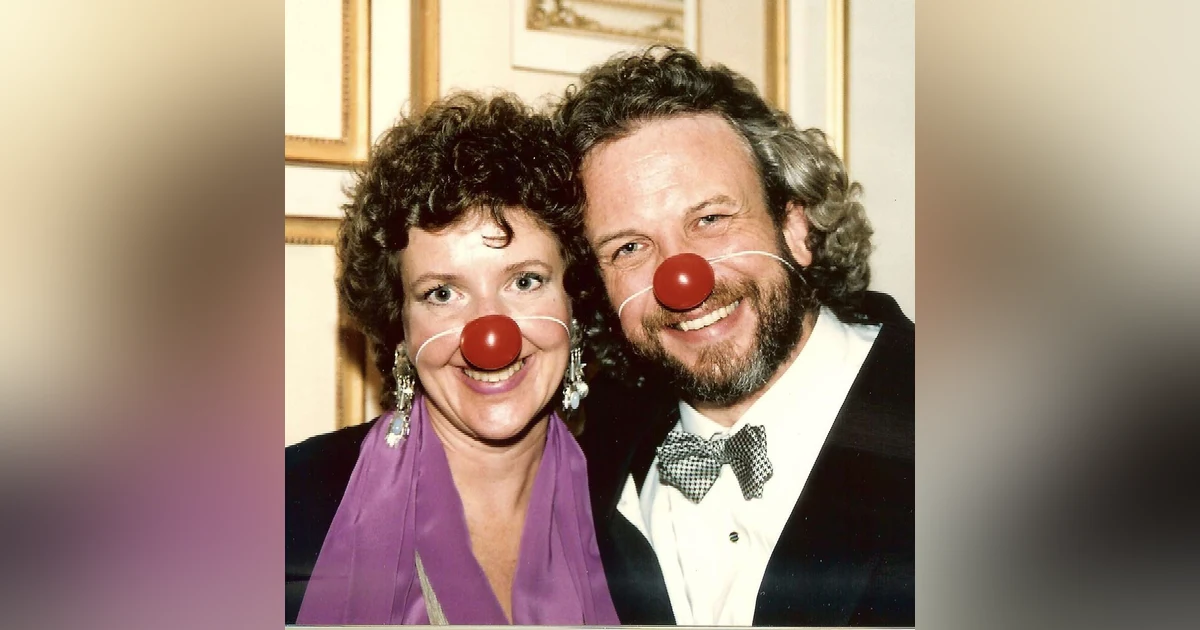
In this heartfelt episode of No Wrong Choices, we sit down with Rick and Jane Howe to explore their journey after the devastating loss of their infant son, Stevie, to sudden infant death syndrome (SIDS). They share how, in the face of unimaginable tragedy, they turned their grief into action — creating national awareness campaigns, pioneering educational efforts, and driving change that cut SIDS deaths in half.
Through humor, candor, and raw honesty, Rick and Jane reveal how they found strength in each other, mobilized thousands of volunteers, and ultimately helped save thousands of babies’ lives. Their story is a testament to the power of resilience, community, and the belief that even the most personal pain can lead to a profound and lasting impact.
Whether you’ve faced loss, adversity, or simply want to learn how purpose can emerge from heartbreak, this conversation is both moving and inspiring.
To discover more episodes or connect with us:
00:03 - The Reality of SIDS
01:31 - Beginning the SIDS Awareness Journey
05:20 - Breaking the Silence Around SIDS
10:13 - Adopting Ricky After Tragedy
16:14 - Red Nose Day: A Revolutionary Approach
24:35 - Impact and Changes in SIDS Rates
38:24 - SIDS Today and Future Challenges
42:44 - Closing Thoughts and Resources
0:03 Nobody's prepared for this, these little babies. They just die in their sleep and we know more about it now than we did, you know, 30 years ago when our baby died, but it's still a diagnosis of nothing. The phone rang like close to midnight. We answered the phone. It was a lawyer from Guadalajara and he says I hear that you would like to adopt a baby. That little Ricky Howe saved our lives. Yeah, he was wonderful. We had probably 6,000 volunteers nationwide. Wow. We recruited Lloyd Bridges, who had lost a baby to SIDS, as our national spokesman and got him to do a PSA.
0:48 We recruited Bozo the Clown as our national spokesman. Talk about how in the world is Bozo the Clown talking about SIDS? Well, guess what? It worked and it got people talking worked and it got people talking. We spent a long time following the research and meeting the people who were doing the research and trying to help fundraise to make sure that there was an awareness out there. It kept us strong. It kept us stronger. It kept us alive us stronger, it kept us alive.
1:32 If tragedy comes into your life and you have the ability and the opportunity to make things better for other people, you have to do it. You just have to. Hello and welcome to no Wrong Choices. I'm Larry Samuels and I'll be joined by Larry Shea in just a moment. Today's episode is a little bit different from what we usually do. Instead of exploring a career path or sharing a very powerful personal journey story from Rick and Jane Howe that was shaped by their experience with SIDS, it's a story of turning tragedy into purpose, healing and impact. Before we begin, please be sure to take a moment to like, follow or subscribe to the show wherever you're listening right now. Let's get started Now. Joining no Wrong Choices are Rick and Jane Howe.
2:15 Rick is one of my favorite people from within the business of media space and I feel like I know Jane from the countless photos that Rick posts on social media. So, jane, I feel like I know you already. Welcome to my life in a more formal fashion. Thank you, glad to be here Happy to be here. so thank you both for joining us. Today we're going to explore a very personal and consequential journey from Rick and Jane's lives that had a deep and lasting impact upon them and countless others their experience with SIDS. Thank you both for trusting us with what is obviously a very personal and heartfelt story.
2:55 Well, the last time we did this on any kind of camera had to have been, well, my good heaven, in 1987. On the Phil Donahue show. Or John Rivers. We were actually on her show, and that was all in 86 and 87. So I can't even count back that far, but that was the last century. That was the last century, and I'm guessing that this is going to be a whole lot easier and more comfortable than confronting Phil Donahue and Joan Rivers. Joan Rivers was a piece of work. Phil Donahue was pretty easy, but the show was an interesting experience. I had a chance to watch the clip, as did Larry, and that seemed pretty intense.
3:36 It was Well, and the audience had a lot of SIDS parents in it, so that's where the camera was panning around picking up all those people. Well, I promise the two of us will have a lighter touch. I can make you that promise, all right, all right. So, rick and Jane, before we get into your journey story and how SIDS impacted your life, I think it would be helpful for everyone for you to just share a little bit about what SIDS is. Well, this is our personal story, so I'm going to tell you about it from a personal perspective. SIDS is not anything I ever worried about. I never even thought. I'm not sure I even knew about it, but Rick and I were high school sweethearts and we got married and we were married for a long time.
4:22 It's time to start a family and you know, looking at biological clocks and all that kind of stuff and as it turns out, it was not an easy thing for us to get pregnant and have a family seat of turn. And he was full-term, he was a healthy bouncy baby boy. We named him Stephen and everything was fine until it wasn't, I guess, when Stevie died. One thing I want to make sure to say here is that in the world of SIDS, when it comes to married couples, there's a big divorce rate.
5:04 It seems like either this kind of a tragedy in your lifetime makes you stronger or pulls you apart. Well, it made Rick and I stronger, and what we decided to do was to get active. I think that most people who volunteer for any particular charity that's connected to a medical tragedy do it because the tragedy has affected them themselves, and so in this case, even though we didn't know a whole lot about SIDS. We educated ourselves rapidly and I'll tell you what, just in our situation, because SIDS can't be pre-diagnosed, it's a diagnosis upon autopsy and then we found out about the difference between a coroner and a medical examiner and what happens to the tissue samples.
5:57 It was horrible and it made us stronger. It made us stronger In my particular opinion about us. We took that tragedy and we used it to move forwards, not backwards. I think a lot of people who are affected by trauma in their lives let it tear them down. We hope to make it build us up and I think, in our particular situation, us up. And I think in our particular situation, given the, it's almost like back then, the trauma about block grant money getting turned off and put back into the state and then, one by one, the state SIDS organizations got closed down. It was our job to make sure that all this stuff got put back into place, because parents who have lost a child, grandparents who have lost their grandchild, need help.
6:47 They need help, they need support and, as a medical, well, first of all, it's still, I think, number three in terms of lives lost infant children. It was number one when we lost Stevie, but the money needs to be there for research. The money needs to be there for research, the money needs to be there for support of parents, and we spent a long time following the research and meeting the people who were doing the research and trying to help fundraise to make sure that there was an awareness out there. It kept us strong, it kept us stronger, it kept us alive, it kept us basically moving forward instead of backwards.
7:28 Just to make sure that everybody listening really understands what we're talking about SIDS sudden infant death syndrome. Can you define for us what that is? Here's what I'm going to say, and not a whole lot has changed. It is a diagnosis. After the fact, sids deaths go into the statistical column. After autopsy there is a. I guess in families there's a genetic component that if you've had one SIDS death in your family your chances of having another one are greater. But really and truly, mostly it happens to a baby while they're sleeping and nobody's prepared for this.
8:11 These little babies, they just die in their sleep and we know more about it now than we did, you know, 30 years ago when our baby died. But it's still a diagnosis of nothing. They can't find anything wrong. I think the official word is something diagnosis of nothing. They didn't find anything wrong. I think the official word is something diagnosis of exclusion. They've excluded all other reasons why the baby might have died and if there isn't anything, it's infant death syndrome. Wow, Rick and Jane. This is Larry Shea. Thank you for sharing this story. It obviously deserves a lot of attention and I want to thank you for sharing it with us. Take us back to the beginning. Did anybody talk about SIDS at all when you had the baby, or was it just after the fact?
8:51 People didn't talk about SIDS. It was like people didn't talk about cancer. You know the big C. You didn't mention it. Stevie died, jane and I wrote a public service announcement and company I worked with, showtime, produced it, paid for it, even licensed some music behind announcement. And a company I worked with, showtime, produced it, paid for it, even licensed some music behind it and it was beautiful and heartbreaking and it didn't work at all. And so after the fact we did a focus group study and those parents didn't know that they were coming in to talk about SIDS. They thought they were coming in to talk about things that happen to babies, just broadly right Diseases and falling out of the crib and the cat jumping in the bed and all the old wives tales, all the old foolish fables.
9:35 And I wanted to show these parents storyboards for a PSA. And we went around the room. It was a one-hour session, I think we went 45 minutes in and nobody mentioned SIDS. So I sent a note in to the moderator and I said listen, you got to bring up SIDS, we got to show the storyboards. So he said to the group, and these were parents, all parents of newborns one to four months. Okay, which is sort of the peak of the curve of Sid's incidents and he said well, what about sudden infant death syndrome, or SIDS? Everybody in the room pushed back from the table. If there had been a thermometer in the room, the temperature would have dropped 10 degrees.
10:19 Everybody knew someone, or knew of someone, who'd lost a baby, but nobody would mention it Since you couldn't do anything about it. It was terrifying. The pediatricians didn't even talk about it. No, there wasn't a thing you could do. So that taught us that if we wanted to get people to talk about SIDS, we needed to get to them another way. What did you know about SIDS before your tragedy? Basically nothing, and I'll go even beyond that. Rick and I had been married for a while. We were financially stable. We knew our marriage was stable.
11:00 We thought, okay, let's have a baby now. And we were totally shocked and surprised. We thought we were the perfect parents to have a little baby when Stevie died. Oh my God. It was so what. I got mad at God. I definitely got mad at God. And what do you want us to do? And I think that's part of our activism was that we felt that we had to do something to make sure that people were aware of this. In that year, which Stevie was born in 84, died in 85, two in a thousand babies live births died, and so back then that was about 7,000 babies a year were SIDS deaths, depending on where you lived in the country.
11:50 There were a lot of people, and we found when we lived in New Jersey, that there was in fact a support group, part of an organization, the National SIDS Foundation, and their job was to run sort of monthly meetings for parents who'd lost babies to SIDS, because we all had similar, almost identical experiences actually, and we all had things that we couldn't talk about in public, that no one wanted to hear, because no one wanted to talk about it. Because there was no way to prevent it. Right, right. So we talked about it in the meetings and I just remember sitting in one meeting and sometimes I had to reach into the back of my brain and bring out a little squirmy thing that I hadn't thought about.
12:40 Yeah, because somebody brought up something and I felt that adding my part to that story would help. How difficult was that to open up about it? Did you open up about it to each other and the group, or did you just realize that the awareness was so important that you had to open up to a larger group and bring awareness to this? Well in terms of meeting up with others. You have to remember that this is a diagnosis upon autopsy. There's no warning, it just happens, and I carried a lot of guilt. I couldn't understand why we, the perfect parents who had prepared so well to have a baby, bring a baby into our lives, how quick this possibly happened to us.
13:31 And even now, I honestly feel that somehow, if tragedy strikes your life, if tragedy comes into your life and you have the ability and the opportunity to make things better for other people, you have to do it. You just have to, and I think Rick and I jumped right into that with both feet and really and truly, it gave us something to do other than think about ourselves. We actually use the phrase and you said something close to that. We actually used the phrase and you said something close to that. If you can do it you must do it. Yeah, if you can, you must you know. And we realized that Jane was an organizer and she ran the state group in New Jersey.
14:17 She's real good at meetings and minutes and all that annoying stuff Me I talk for a living. So I was okay doing those meetings. But then we got involved on a national level and started figuring out how we could actually make it something that people would talk about and put some pressure on the medical establishment to get research done. So I want to get a look into your lives at this point in time. So, were you in your late 20s, early 30s at this moment in time, or beyond that? We were both 35 when Okay.
14:58 So you're both 35 Actually 34 when Stevie was born, 35 when he died. Got it. So you're 35 and, rick, you're working at Showtime at that point in time, correct In New York? Yep, jane, were you a professional as well. I'd been a teacher all my life. At that point in time, I was a volunteer at our local environmental center, but I was not getting paid. I was doing a lot of work, but I wasn't getting paid, Of course you were getting paid as a mom, but prior to that she was teaching at Bruce Springsteen's high school. Oh wait a minute In Freehold New. Jersey. Now you're making it personal for me as the biggest Bruce Springsteen fan that I know.
15:40 I have taught agriculture all my life. I can tell you anything you want to know about growing a beautiful tomato. Very nice. So you're in your mid-30s and this tragedy strikes and I'm sure that you're lost, you're confused, you're scared, you're upset All the emotions that were going on that moment. How long was it in between tragedy striking and being able to create a sense of purpose from this and to create some sort of meaning and a path for yourselves? Well, the folks at Showtime, Jane and I, probably the predominant emotion we had is we were angry.
16:27 Yeah. Yeah, white heart angry. We decided aggression was better than depression. Yep. The folks at Showtime picked up on that. They produced our spot. The PR people at Showtime got us on the Phil Donahue show of all things, which was an interesting experience, and then the Joan Rivers show. After that, when she had a talk show and four-year audience. That was the last time that Jan and I sat and talked about this in public. Wow, we'd had private conversations, but that was the last time we did in public. But then we did something extraordinarily important in public.
17:08 But then we did something extraordinarily important. Stevie died on October 22nd and we decided we could not be around the family my family and Janie's family. We just couldn't be there at Christmas. Just could not be there at Christmas. So Think Debbie Downer. Yeah, just couldn't deal with everybody's comments. There's no way to know what I mean. It's unimaginable. Two classic things. After Stevie died, my parents came up to stay with us for a while and my dad, sitting there on the couch, came up and he said can you give me something to do? I said go mow the lawn. Said can you give me something to do? I said go, mow the lawn.
17:48 And then shortly after that I was at a trade industry conference and a friend came up to me and I can't believe he actually said this, but I'll never forget it. He said yeah, I know how you feel. I lost my dog last week. Oh wow, are you kidding me? But I can't. People don't know what to say. Do they Right? No, kidding me, but I can't. People don't know what to say. Do they Right? No, you don't say it. Very often they have nothing to say. They have no context when it comes to a parent losing a child. So we decided we were going to get away for Christmas and we had a little bit of experience going to Mexico, and right after that was the earthquake in Mexico City, where a lot of the hospitals pancaked, the mothers died and there were babies.
18:33 So we were having a miserable time that Christmas in Mexico, not knowing that Mexico had the highest birth rate in the entire global community. Babies everywhere. Babies everywhere, babies everywhere this earthquake happened. There were a lot of orphans, so we actually went to the local. I can't believe we did this. We were so naive. We went to the local embassy. We talked to the people in the embassy about these babies who might need parents because we were parents who were looking for a baby and they said, well, you know, we have an orphanage system here. We don't really do this, but we know this person, who women find him and if they want to place a baby and so, to make a long story short, if you remember, hands Across America, I do long story short if you remember Hands Across America.
19:27 That night both of my sisters were in our house in New Jersey because we were going to go to Princeton and hold hands across America and the phone rang like close to midnight. We answered the phone. It was a lawyer from Guadalajara and he says I hear that you would like to adopt a baby. And we said yeah, yeah. And one thing led to another. There was a whole lot of serendipity involved and we adopted our Ricky Howe. He was born on September 24th and we were down there waiting for him to be born. I'm going to embarrass you for a minute we were down there waiting. Stevie had died previous October, ricky was born September 24th and Jane got her milk back.
20:15 Oh yeah, I got my milk supply back. The human body. We actually took this as a sign from. God. And this is a year after Stevie had passed away Eleven months. I woke up one morning and I looked brushing my teeth I'm like what's that on my shirt? And I got my milk supply back. So I called La Leche League and I said, well, what's going on? And they said, oh, it happens all the time. Go out and get a pump and build up your supply. Wow. Yeah. It was at home. People were like are you crazy? You're going to give your money to an old Mexican lawyer? What are you?
20:56 nuts. We stayed at a little casita in a village outside of Guadalajara about two months because you couldn't begin the adoption process in Mexico. Until the baby was born we got referrals from friends and physicians was born, we got referrals from friends and physicians we went to the Mexican consulate in New York City to get all those documents stamped and authenticated. So when Stevie was born, we were in a tiny little hotel. Oh my heavens. When Ricky was born Wow, we were at a tiny little hotel in Guadalajara. I think you had him in his arms within a couple hours before he was born. Wow, we were at a tiny little hotel in Guadalajara. I think you had him in his arms within a couple hours before he was born.
21:37 Yeah, I had him right away. We hopped in the car, we went down to the village and spent the next two months on Mexican baby time. And I would like to say this adoption all by itself, no matter where you are, but especially in this country, there's a whole lot of things that a lot of places where you can fall down for a number of different reasons, but I think the main reason is that we weren't afraid. We had so much experience with infertility and if we had to wait, maybe to get pregnant again, for the next baby to come around. And here there's, I call it, this whole world full of babies that needed parents, and we were there. We were parents that were perfectly willing and able to bring in a new child into our family, and it worked out.
22:25 That little Ricky Howe saved our lives. Yeah, he was wonderful. Well as somebody who is adopted or was adopted, I certainly have great admiration and respect for everything you did, and I was very lucky in my life as well. Well, we came to the conclusion. I still actually believe this with all my heart is that families come together in so many different ways. So there's, something there, yeah, for sure. I have to ask while this process is going on obviously a super important time you're putting your family back together and finding this love and this Mexican baby time, as it were. Are you still in the back of your mind, or maybe even having open conversations about the awareness factor, or did you just put professional and everything on hold to take that time that you needed, or were you still talking about it?
23:20 Awareness about SIDS. Correct. Yeah, no, it never went away Right. And here is where the story takes an interesting turn. After we did that public service announcement that was so perfectly recorded and perfectly written and completely turned people off, and then we realized that you needed to come at it a different way. We saw that a SIDS organization in Australia had ripped off Red Nose Day from England. England Red Nose Day was comic relief where you'd put on a red nose, you had to buy it and you would do it for a good cause. They did National Red Nose Day for SIDS in Australia and it took us a while to kind of figure out what was going on there.
24:02 And it occurred to us that the way you got people to talk about SIDS was to kind of come around the back of the head and you got them to get a red nose and to talk about stopping SIDS before they really understood what they were doing. And then they developed the awareness themselves at their own pace as to what they were doing. So we ran from our living room a national awareness campaign for Red Nose Day USA. We had probably 6,000 volunteers nationwide. We recruited Lloyd Bridges, who had lost a baby to SIDS, as our national spokesman and got him to do a PSA.
24:47 We recruited Bozo the Clown as our national smoke clown and he was on our posters and again, talk about how in the world is Bozo the Clown talking about SIDS? Well, guess what? It worked and it got people talking. It ran for about three years. Did all the national promotional jazz that you would do? And what happened was people started talking and at the same time, there had been research that was done. It started in England, but it was corroborated in Australia. And prior to this time, my parents, jane's parents, and all the nurses and all the grandparents said you put a baby down to sleep and put the baby on the tummy, because if the baby throws up he's not going to choke.
25:34 That's what we all did. And in England they did a study of babies on their backs and a magical thing the SIDS rate was cut in half. Wow, just from that. And that happened in Australia. And we were down there and they said you've got to do this in the United States and the American Medical Association said said you've got to do this in the United States and the American Medical Association said no, we've got to replicate their data. You can't do that right now. So we just how long was that going to take? Oh, another 10-year study Wow. You know what it was. The study was one thing, but they had to change all the way they taught doctors and nurses. They had to change all the medical books, all the medical text, if they were going to say it's not stomach to sleep anymore, it's back to sleep.
26:17 It was just an enormous, enormous expense for them by way of how they educate doctors and nurses. So we just did it. For the third year of the campaign. It ran 91, 92, 93, 94. I went to a Walgreens board meeting with Bozo the Clown at the invitation of the chairman of Walgreens, who was the Sid's grandparent. But he wasn't at that meeting so I went into the meeting, without the support of the chairman, with Bozo in Chicago. Now just got to tell you you haven't lived until you've seen a bunch of very senior corporate executives turning into little children when Bozo's walking around going.
27:01 Did he make balloon animals? That's great. But the net result was Walgreens not only published a booklet called Back to Sleep Reducing the Risk for SIDS, they distributed it at their stores. We had our red noses. We had a red nose for $2 and a badge that said I'm too chicken to wear a red nose, but there was a 50 cent fine, so you had to pay $2.50. And we had a nose that would go on the grill of your car. Walgreens sold them nationwide in 1999, and that was the first time that the word got out about putting babies on their backs to sleep.
27:43 Yep, and what was the impact? In 1993, we lost about 7,000 babies. By 1995, we lost 3,500. Wow, cut it in half. Incredible. And the issue I mean just understand, this isn't a vaccination or something that takes a long time. You just put the babies on their backs and the results were instantaneous. And then the American Academy of Pediatrics said, yep, okay, it's all right. And the AMA said, yep, okay, it's all right. And all of a sudden even the nurses said it took a while with the grandmothers I think. But even the nurses said the baby's not our baby. It's remarkable. So it had an instant impact.
28:26 So I'm curious, when you were at Showtime, as all of this stuff was developing, when you were at Showtime, as all of this stuff was developing, did you make a decision to walk away from Showtime to pursue this full time? No, no, no. As a matter of fact, the energy level was high. The president of Showtime was Tony Cox. He supported our work, supported my work. At Showtime we had a terrific staff. And just an interesting anecdote of this in early September 86, I'm going to the office waiting for the phone to ring because Ricky could have been born at any time after early September.
29:10 I'm sitting in the office staring at the phone and my people said for Christ's sake, will you get out of here? We got this, so we packed up and we went to Mexico. The Showtime people were hugely supportive Corporately. They were part of Viacom corporately and all my friends there were unbelievably supportive of our work. Amazing, how did you because this is important for any kind of mobilization how were you able to reach Lloyd Bridges, reach Bozo the Clown? How were you able to, obviously, to get them on board. Lloyd had a very personal connection to the story, but how were you able to reach them and convince them that you guys were going to make a difference?
29:55 Actually, I think Larry wouldn't understand that I'm a real asshole If Rick wants something, he will find a way to get it. He heard that Lloyd was a Sid's grandparent. So I flew out to LA, met in their little house with Lloyd and his wife Dorothy, who he called the general, and so I went through my pitch and I said we'd like you to do a public service announcement wearing a red nose and he goes, I'm not doing that. Dorothy said one word. She said Lloyd and Larry Harmon was the original, one of the original Bozos and I looked up his agent and he put me in contact with Larry and I went to Larry's apartment in New York which was filled, of course, with Bozo tchotchkes and we got Larry and Bozo to be our national spokes clown and, frankly, once we had those two, all of the PR stuff, we got on the Today Show with the weather guy Willard Scott.
31:03 Willard Scott, Willard Scott sure. Wearing a red nose and holding up the poster. Janie got involved with the local clowns. Nationwide Yep. I became a clown. I was Mary Jane from Maryland. And you think herding cats is hard. You should try herding a clown. You know they have their own thing. But guess what? They got right behind the program and they supported us in local events. And what we had in New Jersey was the New Jersey chapter of the National SIDS Foundation. But then there was also the Maryland chapter and the Florida chapter and individual cities and a half dozen chapters in California.
31:43 And all of those chapters and all of those volunteers were the people who made that campaign, Red Nose Day work. They got local support, they sold the red noses and it's not the kind of thing that would have worked in Manhattan, but boy, in Omaha it was a gangbust. That's incredible. Just a different kind of feel to the place, although it did pretty good in LA, but New York was a little snotty for that. Sorry, larry. that's all right, I grew up in Buffalo. I'm half and half at this point, I guess. Well, we did talk to other. We did look. There was a lot of people who've lost kids to SIDS but they don't make it public.
32:24 When we did find Lloyd Bridges and his family and we talked to with Beau Bridges and Jeff Bridges and they told us that I guess the Sid's baby was in between Bo and Jeff. Bo said I had a normal childhood but when Jeff was born my mom would chew his food for him if she thought it would save his life. And then he turned into the wild one because he'd been brought up very strictly controlled from a safety point of view. You know, and it affects families that way. When our Stevie died, my sister how devastating and really and truly the whole government behind it, you know losing the.
33:10 I guess John Kennedy created individual state departments that got folded into block grant money and once the states were able to do what they wanted with the block grant money, they closed those SIDS programs down, which sounds like something we're going through today. Yeah, before we get into that and that's critical and we will talk about that in a moment I'm curious about momentum and longevity. After you go through this incredible effort and have such wonderful success in terms of creating awareness and bringing numbers down, et cetera, et cetera. I'm curious were there regulations that were put in place?
33:51 Were there foundations that were created? Were there funds that were created to continue the work that you guys had done? There was, frankly, not anywhere close to enough research money put into SIDS, because in the scale of how many people die from cancer and this and that and the other thing, sids is pretty far down the list and we still don't know what causes it, by the way. So it's hard, hard research. There's a new story that comes out every couple of years. Somebody said it was the brainstem and somebody said this kind of chemical in your system, that kind of chemical, you don't know. Okay, but the research is continuing, independent primarily of the government, and you'll you're going to ask the question a little bit about what the government was doing.
34:37 In our specific case, when we got the numbers down with red nose day, we said, well, number one, we were doing that as volunteers, so we ran out of money, so I had to go back to work. But you know, after four years of that we said, okay, we're done, we've got a family, and we sort of stepped away from the whole thing and worked on raising a kid. Yeah, I would like to add to that that instead of living in the past then for Stevie, we lived in the present for our son, ricky. He was old enough that he knew what the time divide was on activities, and me personally, I had to get over my guilt.
35:20 I thought, you know, when we got Ricky it was my second chance and I had to devote myself to him and I did the best that I could, and at one point I had to let go of Stevie and embrace Ricky, but on the other hand, go of Stevie and embrace Ricky but on the other hand, we didn't really protect Ricky? No, we didn't. If he wanted to practice walking across the top of a fence, he could do it. He was pretty athletic and boy, we dragged that kid all over the world. Yeah, we did. All of our SIDS-related. Yeah, we were not. I agree with that we were not. I agree with that. We were not overprotective with him. I think he benefited from that. Yeah sure. I just have to ask if, at this point in the journey, when you're stepping away, you've brought awareness, you've done what you can do to a certain extent and you wanted to get back to your family.
36:08 I don't even know how to ask this, but did you pat yourself on the back for bringing this awareness? I mean, it's amazing what you were able to accomplish. There must have been some reflection of we did a damn good thing here and now the SIDS organization itself had gone through a lot of changes. I remember standing in the entry room into the main speaker's auditorium thinking like, oh, what am I doing here, you know? And somebody walked up to me and they said God, you're Jane Howe. And I said yeah, and they said do you know how many babies lives you saved?
36:49 And that was the first time that I actually thought about it that way and that somebody else thought of it that way too. We can reasonably assume that the process of putting the babies on their backs to sleep would have come along eventually. What we think we did, with all the people and all the volunteers and everything else, was we accelerated that. Yeah. Sure did so arguably. 3,500 babies a year, times however many years Decades. Yeah, we're not backpatters. We were too busy living our lives with our little Ricky boy. Again, he saved us. Yep, he made us a family again.
37:30 That's incredible. It's funny. You think about success within our journeys and I imagine what could be a greater success than what you just described? It wasn't just us, we just were the catalyst. I will tell you the one thing what we did with Red Nose Day was a direct outprop of the work that I did at Showtime. I ran national promotions at Showtime. I ran national promotions at Showtime. I knew how to do that shit Right. So where are we with SIDS today, in 2025? Has your impact endured? Well, the numbers have stayed down. However, within ethnic populations, notably African-American and Native American populations, the numbers are creeping back up.
38:14 The SIDS rates are creeping back up and part of that is attributed to the fact that they're not getting the instructions about putting the babies on the back and also not covering the babies with blankets, and there's a handful of fine-tuned things there, but the real issue is putting the babies on the back and the Eunice Shriver Institute at the NICHD started taking over the education for back to sleep and publishing the brochures, getting that information out, training the doctors, training the hospitals, working with local organizations and just keeping the push up until just a few days ago, when we're recording this, when the administration the Trump administration cut the funding down for the national institutes, cut the staffing down at NIH, and everything we've read in the last couple of days is that all the support work for SIDS is going to go away.
39:14 There will still be some volunteer organizations, like the one that we worked with, which still exists, but with $50,000 a year budgets not however much the NIH has and hospitals doing research but having to get their own money to do that. But the federal government's support to save these babies may dry up. Certainly they're trying to dry it up. Wow, has progress been made in terms of research and trying to figure out what SIDS really is Like? Have we learned more over the past? You know, bunch of years.
39:55 The prominent piece of evidence appears to be the infant brainstem. The spotlight on the infant brainstem has to do with damage from toxins, from a third trimester infection they think it's Staphylococcus that the infant brainstem is damaged and it can no longer make a decision between heart or lung, which is one of the reasons why I guess, putting the baby on his back instead of his stomach, that infants that have this. Predilection almost right. Yeah that have this damage to their brainstem do not arouse when they're breathing in carbon monoxide instead of oxygen.
40:38 So if you take their face away from any kind of soft bedding and turn them on their backs, I guess a lot of people will say well then they're going to aspirate if they regurgitate. Well, it turns out that breathing in carbon monoxide was more detrimental to these babies that had this damage to their infant brainstem, which controlled autonomic function. What we know so far in the research is different theories as to why it happens, not a lick of information about how to stop it. Nothing Got it. There's no vaccination of information about how to stop it. Nothing Got it. There's no vaccination. There's no way to prevent it. Parents are still going to get up and check on their babies, yeah, night long.
41:20 We used to have a whole business of baby monitors. Monitors, yeah, and they sold a lot of baby monitors and none of them did any good Because, frankly, if the baby is going to stop, the baby's gonna stop breathing and there's not a blessed thing in the world you can do. Yeah, obviously a lot more work to be done in this area and tons tons more losing funding does not help, you know. No, it's just tragic. I want to just say I think one of the most remarkable things about your story and your journey both of you is something that you stated at the very beginning, which is, when something happens like this, it usually ends with divorce and you blaming each other and you tearing each other apart and this is the exact opposite of that of the strength that you gave each other to build each other up and it's just admirable from my perspective up, and it's just admirable from my perspective.
42:15 I want to ask you about advice for anybody navigating any kind of tragedy with a baby, whether it be SIDS or something else of this nature. How can they learn from your story and be as strong as you were through this journey? Don't be afraid to talk about it. Find other people who've gone through what you've gone through, and my own personal view don't give in to depression. Fight back, get angry. Make a difference. That's great advice and for anybody out there listening who would like to make a difference. Where can they go? Can they donate? How can people get involved? There is an organization they can simply Google First Candle. That is the name of the organization that we worked with.
42:57 That has grown up. They've expanded their work a little bit past SIDS to other infant death issues, but First Candle is now going to take vastly more importance if the government is backing away. So go to First Candle I think it would be firstcandleorg. They are there to listen and they are there to help and maybe, more importantly, give you something that you can do. That's great advice and everybody out there, make sure you check that out. And Rick and Jane, this has been such an incredible story. And Rick and Jane, this has been such an incredible story. It's an inspiration in so many different ways, as Larry just articulated, to see two people come together to become stronger through something like this.
43:43 It's something that all of us can learn from. I'm so blown away by this story. Thank you for bringing this to us. Is there anything else you'd like to share before we part? I think when you have a partner for life, that's what makes it all work. Truer words have never been spoken. What great advice from Rick. Larry Shea, what are your takeaways from this conversation? Yeah, you know we talk about adversity a lot on this program, you know, but never quite like this. This is way beyond like life handing you lemons and let's go make some lemonade, obviously, but just the strength, the mobilization, the determination to make a real difference.
44:27 I mean it's truly remarkable and a remarkable story. But I think the true story is them just defying the odds to stay together. You know, usually these things tear people apart and it's just. This is flipping the table over, you know, and saying you know what's been done in the past isn't good enough and we're going to do something about it. And it's just so admirable. It's a story of facing incredible adversity and I just want to say this family is truly remarkable and I'm inspired by them. It was really touching. Absolutely. You know we came up with an idea for a show, you know, a long time ago. That was tied to learning from, you know, our experiences and learning from the different things that happened to us along the way, and it was all based in the belief that every single thing that we go through, every single thing that we do, we learn from and in some way it makes us better, it makes us stronger, it makes us more capable and, you know, unfortunately for the Howe family, they had to go through tragedy in this case.
45:33 But you know, all of that really holds true here and it's truly incredible and inspiring to see what they were able to do with what was thrown at them, to ignite, in a way, a foundation, to create such an impact on a cause that was taboo, that wasn't talked about, that was a secret that was hiding in everybody's back room in a way, to bring that to the forefront in the way that they did and to use what they went through in this way. We haven't really broached this subject before. We haven't talked to people who have gone through something like this before.
46:16 I learned so much, I was so incredibly inspired and you know I have a great deal of respect for Rick. I've known him for a long time and in a way, this, I think, deepened that if, if, if it was at possible, I just, I was blown away and we have to pat them on the back. If they're not going to do it themselves, we should, because they saved thousands of lives, countless thousands of lives, and I just thank them. I thank them for sharing their story and I thank them for what they've done. I do too. Rick and Jane, thank you so much for trusting us with this story. As we touched on at the end of the conversation.
46:57 If anybody out there would like to learn more or get involved, the website that you can visit is firstcandleorg, and they are set up to really tackle SIDS and to tackle this very delicate and critically important topic and issue. So, Rick and Jane Howe, thank you so much for joining this episode of no Wrong Choices. We also thank you for joining us. If this episode made you think of somebody who could be a great guest, please let us know by reaching out via the contact page of our website at norWrongChoicescom. While you're there, you can check out our blog for highlights and extra insights from our conversations, and don't forget to follow us on social media.
47:41 We're on LinkedIn, Facebook, Instagram Threads, YouTube and X. On behalf of Larry Shea and me, Larry Samuels, thank you again for joining us. We'll be back with another inspiring episode next week.