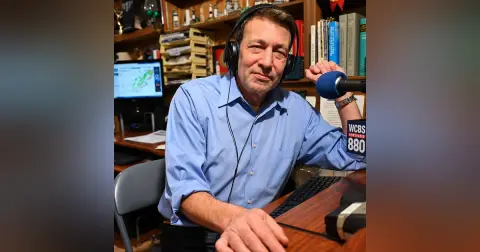
Craig Allen: A Life in the Eye of the Storm

 Apple Podcasts
 Spotify
 Castro
 RSS Feed
 Youtube Music
 For more than four decades, Emmy Award-winning meteorologist Craig Allen has been one of the most trusted voices in weather broadcasting. His remarkable career spans national broadcasts on CBS This Morning and CBS Morning News, more than 40 years on New York's WCBS Newsradio 880, and other prominent television roles.
It all began with a childhood fear of thunderstorms that evolved into a lifelong fascination with weather. That passion eventually took Craig from tracking storms in his backyard to becoming one of broadcasting's most familiar meteorologists. Along the way came some remarkable experiences, including a nerve-racking introduction to national television, an unforgettable encounter with Al Roker, and an unexpected twist of fate that helped launch his career.
The conversation also explores his firsthand experiences with Hurricane Sandy, his fascination with dangerous storms, the realities of climate change, and the dramatic evolution of broadcasting. And Craig readily admits that when it comes to chasing severe weather, he has the "crazy gene."
Beyond the forecasts and entertaining behind-the-scenes stories, Craig shares valuable insights about perseverance, embracing opportunity, adapting to change, and earning the trust of an audience.
It's a fascinating, funny, and revealing look at the man behind the forecasts and a career built on passion, personality, and credibility.
To discover more episodes or connect with us:
00:00 - Tidal Flooding Cold Open
00:32 - Welcome And Meet Craig Allen
01:52 - Weatherman Versus Meteorologist
06:57 - Sweating On Camera And CBS Mornings
12:19 - Childhood Storm Fear Becomes A Calling
21:40 - Meteorology School And Constant Learning
32:57 - Trust And Responsibility On Air
37:19 - Climate Change Disrupts Old Forecasting
43:35 - Sandy Scares And The Storm Chaser Debate
49:51 - Media Changes And Career Reality Check
52:44 - The Daily Grind Of Radio Weather
59:36 - Trusted Over Famous Final Thoughts
Tidal Flooding Cold Open
Craig AllenThere are some towns nearby me on on Long Island here that flood even every full moon brings tidal flooding in at high tide. If a storm is approaching at the same time, the water levels get really high and close down the entire town. And I get in my car and I drive down there to either report from there or take take video.
Larry SheaYou got the crazy gene.
Craig AllenI got the crazy gene. There's no doubt about it.
Welcome And Meet Craig Allen
Larry SamuelsHello and welcome to the Career Journey Podcast, No Wrong Choices. My name is Larry Samuels, and I'll be joined in just a moment by Tushar Saxena and Larry Shea. This episode features the meteorologist Craig Allen. Before we bring him in, please be sure to like, follow, or subscribe to the show wherever you're listening right now. Let's get started. Now, joining No Wrong Choices is the Emmy Award-winning meteorologist and longtime trusted voice of New York Radio and TV, Craig Allen, who spent more than four decades with CBS and other marquee news organizations. Craig, thank you so much for joining us. Oh, oh, you were talking about me? Okay.
Craig AllenThank you. Thank you. I I I enjoyed this. Uh, you know, when Tushar called me and said, would you like to try, you know, try this and do this? Um, you know, I I said yes because I'm not, first of all, I'm not doing very much right now. Uh as I approach the uh the retirement years and and several stations and things like that. There's so many changes in the broadcast world. But um I thought that this would be very interesting because as it was explained to me, how did you get started and and and why did you keep going and how did you end up in this field? And uh I was I was really looking forward to it.
Tushar SaxenaThank
Weatherman Versus Meteorologist
Tushar Saxenayou. We're looking and we're definitely looking forward to having a conversation with you, Craig. Okay, so I'll start with a little bit of a uh maybe there's a uh the nuance to this. So for so many years, we've obviously used the term weatherman, and now we've kind of transitioned maybe the word m meteorologist. Right. Or maybe not even maybe we have. So before we get into more of your background, what is the difference between a weatherman and a meteorologist? Or is there one?
Craig AllenThere is, there is. Meteorologist has uh has the full training and schooling that you would get for at least a BA at the very least, then BS, uh, and then go on up into your MS and even doctorate if if you uh if you're willing to do that. But that is full schooling and training uh about meteorology, about the field of meteorology, how it works, how the atmosphere works, there's physics, there's dynamic, all the dynamics, there's theoretical meteorology. I've got an interesting story to tell you about that, though, in just in just a moment. But a weatherman or weathercaster, uh, because there are so many of both genders now, you know, in in the field, I would say is someone who is given the forecast by someone who prepares it, and then they're the ones in broadcast meteorology that go on the air and deliver it. Now, that's not to say that they don't know what they're talking about. A lot of them do, but they don't have the formal schooling that it took to get to become a uh meteorologist to get that title or to get an AMS SEAL or an NWA seal. That's the National Weather Association or the American Meteorological Association. Your term meteorology will come from your graduation, but those seals are needed by many, many stations all across the country for you to get on air. They would much prefer that. If you remember, there was a time when uh even here in this in the New York market, not just smaller markets, that we were going for anything that looked good. And I'll let you decipher what that means in any way that that that that you want. But if you looked good and you had what the news director wanted, you could get on. And and it's funny that weather would be the thing that they would put you in, not as a news anchor or or maybe traffic, you know, just something where you could point things out, get a general idea across to the public that's watching, and your job was done. Now they're going back to wanting to see some people that are knowledgeable about what they're saying. And I think you may have noticed that uh on just about all the stations here in New York. I would say, even in the smaller markets. I went traveling out west earlier this year. I was in uh uh Wyoming in the Tetons and Yellowstone, and and it was just absolutely beautiful. But you can imagine they have much smaller markets out there. One of the smallest markets is Bozeman, Montana, uh, which we get in in the Tetons and Yellowstone, and also Pocatello, Idaho. I mean, these are way down at the bottom of the list. Sure. And you should see, I mean, the kids were young enough on air to for me to probably be their grandfather. They they were they were true meteorologists, they knew exactly what they were talking about and and probably knew more than me because of their area. They knew more about mountain meteorology, whereas I know the east coast. I I mean, I could could I be a meteorologist in other cities? Sure. And you have to it you have to get that gut feeling and and and and learn it over the years. These folks grew up with mountain meteorology, went to the schools out there, and um they were good. They were good, and they were technically meteorologists, even though they may have only been 19, 20, 21 years old. Okay.
Larry SheaUh Larry Shea here, Craig. Really nice to talk to you. Um, thank you for giving us your time. We really appreciate it. So you're saying back when you got started, iCandy was a big part of it, right? You were the iCandy?
Craig AllenNo, I don't think I was ever eye candy. I was uh at the time, I was one of the guys that um I used to get uh emails or or regular mails. This is in the days before we had any kind of uh social media and social posting. And people would say things which I really appreciated. Um, why aren't you taking over for so and so? In in a lot of cases, I'm I'm gonna eliminate names, but why aren't you taking place for so and so? You you know, you're the one who knows the stuff, you should be doing this, and that was really nice, but I was as nervous and as geeky as could possibly be at that time. Um, couple funny, funny stories. Well, let me do this this story first. Yeah,
Sweating On Camera And CBS Mornings
Craig AllenI uh sweat profusely the first couple times that I filled in on TV, and then I did a uh a network stint in the 90s from 96 to 99. I did CBS this morning, and I was given that opportunity. That that was in the days of uh Mark McEwen. First, Mark McEwen was the weatherman there, right? And um, and we we had uh Jane Robolo was there. That that that was the time. I mean, we're talking, you know, obviously 25 years and more back. And uh when they decided to change the format, they made Mark a host and Jane the host, and and they asked me to come from WCBS TV to uh become the meteorologist for CBS This Morning. It was a jump, and I just couldn't imagine. And and to this day, I don't feel like I was ready for it. I they they didn't exactly know how to use me, station scientist, or should we have you out there? And as one consultant said, be goofy. Um, and that's that's not me. Um so anyway.
Tushar SaxenaYou're not gonna be like Lloyd Lindsay Young back in the day. Hello, C Caucus. Oh, he was the greatest.
Craig AllenThey wanted they wanted me to come up with with something to, you know, not necessarily a gimmick, but they just wanted me to come up with something uh that would, you know, endear me more so than just being a meteorologist. And um actually there was one time that I was out there and and and I was I there was there were several other meteorologists around, and and uh Al Roker happened to be there. We were at a conference with Al Gore when um the the idea of climate change and global warming was first coming about, and so we were all uh meteorologists from across the country, and and they they told me my executive producer at the time told me to try to get under Al skin, be a you know, make make yourself known. So, what do I do with with with with a guy that's got uh you know billions of followers out there? I I yelled across the field at at you know, um were we at the monument? No, we were in front of the White House, I believe, at one point, and I yelled across the lawn, hey Al, you wouldn't know a shower if you were taking one in the morning or something like that, something really awful, and that's gonna live with me for the rest of my life for anyone that saw that. So that just goes to show you that those, you know, that was a wrong choice. Um there are no wrong choice.
Larry SamuelsDid you guys ever work out your problems after that? Did you guys talk about that?
Craig AllenI mean, we talk, we we we we talk sometimes, but I don't think we've ever ever forgotten that. But I do want to tell you the other funny part of the story about uh being nervous.
Tushar SaxenaThat wasn't the funny part. Yeah, yeah, yeah.
Craig AllenWhen I was first when I first started for for the network, um, and and I was so nervous. And I'm standing there, and at that time we're we're using green screens. We're past the we're we're past the magnetic icons on on a wall or or using magic markers, and uh some front of the the screen, and of course the only way that you could use a green screen is to have a monitor on both sides so that you could see what you're pointing to. And and they used to have storage in in those in case you needed anything, in case the mic changed, uh IFB, whatever. Well, I'm sweating. It's coming down like do you remember the movie Airplane when when Robert Hayes is trying to land the plane and it's coming down from him like a waterfall? Well, that was me. And and and I didn't know what to do. I, you know, so anyway, I'm looking and and they said there are powder puffs in one of the storage uh units behind the uh behind the monitor. So I go back there and I take a powder puff and start blotting myself on the forehead, and it was Mark McEwen's powder. Now, Mark is one of the most wonderful African American men that you can imagine. And I am patting myself with his color makeup, his skin tone. The the the the floor manager came over to me in such a panic, and she's literally like this, trying to rub it off my forehead, and then found a lighter powder, which kind of covered it up. But that that story I will never forget either.
Tushar SaxenaBecause I'm surprised no one like tried to tackle you like a linebacker.
Craig AllenWell, exactly, exactly, and and so you've got that, and then what happens when you're nervous, and then someone tells you, no, you get more nervous, more nervous, yeah. And it was it was probably one of the most awful. Uh it wasn't the debut show, but uh, it was probably one of the most awful thing times I've I've ever had on camera when people ask me the question, what's your most embarrassing thing that ever happened to you?
Larry SheaThat wasn't cross that question off the list, boys. We're gonna get into a lot of that kind of juice, as it were. Um, but let's bring you back to the beginning.
Childhood Storm Fear Becomes A Calling
Larry SheaLet's bring you back to the early stages. Let's start from start from the beginning square, as it were. As a kid, I mean, obviously, what was the dream? That's always the first question we want to ask you. But were you always fascinated with weather? I think is a great place to start.
Craig AllenYeah, definitely. I can remember being fascinated with weather at three years old. And that's a that's an interesting memory that I have. I was uh growing up in Brighton Beach, Brooklyn, and we had a window that faced an alleyway between the buildings. And anytime it rained, uh, this alleyway, there was a drain in the in the middle of the uh uh walkway, in the middle of the alley, and it would fill up. It was always clogged, you know. And so any kind of rain would uh, you know, it would just start filling up. And I used to look out the window. Obviously, I didn't know how to measure anything or anything like that at three years old, but I used to look out the window and judge how heavy the rain was by the amount of water that was filling up in the alleyway. It used to fast, it used to kind of fascinate me. Weird, weird thing. But from that, I had a fear of thunderstorms, big fear of thunderstorms. But my parents gave me uh books, you know, children's books at the time, because I can remember being about five years old, reading uh one of those books and learning what a thunderstorm was, becoming fascinated by that. Between the ages of five and nine, we moved to Canarsi, and I used to see a lot of thunderstorms out the window there, looking out through the back. Uh the driveways were in the back of those houses. And um, it it just grew. It grew and it just kept going and going. And I was always interested in weather. And and and I do remember one particularly severe thunderstorm that scared the living daylights out of me, with you know, lightning striking maybe right out front, the TV, those kind in those days with tubes and everything, the TV just went blank, you know, and and and stuff like that. That scared me, that probably threw me back a couple of years, but um then I moved to Massapequa on Long Island at age 12. And from that point on, uh my grandparents bought me some equipment. Uh, both sides, my parents bought me equipment, and by the time I was age 13, maybe, I was already reporting. I was a weather observer for a guy named Bob Harris, who was on WOR 710 in the New York area. He was a great weathercaster, great, great personality on air, terrific sounding, knew his stuff like you can't imagine, but never got a degree. And unfortunately, went on air and called himself Dr. Bob Harris. Oh, wow. And the lie continued to build over the years. And he when when when people, I don't know who in the world threw him under the bus. We think it was a competitor who I shall not name, but we think it was a competitor, threw him under the bus. And um, he was taken off the air by the time I was like, I think it was 17, 18 years old by then, um, unfortunately, but boy, was he he was fantastic. So, anyway, I was the weather, I was a weather watcher. I was already going out to the weather, my weather shelter that I had in my backyard and taking temperature and and and uh humidity and barometer and sending this in from Massapua, Long Island. And so it's been there since I could remember, since since since three years old at least. In that sense, it wasn't even a choice. I was bored with it and uh and and and just made a career out of it. You know, you continue to build on that after. I mean, it's like I'm thinking to myself, I love animals. I I um I love gardening and all that, but what am I gonna do for a career? And as I just kept going along, meteorology was the hands-down choice.
Larry SamuelsWhere did you come up with the idea to get on the radio? I mean, your your grandparents buy you this equipment. Uh, what was the equipment and and where did that inspiration come from?
Craig AllenWell, the equipment, believe it or not, one one set of grandparents, my paternal grandparents, bought me a fax machine, which in the old days was a giant drum with a blade that circulated around a thermal paper and used to print out weather maps. And in those, it was old Army Navy surplus stuff. That's where they got it from. And I had to hook up a shortwave antenna in my backyard, which I I did and got myself the signal and a reception of where these weather maps were coming from, which everything at that time everything was coming from, DC. I I was a I was printing weather maps. I joined a weather service in the um uh I found out from other weather watchers that Bob Harris had ultimately before anything bad happened to uh to Bob, he had something like about 150 observers from all around the tri-state area. Wow, wow, he had a real network. Yeah, he had he had a really good network, and we would hear our names mentioned on the air in the morning. Um, you know, he would say, you know, and uh and Craig uh Craig Allen in uh Massapua says it's 42 degrees, Pat Pagano in Rosedale says it's 45.
Tushar SaxenaWow, that's cool.
Craig AllenWell, there's there's the name, Pat Pagano. He was starting his own weather service. Pat became my my first boss, so to speak, and we started picking up little radio stations. We started our own weather service by the time I was in college or in my junior year, I think. Junior year of high school, junior year of college, of college, of college, and I was already on the air on weekends on little stations in Providence, Rhode Island, and Syracuse, New York, and Columbus, I think. Yeah, stuff like that. Little, little small stations that were willing to pay something like 50 bucks a week for Pat and I to provide them with their own personal weather forecasts. So that's how it got started, and it just kept building and building. And I was still with Pat at the time when here's an interesting story. Bob Harris also got himself a chance at WCBS AM. He was there for a long time, and Bill Corbell moved into, I don't know if you know these names, but Bill Corbell moved to 710 and then they they switched. Bob was at 710, came to 880, and Bill was at 880 and went to 710. That's that's the way it worked out. What happened was is when Bob was was was called out and lost his job. Uh he was he was replaced by somebody who uh had himself a fairly long run at the station. But in the early years 79 and 80, there were two hurricanes um during I the the was it the 1980 season? Maybe Hurricane David and Hurricane Frederick. Um, he was he was out in the Atlantic, so it didn't didn't have anything to do with this story. Hurricane David made landfall in Florida, came across Cuba and turned and made landfall in Florida. It did a lot of damage, wasn't a major hurricane, but did a lot of damage down in Florida. Hurricane Frederick, about two, three weeks later, followed a very similar path. As it started approaching Cuba, the maps started showing it not making that right hand bend, at least not at that point, right? So that it could hit Florida or the east coast of America. It looked like it was going to head into the Gulf and then probably do that right hand turn. And the meteorologist on 880 says in in a he had a twangy tone. I don't know where he was from, but he had kind of a twangy tone, and he says, Well, we don't have to worry about that. We don't have to worry about Frederick for the East Coast, he'll probably hit Cuba directly and kill some of those commies anyway. Oh so yeah, I've got a lot of stories for you.
Tushar SaxenaOh, wow.
Craig AllenYeah.
Tushar SaxenaSo radio's a different radio and broadcasting's a different world now. You better believe it, huh?
Craig AllenSo he was taken off the air immediately, as you might imagine. Auditions were held, and I auditioned, and WCBS picked me with the other tapes, cassette tapes in those days, picked me out of the three or four of us at Metro Weather that auditioned. There is your again, no choice exactly in this, but just a stroke of fate or stroke of luck. Right place, right time, right news director who thought I had the right voice and personality for on air. And that's how I got started at WCBS.
Meteorology School And Constant Learning
Tushar SaxenaThat's such a great story. Let's talk a little bit about then your let's look at your your college years, then, because you went to Stony Brook, and that's where you got your degree. Yeah. So I won't say it's the early days of meteorology. I'm not gonna say that because obviously I don't know, but yeah, what does a meteorology degree in the 70s look like as compared to today?
Craig AllenThere is so much new. Information that I would most likely fail today. I would probably fail. There's a test that the AMS now gives to become a certified meteorologist. I mean, they they moved it up a notch. So you have your AMS seal. I have my AMS seal in radio, my AMS seal in TV, but now it's a certified consulting meteorologist or certified digital meteorologist or certified broadcast meteorologist, CBM. I'm gonna be honest with you, I was afraid, I'm still afraid uh to go for my CBM. It would be great to have, but I'm already past that, I think, in my career. It would be a feather in my cap, but there is so much more that I use, obviously, when I'm still forecasting, but I don't know if I would be able to pass and get the 80, I think it's 85% correct to be able to earn that. And I I don't want to feel like a failure. And and um it's it's incredible. So uh meteorology back then was the basics, physics of the atmosphere, dynamics of the atmosphere, um physics and calculus. You need that. I um I failed calc my first semester, first time I took it. Same. Um, yeah. And and I got a D in physics, so I was going nowhere. Uh you're doing real well for that mini round again. And uh decided because what happened with that was I thought to myself, and this was the other story I was going to tell you, is that I graduated in the top 10% of my class at Farmingdale High. I thought to myself, gee, I must be smart, and decided to take a whole bunch of courses and classes at one time, thinking, you're let me tell you something. Anyone who's listening that is in high school right now, you are not prepared for college. You may do very well and graduate with high marks, but my advice is to learn how to work and study in college because there is high school does not prepare you for it. Yeah, for sure. High school will prepare you for knowledge, and and that's about it. That's about it. But anyway, so I I went to Stony Brook and I took my first semester, bio, chem, physics, calculus, and it was either earth science, and there was one more, which I'll get to you, get to in a second. So I you know I I fail, I told you I failed calc, I got a D in physics. Uh, I did okay in bio, I did okay, obviously, I did okay in Earth and Atmospheric Sciences, but basically I and Chem, I think it was a C, I came out with a 1.76 GPA, and that puts you on probation. Um you know, even back then, anything under a two is is probation. And the only reason why I graduated, uh, why I came out with a 1.76 is because I got an A in bowling. I don't want anyone to think that uh, you know, that I got out of college, you know, with a 3.8, 9, or 4.0, nowhere near it. So there was a lot after the degree that I had to continue to learn. And I went to all the AMS conventions and conferences, they were great, great for information. There were other conferences that weren't held by the AMS that I went to. I did go back to Stony Brook to not teach a semester, but teach a couple courses. I went and sat in with the National Weather Service and watched them from time to time. The point is that even after the degree, there was much more to learn. But now we are at a point where I don't think, as a broadcast meteorologist, there's much more I could do to increase my forecasting ability. What I'm having more trouble with now, believe it or not, is the actual presentation, which at Channel 2 has become ARVR. You are in nothing but a green room. Picture your rooms where you're all sitting right now, as with nothing in it but green walls, green ceiling, green floor. That's it. Yeah, yeah. You don't know where anything is until you see it on the screen. Now, granted, that's the way it was when you started learning about uh chroma key and had to learn the you know point here, point there. Yeah. But this is nothing. You don't even have a screen. Well, you do have screens to look at, obviously, but something will just pop up out of the floor. You have to know where to stand. Something will come down from above. Uh, we have had things where globes come down and look like they crush our forecast, our our meteorologists on the air. I had uh virtual, it comes up with a headline board, and I was standing in the wrong spot, and it virtually, thank God, came up right up in between my legs. And it's you know, it's like it thank God it was virtual because I would have screamed bloody murder and been shot to the you know the top of the studio. So there's nothing there. So I'm having trouble. Now, obviously, the guys that we have there on a regular basis, they are so good at it now, but they're still there's still technical problems. I just you know saw it the other night. I mean, there's nothing you could do about the technical problems except laugh and play along with it, but they're good, you know, they they've gotten it down because they do it every single day. Sure. I'm at the fill-in, I'm at the freelance stage of my career, and so I'm nervous. So the presentation part, uh I'm not sweaty nervous. I just want to make sure I don't look foolish. But I give the news director, uh Sarah, I give her a lot of credit for allowing me to keep keep trying, allowing me to keep doing it. And she lives in my head a lot. Like, oh my God, did Sarah see that? You know, that kind of thing. That's where we are. That I yeah, the broadcasting part is actually harder now than the forecasting part.
Larry SheaYeah, I mean, you're really painting a picture of perseverance, though, because despite the fact that academically in the beginning of college you struggled, I mean, you obviously found a way to swim to the top and make your way in the profession. So, you know, what are those other skills that allowed you to, hey, you know, maybe I'm not gonna get the 3.8 GPA, but yeah, I know how to work with people and I I could figure this other stuff out. Like, what was it that kind of set you apart and allowed you to be in this business for you know four decades or whatever it is?
Craig AllenYeah. That's an that's an excellent question. And I would say a couple things. A lot of people, if I'm in the stores, the bank, something like that, they recognize me by my voice, which amazes me that you could recognize somebody by their voice. But it is true, because now, you know, over the years, I've learned to be able to do that. And some people have very notable voices and and and pentameters and in the way that they speak. And that that always amazes me, and rather than just by looks, and I'm going to say, even though some consultants didn't like the way I started and wanted be goofy and look this way or do something uh that gets you more well known, uh, you know, in the um in into the public, I would have to say, and this is based on all the posts and comments that I get on social media, that I must somewhere have an authoritative yet personable persona that I exude. Um, that's all I'm trying to be humble, but that's what everybody says. I get so much of you're the only guy we'll trust. Trust you, yeah. I think that's the key word there, right?
Larry SamuelsTrust.
Craig AllenYeah, and I like that. And that's why I continue even to this day. I'm not gonna tell you that anybody who's on TV and gets recognized out in a restaurant or something. I'm not gonna tell you that they don't like to see that too. You know, they they do everybody, whether it's show business or news or whatever, you like getting recognized. It's a good feeling, unless they come up to you and say you're a, you know, you blew it last week. I was playing golf and I got rained on and it was not oh, you don't know how much that that in the beginning until I learned how to, you know, uh uh word things, word statements and sure and stuff. But but but people would come up and and and and be in the days of mail. I mean, you would think it's easier today because you could uh hide your identity, but in the days of mail, you'd get mail with no return address on it saying that if I ever see you literally, I've gotten ones that say I I you know I I I will hurt you or I will make you pay for the fertilizer that I put down on my lawn or that I you know that I got soaking wet, it was a brand new suit. It there's nothing you could do. Yeah, yeah, it happens, and I learned through the years. First of all, one news director told me, You got you better develop a thick skin, you know, in this business. But in terms of of trying to be humble, I I really like the part where they say, We trust what you say, even if they preface it with, I know you're not perfect, but I know what you were trying to say, I know what happened to this system, or I don't, I don't know what happened, you know, why did it do this? They'll ask rather than put you down. Now there are so many weather services and weather um fanatics on online that it's very, very hard to tell who's just doing it for the clicks and who's doing it for, you know, uh really trying to get the point across. So all that information is in there. And I'm I'm just gonna say that that obviously the news director at the time, I I mean, I've I've been blessed. That's all I can say. The news director at the time at WCBS, a very famous name, Lou Adler, and and uh he worked with Jim Donnelly. He liked me, he picked me out of the group that that that auditioned. And if that had not happened, where would I be today? I don't know. Yeah, you you I'm telling you, you talk about no wrong choices. Uh, sometimes you really do have to have you know that golden arrow of luck on your side, too. You really do.
Larry SamuelsYeah.
Trust And Responsibility On Air
Larry SamuelsI'm curious about how you view the job, meaning you were passionate about weather, you organically, in a way, found yourself in this world. But as you're putting yourself out there, as you're reporting the weather, as you're becoming a part of the community, as you're becoming a trusted voice, as you just talked about, do you view your role as somebody whose job it is to share information and engage and entertain? Or is it something more than that? Do you feel like you have a sense of responsibility to the community? And when you think about hurricanes and beyond, like what is the role and how do you view it?
Craig AllenThat word responsibility was in my head as you were talking. I was gonna say responsibility is at the top now, especially. Unfortunately, when you're younger and you're trying to make a name for yourself, you will do other things outside of the box because you're younger, more energetic go-getter type of thing, and you do want to make a name for yourself, but then you begin to realize that you are developing a trust and you are responsible, especially now. The National Weather Service, their whole idea idea, I did I say that is it from New York Cadarcy, old school canarsi. That's that's old school canarsi is is for sure. Oh my goodness. I you know, if I I never even did that on air, but um it was there was New York talk. And uh, what what happened was the trust that that developed, you suddenly realize that the people are saying that what do you think about this? Do I have to run? Do I have to get out of here? I had to evacuate when Sandy came up to the garage. Uh Sandy's water from the ocean came up uh to the garage, didn't get into the house, thank goodness. But um, I I evacuated. And so, you know, I I lost that ability to get on air except through the phone and just tell people where I was and this is what I'm seeing, and don't go back home. However, responsibility is definitely at the top, and then the ability to present it in a way that people understand is number two. And like I said, the National Weather Service, the whole thing behind everything that they do now is saving lives and property. That's that is the whole goal behind the National Weather Service, and that should be, and I believe is for probably 90% of us on air, that should be the goal at this point. Because now, doesn't matter what side of the aisle you're sitting on, whether you believe something is happening or not, there is scientific fact of global change. I'm not gonna say global warming because that is it, that's where we run into trouble. Global warming makes people think that that's all the earth is doing. Yes, that is true, but when we get a snowstorm, a major snowstorm, you will then inevitably get where's your global warming buster, you know? Right, right. Um I've got I've got two feet of snow. Well, the reason you've got two feet of snow from what would otherwise be a one-footer or a half foot of snow is because the world is warming. It is uh holding much more moisture and it's changing the weather patterns in the jet stream all over the world. So let's just, you know, keep it at that without the politics behind it, and and just say that you now better think of responsibility as the top priority because we are hearing every day, whether it uh whether it be CBS, NBC, ABC, the national news, never mind just our local news here, our national news is starting off with weather almost every day. But you I mean, bombs are going off somewhere, but first let's start with with the uh with the three people that were killed in such and such from this tornado. That's the way it is, and that's because we're we're we're concerned. We really are concerned about where we're going with this.
Climate Change Disrupts Old Forecasting
Tushar SaxenaWhat are the changes that we have seen, not just simply in the long-term climate, and how has that been affecting the short-term weather?
Craig AllenUh it well, directly. I mean, the uh the long-term climate now with a warming climate is able to hold much more moisture. When you have a warmer, more moist climate, you are changing the position of ridges and and troughs in the upper atmosphere where the jet stream is. So sometimes when you should have what we call a zonal jet stream straight across, there are big ridges, which is high pressure, big troughs. You know, it's it's like a balloon. You squeeze a balloon on one side, one side goes up, the other side, you lose the air, and the other side goes. That's what's happening with the jet stream. It's oddly shaped too much of the year now. The El Nino that's taking place. This is the most intense El Nino ever on record, anyway. One thing we've been taught to say is never say warmest or hottest or wettest ever. Don't ever say ever, because we don't know what may have happened before records. I've been taught that and and uh yelled at for that. But on record, this El Nino, there's not never been anything like it. Why is the water in the Pacific turning so warm this particular time around and altering, completely altering the jet stream, making the Pacific season out there already up to the letter M or past the letter M. And the Atlantic season hasn't even seen a hurricane yet. We've had a couple small tropical systems, one day one day thing, and but but the Atlantic season is barely nothing because when you have an El Nino, you've got winds that are coming across the country that are, in this case, they are disruptive to a hurricane. There is so much that I don't know that we don't know right now, because of this change in climate, that it is affecting weather. Very much so on a day-to-day basis, because now many of the models that have been developed have to be changed again. When I hear somebody say that they want to make a um they're making a forecast for the upcoming winter based on uh what has happened in years past, they use an uh analogous weather maps, analogies. I don't want to say I don't respect it. I give you all the credit in the world for thinking that that you could do this. But if you're using an analogy like, oh, this looks so similar right now to something that occurred in 1949 or 1972, yeah, but the climate was different back then. Right, right. And so it's it's not going to operate the same way.
Tushar SaxenaFrom your experience here, how have you personally seen the effects of climate change over the course of your career?
Craig AllenWell, I would say, well, there's a couple of things. First of all, I notice as just a pedestrian observer. In other words, I'm also a gardener. I love gardening, I love beaches, I love marine meteorology, and I have seen so many changes around here. And right now I'm I'm talking specifically Long Island, but uh it certainly is the case in so many other areas too. And that is there's different kinds of plants. Right. We are now uh in a zone in a different zone, a warmer zone. So plants last longer. We are seeing more weeds, different kinds of grasses. They they also last longer, these other grasses that are out there. And uh, one of them happens to be called nutgrass, and it drives people nuts, right? Because it's got a um, instead of just a little seedling, it's actually got like a tiny little nut, a bulb at the bottom of it, like like like onions or scallions, the way they grow uh up from the ground. And um, they're very hard to get rid of, and they are just taking over everybody's lawns, and that is brand new. The weeds that we're seeing are brand new, and we think a lot of that was brought in by Sandy. Now, when Sandy was here in 2012, uh, not only did Sandy bring in a lot of different uh uh pollinators and and and flora and fauna, I guess is the best way to put it. Right, right, but um also killed a lot of the native stuff because the salt water absolutely decimated all of the evergreen trees that we have around here. So when you take things like that, I've just seen so many differences over the last couple of years in terms of my gardening. What I see with the beaches, I mentioned at some point that there are some towns that are nearby to me that flood almost every time now at times of uh a full moon, full moon or new moon, right? Not just during storms. That's an indication, or that is uh the reason behind that is the sea level rising. And we are going to see this more and more frequently. That's not weather, that's climate. Uh, the climate is changing, the climate's getting warmer, the sea levels, the ice is melting, and the sea levels are rising. And even though it's minute worldwide globally, it still shows up. And we're seeing that now in some of the South Shore towns along uh and across Long Island and the uh the Jersey Shore as well. So there's definitely an observable difference. If you're looking for it, you will see it, you will find it. Seasons are changing a little bit also, because I think what's happening is seasons are getting pushed back. Spring seems to start later, summer seems to last a little bit longer. And that means fall starts later, fall ends later. Winter doesn't seem to get going until sometime in January. I mean, how many times have we had a white Christmas around here? It's very, very infrequent here in the Northeast. Come March, come April, you're sitting there and you're saying, okay, I've had enough of this. I want it to warm up. And it doesn't.
Larry SheaT, I want to thank you for helping us geek out more and more in work. But uh let's uh also let's do a fun one. Let's do a fun one then. Uh, we've all seen pictures of weather people in the monsoon getting sucked into the ocean behind them or something like that.
Sandy Scares And The Storm Chaser Debate
Craig AllenTo prove that it's a hurricane.
Larry SheaIs this just a rite of passage? Like, does everybody and what was your wildest weather experience that you were either, you know, neck deep in or out there in the elements or dealing with firsthand? And yeah, yeah, that kind of thing.
Craig AllenWe are crazy. I mean, to like what to like weather, you have to like the craziness of weather. Today's absolutely beautiful. And I spent time outdoors, but there's nothing going on.
Larry SheaI mean, that's a question there, right? Like, do you secretly hope for chaos, or do you like sunny days?
Tushar SaxenaDo you want to have fire and brimstone rain?
Larry SamuelsAnother boring, beautiful day.
Craig AllenYeah, I secretly hope for storms, but I'm not hoping for chaos or danger. That's the only way I could put it. But in terms of uh we we all go out there. There are some towns uh nearby me on Long Island here that flood instantly. And now that sea levels are rising, even every full moon brings tides, tidal flooding in at high tide uh to some of these coastal towns. If a storm is approaching at the same time, the water levels get really high and close down the entire town. And I get in my car and I drive down there to either report from there or take video. You got the crazy gene. You got the crazy gene. I got the crazy gene. There's no doubt about it. Tornadoes, I'm not a fan of because it's just much too destruction, too much destruction. But I'm a huge, huge fan of thunderstorms, which goes against everything I said at the very start of this when I was so afraid of thunderstorms. I am a huge fan and go up to the loft in my house and stare out the window, which is one thing you are not supposed to do. But I am watching these things approach from afar, from west to east or northwest to southeast. And I had friends that were just as much fanatical, uh fanatics about weather as I am. And we used to, when we went down to uh Jones Beach at night, we wouldn't go down there for the sake of the beach. We went down there to sit on docks or piers and watch lightning out over the water and watch storms out over the water. The biggest scare I ever had would probably be Sandy. I've had other hurricanes around here. I went through uh uh Gloria, I went through Irene. Um, Sandy was the year after that. Sandy was was uh uh obviously a hell of a storm and it did a tremendous amount of damage, no power here for for about two weeks, but whatever. That did frighten me, and I did, as I said, I evacuated because I saw water coming up from the manholes, and I saw water coming up from across the street, the pool when I got back and I was finally allowed to come back. The pool had crabs in the at the bottom of the pool. Wow, my neighbors had fish on their lower level in their basements. It was just remarkable. So that one scared me, but is it a rite of passage? I don't think it's so so much so much a rite of passage as it is as we're just crazy enough to want to do it, and that's it.
Tushar SaxenaThat's fair. What are your feelings on storm chasers? Obviously, the the big show on Discover, which is you know, a storm chaser's eye of the storm, things of that nature. They just seem like lunatics, yes, and they are.
Craig AllenUm, but but they have given us so much information and so much to learn from. If they're safe, and that's the way they want to go about their life, 10 feet away from the thing. How are they going to tornado? You have my blessings to do it, and I give you I give you the Lord's blessings that you're safe. It's a great show if you haven't seen it.
Larry SheaIt's just fascinating.
Craig AllenI've seen, yeah, yeah, yeah. And and and I well, you know how how it works when when when they take their um analogies on the internet and they know exactly what you're looking for. So all I have to do is look for one tornado, and and the next thing I know is I've got my feed filled with them. Uh, so I see them, yeah, and and I'm I'm absolutely amazed. I I don't know what my feeling would be. It might be exhilaration. I'd be terrified. I probably scared, but uh probably scared.
Tushar SaxenaOh my god.
Larry SheaI mean, how do they know which way that thing is going?
Craig AllenIs that something you could know? Yes, okay, yeah, you can uh because most of them, most of them have radar on their phones, or they actually have built-in radar in their cars are all jacked out with all the equipment yes and stuff. And the average tornado almost always travels from southwest to northeast because that's the prevailing jet stream in the summer. Interesting. Uh, in the spring, summer, and and early autumn seasons. So you almost always guess that that's the direction, yeah, but they do have it on their phones. And uh, I have all the equipment here in my office. I mean, I could tell you exactly, you know, what town it should be over at almost to the minute or or two. I uh like I said, yeah, they're crazy, but they know where it's going and they and they know how to they know how to avoid danger. You say so. Yeah, yeah.
Larry SamuelsWhile we're on the the storm chasers topic, uh I do feel like I have to ask this question. Yeah. Weather-related movies, do you have a favorite?
Tushar SaxenaYou still my question.
Larry SheaThis include Groundhog Day or no, or The Wizard of Oz.
Craig AllenUh yeah, right, right, right, right. Groundhog Day is funny. Um, it's not funny anymore to me, but it was always uh, you know, something funny to always see it pop up on February 2nd on your feed. I would have to say Twister was good because they followed they followed the weather fairly well. There's a lot of stuff that obviously Hollywood put in there that would not make any sense, but I did get a feel, a good feel for that. I laugh all the time. I see airplane, I mean it's flying through storm. Yeah, you know, yeah. You take the weather map. What do you make of this, Connie? Uh you know, so I'm not a huge movie fan, but anytime that there is weather, it it gets my attention in a movie.
Media Changes And Career Reality Check
Tushar SaxenaSo what scares you now these days, not simply about meteorology in general, but the industry going along with meteorology?
Craig AllenJust the general change in the whole industry, where we've gone. I don't like. I don't like what I'm seeing. I don't like what I'm seeing happening to AM radio, to FM radio, to the way the TV stations are are uh presenting some of the information. I'm definitely old school. Um, I like AM radio. Nobody else does. In fact, nobody under the age of 40 knows what AM radio is, probably, but they do know FM. Without getting myself into trouble, I would love to see things go back to the way they were. Trust me, I understand money, I understand corporations. I read the New York Radio Message Board also, and and and how many opinions there are there, and why radio is what it is, and what TV is what it is. But I think that there is a better, more subdued uh way and version of presenting our information than what we're seeing more and more of. And the more and more conglomerates gives you less chance of presenting it a little bit different because you're not able to have that individuality. There's no way in the world that an AM station, no, no matter whether it's 50,000 watts and and it's you know, it's it's it's a it's a nationwide burner that can get to everywhere, no one's gonna hire me to do weather for that anymore. Those days are gone, or even FM. Those those days are gone. TV, we still need presenters. Acuweather and weather nation, the weather channel, these are all places where if you want to and you're trying to make a choice to get back to the whole idea behind this this uh podcast, is to get into those services. I can't tell you how you'll be treated or what you'll have to do. It's it that changes every day, too, with what the public wants. But those are the places where you will have to go because you're not going to be able to get into the media uh individually uh anymore without having a um a history, also some luck and the ability to get people to support you on the way up. So that's the best thing that I that I could tell you right now. If you're going to be making a choice, don't look to immediately jump to a New York market station. I was like I said, I was blessed. Uh that that barely happens. Everyone usually gets their start in Pocatello or Bozeman, and there's nothing wrong with that at all. But the the opportunities are limited. That's my personal feeling on that.
Larry SheaYeah, I
The Daily Grind Of Radio Weather
Larry SheaI appreciate that because we're always trying to think about the listener who wants to be a meteorologist someday. So this is such valuable stuff. Um, and that's where I was gonna go. I mean, we kind of left the career journey stuff, you know, to talk about so many other wonderful topics, but um, I'm just wondering it's kind of a two-parter. Yeah, every job you got was A, either an audition or someone you knew or something like that. And B, can you just walk us through a typical day? Because it sounds like I read that you got up at 2:45 in the morning every day or something. Like it doesn't sound like an easy job, man.
Craig AllenOkay, so I would have to say that yes, I did have to audition, but as time went on, the name became more familiar. Sure, the public's awareness of my name and trust in my name became more familiar, and auditions became less and less intense, and it became it became more of waiting for HR to onboard me, you know, doing background checks to see whether or not I'm a kook or not. And and that became more of a waiting period. You do have the crazy gene. We've already said I have the crazy gene too. Yeah, it's a good thing on when you're filling out your W9 and and all of a sudden they don't they don't ask you how crazy are you. That's right. I would say that auditions definitely at the start. And and and hey, I I was a sweater, and and uh, you know, I I was even sweating when I was auditioning with uh with Lou Adler and Jim Donnelly for for WCBS when they first called me in, even after hearing my tape, because I was completely unknown. Uh this this was the beginning, this was brand new, except for these smaller, um, smaller stations in in much smaller markets, uh, briefly on radio. So I had that help of getting more known, and the more known I got, the less I had to audition. Exactly. Oh, hey, Craig is free. Uh, I'll never forget one time a news director said, What are you doing these days? We were at a uh an award ceremony, and um, what you doing these days? Not too much. I'm freelancing here. How would you like to come on over to Pix 11? There you go. You can't beat that. And and that again is is being blessed. You just you can't beat it. But the typical day, it depends on if it was radio, the day did start around three, let's say. You know, it depended on the weather. If there was bad weather, I would get up at around three. If there was easy, since the first broadcast was at four, uh I'm sorry, at five. I would I there were days that I would get up at four. I did a lot of stuff sleep at night. Yeah, yeah, yeah. I did a lot of stuff at night because I was able to uh get all the information before going to bed. I never slept more than four hours a night during the week.
Speaker 5Oh my goodness.
Craig AllenBut I would take two and three hour naps during the course of the day, yeah, and we which was much easier in the winter time than the summer because the summer's so nice. Winter, you don't care if you sleep during the middle of the day. The forecast would be prepared. I would be on the air every 10 minutes on the eights. That would go from 5 to 10 a.m. Take my nap and then come back again for the evening commute, 4 to 7 p.m. In between, I would be either with Debbie or um I'm looking at Tushaw right now. Or you would call me and uh, you know, Debbie and all the people that worked over at the network, I would try to give you information. So it was a full day, it was a completely filled day for radio. There were days when I did radio and TV together. I did radio from the broadcast center at CBS on on uh various days. That was real tough, let me tell you, because if there was something going on, radio would uh oh, there was one day, there was just like one, there was a stroke stroke of lightning right outside the building. And um, the radio station said, You got to get on the air. This sounds severe. It was really, it wasn't severe, it was just lightning, just hit close by. Amateur, it was scary, but but it wasn't, but it wasn't a it wasn't you know, technically a severe thunderstorm. There are there's a quail, you know, there are priorities that have to be met for that to be called a severe thunderstorm. Whatever it struck and it was loud. Yeah, radio, you gotta get on the air. TV said, quick, quick, get in the studio, get on the well, who do you go to? Oh, and I had I I had a couple a couple times that were um it was so bad. I was I felt so sick inside. You know, I I I I I was really screamed at by the TV news director because radio could there was more flexibility in radio because they could say we're gonna get to Craig Allen in just a second. TV couldn't do can't do that because you're on more of a deadline. You've got a reporter here, reporter there. You've got you've got your whole rundown in front of you. And so uh the TV director, if I went to radio, the TV director really screamed. Is that in one of the questions? Memories you don't want to remember. What's that off the list?
Larry SamuelsDid you like one medium more than the other? Did you prefer radio to TV, for example?
Craig AllenUm, I I always I always preferred radio to TV because radio gave you more leeway, radio was easier, radio was more informal. Radio is also more immediate. It's more immediate, but it was able to, I was, I was able to work out my life around it. Right. Um, first of all, for TV, with the exception of the pandemic, where I did do TV at home, which is kind of strange, but there was no such thing as doing doing your weathercast from home. I had to drive into the city, which anyone from Long Island will tell you they hate it. Um, it's it's it's just got awful. I I always preferred uh radio more to TV, but once I did get into TV steadily, radio I started in 82, TV I started in 92. And once I did get into TV, I started enjoying it a lot more. Uh took away the nerves and and and uh you know felt important, uh, felt responsible for a lot of people. And that's why even today I'm not giving up on either medium, but there's no full time anymore. That has to do with them and my age. You know, I'm I'm I'm approaching 70, so I'm not very uh willing to get up five days a week like that anymore or run into the city on a regular basis anymore. It's a little too tough, but boy, do I still enjoy doing it. So, you know, if they call, I'm there, you know, and and and I'll I'll keep doing
Trusted Over Famous Final Thoughts
Craig AllenSpeaker 1
it.
Tushar SaxenaI'll I'll definitely keep doing it. I'm with it, Craig. My last question to you will be Is that after all this, yeah, do you prefer being famous or trusted?
Craig AllenTrusted for sure. I'm missing some of the fame. Like I that I joked, but obviously to make a joke like this, uh it had there has to be something real about it. Of course, there's always a little hint of truth, right? I got back from I was shopping at Stu Leonard's yesterday. I came home, believe it or not, from an interview with Newsday TV to do some fill-in there. It was close to Stu Leonard's on the way home. I figured I'd stop in there. So now I'm in I'm in a suit. And by the way, that also just goes to show my personality and should go for anybody, even though everybody is trying to become so informal. No tie, no, you know, there was sneakers. Yeah, I'll I'll do that every once in a while on air. But for for an interview, I still will wear a suit and tie, even after all these years, and everyone at the station knew me. Everybody, but you still there's gotta be some sort of uh dignity's too much of a word, it's too harsh, but you still gotta you still gotta be you. You're you're not in there, you've gotta be. I don't want to stand up right now. This is nothing against you guys, but I'm in shorts, you know. So we're all in shorts, right? Yeah, I I I said to Touchard, I said, suits? He goes, Are you kidding me? Are you kidding? Cloves, clothes, just clothes. So I put on a button shirt though. But um, well, anyway, I'm in Stu Leonard's and I went through the store. It was pretty crowded. I got home and and I said to my wife, nobody said hi. Because I'm not nearly on TV as much as I used to be. Oh, I get I'll get I got looks, and and I I look back and I a little smile. I'm sure I'm not uh again, uh just I'm trying to be humble, but I used to get a lot of that. But I but it's actually true. I you know, I came home and usually from from the bank, from from supermarkets, movie theaters, you know, hey, aren't you? You know, that kind of thing. And I like that. Who doesn't like that in this? But by all means, trust is number one that I could still post anything on here uh and still get, you know, at least 500 response or you know, a couple thousand views of what's going on. And I know that people know that I know that there are thunderstorms or snow coming. That the it it that's definitely at the top of the list. Yeah, it's that's that's a good question, but I'm I'm not gonna, you know, tell you that that I don't miss it a little bit. Sure. Sure.
Larry SamuelsWell, well, hopefully your efforts today and our efforts afterwards will put you right back into the spotlight. Right. And uh, you know, as we wrap up, the the word that's in my head right now is earned. You know, too sure asked about trust, and that is something that you have earned over the past four decades. And you know, when I heard that we were gonna have the opportunity to talk to you today, I mean, I certainly reacted and said, Really? Wow, that's that's great. Thank you. And that's yeah, that's a reaction that you earned. Thank you. So, you know, thank you for everything you've done.
Craig AllenI am not used to uh I I I never, never, somehow or another, I just never learned how to get used to that. And it's so nice to hear, you know, it's just like your Craig Allen, the guy that's off air. Really, the guy that's off air is totally different from the guy that's on air, but you could see look at me right now as being on air with you. Yeah, I'm but but but now you're seeing my real personality come through. That's right. That's right.
Larry SamuelsYeah, it's a totally different dynamic, and it's a great one.
Craig AllenThank you. Thank you so much for spending the time with us today. Thank you. No, it was it was absolutely my pleasure. Two char I hope I see you somewhere, somewhere else uh rather soon as well. 100%, Craig. Thanks again, all you guys. Thank you, Larry, Larry. Thank you.