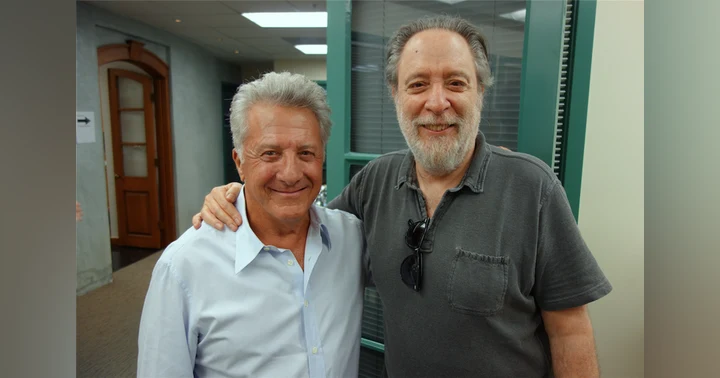
The Kid Who Had to Be in Show Business: Julian Schlossberg — Part 1

 Apple Podcasts
 Spotify
 Castro
 RSS Feed
 Youtube Music
 Julian Schlossberg has spent more than six decades in show business — producing films and Broadway shows, distributing movies, representing legendary talent, working as a television executive, author, broadcaster, and much more. But long before any of that, he was a kid from New York who simply knew he had to find a way into the entertainment business.
In Part 1 of our conversation, Julian takes us back to the beginning — from growing up obsessed with radio, television, movies, and theater to driving a cab, working at ABC and Paramount Pictures, and ultimately betting on himself and building his own company.
Along the way, he shares remarkable stories about the people who helped shape his journey, including Carol Burnett, Elia Kazan, Elaine May, Mike Nichols, Alan Arkin, Orson Welles, and others. He also explains why he walked away from the security of a major studio, how an unconventional approach helped him build one of the largest independent film libraries in America, and why decades of success taught him that nobody truly knows what will connect with an audience.
Julian is a remarkable storyteller, and this is a funny, revealing and deeply personal conversation about ambition, relationships, risk, failure, resilience, and a lifelong love of show business.
And this is only Part 1. In Part 2, Julian reflects on his legacy, shares advice for those coming up behind him, and reveals why, after more than six decades in show business, he still isn't slowing down.
To discover more episodes or connect with us:
00:00 - Welcome And Julian Schlossberg
01:25 - Radio TV And Live Audience Bug
03:12 - When Rejection Ended Acting Dreams
04:49 - Bronx Kid Becomes Movie Scout
08:28 - Parents Pushback And Early Breaks
10:03 - Pinboy Taxi And Army Grit
12:56 - Learning Everything And Asking For Time
16:53 - Leaving Paramount And Betting On Himself
24:23 - A Phone Book Path To Kazan
31:19 - Castle Hill Deals Paying Fast Wins
35:50 - Instincts Flops Theater And Highlights
50:59 - Advice On Passion And Part Two
Welcome And Julian Schlossberg
Larry SamuelsHello and welcome to the Career Journey podcast, No Wrong Choices. My name is Larry Samuels, and I'll be joined in just a moment by Tushar Saxena and Larry Shea. This episode is part one of our conversation with the media legend Julian Schlossberg. Before we bring him in, please be sure to like, follow, or subscribe to the show wherever you're listening right now. Let's get started. Now joining No Wrong Choices is the entertainment icon, Julian Schlossberg. Over the past six decades, Julian has touched just about every corner of the entertainment industry, serving as a television and film executive producer, film distributor, talent representative, broadcaster, Broadway producer, record executive, author, talk show host, and now podcaster. And I consider it likely that I probably forgot at least 10 things along the way. Julian, thank you so much for joining us.
Julian SchlossbergWell, thank you, Larry. And hearing that, I'm ready to take a nap.
Tushar SaxenaThat's one hell of an intro for us as well. I mean, at this point, the interview is over, for God's sake. So uh well, uh you know, Julian, thanks again for thanks so much for joining us. Um, you know, the first question's got to be you have had such a a life in cur in show business. Was show business always what you wanted to do?
Radio TV And Live Audience Bug
Julian SchlossbergIt was, Tushar. In fact, it's rather interesting. I was fortunate enough to grow up initially with radio. I mean, it wasn't the Civil War, but it was a long time ago. And uh it was incredible because it forced you to imagine images and ideas. You were on the range with the Lone Ranger. I mean, you know, you're walking down these steps to Jack Benny's vault. It it forced imagination while television spoon-fed it to me. And I love television too. And when the advent of television came, I had to go and watch these shows in person. I lived in New York, I took the train, and I would go down and go to these shows that I knew where to get tickets, hotels had them, and they all were looking for audiences all the time. And so I would become an audience member of so many shows. And the best one was Perry Como, because Perry Como would do his show for a dress rehearsal for the public and then and then do the show afterwards. So I ran to the dress rehearsal, jumped on the train, went home, and saw the actual show, and I wanted to see the changes that were made from the dress to so I was hooked. I was so hooked, it was pathetic. And I I would I would go to live radio shows, Arthur Godfrey, his sister Kathy Godfrey, and oh, and and Mike Wallace had a show, the guy from 60 Minutes uh with his wife then Buff Cobb. I mean, it was a great thing, and I loved every time I loved doing it. It was just a great way to begin. So I was hooked. I mean, it it was over. I had to get into this
When Rejection Ended Acting Dreams
Julian Schlossbergbusiness.
Larry SheaI love it. I love it. I think a good way to um embrace this conversation in the beginning is to go all the way back to the beginning, like you're talking about those New York City days running around. Uh, did you ever want to be talent? You know, you say I wanted to get in show business, but was it always going to be on the production side of things, or did you ever have an inkling to go on the talent side?
Julian SchlossbergOh, I had a huge inkling to get on the stage. And uh I actually did what they called winter stock. I I played um in On the Town. There were three sailors, and I was the uh one of the three sailors.
Larry SamuelsI think I saw a version of that at one point along the way.
Julian SchlossbergI hope not with me.
Larry SamuelsIt was not good, but I think I saw it.
Julian SchlossbergAnd it probably wasn't me. But but anyhow, uh, what would happen? I got, I remember I was I was interviewed, and there were three sailors, and they all had the same roles. In the movie, it was Sinatra, Gene Kelly, and Jules Munchin. But up here, the I was one of the three, and the two others got wonderful reviews, and I I was known as uh Julie Sands then. And I got um, he's engaging, he's personable and engaging. That's it. The other two got a paragraph, and I thought, wait a second, wait, what about me? And then I realized I couldn't take it. I I couldn't take the rejection. So to answer your question, Lar, yes, I wanted to be a performer, I didn't have the guts for the stamina. It took too much, so I I gave that up pretty
Bronx Kid Becomes Movie Scout
Julian Schlossbergquickly.
Tushar SaxenaOkay, so as a young man, what was what was life like for you? Like what was growing up for you like that you know that sparked this interest to go into what you've uh made your life?
Julian SchlossbergWell, I think the interest to Tushar was was probably uh the idea in New York City that movies opened first in one theater, or maybe two, that was it, not the thousands that happen now. And it would sometimes play in Manhattan for a year before it went to the neighborhoods. So I became from my school in public school, the guy that kids would come to and say, You saw the Ten Commandments, right? I said, Yeah, I did, I did. Uh whatever it might be, and I would go down, and in those days, uh, you didn't have to worry about being kidnapped or problems. Kids could go on a train and go down to Manhattan, as I did, and I would see the movies before they came to the neighborhood. So that was kind of like my uh calling card, uh, a bit of a Paul Revere.
Tushar SaxenaYou became the you became a very the very first movie critic at that point, right?
Julian SchlossbergWell, at least for PSAD short.
Larry SamuelsSo, how did you you target that passion? So you're growing up in this city, you you're so locked into wanting to be a part of this world. You know, when did you decide that this is in some way what I want to do? And how did you start to pursue that?
Julian SchlossbergWell, it was no question that I was gonna do it. I mean, I didn't know what I was gonna do.
Larry SamuelsI was gonna say, we should probably define what it is.
Julian SchlossbergThe question is what was I gonna do in it? Yeah. And and I would at eight or nine or ten years old, I would bring home foolishly uh variety. My mother went nuts and said, you can't, you shouldn't be reading that. You think it was a porno. I mean, it was you know it was just show business, but she was an educator and very intelligent, and she didn't want me to take that path, but I did. And so I, of course, I continued to read variety, but I didn't bring it home. I got the point. I I started, I went, I ended up going to the army and I graduated college. And I took at college at NYU, they had what was called in those days TMR, which was television movie, and radio, movies and radio. And I took courses in that and I became a pretty good radio actor. And uh so I thought maybe I could try that. And I read that Gary Moore was doing a television show and that he was rehearsing at the Henry Hudson Hotel, which was on 57th Street. So I walked over to 57th Street and I walked down these stairs, and there was uh a one young woman there, and I said, uh, I'm looking for a job. And she said, Well, let me see if I can help you. And she went into uh turned out Gary Moore's office, came out and said, Okay, he'll see you. And I talked with him, and he said, I have friends who are selling shoes, I'd like to give them a job, and I can't, so sorry. And I walked out, and that young woman, years later, was in my home for dinner. It was Carol Burnett. No way. Wow.
Speaker 4No way.
Julian SchlossbergYou talk about an arc. She was so kind and so supportive to a young kid, a stranger. And when she when she came to the house, I told her that story, and uh we we became good friends. She's a one wonderful gal, wonderful person.
Parents Pushback And Early Breaks
Larry SheaHey, you you're talking about your your family a little bit too. Like at that point and growing up, were they supportive of you? You you said your mom didn't want you reading variety like it was a porno mag or something, but were they supportive? Did they support your your efforts to be in show business?
Julian SchlossbergMy mother was 100% against it. My father was hundreds of it. My father loved show business. My father loved show business. Uh, he was probably, if I look back, it was probably his excitement. And I do remember one day he said to my mother, I'm gonna take him downtown. Uh, he loves uh the Today Show with Dave Garraway. I want him to meet Dave Garraway. Oh, great! I said, let's go meet Dave Garraway. And I remember as we were leaving, my mother yelled, You don't even know Dave Garraway. But we we went down, and somehow my father, I don't know how he did it, got me to meet Dave Garraway, who was as for a little kid, but even if you were older, he was a big man. Uh and uh he started the Today Show, and it was a real excitement to to meet him. And and so I I was just as I say, it was like catnip to the cat. I I just had to do it. I didn't know what I was gonna do, but I knew I was gonna be in that business, and uh and that's what happened. And I I'm still hooked, years later, hundreds of years later, after all these productions and all the stuff and all the people, it's still the most exciting business in the world
Pinboy Taxi And Army Grit
Julian Schlossbergfor me.
Tushar SaxenaFor me, I think for a lot of folks as well. Um, let me ask you about your first job. What was your first job? Not not your first showbiz job, your very first job.
Julian SchlossbergMy very first job was uh either, I was a pinboy in a bowling alley. Um, and at the same time I was delivering clothes for a cleaners. But the guy in the alley, bowling alley, knew, but the cleaners didn't know that I was doing that. So I'd run down and I'd pin a game, I'd run up and grab the clothes and run back. It was it was wild. And I would say the two hardest jobs I ever had was a pinboy, because I was it were there were eight pin boys, and I was the only sober one in the whole place and and also about 20 years younger than all the other men, and and the other hardest job was driving a taxi because that was really tough. That was tough. It was uh the bike riders, the new Jersey drivers. Relax about your drivers. That one's for you, T. Yeah. Yeah. MDs, they couldn't handle New York City, you know. It's like Jack Nicholson. You can't handle the truth. They could not handle driving in Manhattan in those days. So it was a uh it was tough. It was tough. But I loved, I loved the idea of meeting people uh that way. But uh those were my early jobs, yeah.
Tushar SaxenaAnd that kind of leaves me in first of all, like what year are we talking about when all the like when you were driving a cab, a pinboy? What years are we talking about here? Now you now you're not I don't want to age either, but I mean if you want to tell you, I'm curious like are we driving a taxi in the 50s?
Julian SchlossbergNo, no, no. Wait, wait, bad enough, but 60s.
Larry SamuelsWell, but that must have been crazy. The stories that you must have from that experience.
Tushar SaxenaThe 60s must have been cool.
Julian SchlossbergI mean, well, it was it was in some ways, it was X-rated in some other ways, and uh it was a strange time, the 60s, as you guys know. Um, but the stories I had as driving a cab was really um, most of the time at the beginning, I was rather gregarious and talking away and enjoying it. And after a while, it was so exhausting, so tiring, and so much pressure that I would are turned into a grunter. Yeah, oh, okay. You know. But I was very happy when uh I was driving a cab to put myself through college because I needed uh it was uh getting expensive. Even those days it was getting expensive. Um, and I had just gotten out of the army, so it was a hectic time, but I I will say that uh it all is kind of, you know, it's part of what your show
Learning Everything And Asking For Time
Julian Schlossbergis about. It's all building blocks, and you kind of realize when you look back how much of that was the fabric of what became your life.
Tushar SaxenaActually, you have now led me to my next question, which was those experiences you had: pinboy, being in the military, taxi driver. How did all of those influence you when you got your first gig in show business? And then, you know, your your drive to want to get into show business.
Julian SchlossbergWell, I had become a history major, and I I found that over the years that was a very big help. I uh to name drop a bit, I remember uh Mike Nichols and Elaine May were making, I think it was the birdcage, and they needed something historic. There was something they needed about a president going back, and I remember they both called, and I was so excited they were both on the line. I thought it was perhaps for a deal. They wanted to know who the president was after Calvin Coolidge or something like that. So that in a way that helped. Um, but as I said earlier, it is becomes part of the fabric of your life, and it's hard to know where that began and where it ended. And I gave that example, but often it was just the idea of wanting to learn. The thing I I realized early in life, and I think it's important. I knew most of my friends were doctors, dentists, lawyers, they were all professionals. I had no, I had a degree, a bachelor's uh degree, but I wasn't a professional in anything. So I thought if I'm gonna go into show business, I want to learn every aspect I can of this business. I don't want to just concentrate on movies or television or radio or records. I want to know it all. And so I would really spend a great deal of my time studying the entertainment business, reading biographies, and asking to see people uh who were in my field, but just to say, can I have 10 minutes of your time? And almost no one said, Oh no, I don't have 10 minutes. I mean, everybody, and of course, you end up spending sometimes an hour with them, but asking them questions and how did it come for about and what did you do? Uh, because I was A, interested. I it was not, it wasn't just for opportunistic reasons, even though that was part of it, but the other part was I was interested in knowing how did they make it? What did they do? What were the roads they took? And uh, and often that helped a lot. So when I was offered, I was a young man, I was 27, working for a theater company called the Walter Reed Organization, and the head of it left, and I was the assistant. And Walter Reed himself said, uh, look, we're gonna bring someone in and uh you'll work with him. And I said, Why can't I do it? He said, You're 27 years old. You know, I said, I want it. I want this job. Now, when I think about this now, I shudder. I I, you know, you you you when you're young, you somehow think you're invincible. Somehow, certainly death is not contemplated, but even failure, if you're doing okay, isn't it? So I demanded, I mean, crazy, that I want this job. And I remember Walter Reed himself said, Look, Julian, if you stay with this new guy, you'll get the job. He'll leave and you'll have it. I he said, but if you don't, if you take the job and you can't cut it, I'm gonna fire you. I'm telling you now. So you do what you want to do. I said, I don't have to think about it. That's what I want. I want the job. And he gave it to me. Now, as I say, I don't recommend that to anybody. How did it go? Were were you ready for the job? I became ready for the job. I was ready uh in my head, but I certainly was not ready. No, no, it's a good question.
Tushar SaxenaWas that your first showbiz
Leaving Paramount And Betting On Himself
Tushar Saxenagig?
Julian SchlossbergNo, no, my first was the ABC Network. I worked at the ABC Network when ABC was there were three networks, and at that time ABC was fifth, somehow, you know. BBS and NBC had it, and all of a sudden we got Mikhail's Navy Bewitched and the Fugitive. And all of a sudden, ABC became a little bit of a contender, so it was kind of nice. And I stayed there a couple of years and then went on to Walter Reed, and then I became uh uh vice president of worldwide acquisition for Paramount Pictures because my goal in at that point was to run a studio. I I felt that I that was what I wanted to do. And going to Paramount, I realized quickly that I didn't have it. I had I felt the ability and the talent, but and this is not picking on Paramount or uh it it's a corporate, I'm not a corporate guy. And uh I I found that this I couldn't swim in those waters well. And I asked, I was I had a two-year contract and I asked Barry Diller, who was running the studio at that time. I said, Look, uh, I want to leave. I said, I have a year left. We pay everybody 50 cents on the dollar. Let let just give me 50 cents in the dollar, I'm gone. No, no, I want you to stay for the whole king. I want to convince you this is where you should be. I said, I don't want to be here. He says, Well, what's the problem? I said, the problem is I'm diametrically opposed to everything you do here. And he said, diametrically?
Larry SamuelsThat's extreme.
Julian SchlossbergI mean, he he could understand oppose, but I have to say we both broke up laughing. We just did, but but it was it was an unhappy time, you know. Um, it sounds like I had a great, easy life, and nobody, as we know, does. But by and large, I did, except for those two years. Well, I should say one year, because the second when I knew I was leaving, I didn't have a wife, I didn't have children, I didn't have to worry about college education. I knew I had to get out. I spent that last year working for Paramount and working for me, my new company, setting everything up so that I left on a Friday, Monday, I had my office, I had my assistant, I had pictures that I were gonna represent, I had everything set.
Larry SheaSo I think one of the things I noticed about your career just in reading, I went from here to there to there to there. And we're gonna get into you taking that leap of faith on your betting on yourself. But you moved up the ranks so quickly. Was there something that was just in you that allowed you to work up the ranks and and and were you doing a great job? Were you just gumption? Like, what was it that allowed you to just get to where you wanted to go so quickly?
Julian SchlossbergI I think a drive and ambition and I hope some ability, but there was no question that I wanted to make it, whatever that meant, I wanted to make it. Uh, it was the carrot to the donkey, and I went after it with with both hands. Yeah. What I tried to do, and I like to feel that I can say this hundreds of years later, that I never hurt anyone on the way up. I hope that's true. I certainly tried not to, and I can't say that it wasn't the same against me. There were people who really did try to sabotage me. But you know, uh, you handle it. I'm a I'm a kid from the streets of the Bronx. I'm not some guy who grew up in a, as a friend of mine said, you weren't born in the back of a pickle truck. So I could handle myself with that, but I tried very hard not to hurt anyone, and I hope I I succeeded.
Larry SheaYeah, show business, it's tough anyway. But yeah, a kid from the Bronx, I could see you being tough-minded and ready to do what you needed to do. Um, I always wondered how you went from Paramount to your own uh company. Like that must have been, I don't know. A lot of people when they're making the leap of like comfort and I have a job, to I'm betting on myself, I'm gonna go and do it on my own. There's a lot of trepidation there. It sounds like there wasn't for you because you were ready to leave. You wanted to leave.
Julian SchlossbergLarry, Larry, you are so kind. I was petrified. Fair enough. I'll start, I'll start out by the fact that I was an only child and I was loved by my parents. Now that's a hell of a beginning. If you're the only child and your parents both love you, you've got a fair amount of confidence, and you better do reasonably well because you've been given a lot. But I was scared to go out. I mean, I was let's see, how old? I was 34 years old. I had worked for all my life and I had a paycheck, and now I was not gonna. Have a paycheck. And in fact, I had to pay us an assistant and I had to pay an office. And so I went out. There were two great talented people in show business. One was named Herb Gardner. He was a writer. And he wrote I'm Not Rappaport. He wrote A Thousand Clowns. He wrote a wonderful comedy. He was a very talented man. And the great Elaine May of Nichols and May, who was one of the great talents of all time. Both of them took me out and I told them how frightened I was, because I was. And Herb said, You open up the store, we'll help you fill the shelves. And I have to tell you, when two people of that caliber say that to you, you have uh it's almost like spinach to Popeye, you know. All of a sudden, I lost a lot of the trepidation because I had these two talented people who were going to help me. As it turned out, they couldn't really help me at that point, but years later they did. So it's ironic, you know. I mentioned how bad those two years at Paramount were, but my closest friends in show business I met through that job. So, you know, as they say, when the Lord uh let's say closes a door, he may open up a window somewhere. Yep. And that's what happened at Paramount. Because when I look back at Marlo Thomas and Charles Groden and Elaine May and Mike Nichols, I mean, these people became my closest friends. So without Paramount, I might never have met them. So here you go.
Larry SamuelsI'm curious. So we we we've established that you grew up in the city, that you're tough, that you're willing to put yourself out there and go for it. And you have a great deal of self-confidence, although you're also human. The fear was certainly in there at that time, too. But I'm curious about who you are at this point. You know, meaning, what are your credentials? What is your background? What is your network? Like when you decided to take the leak to start up your own business, who are you? Like, what makes you qualified at that moment in time to do this?
Julian SchlossbergWell, it's a really good question. I'm glad you didn't ask it to me then.
Larry SamuelsBut when you look at that 10-year window, like like what did you do? Like what got you ready?
A Phone Book Path To Kazan
Julian SchlossbergI'll tell you, in 1966, I looked in the Manhattan telephone book. Yes, gang, before there was cell phones, there were telephone books. And I looked in the telephone book on under who was the Spielberg of his time, a guy named Elia Kazan, who had founded the actors' studio and who had discovered Marlon Brando, Eva Marie Saint, Jack uh James Dean, and of course had won Academy Award on the Waterfront Gentleman's Agreement. The original director on Broadway of Death of a Salesman, the original director of a streetcar named Desire, the original director of uh so many. So And they were in the phone book. And he's in the phone book. And he's a weird part, right? And he's in the phone book. He is in the phone book. And under the under his phone book uh is the telephone number and the address. And so I decided that's crazy. Too shar you hadn't heard. Oh my god.
Speaker 4You knock on the door. Hey, hey.
Julian SchlossbergAs Al Jolson used to say, you ain't heard yet. I I go over to 1545 Broadway and I can't find I can't find the office building. I can't, and then uh it's the Victoria Theater. And then after a while I look and behind the cashier's booth, there's an entrance, and I look in the entrance, and that's the number. That's his office. And I look up, but he's not listed there. So I stood outside. And around 55:30, out came Kazan. And I just didn't have enough nerve. So I just kind of followed him. And he went up. He I he walked up uh Broadway and I followed him to 68th Street from 46 to 68, 20 some odd block. And I didn't have enough nerve. I said, All right, I'm gonna do it tomorrow. So the next day I went back, and the next day he came out, and the next day I didn't have enough nerve. The third day we went to 49th, only three blocks. He he was smaller than I. He turned around and he said, Who are you? What do you want? And why are you following me? I in my best Ralph Cramden voice went, I'm the uh calm down, he said. Calm down. Come come with me. I want to go back to my office, I want to talk to you. So we started going back to his office at 46th Street. And we're passing cars. He'd mention a car, he'd talk about a restaurant, look at a person, and he and I I didn't say anything. I just couldn't believe that. I'm on my way to talk to Aliyah Kazan, he's gonna talk to me. Up to this office we went. We go into a two offices, two little offices. One is a his office, he stretches out on a on a couch like a cat, and he says to me, now who are you and what do you want? I said, I want to work for you. I don't want any money. I just want to be around you. I want to learn from you. I want he says, Well, what are you an actor? I said, No. He's he says, Well, there are plenty of actors who are willing to do that. But I said, I'm not an actor. Well, what do you what are you doing? I told him I had worked at ABC and I was now working at this Walter Reed theater company. He said, Oh, do you ever hear of a movie called A Face in the Crowd? I said, Oh, yeah, that's Andy Griffith, Patricia Neal, Lee Remick. He says, I know who's in it. I made it. So, how about Baby Doll? And I started to say, Carol Baker, he's don't tell me the cast. He said, I'm getting those two movies back from Warner Brothers. Do you think you could do anything with them? I said, sure, sure. Having maybe one or idea or two at the best, because there was no CDs, there was no cable, there was none of that. There were revival theaters and there was television. And so I decided, and he gave me the movies. I mean, it was it's impossible to believe that this man on one meeting gave me these two movies that he was getting back to try to sell. What when I think about it, I can't believe it. And his attorney, he sent me to his attorney. I go into the office, and the attorney says, Who are you? And what why are you doing this? And I said, Well, I blah blah blah. He says, Get me Kazan on the phone. He says, uh, they called him Gadge. He said, Gadge, this kid's up here in the yeah, uh uh. Uh-huh. Hangs up, so okay, we're giving you the movies. Wow. Kazan didn't want to hear anything. Years later, uh, I said, Why did you do this? His name was pronounced Elia. People call him Elia. It's always Ilya Kazan.
Tushar SaxenaRight. I always wasn't.
Julian SchlossbergIt's Elia. It's Elia Kazan. Anyhow, he I said, Elia, why did you do that? He said, Julian, I spent my whole career casting. I I felt you were gonna make it. And I thought I wanted to get in on the ground floor. So it was uh, I don't know. It it you you think back on these things like I said about Walter Reed. I never now would say I want that job. I would never go after Kazan and just try to, you know, meet him. But in those those days, I just had the ability to or the insanity to do that.
Tushar SaxenaYou just have the ability to open the phone book.
Larry SamuelsYeah, yeah. Great beginning. A great beginning.
Julian SchlossbergI'm curious, what did you do with the movies after you got them? Sold them all over the world. I and I tell you, Larry, what was exciting about that was that I represented Elia Kazan for 40 years with no contract, just his firm handshake. Oh my god. That was it. That was it. And when he had he he was gonna he's gonna turn 90, and I said, uh, I want to throw the party for you. I want to my wife and I were gonna throw the party for you. And um I said, and you can invite as many people as you want. Yeah, just bring your friends. He said it'll be a small party then, but it it turned out that it was not. Every time I opened my front door, in came a legend. I mean, unbelievable. June Cronin and Andy Griffith, and I mean, it just went on. Robert Anderson and Teresa Wright, people were coming in, Mike Nichols, Arthur Penn, it was unbelievable. And uh I was so pleased that I had done that for him because what he had done for me was to make me legitimate. When the word got out that I had these two movies and that Kazan had given to me, it all of a sudden, like when we went to high school, it says given in geometry, remember? Given, okay, given, he must be somebody. Now I wasn't, but it sounded like I was.
Tushar SaxenaObviously, it this is it's an amazing story about how you began essentially your distribution company, but what was next?
Castle Hill Deals Paying Fast Wins
Julian SchlossbergWell, let's see. The distribution company mattered a great deal to me because I was trying to figure out how I can compete with companies that have so much more money to advertise and so much more money to pay in advance uh to get a movie. And I thought, what can I do that nobody else is doing? Well, in the motion picture business, every contract read that you pay 60 days after the quarter ends, which meant that the first quarter January, February, and March, you didn't have to pay until June 1st. In other words, if your movie sold in January and you wanted the money or needed the money, you couldn't get it for five months. I got the word out I will pay you as soon as the check clears. What? Well, idiot in New York who was willing to pay as soon as the check clears, and that's what I did, and that's what, besides Kazan's name, that's what built my company. But I did something that no one had thought of, which was to be, I mean, have as a producer years later, nothing's more infuriating than having to wait all those months from a distributor to get paid. And I and I somehow intrinsically knew that, and that's what changed a lot of my projection, uh, my projectile to be able to pick up movies. And and the word got out, and it really happened, it really helped. I ended up with 500 movies. I had one of the largest libraries uh in America, if not V, from an independent.
Tushar SaxenaYeah. So how is it? So uh we're gonna give it up on a little bit of a tangent, but not too much, and say, so this notion of being a distributor, how much different is it than being a movie producer or a television? Um a movie producer is probably the best, is probably the best example there.
Julian SchlossbergIt really has nothing to do with it, except that the only thing that's good about being a producer as a I'm sorry, is being a having been a distributor is you know, you know when you when you produce something what you're up against. And you can say, wait a second, wait a second. I've done this before. You don't have to do that. How about this? I mean, it it that was the help to Shari. In other words, the idea that I knew and when I had a product that was finished, what the next step was gonna be. Because you know, the every business in the world is the same in in one way. There's a product that's manufactured, someone's got to sell it to the stores or to you, and then there's the uh the the people at public who gets it. So you've got a producer, does the product, the distributor sells the product, and the exhibitor, the theater, plays the product, whether it be legitimate or not. So all businesses have that in common, but of course, then then then of course everything else changes. Uh how you do it and who you do it with, etc.
Tushar SaxenaAll right. So uh and this and I think we forgot to mention, but this was your company, your distribution can be Castle Hill, correct? That's right. And uh because I'm let me ask you this then sure. In the in the hierarchy, let's say, uh of movie, of the movie business, in terms of who has a bit more power? Is it the producer, film producer or the film distributor?
Julian SchlossbergWell, it really depends on the producer. If you're hypothetically Ray Stark or Cecil B. DeMille, you've got the power. But by and large, once you take your product and hand it to a distributor, they have the power. Unless you have so much power as a producer that you can push them around. But by and large, you've now given your product over to somebody else. Now, if you're smart or you know the business, you might say, I have to open these 10 cities, or you have to spend this amount of money, or else you don't get my movie. You know, so you have to know the business. But once you turn to a distributor, that's where you'll hear people saying, My distributor screwed my movie. Yeah, that you'll hear the same way that you'll hear from a writer, that book publisher screwed my book. You know, I mean, it's always the same rather than the person saying, hey, maybe I did something wrong as well, you know.
Larry SheaSo this question is for Castle Hill, but also for your production stuff as well.
Instincts Flops Theater And Highlights
Larry SheaDid you enjoy negotiating deals, or was it a necessary evil of show business, essentially?
Julian SchlossbergI actually enjoyed the the negotiation a lot. What I hate about producing, I I can't even begin to tell you. I call it the tin cup theory. I have to raise the money. And if there's something I truly can't stand, it's that. It's just awful. And and I'm not even good at it. I mean, even Oh, you've done something. I know I've raised look, I've raised millions, there's no question. But I can also tell you that I'm no good at it. Because many times I'll have said to someone, when they come and say, How much money can I make? I say, you could lose everything. And and if I had a co-producer, say, Julian, why do you have to say that? I said, because I'm getting so annoyed at how much money can I make. How the hell do I know how much money he can make? You know, I mean, the one thing about show business, nothing's guaranteed. Nothing. Alfred Hitchcock announces, I'm making my 50th movie. Whoa, Hitchcock 50 movies. I'm gonna get the number one box office male star in the world, and he gets Paul Newman. I'm getting the number one female box office star in the world. He gets Julie Andrews, and he makes a movie that you've probably never heard of called Torn Curtain. So, I mean, there's nothing, and I mean nothing guaranteed. On paper, it looks great. I can't tell you how many people thought Jaws was a disaster, how many people thought Close Encounter. I'm not picking on Spielberg because those are two huge hits, but both of them, the word was out disaster. You don't know. That's the most exciting and frightening thing about show business. Nobody knows. And I mean nobody. Because if anybody knew, there'd be something beyond trillions that you would make.
Larry SamuelsAs you walk through that, I'm curious when you look at somebody who's had a great career and has been successful. Instincts certainly play a role in that. Um, and I'm curious about your instincts. Like, do you feel like you had really good instincts? And if so, how did those develop?
Julian SchlossbergI felt that I had terrific instincts, and now I feel I don't know anything. I mean it. I'm not kidding. Uh why's that? I I used to feel that I, whether I was right or not, that I had a real feel. And and I had an incredible successful track record of picking movies before they opened and putting them in the Baronet, the Caronet, the Fine Arts, the Festival, Little Carnegie, the Ziegfelder, the Mill, the Victoria, the Asta, the Waverly. I had a lot of theaters all over, but that was in New York alone. Um, and I had hit after hit, and I felt I really knew something. But the more I got into the business of today, I know I don't know. I mean, I know. I I see uh I was a Tony voter for many years on Broadway, which enabled you to have the best seats in the House for every show because they wanted your vote, obviously. And so I would go to see shows that were hits, and at best they were mediocre, as far as I was concerned. At best, and and and I I I couldn't, I could never feel now that I have those instincts, Larry, that I once felt I had. I don't. I don't know what the public wants. Uh and I may have never known, but at least I thought I did, and it looked like I had for a while. But now I know I don't. In fact, it's interesting. There was a time there wasn't an actor or director or a writer that I didn't know of. And now I get variety every week as an academy. I'm an academy voter. I get the variety every week, and they say so-and-so and so-and-so, and I don't even know their names. I mean, generally, I look, I don't know Selena Gomez from the hole in the wall, but I know her name. I know her name is Selena Gomez. These names I don't even know. So I'm I'm out, I'm gone. It's finished. But as far as uh the instinct aspect, I I don't, I'm, I wouldn't even consider it. I put a Broadway show on that I would have I would have broken the producer handbook by putting my own money into it. That's how much I was sure of, called Bullets Over Broadway. I worked with Woody Allen, I worked with Susan Strowman, who made the who done the producers, who's won six Tonies as a choreographer and as a director. Woody Allen, I don't have to tell you how great a talent he is. And so I would have bet the farm on that. And it didn't work. And and I was sure that was it. I was sure that was my gold ring. Because I've done nicely, I've made money, I've had a good career, but I never hit a big one, a real big one. That was it. I was sure of that. And took me only about a year and a half to recover. And uh oh no.
Tushar SaxenaAll right, so when did you make when did you make this when did you make that transition from film to stage? Uh I never, I never, I just did all.
Julian SchlossbergOkay, all you did it like all at once. I just kept expanding. But my love was theater. My love is still theater. Um, because I have, I have, I mean, I have as a producer, I have more of a chance to to hold on to the production. You know, when you make a movie or a television film, you're trying to not let the train get derailed. You're holding on, and you're but you're not, you can't, it takes it has a life of its own. It's it has a whole story, it's going, and there's nothing much you can do about all you can do is try to slow it down a bit. But with theater, you can change, you can really rewrite, you can do a lot of things uh to kind of keep it in one place. Because in a film, television or not, you've got a bunch of locations. You know, you've gone here, you've going there, and you may only have two days that they've given you this house for, and you need a third day. What this is no problem for the theater. You're in one place, one location, and that's it. So I like theater because as a producer, I have more control. Um, film, of course, can make you much more money, but um, I never had that problem.
Larry SheaDo you have a favorite moment or a favorite project in general that you worked on that stands out above the rest?
Julian SchlossbergNot counting our interview.
Larry SheaNot counting this interview, of course.
Larry SamuelsI would I would say counting it. We took that for granted.
Julian SchlossbergThat's kind of one of the, you know, that's one of the high points. Um I I was very proud um of taking Orson Wells as a fellow, a motion picture he made that languished for 40 years. He had opened it in 1952 at the Paris Theater in New York. It did not do well, and he was quite depressed, and he put it away. And when he passed away, his daughter came to see me and uh to show you how uh a male's ego works. I figured, oh, his daughter's gonna come in, she'll be very heavy, maybe have a beard, who knows? And uh in come this beautiful, willowy, gorgeous blonde former model. Anyhow, she uh said, I have this film my father left, and uh, would you look at it and see if there's anything you can do with it? I said, Really? I I I didn't know there was an Orson Wells film that was uh never shown or once. And and she showed it to me, and it was brilliant, but it was out of sync, and the music was off, and he had shot it after World War II in Italy, and Italy had been decimated, so that it was in physically bad shape, but it's still uh Shakespeare uh by Wells, Wellsy and Shakespeare. That it was only 94 minutes. It wasn't going to be a couple of hours. But it is so brilliant. And so I took that on and I spent, I think, 10 months of my almost a year of my life remixing it and getting it out. And we sold it all over the world. It was a huge success. And I went to Cannes at the film festival. I'd gone to the film festival for 20, 30 years. I was one of the early Americans who went there. And we showed it there. We had a party afterwards. And Emma Thompson, the actress who I never met, came. She came to the party and said, I just want to meet you because what you did for the world by bringing this movie back. Well, I mean, I was I was like, you could put my four legs up and pat my belly. I I Emma Thompson, my golly. And uh so that's what happened. And I I was I'm very proud of that. I'm proud of the fact that that movie, perhaps without me, would have languished forever. And I hope that I I now know that at least I was able to bring it back. So I think of everything I've done, that's one of the highlights. Another one, another one, if I made Babylon.
Speaker 4Absolutely.
Julian SchlossbergPlease. What about Babylon? Okay. Um if I made Babylon, I I wanted to put Alan Arkin and Elaine May back in theater. Both of them had started in theater. They were giant successes, but they never wanted to do theater again. But I knew both of them, and I and I wanted to find a way, but I they didn't want to do it. Years went by, and Alan called me up and he said, Julian, I've got this one act play I've written. Uh, could you put together an audience and let's look at it and let me read it with my my youngest son, Tony? I said, sure. So I put this little thing together, you had about 40 or 50 people. I invited Elaine uh May to come with me. Then we went and we saw the play, and it was really fun. And I said, Oh, Alan, this is really good. And on the way home, Elaine May and I lived in the same uh building. And uh uh she said, What are you gonna do now that you've got Alan and Tony? I said, Why don't you write a play for you and Jeannie? Her daughter is Jeannie Berlin, a fine actress. I said, Why don't you write a play for you and Jeannie? And maybe we can couple them together. She said, Okay, let me see what I can do. So that was a Friday night. On Monday morning, under my door is an envelope. Wow. And in this envelope is Elaine's play. And I read it, and it's really funny for her and Jeannie. And I'm so excited. So I start calling people and I'm raising money. And all of a sudden, I realize in the middle of all this, and I have half the money, that I'm gonna advertise Alan Arkin, Elaine May in whatever play we were gonna call it, but they're never together. Once with a daughter, one with a son. So I pick up the phone, I call them both. Emergency meeting, we have to meet. So I we they what? Come on, we'll just meet. So I go over to a restaurant, we have lunch, and I explain to them the problem. I say, you never are together. And Alan's first line is, I'm not writing another play. Elaine May says, Well, I guess that leaves me. And then, so I waited for the weekend. I was not gonna get a play. Weeks are going by. I don't get a play. I call Elaine. I said, Elaine, you said last week I'd have the play. She said, Yeah, I did. I said, Well, you don't have it. She says, It's very hard. I said, What's so hard? You're such a creator, you can just knock these things off. No, she said, This has to have all four of the actors in it, and the roles have to be all equal. I said, Where is this written? Who's ever heard of this? She said, That's what I want. Now, this is where a producer supposedly has power. I had zero nothing. All I could do was say, yes, sir, yes, there are three bags full. Um, so I waited and waited, and finally she wrote this incredible play, third one act, which was uh I knew where to put the plays immediately, Alan Elaine, and the four of them. And it was a giant hit. We played the promenade, it was called Power Plays, and uh it played so long that they said, okay, we had enough. I was so excited, Alan Elaine back in New York after 30 years, and and so I wanted to keep going. And I saw every time I brought an actor or actress in, they say, I can't replace Alan Arkin. I I can't replace Elaine May. And finally, thank God for Dick Benjamin and Paul Apprentice in California. I said, Come on to New York, you'll have fun. I I don't want you to see the play. I have learned if they could see the play, they would, they would, it was too daunting to replace them. So they came and they came in and we kept it going. So we played it for a long time, and it was uh that's another highlight for me. Yeah.
Tushar SaxenaAll right. So um to kind of stay in that vein, uh what has what sticks with you longer? Uh wins or losses, so to speak?
Julian SchlossbergThe losses hurt. You know, the I I tend to that's a good question, Tushar. I never really thought of it that way, but often the ones that quote didn't make it uh matter the most because you worked so hard and you got so disappointed. Um, I mentioned bullets, but there there were other plays. But I had I had enough success with plays that after a while I was able to kind of not become inured, because you don't become inured, but at least I could handle it better. Right, right, right. The closings, so to speak. I I you know, I started out, as we mentioned, in the business pretty successful, and I started off-Broadway with the two highest grossing plays in the history of Off-Broadway, and so I thought to myself, you know, Julian, you made a mistake. You should have gone into theater. You got it, because you've been going to theater all your life, and you're not, you don't have to think about the country. You don't have to think about New York. You're a New Yorker, you're gonna do great. These two plays, you're on your way. Three flops in a row after that. Boom, boom, boom. And that's that's what happens. You get a little bit cocky, and that took care of that. And then you learn it just doesn't work that way.
Advice On Passion And Part Two
Larry SamuelsWhat would you tell uh a young producer, uh a Broadway producer, somebody who's on the rise, wants to get into that space? We usually ask the advice stuff you know later on in the conversation, but we're not there yet, but I think it's only portion here. We're gonna compartmentalize things.
Julian SchlossbergOh, I don't mind. You can always edit if you want.
Larry SamuelsBut a young Broadway producer, like everything you've been through, everything you've done, what should they know?
Julian SchlossbergWell, what they have to have is a passion. They if they're looking, if they're looking for it as uh a way to meet girls, you can certainly do it. If it's a or meet guys, you can certainly do it. But if it's about a longevity, you better make sure that what you're putting your name to, you really believe in. Because it's gonna keep, it's gonna, it could be six months or a year or two years of your life trying to get it up or trying to make it continue, trying to let it continue. So the passion and the caring of that project, I always say I have to fall in love or I can't produce it. Because I'm gonna be living with it for so long. Uh so I guess I'd say make sure you really care about it. Try to find someone who can raise money so you don't have to do it. But I think mostly, as I said, Larry, I think most important is that you really have to care. And if you don't, if you're in it for try to make the money, uh sometimes you do, but uh producing on Broadway is like uh looking for oil, you know. A gusher can come up and boy, can you make money, but most of the time it's sand, it's still right, right?
Larry SheaUh any any kind of show business here. Best thing about being in show business, worst thing about being in show business.
Julian SchlossbergBest thing about being in show business is the people you're able to meet. Because they, as you guys know, because you've all done it, you're meeting some of the most exciting people in the world. And and it's not like you're gonna be bored. Uh you're you're gonna be stimulated, you're gonna be angry, you're gonna have a lot of things going on and emotions, but it's not gonna be dull. It's gonna be uh, as an ex-wife once said to me, I can say a lot about this marriage, but it was never dull. And I think I think that's probably true, that uh that's the best thing. The worst thing, as I've said more than once, uh, was raising the money for me. Uh as I said, people, there are people who love it. And I once had a wonderful man uh who became a very close friend who did it for me for a bunch of shows, and it was the most wonderful thing because all I had to do was work with the writer and the director and the actors, and that was great. And he took care of the money. And uh, you know, if I wasn't married, I might have married him. Right. Right. There's nothing nothing more than to not have to worry about a part that you don't like, the only part that I don't like. Yeah.
Larry SamuelsThat concludes part one of our conversation with Julian Schlossberg. Part two will explore his personal legacy, advice for those coming up behind him, and a look at what he's doing today. This man does not stop moving his feet. Julian, thank you so much for joining us. We also thank you for joining us. Please be sure to like, follow, or subscribe to the show if you enjoyed the conversation. Five-star ratings are helpful too. You can also connect with us on LinkedIn, Instagram, Facebook, and YouTube. If this conversation inspired you to think of somebody who could be a great guest, please let us know via the contact page of our website, which can be found at nowrongchoices.com. Be sure to check out our blog while you're there. On behalf of Larry Show, Tushar Saxena, and me, Larry Samuels, thank you again for joining us.