Turn Challenges Into Adventures with CIRE Travel CEO Eric Hrubant
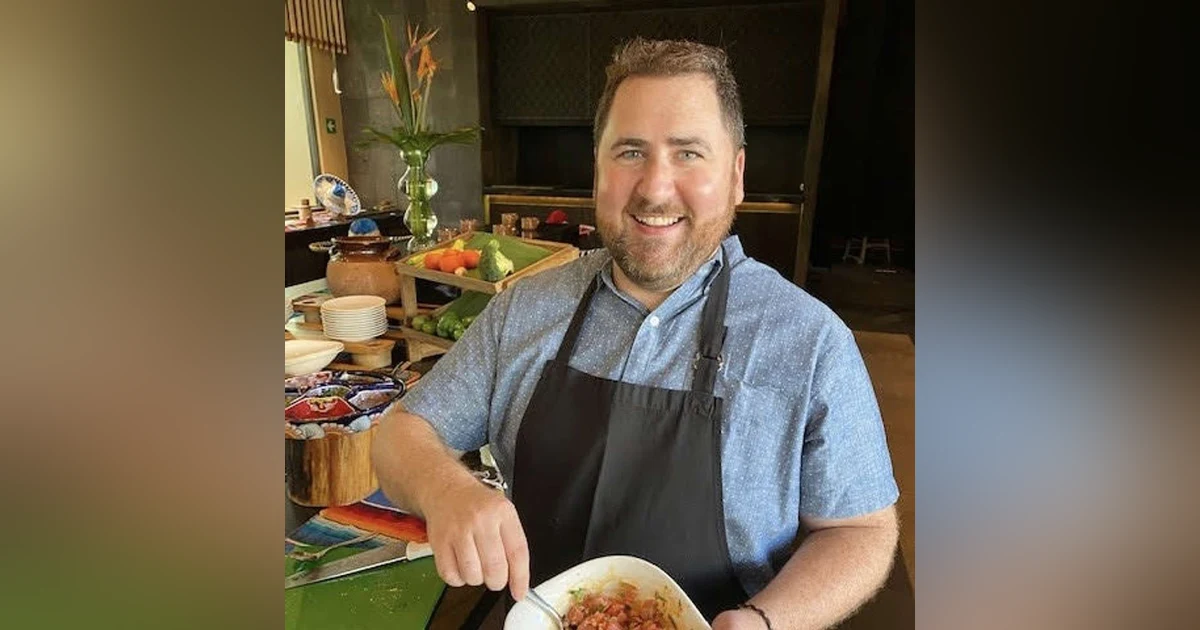

Ever wondered how the greatest challenges can forge the most remarkable leaders? Join us on 'No Wrong Choices' as we delve into the life of Eric Hrubant, CEO and Founder of CIRE Travel. Raised in Jackson Heights, Queens, Eric's journey from a tough childhood to becoming an inspiring visionary in the luxury travel industry embodies the spirit of resilience and determination. Facing the colossal challenges of the COVID-19 pandemic, Eric not only steered his company through turbulent times but a...

 Apple Podcasts

 Spotify

 Castro

 RSS Feed

 Youtube Music

 YouTube
Ever wondered how the greatest challenges can forge the most remarkable leaders? Join us on 'No Wrong Choices' as we delve into the life of Eric Hrubant, CEO and Founder of CIRE Travel. Raised in Jackson Heights, Queens, Eric's journey from a tough childhood to becoming an inspiring visionary in the luxury travel industry embodies the spirit of resilience and determination. Facing the colossal challenges of the COVID-19 pandemic, Eric not only steered his company through turbulent times but also redefined the role of a travel advisor in today's tech-driven world. This episode isn't just about travel—it's about overcoming adversity with grit and grace, learning from every twist and turn, and transforming personal trials into professional triumphs. Tune in as Eric shares his unique insights on building a thriving business against all odds, the importance of personal touch in the digital age, and how a single mom's fierce resolve inspired him to never settle for the ordinary.
To discover more episodes or connect with us:
0:02 Hello and welcome to the Career Journey Podcast no Wrong Choices, where we speak with some of the world's most interesting and accomplished people to shine a light on the many different ways we can achieve success. I'm Larry Samuels, soon to be joined by Tushar Saxena and Larry Shag. Please support our show by following no Wrong Choices on your favorite podcasting platform, connecting with us on LinkedIn, instagram, youtube, facebook X and Threads, or by visiting our website at norongchoicescom. This episode features the founder and CEO of Sire Travel, eric Rubent Tushar, as one of our I guess one of our world travelers.
0:43 I think all of us like to travel on this podcast. Why don't you lead us into this conversation? Well, I thank you for that, but I'll also say this I'm probably the resident skeptic as well. Yes, you are, and look, no offense no offense meant to Eric at all but in this day and age where you can order tickets on your cell phone, one of the first questions I'm going to ask them is why do you still exist and why is your job still important? I mean, there's got to be a real challenge to this right, the challenge of saying that a travel agent, in this day and age, remains a relevant profession. And what separates you from me going on Travelocity and getting the cheapest airline tickets I can find or getting the cheapest room that I can find at a decent rate at a decent hotel?
1:26 I'm interested to find all that out because, honestly, this is a person who's probably way out of our comfort zone. This is one of those professions where I've kind of known about it. You've seen it on TV shows, but you don't really know a heck of a lot about it. And how do you build this business from the ground up? And he obviously went through COVID as well, like the rest of us how do you deal with keeping that business afloat when no one's traveling? I mean, we're talking about challenges throughout. These are real challenges. Yeah, I love that you just hit on that. I'm excited to hear about that as well. And just running a company in general, I mean no matter what kind of company it is.
2:08 I mean you're managing people, you're managing situations, but you're right, t he managed a situation during one of the hardest times to do it, which is during COVID, when nobody was doing anything. So I'm excited to talk to him about. Is he passionate about travel, like? Is this something he definitely wanted to do in his life from a young age? How did he get into it and how do you run that business? So I think we're about to learn an awful lot about running a huge business. Absolutely, and those are all great questions that sort of lead into my key thought. So I had a chance to talk to Eric before this interview to sort of set the stage and get everybody comfortable, and I learned a little bit about his background, which is very interesting, and I look forward to him sharing all of that with us.
2:55 So, that said, here is Eric Rubant. Now joining no Wrong Choices is the founder and CEO of Sire Travel, eric Rubin. Eric, thank you so much for joining us. Yeah, it's my pleasure. I'm happy to be here, eric. I think I should lead in with a question along the lines of where in the world is Eric knowing that you work in the travel business? Where do we find you today? Yes, I'm sitting in my home office, which is a lovely finished basement in Kennebunkport, maine, so about 30 minutes south of Portland. Very very nice. All right. So my first question to you is this I didn't even know travel agents still existed. In this day and age.
3:36 Considering all the technology that's out there to get trips on the cheap, how do you still exist in this ecosystem, man? So this is my favorite question. I get at the local bar because the minute I say I own a luxury travel agency, this is the first question and I love it because think of it this way, you guys, everyone flies right. Everyone travels for business, for pleasure. Think of it this way. You get onto your plane. If you're like me, you have twizzlers. You're just sitting down, opening your twizzlers, and then the pilot comes on and says this flight's been canceled and everyone lets out that sigh For Sire Travel clients.
4:17 Me or someone on my team is calling you, saying Tushar, your flight was just canceled. As you know, we've booked you on the next one, texting you your boarding pass. Why don't you go to the bar and relax? And then the other 300 people on the plane are trying to rush to get off the plane, to wait on another line full of people to hopefully get rebooked and get home to their family where you're like you know what? I got people. So, again, I own a service business. The service that we offer is travel. So my business has been booming. I've been doing this for 26 years, since COVID. I'm turning away more business than I can take on right now because people want a person.
5:00 You can book whatever you want online, but you try calling an airline 800 number or an online travel agency and you're not getting any service. So that's what we do we literally hold our clients' hand, whether they're business travelers or vacationers. I swear by travel agents when I travel. I just love the detail right and the options. I mean you guys are going to know the areas a lot better than I would, so I love that angle. Take me back to you as a kid in Queens. Tell me about how you grew up, what you wanted to do, what your life was like. Let's start right at the beginning, because that's how we like to do it, yeah.
5:42 So I grew up in the early 80s in Jackson Heights, Queens, the most diverse neighborhood in literally the world. I was gonna say that's like traveling from one block to the next. So you started off in the right place, that's for sure. Exactly so I grew up. I had a wonderful single mother. I'm an only child and I grew up pretty much on food stamps and welfare. We had very humble beginnings. Like I remember, I had one pair of sneakers that had to last me the entire year and my mother got me a new pair when she got her tax return. So by like February or March I was duct taping my shoes. Like I knew from a very young age that being poor was not for me and you know I was a latchkey kid.
6:24 So I'd come home from school and I used to watch Oprah. Oprah was my babysitter from four o'clock to five o'clock every day for years. I watched Oprah. At the end of the Oprah show there's her, like her production company called Harpo Studio, which is Oprah backwards. So from a little like seven-year-old kid, like literally, you know, home alone, um, I was like huh. So you know, eric backwards is sire. So from a little seven-year-old kid, I'm like I'm going to have a company one day and call it sire. So that's how it started. And then, um, I, I dropped out of high school. I got my GED. Um, I got associate's degree and then I was actually in school in a four-year program studying social work.
7:09 But again, I always went to school at night because I had to work during the day. So my mother was a nanny for this family and the woman she worked for her travel agent at the time, in 1997, needed like a secretary. So I went in for an interview and back then it was, if you remember, there was no electronic tickets in 1997. It was a paper ticket you had mail to you or a FedEx to you. So think about it In a travel agency, all of the tickets had to be put together like taken out of the machine, stapled into a ticket jacket and then sent out to your clients, whether it was by Messenger, fedex, snail mail. So that was my first job. I made a whopping $15,000, which my mother never made more than like $16,000 her entire life.
7:58 So that was kind of like she was like, oh shit, you got a good job. So, anyway, I took off one semester of college and never went back. But I've done okay. So I basically started from literally being like you know that simple job, answering the phones. And then there's this great woman named Marie McGregor and her and her husband had this small travel business. It was just the two of them and they worked out of the agency that I worked for and they were growing. So I literally said to her I'm like would you hire me? She said yes, that was the job interview, pretty simple, and she trained me from the again, from the bottom up, and she was really like a second mother, like when I bought my first house.
8:38 She bought my washing machine, you know, and I'm really good, I was really good on the phones. I'm really good with people. I was studying social work. When I retire, I want to be a bartender because I think I'll be a fantastic bartender, I haven't known you long, but I have no doubt. Yeah, I like talking to people. I like the psychology of getting people to make a decision. So I worked for Marie from like 1998 or 1999 until she retired 11 years ago. So I basically bought her book of business and I rebranded it as Sire Travel because I already had a name and it really was fantastic. So I wasn't a startup in the traditional sense. I already had clients who already thought I owned the business.
9:21 But I was very lucky Again to use the bartender analogy. It was I was very lucky, you know, I, you know, again to use the bartender analogy. It was like the bartender buying the bar right, you're behind the bar every night for a decade and you're like, when it's mine, I'll do it this way and that way and that's what I did, and I've hired all my friends along the way. So all of my travel which is a great feeling, I'm sure. Yes, Like everyone I've worked in travel. I've slowly poached. That's kind of a brief history. Well, I'd like to make it longer, if I may. Yeah, sure, I mean, we have now. So I don't typically like to go backwards, but I do have a question or two about the journey up to the travel agency to the travel agency.
10:01 So you know, as you're watching Oprah thinking about Sire X, you know what were the other types of companies that you imagined yourself, you know, creating Because it feels like in a way, it sort of fell into this opportunity with the travel company. What were your other visions in advance of that? Yeah, so when I was a kid, I wanted to be everything from a choreographer. I can't dance. It was the two years of that. Yeah, so when I was a kid, I wanted to be everything from a choreographer I can't dance. It was the two years of Paula Abdul everywhere, like in 1989 and 1990. We all remember. We're all about the same age. We're straight up years in DJ Scat Cat. Yes, yes, yes yes, I didn't know what it meant, but I was like I want to be like Paula Abdul. Anyway, I digress again.
10:42 I would have been a great lawyer. I still think that was my miss colin. I would have been the best litigator out there, um, but then you know, my like, my like, my mother's dream for me was to be a sanitation worker in new york, because it was a union job, like that was. You know from like a little kid growing up. It was basically you need a union job, you need a union job. So that's kind of. My mother's dream for me was to be a garbage man, which is fine. I would have done well, whatever. Oprah said something once. She was like I would have been the best at anything I did If I had sold shoes. I would have sold the most shoes because people would have wanted to buy shoes from me. They would have wanted to come into the store and talk to me. But I was going to be a social worker.
11:24 I figured, like what can I do to help people and make money? And I realized I'm not going to make money as a social worker, but I just I've I've always wanting, wanted to help people, whether that was being a teacher or something of something in service and and that's. I feel like I've not. I really haven't talked to anyone ever who actually went in to travel on purpose. It all happened by accident interesting you have a lot of like great minds of people who just kind of fell into something and were like I'm good at this. So was that your real inspiration? I mean, obviously we always talk about, hey, what inspired you? Was oprah that inspiration for you? Because it seems like you know a great deal of like she obviously, obviously she is very self-made in her career, she's top of her field, an icon.
12:08 So was that very much as a kid like, yes, I want to have not only the Harpo, I want to have that Harpo life, but I want to have that type of inspiration as well? Yeah, I wanted to always take care of myself, right, I'm not the kind of person that can work for somebody. I work for my boss and we got along great because she let me run the show. I'm, like you know, I'm a bossy pants kind of person, so I like to be in control. Um, um, yeah again I. I kind of feel, like you know, growing up with like a single mother, like watching her struggle, like my mother had the worst jobs ever, like later in her career she was a nanny, which was good, but she had factory jobs, she was a hotel maid and you know, like being alone on christmas every year because she was working, like I kind of feel there's great value in knowing what you don't want in life.
12:58 You know, I was very lucky from a little kid to realize this is not for me, like I do not want to live in poverty and I have a lot of chutzpah. So I think, just from pure chutzpah I was going to make something of myself and make my mother proud. And you know, like my mother had me out of wedlock so she was kind of like the shame of her family. And then, you know, back in 1977, it was still taboo to have a kid out of wedlock. So, like my mother's family kind of shunned her. So we really were a two-person team all of our lives. So as I got older and started making money, being able to take her to London and Paris and, you know, kind of travel the world because she couldn't take me, that was really fantastic.
13:41 That was really fantastic. As you tell that story. I don't want to compare my upbringing to yours, because every upbringing is unique, but I did grow up without very much and I think my parents were always sort of living in fear of their kids not making it and having to follow a similar path to the one that they followed and, as a result, I think, to a certain degree, they expected me to follow a particular path. They expected me to live within a particular box that was very safe, with a very, you know, defined destination. And I'm wondering did your mother put, you know, certain pressures upon you to do certain things or to follow certain paths because of your circumstances?
14:29 Not so much. My mother was really. I was well, I wasn't a good kid, I won't say that, but my mother wasn't like. She never grounded me. Like you know, my mother's just trying to survive really. Right. That was her main goal to not be evicted to. You know, put food on the table to try to get. She just wanted me to do anything. I mean I could have had any career. As long as I was able to be self-sufficient, she would have been happy. Um self-sufficiency or stability Cause, like even you had said, she wanted you to be a garbage man. Right, garbage man is it's. It's stable, it's a stable job right. Yep, yeah, that's what she wanted for me. Anything. She didn't really understand travel, but she knew I was doing well and, yes, I would say you're completely right with that.
15:13 She wanted me to have a stable job. So then I was happy and you know, as was kind of like being able to get out of the borough and go to Long. Island or New Jersey. I think she was happy when I bought a house in Jersey, she was like aha he got out. So I love what you said a minute ago about knowing what you don't want to do Right and learning that lesson. Same thing I don't want to talk about. You know my upbringing, but, but honestly, we come from factory workers quite a bit and they would make us work in the factory in the summers just so that you could see you don't want to be making $6 an hour.
16:02 You know putting rivets on the back of you know screws and oh man, I hated that job so much. I was like I'm going to get educated, I'm going to do what I need to do. I'm going to get the hell out of here. You have a real gift to the gab. Is that something you can learn? I mean, obviously it helped you with the travel agency early on. I mean, you know, some people are given that skill, have an innate skill. Other people, you know, kind of come out of their shell. I mean, what was it for you? You always had this. It's kind of weird. So if we weren't on this podcast, I'm actually completely shy and awkward. Maybe not shy, but I'm definitely. I don't believe it. For a second, I'm not. I'm not the person to go to someone else at a party. I really what's it called?
16:44 Like an introvert who's an extrovert or something you know, like I'm on the phone all day long or on Zooms by six o'clock. I want a gin and tonic. And like law and order, like by six o'clock. I want a gin and tonic and like law and order, like really. Like I just want quiet. But no, I've always been. I've always liked to talk. That was always my report card. You know Eric talks too much, which worked for me now. But yeah, again, I'm really comfortable and when I started working in travel, like people listened to me, they respected my opinion, they could tell that I wanted to help them. So I developed my confidence very early. So I've been very lucky for the last 27 years, you know, from nine to five or seven to seven, depending on the day like I'm comfortable with what I do.
17:26 I'm comfortable with side travel, like I'm in charge, I run the show, like I know what I'm doing. So for me, my career, my business, is my safe spot really. You know, like during COVID, when there's nothing to do, I'm like, huh, this is what it's like to leave work at five o'clock. Like it was bizarre to me, what do I do now? Like I wasn't calm during COVID. I was like this is too much free time. You know, I wish I could go back. I enjoy that those few months a little bit more, but I like it. You know I really do love what I do. I want to talk a little bit about your mentorship, so to speak, when you join McGregor. So how long were you with McGregor?
18:06 I was with Marie from I mean technically from, I think, 1999 until December 31st 2012. And at the time it was her and her husband. She was a travel agent from the time she was 20 on Long Island, so she moved to the city. Her husband was a telephone guy. So what was it? It was like New York Telephone and then, whatever it was, it's like Verizon, but all of the different telephone companies in New York and Long Island. So when he retired at like 50, he went to work with her is because she didn't use big words, she didn't try to put on airs, she talked to everybody just as herself, and people realized she was just a no bullshit New Yorker and that's why she was so successful.
19:01 And I saw that very early. I remember we had a client who said to us a client is now literally my best friend, we became friends because of working together. But she said it was like in 2001, before 9-11, my boss took the MetroLiner at the time to DC the Amtrak MetroLiner to pitch this account and she left with the account because the three people they were like you were the only person that came in. That wasn't a salesperson, you're a business owner who knew what they were doing and we just liked you and trusted you. So that's what I learned from her mostly, you know, as a high school dropout, like you know, I'm not formally educated.
19:42 I have a big chip on my shoulder about, you know, using the wrong word and everything else, but so it took me a long time to realize that when I just put that away, that's actually when I shine and things are easy. So I am now unapologetically myself, even if I make a fool of myself or curse too much. So you're obviously intelligent. I mean, you're obviously intelligent, Eric. This conversation just shows it. This little portion of the conversation shows it. Why did you drop out of high school? Why did you not go to college? Oh, so again, I was, like you know, a little gay boy growing up in you know the eighties. Like school was never fun. I was picked on every day, you know, in high school I went to high school I don't know who's listening here, but uh, if you know New York or Queens, like I lived in Jackson Heights, I went to high school in Bayside, which was like an hour and a half commute.
20:31 It was like the subway to the bus to walking. So like I hated school. I wasn't the kid who loved school. I had headaches every day, also a really sad story, not to bring anyone down too much, but it goes to show where I came from. But like my mother and I were, so poor we were, you know, our building tried to evict us numerous times and I remember watching Good times, remember good times with like janet jackson and absolutely, and jj walker dynamite so on that show they were always trying to be evicted. So what they did when the landlord wanted to evict someone on that show, they would put like something on their doorknob so they couldn't get in. You know, I couldn't get into their own apartment, basically. So like there was a one time when we were about to evicted I did not leave the house for a month because I was so afraid that if I left they would come and like lock the door on us.
21:19 Like that's the kind of fucked up childhood I had where I was. Like I do not want this. So again I forgot what your question was. Now we're going into that sad story. now it was like why did you drop out? You know, why did you? Why did you not? Why did you drop out? And then, obviously, why did you not? Why did you not want to go back to college? yeah, I just I really did. I liked college actually quite a bit and I I, when I retire, I'm going back to college. I I'll be a bartender at night and student during the day, but nice I always want to be an english major because I love reading, I love writing. But if, if you go to school at night, it's not realistic to be an english major because you can't, there's no time to read and write you can be a business major. Look at, you could teach a class come on, I'll do that.
22:02 I'll be an english major without the math requirements when I retire, um, but yeah, so again, I still. I would not call myself traditionally smart or book smart. Um, you know, I will not have a big political debate with anyone, like I know when to shut up and walk away or, you know, not engage. But I can talk about travel, I can talk about what I know and again, I feel, you know, growing up in New York City, especially in Queens, you develop a sort of street smarts that is very valuable and when I meet other New Yorkers who grew up in New York, like in the five boroughs, they have this grit about them, this really good grit, right when you know, like you learn how to ride the subway, you learn, you know.
22:44 I see kids on their phone walking down the street in New York. I'm like that's how you get mugged. I'm like you know, put your phone away. You know, pay attention. So it's funny. I you know. Growing up, my mother it was like, you know, the 80s, where there was kidnappings and people putting poison in Halloween candy. So, like you know, I remember going up yeah, it was crazy, but you don't like put your name on your jacket. You know if, like, we had a password if someone rang the doorbell. So when I moved to Maine a few years ago, the woods are behind my house and I hear noises from the woods animals. I'm like you know what, I could probably shake off someone trying to mug me, but those animals in the forest man, they're the ones that are going to kill me.
23:25 I'm like I wasn't prepared for this. Now, you know. I do exactly the same thing when I go to my in-laws up in Connecticut. I mean, I've lived in Manhattan for, I don't know almost 30 years now, so I'm afraid of nothing here. But if it's too quiet and if I'm in the middle of nowhere I'm scared to death. I don't know what's coming out from behind that bush. So, Eric, I want to jump ahead a little bit to the business. So, you know when you talk about street smarts and instincts and things of that nature. So you're in the business, you're, you're working for Marie Marie, I believe, tell me about the transition. I mean, ultimately, you need to. You needed to make a decision as to whether or not you wanted to buy this business, and and how.
24:11 How were you able to do that? Like, like, take us through that. Yeah, um, so I worked with her and I really, you know, she really was very good to me, she really was a second mother to me, she, she showed, you know, I got to really, you know, make a lot of mistakes with her along the way. So I saw the mistakes she made, I saw the successes she had. So I mean literally, you know, we sat like three feet apart from each other for, you know, 15 years practically, so I learned firsthand and, which was great, I didn't have to worry about that when I finally started, sire. And you know, there was a point, probably like in 2009, 2010, where I was like Marie, I love you and I always want to work here, but I just want to work for myself.
24:54 I don't want to work for someone else the rest of my life. And that was the honest truth. I mean, I, you know, and I knew, if I went out on my own, like I have the hustle, like I knew that if I got myself a couple of years, as long as I had made enough money to pay my mortgage, I could build a business, and I was ready to do that. I said to her I'm like I'm not going to leave you in a lurch. But I'm like maybe we should work on a plan for me to go out on my own, you know, over time. And that's when she says you know, my husband and I we're going to retire in probably three years, can you wait? So I did, and we had three years to talk about it. We had three years to come up with, you know, and we did it over dinner and drinks. You know it was like she would come to my house, I'd go to her apartment and, you know we came up with a plan that worked for us.
25:40 And again, even with the plan, like you know, she could have probably made more money not selling it to me, but it was a good choice. And you know she, bob, passed away a few years ago. She really lives in Florida. We don't talk as much as I'd like, but I still consider her one of probably the biggest mentor and teacher that I've ever had. It's so interesting hearing you talk about that, because in my head I'm saying to myself to buy a business, I mean there has to be that eureka moment where damn it, I'm going to do it. And it sounds like with you it was more of a transition, like a thought process, of building momentum almost, and then it finally came to fruition.
26:20 So I find that so fascinating. Was there a eureka moment or was it just like an evolution? It? was. You know again, as much as I loved Marie, I wanted to work on my own. You know, if I was working at midnight or on a Saturday, you kind of get bitter working for someone else, even if I was paid well, I was treated well. I really had no reason to be bitter, I really didn't. I was just young and obnoxious. But with this it was a nice, easy three-year transition. We were able to talk about everything. I was able to talk to Marie. Once she retired we still chatted every day, almost. So you know she still got to live. You know I still got to talk to her and ask her questions. But it was an easier transition and we got to tell our clients in advance.
27:04 So there was no shock like, oh, a new name, new owner, um, and I was what I, what I, my old boss, marie. She never advertised, all of her business was word of mouth and we had a really great business. And I remember saying to her time and time again imagine if we had a really nice website, imagine if we actually advertised, not knowing anything about advertising or marketing or SEO or anything that I know. Now I was like, imagine we could have this huge business. And there was four of us by the time I bought the business, or maybe five of us, you know. And when I bought the business I was like at my parent company, like you know, sire Travel was part of a larger company.
27:45 I was an independent affiliate but the largest agent had 12 employees working for her. I was like, okay, she has 12 employees, I'm going to somehow get to 12 employees. And that was sort of my chutzpah, to kind of. You know, I mirrored her office, had a couch. I was like I want a couch in my office. You know, like stupid little things just to measure me along the way. But so, again, it was a transition. I took out a $100 thousand dollar loan for my website. I was like you know what I'm going to. I want a website. So you know it wasn't quite a hundred thousand dollars, but I did a really good website. I learned a lot about, you know, seo and what that means pleasing the Google gods and you know you do all this work and then you don't see anything Like for a year and a half after the website was up, I was paying this $5,000 bill every month to my ad agency, creative agency.
28:40 And then one day, one day I remember the phone rings and it was like hi, my name's so-and-so, I saw you online. And I was like get out, it's working. I could have hugged the woman and that after that it was like wildfire. Like you know, once the Google gods were pleased, I got to 12 agents pretty quick after that? And then what Tell us about the scaling of the business? I mean, I think you've relocated to Kenny Bunk Pork since then, right, because you were down here. Yeah. Tell us about that process and about the scaling of the business. Yeah, so I used to work within a very large company and a couple of years ago I made some changes.
29:24 So now I work. My parent company is called First in Service Travel and they're a really well-known large travel agency in the United States and around the world actually. So our offices are technically headquartered on Madison Avenue and 49th Street. I go down, you know, one week every six weeks. Mostly they got good Chinese food. They don't have that in Kennebunkport. No, we have both. Just loud woods right behind you Loud scary woods, Lob lobster and hamburgers and again, nothing wrong with that, but we, our chinese was not so good, I digress. But um, so I, I scaled, and I scaled very quickly and it was exhausted for a right before covid.
30:06 I remember feeling for like a year that I was just about to miss the train, like Like it was just the train was moving and I just was not on it and um, and then COVID happened and you know, it went to zero. You know, overnight, quite literally, like everything stopped. Um, and I remember like not panicking, like I panicked a little bit but um, I mostly panicked because I was like I employed 12 people, like how am I going to furlough them? That was the worst day of my life, having to furlough almost everybody. I kept three people. I had a reduced salary during COVID, but that was the hardest day of my life. I had to pick one day, but it really allowed me to catch my breath and figure out again what I don't want as a business owner.
30:50 I'm saying no a lot more. You know, like COVID was my MBA, it was learning. You know how to survive, how to start over and and and do it on my terms. So again, I feel like I learned great boundaries as a business owner, saying no, firing clients Like I. Recently. You know I have a new CFO. You know running numbers like you know like right now, like my big, I'm very lucky my biggest account is only 5% of my total revenue, so I don't have all my eggs in one basket, right, but that account that's 5% of my revenue is like 30% of my time and you know it's like really like looking.
31:32 You know, as you scale up, you also kind of want to be like what's not working. You know like so again, you know I have no. You know it's horrible, but I've gone to many accounts and be like I've loved working with you, but you know I either need to raise your fees a lot or we need to part ways. So now it's kind of I'm trying to work smarter, not harder. And you know, as I scale up again, you know I keep I, you know I say every couple of years I take a few steps back, which which I I'm fine with. Now it's you know you go. Then you're exhausted, you're like okay, what's working, what's not? Make some changes. So I feel like the second half of 2023 for me was making some changes, scaling back, actually, you know, getting rid of getting rid of some clients that just were.
32:18 You know, I have a I call it part of my friend. You know I have a no asshole policy where if the phone rings and we all collectively sigh when we see the caller ID, the client you don't want, right, no matter how much money they make, if you're like, oh, you know, that's not what I want. So I've really kind of looked at all those X and been like, okay, time to move on, you know. And again, so I keep learning. And you know I would say that I had no boundaries before COVID. I said yes to everything. I would say yeah, even to my own demise, and it really was. I think I would have burnt out if COVID didn't come along when it did. Do you consider yourself a business owner or a travel agent, or both?
33:03 Or is travel agent even the right word to the right phrase to use any longer? Yeah, so, so, a couple of years, so a couple of years ago, around COVID there's a company called the American Society of Travel Agents who changed their name to the American Society of Travel Advisors. Because that's what we do. We're not selling a product, we're selling a service. Back in the day, a travel agent was an agent of the airline. There was no internet. You called a travel agent, or you called Delta. There was no in-between. Again, we're no longer an agent of anybody. I tell my clients that you are leveraging our time, our expertise and our contacts. That's what I'm selling. So I use the word travel advisor, but for SEO purposes everyone would just look for Google travel agent, so I could care less what you call me.
33:52 I do consider myself a business owner who owns a travel company, and I've only made that. I've only said that in the last again since COVID. Before then it was just I'm a travel agent. You know that was it Now. I truly think of myself now as a business owner and as someone who never really resonated with numbers before. Like I've really come to embrace that. You know, I always hated math and I told myself I was bad at math and I am, but now I have a CFO and I no longer fear those things. And you know, reading the numbers have painted these pictures for me. Where, again, if you had asked me two years ago if I would have said something like reading the numbers painted a picture for me, I would have been like you're crazy, but it's the truth.
34:37 You talked a little bit about. One of the things that your company provides is contacts, right? So I want to talk about how you foster those contacts. I recently did a two-week trip to Alaska and the travel agent that I usually use was like I'm not going to know anything about Alaska. It was very specific to that part of the country. So my question is, in general, are you just saying yes to every client or you know, and going and doing the research and finding what they need to make their trip? You know sing and dance, or are you a specialist and you have certain parts of the world that you're like we know exactly what to do here. We're the best at this. Come with us. No, I'm definitely more of a generalist.
35:19 So Sire Travel has two divisions. We have a business division and a leisure division. So on the business side we only work with small to medium-sized accounts. So IBM is not my ideal client. We have some companies where it a one person who travels and our biggest account maybe there's like 50 people who travel. So again, you know, we're not a mom and pop, we're not a big. You know a call center somewhere. We are a concierge agency. So you know, our clients get to know us. You know, after working with us for two or three trips, you're not calling Sire anymore, you're calling Eric. You're not calling Sire anymore, you're calling Eric, you're calling Amy, you're calling Robin and Nikki and they become your person, you know? And on the leisure side of things, kind of the same thing.
36:00 Like you know, we don't take on every client for many different reasons. It really has to be a good match. You know we charge a fee and we charge that fee upfront. So we are the professional. But, lawrence, to answer your question, like when I was in New York in my office, like vendors come in all day long, right, everyone comes to New York, they go into travel agencies, they take you to dinner. So I have spent 27 years cultivating contact. So while I'm not an expert in Australia or not an expert in Alaska, I have partners who are, and I really have partners all over the world. So if you're going to Alaska, I have a partner I use there.
36:40 So you know, we kind of do the curation and then we kind of book it with someone local. So our clients are getting best of both worlds and I've done that anywhere from the Bronx to Botswana. I know someone and it's really important. If I have an issue with Delta, I'm not calling an 800 number, I'm calling Christina, you know. If you know, if I have a Marriott issue, I'm calling Stacy or Mitch. They're my Marriott people, right? So again, for every brand, for every company, I have a go-to person or team and that really helps us do what we do. What is the biggest challenge in what you do? You've been in the business for a while.
37:21 You've seen technology come in. You've seen the industry, I'm sure, flip upside down like every other. What is that thing that keeps you up at night, that you consider to be the biggest bugaboo, so to speak? Yeah. So what keeps me up at night is if someone on my team is not happy, I feel truly. This may sound inappropriate, but I feel like the father. I feel truly this may sound inappropriate, but I feel like the father. I feel like, you know, it's my business. I am the parent. So if someone on my team isn't doing well, whether it's a personal issue, whether it's a business issue, if they're not happy, I'm not happy, right. So I, it's a social worker in me, it's a Jewish mother in me, right. If someone on my team is isn't happy, because I truly like.
38:03 I'm like what can I do to make it better? Even if someone on my team makes a mistake, I'm kind of like what didn't I teach them? It's my fault, like, why weren't they empowered to, you know, to do this? So that's what keeps me up at night. Again, it's really making sure that my team is happy. I love my team. They treat my business like their business. If you're a business owner and you have 12 people that treat your business like their business or however it is, I mean that's gold, right? You know Robin, who works with me. We've known each other for 20 something years, since 2000,. We know each other and we have tried to see Madonna together on tour a few times and the night we have tickets, madonna cancels, oh no.
38:45 We finally broke the curse at Madison Square Garden, first row at a Madonna show, and Robin is one of my best friends and my lead corporate agent. So these are the kind of relationships that I fostered. Larry, to answer your question about the industry, I love when things get more confusing, like JP Morgan Chase. Now they're starting their whole travel thing. So you have JP Morgan Chase, you have Amex. You have more websites than you can do it. So consumers, clients, are more confused. More options do not mean anything is better. More options means more mean anything is better. More options means more confusion. So the more otas, the more online travel agencies, the the more noise out there.
39:28 The bigger my business gets. Because people want eric, people want robin, right, they want someone who knows the answers. You can go to tripadvisor or yelp, right, and you know, get a review about what the best meal is or what the hotel is. But having someone who actually you know you're paying to have your back, that's what it's all about. So I hate the word disruption. I it's overused word, but the bigger travel gets, the happier I get, because it's the people find us. It's so interesting. A lot of human. You know they really. And even after COVID, like you know, our clients who had to cancel a trip they weren't on hold for four hours with an airline getting their refund. They were.
40:08 You know I was reaching out to them saying, hey, larry, I'm going to get your money back. It may take two hours, it may take two months, but I'll get your money back. And we did. Our clients were never on hold for any airline. You watch all those horror stories during COVID about people who couldn't get their refunds. I was like they didn't use Sire, so that's what we do. So the more noise, the more I smile. I never, ever ever would have seen that answer or thought of that. That's so compelling and so interesting. Yeah again. And the more competition, the more confusion. It's kind of like people. Just people don't actually like options. That's what I've also learned. People don't want 14 options, they want three.
40:51 Yeah, larry, here's your options, top three. Here's my favorite, here's why. And you're going to go back and say, eric, you're right, book it. I mean, I guess, that kind of steals. My next question, which is what separates an average agency from a great agency, or what makes a great travel agency, and the answer is being able to answer questions before they pop up. Yeah, it's the people, you. I mean it sounds weird, but we care. You know we care is such a stupid answer. It's the truth, it's not. No, I mean, it's legitimate, though. Right, it's totally legitimate. That's a legitimate answer. We care, we, you know. I must say, like you know, we, we, we try to keep, you know, 830 to six o'clock hours. But if I see a client in need at nine o'clock, depending on how much wine I've had, I will jump on and help myself.
41:38 Again, most of my friends, my close friends, are travel people, whether they're on the hotel side or airline side, or they become clients. But my social life looks like a travel industry gathering at any time. So that's also what's really fantastic, because when you're in the trenches with clients, if we work with an executive assistant who's managing four big personalities right Like four Anna Wintours and we're keeping that administrative assistant happy having her back so she can deal with her bosses, that's a client for life. That administrative assistant, or executive assistant, will take us with her or him to every job until they retire.
42:20 Because, again, we're trying to help them, to make them look like stars. So I work with a great business coach and she's always like, oh, you need to go to more like CEO meet and greets. And I'm like, no, I want to go to executive assistant meet and greets, I want to work with the people. Right, those are the people who are actually booking travel that we're helping. I would rather do any of that than, you know, go on a golf trip. That sounds horrible. I would never want to do that, you know. You're speaking to the wrong guy. Give me the golf trip, man, I'll send you on a golf trip. I just won't go on one myself. So, eric, we're going to sort of come at you in a, I guess, an atypical way to come at you in a, I guess, an atypical way.
43:03 So we usually sort of at the end of the interview, in the end of the conversation, ask for the advice you have for somebody who wants to get into the business, et cetera, et cetera. But in this case I think Larry has some very creative questions for you that we definitely want to get to before we exit. So I'm going to ask you that question first. What advice do you have for somebody who wants to get into this business? Yeah. So travel is so big, it's a multi-trillion dollar industry. There's something for everyone, whether you want to own your own business, like I do, or whether you want to work at a hotel. Right, it really is so big. So talk to everybody. Most people in travel want to talk and help you. So reach out, even cold calling someone being, hey, you want to travel agency?
43:43 You know, talk to me. I did some, you know, guest speaking at Rutgers university in um in in Newark, and I got an amazing employee out of it Cause he was like, oh my God, can I come work for you? And it worked out. So again, talk to everybody. There are some great organizations that have. I said there's a company called a lobbying group, really called ASTA, the American Association for Travel Advisors. They're fantastic. They advocate for the travel community. They're a great resource if you want to start your career. So, depending on what you want to do, it's so big and I don't even think there's a lot of competition. All that you need to know is what lane you want to go and stick to it. But again, I'm a high school dropout who makes as much money as a non-trial lawyer.
44:24 So we'll do our lightning round in a second. But I have one more question and I don't want to put you on the spot, but do you have an anecdote of the trip from hell? Someone stuck in Bangladesh with a broken leg or anything? Like that that you want to share with us before we do the lightning round. I'll give you my favorite. So my favorite one and it's our pitch story because it's true. But I know, seven or eight years ago, when I was still booking travel myself, we had a honeymoon couple who was going to Bali. I don't remember if it was actually Bali anymore, but I say it's Bali for the purpose of the story. We were planning the trip for them and they really wanted the five-star resort. But it. We were planning the trip for them and they really wanted the five-star resort, but it was just too expensive, no matter what we did. But right next door there was a lovely four-star resort, like literally next door.
45:05 We booked that, booked everything else for them their flights, whatever else they get on the plane to go to Bali. Two hours into their flight I get a phone call from the hotel they're staying at saying we had a flood and we're not taking any arrivals, we can't take anyone coming in. And I was like oh crap. I'm like okay, I have 14 hours to figure this out. They're not going to let me have 14 hours. So that five-star hotel next door. I knew this guy named Michael Michael Foley, he's still around who I literally emailed him. I'm like Michael help, and he's like he called me and I'm like Michael help. And he's like he called me and I'm like remember that couple? I was trying to book at your hotel but it didn't work out. I'm like, here's where we are, can you help me?
45:46 They need a room. He's like give me an hour. He calls me back in an hour saying Eric, I called the hotel, they're going to honor the rates from the hotel next door and I'm going to send a car for them to meet them at the airport with the notes explaining what happened until you could reach out to them, um, when they get to the hotel. So this honeymoon couple who's in oblivion flying to, you know, bali or fiji or wherever the hell it was, um, they have no clue what happened, but if they booked that online, they would have gotten to that hotel after a 14 hour flight or 15 hour flight and it would have been closed. You know. So, man, oh man. That's my favorite story. But one other quick story like you know, we had some clients who we just booked flights to go to paris or geneva, rather, um, for christmas, and just I was about to log off at night I got a email that their flight was canceled for the next day.
46:35 And there were 10 of them, I was like oh, jesus christ, it's like december 23rd, so called. I emailed the client. I'm like Max, I'm like shit's hit the fan, just give me an hour, I call you know. Actually, someone on my team, amira, called Delta, got a great agent on the phone. We looked at everything. She was able to get them on Swiss airlines, all 10 tickets. No one had a middle seat. You know, everyone had a window, um, and he was like, really in an hour you got that done. But just think about it, december 23rd, getting the phone call that your flight for your family of 10 is canceled when everything is sold out. Um, and he's like that's it. And again, here's everything, here's your seats and everything. So that was a simple one.
47:16 And then there's the, the bigger. You know we call them. Yeah, love it that's why you use a travel agent. Right there, there's the sold me, we gotta go. You sold me, uh best adventure, oh best adventure alaska is a great adventure. Oh, eventually, now we're booking a lot antarctica cruises. These are true bucket list trips um, which are truly, I mean just without words. They're so magnificent, so most romantic. I mean anything can be romantic. I would say Fiji right now is where we're sending a lot of our honeymoon clients. And what is your number one place to go?
47:57 We'll leave it with that. Yeah, I well, it's funny. I moved to maine, which was my happy place really. You know it's only a drive, but I love england. When I retire I want to spend like three months at a time in in and just exploring, so I'm kind of not a super adventurous travel myself. Again, life is hard. I don't want to rough it like I grew up roughing it. I'm the same way you mean a five-star hotel with a butler. That's my idea of getting a life. So it's very funny about my son keeps talking about camping and I keep referring him to his mother because do you know what I'm never going to be doing? camping. What kind of ending point.
48:37 But I remember I talked about being homeless. I prayed to god every day not to be homeless. Why would I go camping? It seems like a sloppy thing. Thank you, and my line always is. We created civilization for a reason to get out of the woods. What about? glamping. You could always glamp I could, but there's got to be something else I could do. Yes, God or Jesus or whoever prevents me from being homeless. I'm not going to be so, Eric. For everyone out there who'd like to learn more about Sire Travel. Where should they go and what should they know? Yeah, so check out Sire Travel. Siretravelcom. You were on Yelp. We are on Instagram, facebook.
49:18 My name Eric Rubant H-R-U-B-A-N-T. I'm literally the only Eric Rubant in the world, so I'm extremely Googleable as well as Sire Travel. Oprah, if you are listening, thank you. I'm really trying to make this happen on every interview. Just thank you for being my nanny all those years. And we'd like to book you Oprah if you're interested, or. Gail a call if you're listening Oprah. Or Gayle King, maybe Someone in the Oprah universe yes, exactly. Eric, this has been a spectacular conversation. We are all sitting here smiling right now, and we owe that to you. So, Eric, thank you so much for joining us.
49:58 Yes, no this really was a lot of fun. I'll do it anytime. So, eric, thank you so much for joining us. Yes, no, this really was a lot of fun. I'll do it anytime. So that was Eric Rubant, who just told us a great story about overcoming the odds and having the courage to put yourself out there to create a life for yourself. What a fascinating guy, tushar. What are your thoughts? I am sold. I know why a travel agent still exists in this day and age. And I'll tell you what. If I need one, I'm going to Eric. No more will I simply book my trip to Chicago through my app. I'm going to Eric. If I have a real trip, that I'm going to do. And you know what. You're right to say that this man is all about overcoming challenges. I mean, we spoke to him and I asked him the same thing.
50:40 I asked him the same thing. I asked him like why did he not finish college? The idea of building this profession and especially in this day and age, it's not to be snobbish to anyone, but to build that kind of a profession and that kind of a career and not have a college education, I would say in this day and age it's looked upon as something that is not preferable in many, in many worlds. But to have been able to kind of overcome that and overcome probably what was probably a great deal of snobbery on in in front of a lot of people, that is amazing. And not only that, but to actually make his his, his business, survive and now thrive post-covid, is also a great story. It's also a great tale of someone just being able to kind of roll with the punches and see and have a good amount of foresight about what's coming down the road.
51:28 Yeah, if you could make it through as a business manager, as an owner of something like COVID, I mean, and come out the other side stronger. I mean, it just shows you how impressive he is. I was really struck with the serendipitous nature, as it were, of him getting the business to begin with, that his mentor was ready to move on and offered him this opportunity. But the risk reward is something that we often talk about on this program, of being prepared to step through that door when it's cracked open for you. But he really poured everything into that moment and it wasn't like a you know, I'm about to make the decision. This was something he had thought about a long time.
52:10 He was ready for it when it happened and now he's thriving. And who knew that there was going to be a world pandemic, right, and that he'd be shut down essentially? For you know however long he was. but, yeah, really impressive how he manages, how he, how he leads and, yeah, he's a super impressive guy I mean, we talked about we talked about it before the idea of being serendipitous, um, I think I think a lot of times we use the word on this show which is courage, and he showed a lot of courage in in uh, in an environment which was not going to be forgiving to a lot of people, and we've seen this right. We've seen this on the other side about how many businesses went out of business, how many needed help to get through, and he was one of those businesses that needed some help to get through, but he managed to get through and once again, he's thriving.
52:56 I'm very impressed by his ability to be fluid and to be and to understand the the needs and wants of his customers, and not only that, but then to also be able to say I can be picky with who is my customer as well, because that's a big deal as well. Right, because sometimes not everybody's a great fit, not everybody should work with everybody, and it's not, and it's not a knock against him, it's not again knocking us, you know whether it's not a knock against him, it's not a knock against whether it's customer A or customer B. Sometimes it's not a good fit and we can all move on and be friends. At the end of the day, that's really all that matters, and he's really been able to create this kind of boutique industry and make it thrive. Absolutely, and for me. I want to pick up on two words that you guys used.
53:37 One was courage and the other was leadership. You know, when he set up his business, he took a major leap by putting pretty much all of his money into marketing from day one and saw it pay off. It was a massive risk that he took to try to bring his business forward and he was successful. And it took a lot for him to do that. And I also want to talk about his leadership qualities. I should call out that a friend of mine and somebody who works with him or for him is excited about bringing him forward to us. It showed me a lot about Eric, about his leadership qualities, about the loyalty that he's established amongst his team.
54:30 I mean, clearly he's a remarkable guy that we, you know, got to discover throughout this conversation and felt it ourselves. But it was really interesting to me and caught my attention that somebody from the outside brought him forward and brought him to us for those reasons. So not only is he a business owner, he is Eric Rubant, and if you want to check out his business, it is Sire Travel. You can find it online and anywhere else you might want to research travel. So with that, eric Rubant, thank you so much for joining this episode of no Wrong Choices. We also thank you for joining us. If this episode made you think of an inspiring person in your life who could be a great guest, please send us a note via the contact page of our website at norongchoicescom.
55:14 We also encourage you to connect with us on LinkedIn, instagram, youtube. So encourage you to connect with us on LinkedIn, instagram, youtube, facebook X and Threads. On behalf of Tushar Saxena, larry Shea and me, larry Samuels. Thank you again, and always remember there are no wrong choices on the road to success, only opportunities, because we learn from every experience.