Ann Liguori: What's the Story?
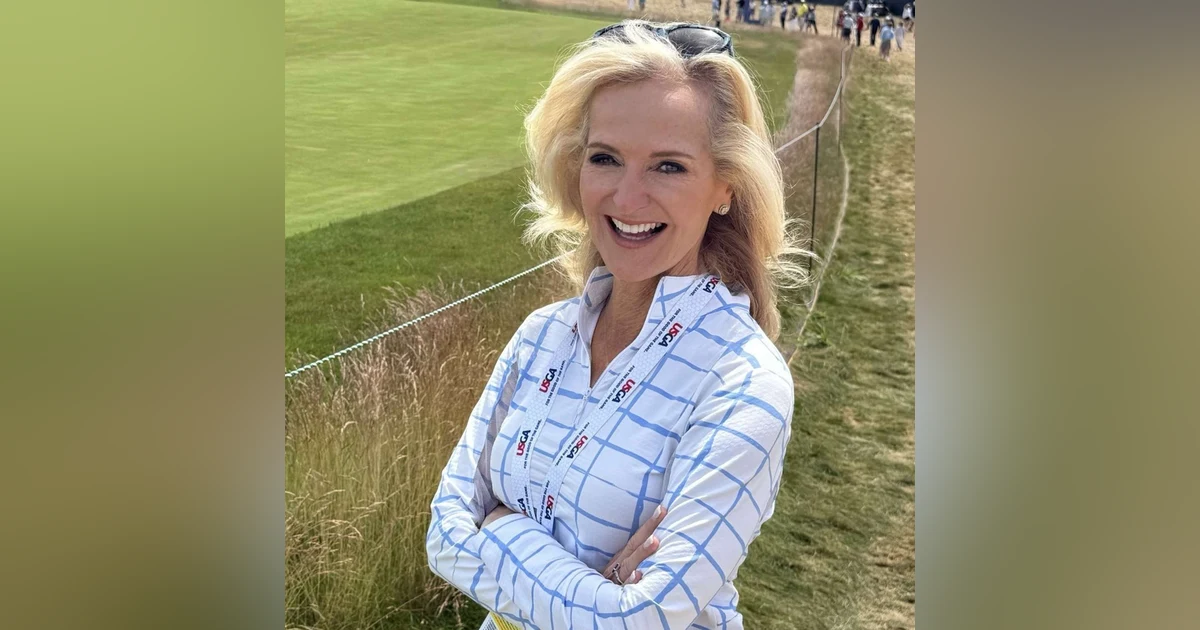

Ann Liguori didn't wait for opportunities to come her way. She went out and created them. A pioneer in sports broadcasting, Ann was the first woman to host a sports call-in show on New York's legendary WFAN and the first woman to host a primetime program on the Golf Channel. But her remarkable career wasn't built on broadcasting talent alone. Through persistence, preparation, and an entrepreneurial spirit, she built a successful media brand on her terms, creating her own programs and securin...

 Apple Podcasts

 Spotify

 Castro

 RSS Feed

 Youtube Music

 YouTube
Ann Liguori didn't wait for opportunities to come her way. She went out and created them.
A pioneer in sports broadcasting, Ann was the first woman to host a sports call-in show on New York's legendary WFAN and the first woman to host a primetime program on the Golf Channel. But her remarkable career wasn't built on broadcasting talent alone. Through persistence, preparation, and an entrepreneurial spirit, she built a successful media brand on her terms, creating her own programs and securing major sponsors.
In this episode of No Wrong Choices, Ann shares a journey that began with a dream at just three years old and led to interviews with icons including baseball legends Mickey Mantle and Ted Williams, actor Sylvester Stallone, and global entertainer Celine Dion. She reflects on the importance of building relationships, believing in yourself, and recognizing opportunities where others might see obstacles.
Along the way, Ann shares what she's learned about the art of listening, the value of owning what you create, and the lessons that have shaped her career and life. She also discusses her passion for golf as a metaphor for life in her book Life on the Green, and the personal experiences that inspired her philanthropic work through the Ann Liguori Foundation.
It's a conversation about being proactive, persevering, and the power of turning passion into possibility.
Learn more about Ann at AnnLiguori.com and explore her shows, Talking Golf with Ann Liguori and Sports Innerview.
Listen, watch, follow, or subscribe to No Wrong Choices wherever you enjoy podcasts, including YouTube.
To discover more episodes or connect with us:
00:00 - A Golf Teaser And Surprise Moment
00:22 - Welcome And Meet Ann Ligouri
01:43 - A Dream Sparked At Age Three
04:53 - Competing With The Boys Pre Title IX
07:17 - Shyness And The Art Of Listening
16:48 - Breaking In Through Hustle And Networking
24:15 - Golf Channel Breakthrough And Celebrity Guests
27:10 - Sponsorships Ownership And Being A Trailblazer
37:51 - Longevity Wellness And Protecting Your Brand
42:26 - Books Legendary Interviews And Life Lessons
53:28 - Media Archives Modern Influence And Social Proof
58:02 - Career Advice Informational Interviews That Work
01:00:21 - Foundation Work Cancer Loss And Awareness
01:05:48 - Where To Follow Closing Thanks
A Golf Teaser And Surprise Moment
Ann Liguori
I just loved golf and it became my lifestyle. So everything I do, you know, I go on a lot of golf vacations with, you know, my guy Scott and uh
Larry Shea
Will you marry me?
Larry Samuels
Oh my goodness. I know, right?
Ann Liguori
We travel all over the world playing golf.
Welcome And Meet Ann Ligouri
Larry Samuels
Hello and welcome to No Wrong Choices. My name is Larry Samuels, and I'll be joined in just a moment by Tushar Saksina at Larry Shang. This episode features the sports personality and entrepreneur Ann Liguori. Before we bring her in, please be sure to follow or subscribe to the show wherever you're listening right now. Your support enables us to keep bringing these great stories to life. Let's get started. Now joining No Wrong Choices is the pioneering sports broadcaster, interviewer, podcaster, entrepreneur, and philanthropist Ann Ligouri. Ann is also the author of Life on the Green and the founder of the Ann Ligouri Foundation. Ann, thank you so much for joining us.
Ann Liguori
Hey, thanks so much for asking me to come on. Good to see all of you.
Tushar Saxena
All right, so uh once again, I will do a full disclosure. I have known Ann Ligouri for a long time. Like going back a long, a long time. So, yeah, for those who are like big FAN fans, we all remember her show, Ann Ligouri. What's the story, Ann Ligouri? We'll kind of jump off right there, Ann. So Ann.
Ann Liguori
Sure, I started when I was 12, too short. You know.
Tushar Saxena
That is one heck of a story, Ann Ligouri. Ann, how you doing? And you know, what got what got you into this field? We're gonna start right there before we before you jump back into this the
A Dream Sparked At Age Three
Tushar Saxena
the beginning. So why why broadcasting, Ann? Because you've been doing this for so long.
Ann Liguori
Well, I guarantee you, very few people know what they want to do when they're three years old. But I did. I must have been in my high chair in Cincinnati where I was born, and then we moved to Cleveland when I was eight. But my mother must have had Ruth Lyons daily show on. She was a true pioneer in the talk show genre on television, but she was also a musician. So she would host interview show and she'd play the piano and she would sing. And I just remember watching her uh host this show. It was a noontime show. So I must have been having lunch in my high chair watching this show. And from the my, that's my earliest recollection that I wanted to be into broad and get into broadcasting and interview different personalities. And then because of my athletic background, I've always been a big athlete. Uh I had 16 varsity letters in high school. And you know, I played sports with all the guys in the backyard and the and the girls in the neighborhood uh growing up in Ohio. So I combined my love for sports with this love of just wanting to interview fascinating people. So I focus on sports, but I honestly can say I wanted to do this since I was three years old, which is really crazy.
Larry Shea
I think this is a record. You know, we always start this show with what was the dream and three years old, I think would be the record.
Ann Liguori
I it's amazing I can remember from that far back, but I definitely have recollections of being in the high chair and watching this woman on, I hate to say it on black and white TV back then, but I have to say it was she made such an impression on me. So it's important to know that you can be totally impacted and influenced at that age as a toddler because this woman had a huge effect on me.
Larry Shea
Yeah, I spent yesterday afternoon watching Ruth Lyons' clips on YouTube just for well, I was researching you, of course. How can I not find out who Ruth Clips was?
Ann Liguori
Ruth Lyons clips on YouTube?
Larry Shea
There's a documentary about her, there's a whole like whole series of documentaries about her.
Ann Liguori
Because I'm gonna, as soon as we're done, I'm gonna go watch them because I she has a she had a book that I was able to find years ago, and it's it's she has a fascinating story. But this was in the 60s, and this woman was hosting a show in Cincinnati on local television Monday through Friday, and it it that she's a true pioneer in that she was Rotzy Tatsy too, man.
Larry Shea
She was not afraid to get in everyone's kitchen and tell it like it is, and yeah, real interesting lady. Yeah, yeah, fascinating, powerful, especially for the time. I mean, you know, the the artists didn't really call the shots, but she did, yeah, for sure.
Ann Liguori
Yeah, yeah, I love that. The fact that she had a lot of control and not only was such a great host and such a talent musically, but she also, you know, had she also apparently it it got such great ratings in Cincinnati. Everybody watched it. And so, of course, she had you know the power to make a lot of the decisions, which I think is so important. So bravo. I'm so impressed.
Larry Shea
Yeah.
Competing With The Boys Pre Title IX
Larry Shea
Let's talk about the sports stuff. Were you always athletic? Were you always going to play sports? Or, you know, marrying this with being an interviewer is a strange combination. Did you have aspirations to play professionally?
Ann Liguori
You know, I grew up very athletic. My brother, who was a year and a half older than me, he was very athletic. So every day after school, if we didn't have organized sports to go to in school, everybody would come to our backyard, or we had a big backyard in Brexville, Ohio, and we would just we'd play football, we'd play baseball, we'd play kickball, uh, you know, whatever it was. And I was often the one of the first ones picked. Back then, you know, it didn't matter if you were a girl, you know, oh, you know, she's a girl. We don't want her on our team. I was the fastest runner of all the people there. Nice boys and girls. And I was such a naturally gifted athlete. So, you know, I always grew up being accepted as an athlete by the guys because I always competed with and against them. So yeah, that made a huge difference. And then when I was in junior high, it was really shocking. There were no organized sports for girls when I was in seventh and eighth grade in my middle school. Thank goodness Title IX was passed. And by the time I got to high school, it was mandatory for public schools to offer, you know, varsity sports programs for girls, but it was still limited back then. So in the in the fall, I competed in volleyball. In the winter, it was basketball. In the spring, it was the girls' track team, but I wanted to play tennis. That was my big sport back then. And we did not have a girls' tennis team. So I played on the boys' team, qualified for the boys' team. And then when I was a senior, I played number one singles on the boys' team.
Larry Samuels
Wow.
Ann Liguori
So talk about gaining incredible experience. And we, you, you know, we played beyond conference matches and throughout the state and the region. So I was getting a lot of experience competing against, you know, guy tennis players. And uh boy, that makes you tough.
Speaker 4
I can imagine.
Ann Liguori
It makes them really tough when they lost, right? But anyway, it would, it was really good experience for what I'm doing, you know, what I've been doing my whole life, being in the sports broadcasting world, which is dominated by guys. And uh, I feel very comfortable because I've always competed with and against guys.
Larry Samuels
So that's the competitive part and the sports part.
Shyness And The Art Of Listening
Larry Samuels
What about uh Ann the performer? So there's another part to this story and to what you do. Were you always uh charismatic? Were you a character? Did you have big presence? Who was a young Ann?
Ann Liguori
Well, that's interesting. That's a good question because I was very shy when I was young and still a little shy, believe it or not. But I always wanted to interview people. It was really more about being generally curious about other people. So we'd go on family vacations and I'd have my recorder and my microphone, and I'd be interviewing my dad or you know, the neighbor, or whomever, or I'd be doing play by play of whatever we were doing on vacation. So I always enjoyed that part of it, just hosting shows and uh interviewing people. And yeah, I just think, you know, you're born or you just love doing that. And, you know, I've always wanted to do what I'm doing now. And as I said, I I've dreamt about doing it for so many years. And and I'm just very blessed that I can continue doing it well into my age now and beyond. I mean, I just think I love what I do so much that everybody thinks, well, they ask, Well, are you gonna retire? Why would I retire? I'm having too much fun. I'm just really every day is new and different. So nothing gets boring. There's always new challenges. You know, I run my own company and and my own brands and bring in my own sponsors. So I'm doing more than just the on air, obviously. I'm running a business which I find challenging and and very satisfying.
Tushar Saxena
And you're always gallivanting around the world. That's all I know. Ann is always globe hopping. Always globe hopping. And so at what age did you do your first interview? Do you remember?
Speaker 1
Wow.
Tushar Saxena
I mean I don't mean professionally. Unless you want to consider, you know, interviewing your mom and dad as a as a profess as a profession, but yeah.
Ann Liguori
I mean, I can probably when I was, you know, seven or eight years old, just pretending maybe with a spoon as a microphone or or even a recorder, maybe when I was in 12 or 13. You know, mostly these family vacations when you're in the car. You know, my dad was a professor and a dean of business administration at Cuyahoga Community College in Cleveland, Ohio. My mother was a professor, professor. She went, she actually stopped working to raise four children and then went back to teaching after my younger brother went to school full time. And we'd go, so they had summers off. So we'd go on these great vacations in the car, driving out west from Ohio, going to California via the southern states and then up the coast of California and back. So we had a lot of time in the car. And I just documented the entire trip. So I think I can, you know, back when I was a teenager, uh, you know, I probably those were my earliest days interviewing people, particularly my family.
Larry Samuels
Do you have any of those recordings? Yeah.
Ann Liguori
Oh my gosh, I do. Yeah, that's a good question. yeah, somewhere in uh a suitcase are all those uh, what were they, cassette tapes back then?
Tushar Saxena
What have you got cassette tapes?
Ann Liguori
Yeah, cassette tapes. But, you know, and then I care I kept all my shows on WFAN. So I have hundreds of cassette tapes from my FAN shows. And then all the interviews I did for sports interview, my cable series, sports interview, and that aired for 17 years. So I have all those VHS, beta SP, one inch, three-quarter inch. I have, I pretty much try to keep everything I do.
Tushar Saxena
Excellent. So I can only imagine where this stuff is, like what kind of large vault it's in, uh, the antigoric vault. And so you take this level of interviewing, you take this level of sports. Obviously, back then there weren't probably a lot of like I guess broadcast outlets when your uh your your school and high school days to kind of carry this love forward. Were you did you get involved with the school paper? Did you do things of that nature, or was it all just sports, sports, sports?
Ann Liguori
Yeah, uh when I was in high school, I wrote for the school newspaper, even in junior high. Now that reminds me, when I was in fourth grade, I did a an interview column for the school newspaper, fourth grade. I think I was eight years old. So there you go. Yeah, Mrs. Hooth was my elementary school teacher, and we put together our class put together a you know, like a school newspaper, and I did the interview column every time we did the edition of that newspaper. So yeah.
Tushar Saxena
How many times did you interview the lunch lady? That's usually how it goes.
Ann Liguori
Exactly. Gosh, I don't even remember who I interviewed back then. But yeah, so it started, you know, once you have a passion and and the love for doing it, you just find ways to do it. And in high school, I was the PA announcer for the boys basketball team. And, you know, I tried to get as much experience in high school as I as I could as a broadcaster. And then it was really more, it really developed more when I went to the University of South Florida and I got internships. I got an internship at the local WNBC affiliate in Tampa. I worked for the um public radio station at at USF, WUSF. Uh, so you know, and then I put, oh wow, Coaxle Cable, this really dates me, was first starting. This was in the early days of cable when I was in college, and they were looking for content. So I put together a show called Tampa Bay Sensation. And I got my friends from our AE Row Broadcasting Society chapter. I was the president of the chapter. I got them to help me do this show and we put this cable show together. So we did a weekly show called Tampa Bay Sensation. It wasn't sports, it was more what was going on at the school and in the community. But you know, all that experience kind of added up.
Larry Shea
You know, the picture you're painting isn't one of a shy person at all. I gotta be honest with you. Like I know. How did you how did you reconcile that? How did you overcome being shy to put yourself? You're not just dabbling, you're you're doing putting yourself way out there. Yeah. Like that took a lot of courage.
Ann Liguori
I forced myself to do it. I think by the time I was through high school and in college, I had a lot of confidence from my athletic abilities and you know, from doing all my athletic accomplishments and academic accomplishments, but I think that helped me get over the shyness. And I think I got when we moved from Cincinnati to Brexville, Ohio, and I was only eight years old at the time, I think, you know, that was a shocker at for me at that age. So I was kind of going into a new school and it was a new house and a new community. But I obviously got over it. And you know, I had to wear braces and glasses, and you know, you go through all those challenges when you're a kid. But I think by the time I got to college, I was pretty much over my shyness, I hope.
Larry Samuels
I'm curious about that experience though, and I don't mean to go down a rabbit hole, but yeah, going to a new school, going to a new town, being shy. Like, did that force you to learn how to connect with people? Like you're a great interviewer. Was that sort of the beginning of learning how to connect with other people and have empathy and things of that nature?
Ann Liguori
It might have been. I just remember, you know, it was going to a new school, and then I at the same time I, you know, I had was wearing braces and you know, a lot was going on. You know, I was only what eight, nine, ten years old.
Larry Samuels
So still pretty young.
Ann Liguori
Yeah, I was young. I think a lot of we all go through things like that. I just you get over it. I, you know, a lot of people, I'm still shy. Listen, a lot of people in this business.
Tushar Saxena
You come off with shy end. I gotta admit that. I know, I know.
Ann Liguori
Here's the thing. I there's so much talking I can do. You know, in this business, I could never host a show Monday through Friday for three or four hours or five hours a day. I would get so sick of talking, of hearing myself talk and talking. I I'm not saying that's being shy, but I like controlling how much I'm out there. I don't like negative publicity. I don't really like positive publicity. Some people in our business want any kind of publicity. I used to get so upset when I'd hear different commentators or different broadcasters doing interviews, and they wouldn't let the guest talk. Right. They would talk over them. They would ask a question, and then it would be all about the host. It wouldn't be, the focus would not be on the guest. And it would just drive me crazy. I mean, the key to a great interview is listening, right? Throwing in the good questions, doing your research as you all have, asking good questions, and then listening. To me, when I see broadcasters just, you know, pontificating and getting on their soapbox and not giving anybody a chance to talk or get a word in edgewise, that is such a turnoff for me. So somehow, you know, my shyness kind of maybe led to wanting to continue being in this business, but knowing my interest level and my limits, I would never want to do a show five hours a day. Couldn't do it. I would get bored doing that because I like a variety, I like to do a variety of things.
Larry Samuels
Well, you've been fortunate that you've been able to carve out your niche and really define how you want to engage with the world and the stuff that you put together is great.
Breaking In Through Hustle And Networking
Larry Samuels
So, with that in mind, how did you so you're in college, you're at USF, you're getting your reps, you're getting some experience. How did you break into this business?
Ann Liguori
So when I was in college, I was very active in broadcasting and the program, the communications curriculum. And I noticed on the bulletin board a fellowship program offered by the International Radio and TV Society, the IRTS. And it was based here in New York City. And every year they do a great program that back when I was in it, they picked 2025, uh, some graduates, some juniors or seniors. And um, so I applied for it. It was a pretty extensive application process. You had to write essays. I just remember it took me a long time to complete the application. And I was pleasantly surprised when I got picked. So basically, it's an eight-week program in New York City. They they put you up at the NYU dorms, pay a stipend to for your expenses, and they they, based on your interests, interests, they give you a fellowship that it's like an internship every day you go, Monday through Friday. And and but more importantly than the actual internship to me were the informational interviews that we set up. They introduced us to a lot of the movers and shakers in the business. So, you know, I I always was a good networker. I think that's uh very important for anybody looking for any kind of job, any in any career, knowing how to network and and meet people and and follow up with people. And I was always good at that, but I was meeting some incredible people. And I remember going into CBS Sports, Don O'Brien was the vice president. We went in, the whole group, and he was showing us everything that CBS sports was all about the masters, the Super Bowl, the Olympics. And I'm looking at this video thinking, oh my gosh, you know, these are all my favorite sports. The US Open tennis. I said, this is where I want to be. I was able to get a per diem job after that program ended, the fellowship program ended at CBS Sports. and you know, that lasted for about a year. And then they were urging me to pursue a staff position where I could get benefits and all that. And I let them talk me into it. And I landed in operations at the broadcast center. And I think I lasted three months there. I just couldn't stand it. I had to be out. You know, the US Open was going on, so I wanted to go and work the US Open and Wimbledon and all these events. So I ended up getting, I left CBS Sports in the operations department, and I ended up getting opportunities as a statistician for HBO Sports. So I was a statistician at the US Open for a couple of years. Uh I went to Wimbledon, was a statistician for HBO Sports at Wimbledon. And one thing led to another. Then ABC Radio Network, um, they saw my byline. I started freelancing for USA Today in the sports section. Remember USA Today? Everybody read USA Today. That was like the sports Bible back then. This was before the internet, and the, you know, you could read all this information on online. And everybody bought USA Today. So I started freelancing for the sports pages of USA Today, covering events in New York City as a freelancer. And then ABC Radio Sports Network, I was able to get a freelance position with them. So, for instance, I'd go to the 21 Club and cover a boxing press conference, and I would do it for ABC Radio Sports and for USA Today. I would do the radio, you know, get the interviews on radio, and then I'd write the article for USA Today. So I was really hustling, just trying to pay the rent in Manhattan and get a lot of experience. And I did that for a number of years, covering every team in New York for ABC Radio Sports Network. I one night it was the Mets, the next night it was the Yankees, Jets, Giants, Nets, Knicks. And every night I was at a different game. And that was huge. I mean, I being able to interview the different sports personalities, uh, meeting the sponsorship types of people involved with these teams, it was a really great experience. I did that for a number of years. Uh, and then WFAN came a calling. They heard me on on ABC Radio Sports Network and saw my byline in USA Today. And that byline was huge back then. And they called me in and I interviewed with them. And next thing I know, I'm reading that I was hired in Bob Raceman's column.
Tushar Saxena
Bob Raceman told you you were hired at FA.
Ann Liguori
Yes, before I even signed the contract. I'm like, what? And I was mortified. I mean, could you imagine? I mean, Shelby Whitfield, who was executive producer at ABC Radio Sports, was so good to me. And he reads in Raceman's column that I'm going to be one of the uh original sports talk show hosts on FAN. And I happen to, you know, become the first female to host a Colin Sports show on the fan. And Halo Gory, what's the story? Lasted for 25. Years every week. So um yeah, so that was basically it. I started I was just freelancing and one thing led to the other. And uh, you know, all that, all those opportunities were just wonderful training for sure.
Tushar Saxena
Okay, so you covered a a ton there, and then a lot was covered there.
Ann Liguori
I I don't I hope I'm not confusing your audience here.
Tushar Saxena
I kind of want to circle back to the CBS days there a little bit. Yeah. So CBS only for three months, and then you essentially put your own shingle out there. And as you say, I'm uh you're doing stats for Wimbledon, you're doing stats for the US Open, you're you're traveling. So, how does that work as a young freelancer when you're saying, okay, I'm gonna work for HBO, uh, doing stats for them for Wimbledon? Are they then taking you to England at that point? are they taking you to France? Are they taking you to all these places?
Ann Liguori
Yes, they're they're coming to me. So again, the key here is networking and getting to know people, improving yourself, and establishing a great reputation right away, establishing your credibility and your work ethic, because you know, you'll meet one person, and that person may be in charge of hiring for the next, you know, gig. So when I was at CBS Sports, I remember back in the day of uh People's Express Airlines. Remember that airlines? You guys are way too young for this. I ask a long, that's way before you were even born. But we I'd fly myself for 50 bucks a day.
Larry Samuels
I was gonna say it was like $29 a flight. I remember.
Ann Liguori
You remember, C Larry knows. So for $50 a day, CBS Sports, you could be a runner for CBS Sports, right? If not, I mean, you had to know people and they had to hire you. So I remember flying myself, but you had to fly yourself to the games. And I flew myself to the Ohio State Michigan game. That was the very first football game I covered as a runner for CBS Sports. And um, you know, they stuck me in a studio, put a headset on on me, and I'm like, away we go. you know, I was some liaison between, you know, whoever was on the field producing and the people in the in the control room. So just I tried to get as many freelance gigs as I could. Of course, you have to know the right people and you have to be in the know, and you have to, you know, you you have to prove yourself and they have to like your
Golf Channel Breakthrough And Celebrity Guests
Ann Liguori
work. With Wimbledon and HBO, trying to think how that transpired, but somehow Michael Whalen, who is one of the most talented professionals I've ever worked with in cable TV, he hired me to be a statistician for Wimbledon and and the US Open. Fast forward to 1996 when the golf channel started. Michael Whalen left HBO Sports, was hired by the golf channel to start this brand new station, 24-7 golf. So he calls me and says, Ann, you know, it's been a while, but I'm now at the golf channel. We're going on the air in a couple months. We'd love for you to host a show for us. Do you have any ideas? And literally in five minutes, we came up with conversations with Ann Ligouri. I said, Well, I asked him, what shows do you already have in the can? And he most of the shows were already involving professional golfers. So I said, Well, Michael, how about if I host a show interviewing A-list celebrities in Hollywood, music, sports, about their passion for golf. They're not professional golfers, but we can talk about their success stories and we could do all these interviews while I golf with them and talk to them at a gorgeous golf course somewhere. And I started naming all these A-list celebrities that I would book as guests and interview. And he said, Ann, if you can get those guests, you're hired. So now I had to get the guests. I mean, I promised him I would. So conversations with Ann Liguori aired on the golf channel. At the very beginning, the first week the golf channel started, my very first guest was Sylvester Stallone. I had Celine Dion, I had uh Samuel L. Jackson, Joe Pesci, Kevin Costner. I delivered. I worked my butt off to get these incredible personalities, Matthew McConaughey, uh Amy Grant, Vince Gill. And I just I put together this award-winning show for the golf channel. I was the first woman to host a primetime show on the golf channel, and that aired prime time for five years. And that was going on while I was hosting Halo Glory. What's the story on the fan? So one thing leads into another, Tushar. And, you know, I can't say it happens that way for everybody, but the key is being a good networker, having an incredible work ethic, and believing in yourself. And, you know, I listen, I I had to pay the rent. I had to, you know, I wanted to work a lot so I could afford to live in New York City. I I came to New York City right out of college. I had no family here, no friends, no money. So I really started with nothing. And all these years later, I look back and I'm pretty proud of, you know, what I've achieved since then.
Larry Shea
You should be, my God. Yeah, yeah.
Sponsorships Ownership And Being A Trailblazer
Larry Shea
I I have to be honest, you're making it sound so easy. Uh in a time when, first of all, women were not prominent in the business, in the field. Was there resistance? Did you feel a palpable resistance to a woman being in this field, or was it this easy for you?
Ann Liguori
No, it was not easy. And I actually it sounds like it's been easy because we're talking a lot of years ago. But there were so many times when I thought I would just close up shop in New York, head back to Cleveland, Ohio, and you know, try to get a job in a local market where I grew up. No, it was impossible. It was not. That's why I freelanced because I couldn't really get a full-time job that I wanted. They weren't hiring females in sports media, mostly on air or producers, things that I wanted to do. There were a few who there was one or two at CBS Sports who were executives who I whom I really admired because they were true trailblazers in those positions back then. But Phyllis George, she was on the NFL Today show when I, you know, started at CBS Sports, Jane Kennedy. So there were women before me who kind of broke in, but they were so few and far between. There were so few, few people hiring. And and so I basically took matters into my own hands and initiated it myself, which was not easy. It was very difficult. Most I don't recommend it for a lot of people. It's very hard to do. But for instance, for my sports interview TV show, I pitched the idea to MSG Network. I wanted to interview sports legends, half-hour show every week. They said, Ann, we love your work. We hear you on the fan. We see your byline in USA Today Sports. We can probably find you a time slot every week, but we can't pay you. So what do you do? I didn't let that deflate me. I didn't let that crush me. I basically said, okay, there's a little window here. They're gonna give me a time slot every week. How do I make this work? I will try to get sponsors to pay for the show. So I ended up knocking down doors on Madison Avenue. Getting those meetings was nearly impossible. These advertising executives would look at me as a woman and as if I had three heads. Wait a second, you want to host a sports show and you're selling, you want us to sponsor your show? Are you kidding me? So, I mean, imagine that for 20 years.
Tushar Saxena
It feels like an episode of Mad Men.
Ann Liguori
That's exactly that's how it was. The fact that I could even get in the door with some of these advertising executives was a miracle. Most of them slam the door in your face. And this is not when you could just email somebody and maybe they wouldn't return your email. You had to pick up the phone, call, get through their assistant. You know, it was so you had to handwrite letters, send them in the mail. I mean, this was a laborous process. And I don't know what kept me going back then. It was impossible, but I just had this incredible belief in myself that it would work. And my very first sponsor was Volvo. I remember meeting, well, I knew the PR guy for Volvo because I covered a lot of tennis at Madison Square Garden, the Volvo Grand Prix. So the PR guy, Ross Levinson, got me a meeting with the CEO of Volvo and the marketing director at Volvo in New Jersey. So I drive out and I'm in the office, and right away the marketing director looked like he was not into this meeting at all. He looked like he wasn't even happy I was there. So I, you know, you have to kind of fill the room. You have to have good instincts. So I waited for my pitch to the CEO who was in from Sweden until uh, you know, the marketing guy left the room. And as soon as he left the room to go get sandwiches, I basically dove into my pitch. And by the time that marketing guy came back, the CEO was ready to underwrite my show, to sponsor my show. Wow. And so again, there's a lot of, you know, I didn't have training for any of this in college. You know, there's just a lot, you have to be a good salesperson, you have to have great business instincts, and you just have to have an incredible belief in yourself and what you want to do. So Volvo became my first sponsor. Not only were did they say, yes, we'd like to sponsor this brand new show, they also agreed to pay me up front because I didn't know how I was going to pay my production staff. So I had to get this agency and Volvo to, you know, to agree to my terms so I could actually make it happen. And then Sharp Electronics came in, my dear friend Dan Infante, who really was responsible for he was the head marketing guy at Sharp for years. He was the main title sponsor of my sports interview cable show for gosh, 15 years. And so Sharp came in and I was able to get other accounts like Federal Express, Advil, TWA. You know, I just really worked it and things were were really good at that point.
Larry Shea
Yeah, amazing. I mean, that's amazing how you secured sponsorship and stuff. I I also read about you that you put so much pressure on yourself to perform and be successful, not just to be successful, but because you knew that women would follow in your footsteps and it was important for you to succeed so that those doors remained open. Is that true?
Ann Liguori
Yeah, I mean, look, I'm a I'm from Ohio, uh small town girl. I did not grow up in New York, I did not grow up following the Knicks or the Mets or the Yankees. I grew up in Ohio following obviously I was a Steelers fan because my dad, you know, was from born and raised in Pittsburgh. But um, so when I got on FAN, you know, that was a huge platform for anybody. And, you know, you take calls, seven-second delay. You had to know your stuff. And it wasn't like you could just go online or Google the answer to a question if somebody's gonna, you know, ask you, you know, a question. So I really, you know, worked hard to know and to watch every game I could and and to really, I took notes on every game. And, you know, I really wanted to know my stuff because I knew being a woman, I'd be tested more and I'd be judged more severe. And I knew that if I failed, not only would it hurt my own career, it would probably hurt the chances of other women you know going into sports media in the future. Yeah, I put a lot of pressure on myself to really know my stuff and to do a great job.
Larry Samuels
So I'm curious what it was like between you and other people who were on the rise in the industry at that time. So we've talked about executives, we've talked about as a woman trying to break in, but how was it uh for you with your peers or with others who were chasing after similar opportunities as a woman? You mean other women or other like men, like it's an old boys' club, you're a woman trying to break in, you're grabbing these jobs. Like, did you have to deal with stuff and deal with pressure?
Ann Liguori
Maybe Tushar could answer that at FAN because I was just focused on what I was doing, and everybody was pretty pro was really professional. I got a I got a lot of support. I think um you know, I'd get a lot of great guests on my show because interviewing was more of my thing than just talking about the Yankees and Mets and taking calls for hours on end. I did take calls and I had regular callers, short out from Brooklyn and Doris from Rego Park, and who was the guy? George called me from a prison like every weekend as a prison guard.
Tushar Saxena
I never got I never got the prison guard call.
Ann Liguori
Oh, you did it?
Tushar Saxena
I do not screen that guy. You were definitely the alternative at FAN when it came to talk show hosts, right? Because you were, as you said, you wanted to have callers talk, you wanted to have your guests speak. Hell, you even gave me the chance to talk in a full prison. Is that why this happened? Is that why we're here? Yes. Full disclosure, I was one of the producers and bored up for Ann for a couple for at least a couple of years while I was working at FAN. And she gave me the opportunity to pop on for a couple. The one story I'll always remember was during the uh it was during the 98. That was the McGuire Sosa home run hunt, right? Some of those lines? Yeah. So yes, so there was at some point uh she had a guest on who was talking about how steroids had made their way into the game, and I argued the opposite side. Obviously, now in retrospect, I have egg all over here. And you're still on the air. There we go. This is why I'm an expert. So, but no, that was a lot of fun, and Ann was very gracious about allowing the others around her to also pop in and speak on this.
Ann Liguori
So Don Le Greca was my update guy for many, many years, and I used to give him so much leeway on the air because I liked what he had to say. He was knowledgeable. I had, I, you know, and years later he he credited, you know, he thanked me for all the airtime I used to give him when he was an update guy. And he look how well Don LeGrecka's doing. So, you know, I've done, I hope I've you know helped a lot of announcers, not only from FAN, but interns who have been with me. Gosh, so many women have interned with me. And now I'm so proud of what they're doing. One is doing play-by-play on ESPN and CBS, and another one is the VP of Communications at the Philadelphia Eagles. So as a mentor, I've helped a lot of people. And but I've I've always wanted to help people, you know, promote their careers and get to where they want to go.
Tushar Saxena
And what was it like being the alternative voice over at FAN for all those years?
Ann Liguori
I never considered myself the alternative voice. I just, you know, considered myself having a place at the table and and hosting whether it started up Saturday mornings, then I did some overnights, and then toward the end, there it was like from 10 p.m. till 1 a.m. And after 25 years, I, you know, I had had enough because I was traveling so much with my other jobs, you know, with the golf channel and with the sports interview show. I didn't have time to watch every game because I wasn't around. I was on an airplane. So I actually volunteered. I said, listen, I love what I do and I'm so appreciative of this opportunity, but it's getting harder and harder for me to watch as many games as I need to watch to do this show. And then I talked them into doing uh a, you know, a golf show, talking golf with Ann Ligouri. I I never felt like I was the alternative.
Longevity Wellness And Protecting Your Brand
Larry Shea
I we're so remiss we didn't even ask you about your golf game. How's the golf game?
Ann Liguori
The golf game's good. The golf game's good. I played in Ireland. You know, I didn't really know golf. Golf was not my big sport as a kid. I played everything but golf. And then when I got the opportunity to have this primetime show on the golf channel, I started getting great invitations to play in these celebrity tournaments. And once again, I'd be like the token female to be invited to play in these celebrity, you know, tournaments, whether they were NFL events or Major League Baseball, alumni association, golf events, whatever. So I needed, I needed to be good. I wanted to go in there and I didn't want people to say, oh, look at that woman. She's terrible. So I took lessons, I practiced, you know, I'm very athletic. So I was able to um pick it up. You know, it's very tough. It's great, it's a tough sport. It doesn't matter how great you are in other sports. Golf is is very challenging. I see you have a whole bucket of or boss and ball boss.
Larry Shea
Larry and I are playing tomorrow. So yeah.
Ann Liguori
Yeah, you know how tough this sport is.
Larry Shea
It doesn't grind it out.
Ann Liguori
You know, and I watch the pros. I've covered 28 masters and and still going strong. And you know, you watch Roy McElroy miss putts like this. So I don't beat myself up on the golf course. I'm not a professional. I just like to have fun. And I'm a member at Southampton Golf Club. I'm honored to be a member there, and I'm an honorary member at three courses in Ireland and in Florida. I'm an honorary member of two courses down there. So actually, I'm also an honorary member at The Rock. If you ever want to play The Rock out here on Long Island, it is. I was just there Tuesday.
Larry Shea
Don't tempt me with a good time. Yeah, let me know.
Ann Liguori
I'm happy to get you on. I mean, it is just amazing what they've done to that course. So it's a private course now. It used to be public, but they have totally transformed that. It's beautiful.
Larry Shea
I I could talk golf with you all day, and believe me. Yeah, we should. What was the key to your longevity?
Ann Liguori
I think my passion for what I do and being always curious about people and interested in other people and their success stories. Also, I think health-wise, you have to be good, you know, of good health. I I work out every day, I try to eat well. I think you really have to, as you get older, you have to exercise even more and keep, you know, strength, your strength up and your flexibility up, you know, before even coming on the show. I walked my dog. He gets, we go for long walks and I do all these calisthenics. And if it's warmer out, I swim and I bike, I play, you know, a lot of I don't play tennis as much as I used to because I have some shoulder issues. I like pickleball. It's a little easier on the shoulders. So I'm just very athletic and I try to be really healthy and it gives me energy to work out. And I think longevity, it's important. You have to take care of yourself. So wellness is very important. And then I think having a passion for what you do is key. And you can do that as long as you're around. It's important to have a passion for what you want to do forever. You know, and you never want to lose passion for life.
Tushar Saxena
And you're not just a sports personality, you're also, as you say quite often, you are a sports brand. So how do you transition from An Ligouri sports personality and build out to An Ligouri the sports brand?
Ann Liguori
I think it's all the same because, you know, my brand is Ann Liguori. My shows are Ann Liguori, you know, whether it's talking golf with Ann Liguori or golf interview with Ann Liguori or sports interview with Ann Liguori. I think, you know, from a business standpoint, you're always promoting and marketing your brand. Particularly nowadays with social media, it's easier to do that because you can, you know, post information about yourself and promos about your shows and segments of your interviews, that kind of thing. So I just think it's one and the same, Tushar. I think everybody who's gets into this business has to be very conscious of their brand. Meaning, who are you and what are you trying to portray to your audience, whether they're viewers or listeners or on social media. You should never post anything on social media that is not positively, that that does not positively reflect who you are. So I just think it's important to be very conscious of your brand and what you're putting out there. To me, that is your brand. You are your brand, because you're constantly needing to promote yourself so that people are interested in in what you have to say and and the stories you have to tell.
Books Legendary Interviews And Life Lessons
Larry Samuels
So a few years ago, as you follow all of your passions forward as a broadcaster, an interviewer, a creator, you wrote a book. What was the inspiration behind writing a book? And can you tell us about that project a little bit?
Ann Liguori
Sure. So I have two books. The first book's called A Passion for Golf, Celebrity Musings About the Game. When I was on the golf channel, Larry, I interviewed all these A-list celebrities. I mentioned many of them, from Sylvester Stallone to Celine Dion to Jim Brown to Sugary Leonard, all about their golf game and what they bring from, you know, their careers to golf. That show on the golf channel, I got a lot of attention for that show, but it was in the early days of the golf channel, and a lot of cable systems around the country hadn't picked up the golf channel yet. It took them about six years for the golf channel to really be established. So I kind of missed out on the biggest audiences with the golf channel. So I had all these great interviews and I had all these great stories to tell about, you know, how I connected with all these A-list stars. So that is the subject of the first book, A Passion for Golf. Shall I write amusings about the game? Fast forward to uh 2024, I came out with my second book, Life on the Green Lessons in Wisdom from Legends of Golf. And it features 12 golf legends, six men, six women, everybody from Jack Nicholas to Tom Watson to Ben Crenshaw, Bernard Langer, Pondre Carrington, Nancy Lopez, Annika, Jan Stevenson, Renee Powell. Amy Alcott, Dottie Pepper. And it's basically what they bring from their iconic golf careers to life. It's really about wisdom, life lessons. And I like that. Sport is such a metaphor for life, particularly golf is such a metaphor for life. I like sharing stories that anybody can relate to and learn from who aren't just golfers, who, you know, this my book, Life on the Green, is just as valuable to a non-golfer as it is to a golfer. Golfers will love the success stories of these legends in golf, but anybody will be able to relate to Padre Harrington, admitting he has fear that anytime he goes to the first T, he's not only nervous, he's fearful.
Larry Samuels
Wow.
Ann Liguori
He shares that he uses that fear as adrenaline and he embraces it. So his lesson is for all of us who have fear in anything we do to try to embrace it and turn it around and use it as adrenaline because it's a very normal thing to have fear, which I thought was an incredible revelation coming from, you know, this three-time major champion, Padre Carrington. I love the guy. He's just so brutally honest. Bernard Longer talks about how poor he was in his youth. He really shared information that nobody had heard before about his uh childhood and you know how much poverty he and his family were in. And so it's now, if after learning about his background, the guy's still competing. He's 68 years old and still going strong.
Speaker 4
Wow.
Ann Liguori
He's just, you know, an incredible competitor, still winning on the champions tour. And you can maybe understand after reading that chapter why he's so driven and so hungry to win and to compete and to continue such an incredible lifestyle because he had nothing when he was a kid. So these are the stories I like to tell. And so those are some of the stories in uh my latest book, Life on the Green: Lessons in Wisdom from Legends of Golf.
Larry Shea
I love that. And I love the parallels with life in golf and it's a microcosm. And we've heard so many people talk about how that anxiety that you get before you put yourself out there is fuel. And if you don't have it, that you know, you really need it to get you going and to pump up your adrenaline, like you said. It's so important.
Ann Liguori
Well, I don't know about you, Larry, but yeah, when I go to the first T, I'm nervous if if I'm at a celebrity tournament, but I'm not fearful. So for me to really analyze Padre Carrington's you know, sharing of this was like to me, it was eye-opening because I'm thinking, okay, so how does this guy, he's such a good player, have fear, which is beyond nerve in my book.
Larry Shea
Yeah, you're right.
Ann Liguori
And I'm figuring, you know what? He's so good. He's won so many times. He puts so such high expectations on himself, and other people put high expectations of himself. Now, you know, in golf, you could be Padre Harrington and shank your tee shot. Of course. Or all of a sudden your game just disappears. That's what happens in golf. Uh, just how mortified you would be if you're on the first T and you know, millions of people are watching around the world on TV and and you can't hit the ball.
Speaker 4
Yeah.
Ann Liguori
So I think that's the fear he's talking about. I'm I'm sure a lot of people think about that because if you start letting, if you start really thinking about how many people are watching you make a putt or try to make a putt, or hit a ball, it's debilitating. You can let it debilitate you from a mental standpoint.
Larry Shea
It definitely can be. And we love the name dropping. Keep it going. favorite interview. Do you have? I mean, you've interviewed legends, so many people over the years. Do you have a favorite?
Ann Liguori
Well, I think for my sports interview show, my TV show, you know, Mickey Mannell was my very first and Ted Williams. I would say those two are probably my most special, you know, and most memorable because Mickey Manos, he was the first sports interview show I ever did. I went to Mickey Manno's restaurant and uh David Lederman, um, who was part owner, helped me get Mickey to agree to sit down to the interview. Of course, they did it well before happy hour because everybody knew Mickey liked the drink and they didn't want him to misbehave. And so I went in early in the like the two o'clock in the afternoon. We sat down in in the Roger Maris booth, and Mickey was just incredible. He started tearing up when we talked about his friendship with Roger Maris because a lot of people thought they didn't like each other because they were competing against each other on the same team, going after the same records, the home run record. But he took a baseball out of a case of the wall in that booth and he said, Ann, I went to visit Roger every day he was in the hospital and he signed this ball for me and it said, To Mick, my best friend, love Raj. And he started crying. So, I mean, those all those interviews were just very, very special because I got them one-on-one in a private spot where they could really open up. And, you know, he started talking about his father who had Hodgkin's disease and died of Hodgkin, and his son had it and later passed away from it. And it would, you know, it was a very emotional interview with Mickey. And then, of course, Ted Williams. What a mythical figure. I never saw any of those guys play, but you know, I I would watch, you know, old-time baseball reels and go to the library back then and sure, look up and you know, get books. We didn't have the internet, so we could do all this research. I had to, you know, really go and do my homework and all these legends that I never saw play because they were so so far before me. And uh I was playing golf in Orlando at a golf course, Black Diamond, and I found out that there was a Ted Williams baseball museum nearby. And I thought, oh wow, let's go check it out. And then somebody told me that John Henry, his son, lived nearby. And John Henry reunited with his father and started handling all his memorabilia and started managing his career. And I found out where John Henry lived and went and knocked on the door because I was determined to try to get Ted Williams to come on my show because I I knew he was old. I knew he wasn't well, and I just knew that I just wanted to get all these legends on the show. I mean, I have so many great personalities on the sports interview collection. I own the whole archives now. You know, Gordy Howell, Will Chamberlain, Hank Aaron. I mean, I interviewed all these icons and I wanted Ted Williams as part of that show. And John Henry wasn't home, but I left my business card with his wife and I said, I told her what I'd do, what I did, and I said, I'd love to somehow interview John's father. here's my business card. Please have John Henry call me. And sure enough, two days later, John Henry called me and said, if you can get to Boston for the All-Star game, this was in the late 90s. He said, My dad will be in the hotel. If your crew is all set up at 11 a.m., he will have just gotten up from his nap. He'll be feeling great, and he'll give you really good, he'll be sharp and he'll give you really good material. And I said, Done. I will get my camera crew up there, we will be all ready to go. And at 11 o'clock that morning, Outlooks Ted Williams.
Tushar Saxena
Oh my god.
Ann Liguori
Are you kidding me? It's like a mythical legend. The guy wasn't even real to me, you know, like, oh my god. And the interview was so amazing. The guy was a baseball genius. Not only did we talk about baseball, we talked about his co-pilot when he was in the Korean War was John Glenn. So we talked a lot about that. We talked, he was in the Fishingman Hall of Fame. We talked about that. It was a great interview. And I was so happy that John Henry made it happen for me, his son. And, you know, since then they neither have happy endings to their stories, but I honestly have really John Henry treated me great. And uh Ted was an incredible interview. So I own, you know, I own the rights to the most important thing I think I ever did in my career was own maintain the rights to that cable show sports interview with Ann Liguori. And now I have, you know, I license the shows out, you know, if Tennis Channel wants five minutes of Arthur Ash, you know, I can do that, or if ESPN wants John Daly or Jack Nicholas, you know, I'll uh I've been licensing these shows out for years. So all these years later, they're still they're still there and they're still going strong.
Tushar Saxena
I got a couple of questions on that. One is that you talked a moment ago about your favorite interviews. FAN, you were known as the golf expert, golf and tennis expert. I mean, you know, Tony Page was one for boxing, Chris Russo, the mad dog, was also a big tennis guy. Do you have a favorite sport, or should we just take for granted that because you've done a gazillion interviews about golf, that it's golf?
Ann Liguori
Yeah, I mean, golf obviously became my favorite sport. Once I started doing that show on the golf channel, it started in '96. I just loved golf and it became my lifestyle. So everything I do, you know, I go on a lot of golf occasions with, you know, my guy Scott and uh Will you marry me?
Tushar Saxena
Oh my goodness.
Ann Liguori
I know, right? We travel all over the world playing golf.
Media Archives Modern Influence And Social Proof
Tushar Saxena
So you talked a moment ago about like, you know, obviously you have an archive of all these legends uh of celebrities and sports celebrities, but you said you've kept all your, you've been able to keep all your tapes. You've been able to keep all the media that you've done over these years. How have you been able to do that? I mean, you know, that is very, very tough. Especially maybe not so much in this day and age now, where where a lot more celebrities are able to kind of sell out their sell their catalogs and whatnot of their of their material. But back then, it would have been I'm shocked by how much material you were able to keep back then.
Ann Liguori
Well, you know, it was my own show. Sports interview with Ann Lagorry. I went out and produced it. I was the executive producer, I maintained the rights to it. I got all the athletes to sign release forms. you know, I put the whole show together by myself, and then I just I edited it, and then I would just, you know, send it to all the networks. It was on MSG Network, and then we syndicated it around the country. It was on in LA, it was on in Cleveland, it was on in Philadelphia, it was on in Florida, it was on all over the country. And that show aired for 17 years. So, you know, I was just the business person in me. I put the whole show together myself, and I'm thinking, well, why not? It's my show. Let me maintain the rights to it. I mean, nowadays it'd probably be a lot harder. The the athletes wouldn't necessarily sign the release forms. But back then, and it they're all positive interviews. I never went out to exploit a star or talk negatively about somebody. I, you know, I was always very respectful. Uh, you know, I we broke stories on the show, but nothing, you know, I knew a lot of things that I would never have promoted or discussed because I just didn't feel that was my place.
Tushar Saxena
And how is it now for you? I mean, uh, you know, you obviously you're still interviewing, you're still traveling, etc. Is it easier now to create a show, an Ann Liguori show, or is it still maybe not as difficult, but is it still hard?
Ann Liguori
Yeah, I still have my sponsors. I think that's great. And, you know, I'm talking about sponsors who have stuck with me for decades travelers, insurance, tourism Ireland. I've been promoting golf in Ireland for 30 years when no Americans even knew about the incredible Lynx courses in Ireland. They would go to Scotland because, you know, St. Andrews is the birthplace of golf. Now you can't get tea times at these incredible golf courses in Ireland. So they're very appreciative of all the work I've done in the last 30 years to promote golf in Ireland on radio and television. IB Cool. I'm the ambassador for IB Cool FleisureWare. They signed me to a deal in 2021. They said I've grown their business 100%. So I mean, I work really hard for my sponsors and they appreciate it. And, you know, again, you know, not only am I an ambassador for these companies, but they're also sponsors in my talking golf with Ann Liguori podcasts and my golf interview with Ann Liguori shows.
Tushar Saxena
So are you the first influencer?
Ann Liguori
No, probably not. I mean, you know, that's a whole other deal. You know, I don't consider myself an influencer, but you know, social media is for the youngins, not for, you know, I mean, I do it, but you know, and here's here's the beef, right? I mean, all of a sudden when social media became the thing, after millions of people listen to you on radio and on television, you are totally judged now by how many followers you have on social media. I mean, what's wrong with that picture? Yeah, so it's a little bizarre, you know, this whole new age of media that we're in. So I can't compete with a 15-year-old. You know what I'm saying?
Larry Shea
No, but you're a force of nature. Yeah, that's for sure. As we we wind down a little bit here, if you didn't succeed at this, what would you have been doing?
Ann Liguori
I would probably be a sports agent.
Larry Shea
Okay.
Ann Liguori
I'd probably have to get my law degree and represent athletes and broadcasters. And I'm doing so much of that business now for myself. You know, I think it would have been a natural progression to do it for other people. But yeah, I'm very happy with what I'm doing. But, you know, I mean, how many female sports agents are there? Not as many as there could be, right? I think it's a great field for women who want to pursue that. Of course, you know, I highly recommend a law degree and business degrees and marketing degrees, all that comes into play. But that's, I think, a field wide open for
Career Advice Informational Interviews That Work
Ann Liguori
Speaker 1
women.
Larry Samuels
Speaking of a field wide open, um, a young person, I'm trying to sort of define what your footsteps are because you are a unique person in that you're an entrepreneur and you've done so many different things. This is not a straightforward question, but a young person who wants to break into the sports world, sports media, and expand beyond that, what advice do you have for them?
Ann Liguori
I think again, uh work ethic is important. They should buy a copy of my book, Life on the Green, Lessons in Wisdom from Legends of Golf, because every chapter is crucial for somebody's success. And if they read that book, they will learn about, you know, all these lessons that they can carry throughout their lives, whether, you know, they're professional or personal, you know, advice. Work ethics ethic is very important. As I've been saying the whole time, networking is is huge. You really have to make an effort. You've got to get out of the house, you've got to go to the join that association, go to that cocktail party, meet people. Here's a very important element. And we did this with the IRTS, the International Radio and TV Society Fellowship. Make informational interviews. Call an executive who's in a field that you may want to learn more about and pursue. See if you can get a sit-down interview with them. It's not for a job, it's just to learn about who they are and what they do. Those informational interviews are so key. And then while you're doing it, you know, you're networking and that person might just know somebody and might have heard of an opportunity. You know what I'm saying? So the more you got to get out of the house and you have to meet people, shake hands with people, really work it. It takes a lot of energy, but you have to work it. I know now, nowadays, particularly after the pandemic, so many people stay at home and and you know work on their laptops and phones, and you have to go to events and meet people and try to get in a position where you can network because that's where you hear about you know the opportunities.
Larry Samuels
Absolutely. Face to face is everything. Before we let you go, I do want to talk about one more thing, the Ann Liguori Foundation.
Foundation Work Cancer Loss And Awareness
Larry Samuels
So we've talked about your other work and your other efforts. I know that this is something that's incredibly important to you. Can you talk about that a little bit?
Ann Liguori
When I was in college, I lost my dad to cancer. I was a junior and he had stomach cancer and passed. Then a year and a half later, my 22-year-old brother Jim died of leukemia. Out of the clear blue, he got sick, didn't know what it was. And it just happened timing-wise to be the year I started my fellowship in New York City. And I almost just left New York to go back to Cleveland to be with my mother and you know, and to be with my brother. But unfortunately, he passed. So I've always been very connected to educating people about cancer and leukemia. And back in the day, I would, you know, people would ask me to be on committees for charities to raise money and uh, you know, for cancer and raise awareness. And then 28 years ago, the American Cancer Society approached me and asked if I would host a golf outing at West Hampton Country Club. And I had just bought a house in West Hampton and I thought, wow, of course, it's five minutes away. I'd be honored to host an outing for uh the American Cancer Society. So that went on for 10 years, and that was a celebrity golf outing. So every year we'd get all jets and giants and just different celebrities in sports to come and they were five some and we'd have huge turnout. Bo Dito would come and Jerry Felbin and Bobby Nystrom and you know, every year we'd just have a great group of actors and musicians. And then a friend of mine who was in the not-for-profit space said, Ann, if you put your own foundation together, you can help not only the American Cancer Society, but you can help other not-for-profits as well. And so I started learning about what that was all about. And I thought, okay, I'll put a foundation together. And that way, you know, we can donate money to a lot of different groups. And so the Ann Lagoria Foundation was founded, and we continue to do this charity golf event. It's not a celebrity event anymore because we sell out without having to bring in celebrities. And it's has, you know, we've had a great, great run. We're we go to the best golf courses on the east end of Long Island. This past year we were at Maidstone. We've been to Friars Head, Sabonic, West Hampton Country Club, Atlantic, the Bridge. so we do it every year. And my sister and brother get involved with it. You know, I'm very proud of the money we've raised. We do a lot for St. Jude, East End Hospice, Southampton Fresh Air Fund. I mean, there's so many organizations that we benefit. So, you know, it's just something we do. And I try not to, I don't really promote it that much because it's just um, you know, it's something I do. I don't really need a ton of attention on it, but everybody's been affected by cancer, either directly or indirectly. So y'all can relate to the need to want to raise money and and and help, you know, fight cancer and try to do everything you can to at least raise awareness. My nephew was diagnosed with testicular cancer a couple years ago, and he he's only 28. Thank God he's in remission, but he came out and he spoke at Friars Head that year when we had the outing there. And, you know, people, you have to keep it in front of people. You have the detection, early detection is key for so many of these cancers, colon cancer, prostate, breast. You know, so I just think education and raising awareness is is important. And so I'm proud of the work we've been able to do in the last 28 years.
Tushar Saxena
All right. I know you're very humble about the organization, but I'm gonna ask you anyway. So, A, how much money have you been able to raise over the years? And B, how can people get involved with the organization if they want?
Ann Liguori
So we do one charity event a year, and it's this golf event. And I get a ton of requests from people who want to be volunteerists. So every year we have a you know a nice group of volunteers who come and help. you can come and play, you know, it's not cheap because the clubs out here are very expensive. They don't give you a discount because you're a charity. but we've raised, we've raised millions of dollars. You know, we've been doing it for 28 years. So um, if I had to maybe guess, I'd say about 1.6 million at this point that we've been able to give away. So it's amazing. Yeah. And, you know, we also at one point would bring in nutritionists to public schools out here on the east end of Long Island to educate young people about the importance of good nutrition and fitness because eating well is so important. And you don't really necessarily learn that in school, right? Unless you take in a nutrition class. But how many high school people take nutrition classes or junior high kids?
Tushar Saxena
How many schools even even give nutrition classes anymore?
Ann Liguori
I know, I know it's so important, and the the importance of regular exercise. It's all of this helps, you know, fight disease and so and inflammation, which causes you know some diseases. So, I mean, we try to educate people about that as well. So we're trying to do we're trying to cover a lot of different areas with the foundation.
Where To Follow Closing Thanks
Larry Samuels
Great work. Well, and thank you so much for joining us today. Your podcasts are Talking Golf with Ann Ligouri and Sports Innerview, correct?
Ann Liguori
That's correct.
Larry Samuels
So everybody should check those.
Ann Liguori
You can get them on Apple, Audio Boom, iHeart, Spotify. You know, it's out there. I am a subscriber.
Larry Samuels
I am a subscriber to you. I am now also.
Ann Liguori
I love it. And you know, Instagram, it's the Ann Liguori, and everything else is Ann Liguori. LinkedIn, Facebook. I also recommend people to, you know, sign up for LinkedIn and do a lot of networking through LinkedIn. They didn't have LinkedIn when we were starting our careers. That can be a very helpful tool as well.
Larry Samuels
Absolutely. Absolutely. Well, Ann, thank you for the stories, the walk down memory lane, the just inspirational stories. This has been fantastic. Ann thank you so much. So that was the remarkable self-starter, entrepreneur, broadcaster, and just great talent, Ann Ligouri. Two share, thank you so much for bringing her to us.
Tushar Saxena
You know, I've I've known Ann for a long, long time, as I as I mentioned in the interview. and even I have to admit, I did not know everything about Ann that I thought I did. I always knew Ann Ligouri was a trailblazer. I just didn't realize how historically important she is. Right? I always knew that she was the first one of the very first female voices over at WFAN. I knew this. I produced for her, got to know her well, but you know, you never really seem to know anybody and you or even maybe, maybe it's better to say it, sometimes you just don't understand the importance of someone till you actually hear it from their own lips, or you have the the benefit of time afterwards, right? So I as the years have gone by, I understand more and more how important Ann Ligouri is. And the idea that she can you know wanted to come on with us and talk to us, she doesn't need to do that. Ann is way more important than we are. I got it back, you know, not not to make light of it, but she's got so many lessons that so many people can learn from, so many young broadcasters from can learn from. And the and those lessons are universal. Maybe you know, we might think that you know, as you get older with time, you kind of get out of touch. Not the case. There are certain lessons that she teaches us, which are so universal. The idea of relationships, right? Relationships are something that we all need all the time. I am so proud to know uh Ann Liguori. I said that once about Ian Eagle, right? I and Eagle is my friend. Ann Liguori is my friend. I'm proud to say that.
Larry Shea
Yeah, she's truly inspirational. I took so much from this interview. You know, we have notes that we put together um to really, you know, gather what we learned and what we take away from these interviews. And I have like a page. I can't really do the full really
Tushar Saxena
that should I have a full page, but
Larry Shea
an honor and a privilege, honestly, to interview Ann Ligouri. I have such a high level of respect for her. I found so many things fascinating. The fact that she is a dream at three years old that she sees through uh for her entire life. I mean, it's gotta be a record for this show.
Larry Samuels
It's gotta be the way the youngest, the youngest one in Noah's six.
Larry Shea
Maybe I'm planning to be like Ian Eagle was six, and she's got a beat by three years. So how about that? her shyness and how she overcame it. I mean, if you ever were a shy person and wanted to put yourself out there, Ann really is the inspiration to do that kind of thing. obviously, great networker, a hustler, superior work ethic. You know, you just when you study her story, you can really hear why she's successful because she just wasn't going to be denied. And that really came through for me. She's just high energy, passionate. I I get inspired listening to her. So thank you for that, Ann. and I just found it fascinating also because it's it's unlike me. She loved being an independent contractor, you know, she loved taking care of herself. Whereas I see the safety of being under an umbrella of a company and being part of something bigger, and there's a safety in it, you know. So the courageousness of her saying, I left that operations job. I was gonna go out and make my own name for myself and do what I loved to do, which is interview people. And she found a way to make it happen. Ann, you're an inspiration to all of us, but I really took a lot out of this.
Tushar Saxena
You know, I she's the perpetual freelancer for one reason. It motivated her to work hard, right? Yeah. You one thing we're gonna say about Ann Liguori, she will not be outworked. That is period end of story. No, no.
Larry Shea
Did she accept my marriage proposal? I wasn't sure. Oh, jeez. I don't think so. I'm not sure.
Tushar Saxena
You're a little bit too late to the game mode.
Larry Samuels
I was gonna say she's courageous. I don't know if she's that courageous. So, you know, I was really struck by her entrepreneurial instincts. I mean, to be a young person who's given the opportunity to create some programs from scratch, and rather than let a barrier or a boundary stand in her way of not having a sponsor in place or not having revenues or enough money to stand this thing up, she said, I'll figure it out. I'll do this, I'll get this done. And she put on all the different hats that were required to to create great original content. And she had the the wherewithal and the know-how to actually grab the ownership rights to to an interview, I I think it was as well. And what a great, I mean, just who does that? What young person knows to do that? So I was just struck by her instincts, and you know, she only sees one way forward, which is a great way to live life. So there was so much to take out of this episode. And thank you for spending the time with us today. For everybody out there who'd like to get to know her a little bit better. She has two podcasts, Talking Golf with Ann Ligouri and Sports Innerview, spelled I-N-N-E-R, View, and uh go to our website, Ann Ligouri.com. And thank you so much for joining us today. We also thank you for joining us. To support our work, please be sure to follow No Wrong Choices on social media. You can find us on Instagram, LinkedIn, Facebook, and YouTube. If this conversation brought someone to mind who could be a great guest, we'd love to hear from you. Just reach out through the contact page of our website, which can be found at Norongchoices.com. We're also building out our video library on YouTube, so be sure to check out this interview and lots of other great stuff there. On behalf of Larry Shea, Tushar Saxena, and me, Larry Samuels, thank you again for joining us.