The Write Prescription: Randi Hutter Epstein's Medical Journey to Journalism
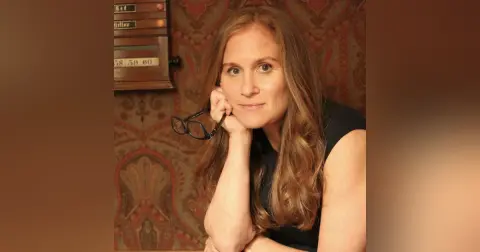
Would you go to medical school to become a better writer? Randi Hutter Epstein did. Unconventional best defines the career journey of the multi-talented Medical Journalist, Author, College Professor, and MD, Randi Hutter Epstein. Coming out of college, Randi knew two things: she wanted to write and was fascinated by the medical field. What to do? Her father, a physician, challenged her to embrace both, which led to Randi enrolling at Yale Medical School—with the full knowledge that she would ...

 Apple Podcasts

 Spotify

 Castro

 RSS Feed

 Youtube Music

 YouTube
Would you go to medical school to become a better writer? Randi Hutter Epstein did.
Unconventional best defines the career journey of the multi-talented Medical Journalist, Author, College Professor, and MD, Randi Hutter Epstein. Coming out of college, Randi knew two things: she wanted to write and was fascinated by the medical field. What to do? Her father, a physician, challenged her to embrace both, which led to Randi enrolling at Yale Medical School—with the full knowledge that she would (most likely) never practice medicine. The journey that followed is fascinating, inspiring, and still evolving.
In this episode, we will:
• Experience the Growth Mindset in action.
• Discover how to succeed as a reporter living overseas.
• Get a look at how a medical journalist discovers and pursues a story idea.
• Explore the life of a modern-day college professor.
Randi’s experience goes to show that there's no single way to success. Whether she's nurturing the next generation of writers at Columbia and Yale, authoring books that captivate readers, or shaping stories for top publications, her path highlights the beauty of following your own compass.
Randi’s story is a testament to building a career on your terms, embracing learning at every turn, and pushing against the expected.
To discover more episodes or connect with us:
00:02 - Medical Journalist Randy Hutter Epstein
09:43 - Navigating Career Choices in Medicine
15:47 - Navigating Medical School and Journalism Pathways
25:23 - From Medical School to Journalism Career
32:57 - Editorial Influence on Writing Success
45:39 - Teaching Journalism
01:00:27 - Passion and Curiosity in Journalism
0:02 Hello and welcome to the Career Journey Podcast no Wrong Choices, where we speak with some of the world's most interesting and accomplished people to shine a light on the many different ways we can achieve success. I'm Larry Samuels, soon to be joined by Tushar Saxena and Larry Shea To help support our show. Please be sure to like and follow no Wrong Choices on your favorite podcasting platform. Connect with us on LinkedIn, instagram, youtube, facebook X and Threads, or visit our website at norongchoicescom. This episode features the medical journalist, author, professor and MD Randy Hutter. Epstein Tushar as, in some ways, a fellow journalist and writer and reporter, why don't you lead us into this conversation?
0:50 all I'll say is this if you look at this woman's resume, we are not smart enough to speak to this person. I gotta be quite honest with you. Um, look she. She obviously is a prolific writer and you know she went to not only journalism school but she said, okay, that wasn't enough, I'm gonna go to medical school as well, just just for the hell of it. I mean, that is crazy, the amount of academic rigor that you have to go through with this. And she has managed to build a career as a freelance journalist. I don't think she, if you. I don't think she's ever had a full-time gig. She's worked obviously places, but I don't think she's ever had a full-time gig. She's worked obviously places, but I don't think she's ever had a full-time gig. Now you look at my resume. It goes from freelancing to full-time positions, freelancing to full-time positions.
1:33 I have a good mix, but for someone to say that they're going to essentially build their career around never having a full-time gig, that takes a heck of a lot of courage. And Randy Hutter Epstein is no joke when it comes to speaking to people who know what they're talking about. Yeah, I'm going to second your thought about the resume. Again, I am feeling like a bit of an underachiever. We're all underachievers next time. Embark on this incredible interview that we're about to do. And you're right, she's an impressive person and we're going to have a lot of fun with this one. She's an impressive person and we're going to have a lot of fun with this one. I can't wait to dig in because she wears a lot of hats and I can't wait to see how they all fit together. You know, you're right. T, who goes to medical school with no intention of practicing medicine Just for the hell of it.
2:15 We're going to dig into that. So fascinating, fascinating person and we can't wait to talk to her. Yeah, I'm sure this is going to be a great conversation. I will share that. I know her and I know her energy level and I know how interesting she is, so I have absolutely every confidence in the world that this conversation will live up to the expectations that we are setting. So with that, here is Randy Hutter Epstein. Now joining no Wrong Choices is the medical journalist, author, professor and MD Randy Hutter Epstein. Now joining no Wrong Choices is the medical journalist, author, professor and MD Randi Hutter Epstein. Randi currently teaches journalism at both Yale and Columbia University, while working on her next book and writing the occasional article for the New York Times and other national publications.
2:58 Randi, thank you so much for joining us. I am so thrilled to be here. So I suppose, as we often do on this program, I should offer my full disclosure that Randy and I are friends. So there might be some inside baseball or inside jokes along the way, but it was my view that Randy would be a great guest today. Of course, she has taken, I think it's fair to say, an atypical path from the beginning to where we are today. So, Randy, with that, why don't you lead us into the conversation by telling us in your own words who is Randy Hutter Epstein and what do you do? Well gosh. Okay, so what I do is I teach and write about medicine, and so I guess my passion is accurate medical and science communication and public health communication, which I used to have to explain to people why it's important that we don't hear false things about medicine, and I'd have to like find an anecdote to explain.
4:06 But now I kind of think we've lived with all this stuff, it's like an easy thing, it's to explain, so that's what I do. How did I get there? Circuitously, because I'm one of those people that isn't very focused. I have a lot of interests and so I kind of just studied liberal arts and liked science and liked writing and kind of like drawing and all these different things. And then by the end of college someone did mention oh well, if you like writing so much and you like medicine, you should do medical journalism. I didn't have any journalists in my family. I never thought about that. I didn't think of writing as something that you can do as a profession.
4:50 So I ended up going to Columbia Journalism School where I learned a ton because I knew nothing. I was a clean slate, which is a nice way of saying I was completely ignorant going in. A lot of my classmates were like on the school newspaper for years and their parents were in the business and they knew all this jargon. I knew nothing, so they didn't have to. I didn't have to unlearn any bad habits, I had nothing. I was a clean slate. And then I did tie with the idea of should I go to medical school or not, and that my dad was a doctor who was a pathologist. So, yeah, that was an influence. There was no, oh, we want you to be a practicing physician.
5:35 But my dad, who was really intellectual, kind of thought why wouldn't you want to learn more? Why wouldn't you know? If you want to write about something, why wouldn't you get educated in it? Why would you just spend years asking other people? So I did go on to medical school after journalism school, have an MD, but I did not do a residency or internship or anything. So I'm not licensed. I never practiced medicine. I used my well four years, but I did it in five years. I took time off, as many of my classmates did. So I use my medical education to inform the way I write about medicine and I would say that so I don't have the experience of being on the front line, I can't say I know what it's like when there's all this stress around and this is how you have to make last minute decisions, Though I've been next to people that have.
6:32 So I think I have a sympathy for it. I think from my little experience in medicine, you know, compared to people like Larry's wife that's an expert that has spent many, many years in training and clinical practice I don't pull from that experience. But I pull from my little bit of experience of standing next to people and having had the wonderful privilege to be near people that have been in the throes of making those decisions, that have been in the throes of making those decisions. It's such a unique journey that you've had going to medical school but not practicing medicine, all of it. Let's take a deeper dive into how you got to where you are now, because you're obviously very knowledgeable.
7:18 Were you always a good student? Did you grow up a good student? Was that always a part of what you wanted to do? You said your dad wanted you to get educated in this specifically because you showed interest. But when you were a little girl, was it like I'm going to get straight A's and that's just the way it is. Yeah, I mean, I wasn't like I wasn't one of those kids, but I don't really know anybody that really is. You know, it comes so easy. I didn't study because you did. No, I definitely was a studier, studied hard, played hard. But we can focus on the study hard part for this conversation. We have to. Of course we don't have to Come on. Yeah, I would say yeah, I wasn't.
8:01 I'm not an efficient studier like my husband was. We went to college together. He could like go and focus. I'm not good at I don't want to say I'm not good at that. Some people have different kinds of attention spans. Mine is probably on the shorter end. You and I sound very similar. I study a little, I take a break, but yeah, I did always work hard in school. Initially, when we were all kind of pre-gaming this interview, one of my questions was are you crazy? Having gone down your career path, meaning you know, obviously you know journalism school is no walk in the park. But then to couple that with medical school afterwards during your years, I mean that is an unbelievably rigorous academic journey.
8:48 I understand, having read your bio and having seen some other interviews with you, you wanted to be an architect. Your initial thoughts were you would be an architect. So what were some of the similarities that you saw, let's say, between architecture? And then, before you finally made that decision that you know what I want to go to med school? Did you see any similarities in those disciplines? I see there's creativity, a lot of observation, so I see that if I'm sort of pulling at things oh, you asked if I was crazy, but yes, but probably not in other walks of life. Right, right you know I mean, yeah, I like to do practical jokes, I like to do things like that, but that is yeah.
9:34 So but I would say in retrospect it's very easy for me to say I did this school, then I did this school and then I did this. But at each step along the way there was definitely oh no, I made the wrong decision, maybe I should drop out. Oh no, maybe I shouldn't be doing this. So, for instance, yeah, medical school is kind of hard. Who would have thought that? So I did take time off to write, I did take time off to write. And then, after I was in medical school for two years and I would say I complained for oh, three years of the two years I was complaining about it. And then I did write a letter.
10:17 I mean, I don't remember writing this letter, but I didn't send an email. It was in the 80s Somehow. So you had to send an actual letter. Somehow I communicated it must've been a letter to the Dean of students saying, like you know, thank you very much, but I don't think I'm going to be coming back and I'm still friendly with him. He's well into his nineties and we just went out for lunch recently and he basically, like my parents at that point, were like I can't. They're not. There's a limit as a parent what you can force someone to do when they're complaining that much. But he brought me into his office and said I know what you're thinking that the next two years are going to be a waste of your life.
11:01 And you know, when you're in your 20s, every minute seems like this is a waste. If you know, I have to go on. And it seems like all your friends are accomplishing so much. By the time they're 24 and 25. I don't know. That's just sort of the image that I had of my I think you're right about that. People are writing and writing books and doing all this stuff and you know you read about it and for me it was like focusing on all these people that were doing really creative writing stuff. So he said to me, if you drop out now, it's going to look like you failed out and the two years behind you was a waste of time. That's definitely a waste. If you finish up the next two years, you don't have the pressure of applying for residency.
11:45 You can think of it as this amazing reporting project. You want to write about medicine? You can. You'll see surgeries, you can do rotations and whatever you want. So I stayed and so I basically have my MD just because of him, dr Robert Gifford, who's just a wonderful person. So, yeah, so it wasn't like, yes, I'm a good student and yes, I do work hard, but I also I'm always questioning myself and thinking, yeah, well, actually I didn't know that there was this podcast at the time called no Wrong Choices, because I was like, did I make a wrong choice? Wrong choices?
12:27 Because I was like, did I make a wrong choice? No one ever said to me there are no wrong choices and there'll be a podcast one day. With that we're hoping we're bringing that mission forward. We didn't know that either, so I do want to back up a second though. So you know, when you were at Penn and you were studying architecture and you eventually decided to pivot towards medicine, it's my understanding that you actually wanted to be a journalist, but your passions were tied to medicine and when you went into medical school you kind of had a unique vision for what you were going to do with that part of your life. Is that accurate or no? Kind of. I mean, I was only in architecture for like a year and then I took a science class and just a microbiology class and was like this is so interesting.
13:15 I think I was so reluctant to go down that path because I was really close to my dad and he was a doctor and I just didn't want to be like, oh, now you're just doing something because your dad is doing it. But I really found like like I think other like architecture was fascinating and interesting, but there was something like this is cool, this is life, like this is going inside us. So I loved cell biology and then I also like to write, but I didn't consider myself a journalist or think about it. I just was like going along being a college student Like I. I mean, I think it's different. Kids are constantly thinking like how am I going to? What am I? How am I going to use this to then do something after college?
13:58 Like I don't think I was thinking that. I was thinking, oh yeah, if I end up going to med school, I should take the pre-med requirements that are like eight classes. It wasn't that much so like I did that, but I wasn't. I didn't. I wasn't thinking like jobs and careers. I was just kind of figuring out what am I going to? I actually was like, what am I going to major in that super liberal arts that can count as a major. So when you went to med school, you did go with the intention of becoming a doctor, and that changed over those next four. No, I went on my med school. I was so confused that when I was applying to med school I still wasn't sure that it was the right route.
14:40 So I thought, if I go on my medical school interviews and say I do not want to practice, I just want to write about medicine, oh not, I just, I want to write about medicine. And if they all say we're not going to waste a space on you, then I'll be like, oh okay, I needed a door to close in my face. Like now I know that that's not. Now I know that's a wrong choice. Thank you very much. And you know, a few of the schools did say like why are we wasting his face on you? And I was like I don't know, you're not going to, you're not going to accept it, don't worry about it, you're not wasting his face.
15:37 But the intention was always to write very happy with someone getting an MD, phd and doing research and not practicing. I think they saw me along that line. The guy who interviewed me, who was wonderful, who died at an old age recently, shockingly was like that's a terrific idea. He had a heavy Southern accent that I'm not going to try to do now, but he basically I thought he was going to say we're not going to waste a space. And he was like we need people who understand medicine to spend time explaining it. And this was in the 80s. Wow, we need the. We need people to understand what's going on in medicine. And do you know we don't have exams at Yale and we have the fewest class hours of any medical school.
16:19 Yeah, so I was sold. I was sold on the no exams. Sounds like my educational journey. So obviously you said that Yale was very open to your thought process and said what you want to do with your medical career. What about your peers at that point? How were they? Because obviously many of them have probably gone on to become doctors, practicing doctors, so many of them were probably the same way along some of the other med schools you looked at which were like why did they waste a space on you? Someone could actually be here doing something. What were your peers like? Fine, no one I don't know. I want to speak for them. Let's just put it this way that I don't I mean I, I had, I had friends, we all got along.
17:06 I don't, nobody. Nobody seemed resentful. I wasn't going to take their spot in residency, so they don't have that um, but I'll say that. Um, my daughter now just started med school and she has the the same anatomy professor that I had, like over 30 years ago, and he's wonderful. And she said something to him like you know, did you, I think you also taught my mom? And he said yeah, I don't remember many medical students, but she was a real character. Yes, of course I'm not quite sure what he meant.
17:48 I mean, I did really love anatomy. But yeah, I'll have to ask him next time I see him. As you got towards the end of medical school, did you ever consider changing your mind? Did you ever consider going through and becoming certified and doing a residency? There were moments, so I two twice. I was just thinking about this recently. You know it's funny because the journalism background people are like you're going to love psychiatry and all the stories. You love kids, You're going to love pediatrics. I have four children and I do love kids. I love them when they're healthy. I found. I found inpatient pediatrics killed me.
18:31 My daughter might want to do something like that but it was. You know it's hard to be like. Well, the you know those five years of your life were you know you at least you got those good five years. Like I just found it very, very depressing but I was fascinated with it, but I never. I didn't think pediatrics at all. The few things I did love pathology, which my dad was a pathologist, which of course, like, oh you know, you're going to do what your dad did. But I did love that, I loved I did a pathology rotation and I just thought I remember holding a breast cancer, like not the human, the actual tumor, and I just found that fascinating. I'm like whoa, I have cancer in my hand.
19:11 Wow, not spreading it, but like, so there was something fascinating about this, is it? This is the disease. I just thought it was fascinating that. And then I had a day in a rehab center that we did a rotation at or just spent a little time with in med school, and I just thought the doctors there were amazing. And so I did think for a moment because I remember saying to doctors this must be so depressing. You're dealing with people that have horrific accidents that then have to try to if they can maybe learn to walk again. And the doctors there were so wonderful and they were like cheerleaders for their patients and they said, no, it's not depressing, it's actually amazing to work with someone and get them from where they thought they're never going to walk again to at least to the next level and there's just there's this huge feeling of accomplishment.
20:09 So there was moments but that was just momentary things of admiring these doctors. Not enough. Yeah, I knew I wanted to write and I knew I wanted to write during the day and I knew I wanted a family. And you know, there's all this talk of being a woman and juggling career and family and I just didn't know how two careers and family and life, like I just I didn't think I could do it all. So, yeah, so that covers the medical aspect of your academic journey. Talk to us about your writing. How did you pursue that passion? Yeah, right after college I applied both to medical school and Columbia Journalism School and I thought if I got into Columbia which I did I had had an internship at the Times and like that's what solidified that's so cool that these people are hearing news and writing it.
20:58 So I went and it's only one school year, columbia. So I went there right after school year Columbia. So I went there right after. And then the decision was oh, do I go on to med school after? Do I just go out and try to, you know, write as a medical reporter? So then I did. I went right to medical school right after journalism school. Obviously you said you worked at the Times before you even went to J school. Oh, it was an internship, I mean, internship. Pardon me. So, um, what was your internship like and how did that? How did you, as you say, it made you, it made you determine that this is the career path I want. This is the career path I want to go down. So, what was that one moment? What was that one thing Was this is what I want to do.
21:41 I absolutely now know this is my calling. Let me just tell you how I got this internship. I knew nothing about journalism, nothing Like I didn't realize that people apply when they're born to get an internship at the New York Times and if you wait until nursery school. That's too late. Wow. And you've already been editor-in-chief of, like Harvard Crimson or something. And so I applied like really late, whatever. And I got like a rejection letter. That was just like are you serious? I think that's what the rejection letter said. And then, after I got rejected, I got a letter or a call whatever one did in those days to say that the secretary in the science news office you know everyone sat in the same room and all the journalists around and the secretary sat in the middle, you know, to field all the phone calls.
22:38 She's going to be away for the summer. It's a paid job. Do you want to take over for her? You'll be answering phones, but we know you're interested, so we'll. You could see what's going on and we'll fill you in on what's going on the meetings. And I did get to write a teeny bit, I think, a paragraph at the end of the summer, like a really short little news thing. So that's my internship, like that's why so wait, so was it actually an internship, but it sounds like it was a paid gig yeah, it was okay so that, because back in the 80s interns meant you like you worked for free. Right, you got coffee. It was a little paid gig I did the coffee I I like was so like you're talking about me being a good student. Like people got their mail, I think alphabetized, you know like here's your mail today.
23:23 you know and like, and I was really good at filing and you know I was really good at that stuff and I'm still friendly with some of the people that were in the office then. But I was. It was wonderful and I worry about this with all this remote work, because if it were remote or anything like with other people were working remote, I would have never had this opportunity. Every big time science medical journalist was like sitting all around me. I heard them on the phone, I heard what they were doing, I heard when they came back from meetings and talking about fighting to get their pieces on the front page. You know I heard all that and I was just sitting there.
24:03 But I made really good friends. They're really good mentors and I learned a ton, a ton. So then I knew I'm sold. You know, I want to. I want to do this. I want to hear medical news right away and try to make science degree one, larry altman, who I'm still in touch with. he and he he had, but he actually did a residency and he was at the cdc so studying infectious disease, and he's probably the first well, there's probably other before him but I mean he, he was one of the few, I mean he, he went to the new york times, I think in 1965 did any of them. When you told them that you were planning to go to medical medical school, did any of them say that's.
24:46 Told them that you were planning to go to medical school? did any of them say that's a wrong move, smart move, anything like that, I don't remember. Or did you even tell them? Yeah, I don't think it was. You know, it's funny, I've never been asked that before. I don't think that I think I was handing them their mail and filing things. I mean they knew I was interested in writing. So they were really wonderful about telling me what they were working on, but I don't think anybody asked like what's your-? What are you doing next? Yeah, what are you doing next, kid? No, I was more interested in hearing what they were doing. Yeah, Well, and it clearly had an impact. So you go through that experience. You then go to Yale, you complete your medical degree there and you're teed up, you're ready to run.
25:31 So where did you run to from medical school? Well, I got married and my husband and I decided we wanted to live overseas, live overseas, and he was able to get a job in London and everyone said to me you're not going to be able to, you know, find work because in order to be a foreign correspondent, you have to put in your due diligence, you know, at the United States and then get launched overseas. Yeah. So I was like, ah, you know. But as life happens, someone gave me the name of someone at the Associated Press and I went to the Associated Press and met someone and he said well, you know, we do have someone that's like freelance with us that covers theater and he wants to be a theater writer.
26:20 So he writes about all the theater for the Associated Press out of the London Bureau and then he can freelance outside. We do not like covering medicine. They sort of feared medical stories and would wait till the New York office said why did you miss this story? And then they would quickly cover it. So they said if you want to do medical things for us and we'll see how it works out. So that's what I did. So then I got this gig at the Associated Press and it was a really wonderful office. I'm still friends with some of the people. It was just one of those lucky things that it was like a small bureau with the nicest editor that, and he made our work like with a comma here and a tweak there.
27:04 He made our stuff seem so much better. We hated when he went on vacation. You know, sometimes you work in places where you're like, yay, the boss is away this week, like we all panicked. It was like mommy's away for the week and her copy's not going to be as good. Now what do we do? So it was really, and it was also stressful in the sense that you know, I got this job and I had gone to journalism school and I had written on deadline. But this was before the Internet and so the Associated Press and Reuters and UPI these wire services were the first to get the news out. So when there was a tight deadline, you had four or five hours and then it went around to the entire world.
27:48 I did live in panic. I hope I didn't say a thousand, but it was really 10. I hope I didn't get the decimal point wrong accurate. But there was no like no one was also reading the science article. So I would, I would hand my copy in and then I would wake up really early the next morning to go the newsstand to buy like the major national newspapers in London to make sure that my story was like just saying, like it wasn't like this like I, my big fear would be like this drug. You know the.
28:29 You know I would write this drug really works. I didn't. And then I'd go to the newspaper and everybody else would be like danger in this drug and I'd be like wait so it never happened, I never got anything completely backwards and I and I was actually good with the decimal points. I think I was so worried. I checked things a million times. But it's great, great practice to not be oh, this word or that word, which verb, and just write clearly and quickly and get it out there. Yeah. Yeah, I'm so glad you just talked about the precision that you have to have there.
29:09 First of all, that sounds like a dream gig for you, specifically, you know, when you go overseas. I mean that's amazing that that gig happened for you. It sounds like the self starting, the self motivation in you is kind of what's driving your whole career at this point. Are you deciding what you're writing on? Like how is it working, like with? I need to know this answer. This is something that's a void in the medical world and I need to figure it out, and I guess that lends to that job and throughout your career. Like, how are you figuring out? This is something I'm fascinated with, so I'll do all the research and lay it out for the world. Or there's a real void here. We have to fix this void medically. Yeah, I mean I think it works both ways. I think you know when I wasn't working on books or what I tell my students editors are always looking for ideas, and so it's great to be digging, and whether that's talking to experts, reading valid, but maybe like more obscure journals.
30:05 You know there's like the New England Journal of Medicine and JAMA and things, but then there's also each specialty has their journal. I wouldn't call them obscure, but they're focused on a specialty. So when I was younger I mean I'm still young, I'm only in my sixties, but like when I was Exactly. When I was a little younger, like thirties like yesterday, I would For all of us. When I was a little younger, like 30s, like yesterday. I would. I would For all of us, yeah. I would send an editor a bunch of story ideas and, honestly, like oftentimes they would be like no, no, no, no, but they would see that I was hungry to work. And then sometimes they would say, well, but we are looking for someone to write about X, and sometimes I like that's kind of not what I'm interested in writing.
30:50 But you know what you take, what you can do, and I also found that I can't even like usually you get interested in it, or at least I do. There's something interesting in every story, or you find it. So someone will be like we need someone to write about whatever disease or whatever medical thing is going on, and so I'm like, oh gosh, that's so not of my interest. But it is like I don't know. You start talking to people and you're like, wow, this really is fascinating. Or it gets to the point where, well, how do I convince an audience member like how this is exceeding? Because I can relate, because I didn't think so, I didn't want to be writing this story. So some of it's that.
31:32 But oftentimes it is both hearing people you know talking about their fears or what they don't know, or hearing something in medicine that I think people don't have the right information about, and trying to get a story that sets things straight. So it kind of goes both ways. So when you're in London, I guess how long were you there? And as we all did our homework and did our research, we know that you didn't just write for the AP. You added a lot of other projects and roles to that. So tell us about the momentum building and how your career really started to grow for you. Yeah, so we were in London about six years so I freelanced to other newspapers there and magazines.
32:20 There were more magazines then. It was fascinating just seeing the difference between working with American editors versus British. And so I freelanced there and I also was the bureau chief or the sole person I was chief of myself of a publication called Physicians Weekly. That, no, I don't think it exists anymore. That, no, I don't think it exists anymore. My editor there was amazing and so that was writing. It was. It went out to doctors so it was writing medicine for doctors. And the other thing I always tell aspiring writers or journalists like, the one thing you really want is a good editor.
33:03 You know, that's to me that's been more important than the publication almost, and who's going to be reading it? It's wonderful to have an editor that works with you, so that's a learning process and makes your writing better. So Physicians Weekly was like a mentor to me the editor there and he was wonderful. So that helped a lot the editor there and he was wonderful, so that helped a lot. Now my book editor has been like a wonderful mentor to me to help, you know, hone my ideas and my books. So, yeah, I think I, I, I lean on all those people. So I have two questions. The first one will be have you ever had a full-time gig? Cause it seems like your entire career has been kind of freelancing.
33:44 To do that is incredible. To do that Remarkable's absolutely remarkable. To make a, to make your livelihood off of essentially just freelancing your entire career. And then two what makes a great editor? great. There's two different things. I mean, I've had my last book, had an amazing copy editor. I'm so indebted she. She found like every cross t that wasn't crossed and you know, which was wonderful. I think two things to be able to see the holes in your story, you know, to see something fresh and and to know you and to say I think you can go deeper, I think you can make this point sharper.
34:24 Make this point sharper. And I also, I've always worked with editors and well, I guess think so that haven't rewritten my stuff but have pushed me. You know, I've seen the weaknesses and the faults and said I think you can hone this better or this doesn't make sense. So then it's more of a learning curve versus handing someone something in and having them rewrite it. So yeah, so I guess that's what, that's what helps, and I try to do that in my teaching. I guess I consider myself more of an editor. Well, I am a teacher but like I edit their things and I and it's hard I try to edit my students in a way that I push them to come up with this solution.
35:08 I think any great editor is also a teacher, even in the real world, so to speak. Yeah, exactly. We'll get back on the journey part in a second. But while we're here, talk about the pressure of getting it right. I can't imagine the amount of research that you have to do to write in the medical field. It is very precise. Have you ever been worried about getting it wrong, like truly wrong? I mean that has to be a lot of pressure for you to take those facts. You know this is not a fiction, this is nonfiction writing and you have to be precise and correct and organized and thorough. So talk to me a little bit about that pressure while we're here. Oh, I live in that panic all the time. But let me add to this.
35:51 I'll just add to those stresses. There's the stress of getting it right and I do have then my sources that I'll call back and read. And now that I've been doing it for so long, there's people I trust that I can say, hey, this is what I think, am I getting this right, especially if I'm not on the tightest deadline. But I want to add that it's not in addition to the data and the specifics to feel that I've said something that'll humiliate them or that misrepresents them, or that I use a term that they might find offensive.
36:36 So I know that a lot of times in journalism there's on the record and off the record, and if they forgot to say off the record, you could play gotcha. And I just kind of feel all those rules go down the tubes when I'm talking to someone who has been ill and they are giving me details of their illness, and there are some journalists that like to say, oh, we're giving them a voice. Yeah, maybe, but we're also exploiting their story so that our work looks better. You have someone give you all these intimate details and what went through and what happened and how they've suffered and how they've survived, and we are happy because that makes us look better.
37:20 We got it. We got them to talk to us, we got them to open up. My byline gets on the story, them to talk to us. We got them to open up my byline gets on the story. So I feel, because I've exploited their story, maybe, yes, they'll feel happy for getting a voice. I always read back exactly how it's going to say how they're going to sound, and give them the opportunity to say, oh right, I did tell you that, but you know what? Actually, no, can you leave that part out? And you know, and then I will, and then I will. So I'll add that to the worry that I hope that someone doesn't, and it's never happened. But I worry I'll always worry about that that someone will say, oh, I hate that word, or you referred to me as having a certain disease, but I like to say it's with that syndrome, even little words can make someone feel like that their identity has been blurred or something.
38:21 Yeah. So, randy, as we come back to your journey and look at you know your accomplishments to date. In terms of where we are, I guess we're in London. You've been writing for a while. You're there for six years. Eventually, you come back. I'm aware that you have four wonderful children, who are all incredibly accomplished people. What was that like for you in terms of having a career, having a dream, having a passion, having a vision and having four children at the same time? And did you learn from that experience? Did going through motherhood in any way impact your writing? Like, I'm just kind of curious about that dynamic.
39:03 Yeah, I mean. So my son, my first son, was born in London and then I was pregnant with twins when we moved back here and that did affect my career choices because I was looking around to see if I could land like a full-time newsroom gig and then I realized that there's no such thing as working nine to five in a newsroom then and I would have two babies and a two-year-old and or two and a half and like I just couldn't see if there was like a major, great news story and they needed a staffer to go off for a week. I just didn't want to be that person with three little kids.
39:47 So I came back knowing that okay, I'll freelance. And then one of my professors from med school, who was wonderful, he did a sabbatical in London and it's just interesting when you look back on decisions you make because they just seem different and whatever. But he had said to me because they just seem different and whatever, but he had said to me he was a pediatrician at Yale and wonderful. And so he said to me when I was moving back he offered me the opportunity to go on the wards and one or two days a week and just shadow and be on the wards with the pediatricians and if, at the end of the year, I thought, wow, you know what.
40:29 I changed my mind. I could do this. Oh, wow. Yeah, then he would let me join the program. And he said, and if not, no hard feelings, it would just be an interesting experience for your writing. But you know, which sounds wonderful and doable. But at that moment I was just moving back to the States and my son, as boys tend to be, was really attached to me and he was two and a half and you know, america then was a foreign country to him, back and forth to yell all the time and it feels so close. But at the time I thought, you know, I liked picking him up from school and we hung out after nursery school and I just couldn't see myself being like, oh, I'll be home in three and a half hours, so yeah, so I didn't do it, so I just couldn't leave my son then.
41:23 And so, yeah, like it seems like nothing now, it would have been two days a week, but at the moment I was just like I don't think so, so I didn't. So you turned your attention to family. Yeah. And are you freelance writing at that point? Are you writing at all? What does that look like? And I was gathering material for my first book. I wasn't getting as much accomplished as I wanted to, because those twin babies take up a lot of time. Yes, I was trying to freelance as much as I could. I was working on my book as much as I could, but I was constantly thinking I'm not getting as much done as I should. Now I'm curious about the book.
42:20 What was the? inspiration. What was the title and how long did it take you to actually write that first book title ever. Yeah, and that book came around not because of my pregnancies and not because of childbirth or even an interest in OBGYN. It actually came about because when I first started reporting on medicine right after medical school I'm always so like naive plus optimistic, I think. So I thought, ok, I'm going to get these breaking news stories. It's going to say here's a new study that shows X. I'm going to interview experts, I'm going to publish this story, and then doctors are going to be like thank you for this new information based on really good data.
43:00 And now I'm going to change what I do when I go to work tomorrow. And then I was like blown away by you know doctors who I thought were old. They were probably 45. I was blown away by you know doctors saying, wow, really great study that makes so much sense. Oh, are you going to incorporate this into your practice? Well, not really, cause you know I've been doing. I've been practicing medicine for 20 years and and so so I then got really fascinated with like then, how did doctors change their minds? You know like what I mean. If science isn't gonna make you change your mind, like what is? So I got very interested in decision-making of doctors and then doctor-patient relationships.
43:44 I was just like kind of reading in history of medicine and gathering information, and then I gravitated to OBGYN because I found that that was the most fascinating relationship between doctors and patients, because you can be the smartest person in the world but you're in pain or you have a horrible rare disease and at some point you're just going to say to your expert doctor fine, Okay, sure, do it. You're a healthy woman who wants to get pregnant or planning getting pregnant, and you choose a doctor and the doctor's like you know, this is the way I see childbirth and pregnancy and you're like well, I don't, so I'm going to go to someone else, or no, I'm not going to go to someone else, but here's how we're going to talk about this.
44:27 So I was very interested in that dynamic, especially in pregnancy, because you can actually get pregnant without going to a doctor, shockingly, and you can even give birth without going to the you know, smartest OBGYN in the world. So I was really interested in that relationship. When did women become such control freaks, saying like I'm just going to eat this and my baby will be perfect, or I'm just going to do that, and then looking at the whole business of fertility and what's going on. So that's how I gravitated, and so I just started reading a ton of history books and books that were written way back when, and talking to women and archives and collecting information.
45:17 And then at a certain point, I think my husband was like you're going to just collect information forever, or you're going to focus this on a book proposal and get it out to an agent? So and then I did yeah, At what point did you begin your teaching career and how do you, how do you relay this passion that you have for your writing, for medicine, for science? How do you relay that to your, to your students? Well, I started teaching I have to look at my resume. I don't know 10 or 15 years ago, I don't know something like that First I was I co-taught a class with a woman at CUNY Journalism School who's wonderful, and I learned a ton from her Emily Labor Warren, who runs the science writing at CUNY, and she's amazing, and I was so fortunate that she asked me to co-teach something with her and I learned a ton.
46:06 And then I taught. I served as a thesis advisor at Columbia Journalism School Now I teach profile writing there and then I taught this course that I developed the syllabus with another person, kathy Shufro, who's also interested in medical writing. We developed a syllabus together at Yale and I think I hope I get my passion across to my students. They have to write a lot. They know that I obsessively go through all their papers so for better or worse, they're seeing that I care about every comma they put down. So you got into teaching. I looked at your LinkedIn profile as you were giving your last answer so, from what I can tell, it began in 2009, about 15 years ago.
46:48 So you know, as you're developing that skill set, you know how scary is it to go into a classroom for the first time and how do you get good Like, how do you master? those skills. Yeah, I'm constantly thinking how could this class have gone better, trying to keep students not bored, hoping that they did the reading. Yeah, I'm just constantly tweaking it and I think I've just learned through the years that students really mostly want you to care about them and care about educating them, and I do feel that they're paying a lot of money or someone's paying money for them or somehow they earned a scholarship and so I feel like I'm working for them and I want them to come out of the class and then forever and ever in their life, hear my nagging.
47:47 Ever in their life, hear my nagging voice in their head when they I will hear from students years later saying we had to write this piece. I'm in medical school or we had to do this and I could hear you saying like no, you don't need all those adverbs, that's too long, that you can simplify that. So I'm like that's don't need all those adverbs, that's too long, you can simplify that. So I'm like that's. That's what I want to hear. I want my nagging voice to be in your head. What do you get the most gratification from? Is it the teaching? Is it that initial reward? Is it writing a book, seeing it be successful Lectures? Where do you get your most fulfillment? Well, I would say, after I've written something that I think, after many rewrites, I think I've like, oh, that's what I wanted to get across.
48:35 So that's a great feeling. I would say when I leave a classroom, you know, my husband always says, like, how did it go today? I'm like, I don't know. I always say that I don't know, I think it went okay, I don't know. So I don't think I can leave a classroom and be like, wow, that was great, because I'm always thinking so-and-so looked a little bored, did he not get sleep year? Or I spoke to a student's mother actually, because in a circuitous way we got connected and she was my student, not the mother. The daughter was my student a few years ago and the mother said we're so thrilled that you were the one that actually encouraged our daughter to write.
49:31 She never thought about it and she's actually gotten some, you know, published. She's been published and I didn't realize that. So you know I love it. So it's always sort of years later we're all here, things like that. So I guess that too. All right. So before I ask you whether you were an advocate for patients or an advocate for medicine, you were an advocate, and you said you were an advocate, an advocate for the truth. So now do you consider yourself a teacher or a writer? I think both. But I'm going to add I'm an advocate for my students Like I. You know they're applying for something and they did well in my class. You know, or they're not or they're just like. I will like write them the best letter of reference or figure out who I know. Like I feel, like like I will be, you know, I don't.
50:11 I feel like this how could they not hire my former student? So I feel very attached. Once you're in my class, you're like stuck in my web and I feel very. I don't know, I just feel possessive. You feel very possessive, that they're better than other people and they deserve that job and I want to push to make sure that they can get ahead. And nothing makes me more excited than I mean other than my own kids, like hearing from a student their successes. One of my students went off to get a PhD and invited me to hear you know when they do their oral presentation and and just to see students that might've been nervous or freshmen or sophomore and they were in my class and now they're like practicing medicine or in their confident and, yeah, I just love that.
51:01 I just love that. While we're on this subject, I do want to get your point of view on something. So the times are changing very quickly. You've been teaching for a long time. At this point, we've now established it's been about 15 years and as AI begins to creep its way in and knowing that you are teaching journalism, nice example. Look at her face. We just lost our guest, but you know. I'm curious. I mean, this is something that you'd certainly need to be aware of. This is something that you certainly need to address, I'm assuming, with your students. How do you teach your kids to accept work around deal with Like?
51:44 What is your approach to AI, particularly when it comes to writing and journalism? Yeah, I'm actually taking notes here because I have to remember that. I want to talk about it in my class on Monday, now that you've said that. What I did in my Columbia class last semester this isn't my brilliant idea, it's actually a math professor at Berkeley told me he did this and I thought, oh, I'm going to do this too. So he assigned his upper level math students a math whatever, whatever upper level math student people do. And then he said I want you to do it, and then I also want you to feed it to AI.
52:27 You know chat GPT and see how they did it and let's compare. You know not. And so then what I did for my students they had a simple little assignment and I said I want you to do it, and then I want you to feed it into chat GPT or one of the AI things and hand them both in and let's compare and what we got a kick out of. You know, the chat GPT was so much more cliched and you know, and you could see that it was so formulaic in a bad way. And, yes, I know you could say, well, wait five years and it's not going to sound that way. I'm a really low tech human. I don't know how to turn my television on. I don't know how to turn my television on.
53:07 I don't know how to do things If it's more than an on-off switch, I don't know how to do it. The whole thing of AI writing stories freaks me out. What worries me and I don't think I'm going to be able to accomplish this, at least single-handedly is and I haven't. I just put it down to remind my students this semester because I didn't yet, but my students last semester, like I think that there's the part of the joy and frustration of writing is that blank page and that act of creation that goes from like blank page to actually coming up with an idea and and in life.
53:49 That's just this wonderful feeling of oh my God, like I actually had those thoughts in my head, like I framed this. That's kind of cool. It was frustrating, but then you created something. What about AI incorporating into modern medicine? I mean, we just did a story recently about how pretty soon you will not when you get a, when you have an eye doctor's appointment. It will be rare for you to actually speak to an eye doctor, because the AI is much better at diagnosing your problem, and more accurately, so are we moving? So? Is that something you see, or are you worried about that in modern medicine as well? Yeah, and it's funny. Okay, my dad, may he rest in peace. You know, like this I would be curious what he was thinking now.
54:31 But even in like the 80s or 90s, whatever technology was coming into pathology, he was and this is sort of brainwashed me into it takes a human like you know he was very much like you have to know their whole disease and you have to know everything. And there's good pathologists and there's lousy ones and you don't just want and machines can't take over. Well, you know, I think, right, there are some technologies that the machine can see things better. I think we're going to need humans too. And I just heard recently and I don't know her name because I can't remember it, but somebody in medicine who studies AI.
55:14 So this is not my thought, it's her thought that on the positive side, what could happen is if we have AI better at diagnosing certain things, then the doctor's role will free up doctors to be able to have the conversations and explain what's going on. You know, there's so many doctors saying like I'm staring at electronic medical record, I'm doing this, I can't, I don't have that much time. So she was saying maybe this will provide doctors with the time to say here's what this machine just diagnosed. Here's what this machine is seeing. Let me sit down and explain this to you and go over what it means, because just having I mean I think some people have already experienced this that if you've gone to the doctor and you get your electronic medical records results back before the doctor can read it to you like you don't know what all these lab results mean.
56:14 So you're going to need a human to explain it, because we're not a bunch of data, we're humans, where certain data points mean certain things. So we're going to need that. But but I heard an interesting anecdote of someone said he didn't even tell me what it was, but he had some medical issue and he couldn't figure out pain in his arm or whatever it was. And he was going to all these different specialists and he was a doctor, he had access to all these great specialists and everybody was seeing his illness from their own specialty and he was getting frustrated. He fed it into chat, gpt or whatever computer thing. And here's what he said.
56:55 I never felt so listened to until that's the frightening part of it. Right, that's the frightening part listened to every single part of your story and then analyzed and actually gave him the best feedback, versus the orthopedic surgeon just was paying attention to one slice and the neurologist paying attention to another slice and dismissed all the other stuff. So yeah, it's weird. Getting back to your career journey a little bit, I have to ask this question. I encourage you to be as vague as you want to be, but there's people out there listening right now who really want to know.
57:38 You found this very specific niche and carved it out. You're a specialist in a very tight window and that's important because it enables you to be who you are. Is it lucrative or do you? Have to teach and write and do all these things to piece it together? Or is it just because you love it? because I love it. It's not lucrative at all. There was a great article uh, I keep forgetting the names, but if someone knew there was a great article in the New York Times about why we should pay teachers a lot more. It was written so well. No, it's not lucrative at all.
58:20 I love what I do, but, yeah, you don't. And actually, for freelance writing, a lot of the fees that we get it's something that we writers bitch about all the time. Um, I think the fees are about the same as they were in 1990, wow, lower. That's because people are like. People want you to write for free also, um, which was unheard of in the 90s, but now it's like well, we have this new website, we have this new blog, yeah so the question then becomes so. So how do you pour? How do you relay that to your kids? Obviously, the media landscape has changed right? So newsrooms are taken to the bone in many senses and we see what happens, that.
59:02 We've seen what's happened with a number of large papers. They've shut down, they've cut staff. I mean recently what vice Vice News is going to fire essentially their entire staff and shut down. A company that was once valued at like $5 billion now is like essentially worth nothing. What do you tell your kids now about the nature of the business? It's funny. I was talking to my journalism students last semester. I mean, as I told you, I'm terrible about predicting the future. As I told you, I'm terrible about predicting the future. I do think that we will always need news. We will always need accuracy. The jobs may not be in print newspapers, that I don't think so.
59:43 Somehow people will be getting their news, whether it's in a podcast or whether it's video, or whether it's online or on their watch God forbid. Hopefully we will find ways, because people, I do think, will push for this, that they're going to want more than a one-liner, that they're going to want more than a one liner, that they're going to want more than a breaking news that they can like, read in little like snippets on their phone, yeah, so I do believe people want to know things and yeah, and somehow it'll get funded and somehow there will be advertising for it.
1:00:27 You are a lot less cynical than I am in that sense. I just don't think that people want to learn as much as they used to. I think you know when you and I are not the same age there's a little bit of difference between us, but we came up in the same ways that you know, where newsrooms were big, there were a lot of people in them and there were people who wanted to learn stuff. I think now we just live in an age where there's a lot of echo chambering. And we should point out that Tushar works in the CBS newsroom, so he does know what he's talking about. No, I know, I know, I know. I know you're right. I don't want to be right. I'm not a futurist either. I don't want to be right. Don't tell me I'm right.
1:01:07 All right, all right, let's have some fun. You seem like you're great at parties, randy. I'm convinced of that and I'm good at throwing them. I'm good at throwing them. Yes, she is. I was at one a few weeks ago. It was fantastic. Honestly, can I? just say that I hate the word, I hate that overused like what's your superpower? I feel like it's just depressing. It feels like what a therapist would tell you, like if you're horribly depressed no, you have a superpower. So I don't want to use that cliche, but I do have to say with confidence I told you I stress about accuracy in my writing, I stress about teaching, I stress about this If you said to me in an hour, can you host a party for 100 people? I could do it.
1:01:48 I could do it. That is your superpower. That is your superpower and I actually wouldn't worry. I wouldn't worry Because you know, it it's just a party. And if you think I failed, I don't care, I actually don't. Okay, fair enough. As long as you have free food and booze. we're good, that's right, that's right. Martinis for Teenies, for everybody. You must have come across like strange medical facts, funny things about the medical like your anecdotes in just watching your videos and reading your stories are immense. What's the craziest thing that you've learned in your research? That just blew your mind. I hate to put you on the spot. See, this is the pressure we were talking about before. Can we just talk fun weird facts? Absolutely.
1:02:28 Of course, that's all we want. How about this? That's what it's about. How about. let's not talk about the actual fact, but things that I've done to get facts. Can we yeah? Love it, love it, done, love it. So I was looking at you're probably the wrong audience for this, but when I was working on my stress book I thought, oh, this is like I just finished like a kind of depressing chapter and I wanted something funnier. So, and again, wrong audience here with the three of you, but like I don't know what's funnier than men can't get it up when they're stressed out it doesn't stress me out at all, and so then then I thought, well, I don't want to hear some guys like whoa story, you know, or whatever.
1:03:13 There's got to be someone that's done some animal research on this. Somebody had to have like stress and performance anxiety. Interesting. Like. I spent a while trying and I found a wonderful researcher who was doing it for some drug development, to like his pre Viagra when he was doing this research and he stressed out these little rats, poor guys. And then they would. They would monitor how long it took these rats, when they were stressed, to get erections Not, you know, took them longer. And then I was like, oh, if I'm describing this as one has to when you're writing, you need all the details to describe it.
1:03:54 So I was going back and forth with him trying to figure out, like how big is the average rat's erection, which was like I think it was something like and I'd have to check my notes but it might have been something like 2.8 millimeters or something like that but then I was saying to him I'm going to need like people don't know what that is. We were literally going back and forth. He actually found a certain kind of barley, like he actually had a specific strain of barley that was the exact size of a rat's erect penis strain of barley. That was the exact size of a rat's erect penis. Right. And then I was like but I don't know if that metaphor will land, because you'd have to know either the rat's penis or that specific thing.
1:04:37 But we did end up coming out with a Q-tip nub, like the little top of a Q-tip. So that's a fun fact. I'm not sure, I don't know if it's useful. I don't know if it's useful, but I spend a lot of time trying to get the details right. Specificity, of course, yeah. And I live in New York City and, honestly, we live on such a rat-infested block and I'm not worried about their performance anxiety. With that, randy, this has been absolutely fascinating. Typically we end our episodes on you know, what advice do you have for a young person who wants to follow in your footsteps?
1:05:22 I think you've shared a lot of that already. But if there was one thing you could point at, one, you know nugget of wisdom for somebody coming up in the journalism field what would you tell them? Know your subject. Read a ton, read a ton. Know your subject and keep up the excitement. I mean you have to just I know we hear a lot of false news and it's so easy to dumb things down, but there are going to be people there will there will that really want the truth and I think and then gravitate towards the stories that excite you. You know, I know I said that you're going to be handed stories to do and find the excitement. But yeah, you have to keep your own passion up and your own energy up.
1:06:06 That's great advice and we have to give you this opportunity as well. I know that you have a couple of books out. I think you're working on another and we'll keep that off the record for now, but if people want to learn more about you and read your stuff, what are the titles and where should they go? Oh, they can go to my website, randyhutterepsteincom. And yeah, my first book is Get Me Out, a History of Childbirth, from the Garden of Eden to the Sperm Bank, and the second one is Aroused the History of Hormones and how they Control Just About Everything. I just got that on audiobook, by the way, oh thank you.
1:06:49 Amazing, amazing titles. Well, Randy, thank you for allowing me to convince you to join us today and for joining us. This has been such a pleasure. I'm so happy to be here. Well, that was Randy Hutter Epstein, and I hope that she lived up to all of the expectations I set coming into this conversation. Larry Shea, what are your reactions? Well, I think she just taught us all a thing or two, didn't she? I want her as my teacher, like for the rest of time, like the anecdotes, the energy, as you said, the biggest takeaway I have is just self motivating, just self starter. You know, like this is the kind of career that you carve out if you truly love what you're doing. You know, she said it blankly I love what you're doing.
1:07:32 She said it blankly I love what I do. And it's not for the money, it's not for anything else, it's because she loves to ask that question and research the answer and figure it out. And it's just a testament for me to the idea that if you want it bad enough, if you love what you do, you can find that little bit of pocket of perfection. Right, it's the teaching world, it's the medicine world, it's her writing, which is obviously most pivotal in her life, with the teaching coupled now. But it's also the balance of family. Like she has four kids as well, like you gotta be kidding me she did it all. It's super impressive, not the smartest person in the room when she's in the room with you, I promise you will never be.
1:08:14 You mean you, not her. Me me right Me, I'm not the smartest All of us. Anyone in the room with her, her husband must feel like no kidding. You know, in all seriousness, she's a super impressive person and remarkable conversation, and she gave us so many insights into how you can match that to your career journey, and so we thank her for that. I appreciate the fact that she is a journalist in the truest sense. Right, she is, you know. I asked her quite plainly, you know, do you advocate for patients? Do you feel yourself you're an advocate for doctors or for medicine? And it's no. I'm a journalist first, which means I'm an advocate for the truth, and now she's become an advocate for her students.
1:08:54 You know it's, it's tough, you know I've I've obviously been in the news game now for, you know, almost 20 years at this point, and you do become a bit cynical, right, you become a bit cynical about what people want to learn, what people want to know, and especially now in this day and age, how the business has become, where newsrooms are brought to the bone. But to still have that type of hope and light out there to tell kids these days there's still that need for true journalists, for those who are going to ask tough questions, for those who are going to go out and try and find the truth. Yes, that's what keeps me motivated, I think it's what keeps all of us motivated, and I'm glad that there is someone on the vanguard like a Randy Hutter Epstein still trumpeting that charge.
1:09:38 They're wonderful people and what Randy is putting forward is as genuine as you could ever imagine, meaning I have been to more than one event at their house in support of a writer. I have been to more than one event at their house in support of a local bookstore and I've met her students and they are involved and they're engaged and she is absolutely living what she preaches day in and day out and it's a really wonderful thing to see. And for me, as somebody who has been teaching, you know I've certainly learned a fair amount from her in terms of how to handle my day-to-day and how to approach that stuff.
1:10:23 So just a remarkable, remarkable woman and she loves to throw a party. She sure does, and they're good ones. The last one, I think, had two names on the different signature drinks. It was great. That's great. Did you put it together in an hour Exactly? Was it an hour or more Exactly? So with that, randy, thank you so much for joining this episode of no Wrong Choices. We also thank you for joining us. If this episode made you think of an inspiring person in your life who could be a great guest, please send us a note via the contact page of our website at norongchoicescom. We also encourage you to connect with us on LinkedIn, instagram, youtube, facebook X and Threads On behalf of Tushar Saxena, larry Shea and me, larry Samuels.
1:11:07 Thank you again, and always remember there are no wrong choices on the road to success, only opportunities, because we learn from every experience.