The Sound of Success (Part 2) with Grammy Award-Winning Mix Engineer, Ariel Borujow

 Apple Podcasts

 Spotify

 Castro

 RSS Feed

 Youtube Music

 YouTube
Part 2 of our conversation picks up with Ariel absorbing the wisdom of his mentors in the studios of Puffy and The Cutting Room. These lessons, along with the unwavering support of close friends and family, gave Ariel the confidence he needed to take control of his journey. Hear how he set up his first studio at home (in a NYC studio apartment), served meals to his clients (who always seemed to show up at dinner time) and eventually made the leap to the suburbs in pursuit of a better life for he and his family.
Ariel also reveals shocking experiences from in the studio, complete with celebrity “encounters”, fights, and other antics that come with life in the music industry. He serves up some unexpected but intriguing parallels between his passion for Brazilian Jiu-Jitsu and mixing records. And, shares his well-earned wisdom for those hoping to follow in his footprints. Ariel cannot overstate the importance of relationships and the invaluable influence of good mentorship.
Get ready to be inspired and enlightened by Ariel Borujow’s multi-platinum Grammy award winning journey through the music industry. Ariel has supported many of music’s biggest names including Puffy, Madonna, Andrea Bocelli, The Chainsmokers, Mac Miller and countless others.
To discover more episodes or connect with us:
0:02 Hello and welcome to no Wrong Choices, a podcast about the adventures of life that explores the career journeys of successful and interesting people. I'm Larry Samuels, soon to be joined by the other fellas, tushar Saxena and Larry Shag. If you enjoy our show, please support us by clicking follow on your podcasting platform and by giving us a five star rating. You can also learn more about us and connect by visiting our website at knowwrongchoicescom, or look for us on Instagram, facebook, twitter and now YouTube by searching for no Wrong Choices, or always, you can hear feedback about recent episodes and to meet new people, including potential guests. This episode is part two of our conversation with Grammy Award winning mix engineer, ariel Bourgeau, focusing upon how we built this career after breaking through Larry Shag as Ariel's friend and former colleague, you are once again the perfect person to lead us into this.
0:55 Yeah, I would highly recommend that anybody who hasn't listened to episode one of Ariel's story go back and listen, because I think he really talks about his humble beginnings, really his willingness to do anything, and he really tells that story in a very thoughtful way. So I encourage you to go back and listen to part one. And as far as where we're about to go on his journey, he's a professional right. He's becoming a pro. He knows his craft at this point and he's honing it and becoming a great artist, because that's essentially what a recording engineer is is a great artist. You're literally taking a musician's vision and you're bringing it to life, and it takes a special person to do that.
1:37 It takes another artist to make another artist's vision come to life. Because you are, you gotta be savvy, you gotta be quick, you gotta be smart, you gotta have great ears we talked about. But Ariel also has this thing about him you just wanna work with him, you know, and he just makes you feel better about everything you're putting together, and I think that's what he's about to tell us about is how he became that professional. I think part one of what we heard was here's a guy who learned confidence. He was able to kind of gain confidence in every job he did, every place he worked. He was able to learn just a little bit more, learn just a little bit more. The more artists he worked with, the more confidence he grew professionally, the more people listened to his opinion and then, obviously, he was able to give his opinion more and more.
2:23 And then, yes, we go from, you know, ariel Bourgeois, the technical wizard, to Ariel Bourgeois, the artist. Yeah, and he's living out my dream. You know, this is what I wanted to do for a living, guys. I wanted to be a recording engineer and there's. You know it's grueling, it's long hours, it's tireless, it's sometimes very thankless, you know, but there's a certain reward that comes with setting up a microphone and having someone sing into it or play an instrument into it and putting those pieces together and then a year later you're in the supermarket and that song comes on and you're like man, I saw that thing from the beginning to the end and there's a real reward there that Ariel gets to carry out daily.
3:09 So how amazing is that? So he's living my dream. I'm super proud of him and I can't wait to dig into this part of his tale. Well, that sounds great, and I'm going to go a little bit simpler. I can't wait to hear the craziest things he's seen in the studio. I want to hear some of the highlights in terms of some of the great sessions he's been in. So with that, here is Ariel Bourgeois. We rejoin the conversation with Ariel discussing the importance of being good with people and a good listener. When I was at Puffy's I was working with some of the top engineers in the game and at the time that's why I sent a resume there was because I heard those records and notorious BIG and all those and I was like man, these things sound great, like I want to learn from them.
3:49 And I remember one time one of my mentors there who I was assisting. He said to me don't worry about what I'm doing on the console, watch how I interact with the client. That's more important. And that was like a big thing where now the kids that are coming up now are all working from home and I've seen it happen where their ego gets in the way, like who is this guy to tell me my mix ain't good? But that's not what it's about. Your mix could be great, but did you capture the feeling that the artist intended Because maybe it shouldn't sound so good? Maybe that's not what they're looking for? So part of the job is being like I call myself a sonic psychiatrist Great term.
4:34 Oh my God, but it's really trying to fit. That's the hard part is figuring out, and sometimes you figure it out and sometimes you don't, but there's conversations and I feel like between Puffy and the cutting room. Once those two came into play I was able to get my confidence. And after the cutting room, you know, the last real gig I had as an assistant was RPM, and RPM was a legendary studio which were Billy Joel and what's his name Phil Ramon did all those early billiol records and it was on 12th between university and fifth in this building on the top floor.
5:18 This guy was there since like the late 70s and I think he was paying peanuts there and it was like, I mean, harrison Ford lived like three floors down and this guy had the like the penthouse. It was sick, the studio it looked real retro and whatever. And I was there for quite a bit with this other guy, another engineer named Nick Hard, who's actually we're still really really good friends and he's Snarky Puffy's engineer. So he's, like you know, one of a few Grammys and doing well talented guy and we were there together and I ended up getting canned from there after 9-11.
5:59 Because there was one room, two assistants and the work wasn't coming in and Nick was there before me. So I got fired and after that I said I'm never going back into a studio and I'm going to go freelance. Now, meaning I didn't want to work for another facility. And I went freelance and at the time my wife, who was my girlfriend at the time we were living we moved from Brooklyn in August of 2001,. Luckily because I lived in. I don't even know why I lived there, but we had an apartment on the Brooklyn promenade. It was a studio apartment, oh wow. Well her sister went to Brooklyn Law and got it through that and kind of like, grandfathered a sin.
6:43 I remember that place, beautiful view of Manhattan Really nice, oh you were there, larry, I was there. I went to that apartment once, I think, gary, I don't know what context but I remember that apartment I came to my fourth. was it my fourth of July party? I don't know, yeah, maybe, maybe. I remember the place was banging man. I loved it. But it was like it was a studio apartment. It wasn't big, but what made it feel big was the bay window facing like every I mean it was ridiculous, it was insane. Yeah, literally the Twin Towers were there. So luckily I didn't see that, but we moved to a story and after that I remember telling my wife I said, man, whatever view we get, here is going to suck. I don't know if you guys watched it, was it? friends where they had the view of ugly fat naked guy or something.
7:25 Yes, Well that's what we had in the studio, literally facing a brick wall with one window there, and it was like this like hoarder guy, like oh, it's horrible. But so from that point on I remember she was going to Hunter College and her father was. She was going to get a computer for her birthday and I said, hey, maybe we can get it so we can both use it and I could get a Pro Tools inbox and start running sessions. And I built it up to add all this RAM and stuff, because the Dell computers you could modify them. And that's what I did. I got a inbox and I started running $15 an hour sessions out of my apartment and with who Like.
8:11 Well, who were your clients? Rappers, man? Yep, my client was an artist named Kel Spencer who was actually I don't know if you guys are familiar with the term ghost writer, but a ghost writer is essentially somebody that writes, gets paid but isn't really like the face of the song. They're just like you know. They get their publishing but they're not. You know, nobody knows they wrote it Right, right, right, okay. Sort of like the writer of Donald Trump's Art of the Deal, Exactly, basically. Oh God, I'm gonna talk about that, all right. So we ended up. It ended up being Will Smith's ghost writer and he started booking sessions to do like drop, like you know.
8:59 You know what do they call it Like demo songs for Will, and from that it turned into him working on his artist stuff. And then word of mouth. And my business was always built on word of mouth. It was always like it was always just someone telling someone else. And then the next thing, you know, they would show up at my house and I do sessions and then my wife would come home from her nine to five and cook dinner and if a client was there she'd cook dinner for them and they'd eat dinner. And you know, it started getting to this thing where I started realizing people were booking sessions closer to dinner time because they wanted a free meal. Oh, look at that. And whatever it worked. And I was there for for a little while and then after that we moved to a two bedroom apartment in Astoria so I can use a secondary bedroom as a studio, and I built that out and I started charging $25 an hour and I started getting more sessions and people would show up and sometimes I had like really good artists coming in, you know, like Master Ace and all these people that I had no idea would show up at my house and I was there for a while.
10:08 And then one day I was looking on Craigslist and I found this, this ad that was like built studio with a booth, $600 a month, and I remember I was like I can't afford that right now, you know. So I remember my wife comes home and she pushed me into it. She goes listen, it's first and last month that's $1,200, that's the worst thing that can happen. So if I were you, I would say try it. Worst case you lose $1,200,. You say you tried it and you you move on. You know, but something tells me you're not going to fail. So I did it and I didn't fail and I built up this one.
10:52 It was in a 50 room rehearsal space in Astoria Queens. And the funny thing is is the guy who owned it is still one of my good friends, Tommy, and later on, years later, he helped me build my studio in my house. Because he understood what it was to build a studio, because he built it. So I had this studio for a few years and at the time I got my first Grammy nomination for a mix. I did, and instead of going after the A level artists, like most egotistical people, would being like oh, I got a Grammy now. Now I'm going to make millions of dollars. Who was your Grammy nomination with? It was for TI. Okay.
11:33 Oh, wow, ti. At that point, yeah, I ended up two of my friends at the time had like a small PR company and I said, do me a favor, I want you to like put a blast out, an email blast to independent artists saying that now you two can get mixed by a Grammy nominated, you know, multi-platinum engineer Smart. And I did, and the work started coming in and I wasn't charging that much. So, yeah, I could have gone. I tried a manager and she got me one gig in a month and it was decent money. But you know, let's say it was like 65 an hour and I worked like eight hours or I can charge, you know, anywhere between 350 to 500 a mix at the time, working out of the comfort of my you know my own place, and I was getting, like you know, four or five mixes a week.
12:29 Who's doing better, right? And at that time I guess your prices have gone up now, right? I mean they have, but they have. But the difference, the difference with me, is I was the last breed of engineers that came from the analog days, so a lot of the engineers. When everything moved over to digital, the prices were coming down because people had their own studios at the time, right? So my prices never got up to like the crazy $6,000, $7,000 a song that they did. It was much lower than what they were used to, but I was able to. I was like wow for me. I was like shit, I want the lottery here, you know.
13:11 And they were complaining that they weren't getting enough and people were undercutting them, but really the overhead was much lower, you know. You know you didn't have to book a studio and you didn't have to. You know you had to pay studio time and then an engineer feedback in a day. That wasn't the case. I kept it all and just paid $600 a month to my rent, every month, you know, and that to me, like once I had that studio, that changed. So I was there for a little while and then I remember someone sent me another ad on Craigslist Craigslist was awesome back in the day and I remember someone sent me it actually was useful at some point, right. Very useful and I mean it was basically like social media for jobs and all this other stuff.
13:55 So someone sent me an ad that said new high-end recording facility opening up in Manhattan looking for an engineer mix engineer with credentials. I said cool, what's gonna hurt? So I ended up sending them in a resume and I had an interview and I went in and it was in Harlem on 125th and Park and it was the old studio of Ornette Coleman, the famed saxophone player that was on Atlantic years ago in the 60s and 70s or maybe even earlier in the year. I remember that place too. Yeah, great studio. It was called. Harmilotic was the name of it.
14:38 So I met this guy there and we worked out a deal where he's like I can rebuild the second room for you. And at the time let me go back a little bit, tommy I outgrew my small room in a story and Tommy said I'll build you a new room here. What do you want? I said I need an office, cause at the time my wife was like I'll quit my job and manage you full time because I was double booking people and I'm not much of a. You know, I know how to sell myself. I'm. I don't have the art of the deal figured out like Trump, or maybe I do actually. Maybe I can't go. You probably have it down much better than Trump, for sure. So I my wife decided to come work with me.
15:21 So I said, listen, I need an office, I need a little lounge, a booth and a control room. And he goes okay, I'll do it for X amount and if it's going to help you, tommy is like one of the best human beings on the planet, right Like he's. I adore him and I mean what he did for me was great. And so at the time I told this other guy in Manhattan like, look, I'm about to build this facility and this is how much the guy wants to charge. And he goes I'll match it, come here and you know your wife can come and I'll give her a space here. And she ended we ended up taking the deal. I remember having almost having a heart attack because, telling Tommy, I felt like I was screwed.
16:04 I never screwed anyone over in my entire life and maybe that's why you know the. You know the tortoise always wins, right, the turtle always wins, not the tortoise, the turtle. And I've always felt like the turtle. You know slow and steady and you know slowly rising up, and I felt terrible. I remember telling Tommy he had just started to knock walls down for me and I was like man, I'm so scared to tell you this, but this is what's happening. And he was like listen, you'd be an idiot not to take a Park Avenue address. Do it, it'll help your career. So I did, and it was a studio called Stadium Red Studios Look at you. And we got there.
16:46 At first it was just basically like me paying rent, she was working, booking my sessions and then he saw what she was doing, what I was doing, and it ended up becoming sort of a partnership where he was like you know, you don't have to pay me rent, let's work this out a different way. And I ended up bringing different friends from the music industry accomplished guys and we ended up becoming from a two room facility and ended up becoming a five room facility Wow, in a few years. And we became like probably the most popular studio at the time in Manhattan. Everybody was coming up there, like you would be in the. We had a kitchen, brand new kitchen, and there was a shower and all of that.
17:29 And I remember, like you know, you go into the kitchen and you don't know who you're gonna run into and the next thing you know you're, you know, talking about working a session with this artist and we had. My mastering engineer was there and it was. It was a beautiful, beautiful time and then the owner had made some terrible decisions and the facility closed down after a few years and I was left in the dust again. So I had to pick up the pieces and I ended up partnering with a guy in Greenpoint, brooklyn, who had a nice facility that I needed something nice to bring some of my better clients to. But at that time my friend Tyler, who was an accomplished jazz engineer he's also the backup music mixer at SNL and he had, like this small private mix room in a warehouse of 10 studios in Greenpoint and he goes listen, I need someone to split the rent with.
18:32 Rent was nothing. It was like something like $800 a month. It was $400. Oh wow, my God, come on, so it was nothing. So my wife was like, just take that other room. Even if you use it once a week, it doesn't matter. So at that point my career changed and I'll tell you how Remote mixing. This was 2013. And what happened was that the owner of the first, the guy I partnered with at Greenpoint I was basically giving him a cut of my mix fee, so I was making a lot less money and I started realizing my clients didn't need to be there. So my wife and I had this idea that was like okay, and it was really her experience managing.
19:16 I mean, she was like the Dr Larry Shea of the stadium red and she had this idea Probably way smarter, way more talented, though I mean she's definitely not a music person, but she is a. She's very intellectual. I don't know why she's with me, I'm the opposite, I think with the other side, and she used to. She could think of numbers and things like very quickly. So I remember she said well, what if we did this? Right, let's take like 10 clients. They each book like two, three days apart from each other and we say, okay, you don't want to pay a thousand?
19:57 Let's say, let's pull round numbers, a thousand dollars for an independent mix, right? She's like what if we charge them 750 and you tell them it's a seven to 10 day turnaround for the song? Right now you have ten clients who are getting a reduced rate not showing up. You can work on it whenever you want and you can send them the mix when it's done and they feel like they're getting the best of you and you're getting what you want. And I was like brilliant. So I started realizing that my clients were taking that deal more than showing up at the studio, because it once they show up the studio, I have to raise that rate up because I got to give a cut to the to the partner and You're also booking me for a certain amount of hours, right.
20:48 So that was pre-pandemic. And so what I started realizing was there was, I was using Skype and I tried to figure out, like Skype, I can screen share, how do I get them involved to do the changes? Right? So there's always changes and mixes oh, we want to raise the kick, we want to raise the vocal. And I said, okay, I got to figure out a way to make them involved, rather than like sending them an mp3, then then sending me an email with the changes, then sending it back like, oh, instead of right. How do you? speed. How do you speed up the process? Right it was. It was completely just him. I don't want to waste anyone's time. You know creativity, it comes and goes and time is money too.
21:31 Absolutely, it's 100%. So I figured out that skype had screen sharing and Somebody turned me on to this program called nice cast. That was a company called rogue oh meba and they had a Program called nice cast. Nice cast was a third-party plug-in that you can stream and I think they were using it for podcasts early on. But I was able to stream from my DAW DAW directly to the client through a link and they could look at my screen and see what I did and listen. But it was really janky at the time but it worked right, it really worked. So sometimes the video wouldn't, you know, cooperate. So I would tell them look, let's, let's just get on a call and you stream and tell me great, that sounds good vocal.
22:19 Turn up to snare DB, go up another DB, perfect, and like the changes would take 15-20 minutes and I'm like this is great. So I decided to leave the other studio because I felt like I wasn't really recording anymore. I was starting to really transition off of recording and I loved recording because people were booking me for me. That was the thing that we talked about earlier. My confidence was there and let me tell you something. What I learned is that I control the room. Nobody controls the room. It's my room, you're in my office, you're in my home and I'm gonna make it so comfortable that you don't even know what's going on, except for what's in your head and your focus and your creativity, right.
23:02 So I started just getting bored with recording and I was doing a lot of hip-hop and After a while some of the hip-hop this is where I feel old. I just wasn't really jiving with it. You know, and and Mixing became my thing. It was just, it was my passion, and that's where I ultimately wanted to go was become a mix engineer. And Once I got into that room, tyler was barely there. You know, tyler is like. Tyler has three kids, he's married, he's working at SNL and he's mixing jazz records. The only time Tyler was there after his kids went to bed and I, I became like an early bird. I would get to the studio by 10 am and I'd be home.
23:43 2018, fast-forward, 2015, my son was born and I wanted to be there every single day for Noah. I wanted to be there. When he went to sleep, I wanted to be around. When he was awake, I wanted to. I had to be there. I was around too many engineers that were always in the studio, studio rats. And you know, larry, you know you talk about, you know you couldn't be in the studio, for you can't imagine the hours you wanted to leave it too much. 20 hours at a time, it's too much, I got. I got to that. I got to that. Ariel, how old, how old were you by this, by that point I Mean at 40, 40.
24:24 No, no, it was born. I was 38 when he was, I mean so you've gotten older, obviously. as you've gotten older, I mean your priorities change obviously 100% there's no question. But I think early on I Saw how miserable some of these engineers were. You know, like their wives. You know I've heard everything from like their wives cheating on them to divorce, to this, to that they're. They're not in their kids lives. And you know my dad worked like two, three jobs, you know. So like there was early on, I only saw my dad on Sundays at times. You know Like it was. It was really hard and I didn't want that, you know, and I was only having one kid I'm one and done so I and I wait we waited a long time to have a, you know, to have to have children, so it was always career.
25:12 So what happened was in in 2015, when Noah was born, I I left the studio. He went to bed every day. This kid was the I mean early on. He went to bed at 7 30 and woke up at 7 30. This kid slept 12 hours, man. My father-in-law always said to me you don't know what it's like to have a real child, you're lucky. So I used to go home and and make sure I put him to bed every night, you know, or gave him the bottle in the morning, like I needed that. And then, once a week, I would always take time to give my wife a break and I would take him for the day and we do things around the city as a Baby, you know, and I didn't know. I'm like hey, look, there's dinosaurs and you know he's a baby with the hell, does he know?
25:55 Colors. You know it was also for you. When was the last time you went to see a dinosaur? Oh, that was elementary school until then. Now I've been to the museum in natural history, like you know, at least 30 times already with this. I was there with my four-year-old on Sunday Amazing. I feel for you, threes and fours are worse than twos, that's for sure. But I um, you know, I my priorities changed. So in 2016-17, tommy and I went out for drinks. We're going back to Tommy and Astoria and he says, man, you're doing well, why don't you buy a place and build a place in your house?
26:36 And then you don't have any overhead. And I said, man, I don't think I'm ready to move to the suburbs yet At this point. I've been in the city since I was 18. I've already spent longer time in the city than I did in the suburbs growing up. So at this point, I'm a city slicker. So I said, well, I don't know, man, he goes. Trust me, man, you work all the time. Like, what do you do in the city? Anyway, these days? You got your family, you know, let them breathe fresh air. I'm like, okay, cool. So I started looking and I ended up moving. Man, I moved. You know, really important for me was my son having grandparents around, because I had one set of grandparents here and I didn't have both, and my in-laws are retired and travel between the two coasts and my parents are here.
27:21 So it took a lot of how do I? My ego had to get checked for a minute and I didn't want to move back to where I grew up. But I also know that, like I grew up in a very amazing school district, which that became the priority and I wanted him around my parents, so I ended up moving literally around the corner from my parents, not where I grew up. But you know, I ended up buying a townhouse because I'm not a yardwork guy, like I'm not gonna spend the weekends mowing the lawn. You are suburban adjacent. Yeah, I can't do it, man, like if I'm gonna do take weekends off, I'm gonna spend it with my family.
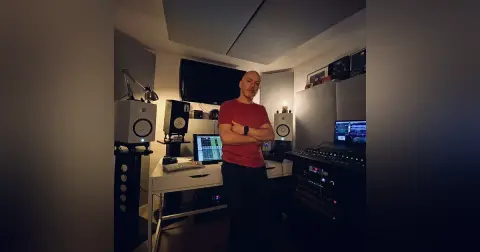
28:05 And I did. I bought a townhouse and there was a corner unit. So I knew that Tommy said find a corner unit, because then you only have neighbors on one side. And we built this floated studio and took about six months. He's a gem man. He lives out in Greenport, long Island, and he would come back and forth and he ran Like he had like one of the best restaurants and somehow he managed to come and help me build it and we built it together. He's like I'm gonna turn you into a man, you're gonna build something. I said, okay, great. And I gained the confidence and we built a studio and I've been working remotely. Now I have Zoom. There's a program now that I can stream high quality audio, so they're hearing it in, you know, full 24 bit quality with like literally less than maybe a second of lag time.
28:59 I mean life is good. I mean there's no question that you know I love working from home. I wake up every morning with my kid at 7.15. I make him breakfast, I have breakfast with him, we connect, I get to see him when he comes home from school and we play some video games and you know his homework and I get to have dinner with my family and I get to go to my Brazilian jiu-jitsu classes every night, which is, you know, my passion too. You know, so it's you have to wear a thong. No, don't laugh, that's funny. No, man we wear a geek. Come on, come on come on. That's hysterical. Why are you talking to this video? The guy's gonna kick your ass. What?
29:39 No man. That's what I figured Brazilian jiu-jitsu has to be. I started doing jiu-jitsu years ago, probably around 2009 or 10. And I couldn't be consistent because at the time we were running stadium red. We got to stadium red at 2008. And you know, classes were at 11 am. But the problem was that you know, if I'm leaving the studio at six, seven o'clock in the morning and I got to go sleep and be back at like noon, I'm not going to jiu-jitsu class. So it would. You know I broke it up a lot and then I tried. I've always done martial arts since I was a kid and you know, jiu-jitsu for me became a passion because it's not what people think, it's not like this brute sport, it's very science-based, it's, you know, a smaller guy has leverage over a guy a hundred pounds heavier than him and it's like mixing records.
30:33 You know, mixing records, you're taking the pieces of the puzzle and it's small. It's small changes to a song that create the bigger picture, right, it's like very increment steps. And jiu-jitsu is the same way. If someone's on, you know, trying to take control of you, it's like the small, minor details of like the different you know body motions and stuff that help create the leverage and it's helped me with my mixing. It's helped me. I mean, for 46, I'm in great shape, you know, and I attribute that to that big shout out to my jiu-jitsu school. You know Dan DeLia and you know my Henzo Gracie family over there.
31:18 But it's, you know, it's great and I get to do what I want to do. And you know, listen, do I feel like I've peaked yet in my career? No, I haven't peaked, but I don't look at it like that. The fact that I do this every day, you know I feel blessed to do it and you know, most people aren't in my position in the sense that they get to spend time with their family and I could care less about, you know, being with my. You know, being in a studio, you know, for hours at a time with clients. I love what I do and I, you know, I'm enjoying it. And I'm moving on to the next now, the whole Dolby Atmos spatial audio thing. I've been training, you know, one of my friends is the senior vice president of A&R at Republic Records and they bought out Red Bull Studios and they built this crazy facility on 18th Street and he's been kind enough to let me go in and train with his engineers on spatial audio and I'm gonna be putting up spatial audio in my room within the next few months.
32:19 And yeah, you know, I mean it is. Listen. You know, obviously we haven't talked about the downsides of the business and the times that I wanted to quit and all of that, but it's real. You know, it's definitely a very hard business. We didn't touch upon the negative, which I didn't want to, just because, you know we wanna obviously show that it's positive and it is. You know, the majority is positive, but they do say that the entertainment business is the hardest business to be in, because really it's everyone. Most people are out for themselves. You know and I've just been lucky enough to have people around me that I don't have any enemies.
33:01 I've never had enemies, you know, and if I feel like someone's battling me, I just move away because there's no reason to engage. You know, there's plenty of music in the world. There's plenty of money out there. Now I think with streaming, there's more artists to work with and I enjoy the ride, I enjoy the process. This is, you know, this is what I've always wanted to do and I've always dreamt of having a studio in my house, you know. Let's. I mean, yeah, that's living the dream right there. You have the best of all worlds, right. So let's do some quick hitters, so quick answers here Ready. I've seen a million things in the studio business. Being a studio manager, what's the craziest thing you've ever seen happen at a studio? Because these guys are making their art.
33:44 You know, and they need all sorts of. You know, obviously there's a lot of drugs, a lot of drinking, a lot of partying, right? It's a lot of sex. That's the easy, that's the nothing, right, I mean the sex stuff. I mean there's a lot of stuff. I've definitely walked in on celebrities having sex. I've I've definitely seen, you know, guns get hidden and shootouts in front of studios. Wow, you know I'm being a white I'm sorry. Shootouts in the studio. No, no, in the front Outside. Oh, so that's expensive equipment. Yeah. I mean being a white boy from the suburbs, you don't see that. You know I was definitely privileged to grow up where I grew up and not see any of that.
34:26 But you know, I've seen that kind of stuff. I've seen fights happen where like planned fights, where they fight in the live room for money. I mean I've, you know. Seen it all, you've seen it all. I mean, I've seen things happen. I've seen things happen at the cutting room, Larry Shea, that you don't know. Yes, listen. I very quickly. I mean I that stuff didn't make the lock, huh. No, they did make the lock. They're in the lock. I mean no names, of course, but yeah, I mean people would pull guns and say I'm taking these tapes home. So I'd get a call at three in the morning and they'd be like can so-and-so take their tapes home? And I'm like no, under no circumstances have they had to take their tapes home.
35:08 And they're like there's a gun in my head and I'm like, literally or figuratively, and they're like, literally, You're telling Dr Larry Shea says you are not taking that tape home. You're taking the tapes. I heard one story where this is an old story and I won't name the engineer, but he told me a story that he was doing a two-pox session at Unique Studios and Poc walks in with an entourage of like 50 people and they put two guns on the speakers facing the engineer. Just laid them there. Wow, I mean, you know like I mean things like that, I've had to help hide guns, you know, I mean there's definitely been like a lot of crazy stories that you know.
35:49 What is one of the, if one or two or three? What are some of the greatest sessions you've ever been in? So, it's-. And they don't necessarily have to be famous people Like if you-. No, I agree, I was gonna answer that. So one of the ones that I really there's three, there's the black eyed peas gave me the confidence to work with A-list artists and that week was, I mean, aside from making at the time, the most money. I still remember how much I made that week, Larry. I think I made it a little bit. Wow, probably more than me $4,000 that week $4,000? It's probably more than I made that week.
36:30 Yeah, so I. I mean at the time I was like 22, 23,. I was like God damn man, we're balling. So I that. Then there was an artist named Phase One that I used to work with, who was a very good friend of mine, and there was we had a collective of producers and they were really into like very conscious hip hop, like very much like Jay Dilla and like that type of artistry that. This is when I had my studio in my first commercial studio in Queens Tommy's first place and every Friday we would do sessions and it was like a hangout and I thoroughly enjoyed and I deeply missed those sessions.
37:19 The producer passed away a few years ago Ace of Buchanan. Big shout out to him. I really missed those days tremendously because it was a family. We would go out to eat after the sessions. We would. I mean it was great. And then the other one is I work with this very accomplished Celtic rock band in France called the Celtic Social Club and in 2018, I've been mixing their records for 10 years and they they flew me out to France. They wanted me to produce their album. And I get to France and it's the studio in the Southwest, on the Southwest coast, in a town called Rochefort and I flew into Paris.
38:05 I took a three hour train ride on my own, not speaking a lick of French except for Merci and C-Vous-Play, and then I went to this. It was a gorgeous studio. We had our own chef. I mean, the history of the studio was an old theater. It was unbelievable, and I remember my clock was so off that week. I went there for 15 days and I remember waking up in the morning before anyone walking around that city. Nobody spoke English. I get a croissant, like just sat by the sea.
38:47 I ate oysters like every freaking night. You know the one thing if you look on my Instagram, there's a picture on there where I took of like a plate of oysters with a beautiful bottle of wine right in front of the console, and I got interviewed by French TV. It was French national TV. I was actually on like one of the biggest TV stations there, and a few years before that wasn't a session. But in 2015, the producer of the band, who's also the drummer he's a very, very one of my closest friends on the planet Manu Mascow. He ended up getting me to do a five city masterclass in Northwest France and when I tell you guys that I thought I was walking into a classroom of five people.
39:35 I did one, just to give you perspective. I did one in Cognac, the city of Cognac, like right outside the Remi Martin and the Hennessy factories and Martel factory, and there was about 200 people there and it was in an old castle and I was on this huge stage and with an interpreter and it was one of the most unbelievable experience. It was easy to bring my wife out there because I'm like, yeah, my manager's gonna come and don't worry about paying another room for her, she'll just sleep in my room, you know. So we ended up going out there and it was hard. I got a taste of touring life because we'd have to get in the car in the morning, go to another city.
40:19 It sucked. I'm so glad I didn't choose to be a musician and it was great man. It was the best experience. I was in every newspaper in every city, like you know, with the big, big article on me as this, like you know, american producer, engineer. And then I got a private tour of the Martel factory, cognac, which is like the oldest Cognac in the entire world, and I think they thought I was Bono man because they pretty much felt like they gave me the key to the city. I'm not even kidding you when I tell you I got like a really big tour, like they must have thought I was somebody.
41:01 I'm not. I mean, the head of cultural affairs of the region of Cognac came and met with me and took pictures with me like I'm some sort of You're a Grammy winner. You're a Grammy, for God's sake. Listen, you know what I learned about, especially the French. They really appreciate American engineers and producers. They treat you differently and I've always had great experiences working with them. I do an album every year with them, you know, with this band, you know. So I ended up so you know that five city masterclass. And then I got to spend two days with this artist who's this very accomplished band called Red Cardel that's been around for years.
41:46 They've been produced by Clive Martin, who did like Queen and shit like that. They're like I don't know, I guess it's like Celtic Rock and I got to spend some time. I have a good relationship with the lead singer and he invited us to stay at his house and I ate this ridiculous food and you know. Got to hang out by the sea and got to see where Johnny Depp's vacation home is in that area that nobody knows about, and just beautiful experience. So I think those experiences really stick with me and I know there's more, but like those are the ones that really to this day are very close to my heart that I think about a lot.
42:30 That's very, very cool. Well, the last question that we'll throw at you if you know you were talking to a young person today who wanted to get into your world, what advice would you give them? That's a loaded question. Or an older person. No, no, no, no, no, no listen. Sometimes you sound like that you know the older you get. I don't want to sound like the get off my lawn guy, you know. Well, that's what two sharers here for. That's his job. Yeah, I usually do that. Go that route so like you know, I guess the best advice I would give to somebody is the music business is a long road and it's a journey it's not people see on.
43:15 I think the hardest thing is to see people on Instagram now because for whatever social media they use, but I'll take Instagram because the only thing you see on Instagram is the good. Nobody ever posts the bad. You know what I mean? No of course. Can you imagine someone put a picture like here's my face when the client says my mix sucked. You know, like nobody puts that up there, so they always see this the good of what's going on, but they don't realize that the grass is always greener. And taking it from a guy like me, this business is waved. So what I say, the best advice I give to people, is live like you're poor, right?
43:59 So like let's say that I do a project and like the album, let's say it's a $50,000 all in project with a point, right, do you think I'm spending $50,000? Like that I'm putting that money away Like I, you know I cut myself a check. That's the same check whether I'm making $50,000 or $2,000. You know, like it's the same check coming from my, you know, to myself, and that's the way you have to live, you know. So I tell people like it's really about, it's not how much you make, it's how much you spend, right, and in this business that's one part of it.
44:40 The other thing is relationships, right? I mean, look at Larry and I like we've known each other for so long and the minute we got on the phone we haven't spoken in years. The last time, I think, I went to one of his birthday parties at a bar and we, just we get right into it and it's like nothing's ever changing. That's from having good relationships. You know, like Larry and I definitely have had some like not conflicts, where we hated each other, but you know, like in the music business, like you know, as your boss and the worker, you know there's not always gonna be a walk in the park, yeah the usual stuff. Yeah, the usual stuff, the usual stuff, but relationships are everything.
45:20 Keep relationships because you don't know what that person that you're talking to, who that person's gonna be 10 years down the road. I've seen people destroy relationships with people under them where a few years later they're vice president of A&R of a major label. you know, and then all the other Don't burn those bridges. Definitely don't burn those bridges. Yeah, it's fairly important. And really it's about honing your craft, and I know that's like very cliche to say, but it's really important to understand that there's so much information out there now. It's all about becoming the best at what you can create your own style.
46:05 You could learn from different engineers, but ultimately everybody's ear is different. You know and I always equate it back to Jiu-Jitsu Every body, your body, is different than the next person's body. So how you maneuver certain positions or certain mixes or certain techniques is very individualized. So it's about being your own person and eventually you get to a point where people anybody can make anyone sound good, but people need to. People start coming to you for taste, and that's what you wanna strive for. You want people to come to you for your taste because of what you accomplished, and again, it's a long journey.
46:45 So don't ever give up. That's very cliche, but it's the truth, because I've wanted to give up so many times, after the cutting room, after puffies, after this. Things happen in life that are tragic, that you never know. You lose friends, deaths and all this other stuff and you start questioning what you do. But at the end of the day, it's nothing can compete with the passion, and if you have a passion for this. You just have to continue, because ultimately, the turtle does win, right Like it gets to the finish line, and that's what matters and, at the end of the day, your health is also dependent on your stress level.
47:30 And I don't have to answer to anybody anymore except my wife. But you know but otherwise that's-. All great advice, without any question at all. I know and I feel like some of it is cliche, but it's now that I'm older and I understand that. No, it's valuable though it's valuable it is and it's the truth. It's cliche because it's true. That's the point. Yes, 100%, and that's really the advice I'd give someone and smile and make people feel comfortable. That's it. So if anybody wants to find Ariel after this conversation, where should they seek you out and what should they know about engaging with you?
48:11 I'm always engaging with people. I feel like no matter what, I love engaging with people. I love to give advice. I also do mentorship. People call it mixing lessons. I don't. I call it mentorship lessons. I've done that for I have some really good engineers out there that are becoming very successful who, assisted for me, have taken my one-on-one mentorship lessons. Where could they find that Ariel on your website? So on the website. So if you go to my website, which is wwwariel a-r-i-e-l b-o-r-u-j-o-wcom, you know my website is.
48:55 I check it. Instagram is really the one that I get the most hits on, and my Instagram is mixed by Ariel m-i-x-e-d b-y-a-r-i-e-l. Awesome. So if anybody out there wants to engage with a highly skilled and talented engineer, those are the ways to track down Ariel. Ariel, thank you so much for spending time with us today. And it's my pleasure I had such a blast. I love doing this kind of stuff, Thanks buddy. So that concludes our conversation with Ariel Bourgeau, and what a great guy, what an interesting conversation that was. To me, who's a huge music fan, getting a look behind the curtain is incredibly fascinating.
49:41 And beyond that, ariel is such a great story about somebody who was entirely self-made, put themselves out there, took up a big risk and made it so. Just a very inspiring person, tushar. What are your thoughts? Part one of our conversation with Ariel was all about a guy who was willing to do almost anything and everything to get his career off the ground. And the thing I take away from part two is here is a man that was very comfortable with his life. He's very comfortable with his family life. He wanted to do everything he could to make sure that he had time with his wife, with his son, with his career and have it all balanced very well. And that's kind of what he's done and it sounds so wonderful In many ways.
50:25 Part two of our talk with Ariel I came off as like it just came off as sweet to me. It just came off as very sweet and very endearing and I really, really enjoyed it and I'm very happy we had a chance to speak to Ariel Bourgeau. I'm really happy about that. Yeah, I think he paints a picture of somebody who worked so hard in the beginning so that he could basically have the freedom to have a family life right and to be a part of his children's life and to work on his terms almost, and I think the partnership with his wife was instrumental with that. I mean he just gave us so many great. I mean he called them cliche parting lines, but I mean I think they're important.
51:06 Relationships are everything, and that goes for any profession we're talking about. Never burn bridges. Create your own style. Ultimately, when you're talking about being a mix engineer like, they are hiring you for a reason they want your stamp on their song. And so when he talks about honing your craft and creating your own style, you're selling Ariel Bourgeau. I mean, that's what it is and ultimately the turtle will win. I love that that was a great line. His slow and steady wins the race man, and he just laid it right out there for you. And that works for a lot of professions, not just being a mix engineer. Absolutely, and one of the core tenets of our show is to try to shine a light on things that our audience can use within their own careers and with their own journeys.
51:56 And one of the things that stood out to me and granted, it's not necessarily easy to pull this off, but, tushar, I think you alluded to the partner earlier on and if you look at many successful business people, many successful people in this world, they have made the right decision of a life partner. It's funny Warren Buffett often says the greatest advice I can give anybody is to marry the right person. It changes everything and it's really like if you read any book about Warren Buffett, it seems to get back to that all the time. And when I hear Ariel talk about the confidence that his wife gave him, pushing him to set up his own business, take certain risks, be willing to walk away from her own career to start to run his business, all that just really stood out to me and is just great proof that that concept and that idea certainly holds true.
52:57 Yeah, and I also think it's important that we talk about Ariel. He wasn't chasing a paycheck here. This could be, as I said, a very grueling business, but it can also be very rewarding. And it's not necessarily the paycheck. Yeah, you can make a living, but you're a part of something magical making music and I think you hear that in Ariel when he tells his story, that he wanted to be part of something like, oh my god, they pay somebody to play with those buttons, like that's going to be me, and there is something very magical about it. And when you get in the music business, you see your name on an album for the first time. I mean there's no words that can explain.
53:38 So it's a viable career, it's a great career. It's changed dramatically over the last couple of decades, but go after it, man, dream big, because that's what this show is all about is dreaming big. That's exactly right. So Ariel is great proof of that. He set up his own business, his own practice. He created a career and a life on his own terms, and that's pretty remarkable. So that is our conversation with Ariel Borgio. Ariel, thank you so much for joining this episode of no Wrong Choices. We also thank you for joining us. If you enjoyed the show, please tell your friends, click, follow on your podcasting platform and give us a five-star rating. Also, if this episode or others inspired you to think of someone interesting in your life who could be a great guest on the show, please send us a note via the contact form on nowrongchoicescom.
54:28 On behalf of Tushar Saxena and Larry Shea. I'm Larry Samuels. Thank you again for joining us and remember there are no wrong choices on the road to success. We learn from every experience. Have a good one.