Join The FBI with Special Agent Amanda Pike (Part 1)

 Apple Podcasts
 Spotify
 Castro
 RSS Feed
 Youtube Music
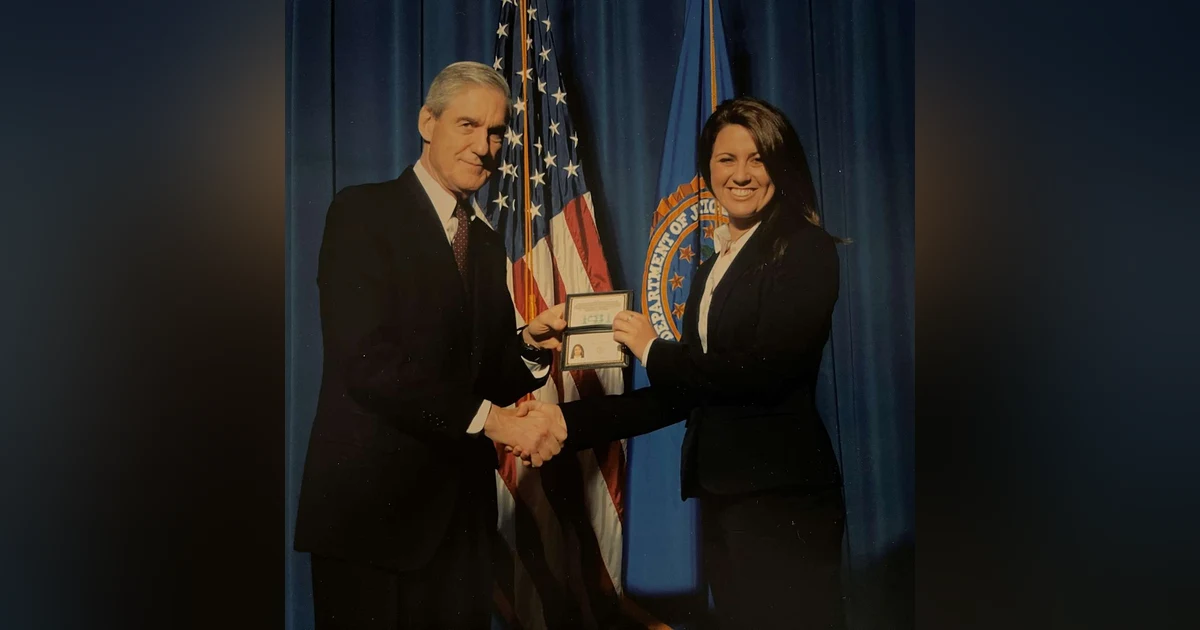
 Have you wondered how someone becomes an FBI Agent? The simple answer: every path is unique, be yourself and have LOTS of patience. It also helps to be exceptional. Special Agent Pike shares the story of her journey from rural Maine to Quantico during this episode of No Wrong Choices. Part 2 will focus on Amanda's life as an Agent.
To discover more episodes or connect with us:
Hello and welcome to No Wrong Choices, a podcast about the adventures of life that explores the career journeys of successful and interesting people. I'm Larry Samuels, soon to be joined by the other fellows, Tushar Saxena and Larry Shack. If you enjoy our show, please support us by clicking follow on your podcasting platform and by giving us a five-star rating. You can also learn more about us and Connect by visiting our website at NoWrongChoices.com or by following No Wrong Choices on Facebook, Instagram, and Twitter. This episode is part one of our conversation with FBI special agent Amanda Pike, which digs into how someone becomes an FBI agent. Larry Shea, why don't you lead us into this one?
Larry SheaYeah, I'm super excited about this one. Um I've been thinking about it, watching all my FBI shows, getting it together, headspace-wise on how this should sound and feel. Um, this is a mysterious thing for us, right? This cut kind of profession. I'm curious to know how she got there. I want to know if this was the dream. I think that's one of the most important things we always ask uh people on the show is was this really the goal? Was this what you wanted to do with your life? And just as a side tease, we do promise to solve the JFK assassination. So stay tuned. We'll get it all together.
Tushar SaxenaAt least we'll try. At least we'll try. Uh I am I'm a big fan of someone who goes into this type of work because, you know, when you're talking about a member of the FBI, you're talking about people who aren't always the hard chargers and the guys who break down and the folks who break down doors. You're talking about people who have to think, right? They're bro, they're all about the investigation and building cases. So, you know, a lot of this is about, you know, how do you go about this? What for many of us would seem like just building like very slow work, very b very methodical work about building cases against criminals. You know, uh we you said it a moment ago about watching all these TV shows and movies. We've seen them over the years, you know, whether it be like, you know, Silence of the Lambs or FBI on CB on show on channels like CBS, you know, uh obviously life in these in these agencies are not like that. And it would be really and it's gonna be really interesting to figure to find out from someone who's actually in it, what is that life really like?
Larry SamuelsAbsolutely. And for me, I'm very curious about the recruitment process. Uh like do you are you standing on a street corner, somebody suddenly comes up behind you, taps you on the shoulder, and says, Hey, I got an interesting opportunity for you. So I'm curious to see how uh all that works. So with that, here is Amanda Pike. Now joining No Wrong Choices is Special Agent Amanda Pike of the FBI, who is based in Buffalo, New York, my hometown of Buffalo, New York. Amanda, thank you so much for joining us.
SPEAKER_03Thank you guys so much for having me. It's such a pleasure to be here.
Larry SamuelsWell, you're saying that now. Amanda, before we get too far into the conversation, um, can you please set the stage for us by um I guess translating? What does special agent mean in FBI language?
SPEAKER_03Well, the simple answer to that is it is the law enforcement or a law enforcement branch or job role within the Department of Justice. So here at the FBI, uh we employ all sorts of people in all different kinds of roles. And the special agent, for lack of a more sophisticated way to put it, are the gun carrying, gun-toting um employees here at the Bureau that work the investigations, the tactical side of things.
Tushar SaxenaAll right. So have you always wanted to be have you always wanted to be in law enforcement, or have you always wanted to be a member of the FBI?
SPEAKER_03So no to both questions. I have not. Um, I think the law enforcement in general was really nothing that was on my radar whatsoever. And certainly working at the FBI is not something that came onto my radar until I was a little bit further along in life. Um, but I did not grow up as a young girl dreaming about, you know, putting bad guys in jail and and carrying a gun and running investigations, certainly not working for the FBI. No, no, never not anything that ever crossed my mind.
Larry SheaI love that answer. So we'll get to that then. What was the dream? You grew up as a little girl dreaming of something. What was that?
SPEAKER_03Well, a lot of things. I feel like, you know, whatever the flavor of the week was, but for the longest period of time, I wanted to be a marine biologist. Uh there was a period of time that I was interested in being a veterinarian.
Tushar SaxenaI wanted to be marine marine biologist as a kid, too. My God.
SPEAKER_03Right? Jack Rousseau, yeah, was sort of like my one of my heroes. Thinking back to time that I spent in the my elementary school library looking at books, but um, you know, a writer, uh, all kinds of things like that. But no, law enforcement was just not at all on my radar. And I didn't come from a family of really law enforcement or military, of which the more you talk to, I think probably FBI agents, you see, there are both of those are well represented here in our agent population, folks that have a law enforcement and or military background. So my dad worked in a paper mill. Um I grew up in rural Maine, in a very small town in central Maine. Um, his dad also worked in the paper industry. My mom was a school teacher. And so I really just most of you know, kind of what I dreamed about came from, you know, books that I read or shows or movies that I watched. And an FBR was really not on the radar. And like I said, no, no police officers, um, really not much military. Um when I was a child, both my grandfather served in World War II, but that was so far removed from my you know experience or relationship with them that it wasn't really a strong influence. And so, so yeah, I kind of just drifted about in my imagination and and um was not till I was in my let's say mid-20s that really it came on the radar at all.
Larry SamuelsSo, you know, tell us about that. I guess you know, high school were you an athlete? Like, like I'm curious about some of the characteristics or traits that that kind of eventually got you to got you onto this path.
SPEAKER_03Sure. Well, I think you when you talk to any number of FBI agents, you'll realize we're a pretty diverse group of people. Certainly there are many what you might call competitive or alpha personalities in the mix. Um, lots of high school athletes, lots, lots of collegiate athletes. I was more probably what you would call a nerd. Uh a lot of read a lot of books, did really well in school. Academics were really where I excelled. Um, I, you know, played sports here and there, but more for the social aspect, like less for the competitive nature. So that really wasn't my thing. Um, I was more just kind of a bookworm and um and into the academic stuff. So I think, but generally speaking, that is a pretty common quality of a lot of agents that I know, you know, a lot of competitive personalities, um, a lot of folks that were competitive in athletics, both at the high school and the collegiate level. So probably a pretty common trait of a lot of FBI agents, just not this one in particular.
Tushar SaxenaSo, what did you go to college for?
SPEAKER_03I so I went to a school up in Canada, actually, a university called McGill. And I was a Bachelor of Arts in um really political science, but international relations. And then I also studied some foreign language while I was there. So my minor was in East Asian language and literature. I studied French, of course, um, being in Montreal. And and then I studied Russian briefly while I was there as well.
Tushar SaxenaOkay, so at some point you thought you wanted to be a diplomat, it sounds like.
SPEAKER_03Well, I will say that I had certainly language was probably one of those areas that if I were to say, you know, there was something that I excelled at, and maybe if I had the attention span or ambition to really make something of it, I probably could have made something of a career using uh, you know, whatever language is a second language, interpretation or translation. So when I was in college, that came out as a possibility and something that I was interested in. And I've always loved the aspects of learning a language that um it kind of gives you more insight into other cultures and you know, other areas. And I've just really loved everything about studying foreign language. And so, yes, I definitely had vision toward that as a potential career path and not necessarily working as a diplomat, but maybe for you know, an NGO, a non-governmental organization, or for some sort of intelligence agency where I envisioned the use of my language might um, you know, be an important characteristic in regard to hiring or my competitiveness as a candidate. But uh at that point, still no thought toward law enforcement, certainly no thought toward the FBI.
Tushar SaxenaAll right. So uh let me ask let me ask a couple of different ways, a couple of different questions here. One, why go to school in Canada? Is it'll be my first question. I'll follow up on that one.
SPEAKER_03Well, this is a plug for anyone out there that's listening who's got kids that are ready to go um to college or interested in college. One, I'm from Maine. So, you know, we're basically Canada anyway. There's that. And um McGill was a great school.
Larry SamuelsThat's what you're saying about Buffalo too.
SPEAKER_03Yeah, well, right? That's why I think it's crazy that people here don't think of University of Toronto um or other very, very good universities in Canada, the price I'll also say. McGill's a great school, it's an excellent school, it has a great reputation. I received an excellent education from it and love my time in Montreal, but it was also a fraction of the cost of going to a private school in the United States, which were basically my alternatives. All the other schools I was looking at were um, you know, private liberal arts schools in the US. And I paid uh for four years at one of the top universities in all of Canada, probably what I would have paid, or maybe even less than I would have paid for one year at a university in the United States, plus the exchange rate. So it was really an incredible opportunity. The my uh I was it's a huge school of 30 at the time, I want to say it was like 30,000 students. I had classes when I was a freshman that had you know 700 people in them. But for coming from a tiny, tiny town in Maine, um, my graduating class, I want to say, was like 65 or 70 people. And so to transition from that to the environment I was in up at McGill was really eye-opening and just so diverse and so many, uh, so many people with different experiences and different knowledge and uh from different areas. And of course, I was an international student while I was there, so had some exposure to other international students and really just an eye-opening and um you know horizon broadening experience that I wouldn't trade for anything else in the world. I would really encourage anyone who has is either thinking about you know going to school or has kids that are thinking about going to school to consider um the option of sending them to school in Canada.
Tushar SaxenaAll right. So I guess my so my follow-up question will be then when you're done with school, were you recruited at some point during school to go uh go to the FBI? Or was this now you're far out of school, you're actually kind of getting a real job? And if that's the case, what was that what was that real job?
SPEAKER_03So two answers. Um, the first is no, I was not recruited. Okay. And I think that's one of the unique things about going to school out of country, is you do miss out probably on some of those opportunities because at you know, job fairs or career days, it's mostly Canadian organizations and um in, I guess suppose in theory, agencies that are being represented. Um, and and so that isn't something I really thought through. So when I uh graduated, I applied for an internship at an organization in in the state of Maine. So I returned to Maine and uh started out as an intern. Uh it was it's a public-private partnership, uh, the Maine International Trade Center, a really great organization that provided uh research assistance and advice and um uh you know, for main companies that are trying to do business internationally. And I had a really amazing um opportunity there to work first as a research assistant as kind of an intern and then was hired on full-time to work as their program and membership manager. So that was all going on, and I had that job, and it was great. It seemed like a great fit for me coming out of school with a degree in international relations. And at the same time, I took a trip um down to Washington, D.C., where I had a cousin who was at the time working for a uh contractor who had some work with uh some agencies in the intelligence community for the United States. And he had a family friend who was an FBI agent, and she was also a female. Her name was Roseanne. And so he, I think, in in trying to help me figure out what the hell I wanted to do with my life, uh, wanted to introduce me to Roseanne as a potential contact, uh, thinking that it might be something that would be a good fit for me. And so we just had lunch, and and that was pretty much where it all started. Um, you know, we went out for lunch on a spring day in Washington, DC, and just talked about the opportunities at the FBI. And Roseanne was really the perfect person for me to meet at the time. And she really opened my eyes to the opportunities that were available to me at the Bureau, which I would never have expected. Um, in just, you know, my whole vision of the Bureau was based on what very little I knew from either the news or movies or TV. And Roseanne gave me or painted a picture of the Bureau that was just so different from what I imagined a career there to be like.
Tushar SaxenaAll right. So I will ask you about your favorite FBI TVs and move uh TV shows and movies in a second. But first I want to ask, so uh when this meeting took place, what uh how old were you? And roughly what year are we talking about?
SPEAKER_03Oh man, now you're gonna make me age myself here. Um, which was not such a big deal when I was like 28, and now that I'm almost 40, it feels worse. But I so I um graduated a little early in so that would have been 2005, and this was probably within the next six months of that. So I would say spring summer of 2006, and I want to say I would have been 22 at the time. So still a spring chicken. Um, it didn't feel like it at the time, of course. You know, I felt like a full-grown adult at 22, but now that I'm almost 40, oh my gosh, yeah, what a baby. Um bright eye.
Larry SamuelsWe're entering the stage that we want everything to slow down.
SPEAKER_03Yes, yes, I totally am. But but at the time I was ready for everything to speed the hell up, you know. So yeah, 22, um, bright-eyed, fresh-faced, whatever, and had this luncheon with Roseanne, like I said, who really kind of changed my perspective on the the path that my life maybe was gonna take.
Larry SheaYeah, so the fire is sparked right here. And then what what are the what is the pro I guess in general, what is the process in general for the FBI? And then what happens in your case? How does that lead to your next steps?
SPEAKER_03So Roseanne's big advice to me at the time was essentially you're too young. So go out and live a little, get some experience, you know, live, work, do your thing, work at one place, get another job, you know, change roles, whatever it was, develop all this experience and these soft skills that you're gonna need to be competitive at the FBI. I mean, the FBI has a age minimum also for applications for special agent, and I would have been below it at the time at 22.
Tushar SaxenaWhat's the age limit?
SPEAKER_03Uh I want to say it's 24.
Tushar SaxenaOkay.
SPEAKER_0324. So I wasn't far away from it, but still too young at the time. I had 24 in a college, four-year college degree, I believe, are kind of the minimum requirements. And but that was Roseanne's advice. So generally speaking, uh the FBI, I think the average age of an FBI agent um upon entry at Quantico is 31. At least that's what it was when I went in and I entered on duty in 2012. And here's the oh, so now it's 23 years. Sorry, I'm being corrected. It's 23 years old.
Larry SheaAnd um Is the FBI listening to the handlers?
Tushar SaxenaAre your handlers nearby? Yes.
Larry SheaWho's talking in your ear right now? Are comms a part of your daily life and everything that you do? You have comms, note and we can't break you off.
Tushar SaxenaIs the government listening to us right now?
Larry SamuelsAll of us went through background checks before this conversation.
SPEAKER_03We just don't know. 23 is young, it's so young. Um the average age, I think, is was 31 at the time I was at the academy. I believe it's still right around that. Most people that come to the Bureau as agents have already had careers, have already had, you know, are professionals in their own right in their own industry. And that is what makes them attractive candidates uh to the Bureau. So that was the advice that Roseanne gave me back in 2006. And I that pretty much still stands true today, which is the Bureau is for the most part seeking candidates that have had a decent amount of life and work experience prior to becoming agents.
Larry SamuelsSo, what did you do during that interim period? How many preparing for the application process?
SPEAKER_03Well, I let's just say maybe I wasn't preparing per se, not in a real thoughtful way. Um, so I had the job of the Trade Center, which seemed like, okay, this is a good resume builder. And through that, two things happened sort of simultaneously. One, I was working on a project with a small startup company, main company, the wood products manufacturing kind of industry. And they were looking to do some business in Germany at the time, and I was assigned to do some research related to that, import-export sort of stuff. And I developed a relationship with uh the gentleman who owned that company. And I ended up doing some work for him uh sort of part-time on the side. Like I said, they were a very small startup company. At the same time, I was volunteering at a nonprofit organization, um the Alzheimer's Association. We had a family connection to the disease, and so I had um participated in some fundraising events and developed some relationships there. They ended up offering me a full-time job. So I went and worked for them for a period of time, also kind of in the same type of work, which is um program management, fundraising management, that type of work, which really was at its core very similar and at its core, really almost like sales work, but for a nonprofit organization, and then was still working on the side with this private company who was a startup, and they ended up growing to a size that they needed to find hire a full-time employee. And then I ended up jumping ship from the nonprofit organization and then went to work for this wood products manufacturing company full-time. And there we were, for the most part, just building um wooden children's play structures, playhouses. So, not exactly something that seems obviously transferable to a career in law enforcement at the FBI, but that is what I did. And I did that. Um, I worked with that company up until the point that I applied to be an agent, uh, which was when I was 26. So in 2010, I want to say.
Larry SamuelsWere you happy doing that stuff? Was there ever a moment where the the dream started to fade a little bit and you thought about staying on the track you were on?
SPEAKER_03I was actually very happy at my most recent job, which uh was this job that I had with the with products manufacturing company with people that became really some of my into this day are still some of my closest friends. It was a really fun environment. It was a tiny, small, tiny company, startup company. So the energy was really just incredible. Everybody was creative. It was a fun place to work, it was a casual place to work. I had a real really flexible job and hours and really everything that you could want from a work situation. Um, so it really wasn't that that spurned me to finally make the leap. It's sort of less um less interesting thing, which is that I went through kind of a personal situation. I had was in a very long-term relationship with someone that I at the time, you know, thought I was gonna spend the rest of my life with, not to be dramatic, but that ended. And it's like, okay, well, I've got the whole rest of my life ahead of me. You know, do I want to stay here? Is this what I want to be doing forever? You know, am I utilizing all these skills and abilities that I believe I have to the best of my abilities? Um, I did love my job. I love the people that I worked with, but I felt at that moment that it was kind of this critical juncture in my life, which of course, you know, at now at 40, it's like, okay, what was I thinking? I was only 26. I've have all this time to think these things through. But for me in that moment, it felt very critical. And so it was like, okay, well, you know, I've been putting this off. I had this conversation, now this seed has been planted in the back of my head, and I haven't revisited it in a really serious way. And now I have this opportunity to rethink everything I'm doing, where I'm living, where I'm headed. And maybe now is the time to just take that leap and and give it a try. And so I did.
Tushar SaxenaDid you feel mature enough to make that leap at that point? Did you feel that all that experience that you that you kind of built up? You know, even the breakup, even the breakup, even the second. Separation to that all of that kind of set into the, you know, help bake that cake to help you make that next move.
SPEAKER_03I don't know. I think that there was part of me that just thought there was no way that the FBI would look at my application and think, you know, would call me back, would think I was a competitive candidate, and it felt like I would regret it if I never tried. And so that felt like a good moment to make the attempt. But I'm not sure that I had the level of confidence where I really believed it was something that would ever happen or that I was capable of or that someone else would see me as capable of. I think it just felt like a moment in time where you could make a really big change like that. And if it was ever going to happen, then why not now?
Larry SheaSo you apply. Um obviously there's a vetting process, and then I'm I'm sure there's going to be tests and things of that nature. Tell us what that looks like. Were you vetted? How much are you vetted? Is that happened first, and then you go through the training process and how does that work exactly?
SPEAKER_03Yeah. So the application process to become an FBI agent is for most people, at least for me, long and painful. Um, it was about two years from the date that I applied, which was July of July of 2010 to the date that I started the Academy, which was July, almost to the day, July of 2012. It starts off with a really simple standard application on at the time. I think the Bureau had their own website for job applications now. It's all through uh, I think a generic federal government job application website was USA Jobs at the time, I think. And I don't know what it is still USA Jobs. It is still USA Jobs. So anyone out there that wants to know what is USA Jobs. And so you fill out if you uh so you fill out that application and it goes off, of course, into the ether, and you think you're never gonna hear anything about it again. And in the initial phases, for me, it moved kind of fast. Within a month, I had heard back from FBI Boston. So I lived at the time in Maine. Boston was the regional office. Uh, there are RAs, what we call RAs, um, uh, that are like small satellite offices of the FBI that are located in smaller cities. So there were some RAs in Maine and also in New Hampshire, but the the headquarters city was Boston. The field office, the main field office was out of Boston. And so all of my communication and all of my application was processed through that office. So I heard from Boston. They asked me to come down for what we call phase one, or what we called at the time, phase one. Phase one was a written exam, a multiple choice, I think it was at the time exam, that uh I don't even know how to describe it, sort of like a standardized test baseline. Um, you have to get through that first to go on to the additional phases. So I went down, I took phase one.
Tushar SaxenaSo like the FBI S A T test.
SPEAKER_03Kind of, yes, yes. And I think I will say, I think it's harder now than it was.
Larry SamuelsI prefer the uh what was the other one? The uh the ACT. I prefer that. The FBI A C C T. Yes.
SPEAKER_03Um, some version of that. Um, you pass that, and then you go to what is called a meet and greet. It is quote unquote informal, but I think that that's some level of vetting that occurs. I don't know that officially. Um, I don't work in the applicant stuff, and but I suspect that they invite you down and they ask you questions, you know, about why you want to work for the Bureau and um talk about yourself, you know, your your resume, all that sort of thing. And I'm sure that there's some. So there were there were it was more than one. There were a handful of us, and I want to say a dozen. At the time I applied, I think they told us whether or not this is true, I'm not sure, but that they lost just about half the candidates sort of at every stage. And so, you know, when I took phase one, I was in a room with, you know, maybe 50 other people. When I got to the meet and greet, it was uh maybe a dozen. Um, if you pass the meet and greet, then you go on to phase two. Phase two for me was in New York City. Um, so I think at the time they were regionalized, I think they still are. They they flew me from home to New York City, and then in New York City there were candidates from several different regions, including, you know, the Boston area uh or the New England area. And that's also a two-part test. There is a written portion in which you are given a series of questions that you answer. They really are geared towards investigative type work. Of course, many of us in the room have never worked investigation. So I remember sitting down thinking, well, how the hell am I supposed to answer these questions? I don't even know what a subpoena is, but uh the idea, I think, is just to get a sense of your writing skills, your reading comprehension skills, your ability to organize thoughts and put together a plan. So even if you're not thinking about things that are realistically possible, you know, do you have the critical and analytical skills that you need to be able to do this work? And then the second portion, which is much more intimidating, is an interview. Um, you sit in a room by yourself. Uh, there, for me, there were three agents present who asked me a series of, oh, I can't even remember, 10 to 12 maybe-ish questions. And then you just respond to them and they, you know, take notes and make decisions and make their recommendation one way or the other. So you go through phase two, and then if you pass phase two, you have to pass a physical fitness test, which is uh, it's a uh sit-ups, push-ups, a mile and a half, and a 300-meter sprint, which we still have to pass every year here as FBI agents.
Larry SamuelsAll the standards progressive. I've already failed these tests. Yes.
SPEAKER_03So I'm not still running it at my Quantico standards, but everybody that goes to Quantico passes it at the same levels. And um, there's you know, scoring rubric, which I think is all available online for those listeners that might be interested. And you have to score a minimum amount in every category and a minimum minimum amount overall in order to be able to be eligible to go to the academy. So once you pass that, uh, you know, there's a medical examination. Um, you provide all your health records, and then there is a background investigation. I think the background investigation can sometimes be where things slow down for certain candidates. And I feel like I was pretty lucky there, even though I lived in Canada and had some overseas travel. Um, I really don't my application didn't slow down that much, I think, from my background. And then a polygraph, of course, which is also delightful. Wow. And so once you go through all that, um assuming that you pass at every stage, it did. But you know what? I was also the time I applied, I can't remember if I was caught in the middle of it or they were catching up after coming out of it. They're right around the time I applied, there were hiring freezes. And so some of that slowdown, I think, came out of just of that, you know, bureaucratic um malays. And um, they like either I was caught in the middle of it or there, and so things were put on hold for a little bit, or they were just coming out of it, and um, and so applications were just backed up and it took a little bit of time. But I do think that 18 months is probably a pretty standard um application process uh timeline. It it is not fast, and because there are so many phases of it, and there you can for some of the phases, you can you have more than one opportunity to pass. I think phase two, you get two opportunities. Um, you have also uh at least two opportunities to pass the fit test once you're through the other phases. So there are other reasons why your application could take longer or less time. Um, some people are coming already from other government organizations, and sometimes we're processing former or current FBI employees that might expedite your process a little bit. But for someone from the outside, I think 18 months is probably still, even today, still a pretty standard amount of time to expect for the application.
Larry SheaAnd I I'm so curious about your skill set before you went in, too, because I someone told me that if you're a lawyer or an accountant for forensic accounting purposes, things like that, certainly your languages probably made you a very attractive candidate. Is that something that pushes you maybe to the head of the class when this vetting process is occurring?
SPEAKER_03Uh so I would say generally speaking, yes. The Bureau looks to particular uh uh sectors uh or careers, and they look to hire agents from those. So I there certainly law enforcement, military, lawyers, accountants, the traditional stuff. Now, obviously uh candidates that have a cybersecurity or uh maybe an IT background are probably more competitive than they ever have been. Um I would think maybe that the language skills or capacity piqued someone's interest in my resume, but the Bureau has actually never put those skills to use. So yes. Um, so I think maybe it's something that, you know, made me a more interesting candidate over some others, or spoke to my generally spoke to my abilities or capabilities. But the Bureau is kind of funny where you know, people get hired from all sorts of things that make total sense. Like, oh, this person worked for, you know, speaks Chinese or worked for such and such company, and they have all this great background and knowledge and skills. And then, you know, you take a guy from cybersecurity is working drugs and gangs, and you take me who had some private sector experience. So I thought, okay, maybe I'll work white collar and had some language skills, maybe I'll work counterintelligence, and they put me on a counter-terrorism squad. So I it's kind of a crapshoot. And I don't know.
Larry SheaThey place you there, right? Do you have any say in that? Can you say I want to work with accounting, forensic accounting, and find, you know, money laundering? Can you do, or do they just like, here's where you're going?
SPEAKER_03So I'm not sure how it works now. Maybe it's a kinder gentler bureau than it was in 2012. But at the time, I want to say that I was able to order, meaning rank, the essentially the violations or the threats that we work in level of interest. And but I honestly don't remember where counterterrorism would have fallen on my list. I can't, it was certainly not towards the top because I had absolutely no confidence that that is something that I could do or would love to do or knew anything about at the time I applied. And I'm pretty sure that I probably would have listed counterintelligence and white collar higher than counterterrorism. But ultimately, the Bureau puts you wherever they need you. And that is true for both the office that you're sent to. Um so there's 56 field offices throughout the US. And at the time I went through, and I think this is true again now, all the bureaus always changing how they do things. You just ranked them one through 56, and you said, This, this, you know, number one, this is where I want to go, and number 56, this is where I absolutely don't want to go, and I'm quitting if you send me there. And you get somewhere in between. Um, and I think the violations kind of work the same way. This, what we call, you know, you're on a squad, we call them squads here, that works the white collar or works, and of course, now I'm on a squad that works cyber, cyber threats. Um, there's national security, there's criminal. We work both sides of that too. Um, and ultimately it's the whim, whim of the bureau. So it's not always what appears to be the most logical decision. Um, but I have found over the years that it usually does work out in the end.
Larry SheaIt's government. What would be like I know?
SPEAKER_03We shouldn't be surprised here. But maybe they know something we don't know because it does seem to work out.
Larry SheaYeah. You talked about a kinder, gentler bureau, just very quickly, and I don't want to get political with this, but there is a difference between administrations in how they treat and use the FBI and how it's structured. Is that right?
SPEAKER_03I would say that's probably generally true, yes. Speaking as just a member of the general public, not the FBI employee, but yes, I would think that perception is true, yes.
Larry SheaSo are they kinder and gentlemen? And the voice in the corner of the room just said, please don't continue answering. That's right, stop this line of question.
SPEAKER_03Yes, the slash across the neck here immediately. No, I think you know, the reality is that it's to me, it's less a question of anything political and more a question of culture, and that this is something that I think maybe law enforcement is going through in general, and that there maybe in years past were some the culture of law enforcement, the culture of the bureau was one particular way. There was a belief about you know what's effective uh effective in terms of training. Um, and I think the Bureau and the and speaking for us in particular and the academy, I've seen or at least heard of some changes that I think uh, you know, we sort of use the kinder, gentler bureau in some ways pejoratively. Um it's not to mean weaker or less than in any way, but I think some people have come to conclusions about what really works in regard to building a good culture and good teams and effective employees. And I do think the Bureau is getting on board with some of those changes, which are not just law enforcement specific either. I think that's true in a lot of professional environments. You know, what things matter? How do you build, you know, you want collaboration, you want cooperation, you want teamwork. Uh, it's it's especially true in this work where you rely on your coworkers in some cases, um, you entrust them with your life. And so having all of those things are so important. And what are the features of your training and your everyday office culture that engender those types of emotions amongst your employees? And I think that when I went through the Bureau, we were exposed to some things. Um, hazing would be too strong a word, but we were exposed to some things that I think we're supposed to impart some of that maybe older school culture and you know, knuckle push-ups and that sort of thing. And um, maybe there's a little less of that now. And I I think for one of the complaints I always heard, and I think it's so true, is you know, when you come to the bureau as an FBI agent, often you are, you know, you're in your 30s, you're you're a professional, you're not, you know, these are not, we're not like 18-year-old brand new recruits, you know, have never rushing a fret.
Tushar SaxenaYou're not rushing a fret or a circle.
SPEAKER_03Correct, correct. Yes. You know, we are we are people that have had all these life experiences that bring so much to the table. We're adults. Um, we actually are adults, yeah. 31, 32, many, many of the new agents at the academy were married, had children already, um, had entire, you know, 10 years in a professional career, had management positions. And so some of those things, you know, uh, I think are, you know, more or less effective. And I do think the Bureau is trying to engender a different culture, not just at the academy and in training, but but kind of all around. And I think those are all good changes, all great changes. And have nothing to do with um uh politics of the time and everything to do with you know what really works.
Larry SamuelsWow, it's very interesting. Let's go back to to the academy for a second. You you you get in, you you've now passed the test, so to speak. What is that experience? You know, uh, how do you find out? How long are you in training for, and and what are the things that you're doing on a day-to-day basis?
SPEAKER_03I want to say I got a letter in the mail. I think that's how I found out, um, an acceptance letter that told me that my application had been, you know, essentially fully approved, and then I had a date um to arrive at the academy, which was July 15th, 2020 twelve. At the time, the academy, for me, the academy was 21 weeks. So I arrived in July and with an expected graduation date in December, and fortunately had no delays in in my time at the academy.
Tushar SaxenaUm we had some let me let me start. Is that possible? Because you said you said for you it's it was 21 weeks. Is that possible like to have delays throughout and then to extend your time at Quantico?
SPEAKER_03Well, yes, uh, because so much of well, so much of the academy, first of all, is new. And so I think often there are candidates who are what we would call recycled. So meaning if you don't pass a portion of the training while you are with your class at the time, um, you know, the Bureau at that point has invested so much into you as a candidate and getting you there, they will sometimes push you back into a uh a later class so that you can then continue on with your training. You might receive some level of remedial instruction. Um, a lot of times that might be related to the firearms training. And and or you could get injured. So there's also uh an aspect of the academy that is physical. There are defensive tactics and you know, in fitness and um what would they call the practical applications, those are all elements of it too. And so if you were injured and couldn't continue on, you might be recycled. If you needed remedial help with the firearms, which for a lot of people is is brand new, you might be recycled. And so for me, I was able to complete it in the standard amount of time, but I was also referencing the fact that the uh number of weeks in training has changed over the years, and I believe it is shorter now. So um it's not 21 weeks anymore. I think it is shorter than that. Um, I think that's probably a good change also, because I feel like by week 16, it was like, oh my God, get me the hell out of here. Um, but yeah, so the the number of weeks that uh new agents go through the training is over the years has shifted uh more or less. At the time I was there, it was 21. And that included one week of what we call onboarding, where it's a lot of administrative stuff, and you know, you're picking your life insurance or whatever else, getting the the FBI policy intro. And then um, which was nice because I remember when I got to Quantico, um, I thought, oh my God, what the hell have I gotten myself into? And I'm totally not qualified for this, and they're crazy for allowing me to come. And I've no what I no idea what I'm gonna do while I'm here. And then I had this nice week of buffer where I got to know my classmates a little bit, got the feel for the academy and the grounds and all of that. And and then, you know, about a week later we started the actual agent training.
Tushar SaxenaNice. So I want to know about firearms training. Did you have any uh did you have any experience with firearms before uh heading into the FBI?
SPEAKER_03No, zero. So I didn't didn't grow up in a family where guns were really thing. I mean, we grew up, I grew up in Maine, so everybody hunted, but uh yes. Yes, uh, but my dad was even really never a big hunter. So um that was really my only exposure to it. Um I had no formal training whatsoever. Um really had never handled a gun before in my life. Um, so it was a hugely intimidating aspect of the academy for sure.
Tushar SaxenaCan you now tell the type of gun that is fired anywhere in a room anywhere in a room?
SPEAKER_03Yeah, I'm gonna say no. But I was 11 years later, I'm still not really a gun person. Like, yeah, it's it's definitely part of the job, and and I enjoy um my time out on the range, but um, I am not a gun nut, so it's I sort of it is what it is while I'm here, and then um that's pretty much it, yeah.
Larry SheaI we're talking about guns. Have you ever had to pull your gun?
SPEAKER_03I have not. I have but hopefully it stays that way. If the question is, you know, certainly when we're on operations, there are times when our guns are not in their holsters, when you're executing a search warrant, an arrest warrant. Um, if you're asking me, have I ever been in a situation where I thought I was really gonna have to shoot someone, the answer to that is no. Yes, yes. Thank God.
Larry SamuelsThat was part one of our conversation with Amanda Pike, which uh brings me to a question. Touch her, how is your weapons training going?
Tushar SaxenaUh it's going lousy because I'll tell you what, we don't have to bother with weapons training. I'd never get past the physical part of it. Ten push-ups, I can't even do two push-ups. Forget the push-ups, forget all that stuff. No, no, no. It is amazing what this woman has what this woman has done and is doing to protect our country, right? I mean, you know, we've had we when we had fireman Bill on, he didn't want to be called a hero. This woman is also a man, you know, special agent pike, she is a hero as well, doing unbelievable work. And the training involved, it's crazy to me. I gotta tell you, I don't think I don't think any one of us is cut out for that. Forget the physical portion of it, just the mental portion of it is so would seem so taxing.
Larry SheaYeah, I found training is hard. I mean, let's just talk about that first and foremost, right? Like, I don't know if any of us would ever get through the training aspect of this job. But I think what I was struck with the most is that this wasn't the dream, right? That she didn't want to do law enforcement of really any kind. And it was kind of life circumstance that led her to this work. It was uh it was a conversation with her cousin's friend and a seed planted that uh that found root and grew. And you know, it's it's it's funny because usually you think of people in this line of work as that's what they wanted to do their whole life. And this is a pure example of that's not always the case. Sometimes your dream reveals itself later in life, and this can be the fruit of that kind of a of a thought.
Tushar SaxenaThe one thing that really struck me was, you know, she went to learn all of these languages. And I think I said it like uh during the interview, like to me, that tells me you want to go into foreign service, right? You want to be a diplomat, you want to have some you want to you know, you're not gonna learn Russian just to learn it. I mean, who the heck does that unless you're a spy? So I mean, you know, honestly, this was something that she was really going to do. Uh it makes sense to me that she went into this kind of that this is her profession. It made sense because even she kind of mentioned that she wanted to go into some sign uh some sort of like foreign intelligence work, because it makes sense. You learn languages for a reason so that you can you can essentially make yourself a lot more, I guess, palatable to other types of professions is really what you do. You don't do it, you don't do it in a you don't do it essentially in a box, you do it for a reason.
Larry SamuelsAbsolutely, you know, and and as you mentioned that one of the questions that we dug into is about you know what makes somebody a good candidate? Yeah, is it you know being a good legal person? Is it being a good accounting mind? Is it being a good athlete? Like what are those characteristics that make somebody stand out and rise to the top and suddenly you know get that knock at the door that you're going to be going to Quantico? And um it seems logical that this particular talent and skill set of hers, you know, may have uh helped her stand out from the crowd. You know, one of the things that that caught my attention as part of this was the waiting period, you know, two years it took for her to you know go from starting this process to finally getting that knock, or in this case that letter that said, Hey, you know, congratulations, welcome to Quantico. I I can't think of anything in my lifetime. I mean, I I I guess I got a college degree and a graduate degree and everything else, but I can't imagine waiting two years to go through some sort of an application process for an opportunity. So, you know, with that, um, what a remarkable woman, remarkable conversation. And this uh this was a great start. I can't wait to find out what it's like to be an FBI agent, which will be part two. So with that, Amanda Pike, thank you so much for joining this episode of No Wrong Choices. We also thank you for joining us. If you enjoyed the show, please tell your friends, click follow on your podcasting platform, and give us a five-star rating. Also, if this episode or others inspired you to think of someone interesting in your life who could be a great guest on the show, please send us a note via the contact form on NoWrongChoices.com. On behalf of Tushar Saxena and Larry Shea, I'm Larry Samuels. Thank you again for joining us. And remember, there are no wrong choices on the road to success. We learn from every experience.