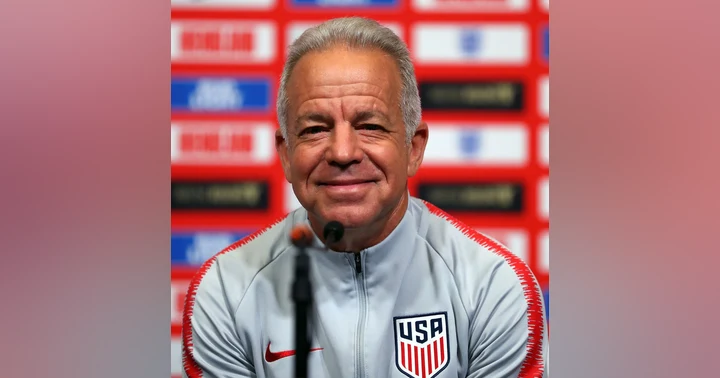
The Best of Dave Sarachan: Insights from a World-Class Soccer Coach
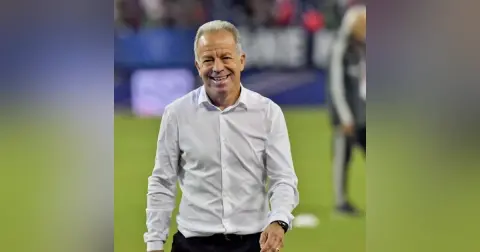
In this "Best Of" edition of No Wrong Choices, we revisit our conversation with the highly respected American soccer coach, Dave Sarachan. With over 40 years of experience at the highest levels of the game, including serving as the U.S. Men’s National Team head coach, Dave shares his incredible journey—from playing alongside legends like Pelé to leading teams in the MLS and beyond. Recently named assistant coach for the MLS San Jose Earthquakes, reuniting with longtime partner and mentor Bruc...

 Apple Podcasts

 Spotify

 Castro

 RSS Feed

 Youtube Music

 YouTube
In this "Best Of" edition of No Wrong Choices, we revisit our conversation with the highly respected American soccer coach, Dave Sarachan. With over 40 years of experience at the highest levels of the game, including serving as the U.S. Men’s National Team head coach, Dave shares his incredible journey—from playing alongside legends like Pelé to leading teams in the MLS and beyond.
Recently named assistant coach for the MLS San Jose Earthquakes, reuniting with longtime partner and mentor Bruce Arena, Dave reflects on the leadership lessons that shaped his career. Whether it’s mentoring young talent, managing world-class athletes like David Beckham, or navigating the evolving landscape of American soccer, Dave's insights offer a masterclass in coaching and perseverance.
Whether you’re a soccer fan or just curious about what it takes to lead, mentor, and succeed at the highest levels, Dave’s story offers timeless lessons in leadership, perseverance, and embracing opportunities.
To discover more episodes or connect with us:
00:02 - Dave Serekin's Soccer Journey
07:48 - Multi-Sport Athlete's Soccer Success
14:42 - Soccer Success and Coaching Transition
23:08 - Pro Soccer Career to Coaching Transition
35:22 - Coaching Elite Athletes Success Strategies
49:59 - Building Successful Soccer National Teams
01:00:24 - Coaching Advice for Aspiring Coaches
01:04:10 - Soccer Career Reflections and Future Plans
01:08:44 - Coaching Journey and Future Plans
0:02 Hello and welcome to a no Wrong Choices Best Of edition featuring the highly respected American soccer coach, Dave Sarachan. Dave has recently joined the San Jose Earthquakes of the MLS as an assistant, reuniting him with his longtime partner and mentor, bruce Arena. Before we kick off with Coach Sarachan, I do have one quick request. Please take a moment to like and follow no Wrong Choices on your favorite podcast platform. Your support helps us continue bringing you these great conversations. Now let's get started with our original lead-in. Today's episode features American soccer coach Dave Sarachan, who has spent the past 40 years working at the highest levels of the sport, including a run as the head coach of the US men's national team Tushar, as the most rabid soccer fan on this podcast, who grew up at the sport, you are the perfect person to lead us out today.
0:53 Yeah, so I grew up not only watching the sport but playing the sport. My father played the sport as a young man. He played it in college. So he gave that love to me and the ability to not only just speak to someone who's coached at high levels in college, but to speak to an actual coach of the us men's national team. Well, I don't really get that chance all the time. So an opportunity to speak to someone like a dave sarakin, yeah, I'm going to jump at that opportunity and I'd love to pick his brain, not only just what it what it meant to come up through the ranks and what it meant to play on the professional level, but what it's like to coach today's athlete, because obviously the mindset changes from when you're an athlete back in the 70s to coaching athletes in the new millennium.
1:37 I mean that's got to be a whole different mindset. Yeah, we love talking about people's journeys on this show and we do a lot of research and figure out what makes that person tick. And here we have an opportunity to find out what makes a head coach at the highest level tick, and it's a real privilege. But we we do this research and it's sitting in front of me and this is an impressive man with impressive credentials, who's done some amazing things in his life, and I absolutely can't wait to hear his journey. And for me, I'm always interested in management and management skills and managing conflict and reaching consensus and things of that nature, and this is a guy who clearly has done that in some very unique ways.
2:19 So with that, here is Dave Sarachan. Dave, thank you so much for joining us. Well, it's great to be here with you guys. It's an honor to be involved in a nice conversation today, so thank you. Don't feel too honored about it. To be quite honest with you. So, Dave, first question this is Tushar, by the way. Is it football or should we? Should we refer to it properly, to you as football or soccer? Which do you prefer? Oh boy, here we go. Good question Right out of the box. I think, for the purposes of today and our listeners, let's just call it soccer. Good enough and then off the air, we can talk about football.
3:02 Good enough. Okay so my first question to you. I guess my next question will be all right. So as a child you must have because, like a lot of us you know are sometimes the first sport we play is not always going to be baseball my first sport as a kid, in in little league and pal leagues growing up, was soccer. I, I'm assuming, probably the same. You have probably had the same experience. So as a child, did you? Was that the your first introduction to the game? And when you started to play as a kid, did you know that this is what you wanted to do for the rest of your life? Absolutely not. No, my generation, uh, and you alluded to it you know my, my dad was played baseball.
3:44 Uh, I have know my dad played baseball. I have an older brother that played baseball and basketball. Nobody played soccer in my family and you know, during the time when I was young, under 10, soccer was really very minimal around in the country. I wasn't really exposed to it. So you know, I did all sports as a kid baseball, little league baseball like you I was, believe it or not, for a five foot five inch guy, I was really good at basketball. But I was introduced to soccer more or less in my really in the neighborhood I grew up there were some older guys a couple of houses down that played for the high school soccer team and they would have the ball out on the yard and I kind of got introduced to it there, getting to know them, going up and watching their practices and so on.
4:38 And then obviously I started to play it. I was too small for Pop Warner football that was a big deal back in the day and my parents weren't thrilled about me playing football. So I was very athletic and I was able to be pretty good at it. So I was introduced to soccer really through the people in my neighborhood and the high school. So you really learned from not organized soccer. You learned from a couple guys down the street and you guys would get together and is that where you kind of applied your skill to be a good athlete, a good player, because you obviously became a very good player. Yeah, I got exposed to it through some older guys, as I said, that had a ball in the neighborhood, to it through some older guys, as I said, that had a ball in the neighborhood.
5:28 We did start kicking. I was very athletic as a kid. I was very quick and fast. You know, in our neighborhood we'd play touch football and running bases and all the things that young American kids would do, and I was a little guy but I was really quick. And when soccer got thrown out there a ball I was I was pretty good at it early and I kind of fell in love with it based on their reaction and the interaction I had with some of the older guys. And then obviously I was kind of introduced to our local professional team, getting to know that we had a team in town and started to watch them.
6:12 And as I got through junior high school and now kickball became soccer, I just sort of latched onto it because it just was a perfect fit for me latched onto it because it just was a perfect fit for me. When did you know that? You know you were something special and you were a standout and it was something you wanted to chase and pursue. Yeah, you know, you get validation a little bit when you now try out for teams and you get selected by teams. You know, up through eighth grade it's more recreational. But once I got to high school my varsity coach at the time took me and one other player up from as a freshman to play varsity, which back then was very unheard of, and the light bulb kind of went on going.
7:04 Okay, if he thinks I'm ready for that, then you know, maybe, maybe I am pretty good at this game. So that that gave me a real positive feeling about the sport and I succeeded in high school as a young guy, as a freshman, and then by the time I sort of finished, our team was the sectional champions and I was a high school All-American and each year the soccer got a little better. I started to get a little stronger and I kind of knew then that, you know, I can certainly get into a college and play college soccer and, who knows, from there.
7:48 So, dave, you mentioned a moment ago that you were a good athlete growing up. So was soccer. Or when you had started to play soccer and you understood that you had an ability, coaches said, hey look, you're a really good soccer player, et cetera. Were you still playing other sports in high school, like baseball, basketball, as you said? You were a very good basketball player for a guy who was only five foot something. You know were you. Were you still essentially saying you know, I can still play other sports as well. Or were you simply saying to yourself, okay, I'm going to concentrate solely on soccer. And then, when you saw that could take you other places, to college being the next level, was that the sole goal at that point?
8:29 No, I played. I played soccer in the fall, basketball in the winter, baseball in the spring. So you, played every four years every year in high school, every year and, like I said, I was blessed athletically. I was obviously doing well in soccer, basketball. I knew I mean I love basketball but I knew that I the DNA into my family, it wasn't going to happen professionally but I played. I all through uh four years of that and baseball as well and I think I I personally feel all playing all those sports uh didn't diminish my skill level in in the sport of soccer.
9:17 I know nowadays everybody uh specializes and and people are kind of down on doing other sports. For me it was the opposite. So I did play all sports and it reflected because I sure wasn't a great student. I put a lot of time and effort into my athletics. Shall, I assume that there are not a lot of Will Chamberlains in your family? There are not. No. No, the tallest is my brother, who's 5, 5'10, and I look at him as a giant so that's great yeah, genetics. Genetics didn't play out in terms of the height I play golf, so I understand you look for sports where five foot five, five foot six works right.
9:58 You know you don't have to be that big guy, but you mentioned your speed. I mean your speed. Your ball handling, I'm sure was pretty good, like where. Those were the things that set you apart in the soccer world, though, and what was that next step? Was it getting scholarship offers at that point and and working into the collegiate level? yeah, so, um, I took, I took each sport seriously, uh, depending on the season, but you're asking about the sport that I love soccer. It's funny. I think back growing up. I lived in one house my whole life in Rochester, new York. We had an unbelievably athletic neighborhood. We had a hedgerow. We had about six to eight bushes that were four feet apart and I would literally take a soccer ball and dribble in and out of those bushes Time myself.
10:48 I would hit the ball against. We had a side little brick area. I found ways to improve my skill Kind of on my own. I didn't, you know, back then we didn't have personal coaches so and my dad and mom didn't know anything about soccer. So I honed it a lot by just a lot of repetition and and I guess the outcome when I finished my high school career was I had speed, I had the ability to use both feet and I developed a soccer IQ and I think having those three things alerted coaches at the college level to start scouting and recruiting.
11:31 My challenge was and I was halfway kidding about the academics. I really didn't put a lot of time into academics. So although I ended up at Cornell, I had to go to junior college before Cornell and I'm thrilled that I did because A academically it helped me get my act together. But also the soccer was fantastic. I mean, back then junior college competition was incredible. We weren't national champions but we were always in the national tournament and that exposed me to even more coaches that recruited me. So that pathway was important for me.
12:13 So you went from junior college to Cornell. Why Cornell? Why did you pick there? Well, I grew up in Rochester. I knew Cornell, its reputation, but I also knew its soccer program and, through a crazy twist of fate, when I was in high school at Brighton, one of my English teachers was the best friend of the head coach at Cornell, the soccer coach, dan Wood, and this guy's name was Bruce Musgrave. And Bruce said to Dan you got to check this kid out. He called me the bouncing bean of Brighton.
12:53 Wow, a lot of alliteration. I like that. Yeah, yeah, say that fast. And my grades weren't good enough to get into Cornell. But when I finished at Monroe Community, dan heavily recruited me to go to Cornell and I knew the reputation. I knew and my mom and dad knew look if you can get to an Ivy League school you'd be crazy not to consider it. Yeah, and there were no athletic scholarships but that's irrelevant and luckily I was able to get admitted. I was recruited. I knew all about the academic institution but the soccer they were national, nationally ranked in the top three.
13:36 Ivy League soccer at that time was fantastic. So I was able to get admitted and have a great two year career at Cornell. I was able to get admitted and have a great two-year career at Cornell. So, Dave, you're at Cornell. Tell us a little bit about your run there. I mean, clearly you did very well. You became a professional player. What were some of the highlights? of that experience. Well, cornell was fantastic. First and foremost, I had a great coach, dan Wood. Unfortunately he passed a couple years ago, but Dan, he was really an intellect. I learned a lot about the game through him. He wasn't the greatest communicator but, boy, he knew his soccer and we had such a good team.
14:16 We were really diverse, international. We had a player from China from back then it was called Yugoslavia, from Peru. So we were very international and we were, we were ranked in the top 10 in the country and during my time at Cornell we won the Ivy League championship and in soccer, college soccer. Back then, you know, pro soccer really hadn't completely taken off. The NASL was alive, but soccer was at a pretty good level back then, and the Ivy League especially. So I was fortunate enough to gain the trust of my team.
15:00 They named me captain in a team that was quite talented and we had great success and I was fortunate by the end where I was sort of, you know, I made all Ivy and I was an All-American. It put me on a platform to get exposure for the next level, which was the North American Soccer League. So I owe so much and I graduated. By the way, fellas, I want to make that clear. I made my parents very happy because, I came home with an Ivy League degree which, if you were a betting man, dave Serekin, was not going to an Ivy League college as a senior in high school, not alone graduating from one and having grown up in a similar environment.
15:51 I'm sure that your parents told every single human being that they knew that their son graduated from Cornell. You got it. You got it. So, dave, what did you learn from being a captain? You got it. So, dave, what did you learn from being a captain? You know you eventually became a coach, which is so much about leadership and management and dealing with conflict and things of that nature Like what did you take away from the experience of being the captain of that team? Well, I guess I was fortunate. Prior to that experience in high school and in junior college I was named captain, so somewhere there was a thread of trust within the group that I was going to be a guy that was somewhat selfless, that took the group and put the group as an important piece above kind of my own personal sort of desires.
16:49 And I took that very seriously and I kind of got an early sense, way back in high school, sports, how teams should work in order to be successful. And I guess I accumulated those experiences so that when I was captain at Cornell because if you think about it, the players that were on that team there were some other junior college players but a lot were freshmen, sophomores, juniors all the way through their college experience at Cornell. So here's a guy that came in as a junior and I guess earning their trust early and taking it seriously, as I said that, making sure that it wasn't just about me, that I would communicate with everybody and form a relationship with the group and kind of keep the temperature of the group throughout the ups and the downs.
17:49 So it was a great experience that opened my eyes to you know how good you can be with the right leadership and the right people, that sort of all buy in. Was that maybe the starting point for you? I mean, we're going to talk a little bit maybe we're definitely going to talk about it in a few minutes, but was that maybe the germination point where you said to yourself you know what at some point in the future I could coach Well? I think that certainly was a big part of it. You know, I remember really specifically before I got to well, no, before I graduated high school, I think it might've been my senior year Every winter there was a kids versus teachers basketball game, and because I was on the basketball team I couldn't play.
18:44 It was just, like you know, the normal student body. But they asked me to coach that team and I remember going home and picking out a sports jacket. Yeah, yeah, yeah, you know, going home picking out a sports jacket and a tie and I borrowed a clipboard because you know that's what coaches wore back then. And I remember, you know, organizing the students that were going to play the teachers. It was a big assembly and I remember kneeling, you know, in the huddle and talking about how we're going to do this and you could just imagine right, and even then I got this feeling like God, this charged me up. It really did, just having a group like that.
19:26 And then you know the experiences along the way throughout the college. I knew that if I wasn't going to coach, I was going to either teach or counsel, but something that involved being a people, person and forming relationships. But I caught the soccer bug and you know I was very focused on being a professional, uh, so I didn't think about what am I going to do when that's done. But throughout my professional career I knew when, toward the end, I said no, I, I, this is too. I love this game, uh, and and I felt I wanted to be a part of it, uh, and learn how to be a coach. Part of it and learn how to be a coach. How many times did students beat the teachers?
20:07 You know, I think none, because even if we were winning. I think the teacher no, no, I think we did well, I can't remember exactly, but let me say this I think I was one and O, that's all that matters. There you go. That is all that matters. All right, so let me continue on with the college career. So you're getting close to the end of your college career. At this point, the North American Soccer League I mean, it's not baseball, it's not football, it's not basketball Actually, it's actually probably a better comparison, maybe, to basketball, because pro basketball was still something of a fledgling state You're still dealing with the ABA. The professional NBA itself is still kind of floundering about.
20:49 Granted, north American soccer is trying to take off in the United States, but there's still no real viable, I guess, grassroots or foundation here in America. Were you A thinking about trying to play, you know, obviously beyond your college years, or was there okay, once college is over, I have to go into the workforce. What was the plan at that point? What were you going to actually become, if not a professional soccer player? Well, let's go back to part of the earlier part of the question. By the time I was a senior at Cornell, I was very well aware of the North American Soccer League. There were previous Cornell players that were drafted and playing in the North American Soccer League.
21:34 I was driven in my head to try to have the opportunity to play in the NASL, specifically for my hometown team, which was the Rochester Lancers, which is you know. We didn't speak about that, but part of what drove me to think that, hey, this is possible was when I was old enough to go to those games. I would watch the Lancers and they had a player, Carlos Metidieri. He was a five foot five Brazilian who was tearing it up. Player Carlos Metidieri, he was a five foot five Brazilian who was tearing it up. He was the MVP at one point of the league and I said, well, there's a little guy that can play. So I was very aware of the NASL and my coach, dan Wood, at the time had said to me look, I'm very well connected with a lot of these younger American coaches who are playing in the league.
22:22 You're, I think you're going to get drafted and you know, I'm going to try to help you help you, you know, you know fulfill your dream. And I was fortunate enough to be drafted by my Rochester Lancer team, so I was pretty driven to give that a shot, a big time shot. So you're drafted, you go to Rochester, home, basically, and at that point is it about earning a spot on the team. Do you know you're going to be on the team and you'll be a bench player or role player, or are you thrust into the, into the fire right there? Well, yeah, if we had, if we had hours, I have some great stories.
23:03 But I was just thrilled to have the opportunity. Well, let me go back. I was drafted in January of 76, and I was still a senior at Cornell. So I wasn't going to just quit. I was too close to getting a degree. So what. I was doing was, I was, I was. Yeah, I was traveling to Rochester three days a week, which is 90 miles in the winter, because we had indoor training. So I tried to make an impression for my coach. He was a Yugoslavian coach and by the end of the indoor training then we had to go to San Diego for an outdoor training.
23:43 And, to make this long story short, I I put myself in a position where they felt that I could uh play at that level and they signed me to a contract. And my first contract uh was non-negotiable, it was $2,000, uh for the season. And uh all, the all, the all, the all. The Americans basically signed the same contract. So we would. We would practice in the morning and paint houses in the afternoon to make extra money. Yeah, but, but. I was a pro and I played in the. NASL. It was at a time when the NASL was in the limelight because of players like Pelé and Chinaglia and the Cosmos.
24:28 Let's face it, they helped propel the league into more of the forefront than behind the scenes. So my timing was good. It didn't allow me a lot of playing time, nor a lot of the Americans, because a lot of foreign players were coming in, but the experience was fantastic what was it like to play with against those guys? with those guys, tell us some some pele and chinaglia stories well, it was surreal, I mean. So here I am, a 22 year old kid in 1976 and and I I was. I was fortunate because you, I used to get soccer did not have the exposure it does today. There isn't anything.
25:10 There wasn't anything like you know where, it was on TV all the time, or whatever, but I would subscribe to magazines. I followed international soccer. I knew about Pelé and Chinaglia and Beckenbauer, george Best, johan Cruyff these are legends in the game. Legendary names, legendary figures, legends, legends, I mean. And here I am with Rochester and I'm on the same field with these guys. So you can imagine I was 22. I mean, pelé unfortunately just lost and that's been in the news lately and it conjures up some incredible memories. But my favorite was when he came to Rochester with the Cosmos my first year and we had a player on our team, Frank Odoi, who was from Ghana, who actually knew Pelé, and he said, hey, I'm going to introduce you guys.
26:02 When he said you guys, he meant the American guys. So before the day, before you know, they're on the practice field. And I remember taking a photo. I have it. In fact I've been trying to dig it up in my boxes of stuff, but and I will where I put my arm around Pele and we have this photo, and I remember his lower back was like marble and he was 36 at the time and just to be in his presence, I mean it was hard to describe. Uh, I remember going out to LA and George Best walks by me and if you remember, you know you guys may not, but he, he was like a matinee idol and when, when you looked at him, it's like my God, I mean this guy, you get a man crush on a guy like this.
26:50 But you know, when we went to play the Cosmos in New York, that was just incredible because the place was packed. You had Beckenbauer, who I loved, you had Chinaglia, stevie Hunt I could go through all the names, and then, of course, pelé. So you were a little, I was a little star struck. Stevie Hunt, I could go through all the names, and then, of course, pelé. So you were a little, I was a little starstruck, no question. But you know, to be able to see their skill level up close, it was daunting really it's so interesting because I wanted to ask you if at any point in your professional career you wanted to maybe pursue European soccer or maybe South America or somewhere else, to kind of immerse yourself in that world where it's much more appreciated.
27:31 But it sounds like all of those stars were here making a good paycheck because, right, it was a draw and it was, it was a way for them to play in America and get exposure. It's such a different scene now than it was then. Talk a little bit about that yeah. Yeah, yeah. Well, back then there was, there weren't any Americans that were going over to play in Europe. From my memory not not during my era that that changed obviously in the 90s and 2000s and and so on. Because they weren't good enough, Dave. I don't think. I think that's a big part of it and in the culture. I can really remember who got a chance. John Harkin was the first one. I can really remember who got a chance.
28:12 John Harkin yep, John Harkin, who I coached, by the way, at UVA and have known John, yes, he was one of the first to go over and play in England. He had a dual passport. Yeah, there were a lot of layers to why it wouldn't happen, but basically the American player wasn't ready for European soccer, nor was the. You know, there wasn't even that much exposure to it back then. Final paycheck and grow the game. Eventually it did in the NASL, the Cosmos, because these other markets couldn't afford to pay players like Steve Ross and Warner Brothers could with the Cosmos.
29:01 So that's a different story. But for me personally, no, I never would. It wasn't in my realm of thought to say, boy, I'd like to go to play in England because, yeah, back then it was the NASL. Really, so if you're making $2,000, I mean, how much are these international players making coming over here, because it seems like that's where all the salary went to is these guys? Is Pele making $3,000? Seriously. Like what could? Obviously, they wrote him a big fat check to get him to come here. Do you remember roughly what we were talking about? no, I think there's documentation about that. I mean, if I get you know it, might it might have been a million dollars, which doesn't sound like anything today, but back then it was, it was a lot.
29:50 It was a lot, uh, but it was true for all those guys and honestly guys, for me it wasn't about the money. I didn't think about, man, I want to be a pro because I want to drive a nice car and make a lot of money. I honestly, too naive. I just I wanted to have that experience and obviously, you know, when I got, actually when I played indoor soccer, my brother, who's an attorney, did my contract and I was making a pretty good living as an indoor soccer player, but it wasn't really about the money. For these older guys that came over, it sure was about the money, but you know, everybody has their own way of being motivated.
30:35 So when did we now move to the? When did we say to ourselves okay, the playing career is over, I want to move to the sideline? At what point did we say we're now ready to transition to the sideline? Yeah, that was at the end of my indoor career in 82. I finished playing and the coach that was working at Cornell at the time needed an assistant and I moved back to upstate New York, to Rochester. Were there two Dan Wood at the time. No, no, dan was gone. This was another coach. Jack Ryder was the coach at Cornell, and so I knew that I wanted to get some experience coaching and there was an opportunity, so I went back there in 83.
31:24 And how old were you at that point? At that point I was oh boy, I was born in 54. Let's do the math 29? . I was going to say I was born in 54. Let's do the math 29? Is that right? I was going to say right around 30. Okay, yeah, yeah, close to 30. That's right. And had a couple seasons there. And then Bruce Arena, who was the head coach at UVA and those that know soccer know about Bruce Arena. My God, he was a Cornellian but we didn't play together because he was a transfer, so I didn't really know Bruce, but he knew me and I knew him and there was an opportunity to join him as a full-time, first at Cornell, to join Bruce in 84.
32:18 And that was really the springboard to an accelerated learning curve of collegiate soccer learning how to coach, what it takes, forming relationships, recruiting, scheduling, and then from there I was offered the opportunity to be the head coach at Cornell and there it went. So 82 and 3 and 4 were the beginnings of knowing that, okay, this is going to be my profession. So is it fair to say that it was a relationship that got you to this point, or it was. It was obviously your alma mater, so it was easy to go back to Cornell, right? But is it is it then, knowing Bruce and him kind of taking you along and saying I have this opportunity and you're going to come along too?
33:06 Is it a relationship thing or is it what, at this point early in the coaching career? Yeah, early you know life is about timing and opportunity and recognizing it. And I guess you know my mom was right Get a Cornell degree because I believe One way or another. Yeah, you know she because my, you know Bruce knew about me because of Cornell. He followed the teams, he knew I was a good player. People that knew me recommended me. Anyway, the Cornell connection absolutely got me in the door with Bruce and then, by working with Bruce and having success, now, five years into my UVA experience, the Cornell job opens and here I have five years under my belt at an ACC championship team, national ranked team.
34:04 So the connection that Cornell played again got me an interview and helped get me the position as the head coach at Cornell to go back in 89. And that was just a wonderful reintroduction to go back to Cornell, having been a player, now being the head coach. So yes, the relationship and the experience you know dotted one I and crossed one T and got me that opportunity. So, Dave, you had a lot of success in college, UVA, going to Cornell, and then you went to the MLS.
34:46 What was the desire to jump Meaning? Could you have stayed in college, risen to the top of those ranks and been content? Why was the MLS compelling to you? That's a really good question. You alluded to it. The collegiate setting is pretty much you're working with a safety net. Very rarely in our sport of soccer were you going to lose a job. I could have stayed at Cornell for 20, 25 years, but again an opportunity came where Bruce Arena was the head coach at DC United, which was in Major League Soccer and early on.
35:35 The league started in 96, but in 97, the assistant there was Bob Bradley, who left and there was an opening and Bruce called me while I was at Cornell and said I want to offer you this position. Think about it. And I had a young family at the time and I felt as though I left the last couple of years at Cornell in a really good spot. We were Ivy champs, we went to the NCAA tournament and I just felt the leap of faith. I wanted to challenge myself what is the next level like? And to be able to now push myself professionally to another level work with a guy that I'm familiar with, get into a team that I feel has good ownership and a good roster that can win because they had one, has good ownership and a good roster that can win because they had one.
36:34 When I added it all up. I just felt in my gut if you're going to push yourself to be as good as you can be, you've got to take this opportunity, knowing that in professional sports it could last a year. But I had the right support internally and my gut told me you got to do this and I did it and thank goodness I did. I did love the college experience, but it was time for me to get to the next level. Dave, I've always thought that coaches, especially at the college level, are teachers. They're first and foremost teachers, and you spoke, you said, you know, you said yourself that your first coach in college, jack wood, was a very influential person on you and you know how much did he influence your style as a coach.
37:22 And then you know, moving forward, jack rider, bruce arena, how much have they influenced your style of coaching, and then how has that turned and how has that then given you your own style, and then have you been able to then give that to other assistants under you. How is it then you then mentor other younger players and other younger coaches? yeah, yeah, a good question. No, I, you know, I I've taken. I've taken all my experiences and a little piece of all the coaches I had starting back in high school. My junior college coach was not a particularly sophisticated soccer mind but he was an incredible human being, an incredible empathetic guy, the way he treated us.
38:07 Dan Wood was a good guy but socially it was a challenge for him but he literally had an IQ of like 160. He was brilliant. So I took a little bit of the tactical side. I took a little bit of the humanistic side. With Bruce. Let's face it, he's arguably the most decorated American coach in American soccer Of all time. Yeah, the most decorated American coach in American soccer Of all time. Yeah, and I took a lot of the details that are needed to succeed and man management. So all the coach, and even the coach that coached me in Rochester, who at the time I disliked because he never played me or the Americans.
38:50 We used to make fun of him and but. But as an adult I can kind of think back to some of the things that I could take from him. So it's like comedians, you know, you take a little, you take jokes and routines from everybody and now you formulate your own way. And the one learning thing that I can share with you is that when I, when I did get my opportunity to be the head coach at Chicago with the Chicago fire, you know, at the beginning, um, I try, I I copied too much of Bruce. I was his assistant for such a long period of time and I realized very quickly that I have to have my own voice and I have to do it my way, which I did, and luckily you know I was successful.
39:33 But to answer your question have to do it my way, which I did, and luckily you know I was successful. But to answer your question in a long winded way. I've taken a little bit of all those experiences and sort of molded into how I now can mentor and teach and get the point across, because at the end of the day, you've got to be able to communicate. And if you don't mind, I can share one other kind of fun quick story when I was at. UVA. Yeah, you know, when I was at UVA during the winter, bruce and I we went to all the basketball games. Ralph Sampson was there. They were great. Acc basketball was incredible. So every home game at halftime we would go into our soccer office, which was about 200 square feet, but the vent above us led into the visiting team's basketball locker room.
40:28 So we were oh wow, you were the mole, yeah, yeah. Now full disclosure. We never once went back to Terry Holland, the head coach of UVA's basketball, to say, hey, by the way, here's what they're talking about. No, the whole idea was I want to hear how Jim Valvano talks to his team. I want to hear how Lefty Drizelle talks to his team, I want to hear how Bobby Cremins Can you imagine? And so so I use that example because I'm always looking at even other sports and leaders in other sports and how they talk and communicate and when they have to put the hammer down, ok, you've got to do it this way or when you've got to soften the message.
41:12 And so it was an incredible learning experience and to this day, I still do that. You know, I love Steve Kerr and the way he operates his team and the way he carries himself and how he communicates, greg Popovich. So you know, I think you take a little bit of all that all the time, but you still have to be yourself. I think you take a little bit of all that all the time, but you still have to be yourself. You know, as you, as you bring that up. You know one of the questions that I had wanted to get to during this this conversation was about managing. You know world class athletes, leading world class athletes. I know you had the opportunity to coach a David Beckham, for example.
41:53 The opportunity to coach a David Beckham, for example, like, how do you deal with people at that level and get them to buy into your philosophy and get them to take direction? I mean, what's it like to deal with those looking from the outside, egos or those types of people? Yeah, yeah, no, look, it's when Bruce asked me to join him with the Galaxy. He and I were hired together. At the same time they let go of the previous staff, and that was 2008. And we inherited a very dysfunctional locker room. David Beckham was there, Landon Donovan was there. There was a myriad of mishmash kind of personalities within that locker room.
42:36 This was August of 2008. And even back with DC United, we had Marco Etcheverry and Jaime Moreno. These were big, big, big people. So my first exposure to high level pros started at DC. And, and look, my daughter had a poster of Beckham on her wall the day I accepted to join Bruce. So you know I was. I got to admit. You know. You walk in and there's Beckham and it's like holy smokes. You know this is the real deal. And it's like holy smokes. You know this is the real deal, but but my, where I'm going with all this is?
43:16 My success with these kinds of people has always started from the humanistic side first, not the soccer side. Now, of course, they have to get your trust and you have to gain their trust and respect for you to have, for them to trust that. Hey, you know what you're talking about from the soccer sense and I I didn't put that ahead of getting to know them first as people. Uh, so they begin to, you know, sort of crack that shell of okay, here's my coach, but he's got a family too, he's got young kids too, he, he, he's dealing with LA traffic and so on, and so you know it starts that way and then, not being a fan, you are their coach.
44:03 And I'm not trying to be a friend of David Beckham's, I don't want to join him for a beer in Beverly Hills on the weekend. You know, you have to know where to draw the line. And I think I was fortunate, with my personality and the way I communicate and sort of handle that end of it, the right balance that I gained their trust pretty quickly. And once you've done that, now you can say, first of all, I'm not going to teach David Beckham how to strike a ball. Say, first of all, I'm not going to teach David Beckham how to strike a ball. Let's face it guys. So let's cross that thing off the list. But we can show them video of team stuff.
44:44 And the other way I would say it too is because I respect where they've been. So I had, you know, david Beckham, robbie Keane, landon Donovan, ashley Cole, stephen Gerrard. I would enable them and encourage them to have their voice in a lot of this and, even if I disagreed, they felt invested that way. They felt respected that way Because, I'll be honest with you, the bigger, the star. In many ways they're very sensitive and they've got their insecurities and they still want to be recognized. So you got to find the right balance. But it still starts with the right communication and building that trust that way. That's kind of how I've always done it and it's kind of worked for me.
45:27 It's a perfect way to lead into my next question, then. So is there? Is there a big difference between the the ego of the european latin american player, those who are obviously playing soccer on a much higher level than the american player? So is there a huge difference in terms of the ego of and of, uh, of dealing with david beckham than there is with dealing with a Landon Donovan? You know that's an individual, that's kind of an individual evaluation. I'd say I would answer that this way Certainly, early on in Major League Soccer, let's say, when Europeans or South Americans came to our league, they felt they were coming into an environment where they were just going to dominate, they were going to be the best, this league's secondary.
46:16 They had an attitude and an ego that you know the American game can't be as challenging as where I'm coming from early on. But I think, through time and through improvements and better quality, whether it's coaching facilities, players I don't think there's a big difference now and again. Here's another good example. Here's David Beckham with the Galaxy, arguably the greatest, the biggest name on the planet in terms of soccer at the time, arguably. And but he, he played for Alex Ferguson at Manchester United and Alex Ferguson took no crap from any player.
47:04 He managed. He managed players in a way where those players would then come into the next environment knowing how to treat coaches with respect, treat rookies with respect. There was an incident that happened with me and you know I'm a mild-mannered guy and I never I rarely get into confrontation, but there was a moment in one of the practices with LA where one of the American guys argued with me over something silly, I don't know. I was reffing and he was just being unbelievably disrespectful and I was about to get back after him and Beckham was standing there and he didn't say a word.
47:49 He pulled this player, just pulled him away, walked 20 yards and had a conversation with him and about 15 minutes later, the guy came up and apologized to me. And I know why David did that because he was brought up the right way in an environment where you don't do that. You just don't do that, and so it depends on the person in the player, honestly, and the environment you brought in so because there's plenty of americans that have an ego. Let me tell you yeah I can't wait to talk about america, the american game and where we are now. But uh, curious, you know. Is it easier to work with a younger player because you can mold them into what you want them to be, or are you prefer to work with a veteran because you don't have to teach them how to strike a ball?
48:36 You can work on the finer points of the game. Obviously, I'm sure you love to work with both, but which is more challenging for you? I really enjoy teaching. You've alluded to that Teaching and coaching and mentoring. If I had to pick, you know the, the. I love the relationships that I formed with a lot of these veterans, like Robbie Keene. You know we talk two, three times a month. You know we've we've became friends and he was he was really a legendary guy and a real pro and I love those relationships. But as far as if you're asking getting in the weeds of really getting on the field and coaching and teaching the young guys are great because they are more malleable.
49:25 They are more open, they're still clay right. Yeah, exactly Exactly, and it's more frustrating because they're not accomplished yet, and it can be. You have to have patience, which I think I do have, but I do enjoy that part and you know the year I had the national team before this, this last cycle we had a lot of young guys and it was really some of the most gratifying work I've had. So I would say the young guys is really something I really do enjoy. That's where I was going to head next. So you know your experience with the American team. You were there, it was a 2002, your first time through with the World Cup and the men's national team.
50:07 Is that right, yeah? Yeah, I. I started in 2000 with with the national team and and uh was part of the 2002 world cup team, which was uh extraordinary. That was my first, so what was that? Yeah, Like, like, what is that experience like? Is it? Are you teaching young guys? Are you dealing with veterans? Is it a blend of both? You know it. You know the guys are off doing other things at different times of the year. It's like how do you meld that type of a team together? And what is that experience like? Well, national teamwork is unique because, to your point, you don't have them daily of opportunities throughout the year, in each year leading up to the World Cup, to bring that group together to make sure that you convey how we do things, what's expected, the style of play, so on and so forth.
51:05 So it's a real challenge. People from the outside can never really know, but it's a challenge and when I had the experience I had excuse me leading up to 2002, it's a lot of trial and error. Guys come in, guys come out, guys can be hurt, guys might not be available. You have to be adaptable as a coach, you have to have patience and then you have to have a good sort of program so that you're playing a lot of good competition and building a roster for a national team. In my opinion, it's been proven. I think that you need the right blend of veterans and young players, and at that time we had incredible veterans and we had two young players named Demarcus Beasley and Landon Donovan, and so 2002 was the perfect blend.
52:00 But you're not guaranteed that. So national teamwork is really a challenge when it comes to that. How many coaches were on that staff, aside from you and Bruce? coaches were on that staff, aside from you and bruce, uh, there was um, there were two other coaches and, uh, the rest were sort of support staff like trainers and so on, so there was probably well, we had a goalkeeper coach. So there was probably five coaches on staff, five of us. So the notion of obviously building the proper mix of players on your team. How important, then, is it to then build not simply the proper mix of players on a team, but a proper mix of coaches and support staff on a team, and how much of an input do you have on that?
52:48 Because obviously a guy like Bruce Arena he's going to be more like the CEO and obviously you're going to be like one of his lieutenants. So how much of a role and an input do you have in building a staff like that, and how much has your experience worked to recruit and to mentor those folks who come? along. Love that question. Love it Because I think what's really overlooked in mentoring and in our profession is the importance of staffing and the importance of an assistant coach. The quick answer is it's massively important for a head coach to build his team and when I say team, I'm talking about the staff now to build his team, and when I say team, I'm talking about the staff now With the right personalities.
53:36 One of the reasons I think Bruce and I you know, I guess you know we're arguably the most successful duo in US soccer, or I should well, in American soccer. We've been successful everywhere because you know, there's things he offers that I don't, and vice versa. And I think a big part of it is to be able to challenge one another, to be able to have the trust of the players, so that if Steven Gerrard comes to me because he doesn't want to go to Bruce, I'm not just going to rat out Steven, I'm going to have a real conversation on my own terms and have the right way to communicate and building that trust because many players go to the assistant rather than the head coach or the assistants plural that you get the right mix.
54:35 You need intelligence, but you need the way you communicate and deal with players that sometimes the head coach isn't able to do, and so I've seen it not in a good light, but I've seen it more in a really good light and I think my experience now as a head coach and leader that's one of the most important pieces is making sure that I can build my staff where we can have real honest, open interchange. And look, a lot of it is ego. A lot of head coaches have too much of an ego. They don't want their staff to have too much input. I think that's crazy. You got to have enough security in your own abilities to say you know what, if the assistant wants to take a group, now do it.
55:16 You want to have a conversation, do it as long as we're all on the same page. So it's massively important. So, dave, when you look at American soccer today and I'm sort of jumping ahead a little bit, but having been the head coach of the US men's national team for a period of time. A I come to this because what was it like to be the interim coach? What is that dynamic and how do you work your way through that? And then B we're very curious to hear your thoughts on the future of American soccer. Well, yeah, I mean. So obviously, 2017 is going down as a difficult period of time for US soccer, when we didn't qualify for the World Cup and that loss in Trinidad, and that loss in Trinidad.
56:09 And then, you know, I didn't set out to be the next coach but, by sort of default, we had a game a month later and we needed a head coach and Bruce had stepped down and the Federation said you know, dave, you need to take the team. The Federation said you know, dave, you need to take the team, which you know I was very glad to do for so many reasons we could talk about. And then the next event was January and they needed a coach and I was the guy and at that point there was no. You know, us soccer was in shambles, really.
56:49 The men's team was looked upon as a failure. Sunil Gulati, who was the president at the time, was up for reelection and his job was on the line. It was a mess, but it was an honor for me to have the opportunity A to be the head coach of the national team, regardless of the situation. But I also took it upon myself to say, ok, they're giving me the keys to this ship. They haven't given me a map. I don't know where I'm going, I don't know what the waters are going to be like, good luck. And so I just sort of took it upon myself to go. Look, this may be interim, this may be lead to full time, but that's not the issue.
57:32 The issue is we've got these games. We've got we've got a January camp. We've got games in March. We have this unbelievable 10 game schedule in 2018 where we're playing Paraguay, ecuador, brazil, england, ireland, france, you know because, the idea was we no, these are the. this was the greatest schedule in US soccer's history and it was such a yeah, this, these are real teams and these were real opportunities for young guys to experience. And so the interim part I didn't really. You know, the experience of being the head coach was important for me.
58:12 The need for sort of a calm head and an experienced guy with these players was needed. So I didn't think of it like this is an audition or I don't know where this is going to lead. I just took it and it just kind of rolled. And by the end, when you know, I wasn't going to be named the head coach and they eventually went with Greg, I look back and felt very proud of, you know, the work that we put in to allow these players these experiences that I think they hopefully would be able to cash in on in 2022. And it was a little weird when you asked me you know what was that like, but I didn't look at it that way.
59:00 These were just opportunities and it was a great experience. And to the second part of your question you know, we've never been in a as a country as individual players are concerned. We've never had the amount of talent, potential talent that's available to us than now because of the exposure so many of these guys have had to our pro league and MLS. And then the opportunities to get over to Europe and everybody wants to fast forward this and win a World Cup. But it's not that easy. We're heading in a really good position. Certainly in all my years I haven't been a part of a generation of players quite with this, much to offer.
59:52 Why do you think it's taken so long to get to this point? You know, I often think about. You know the number of kids that grew up playing soccer and the great amateur programs and the great college programs and the number of really great athletes that play the sport. Why has it taken us so long to catch up to the number of really great athletes that play the sport Like? Why has it? taken us so long to catch up to the rest of the world? I don't know, I don't know. You know there are some ideas that I would throw out there, and one of them you alluded to. As far as college, I'm a big believer of college soccer, but if you think about the rest of the world, players are exposed to a pro club very early.
1:00:36 They're identified very early. Education is many times bypassed and if you think about those players throughout all these years in South America and Europe that had as much repetition and training, it's hundreds times more than players back in the day during the generations where players were playing high school soccer, some club soccer, but then going to college, playing high school soccer, some club soccer, but then going to college. There were a lot of steps missed along the way where it ramped up these, you know, the players from outside of the US, and we're now just closing that gap where and I'm not advocating young players to not go to college what I'm saying is many more now at a young age are being identified like they used to be in Europe, where an academy team or a local team would train them and then they'd play for the local pro amateurs and then be offered a pro contract and bypassing college altogether, and I think we're now getting more of those players who are very serious.
1:01:52 One sport people, not three. Like I, was committed to it early, so I think that's what's delayed a lot of this, to be honest. Give me a couple of pieces of advice for young coaches out there. They want to get into the profession of coaching, whether it be on the sideline, whether it be on the soccer pitch, whether it be hell, whether it be on the sideline for basketball Cause, as you said, you take your advice and you'll take your advice from whoever, wherever you can get it. So what's that one or two pieces of advice you want to give to a young coach, to someone who is aspiring to be a coach? Well, I would say this you know, and I'll use my own experiences, but I think I think that there's a few things I would tell a young coach.
1:02:35 One is there is so much available to you out there, whether it's videos, watching every weekend, premiership games or Bundesliga games, games or Bundesliga games watching other coaches watching, watching, watching and absorbing how coaches behave and how they sort of, how they communicate, because communication is so key. So I would say, take in as much as you can. Accept the fact that you are going to fail, um, accept the fact that you are going to fail you, you are going to fail, um it, it is part of the process. And, and knowing that, really trust your instincts, um, in how you uh, teach and and and how you absorb information and communicate that information.
1:03:26 And know that you're not going to reach everybody, because as a young coach, you can really beat yourself up to go boy, I blew that one. Well, you're going to blow it, but trust your process and stay with it. And then the last piece is because I'm an older coach now and I've done this a long time, but I will never concede that I've figured it all out. I still watch games and pick out new things all the time. So you just got to keep an open mind throughout your process and those would be three things right off the top of my head. Those would be three things right off the top of my head All right, so I have a couple of quickies before.
1:04:10 I know that both the Larrys have a couple of questions for you, but I got a couple of quickies. We should have asked you this early on who is your favorite all-time soccer? player oh boy. Oh boy. My favorite all-time, johan Cruyff. Favorite soccer movie. Oh God, it's got to be whatchamacallit. You know what I'm trying to think of with Pelé. If it's not victory, it's the right answer. It's victory, no, no that's the.
1:04:51 If it's not victory, it's the wrong answer. Hey, I was getting to that. You took the word out of my mouth. It was victory, of course, of course. You're a guy who played with Pele Canalia and Beckenbauer. Two of those three guys are in that movie. I know. I know Victory for sure, sure for sure, and you're a ted lasso fan, we have to assume. Correct, that was the other question. Yeah, absolutely, I love I absolute fan of ted lasso fantastic all right, I love to always ask the question because and I love what you said before you're gonna make mistakes. We're all human, right. What is the the worst decision, the worst mistake you made, where you're like I can't believe I just did that. Is there a moment that sticks out to you?
1:05:32 That boy that was boneheaded, what was I thinking there? Or anything like that. Or if you can't think of one, the best decision you made in your career path, the journey for your career? Well, I alluded to the best decision, and that was taking the leap of faith, uh, and leaving the comforts and safety of of a collegiate position to jump to the pros, um, uh, the worst decision. Well, I would say this about outside of coming on this podcast yeah, besides coming on the podcast that's right well then I'm done. I don't have another answer no, no, but I would say one.
1:06:17 Well, I'll you. I'll phrase it a little differently. One of the great lessons I learned which turned out to be one of the worst things I did, but it's not that terrible but one of the great lessons I learned as a coach was early on, when I had to tell players they weren't starting. First of all, the dynamics of a team. You have 11 players in soccer that start and then you have usually 12 others that don't like you because they're not playing, and that's just you know. And I learned early on A you're just not pleasing everybody and don't worry about it. This is all part of it, as long as you're honest and open. But the one big mistake I made early on and I don't do it anymore is I had to tell a player he wasn't starting and he had been a starter for me.
1:07:05 This is when I was coaching in Chicago. But I said to him here's the reasons you're not starting, but you're going to play in the next game. Okay, and I never should have said that, because when the next game came, I really didn't want to make any changes to the team that had just won and and I committed to something. And here's a young man that's going home, going, okay, he gave me his word, he's going to play me. And I learned a lesson from that, because then I had to tell him again by the way, I'm not using you. And he's he's going to say well, wait, you told me you were going to play me. So one, one big lesson I learned is well, two, you've got to be able to communicate very clearly and be honest and open, especially pros.
1:07:56 But everybody, they want the truth. Don't BS anybody. Tell me the truth. You don't want to play me? Fine, tell me why. And then don't promise me you're going to play me and don't play me, because when that happens you lose their trust. So I would say that lesson really has stood out. Which applies to business and everything else in life. So I guess the last question I'll ask what does the future look like? We know that you're involved with Puerto Rican soccer and leading that team. What does the future look like for Dave Sarragan Puerto? Rican soccer and leading that team. What does the future look like for Dave Sarragan? Oh, that's a. You know my wife and family are asking that question, probably right now. To be honest with you, yeah, yeah, when I hang up, I'm going to have to deal with that.
1:08:44 No, well, I've taken on the, you know, the last two I'll call them seasons but the last two years with Puerto Rico, working with their senior team and their under 20 team, which has been really a fascinating project. I'll call it enjoyable, and I'm currently out of contract with Puerto Rico, so I'm still going to have a conversation with them for 2023, because national teamwork since I've done it with the US I do enjoy that kind of a rhythm. I'm not ready to retire. I still have, you know, a big part of coaching is you got to have energy, and I feel I still have a lot of energy to give Maybe not when I was 22.
1:09:29 And so I'm entertaining different sort of thoughts going into 2023. One is to remain with Puerto Rico. I'm going to have a conversation with them, hopefully next week. My experience and I'll say, wisdom I don't think I, I don't think of myself as having a lot of wisdom, but people when they look at my age, they go, oh, you must have a lot of wisdom. You're fooling a lot of people. Then I'll be honest with you, yeah, yeah. But to be able to give back, whether it's working with an MLS club as as a coaching director, working with younger coaches, mentoring younger coaches, because I think we need to get these younger guys up to speed a little bit.
1:10:12 So you know, I've entertained a few ideas that way, but we'll see. But I'll be involved in some capacity in 2023 because I still love it and I'm enjoying being near my family now where they have little ones, and so the balance has worked out well. So, still to be determined, I guess. Well, you're very lucky, because many people aspire to find that thing that fills them up and gives them purpose, which is also tied to a career and a passion, and you quite clearly figure that out. So congratulations for that and, dave, thank you.
1:10:54 Thank you so much for spending the time with us today. I appreciate the kind words and this has been a blast. I think you guys do a great job, and thanks for having me on. What a wonderful opportunity that was for us to to a talk to a world-class coach and B get to see Tushar act. Maybe, like he was seven, he was really falling back to his childhood quite a bit that interview. I did a lot. I will say this is just a great conversation. I will say this about coach he he did have the right answer when he said answer when he talked about his favorite soccer movie. If he did not say victory and he said bend it like Beckham. The interview would have ended.
1:11:35 I'm just telling you, we would have ended it right there. It was the end of the interview. It would have ended at the end of the interview. I would have just said look we can't talk anymore. I'm sorry. We can't talk anymore anymore. I'm sorry, we're done, we gotta go anymore, sir. But look I, what a great interview that was. I mean I gotta tell you. I mean, you know, even when we, even when we stopped to record, we talked for a few minutes longer, and I'm hoping when the next time he comes to the east coast we all have a chance to get together, because I just love to meet him in person and just pick his brain a little bit more. First of all, this is a guy who played, who was actually on the same soccer field with guys like Pele, tony Canalia, you know, zamuda Birkenauer, I mean, you know these are some of the most legendary people of all time to ever play soccer.
1:12:17 And you know, just to even have that moment to just say, hey, what was it like to watch them play live on the field level, I can't imagine that. I mean, I'm sitting up in the stands as a kid with my dad, but to see that on the field level, I can't imagine that. I mean, I'm sitting up in the stands as a kid with my dad, but to see that on the field level must have just been incredible. And he's so humble. One thing I took away with. That is just how humble he is. He's like a really humble guy and how he was able to like. And one thing you know we've had the chance to speak to coaches and managers over the years in our own interviews and the one thing I always enjoy hearing is how every coach develops a style, and it's not specifically their own style to start with. Obviously. They pick the best parts from everyone who's ever mentored them along their journey and then that's where, when they come to a point of their own maturity as a coach, they okay, this is who I am as a coach and a person and that's really where that journey kind of I don't, I don't want to say ends, but maybe, but maybe that's the middle point or where, or maybe really that's where the journey begins for for many of them, and that's what really what this story was all about.
1:13:21 I really, really enjoyed it, yeah, I think most great coaches are probably players first. You and Dave, I think. Is that that's the case with him? I don't think it has to be. I think you just have to have a passion for whatever you want to go into in the coaching realm. Yeah, and Dave, you know, he it's still, you know, somewhat ambiguous to me, like, how do you get these jobs? Well, I think it was relationships. Right, it was Bruce, it was other people kind of recognizing his talent, recognizing his ability and saying to him like you could kill this job you, you would knock it out of the park. You're coming with me and just because you're given that opportunity we say it all the time doesn't mean you're going to hit a home run, right? He obviously has that, that intellect, the communication skills, everything that you look for in a great leader of people to get the job done.
1:14:09 And you hear it with all of his anecdotes, all his stories and everything he talks. The one thing you always got, the one thing we always talk about here, is that the idea of that you know a Dave Serekin or anybody else we speak to is that, hey, what's it like for you to be a mentor? The notion is, the notion of the reality is that mentors need mentors, right? So that all these guys that we speak to they all talk about. Well, I was mentored by XYZ, like he was mentored by Dan Wood and mentored by Bruce Arena, so now he takes those elements and mentors other coaches. That's really what this is all about a lot of times, right, mentors need mentors. Absolutely, and the part that I was so eager to hear was how do you manage these huge personalities?
1:14:50 How do you connect with folks who are world-class, trying to find ways to relate but to also make sure that there's a bit of a wall up to let them know that I am still the coach, I am still the authority here. I thought that was a very interesting thing. I thought that was a great moment and you know talking about David Beckham pulling aside a young player and having a coach like you know, a player coach, even, you know someone who can handle the guys on his own team and empowering those people to do that right and to do the right thing.
1:15:34 So I thought that was a great moment for sure. So just an incredible conversation. I feel fortunate that we had the opportunity to spend time with Dave today and and obviously wish him the best of luck going forward with all of his future endeavors. On behalf of Tushar Saxena, larry Shea and me, larry Samuels, thank you again for joining this episode of no Wrong Choices. If, after listening, you've thought of someone who could be a great guest, please let us know by sending us a note via the contact page of our website at NoWrongChoicescom. While there, please be sure to check out our blog and explore other great episodes. While signing up to become a member of our community.
1:16:15 You can also follow us on LinkedIn, facebook, instagram, youtube Threads and X. Tiktok is up and content has begun rolling out. We'll be back with new episodes in early February, leading in with a group of highly accomplished women, a CEO, super doctor and Broadway production stage manager for some very popular shows. In advance of that, always remember there are no wrong choices on the road to success, only opportunities, because we learn from every experience.