Sadia Zapp: When Your Career Becomes Your Cause
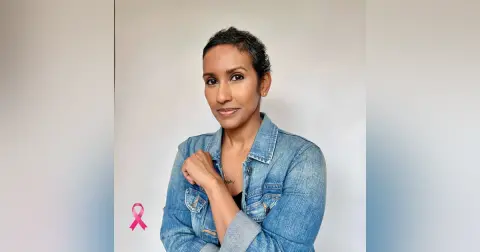
"Some journeys are set in motion long before we realize how personal they will become." In this episode of No Wrong Choices, we sit down with Sadia Zapp, Managing Director of Communications at the Breast Cancer Research Foundation (BCRF), to explore her career journey and personal connection to breast cancer advocacy. Sadia reflects on how witnessing her aunt’s battle with breast cancer during childhood set her on a career path toward advocacy—a path that unknowingly prepared her to fight for...

 Apple Podcasts

 Spotify

 Castro

 RSS Feed

 Youtube Music

 YouTube
"Some journeys are set in motion long before we realize how personal they will become."
In this episode of No Wrong Choices, we sit down with Sadia Zapp, Managing Director of Communications at the Breast Cancer Research Foundation (BCRF), to explore her career journey and personal connection to breast cancer advocacy. Sadia reflects on how witnessing her aunt’s battle with breast cancer during childhood set her on a career path toward advocacy—a path that unknowingly prepared her to fight for a cause that would later become her own.
Sadia shares her experiences as a first-generation child of immigrants, the challenges she overcame, and the pivotal moment when she was diagnosed with breast cancer while working at BCRF. Through resilience and purpose, she transformed personal challenges into professional passion, using her career to champion awareness and equitable care for all women.
In honor of Breast Cancer Awareness Month, this episode is a celebration of strength, advocacy, and meaningful work. Sadia also offers valuable career insights—discussing the importance of internships, embracing discomfort, and how personal experiences can shape a career of impact.
Whether you're looking for inspiration, career advice, or a deeper understanding of breast cancer advocacy, Sadia’s journey is full of lessons for anyone striving to turn adversity into purpose.
To discover more episodes or connect with us:
00:02 - Breast Cancer Research Foundation Advocate
15:13 - Studying Abroad
19:50 - Career Growth Through Nonprofit Opportunities
31:03 - Navigating Breast Cancer Diagnosis and Coping
39:15 - Legacy, Coping, and Advocacy Post-Cancer
44:35 - Empowering Moms Through Breast Cancer Advocacy
54:28 - Personal and Professional Cancer Journey
0:02 Hello and thank you for joining no Wrong Choices, the podcast that explores the career journeys of interesting and accomplished people in pursuit of great stories and actionable insights. I'm Larry Samuel, soon to be joined by my co-hosts, Tushar Saxena and Larry Shea, but before we kick off, I have a very important request to make. Please support the work we're doing by following no Wrong Choices on your favorite podcast platform, such as Apple, Spotify and YouTube, and by giving us a good review. We also ask that you connect with us on LinkedIn, Facebook, Instagram Threads and X, and by visiting our website at norongchoicescom, where you can learn more about us and the show while signing up to become a member of our community.
0:45 Your support enables us to bring these great stories to light. Now let's get started. This episode features a very special conversation in honor of Breast Cancer Awareness Month. We're joined by Sadia Zapp, the Managing Director of Communications for the Breast Cancer Research Foundation. Director of Communications for the Breast Cancer Research Foundation, Sadia is an extraordinary person who has dedicated her career to providing a voice for organizations that make a difference in people's lives, Work that, in the case of the BCRF, is deeply personal. That's because Sadia is a breast cancer survivor. Larry Shea is the person who joined me for this conversation. Please lead us in.
1:26 Sadia Zapp's story is amazing. We've had other people that have been inspired by things that have happened to them when they were younger on this show and they've shared their story, but never quite like this. It's a unique journey and a fascinating journey, and I think everybody's going to take a lot from it. It's definitely one of the most unique stories we've ever had on the show. I can tell you that I'm sorry that I wasn't part of it when you guys did this interview. It's extremely important and I'm looking forward to having everyone in our audience who listens to our show pretty regularly to listen and take some of the words from Sadia Zapp and be inspired themselves. Absolutely. We've dug into advocacy in the past, but nothing as powerful and as impactful as this.
2:07 Here is Sadia Zapp. Thank you so much for joining us, Sadia. Thank you for having me world who you are, but nobody knows you better than you. So if you would, you know, please tell us what you do, what the Breast Cancer Research Foundation is and why you became involved. Let's start there. Sure, so my name is Sadia Zapp. I'm the Managing Director of Communications at the Breast Cancer Research Foundation. I've been here for about 10 years now, and BCRF is the largest private funder of breast cancer research in the world.
2:48 We just a couple of days ago announced a $70.3 million investment in scientific grants to more than 260 researchers across 15 countries, so we are technically an international organization. I'm very, very proud of the work that we do here. We're a tiny, tiny team of about 50 people right now fueling all of that, all of that science. So that's what we do here at the breast cancer research foundation. So I landed here, like I said, about 10 years ago, and my career path has long been, as you mentioned, in the nonprofit space, really, because I knew from the get go that I didn't want to just be selling things that didn't matter.
3:37 I wanted to do something that had impact and meaning to me personally. So I got into healthcare. I started at the Child Study Center at NYU and have been in this space for over 15 years now. We're going to dig into all of that, but I just want to start a little broader, if we could, because people are listening to this podcast and communications can mean anything. What is communications? What does it entail in your specific role right now and what could it entail, because, like you said, you didn't want to be just selling something. But what is communications? What is that field like?
4:17 Sure, so I've been doing communications for nonprofit organizations for over 15 years now and really, at the heart of it, it tends to focus on raising awareness around a specific cause, whether it's a disease or call to action. So each for a number of years I worked in raising awareness around child and adolescent psychiatry, and then I was working on raising awareness broadly in the public. So that might mean public service announcements, developing creative and helping to hone our messages and finding the places and spaces that made sense to reach the right audience, the people that needed these services, and also to inspire people to give back to these causes.
5:08 So I know you were tremendously affected when you were younger. So we like to go back to the beginning. We like to really touch on those original dreams when you were younger, what you really wanted to do with your life, and I know you had a significant event happen when you were younger. So why don't you start there? Talk about where you grew up, your family and how that transpired. Sure. So I grew up in New York City, first-generation child of immigrants. Hard work was instilled in me from the day I was born. But when I was about 10 years old my mom's sister was diagnosed with breast cancer.
5:48 She was only 25 at the time and I remember at the time we I come from a very traditional Bengali family and it's very common in Asian cultures not to talk about health problems specifically women's health is a very taboo subject and we didn't talk about her disease, mainly because we didn't use the word breast. We just didn't want to say the word and so using the word breast cancer, forget about it. We're not talking about that. I remember seeing her wear a wig and for some reason this wig imprinted itself on my brain and we never acknowledged it.
6:29 And I think that's what bothered me, even as a 10 year old, is the fact that we just would pretend like we didn't notice or see these changes that were happening to her physically, and I guess it must've stuck with me in my whole I mean, it did stick with me my whole life. But it clearly had some hand in shaping my way over to VCRF, because when I saw the Breast Cancer Research Foundation was looking for someone on their communications team. One of the reasons that I thought about applying and coming to join this cause was her, was that memory which stayed with me my whole life. So I'm glad that it did and I'm glad that, whatever powers that be that planted that seed in my gut did, because when it came time for my own diagnosis at age 36, I happened to be working at the one place in the world you want to be working if you're going to have breast cancer.
7:25 So yeah, that was you know either eight or just really lucky. I just want to ask, because you touched on it Do you wish your family talked about it more? It seems like it was a cultural what was? You said they didn't want to mention the word. Could you talk about it with your mom privately, or was it just absolutely not? Well, when I was only 10 at the time and I remember just knowing intuitively like it's hush, hush, we don't talk about it, because I heard whispers. So I would hear her sisters sort of whisper about it. And because they were whispering I knew it was something you don't say out about and so I just intuited that part and so I never asked because I just thought, okay, if I ask about this like I might get in trouble, I don't want to do that.
8:13 So I just didn't. And during my diagnosis now, 20 years later after her initial diagnosis, it was so different, like our family now, like things have changed, not just broadly in the country but even within my own family, because you know we've been here for so long but everyone was talking about it. You know, my whole family, everyone knew about it and, ironically, my aunt. It was very triggering for her because she had that comparison where she could see how everyone was there for me and was open about it and was talking about it with each other. But when it was her time it was all a big secret, no one talked about it and she didn't get that support.
8:55 She didn't get that explicit support when it came to her disease. So that I think was quite painful for her actually. So when you're 10 years old and you're, you're feeling all of these and kind of developing your I mean absolute passion. It seems like to find something in health that was going to benefit. You don't know what communications is, I'm assuming at 10 years old. So you know you want to go on this health path. Though how does that? How does that manifest itself? Do you, are you thinking, nursing? Are you thinking what's the train of thought there? We lived up to that stereotype very, very much so, and so when I went to high school, I grew up in New York City, and if you know anything about the New York City public education system, you apply to high schools and you can choose potentially choose where you go.
9:55 So I ultimately went to the High School for Health Professions and Human Services, thinking I would one day be a doctor, maybe, and part of the curriculum there at the time was that you had to intern, so part of one of your courses was to find an internship at any sort of healthcare institution. When I was 15 years old, one of the very first places I worked and I think I wasn't 15, I think I was 14 actually was Bath Israel Hospital, which was right across the street, and the first place they put me was in their emergency room, or they made me go to the emergency room as a, as a volunteer, and I was so traumatized so was everybody else that very first hour in the er about israel, I was oh my goodness there's no way I'm for good or bad.
10:45 It completely knocked me off course, like that one day in the ER. Knocked me off course and I was like there's no way I'm not doing this. This is insane, this is way too stressful, there's no way. And then that changed. That totally changed my career path. But I knew I was going to stay, I wanted to do something in health but went off to college, decided I was going to major in communications. I was one of the rare people in the world that probably ended up working in the field I actually studied. So I studied communications and luckily found a job right out of college in communications on the communications team at NYU, so at the medical center at NYU.
11:27 And that first job was the next sort of propeller, was the next that kind of propelled the rest of my career. So how did you set yourself up for that in school? So you know, people who might want to follow a similar path to you really want to learn. Ok, how do I stand out, how do I make a difference? How do I get myself into that world? So when you were in school, talk about. Well, I think you went to Albany, Is that right? As we did our research you went to Albany taking, and what type of internships or things are you pursuing to?
12:10 create a skill set that enabled you to break into this field? Sure, so I went to the University at Albany and I loved it. I loved college. I loved the SUNY system. It was terrific. It's exactly what I needed, and I majored in communications from very early on. And I will say one of the great things about the program at Albany was that we at the, in your senior year, as part of the communications major, you have to intern full-time. I don't know if it's optional, if it was required, but that's what I did. So in my final semester I actually didn't take any courses. I took one supplemental course as part of my internship, but you intern full-time in some sort of communications position and they connect you with organizations that are looking for comms professionals.
12:54 So I worked at a PR agency full-time my final semester. So I had a nine-to-five job Monday to Friday, and that was for free, I was paying, I was paying tuition to work somewhere for free. I don't think that's legal now. I don't know I did the same thing. I have great memories of that. And when I think about it it's like I was paying someone to work for them. But in the end I think it was one of the best and I'm so glad I did. A number one it got me into that nine to five walks mindset. When you're in college you're in a bubble. It's so different to be set out into the world and into the workforce when you don't have that experience.
13:36 And number one it kind of got me into the mindset. And two having that on my resume and under my belt I think is what made the difference when I left college, because of course, I graduated and then went through the whole, you know, aimless search of finding a job and I got I don't know how much of it was luck, but I will definitely attribute a lot of that to the, to that internship, definitely attribute a lot of that to the, to that internship and that instead of coming out of college with zero experience, I actually had several months, a great recommendation from this PR agency to boot. So that certainly helped.
14:17 And one other thing I also studied abroad and that also made a big difference on my resume, I think, because I remember that the person that hired me said that was one of the reasons she hired me was because she saw that on my resume that I had studied abroad. And I mean for any number of reasons, for a lot of reasons, I hope my son one day studies abroad. I think it's a life changing, life changing thing. So I encourage anyone if you have that chance and opportunity to do it. But those two things that is what made the difference is that study abroad and then being able to intern and work full time. But I think any internship, whatever way that you can get experience in your field of interest, whatever that is, I think is the way to go.
14:57 You are preaching everything we talk about, and she even did a pitch for. No Wrong Choices earlier with the emergency room. Do not do that. You learned it was not a wrong choice. Always encourage internships because that's a way for you to get your foot in the door, and I love that. You mentioned studying abroad. I believe you studied in Valencia, spain, is that right? So how did that affect you? I mean, I know in my life, like just to be exposed to other cultures, other people, things that you're just not used to, just made a huge difference in my life when it comes to your experiences. How did it affect you to study? abroad in Valencia. Yes, well, you know, it's, it's it. First of all, again, I'm going to go back to my culture.
15:40 Culturally, we're very, we were very sheltered. I had a very protective family. I was the very first one in my whole family of all my cousins to go away to college. My sister went to college but she stayed home. There's an? It's very. It was at the time. It's not anymore, but at the time it was really untraditional to move out of the home. So I left home. I went to study at Albany the home. So I left home, I went to study at Albany. So that was step one. But then step two for me I needed to keep breaking out farther and farther and expanding my horizons, and so I wanted to study abroad to continue to expand those horizons and keep making myself uncomfortable.
16:23 I wanted to find situations where I could still thrive, even when I was in a brand new space where I knew nothing. And I learned so much about myself also that like I could live anywhere, like I realized, like I could, really I could. Tomorrow we had to move to France, I could move to France and that would be. It gives you a confidence, right, exactly no question with that building of self-confidence, because when I first moved there, or when I first went there, I wanted to come home right away. When I went to college, I wanted to go home right away. You know, you feel that initial homesickness, but then once you, once you move past that and eventually you will right, and then it's developing that confidence, knowing that, yes, of course you're going to always feel homesick, but then you will get past that.
17:10 So I think that's what it was that building that self-confidence in your own ability and strength to face uncomfortable situations, which includes not speaking the language you know. No one in valencia spoke. You know there's lots of different parts of Spain. You can go to Madrid, you can go to Barcelona and you'll find people that speak English. Valencia. Were you fluent before you went, or functional before you went, Like you know, sixth grade Spanish we're similar. But I really regret I forgot so much of the Spanish that I learned there. So that's my own like you know regret.
17:50 One of my biggest regrets is that I lost a lot of the Spanish that I learned there, but it was just, you know, one of those life-changing things that I think everyone should do so how did you leverage that self-confidence to break into your field? Oh gosh, I don't know if I did. I don't know if I did. I will say I think it was more also just again about. Perhaps it was the ability again to be comfortable being uncomfortable, because I think that's all. I think that's what interviews are. Yeah Right, all interviews are that situation where you have to just be comfortable being uncomfortable, where you're sitting in this really abnormal situation where people are grilling you and asking you questions about yourself that you don't know how to answer.
18:38 But you have to figure it out. Like you're doing now or now Are we doing. Okay, you're comfortable, you're all right, it's a really abnormal, like weird thing, but you do it and I think that probably what helps is just that it's forming those foundational skills, probably more so than like a direct application, but it's just honing some of the things like how to communicate with someone quickly and efficiently and you know, how do you relate to people. I think that's maybe what it is. It's like how do you relate to people that you normally wouldn't relate to because you don't speak the same language, because you know you come from a totally different cultural background, which is what you have to do out in the world.
19:20 I love how you talk about making yourself uncomfortable. I think that's a valuable lesson that we don't talk about enough. There's a few other stepping stones before you get to BCRF Breast Cancer Research Foundation and I just want to know how they affected your journey and affected your life, the New York Restoration Project being one of them. Talk a little bit about that and how that came about. How did you get that job? Sure, and what did? you get that job and what did you do there and how did that increase your value in your journey? Sure. So when I started out, I started out at NYU Lincoln Medical Center and then I was at Mount Sinai at a very specific niche departments within those big, big hospitals which let me talk about sort of odd but really important issues.
20:09 So, for example, first it was the Child Study Center, which was the Child and Adolescent Psychiatry Department at Langone. So I was talking about all kinds of issues related to like ADHD, autism, tourette's and learning disorders all kinds of things that people don't at the time. Definitely at the time before, mental health is like now it's a hot topic. No one's afraid to talk about mental health. Back then it was still a shameful word. There was still so much stigma associated with mental health. So that was that. Then at the Center to Advance Palliative Care, we were trying to bring palliative care services and bring it outside of just in the setting of death and hospice to make it more available to seriously ill patients like cancer patients, to have access to sort of well-rounded healthcare teams Then.
21:02 So I spent all these years in healthcare, ended up going to the New York Restoration Project because I didn't necessarily see it as that far out, but it was different and I just wanted to try something different. While still being in the nonprofit space, again, it was really important to me to keep doing something for cause related organizations. I ended up at NYRP, which was founded by, by Bette Midler, and it's a it's a great organization. They clean up parks. They cleaned up all of the parks along the very skinny tip of Northern Manhattan. So all the parks Fort Tryon, fort Washington, all of those parks that basically line the very top lane what area of Manhattan it used to fort washington?
21:43 Um, all of those parks that basically line the very top lanewood area. It used they used to be total dumping grounds and that meddler used to drive past them and decided, like I'm not looking at this anymore and cleaned it up. And what I quickly realized is that the concept of green space is also very intricately related to health, to public health as well, right, because there are all of these implications not just around improving your physical health, but also your mental and emotional health as well. So, and it's also a social justice issue, because it's often low-income neighborhoods that have the least green space and therefore have less access to all of the health benefits that green spaces afford wealthier neighborhoods, right?
22:29 So, if you're not overlooking Central Park and or have access to it, then you're going to more likely live in sort of desert spaces, right so spaces that don't have any. You know benefits of public parks, right so they. Also the New York Restoration Project owned community gardens, and so 52 community gardens in specifically low-income neighborhoods, so they put on programs and all kinds of stuff and so it ended up. I thought it was an environmental cause I was getting into, but ultimately really it was more about the public health and social justice issues around green spaces. So again we see a theme.
23:11 You were just totally after the helping people with health-related issues and I just think that's incredibly admirable. But not only that. When you're talking there, I'm saying to myself like you are taking on the most difficult you know, mental health issues, end of life issues. I mean you are taking on, I think, the most difficult things that you possibly could have faced head on. Is that a conscious choice, or are you getting a job and they're putting you on these projects? You know that's a great question. I know I think a part of it is both. Some of it is just sort of coincidence, it's sort of what happens, it's another it's.
23:53 But some of it is also seeking out these places, you know, seeking out opportunities and chances, but then the hand that luck plays in connecting you. How did those experiences change you or shape you? What did you take away from that part of your journey? Well, I think number one. First of all, I was also very young in my career and I think it's important and I think this is the norm now. But you know, I would squeeze all of the juice out of the lemon as much as I could, so I would learn as much as I possibly could. But then I also was ambitious enough to focus on myself and know that once I've done everything I can, I'm going to learn.
24:34 I still have to keep growing, and so then I would look for the next position and the next position and the next position. So in the early half of my career there was a lot of that natural kind of shifting and jumping careers. I really, and I think it's still important today to not let yourself stay in one place for too long unless you're still learning. If there's still important today to not let yourself stay in one place for too long unless you're still learning. If there's still a lot to be, if there's still more to learn, great, keep learning. But if you find that, you know, because for a lot of organizations there's a cyclical system, and so once you've gone through a couple of cycles, for me in the early part of my career, I felt like, okay, I've learned as much as I can. Now this next place offers me more to learn. So this place can offer me more to learn.
25:15 It's also one of the reasons why I did switch from health to what I thought was environment. Like I have more to learn in this space, like I want to diversify my nonprofit experience. But so, yes, I think it was that intentional desire to diversify my experience, mainly from my own ability to build my skill sets, so that I had more to offer. So the next place I could go. I have more to offer, and each place that I went, I also was trying to make sure that the projects I took on, the things that I was focused on, was different, so that I could add to my skillset as well. So let's look at the next place you went, which I believe was the BCRF, the Breast Cancer Research Foundation.
26:02 Did you seek that opportunity out? Did you always have your eye on that as where you wanted to wind up at some point in time, or something similar? You know it's funny because so yes and no. So I you know the timing of it worked out sort of coincidentally. Did I always want to work for a breast cancer organization? Yes, so anytime I did see some, any, any breast, I wasn't that picky, I just wanted to work for this cause. So anytime I saw a breast cancer organization have a job opening, specifically in comms and marketing, I would apply. It's only happened. You know how many times is that going to happen? I think it was only once, maybe before, and then the second time it was BCRF.
26:46 So it just happened to work out for me, but I certainly it was on the back of my mind. I kept an eye on those opportunities and when it came along I jumped on it and I got lucky with BCRF and it worked out and, like I said, whatever powers that be that helped me along that path got me to the right place at the right time when I needed to be there, and that's how I ended up here. And you know, like I said before, I still feel the same way where it's like, you know, when you, when you squeeze enough of the juice out. You know you should, you should keep moving to keep growing your career, but I've been here 10 years and I still feel like. I still feel like I'm learning. You know, it's such a dynamic organization because, because it's so small and there's so much to learn and we're doing so much, like every year, there's been something new, something different, something I can learn from which it which is, I mean, honestly, why even I'm still here, aside from, also, my personal passion I I just need to ask um two things.
27:47 um, first of all, how did you know there was an opportunity available? How did you get that job? Where did you see that listing or whatever? It was a friend of a friend Cause those are so those little things that we kind of almost gloss over or take for granted are how we get the job. And, um, I just want to focus on that, and what was your first role with the BCR off, cause I know you've had a couple of different roles. Um, so, your initial role, what was it? And how did that opportunity itself come about? You know the craziest thing because I think statistically I forget what it is. It's some crazy number like 80% of people find jobs through personal connections, through people they know, or some right relationships, so I got everything I've done.
28:29 Sure Right Relationships, so I got everything I've done. Sure, it's the most common way to get jobs. Every single job I've ever had was from idealistorg. It was just an online application that I found, I sought out and I pursued. None of them were through personal connect, like I didn't know anyone in any of the places that I've ever worked. So I always find that so crazy. First of all, about my experience, because it's so different than what I and maybe it was meant to be like that. Maybe there's something in the stars in that way. Yeah, maybe. And what did they have you do when you first come on board? What was your role? I believe my title. I'm sorry, this was 10 years ago, no a decade ago, that's okay.
29:13 It was 10 years ago. I think I either started as assistant director or associate director. It might have been associate director actually and then I was quickly promoted. So I've always been in communications on the comms team, on the same communications team. It's just been laddering up in that same role. You know, laddering up in that same role. And you've always had. You've always had the, that next eye on the prize, that next job that you wanted to go for Is that? Where have you just been promoted? And now, here you are. Yeah, exactly, I've just been promoted in here. There was definitely a time when I had my eye on the next ball and then once we got because Be Struck is so small, we're not very hierarchical, so there's not a lot of those sort of opportunities to get to the next title.
29:56 How many people? My team is a team of eight people, so for me, once I reached right now, my title is managing director of communications. Once I reached that role, I also was kind of like just this is where I'm. I found my sweet spot actually because it's funny. I have a new chief marketing communications officer and she's fantastic, but it's also it's funny because it's a that's a tough job. I'm happy where I am, like that's a really tough job and I like what I'm doing and get to do the like, I get to have my hands really in a lot of things. And so I think that's because right now, right now very much instilled a very sweet spot of exactly where I want to be, what really well balanced.
30:43 And what you're doing is obviously incredibly important because you have become an advocate for something that has become incredibly important, meaningful and personal to you. So we need to, you know, explore something critically important While you're at the BCRF. You got some news along the way about your own health. Can you share with us some background on that and talk a little bit about that experience? Sure. So I had been working at Beesera for seven years and I truly I thought I knew everything there was to know about breast cancer and so when I felt a lump in my breast, I was lucky enough to know, like, what to look for.
31:32 I knew to wait a few weeks, not to panic right away. So I waited a few weeks, kept track of it and then, of course, I went in. I had just moved to a new town, new neighborhood, had no doctors, so I found a random doctor online and by then I, when she, when I went in to see her, she had also felt a lump under my arm, so in my lymph nodes. So she was like, let's just get this imaged. I would go in, like, truly, the next day it was Friday and Monday I'd go in to have a mammogram and they did, because I have dense breasts. They did an ultrasound right after that and that radiologist called me into her office. The tech that did the ultrasound said I'll be right back and she said come with me.
32:15 Actually, she actually wants to see you in her office. That made me like why does she want to see me in her office? I went there alone because I truly, I didn't even tell anyone. I didn't tell any of my friends, my sisters, people that I talk to every single day and tell every detail of my life too. I didn't tell them because I thought they would tease me and they would say, like you're being nuts, right? So when she called me into her office and she made me sit down and said you know, I just want you to be prepared that you know you have a lot going on in your right breast and I think this is cancer. So of course I was. I didn't believe her and I said like how, how could you possibly know that from a biopsy with no biopsy, from just the images?
32:57 And she said I have, I know, I know what I'm looking at. I've been doing this for 40 years and I this is cancer. I just while she said the chances of me being wrong are possible, but it's probably. I'm not wrong. So I appreciated her candid honesty with me because it let me come to terms with that diagnosis quicker than having to wait, because I will tell you and you know, you know this, larry also is like that one of the worst parts of a cancer diagnosis is the waiting right, like playing the waiting game of finding out news and so on one hand, I'm glad she like just told it to me right then and there, but I was also alone.
33:40 I didn't have anyone with me. I had to get on a train, get back home, crying on the train and truly it was amazing. I, despite working at PCRF, I just never and truly it was amazing. I, I, despite working at PCRF, I just never. I never expected to hear that. You know like I knew the odds. I knew that. You know I'm not an exception to the odds, but it is still unusual for someone under 40. I was only 36 at the time to be diagnosed. So I always had an inkling and, like I said, I had that fear from my aunt that I might have breast cancer. I just always thought it'd be like down the road, like maybe when I'm older, but never at this age, with a four-year-old boy at the time. So I never envisioned that at all.
34:20 So that was very eyeopening and it's still since then. I will say it has made me so much better at my job and having that patient point of view was so it has just opened my eyes in all kinds of ways that I just had no idea that I even had my eyes closed. You know, I had no idea what I didn't know, you know. So I mean, I just can't even imagine grappling with with that afternoon, whatever emotions you might've been going through, going through it alone and having the knowledge that you had about this particular disease. I mean, I I could see it being being very empowering that you know all of the information and that you're aware of what's going on.
35:07 But I could also, you know, sometimes ignorance is a little bit of bliss when it comes to a daunting situation. So so I'm just wondering were you thankful that you were educated about what you were about to go through, or was it just? I cannot believe that this is happening to me. You hit the nail on the head. It was such a double-edged sword because, on one hand, I'm talking to every doctor that I talked to the radiologist when she did my biopsy, my oncologist when she called me days later Again, my oncologist was a good friend of mine. Thank God because I worked at BCRF, I was able to text somebody and get in the next day, which was unheard of, right. Unbelievable.
35:53 But I could ask all the questions. I knew all the lingo, I knew what to ask for what does the score mean? What is this treatment plan? What are these options? I was great, right, I didn't have to be someone that's like, what is breast cancer? I didn't have to Google anything, right? I knew all of that, which was great. But then I also knew like terrible things, like things that patients don't want to know, knew like terrible things, like things that patients don't want to know. So it was definitely statistics in my head that I had to. I mean, I couldn't, I tried to dial them down, but it was a concerted effort every day trying to dial down all of the information that I that I did know that was not going to be helpful to me at all. So so, yes, it was like they're good and the bad, and that's still the case today.
36:37 I mean working, continuing to work here is a double-edged sword as well, because I love what I do and I love the level of understanding I have and empathy I have now towards the, towards patients and people that were serving essentially. But it's definitely work to face the worst thing that's ever happened to me every morning, every day, and have to escape. You know like a lot of people use work to escape, even throughout their treatment. Even when I was in chemo and surgery and radiation, I mean thank God I had a really understanding team but I couldn't use work to escape my reality, which it wasn't easy then.
37:22 It still has its challenging days now, but I just get past it and move through it and then I'm back. Yeah, that's actually. You indirectly answered the question that I was going to ask, which was about coping, you know, as a communications director, as someone who we now see, you know talking to us and writing blogs and appearing in different places. I was curious to know if telling your story was one of the ways that you were coping and if getting that message out was in some way empowering. How did you cope through that period of time?
38:02 Well, I was so lucky that my I mean my husband, my son, my family was so incredible, and I will say that that's one of the things that you learn really quickly is that you have to build your team, you have to build your support system, and one of the things I did was you know, have this incredible group of friends, but it's also exhausting to have to tell people and what to do and all the how can I help? I want to help you, and so I assigned a friend like you're, in charge of telling everyone what to do. And you know also another friend like can you look out for my husband? He's doing so much Like he also needs help, like it's not just me.
38:42 So, having a support system, building that team I think it's also one of my learnings that I learned later was assigning specific tasks to some people and putting them in charge of delegating, because you're too tired, like I can't delegate. I was too tired from chemo and then surgery and then, of course, radiation. So that was one way to cope is having a great support system, and, yes, you're absolutely right, great support system, and, yes, you're absolutely right. Since then, I think for me, talking about it and even even my work to some degree not, I mean, to a large degree is cathartic, is really cathartic. It's a, it's its own form of therapy to be able to talk about it.
39:24 You know, the only time I and, but sometimes, sometimes it does, it gets a little overwhelming and it gets challenging to deal with, you know, on a day-to-day basis. But overall, definitely it's cathartic sharing my story. And you know, I've been doing it on Instagram as well, and so now there's this huge breast cancer community online and that the camaraderie and the friendship and this really is like this feeling of sisterhood, is so empowering too. It's really heartening, I should say. And so people who reach out to me and ask me questions or will say, wow, this really helped me I mean feeling like you're helping other people I will say that's not unique to me.
40:04 Every yeah, so many patients that I have met with over the last year, they'll get in touch with me to say, like, how do I switch careers? I want to do what you're doing now. So many patients, people who now, after cancer, realize like I don't want to just sell whatever it is. I actually do want to do something meaningful and I, like I said, it's not unique to me, it's not unique to me or it's not unique to those patients. It's such a common I'm learning now. It's not unique to me. It's not unique to me or it's not unique to those patients. It's such a common I'm learning now. It's such a common reaction from cancer patients post treatment to want to do something more, which you know again, I think it comes back to you realize how precious life is and that you want to and this is a little morbid, but I think for patients, a big part of what's on your mind is your legacy.
40:52 What's the legacy I'm going to leave behind Because, all of a sudden, your mortality is so present? in your face and that you are thinking about, like what am I leaving behind? What is my son going to turn to to remember me? And so part of that is one of the reasons why I tell my story, so that one day he has something to look at. How is your health now? Well, knock on wood. I mean it's great, it's really funny. I think I mean, Larry, you'll know this too, and you're a I should interject for those who may not know my wife has been battling cancer for almost nine years now, so a lot of the stuff that Sadi has been talking about I have experienced, I guess, secondhand, so it's a very familiar subject to me.
41:35 Yeah, thank you, larry. And so you'll know I mean it's really hard to feel like it's ever behind you. You know, you always feel like, even though I mean I'm on drugs for the next five years and these drugs are meant to prevent it from coming back. But and this is part of the part of the curse of being someone at bcrf and so honed so in on the details is that I know that the specific type of cancer that I had has a really is notorious for coming back in 10, 15, 20 years. So it's one of you know. So that kind of fact was like it's something I can I'll never escape.
42:16 And so you know now I'm sorry, now I'm like so distracted by that I forgot what the question was. Does that drive? I mean, my question was how is your health? And you've answered that. Was how is your health? And you've answered that. Does knowing that things might come back in 10 to 15 years, does that create a drive within you to really push your story and to really make a difference with a sense of urgency? I think it is why I'm so concerned with what's my legacy going to be, you know, because I am so concerned about like nothing is guaranteed, and so I've never taken for granted like you know, there's lots of people that feel really comfortable saying I beat this, I beat cancer, I'm.
43:03 I will never feel that confidence, and that's just probably part of my personality because I'm so superstitious, part of my personality because I'm so superstitious, but I always am afraid of it coming back and and so, yes, I am really. Yeah, I think you're right. I think that is part of the reason why I like to share my story, because I feel like I don't know how long I'm going to have that opportunity, so I want to do it now so that my loved ones have something to hold on to want to do it now, so that my loved ones have something to hold on to. I have to ask, because you talked about how you can't really escape. Most people escape through work or through distraction or something else when they're faced with these feelings that are very real and very serious, and you know, the question was asked how do you cope?
43:52 Do you have an escape? Is there something that you can do? Focus on your family, of course, and I'd like to think that your family you're more open about these things with your family than your family was when you were a child. But what do you use to escape? Because I think everybody needs a break, no matter what you're going through, and I just can't imagine not having that break. You know you're facing it at home, and then you go to work and you face it, and then you come home again. Where is that space for you? That's a great question and it's a tough one because it's very rare indeed where I'm not thinking about this.
44:35 Yeah, my family, so my husband and son, and especially having a if you have a six-year-old, if you have a boy, let me tell you I have a five-year-old boy, I know all of the, the pokemon and the you know beyblades and all of that. I actually the energy I can't focus on anything by him because he demands all of my attention. So when I go home and he comes home from school, you know we have our time together and so he is, and all of the birthday parties and all of the just being a mom. I will, and actually I will say, even through treatment.
45:16 You know, it's so funny because being a young mom, you know, a lot of people do assume like it's so much harder. And yes, it is. It is harder, you know, being a cancer patient and being a young mom. But I almost feel like not, that it's easier. But they, you have no choice, like you have to be okay for your kid, yeah, so it doesn't matter how crappy you feel, like you have you have to make dinner, you have to do bedtime, you have to do bath, like there's just you just have no choice but to get yourself going. And I think that's what children give you sometimes is like you have to fake it for them and so you end up faking it for yourself and that gets you through. So I, so I for me, you know, having my first of all my son is the center of my world and so he is.
46:01 That it's not a hobby it's everything it's a hobby, it's a passion, it's a love, it's a responsibility it's a chore, it's all those things. Yes, that's right. Yes, exactly. So I will say he is the number one thing probably wonderful, you know, and and we can hear how you lit up talking about him, so it clearly comes through. So, as we look at the BCRF and their mission and their charge and what they're trying to achieve, give us a little bit of background on that and then tell us how we can help and how we can, you know, potentially make a difference as well.
46:45 Sure. So I mean I mentioned earlier BCRF is the largest private funder of breast cancer research in the world. But what does that mean? What? How are we trying to end breast cancer when we say that that's our goal? So there's a multi-pronged approach that's taking place, which is that there's two key pillars that you need to achieve, which is to prevent breast cancer from happening in the first place, if you're going to make a dent in the number of women diagnosed, and then also to cure metastatic disease, because metastatic disease is the only form of breast cancer that's uncurable, right, and it's the most dangerous form, which is stage four. That's what metastatic disease is dangerous form, which is stage four, that's what metastatic disease is.
47:26 So, those two key things, everything stems from those two key goals, and underscoring all of that is this need to ensure that all of the progress that we've made and are making is experienced equitably, because there's still a lot of unacceptable disparities and outcomes based on race. Black women, specifically, have the worst outcomes compared to white women. So making sure that progress is experienced equitably and that we continue to accelerate the breakthroughs that we're seeing today at a faster pace, because incidence is on the rise, right, and so there's actually been an 8% increase in women under the age of 40 being diagnosed with breast cancer over the last 10 years.
48:10 So my story, you know, it's not actually that unique. Nowadays it's actually quite common. And you know surprisingly, about 55% 55 to 65% of women under the age of 50 diagnosed have had a child within the last five to 10 years. So a lot of these young women are young moms, and so you know. Not that that, you know, makes them any more or less their lives any more or less meaningful or valuable. Valuable, but it really speaks to the fact that young moms, who typically are the like, take care of themselves. Last, still need to be very aware of their own health when it comes to seeing changes in to their body.
48:54 So so, yes, I will say that bcrf is so focused on all of these things, by advancing research across the entire spectrum of the disease, and that's what makes us so special is that we have researchers working on every single angle. We're not just looking at one thing. For example, if you are funding a single institution, you're only funding one place. By supporting BCRF, you're funding this global legion of scientists that are attacking this disease from all kinds of angles. So it's that 360 degree view of the disease. That's the only way we're going to eradicate it right. It's not by any one single breakthrough from any one single place.
49:37 It's by all of these breakthroughs that are happening concurrently and in conjunction with each other. So research, research and more research is the answer. That's great, you know you are. You've gave us so much along the way here in terms of advice about having a goal in your mind, something that you want to pursue for your life, and then actually attacking it and going after it. And I just, if somebody wants to get involved with health and somebody wants to make a career out of this, what would you tell them in terms of how to go about? I mean, you were 10 years old and you found that straight line. I think that's a little ambitious, but if you could point that path, what would it be for people?
50:21 I think, whether it's health or really, like I said, I would have also gone down the route of international development if I had just gotten my foot in the door that way. But I think there are a few key things. So, number one, it's setting the groundwork by giving yourself experience, so things like you know, internships and just any experience you can develop. So and then, number two, finding way. I don't think people value enough the sort of beauty of a very clear communication when it comes to your achievements on a resume and so being able to really, you know, showcase what it is that you do and who you are and, as far as you know, seeking out these places.
51:08 It's just that. So, for example, I mentioned a specific website that was geared towards the nonprofit sector, which is where. I like if I knew nothing, that's what I knew. I knew I wanted to work in the nonprofit space. Whether that was health or international, that didn't matter, I wanted to work in that space. And so, I think, finding those resources and then staying on top of it. So I had alerts set up so that every single day, or multiple times a day, whenever there were job postings in this field of communications, in the nonprofit space space, it can be really specific with emails to me. So the second these postings were up when I was looking, I was on top of it.
51:49 I knew what to do, smart. So I think that it's just pursue, pursue, pursue. And you can do that by finding those spaces that you want to be in. And if people want to make a difference and contribute to the BCRF, how should they do that? Well, visit BCRForg. Breast Cancer Awareness Month is in October, but it happens year round. People are diagnosed every two minutes in this country, no matter what time of year it is. So you know, supporting breast cancer research is critical because one in eight women in the US are going to be diagnosed with breast cancer.
52:33 So if you know eight women, most likely I mean okay, it doesn't work out that cleanly, but just think about it. Just think about those eight women in your life. I mean October 18th, we also have a social media activation happening to represent those one in eight women because, BCRF is determined to make it none in eight, but I think that that's, you know, just important. So I would say visit bcrforg, know that you can support any time of your. Breast cancer awareness month is critical because it's a really important time when we're. I would say visit bcrforg, know that you can support any time of year. Breast Cancer Awareness Month is critical because it's a really important time when we're galvanizing support around the cause. But you have the power in your hands.
53:15 Well, sadia, thank you for connecting with us today. I had shared with you beforehand my background and my story and a lot of the things that you've written and a lot of the things that you have shared really connected with me and, I think, for others who have something going on in their lives that relates to this subject, could take a lot away from reading some of the work that Sadia has put out there. The blog that recently went up I'm trying to find the mother chapter is something that I had read earlier today, which I found incredibly moving. So you know, sadia, thank you for giving of yourself to give to us and to make a difference.
54:01 I thank you for having me on. I'm just glad that you're you're talking about this topic and, like you said, for us, cancer cancer in general it's it's it's on the rise and it's only going to affect more and more people. The problem is only increasingly acute, and so, however we can help to to try to eradicate this disease, it's only going to help us all. You've helped with that today. Sadia, thank you so much for joining us. Thank you for having me. So that was Sadia Zapp and, as came out during our conversation, that was obviously a very personal and very meaningful discussion for me, as my wife has been fighting not the same thing, but going through a similar battle for a very long period of time, and a lot of things that Sadia talked about there really impacted me and felt incredibly familiar.
54:56 So, sadia, thank you so much for sharing that story. Yeah, it is a remarkable story and there's so many fascinating elements to it. You know the fact that she's affected by something when she's young and she literally makes it her life's passion to try to help that cause, and the fact that she's diagnosed herself and she's in this position where she knows every fact and figure about her own diagnosis and the courage that she shows in that moment. I mean I can't even imagine. She showed us so many things along the way, though, just in terms of her career journey. I mean, she was so smart, she had this passion, she knew what she wanted to do. She sets up alerts because her dream job has become open and they notify her that your dream job is basically open.
55:41 I mean just a fascinating use of resources. I love the fact that she studied abroad and tried to broaden her horizons. I love the fact that she's touting internships and that can go for any career you choose. Right, you got to get your foot in the door. Somehow it turns out she got her foot in the door and was mortified by emergency room procedures and things of that nature. But that's the way you do it. You know, here's a woman who found the passion, a real noble cause in her life and made it her life's work to have the most effect in that field. And you can't say enough about that kind of dedication. And thank you, sadia, for sharing your story, because it is touching, it is remarkable, and who amongst us hasn't been touched by some form of cancer, someone you know yourself, a loved one?
56:29 We're all touched by it, and so for her to share her story, it really meant a lot to me, and I as well, larry, was really touched by it. So thank you, sadia really touched by it. So thank you, sadia. Yeah, I found Sadia's story extremely relatable. But before I go there, larry, sam, I've known your wife Beth for a long time. She is by far and away one of the strongest and noblest people that I've ever met. Her energy is ceaseless. At times I'm always surprised by some of the stories that you tell me about her treatment that she goes through and seemingly she never wants to stop working, never wants to stop helping other people. I find her inspiring. I find Sadia's story inspiring and what she is doing is noble work.
57:13 The way I say I found her story very relatable was that she is, like me, the child of immigrants and, like all of us, we are taught as a young age that our parents came to America because they want us to go in one of the big four careers, that being law, medicine, business or engineering. And what she did was very unique was that she went, she's gone or she has remained in one of the quote-unquote big four careers. But they wanted her to be a doctor and she found out quick she didn wanted her to be a doctor. She found out quick. She didn't want to be a doctor. Right? You're right when you say, shay, that you know an internship is a good way to get your foot in the door, but the other, the other flip side to that is it also helps you figure out careers you don't want to go into.
57:54 In some senses Right, so that if If you take an internship, let's say at a magazine, and you find out you hate writing, don't go into that line of work, don't do that. Don't do that. So you know not to be flippant here, but you know it is a great thing. I loved when I interned in college. I loved it because it was a career I was going to go down into and it eventually made up my mind that this would be the way I pursue my life, made up my mind that this would be the way I pursue my life. Now to get me back to Sadia you know you're right in some sense to share when you said in that in the interview that you know maybe sometimes for in some senses ignorance is bliss right Is that if you don't know everything about the disease you have maybe sometimes not knowing is sometimes better than knowing what could be coming down the line.
58:38 And that in some ways to me was the most inspiring part about this interview. Was that you know she knows what's in store for her. There are no hidden things, kind of pop out of the dark here. She knows what's coming and for her to continue to say I know what I'm in for and yet I'm going to continue moving down the road and trying to help others and making a cause in my life to help others that is truly inspiring. Absolutely. You know, and a parallel there with my own journey is that my wife is a physician, so she knows entirely too much also. So that has certainly been something that felt very familiar to me as well. Uh, something that that that's something that's that that felt very familiar to me as well.
59:21 But, you know, picking up on all that, um, you know, in a way telling your story and being out there and being present and being visible is therapeutic and you know, I find it, you know, very compelling that that Sadia is in a position to use what she's going through to help others and to tell that story, to make a difference which in some ways feels good, is fulfilling and, you know, gives meaning to everything that she is going through. One thing we haven't touched on really is kind of what the BCRF does and the way that it goes about.
1:00:02 You know the way it goes about, let's say, asking for money or getting money for initiatives towards cancer research. And I'll say this I think the one thing that is so wonderful about BCRF is that it's not a one-lane organization giving essentially to one school one type of research. It is a multi-pronged approach and it's a global approach, so that everybody is trying to run to the finish line and when one crosses the finish line first, in this case there are no losers. Everyone's a winner, and that's important Absolutely. And for all of you who want to make a donation and want to contribute, you're going to want to go to the website bcrforg, where you can participate and you can help make a difference.
1:00:49 So, sadia, with that, thank you so much for sharing your story with us and for joining this episode of no Wrong Choices On behalf of Tushar Saxena, larry Shea and me. Larry Samuels. Thank you for joining this episode of no Wrong Choices On behalf of Tushar Saxena, larry Shea and me. Larry Samuels, thank you for joining this episode of no Wrong Choices. Please be sure to follow us on your favorite podcast platform, such as Apple, spotify and YouTube, and to give us a great review if you enjoyed this and other stories. You can also connect with us on LinkedIn, facebook, instagram Threads and X, or visit our website at norongchoicescom to sign up and become a part of our community. Thanks again for tuning in and always remember there are no wrong choices on the path to success, only opportunities, because we learn from every experience.