Breaking the Mold: Seth Everett's Journey from Sports Radio to Podcast Innovator
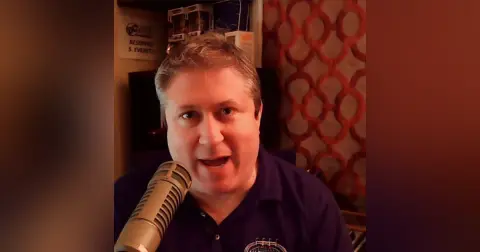
Join us in this captivating episode of "No Wrong Choices" as we dive into the dynamic world of Seth Everett. Once a prominent figure in sports radio, Seth made a groundbreaking shift to become a trailblazer in podcasting. His journey is not just about career transformation, but also about the power of authenticity in media. In This Episode: Authenticity in Reporting: Discover how Seth's genuine approach helped him build trust in the industry, supported by entertaining and enlightening anecdot...

 Apple Podcasts
 Spotify
 Castro
 RSS Feed
 Youtube Music
 Join us in this captivating episode of "No Wrong Choices" as we dive into the dynamic world of Seth Everett. Once a prominent figure in sports radio, Seth made a groundbreaking shift to become a trailblazer in podcasting. His journey is not just about career transformation, but also about the power of authenticity in media.
In This Episode:
- Authenticity in Reporting: Discover how Seth's genuine approach helped him build trust in the industry, supported by entertaining and enlightening anecdotes involving sports legends like Prince, Ken Griffey Jr., and Barry Bonds.
- The Evolution of Audio: Seth shares his unique insights on the audio industry's evolution, drawing from his early days in podcasting – even before the term was popularized. This includes an intriguing tale of his first major podcast's breakthrough, offering invaluable lessons for aspiring podcasters.
- Behind the Scenes: Get an exclusive look into Seth's current ventures as he hosts popular podcasts including 'Sports With Friends' 'and Hall Of Justice'.
Whether you're a sports enthusiast, a podcast aficionado, or someone curious about the ever-evolving world of media, this episode promises a blend of inspiration, humor, and practical insights from one of the industry's pioneers. Tune in to "No Wrong Choices" for a journey through the highs and lows of a remarkable career and the lessons learned along the way.
To discover more episodes or connect with us:
Hello, and welcome to No Wrong Choices. Along with Larry Shea and Touchar Saxeena, I am Larry Samuels, and this is a podcast that's all about the adventures of life. As each uh episode, we'll talk to an interesting person and great storyteller who is what we like to refer to as a dreamer, somebody who had an idea or a vision, chased after it, and ultimately made it or got pretty darn close. This time out, we're talking to veteran broadcaster Seth Everett, who has worked in the radio business. Uh, I guess when it was still called radio, I guess is a funny way of looking at it, but he's been in the radio business for 20, 25 years. He's worked in AM, FM, satellite, podcasting, you name it, he's done it. So he's gonna take us through uh through that journey. Now, Tushar, I know you've known uh Seth for for years. I think you can probably tee him up better than anybody.
Tushar SaxenaI've known Seth since he was an intern uh so many years ago, and he was an intern uh under me, learning from me a zillion years ago, and I've gotten now I uh now I have the opportunity, obviously, to call him my friend. Um there's kind of one word that when I think about Seth now, uh, that really pops into my head, which is the word innovator. Um he has really had kind of had his pulse on the industry, maybe even more than the industry's had a pulse on where the industry is going. Um he's been able to really figure out what to do next before the industry figured out where it was going. Um there's kind of an old saying that goes, it's better to be first than good, but there's another saying that goes along with that. It's better to be good and to be first, and that's what Seth has been a lot of the times. You know, he was a podcaster before podcasting was even an actual word. That's how far back he goes in the industry. So, I mean, he's got a ton of stories about not only his time in regular radio, but even making that transition, which is so fascinating because I gotta tell you, when you're getting out of the industry and going into an industry that has no real goal or no real set rules, that's scary. And that's a story which I which to me has always been fascinating.
Larry SheaYeah, and I'm going at it from a different angle because I don't know stuff. So sometimes we we bring someone aboard and and you have to do your homework and dig in. And I was fascinated to see the the types of podcasts that he's created, the things that he's done in his career, the twists and turns, the left's, the rights. No wrong choices, right? I mean, he he's where he's at, and he's successful because of the choices that he's made. So um I love his tech podcast. I really dug into a lot of the stuff that he's doing, and it's pretty fascinating how he got to where he is now. It's it's a it's a wonderful conversation.
Larry SamuelsYeah, so he he's gonna take us through all that. Uh, and I guess the the final tease and the final setup that I'll give for all this. Um, he was gonna get into stories about Barry Bonds, Ken Griffey Jr., and an eyeball. So this definitely gets uh pretty darn interesting. So uh with no further ado, here is Seth. Now joining us, veteran broadcaster Seth Evertu. Many might call Houdini as he has somehow managed to navigate the bizarro world of radio over what I I hate to say is a couple of decades, not to a view, Seth, but uh he's managed to jump from AM to FM to satellite to digital to podcasting, and now I think he's on Twitch. A, you must be very tired, and and B, thank you for joining us, Seth.
SPEAKER_01Thanks for having me. I'm a big fan of you, Larry. Touchar is is wonderful. And the other Larry, well, we've just met. The jury's still out.
Larry SamuelsIt is, it's always still out, believe me.
Tushar SaxenaHey, now, Touchar, you've known Seth forever, right? I've known Seth for a long time, like almost way too long, to be quite honest with you. Like, you know, I've I've had the pleasure of knowing this is starting out very well. Good job, too. I've been knowing Seth so far back. Enthusiasm, enthusiasm thing. I've known Seth since he was an intern, and this is this is a zillion years ago. So I've had the pleasure of 20.
SPEAKER_01I was 20.
Tushar SaxenaIt was in uh the summer of 1994. Was it really all the way back then? My God.
SPEAKER_01Well, the significance of that is other people have had the same internship at WFAN. It's just I was lucky. My internship consisted of the New York Rangers won the Stanley Cup, the Knicks went to the NBA Finals, OJ happened, and the baseball strike. That was uh that was one hell of a summer. My internship was the baseball strike. It was one of the single greatest summers to be anywhere in New York City.
Tushar SaxenaI will agree with you there, my God. I now that I think back on that, it's just unbelievable. What a great time we all had. Hey, Seth, uh, I want to kind of jump into it with you a little bit. And look, I like I said, I mean, you and I have known each other for a long time. Uh, I've seen you see literally since your career kind of started. Uh, and your career kind of mirrors mine in some ways, is that you know, we both started out freelancing, trying to trying to hustle to get that next gig. Now, you are one of the few people who kind of saw the handwriting on the wall. You saw the handwriting on the wall being that, hey, broadcasting and and media in general is moving in a left kind of direction. Or I mean, you know, it's taking a bit of a left turn, not becoming it's getting away from the traditional stand of things. And you were one of the first people who started podcasting. Now you have three podcasts: sports, uh, sports with friends, tech stream, and my personal favorite, which I listen to a lot, the Hall of Justice, because I'm a big comic book and sci-fi fan, and you talk a lot of people.
SPEAKER_01I can tell the other podcasts, but I love that one too.
Tushar SaxenaThat's what that's that's my personal favorite. I'll I'll I enjoy the other two, but Hall of Justice is my personal favorite, probably because it's not about sports, it's not about tech, it's about stuff that I uh I'm a I'm a lot more passionate about these days. Um, but you were one of the few people who saw how podcasting might uh you know was probably going to take over the world at some point. And I I'll tell you what, I I was not a believer back then, I'm more of a believer now, but I want to know what you saw back then that turned you into like one of the top podcasters out there at this point.
SPEAKER_01I appreciate that. Um, I've already agreed to come on the show. You don't have to be that nice. My introduction to podcasting, though, was before the word existed. Um, it was late 2003. I was working for Major League Baseball. Uh they had done a deal. I mean, this is gonna sound a little tech heavy, but they had done a deal to put our show in an exclusive window on something called Real Audio. You guys remember Real Audio? And at the end of the 03 season, the uh the Marlins, Josh Beckett had just beaten the Yankees at the old Yankee Stadium, and we had this meeting of like 20 some odd employees at Major League Baseball. The exclusivity on Reel had expired, but we were still on Reel. And what they had asked us was, what are there any other formats we could come up with on how to promote the shows? And I don't take credit for this because I didn't do it, but someone in that meeting said, What if we took a portion of it and made an MP3 and we included instructions on how people could take that MP3 and sync it to these new devices, the iPod. And we were all like, Cool. And my reaction at the time was, oh great, I could play it for my grandmother. You know what I mean? Like she was never going to log on to mlb.com, but she would if I played her uh uh you know a portion of our show on this MP3, we had been doing that for about eight months, and then we heard the word podcast, and the late great Daryl Hamilton and uh nothing within my career happens without him. Uh, Daryl and I were doing this radio show together, he passed away in 2015. And when Daryl Daryl was a huge Seinfeld fan, and when we started hearing the word podcast, we started calling our radio segment a podcast. But then what we would say when callers would call up with dumb trade rumors, you know how sports talk radio would go, you know, I want to trade no Mongassi Apera to the Malins, you know, like something stupid like that. Daryl's response would be he he remembered the Seinfeld episode where Elaine bought all of the sponges, the birth control sponges. And she determined if you were spongy worthy. Sponge worthy. Right. We were podcast worthy. And if a caller called up with a dumb trade room where he would go, Come on, do you really think your your call's gonna get on the podcast? Do you think you're podcast worthy? That's not podcast worthy. Like that's what we thought the word was. We kind of mocked it, and we had been doing it for like eight months when we started to hear it was a thing. Uh Ricky Gervaise was the first podcast I ever found. Uh Kevin Smith was shortly after that. And I became an early adopter, but it was because of the guys at Major League Baseball that I can literally say I'm one of the world's first podcasters because we were doing it before it was a thing. Yeah, absolutely. When I got to ESPN in 2009, uh they wanted me to host the Baseball Today podcast, and that was when I learned about the charts, and I learned about what these massive audiences could be. That was not something, again, that I originated. That was ESPN's brand, and that was podcasts. And I had a couple of podcasts that failed, but in 2015, um, I was gonna do a show with Daryl, and tragically, he was killed. And what had happened was I was gonna give up. I I didn't want to do it once he died. And I somebody convinced me that said, you know, go for it. You know, you kind of you've been doing podcasts for a long time, and I said, Okay, but I only want to talk to my friends, and that's when the idea of sports with friends is to play on words with friends. Um, and you know, we're now 300 and something episodes, you know, 325 episodes later. And what I love about it is the intimate nature, you know, radio is a is a is a world where everything is compartmentalized. You know, we're talking with Eli Manning here on WFAN, like you have to constantly reset and constantly ID. But if you're on a podcast, I can say to the guy, When you got traded, what was the first person? Who was the first person you called? Have you ever thought about retiring? Right, right. Like you can ask that, but if you ask that live, you're an asshole. Right. Right, right.
Larry SamuelsBut if you're asking your guest also has the opportunity to say, you know what, we went down a path that I'm not that comfortable with. I trust you, you're a friend. Can you pull that back out for me? Correct.
SPEAKER_01And you can get much more intimate. Uh, the Hall of Justice, real quick, uh, that was, you know, I remember my early days in sports radio being told by a program director. I remember on a Broncos show in Denver, Colorado, I was told to stop referencing Batman. Oh my god. There was something with Batman, and I referenced it. It was in pop culture, and they were like, This is man radio. You don't talk about kitties.
Tushar SaxenaOh my god.
Larry SamuelsAnd we say that to two share all the way, by the way. Yeah, we do.
SPEAKER_01What I find very satisfying is, you know, this genre has grown to such a level that just the idea that you could bring the same gravitas that I brought to sports, but to this genre, um, I really, really found it rewarding. And when I saw that the audience was there as much as it is for the sports show, that really gave me a chance because what I thought at the time, originally it was all gonna be just a hobby, but now it's it's it's grown to the point of where we have contracts and and sponsors and things like that. And once that happened, the nerd in me just said, you know what, you know, we finally belong. I hate the idea of it being geek talk. I I I don't call it I'm you know, I'm I'm too cool for that. You know, what it is is you know, take the passion that people brought to the sports industry, but apply it to films and actors and writers and artists, and do all those things and make it so that it, you know, and and the name Hall of Justice was very simple. If you're old enough to know what the Hall of Justice is, you're our demographic. Because what we didn't want to do was a teeny bopper show. Everything in 2015 at the time in that space was kind of nerdy, and I was trying to do something that had gravitas. And, you know, fortunately, we've been able to stay on, and you know, thanks to people who actually dig the show, we we'll keep doing it.
Tushar SaxenaYou know, I'm gonna admit that uh in terms of the hall of justice, I'm extremely jealous of your success with that because I had actually and you and I, we know many of the same people, even in the comic world, you and I know many of the same people. Like I had actually spoken uh with uh just to drop a name, Todd McFarlane years ago about hey, uh, you know, if you would come over to Sirius, we would do a show there that could be the same way. And then, you know, I talked to I talked to them on the side about, hey, wouldn't it be cool if we kind of did a we did a small show? At that point it was just a show, right? It wouldn't have been a podcast, it would have been a show still. We do a small show where we interview artists and creators and then, you know, film geeks, because there had been all sorts of talk about how, like, you know, sports guys were big into comic books, and uh, you know, and then like, you know, the average person out there, and obviously myself, I was big into comic books at the same time, and and you know, sci-fi movies, etc. So I have to admit, I was I'm very jealous of your success with Hall of Justice because it's something that I have always wanted to do.
SPEAKER_01Well, thank you. That was really the right place and the right time. Uh, in 2016, I had just started the show about six months prior, and the Super Bowl was in San Francisco. And what had happened, you know, because of the West Coast nature, none of the local morning shows across sports radio were going to Radio Row. And Zach Snyder, the director of Man of Steel and Justice League, and in 2016, he had just directed Batman v Superman, and he had signed a deal with Doritos for a promotion. And the PR woman for P for Doritos panicked when she went to Radio Row and there were no radio stations there. So she calls NBC Sports Radio and she says, Uh, can can I put Zack Snyder on your morning show? And the morning show calls me and says, What do we ask him? Like, I I I couldn't tell you one thing, Zach Snyder. You know, shot what what movies does he do? And I responded, Oh my god, I said, I'll write out your questions. I said, But can you ask this PR woman if I could talk to him for 10 minutes about Doritos uh for this podcast that I had just started? And it turns out the PR lady had heard of me from something and agreed to it. So now I'm doing a phone call with Zack Snyder. The podcast, I think my highest episode total at that point was about 600. And the Zack Snyder's now talking. And what I wanted to ask him, all I cared about was why are you casting another guy to be the flash when Grant Gustin is killing it on a CW? That's literally all I cared about. And what I said to him was no one goes to a Zack Snyder movie and walks away and says, Boy, that's some good popcorn. People either love your movies or they hate your movies. And what what I was and that's a true story. Whenever it's a Zack Snyder movie, like no one's on the fence and goes, eh, he's okay. And Zach, for some reason, got like ticked off by that. Not at me, but he started to rip Superman fans. And I didn't know like I I was just like, he said, you know, if fans don't think if it's not Christopher Reeve, they don't think it's Superman, and that's ridiculous. And he ripped Superman fans, and someone at Variety heard it. And I don't know if Doritos tipped them off. I didn't, I'm not a marketing person. And all of a sudden, the Variety writes an article, Snyder ripped Superman fans on podcast, and it had the link to the Hall of Justice, and we got about 450,000 listens to that show, and it went bonkers. And every superhero blog started writing about it. But the best thing that I took away from it was if you looked at my earlier episodes, the ones that were 200, 300, you know, 350, suddenly now they had six, seven, eight, nine thousand listens. Wow. Because people were finding the podcast and going, hey, what this guy does is pretty decent. Let's check this out. And I just think that, yes, Zack Snyder got us on the map, but I think we had to maintain a certain level if we were gonna have a shot in what is now a really, really crowded space.
Larry SheaSo I I love what you're talking about there because you're talking about a specificity of something, a topic that certain people are gonna love and other people have absolutely no interested interest in. And then you're also talking about an intimacy where somebody in a podcast is gonna tell you something that they normally wouldn't have said on a mainstream radio program or what have you. So I'm fascinated with that, and I'm fascinated how you found podcasting to to do these things for you, and that you uh you know what you did built part of that, you know. So take me back to the beginning because what we like to do on the show is really let our listeners know how they can, you know, become a broadcaster, get that foot in the door, start doing what they want to do dream-wise for the rest of their life. You brought us through some of your journey, you know. I heard you say 1994, I heard you say 2003, and and it was a really fast journey through how you got from point A to point B and where you are now. Take us on that journey from the beginning. What was your biggest break? What was your biggest uh decision that you made early on? Because you're really an independent contractor, um uh you own your own business, right? So these are all things that you had to somehow get under your belt so that you could prepare yourself professionally to move on to this world.
SPEAKER_01Well, I appreciate that. Um, you know, when I was coming up, sports radio was in a in a growth spurt. It was booming at the time. You know, WFAN launched in 1987, so this is about less than a than a full decade afterwards, you know. And in 1995, I did uh the minor leagues. I was in the New York Penn League, I did the Auburn Astros, and I learned right then and there I didn't want to do the minors, and I didn't love play-by-play enough. Um, you have to have a real passion for that. I love the experience, I love the people I met, but I don't I knew right then and there like I was never gonna be the guy in double AA that was just gonna work his way up to the majors. It wasn't that important. Uh Denver happened because I took an $18,000 a year producing job. I produced a morning show and I worked at Blockbuster at night. And then I noticed that the station was rotating like between six different guys who was going to Broncos practice. And so I asked them, I said, I'll do it on my own time. Can I go to Broncos practice every day? And then they'll recognize me, and that will help me, you know, get my foot in the door. And they said yes, and because none of the veterans wanted to do it, and so I was 23 and I started covering the Denver Broncos. Well, the Denver Broncos, my second season, won Super Bowl 32. Wow. And I think that's you know, part of that is real just luck because you know, if I had done that for the for the Kansas City Chiefs, I don't have that success. I don't know what that translates, but when I got involved, you know, something that I don't think younger people can do now because of social media. Um, I didn't know anybody. You know, John Elway at the time when I got there was 37. He's not gonna pay attention to a 23-year-old kid. I think I had three interactions with him. Um, I didn't know anybody. I was doing all scrums, I was very nervous. Uh, but then I heard Alfred Williams and a couple of the linemen talking about Madden football. And I went over to them and I was scared out of my mind, these 300-pound linemen, and I just go, Are you guys talking about the video game like Madden football? Wow. And they were like, Yeah, you play it, and I said, Yeah. And I was like, and at the time you could play against somebody, but you had to dial into their computer, and we would play. We would play at night, we would play to like all hours of the night, and they would have practice the next day. And I was like, Who were the guys? Who who was the crew? Tyrone Braxton was involved, and um a bunch, a bunch of players. Um, uh you know, a bunch of the names, they were a lot of starters, you know. It was a lot of starters. Uh Terrell Davis used to make fun of us. Um, but we became like these friends, and we would hang out. And in the the second season, the year they won the Super Bowl, we decided to have a league. And we invited other members of the media, we invited members of the front office. Co one coach did it, uh, one of the trainers was involved, and we would play in this Madden league so that as the season's going on, now I've befriended these players. And When they went to the Super Bowl and they won, those guys invited me on to a float in the parade. Oh my gosh. That's incredible. But I was, but I was 24. You know what I mean? Like I was I was 24 and it was it was wild. And then what was happening was other radio stations were calling to have me on because I was covering the Super Bowl champs. And that's how I met the guys in Seattle. And Seattle comes about, um, you know, Seattle came about, you know, there were a couple things that happened in between, and then next thing you know, they flew me out for a weekend and they gave me a chance to do the Mariners post-game show. So I left Denver and I moved to Seattle. It was weird because my first year in Seattle, the Broncos won the Super Bowl again. That was Super Bowl 33, that I have nothing to do with. And I was jealous.
Larry SamuelsI was like, I didn't make the whole call. That was stupid. But your influence, you inspired them. They carried part of you forward into that next season. That's exactly what happened.
SPEAKER_01Right, because but when history tells that story, it's they remember the run, not the one Super Bowl. Right, right. I was at the Packer one, not the Falcon one.
SPEAKER_00Right, right. Right.
SPEAKER_01But then it happened again, you know, in 2000, uh, the Mariners won the wild card on the last day of the season. And I'm a big time travel person, so I'm a big believer that that Sunday afternoon in Anaheim, California, the Mariners winning that game decides my whole life. I owe the existence of my kids to one baseball game because the Mariners winning, they go on to the wild card, they play the White Sox, and they sweep the White Sox, and they go on to play the Yankees in the ALCS. That's the year that the Subway series happened between the Mets and the Yankees.
Tushar SaxenaRight, right, right.
SPEAKER_01Well, the Mariners uh had gone in and Major League Baseball had launched something with Sirius. It wasn't Sirius XM at the time, it was just Sirius, and it was MLB radio. Dave Sims was the host, and I was their like Seattle correspondent. But because I had traveled, they didn't know that I grew up in New Jersey. And so we had lunch, we went, I went on their shows, we saw all these things. The series goes six games, and it was really funny because I offered when the Mariners lost, I said, Oh, I could stay at my parents' house, I'll cover the World Series. And like the people in Seattle were like, Do you think there's a person in Seattle that gives a crap, you know, gives a crap? If you cover the World Series, the Mariners just lost. Like, like that's what they care about. You need to get back here and cover that. And I had met them though, and then you know, two months later they offered me to move back to New York and be part of the launch of MLB radio, and that led to the podcasting. And so a lot of it is yeah, you have to work hard, you have to network and all those things, but two major sports things happened that had nothing to do with me, but I capitalized on them.
Larry SheaThat's fascinating. And and it's so interesting. We talk all the time on the show about most of the the opportunities you're given are who you know, a break here or there, something that happens. The whole story with you talking about the Denver Broncos and playing Madden reminds me of Almost Famous, right? Where he's like almost in the band, basically, because he's covering the band, you know, which is just a great thing to think about. But you would agree, right? It's all about relationships, it's all about being next to the guy who's making those decisions, and because he knows you, you're given an opportunity, the door is cracked open and you run through it. Is that right?
SPEAKER_01Well, I would think now, you know, back then what what the lessons that I had learned was that radio was a medium that didn't need to break anything. This is pre-social. And let the newspaper people fight all over of who's gonna break the story. What my bosses wanted me to do is just know the team well enough so that when breaking news happened, they could go to me and I would be able to break down whatever was happening. And so players knew that I wasn't sniffing for things. And you know, I was 25 at this point, and a lot of the players were 25, and right we would go out after games, and I would, you know, go you know, boozing with these guys, and you know, I have stories with John Halama and Paul Abbott and Mark McLamore and Ken Griffey Jr. and you know, all these all these guys because they were my contemporaries at that point.
Larry SamuelsCan you tell me? I was gonna say.
SPEAKER_01Yeah, Griffe's a cool story because he hated the radio station KJR that I was joining, but before I got there. And so I went up to him in the first homestand that I had covered, and I said, Look, um, I'm paraphrasing here, but I said, You are more than welcome to hate me. I said, There are plenty of people who do. I said, But if you're gonna hate me, you're gonna know me. And I said, Don't just lop me in with this this radio station that I had nothing to do with. And he didn't respond, but they went on a road trip, and at that time I didn't travel, and they come back, and I'll never forget it was at the Old Kingdom, and the song Jennifer Lopez had just started her recording career, and she had a song that came on that said it was called If You Had My Love, and Ken Griffey Jr. Now this is 98, so 98 is Maguire, Sosa, and Griffey challenged that home run run for a little bit.
Tushar SaxenaYeah.
SPEAKER_01Remember, he finished with like 54 home runs. He's taking batting practice, the hat backwards, like the everything you imagine. He comes out of the batting cage and he walks towards me, and I'm standing with like two other people, and he looks right at me, and I don't realize he's looking right at me, and he goes, This song without the video is pointless. That might define her entire career, at least from my vantage point. And I and I saw that, and I and I saw that um, you know, that that particular uh uh conversation, and it just started a dialogue, and we wound up getting to know each other real, real well. I met his family, I met his dad, and you know, we we kept uh friends. There's a YouTube video of a guy from MLB when he went to the Reds, he uh was they these guys tried to interview him, and they went out and they dropped my name, and he went on this rant of how he made my career.
unknownWow.
SPEAKER_01And so what I said was, I said, I'm taking the video, and if you get into the Hall of Fame, uh I'm posting that. And he got in the Hall of Fame and it went right on YouTube, and it was very funny. He's been on Sports with Friends twice, uh, and he was very cool about it. And when Daryl died, he was the first phone call.
SPEAKER_00Oh, wow.
SPEAKER_01He was the first person that called. I was in shock, and I had saw it on Twitter, and he was the first call. And what I what I will say is the people that I support, I'm very biased when it comes to who I vouch for, but I vouch for him. He is he is as good a person as he is a player.
Larry SamuelsWhat an incredible, like I just thinking about the access that you got at such a young age, you know, it's you know, we had the privilege and the pleasure of working at Sirius for a bunch of years and having a sports show there and having Hall of Famers walk through and A-list celebrities, et cetera, et cetera. You know, at the beginning, you know, I when I was there, I was in my 30s, I was sort of an adult already, but uh I was starstruck. You know, I I managed it. I I don't think I sounded star turstruck. At least I'd like to pretend that I didn't. But, you know, sitting down and having a conversation with uh Andy Garcia or Tom Seaver or something like that was a was a big deal. And it seems like for you it was a tremendous advantage to be able to get to know these guys, these professional athletes and these celebrities on a personal level really early to put you into a different place where you were so confident, so comfortable um quickly, which just seems to me like a a tremendous advantage. And you know, when you look at your career and and the breaks that you got, who are some of the the biggest mentors uh along the way for you? I expect to hear my name at least once.
SPEAKER_01Um well, you told me how to not screw up the uh pronunciations of every Olympic name.
Larry SamuelsThere you go. Oh, he used to scream at me about hockey players all the time. All the time.
SPEAKER_01Um mentors. Well, you know, I would I would have to say, you know, when I think about it, it was Daryl Hamilton. Um Daryl uh played 13 years in the majors and he retired in 01. And in 2003, we were introduced, and we just hit it off. Um, I just understood him. He was a six foot three-inch black man from Baton Rouge, Louisiana, Southern Baptist. We couldn't have been more opposite, and we were just like we we we we just fit like a glove. Uh the radio show we did, we called it Staying Hot with Seth and Bone, and it was so much fun. And then when he uh he left the show to go work for the league, um, he was in charge of suspensions. He would have me come over to the office and we would look at the the things together, we would look at the the footage together, and a lot of times he was too lenient with his suspensions. So when guys would get suspended for like four games instead of two, that was always me. And we had to tell anybody that don't tell anybody that it was this amazing uh relationship in 2014, the year before he died. I worked with the Mets and he worked for the Brewers, and we were intersecting like we were crisscrossing, and I never went to a ball game without at least a text from him. And so when he was he was uh killed in a in a murder suicide, and it was uh a situation where um this woman that he had had a child with uh you know just killed him on Father's Day. And when I heard there was probably about four months where I couldn't look at a baseball game, and it was Dusty Baker, you mentioned uh mentors. Dusty Baker um took me out to lunch in he had Dusty Baker gave the eulogy at my at Daryl's funeral, and for that he will always be this father figure to me. And I was really struggling, and my wife and I decided to take our kids down to DC for like spring break to see the monuments and all that stuff, and we went to a nationals game and I had lunch um in the ballpark with with Dusty, and he kind of helped me get back into a groove where I could take that loss and build from it. And what it taught me was the friends that you make. So, what what Dusty would say is, is there a ballpark you could go in where you don't know at least three people? And I would say, I guess not. And he would be like, That's what you feed on, don't give that up. And what I found was pregame was very therapeutic, the actual nine innings were painstakingly slow, and so it would be becoming harder and harder to watch, and it was just something that was this this evolution. Um, in 2013, and Daryl always teased me about this. In 2013, I worked with Prince, and Prince was um not a mentor by any stretch, but it was a very cool thing, and I think the fact that I had interviewed as many sports people as I had made me not really get intimidated by Prince. And so when I met him, I just wanted to talk shop, like I wanted to talk business and stuff, and it wasn't like the oh my god, I'm meeting this rock spot. Like that didn't that never crossed my mind, and uh it I think I was better off because of it.
Tushar SaxenaAll right, so Seth, you've talked about people who have mentored you, and you know, you are now teaching class. I know you teach class at Syracuse University. Um as well. I mean, you're obviously now considered an expert in the field, so that means that you're mentoring others. Um obviously, this is an area of what's what what we might call new media, or now current probably current media. So, what is it that you see with kids these days when you're teaching them? Like what is the one thing that they ask? What is the one thing that you want to impart on them? What is uh is there any is there any great big, let's say, leap from what you did in radio to what you do in podcasting now? And I'm not talking simply about the idea of a formatted show as compared to an uh, let's say an unformatted show where there's a lot more area to, where there's a lot more room to breathe, but I'm saying let's say the the the basic mechanics of the two.
SPEAKER_01Well, what I what I think now, I think clickbait and s and social uh make it incredibly hard for for young people. I think that the Madden story that I told you guys can't happen today. Um, because nowadays uh everybody's always looking for something, and I think athletes have a guard up that they never did. Um I had established just relationships because there was a lot of times where I would it I would talk to players and not interview them, just just shoot the bull. Right, just find out about families and yeah, and just just keep in touch and and and know things that were going on in your life. And um, I'll tell you a funny example of that. Um at Safe Go Field, uh the bullpen are right uh near the bleachers. And I remember during one of the ball games, uh during like the fourth inning, this really hot girl asked me to come visit her in this in the center field bleachers. So I went and I spent like innings four, five, six, seven in the uh in the in the bleachers. And Frankie Rodriguez, do you remember his Frankie Rodriguez? He was a relief pitcher. K Rod, absolutely. He came in. No, no, no, different guy. Different guy. Uh this guy went to St. John's, he's a New Yorker, and uh I remember he came in and gave up the the tying. He he he they they snapped the tie, he took the loss in this game. It wasn't like a blown save, but he had he had uh given up the game winning uh game game winning run. And so when I went to do go do postgame, I had to interview three players from the locker room before I came on. And I went up to him and I just said, So you want to talk about the home run? And he looks me right in the eye on record on on recording, and he just goes, I know one thing about it, you didn't see it. Oh wow, damn, and I was just how did you respond to that, Seth? I turned bright red. I was like, What? And then uh my favorite clubhouse story was uh there was a reserve outfielder uh for the Mariners uh named Charles Gibson. Uh G I don't remember that name S-O-N. Yeah, remember him. He um he was like a fifth outfielder kind of kind of deal. And the Mariners, when uh they called up their minor leaguers to come have stints with the big club, they would you they leased a bunch of apartments in my building. So I would get neighbors, like players would live there for like six weeks. Like if you were coming up for a short stint, and then if you were gonna come up for a longer time, you'd have to get your own place. But they would they would have these temporary housing, and Charles Gibson lived above me. And it was so funny when we found out because he was like, Oh, we can go, we can, we can um we can we can run. He's like, we can go running in the morning, and I was like, running. And is somebody going to be chasing?
Larry SamuelsExactly. Is something going to be very, very wrong that tomorrow morning?
SPEAKER_01Then we noticed something about uh he didn't have carpeting in his apartment, and every time him and his girlfriend got uh active, intimate, I could hear it from my apartment. It's a nice word.
Larry SamuelsI haven't heard active used in this setting before. I like that they would have religion.
SPEAKER_01Um what what were they doing it on the floor? I don't know. So that was that was the question, and it was funny because I uh one time I said something to him and he kind of like blushed about it, and I was like, don't worry. I was like, I'm not lonely. I just you know, I just I noticed it, you know. And uh one day, so I didn't go on every road trip and I lived, I used to ride my bike to the radio station. I lived really close to the radio station. So on a Sunday, if I had to do the Mariner postgame, I would watch the first seven innings on in my house in my apartment, and then I would go to the radio station to do postgame. And there was an afternoon that Mariners were in Kansas City, and I remember Griffey had the day off, and Charles Gibson was in center field, and I heard the noises coming from the apartment.
Larry SamuelsOh no, Jesus! Wow. What did you do? Did you tell him later? Did you somehow leverage that information to your advantage?
SPEAKER_01I called Griffe and I said, What do I do here? And we had a meeting. We had a meeting, and I remember we went to one of the private rooms in the in the in the ball in the clubhouse, and I was so excited because it was said the sign said no media beyond this point.
SPEAKER_00And I was like, I'm going behind the kill them like media.
SPEAKER_01It was an important meeting. It needed to be done. It was very funny. I found out at the end of that season, uh, they had uh Kangaroo Court, and Charles kept getting um uh fined in Kangaroo Court for being my neighbor.
Larry SheaOh, that's really funny. Oh my god. That's brilliant. Um, this is my favorite part of the show. What's your biggest mistake, biggest gaff, biggest error, biggest, oh man, I never should have done that, and it really messed things up. Well, on-air mistake or a career mistake? I think career mistake, unless you have some of the things that are one's really, but uh career mistake.
Tushar SaxenaBut nonetheless. Yeah, yeah. Let's go with fun.
SPEAKER_01Well, the career one real quick is um going exclusive to ESPN. I I gave up a really fun show at Sirius and I regretted it uh in 2010. Uh, I got bad advice and I took it and I was wrong. And then uh taking the gig with the New York Mets. It was um somebody at Q at Clear Channel had asked me to, and uh I had had run-ins with the Mets. I didn't like the Will Ponds, and they didn't like me. And when I got the gig, I I I immediately regretted it. I had young children at the time, six and three, and I missed them incredibly because I was traveling on the road and I regretted it.
Larry SheaAnd so those are my two some somehow, somehow you're not the first person who's ever said my job with the Mets is the biggest mistake of my life to be a thief.
SPEAKER_01Professionally, yeah. Those those two are my big ones. My favorite mess up, my favorite all-time mess up is uh in 2006 when um Adam Wainwright and the Cardinals beat the Mets in the NLCS uh in game seven. You remember that when uh Carlos Beltron kept the bat on his shoulder?
Tushar SaxenaOh, yes, he struck out looking, of course.
SPEAKER_01The next day, uh, we were doing a video version of the radio show, so it wasn't in a radio studio, it was at an anchor desk, and we had a teleprompter. And the difference was our show took emails. And in the radio show, what I could do is when Daryl was talking, I could just pre-screen the emails and I would choose the funny ones and I would read them on air. But the way the technology was set up, the teleprompter wasn't connected to the internet, so someone and this lovely young lady had to uh type the emails into the teleprompter, and that's how I could read them on the internet. Oh wow, and Darryl, being a former Met, he ripped the Mets that night that the net the next day. He he was like, they did this wrong and they did this wrong and they did this wrong. And you would think in the first half hour we didn't acknowledge that the Cardinals had won.
SPEAKER_00Oh, geez.
SPEAKER_01And someone complained, and it was a longtime listener, somebody wrote and said, You would think the official show for Major League Baseball would be a little less bias. But the young lady who typed it didn't put a space between less and bias.
Larry SamuelsOh no.
SPEAKER_01And I'm reading it for the first time, and I said, You would think the official show for Major League Baseball would be a little lesbius.
SPEAKER_00Oh my god.
SPEAKER_01Darrell looked at me and said, What the hell's a lesbian? That's great. Wow. And then and then a listener like 45 minutes later wrote, uh, I'm not a Cardinals fan or a Mets fan. Does that make me a lesbian?
Larry SamuelsBut that's genius. I'm sure you're marking the negative code in a way.
SPEAKER_01Uh that's one of my all-timers. That that is one of literally the all-time funniest things. I I don't think I've ever laughed that hard, especially on it.
Larry SamuelsOh my god. I'm trying to think of the worst thing that I ever did. Um short, do I'm gonna put it on you. Do you have a list that you have? I have a great one.
Tushar SaxenaI have an absolutely great one. So when I was working at WFAN a million years ago, they would do in the in the Met Pre game, you would take uh you would take uh you would ask for callers to call in, and one of them would be like, Hey, look, if we if the Mets hit like three home runs in the game, you win whatever prize. And one night, one of the other call screeners was taking names in, and the guy he took in, uh, the guy he took in was some guy who was supposedly named Al Koholik, right? Oh no. Al Koholik. So he he didn't he didn't it didn't register with him that it was like it was a phony name. He didn't register with him. So he hands it off, he hands it off to the to the uh producer over at Shea Stadium, who then obviously hands it off to the on-air guy, and the on air guy says, Hey, you know, good luck to Alcoholic. He gets two tickets in the next home game. And like I am screaming at him, I'm screaming at him in studio. I was like, the guy's name is Alcoholic. Or uh some of his other friends. He said his name was Alan Coholic. Yes, I understand he's an alancoholic, but he asked you to call him Alcoholic. Are you an idiot?
Larry SamuelsThat is really funny. I think my worst one is I as as I'm sure Toucher can can describe off the top of his head, was when doing an update, I said that it was raining in the Metrodome.
Tushar SaxenaThat was uh You said it was raining between the Texas Rangers and the Minnesota Twins. They were delayed due to rain. And I was like, hey, did you know did you know that this game was at the Metrodome? What's happening? Is water pouring out of the banks or something?
Larry SamuelsYeah, that that that was one of my my better ones.
SPEAKER_01I didn't do, but but still tremendous. So this is gonna sound a little name-dropy, but we were on an airplane in 2002. I called the MLB versus Japan All-Star series, and there was a reporter named Barry Bloom uh who was sitting in front of me on an airplane. Barry is a fantastic reporter. Um he just happens to have a glass eye.
Larry SamuelsOh no.
SPEAKER_01And when he fell asleep on an airplane between Tokyo and Osaka, his glass eye stayed open. Oh no. And I didn't see this because I was sitting behind them, and Barry Bonds was on this trip, and Barry Bonds is walking back to his seat and literally sees this and freaks out. And he then takes David Eckstein's camcorder, because remember, this is 2002, and starts zooming in on Barry Bloom's open class.
Tushar SaxenaOh my god. Oh my god.
SPEAKER_01So I tell Daryl that story, and Pete Rose that summer, so now we're talking about eight months later, Pete Rose is uh applying for reinstatement, and Barry Bloom covered the initial uh Dowd report, you know, the the initial suspension uh by Bart Giamati. So I get our show guest list and I'm teasing it. Now remember, Daryl lives in Houston, and uh we would talk over AOL Instant Messenger, and a lot of times I would say I'm on the radio and I said, Um, hey, coming up today, uh Barry Bloom will join us. By the way, did you see Barry Bloom yesterday giving it to Bob Lee on the ESPN's Outside the Lines? And Darryl forgets the story that I just told you and says, Yeah, and could you tell Barry to look at the damn camera? Oh my god. All you hear is silence, and you hear me typing, dude, that's the guy with the glass eye. And then he realizes it and he's mortified. And that's what's even funnier because you couldn't contain him.
Larry SamuelsOh man. Wow. Wow. My all-time favorite. I think they say uh always leave on a hit or or whatever. I think that might be a good one. So um, Seth, it the stories have been fantastic. Um, if you are um a young broadcaster who wasn't inspired enough by everything they've heard over the course of the past half an hour, like if you're trying to break in today, and and we'll sort of end on this one, you know, what are you telling your kids? I know you're a professor at Newhouse School up in Syracuse, also. What are you telling your kids if they want to get into this business?
SPEAKER_01Well, what I tell them now is uh don't look at a linear path, you know, the same way uh the three of us, or four of us, sorry, uh did. Um it was the three of you, I didn't include me. Um the issue that is raised is that um depending on what you want to do, what I would suggest is do it already. You know, if you are into writing, start a blog. If you are into broadcasting, start a podcast. Uh if you are interested in play-by-play, go to games and and and and record yourself into your phone. Um talent will ultimately win out, and the cream does rise to the top. The difference now is the opportunities are just in different places, so it is incumbent on you to find them. Um, you know, what I have been disillusioned with in podcasting in the last couple of years is how corporate it's become. Um, now iHeart and Amazon and Spotify and all these companies are putting together podcasts, and now there's all these awards, and the only companies that you know, the only the only award winners are only uh corporate-owned podcasts. And this is not about sports with friends or hall of justice or any of that stuff. It's more about I love the entrepreneurial nature of that space, and I feel like it's getting swallowed. And so what I tell people is, you know, I I teach a lot about podcasting, but what I'll say now is yes, it's great to have one, but your best bet is to find the companies that are hiring because work for Spotify and work for them, uh for for those companies, because what you can find is probably a very strong career, but it's not something you've ever conceptualized.
Larry SamuelsVery interesting. Wow. Great advice from a wise, sage, experienced guy. Um, so said as we told as we wrap up, uh please uh tell us uh about your podcasts and where everybody can find them.
SPEAKER_01Uh you can find podcasts uh you know wherever you you're you're listening to this. Uh you can you can find uh sports with friends comes out on Wednesdays. Uh last week we had uh John Chandler uh from WNBC 4. This week we're having Jay Busby from Yahoo Sports, and um Eli Manning's been on five times. Uh Ken Griffey Jr.'s been on twice. Marty Brodeur's been on. Um yeah, it's just it's a super fun show. Um and Sports with Friends comes out on Wednesdays. Hall of Justice, the last three weeks were all Marvel related. Uh, we did What If and then Venom, uh the Carnage movie, and then The Eternals. And what we do on Hall of Justice for reviews is we spoil them because in the podcasting space, if you give a warning uh in the show notes and in the beginning of the episode, you literally are not a jerk that's tweeting console diet on the main right like that's rude. What I'm suggesting is do it the nice way, and if you do it the nice way, you can find uh a lot of uh just rewards, and a lot of times the reviews get more listeners than the guests, and the guests sometimes they're famous, and that's like no, people just want to hear what we think about Doctor Strange. It's fine, it it it's fine but what the way it is, but it's very different there. So the last three weeks we really dug the uh the the three Marvel shows.
Larry SamuelsVery, very cool. And uh, I would be remiss if if I didn't mention another podcast that you're oh yes, oh he's gonna be mad.
SPEAKER_00Oh crap.
SPEAKER_01Uh tech stream, Shelly Palmer. Uh, I had this idea on taking what I had learned from the experience of the Hall of Justice, and I was into tech stuff, but I wanted it to be uh not too smart, but yet not for dummies either. Um, you had to know something about tech, but it was more about what you are thinking about. And we created this show called TechStream, and uh it's a it's a hoot. Um, it can range from streaming services to should you update to Windows 11, should to um uh the toxicity of social media, uh, to you know how you know how bad is Instagram for you. Like um it Shelly does a great job, and the difference with that podcast is I don't have to book anything.
Larry SamuelsSo it's a lot easier. He waxes poetic for about a half an hour.
SPEAKER_01He yeah, just let him roll. And uh he's he's he's great uh and real easy to edit. So it's a it's a real fun podcast to put together.
Larry SamuelsAwesome. Yeah, Shelly excels at taking the complex and making it simple. Um, I've really, really enjoyed it.
SPEAKER_01You know, when I approached Shelly about it, it was just to I was gonna ask him to promote it. That's all I was asking him to do. And he said, uh, who's gonna host it with you? And I said, I hadn't figured that out yet. And he was just like, Can I try it? And I was like, sure.
Larry SheaLarry, I know you've listened. You enjoy it, right? I have. It's it was very enjoyable. I got a lot out of it. That's my tempo right there. Anything where I can listen for to something and gain knowledge and just you know get get further information about something is right in my wheelhouse. And I very much enjoyed that.
SPEAKER_01It's a lot of fun too. I appreciate it. And he gets all the credit because uh a lot of times he picks the topics. Well, how about this? If they're really cool topics, I picked it if it's boring. That's the way it always is.
Tushar SaxenaThat's the way the world works. If the show's good, it's me. But if the show sucks, obviously it's you. Obviously.
Larry SamuelsWell, Seth, thank you so much for for spending time with us today, and uh, we look forward to catching up with you again soon.
SPEAKER_01Yeah, thanks. Congrats on the show. Uh, thanks for having me on. And uh yeah, uh, you know, make sure that that uh we do this again where we can uh just tell two shar stories the whole time.
Larry SamuelsOoh, there's at least a couple of them. I'll only say that. Yeah, but at least a couple of them. We know plenty, you know plenty. I think that would be eventually there will be a two shower roast. It's unavoidable two sharp material.
SPEAKER_01I totally listen to that.
Larry SamuelsSeth, thanks a lot. Thanks, Seth. So that was Seth Everett, and uh, I'm going to forever be grateful that he joined our podcast for the simple reason that he suggested or at least led us to the idea of having a roast of two char in one of these episodes, uh, somewhere along the way.
Tushar SaxenaAnd uh Yeah, keep that one to yourselves. That's a good thing.
Larry SamuelsI have never heard a better idea than that. So I I really can't wait to take them up on that. Now, um the conversation itself.
Tushar SaxenaThat would be the only wrong choice. I'm no wrong choice. That's a wrong choice. That's a perfect example.
Larry SamuelsIt doesn't exist, remember? So, Seth, um, you know, what an interesting guy. I love the baseball stories. Uh, I love the eyeball story. I hope it lived up to the expectations I set going into this. Larry, you know, what were your uh your impressions?
Larry SheaI think the most fascinating thing is it's always like that one thing that if it didn't happen, things would have gone completely different, right? So he gets a mention and all of a sudden he has ears listening to his podcast, and it becomes something different. It takes on a life of its own. You know, we always talk on this show about like that person you met or that opportunity, that phone that rang and you couldn't believe it, and it literally changed your life, right? So no wrong choices meaning you process the information you have in the moment, and then you make a choice, and you're gonna end up where you're gonna end up, and it can't be wrong, right? So here's Seth, and he has someone who gets ears on his podcast, mentions it, and it blows up and one thing turns into another. It's just uh it's fascinating because that's the way life works, that's the way these things happen.
Larry SamuelsWell, what was that too sure? This is your wheelhouse. What was that guy's name again that he was referring to at the beginning?
Tushar SaxenaZach Snyder's the guy who did Justice League, the guy who did Justice League, and he he's well one of the great directors out there. You know, the Zack Snyder cut of Justice League is really it's it's such a bone of contention within the within the the superhero comic book world. It's this is this is the guy that put Seth Everett on the map. I mean, and and it's such a chance happening, but you know, he took advantage of it, and really this is the this is what made Seth, this is what's made Seth sad, is that he's understood that moment and he's been able to take advantage of it 100%. I'll also go back to the story about him just being able to figure out who he was as a broadcaster, as a young kid when he was when he was covering the Denver Broncos. How ridiculously smart and and what I would call like stupid simple things. Just just going around and saying, yeah, I play John Madden football to a bunch of guys who also are playing John Madden football. This is the this is the most basic way to kind of connect with people, right? How do you connect with that? How do you connect with people? You connect on a very human level. Okay, we don't want to talk sports and whatnot. This is the most basic way to do it. And being a good guy. Do something, right? Being a good guy.
Larry SheaHe was a good guy to hang out with and a real guy, and it it gave him opportunities that never would have presented themselves had he hadn't been good to others and been a cool guy to hang out with and interesting. And that's that's you know, that's what you need to cultivate.
Tushar SaxenaHere's the other thing about that is that the people that he was working with at the time, like guys who probably were covering that team, who had been covering that team for 20 or 30 years, this is something that would never have occurred to them in a hundred years. Yep. Right? This notion of how do I connect with these kids that how do I connect with these kids and who are probably saying something like, you know, the players today are nothing like the players they were that that I covered 20 years ago. Well, that's because you're an old man now. You need right that and it's that mindset. You got to be able to connect with people on a very human level. And once again, what is the choice you're gonna make at that moment? Do you want to be able to connect with people? Do you not want to be able to connect with people? And how do you do that in that moment? And don't be a get off my lawn guy, Tushar. Never.
Larry SamuelsTushar, learn from that. Do not be a get off my lawn kind of guy. Don't make a wrong choice, like doing a roast show about me. So, you know, the my final comment will be you know, I also love the fact that he's a professor at Syracuse and that he's a professor, I think it's at Seton Hall, is the other school that he's working with. So, you know, he's giving back at the same time, which is uh a really nice thing to see. So thank you again to Seth Everett for joining us today. Be sure to check out his podcast, Sports with Friends, Hall of Justice, and TechStream. Thank you for joining No Wrong Choices, hosted by The Fellas. Be sure to download other episodes from your favorite podcasting platforms, and to follow us on Twitter and Instagram at thefellasNWC. No Wrong Choices can also be found on Facebook and the web at www.nowrongchoices.com. For Tushar Saxena and Larry Shea, I'm Larry Samuels, and we are thefellas.