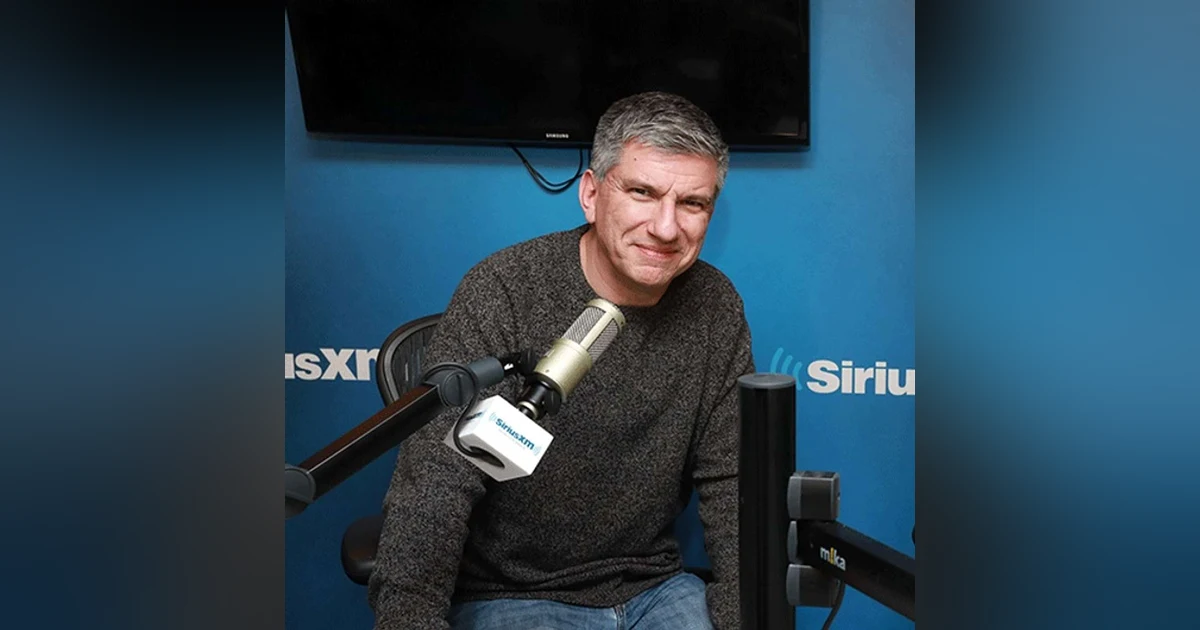
Busting Open Barriers: Dave Lagreca's Entrepreneurial Triumph

 Apple Podcasts
 Spotify
 Castro
 RSS Feed
 Youtube Music
 Unlock the secrets to entrepreneurial success with Dave Lagreca, a living testament to the power of chasing childhood dreams. As a lifelong wrestling aficionado, Dave birthed the widely acclaimed SiriusXM show, Busted Open, revolutionizing professional wrestling coverage. From his roots as a Producer at Sirius XM's NFL Radio, an inspired idea catapulted him into the limelight. Now, he's an unmistakable figure in the wrestling world, gracing everything from billboards to fan-favorite T-shirts. Join us as we delve into Dave's journey from a simple concept to a ring-side sensation, showcasing the making of a true media powerhouse.
To discover more episodes or connect with us:
Hello and welcome to No Wrong Choices, a podcast about the adventures of life. For each episode features a dreamer who chased an idea or a vision, made it happen, or are on their way. Along with Tushar Saxena and Larry Shea, I'm Larry Samuels. If you've been enjoying the show, please be sure to follow us on your favorite podcasting platform so that you're alerted when a new episode is live, or say hello by visiting our website at NorongChoices.com, or check us out on Facebook, Twitter, and Instagram by searching for No Wrong Choices. This episode features an entrepreneur who sold an idea that became an absolute winner. Dave LaGrecca, the creator and host of the Sirius XM wrestling show and now brand, busted open. Now, Tushar, I know you have a long history with Dave, so so you are undoubtedly the right person to lead us out today. So take it away.
Tushar SaxenaI've known Dave for a long time, well before his days at Sirius. Uh, I've known him and his brother, his brother Don for many, many years. I've known him uh for more than 20 some odd years. Um, I'll tell you what, uh, you know, his success with Busted Open is unbelievable because he's not the only person who ever thought of this idea over at Sirius to have a wrestling show. But what I am interested to try and find out and dig in with him a little bit is how did that finally push through? You know, at some point, someone finally said, you know what, we gotta have a wrestling show here at Sirius. We got uh we gotta have a wrestling show here at Sirius, and this is the guy to do it. At what point and who was it that helped him push through and knock through the knock you know, knock that final wall down and then turn busted open into what it is today?
Larry SheaI'm excited to have this conversation with Dave. He's one of the good guys in the business, right? Like I know him really good. I knew him from serious days early, and just always a guy you could talk to and go to and you know, find out something or work out a problem that was happening professionally, and just one of the good guys in the business. And you love watching those good guys succeed and knock it out of the park, right? So, this is a great example of a guy who really busted his ass and then had a dream come true just because he was willing to do it. And and I'm excited to hear his story and how it really happened.
Larry SamuelsAnd he had so much success that his face is now on a t-shirt, which you can get uh somewhere, I don't know where. Anyway, uh you can see him on TV, et cetera, et cetera. So, with no further ado, here is Dave LaGrecca. Now Joining No Wrong Choices is a man who pulled off the incredible feat of turning an idea and a passion into a highly successful media franchise. Please welcome the lead host and creator of the pro wrestling show Busted Open, heard on Sirius XM, Dave LaGrecka. Dave, thank you so much for joining us today.
SPEAKER_08I appreciate it. Thanks for having me.
Tushar SaxenaAll right, Dave, so now you're a huge star. You've signed, you're, you know, you're signing contracts all over the place. If people put on uh put on uh you know WWE Raw, there are big heads of you all all throughout these arenas. Uh, I gotta know, because I mean I've known you for a long time. I've known you for a a long, long time. You started out as a producer, you know, back in the day, before even before I knew you had Sirius, you started out as a producer doing sports shows. Did you ever see yourself going from the producer seat to this seat? And how did that journey happen?
SPEAKER_08Uh I didn't actually. I actually when I was producing and I was producing at WFAN and NHL, and even when I started at Sirius, I had no aspirations of being on air. It was never something that I wanted to do. I I actually enjoyed producing. Um, I loved it. Um, I got a thrill out of it, and I kind of just fell into this, believe it or not. Um myself and Doug Mortman, who's a VP at Sirius, we were pushing for Steve Cohen, who is he was the VP of sports uh for Sirius, to do a wrestling show. And it was we didn't have any aspirations of actually hosting the show. Um, we just thought it would be a good idea to have a pro wrestling show as part of our sports catalog. And it just so happens when the opportunity was given, it was also given to host it. And uh that's it I actually fell into it that way. I it was never something I really pushed to do. When was that, Dave? That uh Busted Open premiered uh the first show uh was April of uh 2009, April 28th of 2009. And when you hear that date, it sounds kind of odd because it was actually after WrestleMania. You know, you would figure that it would start before WrestleMania or immediately after WrestleMania, but that wasn't the case, you know. You know, love serious XM, but hello. Um but uh it started like you know at the end of April in 2009. And it started out once a week for an hour, and then you know, obviously, um as time went on it expanded from there. So, full disclosure, we're colleagues, right?
Larry SheaSirius XM, right? Absolutely. So I'd see you in the hall producing, you know, doing your thing. I mean, you you were always so professional, but I knew you loved wrestling, I knew you really wanted to do this. How many times did you pitch this? Like you must have gone into Steve Cohen's office a hundred times saying this is what needs to happen. Here we go. Here's the pitch. And give us the pitch. How did you do this?
SPEAKER_08Well, that's where Doug comes in because Steve Cohen uh seems to have problems with his hearing whenever I'm in his office. Oh, jeez. So and and uh and and obviously uh he loses his uh efficiency for time management as well.
SPEAKER_06Um should we send a copy of this uh particular episode to Steve's office the second it goes live?
SPEAKER_08And it also seems like whatever else is going on around him is much more important than whatever I have to say. Um so I've I pitched it many times, but um Doug Morton was actually the one that agreed with me, and it was really him pushing it, probably more than me, that got Steve Cohen's attention. Um and uh and then giving us giving us the opportunity. But again, the opportunity was one hour once a week, and we weren't getting paid to do it. It was just like here, if you want to do it, you know, don't let it affect your day job and go to it. And that's and that's what Doug and I did.
Tushar SaxenaAll right, so you and Mort are able to eventually get the show on the air. Now, were you surprised by the early success, uh, early success of the show? Or shall I say, no, I'll take it back because obviously the show the show is now successful. Were you at all concerned whether or not the show would be successful? That's the real question I should ask.
SPEAKER_08No, I I mean it wasn't it wasn't like one of those opportunities where it was like, all right, we have to knock it out of the park right out of the gate. You know, this was kind of like here you go. It's you know, at Sirius XM was a completely different animal back in 2009. You you were able to get an opportunity like we were able to get much easier than now. Like this show would probably never have seen the light of day now. Um, you know, at least the infancy model of it with Doug and I would probably be more like what it is now with a Hall of Famer, you know, as a co-host. But um so we didn't really have any expectations at all. Uh, but probably like by the second or third week that we were doing the show, uh, the phone lines blew up. And that that's something that really, really surprised me. I wasn't prepared uh for this for it to be as successful as it was so early on.
Larry SheaGuys, does it is it sound familiar to you at all? A once-a-week radio show that you're not getting paid for, that they're giving you an opportunity lighting up? Yeah, well, we see you're the successful version of what we were back in the day, right? Um, but it's lightning in a bottle, right? Like you really like the phones lighting up like that, you caught lightning in a bottle, and there was there was uh they were starving for it, it turns out, Dave, right?
SPEAKER_08Well I also I also think that um, and I think the show that you guys did was definitely uh outside the box, um, and it was you know a combination of a lot of different things, um and you know, based around you know, sports talk radio. I I think a big reason why Busted Open was so successful was that there there was no other wrestling show. So like if you're a wrestling fan and you're and you're in your car listening to Sirius XM, the the only outlet is is Busted Open. You know, there's you know when it comes to NFL talk, sports talk, there's so many different outlets. It's very, very difficult to get a grip and and to kind of look be looked at differently than everybody else because there's so many different options.
Tushar SaxenaYou definitely have a captive audience, yeah.
SPEAKER_08Yeah, and then and also at that time, guys, in 2009, there wasn't the podcast like we have now. I mean, you know, our show started long before this influx of pro wrestling podcasts, so there wasn't a lot of outlets for wrestling fans to listen to other than bust it open.
Larry SamuelsSo, Dave, you you got all those phone calls coming in the first couple of weeks. What happened then? Like, you know, you had this revelation like, holy cow, we've got something here. What were your next steps?
SPEAKER_08Well, then that's when you start saying, All right, this show is more than just one hour once a week. And then slowly we started to expand, but it was slow, and that's when you got to convince you know the executives that this is a viable show and that it needs to have a platform, and that was the most difficult thing to do. Uh, the want to do it, the passion to do it, that was never in question from Doug and I. It was it was really just getting the opportunity, and it, you know, and because of the position that Doug had at the time at Sirius XM, which he still has, and then you know, what I was doing to the executives, that was much more important than this pro wrestling show. So it was trying to convince them that there's more here than what they're actually seeing, and if given more time and given a bigger platform, how we could have the opportunity to knock it out of the park.
Tushar SaxenaAll right. So during that, during the early infancy stages of this show, did you at any point say to yourself, uh, because I I I remember, you know, I had discussions with your brother as well, um, and then obviously with you, and you still seem to be kind of reluctant at times to say, okay, I want to be an on-air, I want to be an on-air personality. Even during the infancy stage here, were there still moments where you're saying to yourself, okay, you know, let's get this show off the ground, and then I can go back to being I I want to be the best producer I can be.
SPEAKER_08Yeah, I mean, I never would have imagined that this show would have been, you know, which it is now, six days a week, you know, three hours a day. That wasn't even in my mindset. Like that, that I didn't even think that was even possible back then. I just wanted to, you know, be able to have a bigger platform to talk pro wrestling. I I I never would have thought that, all right, one day I won't be on NFL radio anymore, and that I won't be producing anymore, and I'll be a full-time host. Like 2009, 10, 11, 12, that didn't even feel like that was even an option. But right, but soon after that, that's when I was like, all right, this is something I know could be much bigger, and this is something that I know I could do on a full-time basis.
Tushar SaxenaAll right, I'm gonna ask you, I'm gonna ask you two questions. They're gonna be related and not related at the same time. One is when did you finally say to yourself, I'm an I'm an air, I'm an on-air guy, and this is my show, and this is what I'm gonna do? And then two, obviously in the early stages when you and Mort are saying, you know what, we should, we need to have a pro wrestling show here on Sirius, or just in general, we need to have a pro wrestling show. What was it initially that uh what was it initially that attracted you to say, you know what, I think this is something that, or this is something that I have a real passion for, the pro wrestling, the you know, pro wrestling world? Because I mean, you know, you're not the only person who ever who ever pitched a pro wrestling show over at Sirius. I'll even go, you know, full disclosure myself. I had done that a couple years prior to you doing that. And the same thing. It was thrown back in my face, and it was like, well, you guys are crazy, no one's ever gonna listen, blah, blah, blah. I had a lot of other things going on at the time, so I kind of gave up on that, even though I should have pressed hard like you. So, you know, it you're not the only one who who went to the door and then got got it shut in your face, but you know, your obvious perseverance, uh, your obvious perseverance paid off in the end.
SPEAKER_08Yeah, and then Doug and I decided to, you know, do some shows on the road. So we we we did a couple of post shows after WrestleMania at sports bars, and it was the one at WrestleMania 30 that was like, all right, this this is ridiculous. Now this is something that needs to be, you know, on a bigger platform, and and and this is where I now have to completely focus on this show because we did the post show at WrestleMania 30, and we did it at a bar called bar, a sports bar called Walk-Ons. And, you know, we were hoping to get maybe 15, 20 people, and we had probably about a hundred and fifty between 150 and 200 people there.
unknownWow.
SPEAKER_08And that's when I was like, all right, and it was all like, you know, people that were fans of the show.
Tushar SaxenaWhere's Walk-Ons? Where was Walk-Ons?
SPEAKER_08It was um uh I would say in between uh the Superdome and uh Bourbon Street.
SPEAKER_02Oh, so it was in New Orleans, it was in New Orleans.
SPEAKER_08Yeah, it was in New Orleans, it was like in the industrial area of New Orleans. Okay, so um, you know, that's when I was like, all right, this this this is an animal hair, this is much bigger than we ever thought. This is this is where we need to go all in. And that and that's more difficult than it sounds as well, because you know, Doug Morgan at the time, and he is, he's a VP with Sirius XM. Like, that's not as easy to be like, all right, Dave, I'm I'm I'm folding this and then I'm going all in on that. It's a very difficult situation. So I had a much easier position where I what I was doing to be able to go all all in. And and and that's when you got to make tough decisions as as a host and as a team, who's all in and who's not. And at that point, that's when I was like, all right, I'm all in. Right.
Larry SheaOkay, okay. So before we get into that, I mean, I'm just listening to this, and you know, it's it is it's remarkable, really. And I guess the question comes to me: if you didn't have that takeoff, that that wow, this is wildly successful beyond our wildest dreams, would you have kept doing it for nothing?
SPEAKER_08Yes. Um, I mean, listen, you know, my life is completely different now with a family and a home and everything else. It's easy, it was much easier then than it is now. Sure. But um, but yes, I mean, I would have definitely have done it for nothing. But there got but there came a point where, and you guys realize this too, and and hopefully people who are listening to the show need to realize you gotta know your worth. So it's great that you got an opportunity to do something that you love. But when you know you have something successful and you know it's bigger, that's when you got to be like, all right, you know, I'm I'm I'm listening you gotta recognize I need to be recognized here.
SPEAKER_01Right.
SPEAKER_08And uh and and and I think early on, I just loved the opportunity to be on the air. But then it was probably right after WrestleMania 30 where I realized, okay, this this is something where all right, you're you're you're getting something, you're getting content that people really love. So now uh I I need to be recognized for that fact.
Larry SamuelsSo, you know, Dave, I was gonna ask you a question about what all in means, and we'll get to that in a second, but I think, you know, let's sort of dig into that that worth. Like, how did you define that? Who did you look to for guidance to say, hey, we've got something here. How do I value this? How do I make sure I'm being treated appropriately?
SPEAKER_08Well, I mean, Doug, Doug Mortman, who was my partner and my brother early on uh during the early stages of Busted Open, uh, I think he recognized it. And he was kind of like he blurred the lines of being an employee and being an executive, because he was kind of uh on that fence at that time, uh, where now he's solely on the dark side.
SPEAKER_01Um I kid, but you know, you know what I mean.
SPEAKER_08Yeah, but um, but like, no, then that's when you really that that's when you really have to go to that next step where you're telling the people that are in charge that I know how successful this show is, I know how popular it is, I see the phone lines, look at these live shows. Uh now, now you gotta find people, a team guys, that uh that believe in it. And and I was able to do that because we were on a channel called at the time it was called Sirius XM Rush, which is now Sirius XM Fight Nation. And there was Marissa Revis and Andy King, who were a part of that channel that believed in the show. So I knew I had people on my side that are were decision makers. Yeah, and once you have that, then then you can go to that next step.
Larry SamuelsSo so you kind of went from producer to creator to host. Now it seems like you're taking a step into being an executive producer. Did you also become a business person through this?
SPEAKER_08You have to be. You kind of have to adjust, and that comes in time. I definitely wasn't then, but I am now. Uh, because then then you see other opportunities that you can use your popularity. Uh, and and that took a long time for me to come to grips with. I never saw myself as a quote unquote personality or a viable personality. I thought it was more about the show and the brand. Uh, but then you realize that that you are that. And um you have to it it takes a lot, it takes a lot of time to understand it. And that's not ego talking. I do it with all humility, but you know, you do have a have to have a little bit of an ego and understand that of course, you know, and and and it's something that I still experience, like it's it's still surreal to me. Like I went to the AEW pay-per-view uh the weekend before last, full gear, and you know, hundreds of people were coming up to me asking for pictures and autographs. And when you start seeing that type of thing happening, that's when you realize, all right, I could start branching out as well. And and and I think this brand and myself uh as an individual has been able to do that.
Larry SheaSo this is a good time to ask this question, then. When was the first time you saw your face on a poster or a t-shirt and it was staring back at you? Do you remember the moment where you're like, holy crap, look at this.
SPEAKER_08I do. We had our um 10-year anniversary celebration in New York, um, and we had it at a again at a sports bar, and um, we had 750 people in attendance. And um, which was a problem because the restaurant bar that we were in only fit 600.
SPEAKER_01Oh boy.
SPEAKER_08Uh and the the manager of the restaurant actually pulled me aside and was like, you know, we're we we gotta we gotta put a stop to so we actually had to turn people away. Um, and because they they they were close to calling the fire marshal because there was so many people in the building. Yeah, and then and that's the first time I started seeing the La Greca heads. And then that night, uh, there was a new Japan Ring of Honor show at Madison Square Garden, and there were La Greca heads in the audience, and that was that was like holy shit, you know.
SPEAKER_06Like Did you bring one home to show your wife and say hi?
SPEAKER_08No, I mean it wasn't, but that's the thing. You know, those are people who actually made them, they weren't mine. They uh they weren't it wasn't like those people that were with those heads. I knew, you know, those were people that were fans of the show that created those heads, and uh to see it at Madison Square Guard, that was like a wow moment. And then, you know, then you start seeing it on TV. I couldn't.
Tushar SaxenaWhen I saw that for the first time on on uh on WWE on Monday Night Raw, I was like, What am I looking at here? I couldn't believe that I couldn't believe that. I'm thinking, is that Dave LeGreca's face?
SPEAKER_08And then it was kind of it was kind of crazy at uh the pay-per-view I was just telling you about full gear. There were six different you know, LeGreca heads in the audience, and then there's signs, and and then you see people wearing your t-shirt and and stuff like that. So it is it is surreal, and um, it's something I really appreciate because the fans of this show have been you know so loyal and and tremendous.
Tushar SaxenaSo when did uh when did the show then because I I know that through the the iterations of the show, obviously it started with you and Mort, and then uh I think you your next couple of hosts were retired wrestlers, so to speak. Tommy Dreamer, Taz uh was another one. I'm trying to think of maybe there, I think you had a couple of others in there uh as well. Um, but when did the show finally begin to or when did the show finally begin to break through with the wrestling or with the wrestling entities themselves, WWE, NWA, uh, you know, uh That that that ilk.
SPEAKER_08Well, I mean, we've always had a pretty good relationship with the organizations, even early on. Um in, you know, going back to 2009. But it was in 2016 when uh Andy King and Marissa Revis, you know, called me into an office and said, Hey, we're we're gonna go, we're we we're gonna go with you know five days a week uh for Busted Open. And you know, you're uh you know, you're going to the uh it was like a week before the Super Bowl. So they were like, you're gonna go to the Super Bowl, and that that that week on Radio Row for the Super Bowl, that's gonna be your last week as a producer. Uh when you come back that that Monday, you're gonna be uh full time on Busted Open.
Tushar SaxenaHold on, hold on. So so from 2009 through 2016, you were doing both jobs? Yes. And how many days a week was it from let's say how many days a week was it from prior to 2016 being uh or how many days a week was it at that point?
SPEAKER_08By that time it was three days a week.
Tushar SaxenaOh my god, Dave, what a workload, Jesus.
SPEAKER_08Yeah. So we were I was do uh still producing Sirius XM NFL radio in the morning, and then I would do uh busted open in the afternoon at that time. Wow. And then 2016 is when they gave the green light for it to go five days a week, and then that's when they told me, you know, you're off NFL radio, this is your full-time gig.
SPEAKER_05That's incredible. That's incredible.
Larry SamuelsYou know, uh when did you start to sort of cross over? Because I know you've been hosting things on streaming platforms, etc., etc. When did you bust out of radio into television?
SPEAKER_08Uh that's just that's just come with time. Like I've been given opportunities, like most recently, the WWE having me host one of their kickoff shows for their NXT pay-per-view. That's just happened. Like the one thing about pro wrestling, it is a community, and everybody seems to know each other, and everybody understands uh what Sirius XM or Busted Open's become. So that honestly has just come in time, just opportunity. And and I have always looked at Busted Open as not just, it's not to me, it's not a Serious XM show. To me, busted open is a brand, and busted open is many things. Busted Open is a Sirius XM show, busted open is a podcast, uh, busted open is our a social media platform. You know, at one point we're on YouTube, but we we we don't do that as of right now, but that may change in the future. So there's a lot of different stages and platforms to bust it open. And then that goes back to what you asked about before with me becoming a character or a personality. With that comes other opportunities, and and and it's coming. I'm very thankful for it.
Larry SheaSo the let's talk about the the transition from radio to TV, you know, that that because it's really coming out from behind the microphone. And I know not everybody has had an easy transition to come out from behind the microphone and to have video be part of the experience. Did you have to do a lot to prepare yourself? I mean, these are high-energy performances, these are high-energy events. How did you prepare yourself to come out from behind the microphone and and get into that television world? What was that like?
SPEAKER_08Well, I was nervous about it, and um I the one piece of advice that I got was just be yourself. Just be just do everyone kept telling me the same thing. Just do you, just be you. So once once I realized that, it's cake, man. I because I just, you know, when I do the show, and and obviously on the SXM app, there's video of the show, and there's also obviously video on social media every day. Um I I I'm I am animated. You know, the camera's on me all the time. Sure. So um it's actually rare when it's something like this where it's just audio. Most of the time there is video. So I am animated, and and and and that, and and that's what I've been doing for for quite some time now. So it was is actually an easy transition.
Larry SamuelsSo Dave, when you look back at your journey, you know, you've mentioned you know, different people that we know along the way, and I don't want to give them credit before credit is uh is is owed or deserved, but you know, who are some of those those people who pulled you along, some of the the bigger relationships that made a really big difference for you?
SPEAKER_08Well, I mean, you know, I mentioned Marissa Revis and Andy King. Um, they were instrumental in getting this show uh on the right path. Who are they with? Well, Andy King um is no longer with Sirius XM, but right now Marissa Revis is uh head of our podcasting department. Got it. Um at serious. Um uh Doug Mortman, who uh was my original co-host. Um I wouldn't have been able to do it without him. He was uh part of the foundation of this show. And then my co-host over time, you know, you mentioned like Hall of Famers, Mark Henry, Bully Ray, Tommy Dreamer, you know, now Mickey James and and Thunder Rosa. These are big names within the industry. So I understand the impact that they have, and and it's and it's a such a great dynamic on this show where I'm always gonna be the fan, and then I have the actual performer that I do the show with. So though those are the people that you know obviously have helped this show. And then you know, and you guys know my brother Don. You know, I you know, we grew up together, you know. Don and I, when we were little kids, used to do pretend radio shows in our bedroom, you know, like um, and Don's gone on to uh great success, not on a national level like I am, you know, he's local.
Larry SamuelsUm second dig of the program.
SPEAKER_08I think that was intended for somebody. Yeah, you know, he's dig in the tri-state area, but I'm national. Uh no, but see, you know, like obviously being around Don and seeing what Don has been able to accomplish. And I kind of took a page from Don's book because when you look at Don, one of the things that separated him from everybody else is Don was a hockey guy. He really liked he was hockey. So there wasn't a lot of people, especially in the tri-stead area, that talked hockey. So he was able to find that niche and it grew into something much bigger than that. And I think I've done the same thing with wrestling.
Tushar SaxenaUh I actually will I'll admit too is that uh in the early years of Sirius, um when they started the when they started the hockey channel, uh your brother Don, a very good friend of mine as well, uh, was one of the original hosts, him and uh him and Jim Cerny. Um and I had the opportunity to board up board up that show. And much like you, uh, I was doing my own producing duties and uh other uh other duties during the day, but I would come in two and a half hours early to work to work that show. And then I would work the I would work the hockey show and then I have to do my regular my regular job from like six till two in the morning. So it was it was as crazy. It was as crazy. So but that was the early days of series.
SPEAKER_08Yeah, and then and and you and and it's funny that you say that because yeah, yeah, you did it because you're passionate about it. You saw something and NHL Live, which is that show, that's grown up, that was it.
SPEAKER_01I couldn't remember right now.
SPEAKER_08Yeah, that's gone, that's grown into like, you know, a huge uh TV uh program. And that started on the other side.
Tushar SaxenaI think that predated I think that predated the network, right?
SPEAKER_08Yes, it did.
Tushar SaxenaOh, so I mean like so you can see the actual transition from like, you know, hockey was wondering, like the NHL was wondering where would their where would their audience go or would they be receptive to an all hockey format? Obviously they were, and then obviously it branched out into the n into the next stage. So I mean, you know, uh it was it and you're right in saying that early the early years of Sirius were a lot like the the Wild West in some senses, where you could like do almost anything, and if it worked, it worked. If it didn't, it didn't, but it didn't really hurt anybody. And yeah, as as the years have gone on, you're correct. You know, now that they've gotten a lot more successful, they are a lot more about the bottom line.
SPEAKER_08Yeah, and that and that just comes in time. It comes with time.
Tushar SaxenaIt comes with time.
SPEAKER_08Yeah, Sirius XM is huge now. When when I first started there in 2004, nobody has even heard of Sirius. You know, nobody knew what that was. It was a new concept, and now it's obviously, you know, with with the ever-changing world of radio, you know, terrestrial radio is uh completely different than it was, and localized radio is completely different than it was, and Sirius XM is in every car, every, you know, so it's it's it's completely different.
Tushar SaxenaOkay, so you obviously found a niche and exploited it. Um and Don, your brother, we you know, as you said, he's the hockey guy, so he exploited that niche. Now, did you take a little bit of I wouldn't say uh did you uh did you take some of what he did and say, okay, you know, I'm I'm trying to find my own niche? And then, you know, are those is that something transferable to others? Like can you say to others, hey, look, you know, if you're going to try and get a show, you've got to try and find that perfect niche for yourself and then exploit that? Or is this or are these kind of anomalous situations?
SPEAKER_08It's a great question because I don't know the answer because at the time, like I said, you know, when my brother was getting into the hockey, there wasn't a lot of people that talked hockey. You know, especially in this area. Now it's there still aren't, frankly.
Tushar SaxenaThere still aren't.
SPEAKER_08Yeah, but but like there's so many more outlets where people can listen to hockey talk. And it's the same thing with wrestling. You know, I just feel like the the the you gotta be able to build an audience. What's the best way for you to build an audience? Is it on on podcasting? Is it on social media? Is it YouTube? Like you got to find your own niche that you're comfortable with, and then once you find that, then you hope you put it out there and that people can relate to you, and that people can relate to the product that you're putting out, and that you build an audience. And once you can build that audience, then you then then you're fine, because then you could go anywhere, because then you know that you have that army of people that support you.
Larry SheaOkay, at the risk of losing flow, I want to kind of encapsulate your journey here, though, because I know there's a lot of people out there wondering, you know, how did he get there, though, you know? And and we usually start at the beginning, and we didn't start at the very beginning. So I I've heard you and your brother used to do radio shows, mock radio shows, right? So that's that's lighting a spark, obviously. That's creating this dream and this fascination with radio. You you somehow end up at Sirius XM producing NFL radio. And how does that happen? Did you have formal training? Did you go to school for that stuff? And then once you get to Sirius XM NFL radio, how does that production stuff propel you and prepare you to do what you're about to do with this amazing project?
SPEAKER_08Well, I mean, I it started in school. Like I majored in broadcasting in high school and then again in college. Um, so that's something I always wanted to do. And then uh I worked for WFAN uh as a producer. Uh, you know, I started as an intern um and then worked my way up from being an intern to a board operator to a producer. And then uh based on my work at FAN, then I got a job at ESPN, and then from there I got a job with the NHL. And then from the NHL is when I got a job with Sirius XM. And then and but they're all uh in production. It was all being a producer, a radio producer, producing sports talk radio shows.
Larry SheaWhen you say get when you say get a job though, like was that a relationship? Was that a you know, I went, there was an open call, I saw something somewhere. How does it happen that you get you literally go from FAN one place to another? Because those are some big names, right? How did you get in the door in those places?
SPEAKER_08Well, first of all, like you know, I always say, you know, make sure you get an education because that's where it starts. You know, you you you know, I went to school for communications, and then from there, there was open internships. And there was an open internship at WFAN, and it was unpaid, and um, you know, it was weeknights and weekends. So, you know, you have to make that sacrifice to know that hey, any spare time that I have is going to be spent, you know, be working and not getting paid, which I was completely fine with because, you know, this is what I ultimately wanted to do. So it started with an internship that was so vital. Um, you know, to be able to work in an industry and at a station that you grew up listening to, and now you have the opportunity as kind of like, all right, for the next three months, I'm gonna show them what a good worker I am. And and I was able to do that and get a job. And then once you get once you're in, you're in. So this whole industry is word of mouth. So it's very, very important that you show everybody that you're around and everybody that you're working for, that you're dedicated and that you're a hard worker. The last thing you want is anyone saying any negative thing about you, because that's gonna hurt. You know, it it seems like this is a big circle, but it's really not. It's very, it's a very small community. So um, every opportunity that was given it given to me, I did it my absolute best. I mean, two of the things that we've talked about now that were so vital in my career was my internship at FAN, which I didn't get paid for. And as I said, for the first almost seven years that I hosted Busted Open, I didn't get paid for it. So, like, you have to be willing to sacrifice and uh and get your name out there and to build your name. And that's how I was able to build a reputation that people knew that if they invested in me, they were gonna get a hard worker. And that's why how I was able to go from FAN to ESPN to the NHL, um, because like you said, those are those are big name brands.
Tushar SaxenaAll right. So actually, I was gonna say that just a second ago. You're right, is that while this is a big field in a lot of places and a lot of towns, it's a small community. Everybody speaks to everybody and everyone kind of knows everybody, and you're right. Your reputation follows you wherever you go. So you can never you can never really shake off if you're a jerk, people are gonna know about it. If you're a great guy, people are gonna know about it. So I agree with you 100%.
SPEAKER_08Yeah, and too, Shaw, like like us, or all of us here talking, we all know each other, we all worked for each other. So if you if you found out, all right, well, this person was a producer at Sirius XM, let me call Dave and see uh what the knows him, right? Yeah, see if he knows him. And I might say, you know, he's a hard worker, but man, he's a pain in the butt. Then you're probably gonna be like, well, is it worth it? So like it's very, very um important that you keep your reputation intact and make sure that everybody knows that when your name is attached to something, they're getting the absolute best.
Tushar SaxenaSo, Dave, have you now found yourself becoming more of a mentor than to those around you? Because obviously, you are now a veteran over at Syria. So there are gonna be people coming now who look to you and say, Oh my god, that's Dave Le Greca. Now, you know, to the three of us, or to the three of us, like, that's Dave LeGreca. We knew him when he was, we knew him when we was when he was a producer, you know, great guy, but you know, there you are Dave Le Greca, host of host of Busted Open, fat heads on TV, you know, you're you're you're a real big personality. So how have you been able to a try and try and you know uh I guess navigate that world of being a mentor and you know, kind of you know, keeping your ego in check? Or have you been able to do that? Do you even want to do that?
SPEAKER_08Well, I mean, I I'm always like, and it's a blessing and a curse because you know, I'm busted open and Paul Ehrlich and Gabula Spisa are are our producers on the show and they do a great job. But I can but I understand what they're going through. I know what they what they are going through because I was a producer. So I can help them and I I can help mentor them because I know I've been there. I was doing it for you know 15 years of my life was being a producer. So um that that that never that never goes away. And that kind of goes back to some of the people who helped me, you know, like you know, an Iron Eagle or um a Bruce Murray, those are guys that, you know, at at some point they're producing shows, you know, like you know, they they go back to that era. So um I'm always gonna do that, but but even more so now, um, in the in the community of pro wrestling, I get a lot of people that look to me like, all right, how did you do this? And I get a lot of people that may have a podcast like, how can I take this show to the next level? And uh, and that's something I I really, really enjoy. Um funny, because yesterday I I was in a phone conversation with uh somebody, um Lars Frederickson, who's the singer for Rancid, or you know, he plays guitar for Rancid. And uh he has a uh a pro wrestling podcast, which is awesome. Um and he called me and was like, all right, well, how how do I get to how can I get this show to the next level? So like my God, I I I feel like you almost have an obligation um to this to our community that when you do do something that you you pass the that knowledge on to other people because I think it's important because there is gonna be that next generation. I'm 51 now. So um, you know, there are so many people that are 25, 30 years younger than me that are getting into this, into this industry. So I feel like it's almost like my obligation to help them that they need it.
Tushar SaxenaAll right, so I do have one question. What was the what was your one, oh my god, I can't believe I'm here moment uh thus far in your career? I I think I have I think I know what it is, but I want to hear I want to hear what you you think it is.
SPEAKER_08Well, what's your guess of what you think it is?
Tushar SaxenaUh your roast when you got roasted by Ric Flair.
SPEAKER_08Well, I I didn't get roasted by Ric Flair, uh, but I did get roasted. And we had um it's funny, it's funny you said it's funny you said that because the next day after my roast, I saw Ric Flair, and Ric Flair is like, why didn't they have me roast you? So it's funny, it's actually funny that they that you said that because he's my all-time favorite, but that is a good one. Um, and the fact that this past April, um, there was a a Dave LeGreca roast. And um, you know, I I was like, oh my gosh, this is like the first time where it's on me. Like it's not it's not a busted open show, it's not Mark Henry or Tommy Dreamer getting roasted. It's the I'm on the marquee, it's the Dave LeGreca roast. So I was like, oh my gosh, like I I I really hope that this is well attended because if it isn't, then it's a reflection on on me. And uh we had over 1200 people. Yeah, it was at an amphitheater in Arlington, uh, right next to right next to where the Texas Rangers play. And um it was pretty shocking. Even the people that were a part of the roast, they were like, Oh my god, like I thought this was gonna be like three or four hundred people, and then it wound up being over twelve hundred.
Tushar SaxenaAnd yo, thank you so much for giving us this time. I got you are like way too big time for this show.
SPEAKER_08So it was funny because like the manager of the amphitheater came up to me and was like, Man, we have concerts, like we have bands come here, like foreigner that don't that that don't draw. You outdrew the foreigner, that's as much as as this. And I was like, wow, like it was it was pretty, it was pretty crazy. And Marissa Revis uh put that together, and it was pretty awe-inspiring. And you know, that was where it was like, wow, okay, you know, this is this is something that I never would have dreamed it. And then yeah, for my roast, for the Dave Lagreca roast, you know, there was over uh 1200 fans in attendance. So that was that was definitely that moment that was like that that that was that was a wow moment for me.
Larry SamuelsAssuming Rick Flair wasn't one of the roasters, who were uh who were the roasters?
SPEAKER_08Uh we had um we had uh Lance Archer uh from AEW, Nick Aldis, who at that time was the NWA world heavyweight champion, Tasha Steels of Impact Wrestling, um, and then we had um my wife and my co-host, you know, Mark Henry, Tommy Dreamer, Bully Ray, uh were all part of the roast. So it was it was it was pretty cool.
Larry SheaSo who's the dream guest then? You must you have Cachet now, right? You could get whoever you want, it seems like, with that kind of a turnout. Give me that one guest that you haven't been able to book yet that you're like, we gotta get this person on the air.
SPEAKER_08You know what? That's a great question because I have been lucky enough to pretty pretty much interview everybody in the wrestling world, you know, from Ric Flair to The Undertaker. So now it's kind of like when you get those guests from outside the wrestling world. Sure. Yeah. So, like, though those are the type of guests that you're like, wow, you know, and you know, like I'm a huge Alice Cooper. Fan, so when Alice Cooper was a guest on the show, uh, that was like a big deal to me because you know, I I I I never would have thought that. But also, it's like when you find out that there are people that are fans of yours that you would never expect to have were fans of yours, and then those are the things. And and one, and and she's no longer with us, but somebody who was somebody who was such a great guest, and somebody who became like a really good friend of mine uh before she passed away was Tony Cattain.
Tushar SaxenaYeah, really? Wow, wait, the Tony Cattain?
SPEAKER_08Yeah, Tony Cattain. From Bachelor Party, exactly from Bachelor Party, which is one of my all time favorite movies, and you know, and she was she became like almost like a character on our show, and um, you know, we became good friends, and it it's it's like it's like moments like it's like man, I was I was watching her when I was a kid. Yeah, white snake video. Remember the white snake video? Yeah, yeah. Yeah, yeah. I was watching her maybe sometimes with just one hand, and oh RIP Tony Captain. The other one was waving to your friends who were passing by. I eat a lot, so I you know, I always had like a sandwich in my right hand or whatever. Right. So, you know, so I was always eating. So um very hungry man.
SPEAKER_01Yeah, very, very hungry. Very hungry as a younger man.
SPEAKER_08Very hungry. So maybe I had a nice glass of lemonade in my I understand.
SPEAKER_02I understand.
SPEAKER_08So um, but the it's those moments that I've I really find like, you know, those are special moments. And she was such a sweetheart, such a great person. And um, you know, and Ric Flair, being able to, you know, in my eyes, the greatest wrestler of all time to be able to interview Ric Flair was like a dream come true.
Larry SamuelsSo, Dave, what's next? You know, we've talked about television branching out a little bit. What's the the broader vision, if there is one?
SPEAKER_08You know, I I kind of enjoy what I do. I want to see this show expand. I want to see this brand get bigger, and I just take every opportunity one day. I'm I'm really like, you know, you have your bucket list. Like, I I've I've I've completed my bucket list, but at the same time, um, I've done things that I never thought I would have been able to do. So I'm still like looking for that next opportunity. Like I don't take it lightly. So it's not like it's it's not like I don't have goals for myself. I do, but I kind of like leave myself open at this point where it's like, whatever you want me to do, I'm up for the challenge. Like I I I really I really want to do more television. I'd love to expand to do more radio. And I love the brand of busted open and I love pro wrestling. So I'm not really looking to change worlds. I love the world that I'm in right now.
Tushar SaxenaWho owns Busted Open? You were uh you were serious. Serious. Okay.
SPEAKER_08Because it's now at that point where it's like I guess it's intellectual property.
unknownYeah.
SPEAKER_08Is that the right term? Yeah, yeah, that's right. Yeah. So uh, but they don't own me. So um you know, I've I've I have my own hot sauce, you know. I uh you know, I have my own t-shirts. You know, Busted Open has at Podswag.com have their own merchandise, but I have my own personal map merchandise on Pro Wrestling Tees. So um they own the brand, but you know, and and I'm completely fine with it because they gave us the platform, but you know, but but they don't own Dave LaGreca.
Larry SheaWas that hard to work out with them or was that pretty easy? You just have your own stuff and they have their own stuff.
SPEAKER_08Yeah, it was um it was it wasn't it wasn't very difficult, you know. There always always gonna be a certain person that may try uh to stop it, but I I I I'm smart enough and I know my worth, and I have an agent that uh that makes sure that you know I'm protected.
Larry SheaAnd and how much you ch how much you charge on Cameo, by the way? 25 25 bucks. He he branches out everywhere.
Larry SamuelsSo, Dave, you know, what an incredible story for people who may not know you prior to having you know stepped into this episode. Where can everybody find you? What things should everybody know about?
SPEAKER_08Well, you can follow me on social media platforms at David Legreca One, the number one, David Lagreca the number one. Um I'm available, you know, Busted Open is Monday through Saturday, uh 9 a.m. to Eastern Time on Sirius XM, uh channel 156. Uh the Busted Open Podcast, which has been a hit, uh, that's available wherever you get your podcast, Busted Open Podcast. Uh you can get uh Busted Open Merchandise at podswag.com slash busted open, or you could get Dave Legreca merchandise on Pro Wrestling Tees. Um and also, as I mentioned before, um I have my own hot sauce at Legrecca'srage.com. It's a great hot sauce. I think you'll love it. Perfect gift for the holidays. And then as you mentioned, I'm on Cameo. Um Cameo. I'm of course on Cameo as well.
Larry SamuelsAwesome. I think we have to get Touchar a Dave Lagreca cameo for his birthday. I think that would be a nice thing for us to do.
Tushar SaxenaI'm gonna give myself a Dave LaGrecka tea. And then we'll have to sign it.
Larry SamuelsDave, thank you so much for joining us today. Thank you guys. I appreciate it. Good luck with everything. Yep, you too. What an incredible conversation and what an inspiring guy who really was successful at not only having a vision and bringing it to life, but also he gave me an idea to get Tushar on Cameo. I think it can be done. Touchar, I think we have a chance to put you out there in a different way. Anyway, what an incredible story.
SPEAKER_04No one's saying he's paying 25 bucks by cameo. It's not happening.
Larry SheaBut they'll do it for Dave Lagrecas. Correct. Um, what a great guy. I mean, you love to see the good guys win here, right? But he gave us so much in that interview about how hard he worked, how willing to work he was, how willing to work for free. He said he would have done it for free. I mean, this is a true labor of love for him. You can feel it in everything that he talks about. Um, but he just hit on so many wonderful things about how you get to successful places in life. Um, the radio industry is a small industry, right? Your reputation is important and relationships matter. I love to hear all of those things laid out in front of us because these are the things that we preach on this show all the time. So when you see a good guy win because of those techniques, it's just beautiful because it reinforces everything that we're talking about here on this on this podcast.
Tushar SaxenaAnd I'll say again is that I am surprised by how successful and it's not and I don't want to come off like it's jealousy. It's not. It's just that the amount of success that the show has garnered is shocking. Like I did not, I mean, I expected Dave LaGrecka to be successful. Like if he wanted to be a if he wanted to be a successful producer, he'd be a great producer. But what he has turned busted open into, it's really a franchise. It's turned he's turned it into a franchise. And it's and an extremely successful franchise. I'll say it again. The first time I saw his face on, you know, and uh WWE uh Monday Night Raw, I was like, am I really seeing Dave La Greca's face? I mean, it was it it's one of those surreal moments you have. It's like, you know, I've known this guy forever, and now he's here. I'm like, what planet am I on? It doesn't sometimes it doesn't even it doesn't even seem real. That's how that's how shocking his success has been.
Larry SamuelsYeah, and you know, I I think uh another and you know, it's funny, we we often come up with titles for our podcast and the conversations around the interviews, and and one of the things that I'm thinking about right now is dreams do happen. You know, this is a guy who with his brother, you know, when he was younger at home, uh pretending that they had a radio show, rehearsing while watching wrestling leading into a roast years later. Like dreams really do, you know, if if you're lucky and you put yourself out there and you have the courage to try, they really do come true. And Dave LaGrecca is is is living proof of that.
Larry SheaI I guess my only regret with this interview is I didn't I've heard that wrestling staged, and I didn't get the opportunity to ask whether it was staged.
SPEAKER_02I'm glad that would have been a wrong choice. That would have been the wrong choice.
Larry SheaI thought there were no wrong choices.
SPEAKER_02Um there is apparently one.
Larry SheaNo, this is this is a great conversation, and he he tells you the tools. He gave us the tools, right? Listen to this interview, and he can tell you how to let your passion become your profession. And and it's all laid out for you, and it's beautiful to listen to, and it couldn't happen to a better guy. We love Dave LaGrecka.
Larry SamuelsAbsolutely, just uh an incredible story, an incredible person, and uh, you know, we want to thank him for joining this episode of No Wrong Choices. Be sure to look for Dave LaGrecca on SiriusXM, TV, Cameo, and above all else, buy his barbecue sauce. We also thank you for joining this episode of No Wrong Choices. Please be sure to follow us on your favorite podcasting platform, or join the conversation by visiting our website at NoWrongChoices.com and our Facebook, Instagram, and Twitter pages, which can be found by searching for No Wrong Choices. On behalf of Tushar Saxena and Larry Shea, I'm Larry Samuels, and we are the fellas.