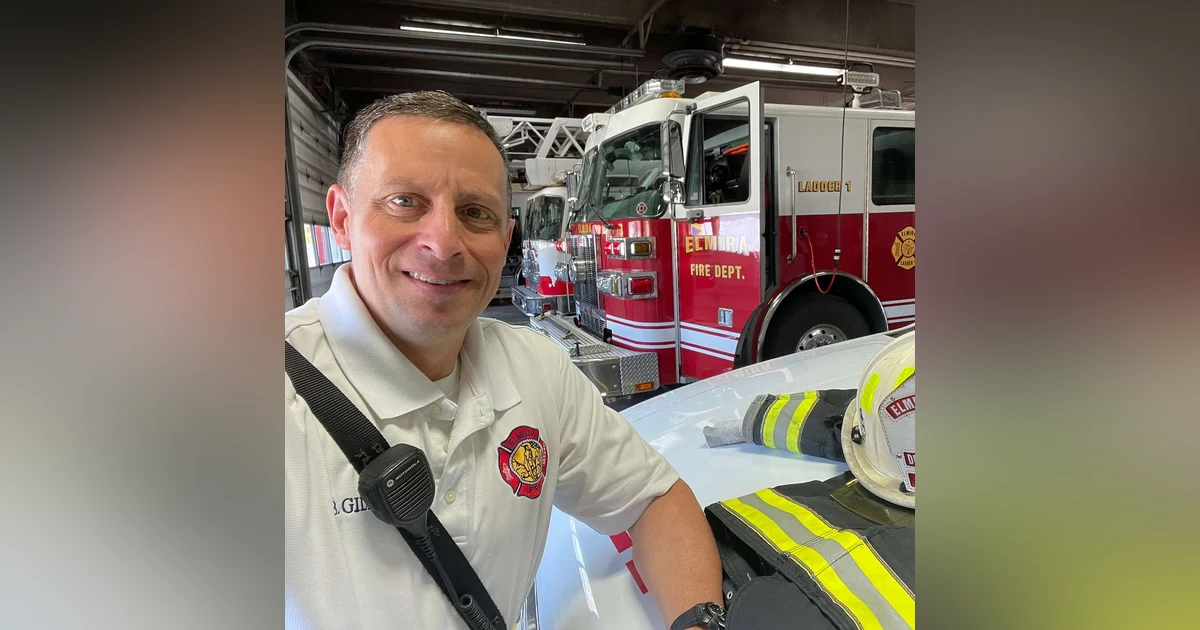
Local Hero with Deputy Fire Chief Bill Gillette

 Apple Podcasts
 Spotify
 Castro
 RSS Feed
 Youtube Music
 Community first, The Family Business and Humble Heroics are the underlying themes of our conversation with Bill Gillette, Deputy Fire Chief of Elmira, NY. During this episode, Bill shares his motivation for joining the Department, walks us through the training process, reveals the dynamics of a fire hall and describes what a fire sounds like. He also reflects upon his choice to follow in his Father’s footsteps – as a local fire fighter.
To discover more episodes or connect with us:
Hello and welcome to No Wrong Choices, a podcast about the adventures of life that explores the career journeys of successful and interesting people. I'm Larry Samuels, soon to be joined by the other fellows Two Char Saxena and Larry Shay. If you've been enjoying the show, please support us by giving No Wrong Choices a five-star rating on your podcasting platform and by pressing follow or subscribe. You can also learn more about us at NoWrongChoices.com and by looking for us on social media. This episode features a real life hero, Deputy Fire Chief Bill Gillette of the Elmiro, New York Fire Department. Commonly we've talked to celebrities, people who have worked in the entertainment industry on this program, but but that's not the core premise of what we're doing. We we talk to people who uh have put themselves out there to go after a dream, an idea or a vision and to make a difference. And undoubtedly, Bill Gillette is a great example of that. Larry Shea, why don't you lead us into this conversation?
Larry SheaYeah, sure. I think the common theme when we're younger is we want to aspire to be something, you know, heroic, as you say, right? We look up to policemen and firemen and um astronauts, right? There's something about the way they're dressed, the way they carry themselves, you know, that gives it a place of honor when you're talking about growing up to be a certain profession. And, you know, usually, as you say, you know, on this show we talk a lot about the scarcity, right? The unobtainable, like, you know, an actor or, you know, um a foreign correspondent. I mean, there are a million things we've done here, but they all seem very scarce. And here we have a job that is plentiful. We could all grow up and aspire to do it, but man, this job is not for everyone because, you know, there is a um a certain level of of uh falling off the cliff that could occur if you do your job improperly. You can't say that about some person. If you do a bad acting job, you just do another take, right? You can't do another take if you're a fireman. So yeah, this is a this is a profession that you really have to have your heart set on doing it because it's a tough one.
Tushar SaxenaI've always thought I think about when I go back to being a kid, right? So you remember that little sketch they used to do on Sesame Street, these are the people in your neighborhood? Like this, this is exactly what we're talking about here. You know, Bill Gillette is a fireman and he's just a member of the community, but so many of us kind of just walk around in our everyday lives, and you know, we consider ourselves, we we don't always think about that guy who has that job, who really is the hero next door. Like, I'm you know, I'm a big fan, I'm a big comic book fan. I say it all the time. You know, my heroes are Captain America, are Spider-Man, are, you know, our Superman. But the reality is that like, you know, a Bill Gillette is a real life Captain America. He's actually saving people, he's actually making a real difference within the community. And let's be honest, you know, this job, as you mentioned just a second ago, uh, Larry Shea, this job is not for the faint of heart. Everyone can be called, everyone can do it, but not everyone can be called, for sure.
Larry SamuelsAnd, you know, what I can add to this conversation is uh the character. You know, I I've known Bill for 30 years. He and I were roommates in college, you've been friends for a long time. And um, while I didn't know that he would wind up here, um, knowing him as well as I do, I'm not surprised that this is what he wound up doing. So, with that, here is Bill Gillette. Now joining No Wrong Choices is a deputy fire chief for the City of Elmira Fire Department who's had 25 years on the job and has the uh perhaps unfortunate distinction of being my first college roommate. Please welcome Bill Gillette. Bill, thank you so much for joining us.
SPEAKER_00Hi, Larry. It's great talking to you again and uh great meeting you guys. I really appreciate you having me on.
Tushar SaxenaAll right. So, Bill, first question is this How many times during your college days? So I understand you guys are college roommates. How many times during your college days did you want to set Larry Samuels on fire?
SPEAKER_00Never once occurred to me. Nice.
Larry SheaI don't believe you. Exactly. I don't believe it either. Uh before we ask you how many calendars you've posed for, because that's coming. I just want you to know that's coming. Um, too.
SPEAKER_04Oh! Maybe that should be the first game. Go for it.
Larry SheaHow many calendars have you posed for?
SPEAKER_00The answer is one.
Larry SheaAll right. Shirt on or shirt off?
SPEAKER_00Well, I firemen were not the stars of that calendar. What we did was a fundraiser for the city animal shelter. So those of us that had a dog or a cat all got to get in uniform and pose with our pet and ended up being a successful fundraiser. So one and only one.
Tushar SaxenaWhich month were you?
Larry SheaOkay.
SPEAKER_00I don't even remember. I'd have to get it out and look, to be honest with you.
Larry SheaIt's not hanging up. You didn't frame that thing?
SPEAKER_00No, no, no frame. No frame. It's it's conveniently been buried.
Larry SamuelsWell, Bill, I I it reached out to you before we did the episode telling you that I need photos for all of our social media marketing. So please send me that photo. Nice.
SPEAKER_00I will. I'll be able to find that.
Larry SheaLet's bring us back to the to your youth, to your childhood. I mean, most boys, you know, grow up, they want to be policemen or firemen or astronauts. I mean, you're literally on that top three list of professions of, you know, what what young people today kind of aspire, or yesterday or today, aspire to be. So, where did this start for you? Where did you get the fireman bug, so to speak?
SPEAKER_00And ironically, um, I was the complete opposite of that. I never really had um ambitions to grow up and be a fireman as my career. I don't know if Larry told you my father was a fireman also, and also a deputy chief for the city of Elmira for 36 years and always admired him, was always interested in his job. But when I got old enough to start thinking about uh life after high school, that wasn't actually not on my list of things to do.
Tushar SaxenaWell, what was on the list of things to do then?
SPEAKER_00Well, like most 18-year-olds, it was kind of uh shot in the dark. Uh, I wanted to try to go to college and see if uh I could find a career. I was interested in sports broadcasting, sort of what you guys, a lot of your background has been, and uh communications and public relations. So that's what I that's what I did at Sunia Swego with Larry.
Tushar SaxenaAll right, so outside of the unfortunate uh the unfortunate uh happenings that you had to be with Larry Samuels for four years in college. So um okay, so you you gave you gave being a broadcaster, you know, being sports journalism a shot in college at least. So what was it that turned you that turned you that made you say, no, this is not what I want to do?
SPEAKER_00Well, where life led me um in the few years after uh graduation, there weren't really that many opportunities for me to even get um off the ground running in that career. So I you know sought employment elsewhere and changed my interests a little bit and uh tried a lot of different jobs and one day decided that um I would take some civil service tests and among them uh the fire department, um, which you know I I uh obviously had the uh the background and the lifelong uh knowledge about some things that the job was about through my father, but that's how uh that's really how that all got started. It was not uh really a childhood dream, but I have to tell you it's it's the best decision I've ever made.
Larry SamuelsSo, what is that process, Bill? You know, I mean I I guess I have two questions. One, um, you know, what were some of those jobs in between? Anything really cool, fun, and interesting?
SPEAKER_00Definitely not cool, fun, or interesting.
Larry SamuelsFair enough. Take us into the process of becoming a fireman, you know, the application process. Is there a a physical aspect and a test you have to take? Like, like what is that whole process?
SPEAKER_00So basically, um it's a civil service um exam that you take. So you have to look for your um, at least here, and I know FDNY has their own test because they're so big, but in our county it's a civil service exam. So you sign up for that, you take the exam, you um hope you become you do good and become reachable on a list, and as the department um has vacancies and hires, you get canvassed, you get an interview, and then there is a physical, um a physical test that they you know, are basically just kind of see if you have enough enough to uh proceed with the hiring process. If you pass the written exam, you're reachable, they call you, you pass the the physical test, they hire you. And you if you're lucky enough, um you may come on for a couple days, or if you're lucky enough, you may be able to be at the department for a couple weeks before they send you it off. And our department um usually sends our new recruits and new hires to the New York State Fire Academy in Montour, but we've had to send them elsewhere. Um Syracuse's head and academy, Utica Binghamton. I ended up going to uh the fire academy in Montour.
Tushar SaxenaAll right, so tell me a little bit about this uh the idea of canvassing and then the physical, right? So obviously you have to be physically fit to to do this job. There's there's no way around it. So what is it, what is that, what is that process like? Like what do they what do you mean by they give you a physical test? Like what are they asking you to lift? What are they asking you to run, etc.?
SPEAKER_00It's changed so much um since I was hired. Today it's it's a little more uh cardio based, but in when uh in the exam for uh when I was hired, they take you through a bunch of different stations, climbing a ladder, uh pulling hose, connecting a hose, running through a tunnel, uh swinging a sledgehammer, knocking a tire off, picking up 50 pounds of weights in a bucket, carrying them, and everything's timed. So there was about there was about 15 stations we had to go through. And uh each candidate goes through that a time, and it's and it's monitored by back when I took it, it was monitored by the local high school uh gym gym teachers. So once you pass that, you kind of wait for the new list to come out, which is a combination of your exam written score and the and how you did on the physical, and then uh you have a new placement on the list, basically, and then you wait for uh vacancies to occur.
Tushar SaxenaYou must have killed it during the presidential fitness test yeah, times during school. Absolutely. With all the squat thrusts. My other question then is you know, actually, you you mentioned the idea of like, you know, having to carry five uh having to carry hose up a up a ladder. You know what? I I've actually always wondered this. How much does hose weigh?
SPEAKER_00When it's empty, it's a lot more maneuverable and lighter. When it's filled with water, it's not so much the weight as the pressure that's that's exerted that can make it difficult to maneuver. Um there's different um diameters, sizes of hose. The uh hand lines, which are the attack lines, which the firefighters usually take inside, and is usually our first choice for most fires, are relatively you know not too difficult to move. Um it takes a little bit, but as as the uh attack lines get larger, your two and a half and your threes, they're they're a little bit harder to maneuver. Um, a really large guy physically fit like some of your some of your professional athletes would not have a problem with a two and a half. I can do it, but it's it's uh it's harder for uh people my size.
Larry SheaSo I guess my question would be you know, you know, you have a written test, you know you have a physical test. Are you training both of these? Are you like tutoring with getting the the mental part of it together and then also doing exercises like sledgehammering and bringing hose up? Like, how are you training for this? Or are you you're just like I'm just gonna give it a one-shot deal? I would think you would have to like really game this out.
SPEAKER_00You do get some advanced warning with your canvas letters that uh the a physical um fitness exam is coming. So there's kind of a saying that we say that that's the time you really should be in one of the best shapes of your life. So that's what that's what the candidates try to do. And uh, as far as the written exam as for the entrance exam, they really can't ask you a lot of firefighting questions because you aren't a firefighter yet and you don't know a lot about that. So that involved a lot of reading comprehension, organizing sentences, organizing paragraphs, uh which example um or which selection uh best restates the sentence, things like that. And those are things like I said, believe it or not, I didn't I didn't end up using my college degree um per se, but having those extra college classes, you know, certainly prepared me for that. Um gave me a little bit of a leg up. So I did get to use a little bit of that, you know, with taking the exams, the entrance exam, then promotional exam since then.
Larry SamuelsWell, you might be using your communications degree right now doing this podcast. I should point that out.
Larry SheaIt's worth it. Um so I guess I my next question then would be let's just say you have somebody who's sort of clever, like myself, and could do the written stuff. Sort of, sort of, but is physically inept in in almost every possible way and would never pass the physical test. Is there a place for somebody who has the mental acuity, but maybe not the physical stamina in the fire department? Is there like, I'm not gonna go in and like bust up fires, but I can help you guys, you know?
SPEAKER_00So in in that case, um, yes, there is. Initially, though, again, it kind of reverts back to you you can't be guaranteed that you would be like, for example, um big larger departments have a fire prevention bureau that they don't necessarily have to do a lot of the same physical exertions that the line firefighters do, but you have to uh you have to be able to get in and start at the ground level and work your way to that if that's your if that's your career choice once you're in the department. So, yes, but to answer your question initially, you you do have to have some physical ability.
Larry SamuelsSo, with that in mind, you you you go through the application process, the training, um, you get the nod, you know, tell us about Montour. When you went off to the academy, what is the training process? What are you doing every day?
SPEAKER_00So it wasn't too terrible for for me because that's only about 25 minutes from where I lived at the time and where I and from where I live still. Um it was about an eight-week program, which also, by the way, since I have gone and uh talking to the new hires and recruits that have come back over the last several years, the academy's been extended to um 12, I think maybe even 14 weeks now. So, and it has gotten a little more difficult physically. There's a lot more subjects that get covered now because the fire service has expanded into different areas. But um, when I went, it was an eight-week program. You have to be there. Uh you had to report Sunday night. You basically trained uh all day, every day, Monday through Friday. You stayed there overnight. Um Friday about five o'clock, you could go home.
Tushar SaxenaSo, what is training like? Like what does that mean? So you're training every day. It's like what are class what does a class look like? What is what does actual physical training look like? And then let me go go beyond that. So you said initially for you it was let's say two months of training. Now it's pulled out to three months to 14 weeks. And obviously things have changed, obviously, to add all these courses. So what are some of the I guess like what are some of the new things that fire that firefighters have to be trained for, have to know?
SPEAKER_00Different. Um, basically large scale responses, whether it be uh hazardous materials, uh biological, chemical, weapons, uh terrorism.
Larry SamuelsWow.
SPEAKER_00Um that's a whole new whole new ball game.
Tushar SaxenaI mean, how long has that been in how long has that been in place?
SPEAKER_00Oh, it's been it was in place uh even back when I was in there. It's just it's just been expanded because of all the different world events, uh internationally and international events that have happened. Um let's see. It's a lot of classroom work. I'm trying to get back to um what you were asking before a little bit. It was a lot of classroom work and also it was a lot of physical exercise. And you have to remember everybody's coming in with virtually, they assume that you're coming in with with no knowledge of firefighting whatsoever. That's how it's designed.
Tushar SaxenaYou're you're a blank slate.
SPEAKER_00Um yeah, you're a blank slate, and they're uh they're uh you know, you they they teach you the engine company operations, ladder truck company operations, uh emergency medical um technician, hazardous materials, rescue, you name it. Um there's a lot of different lot of different uh jobs and a lot of different courses that that you that you uh get subjected to, and there's weekly tests, weekly quizzes, different instructors every week. That was um a challenging sometimes and but also a uh a good thing too, that you would get different instructors from all across New York State that would come there to teach these academies. So you got exposed to different um size departments, different experiences. So it's all good.
Larry SamuelsNow, are you actually you know putting out, I mean, I assume the answer is yes, are you actually putting out fires at the academy that you know are being started? You're working, you know, as a team, you're learning all that stuff. Like to take us through that.
SPEAKER_00Yep, they they're they're they're controlled, of course, um, and part of the academy's program. But uh yeah, you you do a lot of that. They have one week, I I believe they now refer to it as as uh live burn week up there, which is sounds nice. Very right, yeah, it is a lot of fun. Very regulated. Um you have to basically see how people are gonna react in those situations, even though they are controlled. You still have to get an idea of of what that's gonna be like. It's definitely not a substitute for the real thing because now the controls are off. But um yeah, it it was a it was a good experience.
Larry SamuelsWhat were the emotions associated with that? You know, I mean, seeing a fire for the first time and stepping in, you know, I mean, w was was fear a part of what you were doing? Adrenaline? Like what were the emotions associated with all this?
SPEAKER_00Adrenaline, I wouldn't really call it fear. I mean, everybody should be a little bit um apprehensive of fire. I mean, let's be honest. It's it's uh it's not a macho thing to say, you know, you're not afraid of fire. Everybody should be, because uh it's it's uh it's uh sometimes out of your control. But adrenaline, adrenaline Larry, definitely a big thing. Um, excitement, um, trying something new, um, wanting to be good at it, um failures, successes, you name it.
Larry SheaYeah, and building off of that, I mean, do you see people drop out? I mean, I would be the guy who would get into this, and I would be like, I can do this, I can do this, and then the reality of it might set in, and you'd be like, you know, is this really for me? I mean, I have to think at this point in your training, is the time to really ask yourself, you know, I'm doing something that's scary. Let's talk about the elephant in the room, like you said, you know. I'm doing something that's really scary. Is this for me? I could lose my life doing my job, and you can't say that with every job. Is that something you talk about in class? Do you do you discuss it? Is it uns unspoken because you're all there for a reason? Like I I would have a tough time processing that part of it.
SPEAKER_00Some so you're it's drilled into you right away, and it and that never ends throughout your career. Any course you take, any training you take, the the number one priority is your own personal safety. And the biggest reason for that is because if you can't keep yourself safe, how the heck are you gonna keep your crewmen safe and the people that you're protecting safe? So that's drilled into you right away. Um so there are dropouts occasionally. If you make it through the academy, you've pretty much decided, yes, this is for me.
Tushar SaxenaObviously, then the next step is you're going to be assigned to you're going to be assigned somewhere, right? So what's that process like? And what and how does that work?
SPEAKER_00During your time at the academy, your your home department, you know, gets reports from the academy and they check your progress. And again, you have all kinds of final exams, you have um cognitive skill tests that you have to complete. And once your department learns that, you know, you uh they see you get set up for a graduation ceremony up there, and hopefully uh your the chief of your department hands you your assignment letter. And graduation tells you where you're gonna report, what shift you're gonna be on, what hours you're gonna be working on.
Tushar SaxenaSo look Larry Shea asked just a second ago about the idea, like let's just say you're not you're not a you know, you're not your peak fitness, and there are other roles within the department that you can take. Is that something that's is that something that comes out at the end of of your time at the academy? Like, you know, you're gonna go on to do you're gonna be a part of a ladder company, you'll go on to investigate fires, you'll do something more administrative. Does that happen at that point?
SPEAKER_00It really does not, um, because uh your hire date, you know, maybe by the time you get hired and start the academy, let's call it two weeks, let's say the academy's three months, and then you graduate. Um, at least in our department, I believe this is similar to most departments in New York State, you know, give or take some time. You're still on program. Um until the year anniversary of your hiring. So during that time, you know, you are expected, you're the low man on the totem pole, you need to be learning the job, and then you have to be learning to balance your work life, your home life. You have to learn the streets. I mean, I was lucky. I spent most of my life in Elmira, and being a letter carrier certainly didn't hurt with me knowing all the streets that I hadn't come across in uh in my life here. So you have to learn all those things. So it's it you really can't jump into uh a less physically um necessary part of the job until you really get some time, and that's how it works with most departments. Some of the larger departments, there may be a quicker avenue, it just depends because they have more of those positions available.
Larry SheaSo you talked about probation, like the one year. Uh I find that very interesting because I'm imagining like when you get that job and you now know this is your brotherhood, these are the people you're with, this is your firehouse, here's my you must know when that first call came exactly what you're responsible for in a military sense of here's what's required of me, and what is that experience like? I mean, because every I assume when the call comes, every single person knows exactly what to do to the second.
SPEAKER_00Yeah, and that's and that comes with with time and experience. And when you first start out and you get those first calls, it's not that you don't know what you're supposed to be doing because you've been training on that, and your uh your peers and your your officers have have drilled that into you, but you get you know, you get those butterflies, you get those what ifs, what ifs, what ifs, and you're you're lucky if the first time you get your gear on correctly, even though you've drilled on it a thousand times, you get it.
Larry SamuelsI would definitely screw it up for sure.
SPEAKER_00We all do, but everybody, everybody comes around and gets better. And it went and it's like anything else, it'd be those things become second nature as the the longer uh the longer you work.
Larry SheaSo take us through a moment. You get a call, what happens? Is it a bell? First of all, is it a bell? Like what happens? Like, how do you how do you know? Oh crap, time to go.
SPEAKER_00That's that's changed too over the years. When I uh right before I came in, um our county had just gone over to 911. Prior to that, there had been a firefighter assigned to the phone room, usually a senior fighter that would firefighter that would take all the calls. And when 911 was implemented, that changed to uh basically station-wide overhead speakers in all the in all the stations. So there would be a there used to be a quick tone, they'd say Department 6 Elmara, what type what type of call it is, where it is, and any pertinent details, and that would be repeated twice over the intercom and then twice over our portable radios. So everybody gets to hear it four times. And when you're first starting out, when you get those first few uh first few calls, it's a good thing they're saying it four times because you'd be surprised of all the other things that are going through your head.
Larry SamuelsYeah. Now now the call comes in. Do you then immediately run to a pole and slide down it? Do you still yeah, do you still have fire poles?
SPEAKER_00We do one we have the station. Uh we have three stations in the city, and we do have one that still has two fire poles in it. Um, our headquarters never did have fire poles, but our station five, which houses an engine company, and station three, which also houses an engine company. Station three does have the poles too, station five does not. So we actually believe we move quickly, we move with a purpose. If we're far away, we jog trot, we we try not to run because uh it's just uh we we try to keep it under control because you need to you need to get your wits about you pretty quick.
Larry SheaAnd before we ask you if you have a Dalmatian and a great chef is required firehouse, yeah, uh with the poll talk, yeah. Um do you get information as you're on your way to to whatever the emergency is? Because it it could it could be a fire, but it could be a crash, it could be anything. Are you then when you're on the way getting that information updates what or do you just have to wait and see what unfolds when you get there?
SPEAKER_00It it varies. Um sometimes both. Sometimes we don't get any updates at all, and through no fault of the dispatchers, it's just the information they were given. The call ends up being completely different than what they were told it was going to be. And then other times when bad things are happening, or is as 911 gets more um information, they will uh update us on what's going on, whether it's uh like you said, whether it's a a fire, uh natural gas leak, a emergency medical call, or or any of the different things that we respond to.
Tushar SaxenaAll right, so I want to take it back just a little bit. Uh I want to take it back just just a little bit to let's say your probationary year. First of all, what is a rookie fireman called?
SPEAKER_00Oh that's a good question.
Tushar SaxenaUm and it doesn't have to be it doesn't have to be clean.
SPEAKER_00FNG, let's just let's put it that way. Okay, there's some people out there that'll understand that.
Tushar SaxenaAll right. So as the new guy, as the new guy, what is your role in the department? What is your role in your firehouse? And then also coupled with that, how many men make up a firehouse? It depends on the thing. How many firefighters make up a firehouse?
SPEAKER_00It it it depends. That answer is is different for uh every city and every department. And in our city, we have three stations. There's uh three to four uh firefighters and officers included, usually at every station. So it just depends on uh, and as far as what task you're assigned, it depends on what station you're at and what uh vehicle you're assigned to and what seat you're in, believe it or not.
Tushar SaxenaAll right. So as so as the new guy, what is your role? What's your specific role?
SPEAKER_00It uh that would depend on what uh apparatus I was assigned, I was assigned to, but most likely the the newest guys, the guys with the least experienced that are just getting in, maybe still on probation, they're probably not gonna be driving yet or not gonna be the chauffeurs yet because they don't know the streets enough and they might not have enough practice uh putting the engine in pump gear or operating the aerial tower. So we kind of we we give them time to get all that ready while they're still um again doing their ongoing training, ongoing education. The first year or so is super hectic for a new firefighter. Not only do you have to get through the academy, but after that you have uh several different um areas of rescue or emergency medical treatment that you have to get through.
Tushar SaxenaAnd some of that it's a literal trial by fire, right?
SPEAKER_00Some of it is, yeah. Some of it is. Um, we try they try not to make it too much like that because again, the the uh personal safety thing is a big thing where we want to protect ourselves too, and we don't want to foolishly put people in situations that they aren't ready for because that doesn't help anybody.
Larry SheaI I want to make sure I heard you correct. Did you call the drivers chauffeurs?
SPEAKER_00Yeah, sometimes they are called chauffeurs. That's kind of hit or miss in in our department. Most of the time we just call them, we just call them driver. Or if they're not the driver, there's usually an officer, there's an officer assigned to every rig, and then there's a what we call a backwards guy who usually either rides backwards or um is is responsible for uh turning the water on at the hydrant.
Larry SheaGot it. And who out of all those people gets the fun job of turning on the sirens and making noise?
SPEAKER_00Well, that depends. Uh I get to do it myself because I don't have a driver. I fly solo in my car, so I get to do all that. And then on uh the ladder truck and the engines, that depends who the officer is. There's no set rule, just that uh we use those emergency warning devices if we need them. Don't take to do it. Yeah, somebody has to do it. Some of them are pretty possessive about that. You will not touch that siren earth.
Larry SheaI'll bet. Wow. That would be the job I'd be like volunteering for. Like you'd be good at it. You guys do all the heavy stuff. I'm gonna make all the noise over here. Um all right. Let's get to uh, you know, as again we say the elephant in the room. Have you been in that situation where it just I mean, scary doesn't even probably do it justice, but have you been in a situation where uh all your training has to come together or you're not gonna get out of there?
SPEAKER_00Yeah, absolutely. Um, every almost everybody in our department at one time or another is assigned uh the attack person on the the front um of the nozzle for the attack hose line going in. It's uh it's an experience for sure, but again, you don't get put in that position until you're trained, until you're ready. You've worked with the guys that have been there the longest that are showing you what to do. And um one rule of thumb that's very important too is nobody ever goes inside alone. Ever. That's a that's uh um no exceptions to that rule, basically. And and accountability is a is a very big thing with us.
Larry SamuelsCan you walk us through one of the the the bigger situations that you've had to deal with?
SPEAKER_00Well, I can tell you one of the one of the scariest ones um that you'd mentioned earlier about about being scared. It it's again, it's it's not that it's not that you're scared when you go in these fires, um, if you've made it this far, but you are apprehensive because I'm sure you guys, I don't know if you if you have wives or if you've watched some of the the TV shows, uh not like that at all. Where uh they're in the middle of the fire and you can see everybody, and the firemen all have masks on, and then the victim they come to is suddenly upright talking and laughing, and then when he goes outside to the fresh air, then he coughs. I get I get a big kick out of that. Um you can't see anything. Um you're lucky if you can hear because you have radio traffic over your radio. Um, you have the sound of the fire, you have the sound of other crew members opening doors and windows, um, sometimes additional apparatus arriving, sirens. So there's a lot of noise factors. You're completely blind, you have to rely on your training, um, your hands, you have to find a wall you're you're trained on how to proceed in and not lose your positioning in the dark when you can't see. You're also hearing um your own uh your own SCBA, your your air pack. You're trying to listen to your teammates who are also on air, and when everybody is uh imagine how clear everybody sounds when like we're talking right now. Now imagine all of us with an air pack on where we just went up three flights of stairs, crawled down three hallways, and are tired. It just changes everything. So that's what it's like. And then if you've got your gear on right, which you which you do by now at this point, you start to feel you, you know, you're you're looking and you're listening, you're looking for the glow, you're listening for the crackle, and you're you're adjusting to the heat, the temperature changes. And that's where that those first couple times, that's where that's where it gets you, and and you you pucker up a little bit. I'm not gonna lie about it, you do, but you know that you've got your water with you, you know that there's a coordinated attack effort going on, you trust the guys around you, and you trust your training.
Tushar SaxenaAll right, so I'm gonna go a couple of different directions here. Uh one, because you know, this obviously we're dealing in in the realm of sound right now, and you mentioned the sound of a fire. I never really thought of that about that before. What does a fire sound like?
SPEAKER_00Well, you've got you've got crack again, there's a lot of crackling. Um the fire is uh eating away at wood, the building components, furniture, whatever whatever it can get its whatever it can get itself uh into, basically.
Tushar SaxenaAnd then I guess uh to couple that is that it sounds a lot like military training, what you're doing, right? So this notion of we have attack squad, you know, we have a guy on uh who's the attack guy on a hose. You have to you go in pair, you have you have to at least go in pairs. Like it how close is this to like, you know, I guess being in the military?
SPEAKER_00It's it's obviously it's it's not quite the same. Um the military has its own um you know set of uh set of rules, uh set of things that they have to you know train on and be concerned about. We call it sort of sort of a paramilitary organization where it's based on again accountability, there are officers directing uh the uh coordinated attack that has to happen at every fire. So those in in those ways it is similar. Yeah, talk about that. The camaraderie is a lot is is very similar to, I imagine, to what the military has.
Larry SheaThat makes a lot of sense. Yeah, it's a brother brotherhood in that regard. Um talk to me about the communication. You know, we're talking about sound and so forth. I mean, see you have the cacophony of the fire, things collapsing around you, the crackling, it's et cetera. You also you mentioned the radio. The what you know, I've only been around a few like major fires, let's call them in my life, but the thing I remember most is for me, it seems chaotic. You know, like how the heck do they know what floor their guys are on, you know, who's doing what? How are you attacking this thing? I mean, from what you're telling us in our audience, I mean, it's a coordinated, smart, planned out attack all the time. Like, because the military and the firemen don't do anything willy-nilly, right? It's all thought out, correct?
SPEAKER_00It it is, but interestingly enough, um, we have it like we have what we call a standard operating guidelines where all things being equal, starting out, this is how we're gonna begin this operation. And by the time we're done, uh we're usually off plan A and on plan M somewhere down the line. Right, right.
Larry SamuelsBecause you've got a pivot, of course, constantly.
SPEAKER_00No and no two uh residences or or or building fires or anything like that seem to be alike. Um the fire patterns and and characteristics of what the fire does when everything's all cleared out and we look, those there's a lot of similarities there, but um it's it's never the same twice. And that's what makes it interesting and you know can cause a little apprehension on our part once in a while. But again, we we talk about those things afterwards and try to we always try to do better. And it's it never it never goes very rarely goes exactly as planned, but we expect that because we're not um fire is not alive, it's something that um we can't control, but through training and through experience over the years and history of firefighting, um firefighters have learned you know the things that they can do to uh make the fire stop the fire from going where you want it to go, releasing heat by ventilation and things like that.
Larry SheaSo, and and you're just talking about fire. I mean, right? We're just talking like you are also required. I mean, think about where firemen are are called. What are some of the things that firemen are quote unquote responsible for that we wouldn't even think about? Accidents, I'm thinking about. There must be other things where, like, oh yeah, you got to call the fire department, they're gonna come and take care of that. Because you guys are heroes in every sense of the word, and you don't just conquer fires.
SPEAKER_00That yeah, that's very interesting. And that those responsibilities have actually increased um quite a bit since the time I got hired, too. In in our city and in most uh career fire departments, it's as you said, it's not just the fire suppression, it's uh emergency medical service, it's uh responding to vehicle accidents, uh natural gas leaks, carbon monoxide incidents, um, all various forms of rescues. And in Almira, we have um the Shimung River that runs through town. We have we're part of the County River Task Force. Uh we have some man-made lakes sometimes that we have to get people out of. Uh, we're trained in confined space, a hazardous materials response, which the department is also the county team for that. So there are there's just so many different so many different things that come in. And it's funny because we we never say we've seen it all. We will we like to think we've seen it all, but right up to the right up to the last day I report for work, I won't be surprised if I see something that I've never seen before.
Larry SamuelsWow. You know, based upon this conversation, I I think I already know the answer, but but but I do need to ask the question. Have you been injured on the job?
SPEAKER_00I have been very fortunate. I've had to um fill out some exposure uh reports a few times just because of uh um the nature of the call uh we were responding to. I've been lucky so far that I have not been seriously injured. Um and again, a lot of that is circumstantial, it's it but it's also training and it's uh trying to keep yourself in halfway decent shape, those things all help. And I've I've uh I've seen a lot of my co-workers that have been injured, and it's not fun.
Larry SamuelsHave you ever lost a co-worker?
SPEAKER_00Um we not on the job as far as uh as far as like uh the result of a direct call. We I we did lose a uh co-worker um from cancer back in 2016 from uh exposures that uh he did suffer um from being a fireman.
Tushar SaxenaAll right, so before you know when we started this this conversation, you had said that you did not want to go, you didn't want essentially want to follow in your in your father's footsteps to be a fireman, but obviously, you know, circumstances led you down that path. So now that now that you've now that you've essentially gone into the quote unquote family business, what was your primary apprehension from not wanting to go into the fire department to start?
SPEAKER_00There really wasn't any. Um again, my I'd been around that and heard a lot of the stories um through my father, and uh it wasn't that I didn't want to, I just really, really mostly did not really know what I wanted to do. The uh the sports broadcasting and the communications did seem interesting to me, and I definitely wanted to at least give that a try. And I don't regret giving that a try. Um, there's things from that that that have served me well, and all my experiences at us we go uh you know have served me in this job.
Larry SamuelsFunneling, for example. Yeah, sure.
SPEAKER_00Uh one thing ironically um that I did do um in my first three or four years in the department, um, with the public relations background. Um back then there were a lot of things going on. Relmira was not in the best financial situation and uh didn't have the uh the best relationship with with city government at that time. And I put together um one of the first uh promotional fire department brochures, which basically talked about um how long we've been around, all the services we provide, and pictures of the apparatus, and making sure the people knew that we were on duty 24 hours a day, seven days a week, 365 days a year, and uh so I did get to use some of my college skills there. And um with being an officer, you're responsible um for not only your safety but your crewmates' safety and the guys working underneath you. And the the speaking I did, the communication classes I did, the um having to get up in front of people in a lot of different situations, that served me well too. I've been a lot more comfortable being able to do that, and I've gotten some pretty decent feedback um about how my lessons at the fire department and training have gone and what I need to work on. But but I've never um I never would have been able to do that as comfortably had I not uh had those had that background uh in college.
Tushar SaxenaWho knew that you had to make a brochure to say, hey, the fire department won't allow your house to burn down? Come on! Yeah, you need you need a brochure to tell people this? That's hilarious. That's that's crazy.
SPEAKER_00You just hit the nail on the head there. And like I said, there's there was different times now. It's it's things are a lot uh more amicable and the city's in a lot uh better of a position now. So uh, but we still try to promote what we do. We want people to know that they can rely on us and count on us.
Larry SheaSo talk about your family. You know, this is your profession. Um, they didn't choose it, you chose it. Is it hard on them? Um, you know firsthand, was it hard on you as a boy, you know, with your dad being a fireman? What's it like for your family to know that you know you're you're you're in a profession where you sometimes do have to put your life on the line?
SPEAKER_00So again, um my family's been extremely supportive and extremely understanding. Um, even just you know, leaving the day to go to work. And in Omira, here we work a 24-hour schedule. We used to work um a different schedule, but now it's 24 hours. So when I'm gone, I'm away from them for 24 hours at a time. You know, have a few couple days off after that. And what you do is you make it work. Um growing up, I had to understand that my dad couldn't be there for everything, but he also was there for everything he could be. And I never um felt like he wasn't there enough. Uh he he uh he did everything that he could, and that carried over um for my own family today. Um it can be hard when you have younger kids on uh on the mother, on on the wife, and but you know, we adapt, we make do, we take turns with things, we cooperate. Right and uh it works out. My uh own kids understood once in a while that I wasn't gonna be there for every play or every ball game. But you make every other one that you can when you're off, and you know, the same thing with holidays. You you work your share of holidays over your career, nights, weekends, and you make other plans. You you make it work.
Larry SamuelsHow would you react if one of your kids came to you and said that I want to be a firefighter?
SPEAKER_00I would I would support I would support them whatever whatever they wanted to do. I I remember my father absolutely never never pushed it on me. He wanted me to be myself and you know find my own way, and and uh ironically I did, and um I just happened to be um following in his footsteps. So to answer that question, I I would be supportive. I would absolutely be supportive. I I want my kids to do whatever makes them happy.
Larry SheaI want to ask you before before we let you go, and you've been gracious with your time, thank you very much for that. Um I I want to ask about something that I saw recently about firefighting, which involved um uh virtual reality and and training purposes and things of that nature. In other words, creating uh situations where you put firefighters in a room and it kind of trains them and teaches them how to escape these situations, what to do when it's a panicked situation. I there are tools out there now that certainly weren't around when you were training and coming up. And I'm wondering how much that could help, how much you see it in the future, and uh what you think about it.
SPEAKER_00Yeah, that's that's an interesting point. Um, I think those opportunities are only gonna get better for uh future firefighters. Uh very interesting. We didn't if we had had those tools available to us, I would have loved to have taken advantage of that. I think that could be really useful. There's definitely no substitute for uh the actual uh cognitive hands-on experience and training drills, but I'm I'm not against that at all. I think there's gonna be some uh pretty interesting technologies that could come out and could really help uh a lot of professions, not just firefighters, with getting an idea of look, this is what it's gonna be like. And you know, that could that could maybe tell somebody a little bit earlier on, I'm not sure this is for me, or yeah, I definitely uh I want more.
Tushar SaxenaAll right, so obviously I think I kind of know the answer to this question that I'm gonna ask you next. Um I'm gonna assume that being a firefighter is not extremely lucrative. You're not you're not walking around with Donald Trump type money.
Larry SamuelsSo is Donald Trump walking around with Donald Trump like money?
Tushar SaxenaWe'll we'll figure that out for another show. But but the the question is, how much of this or do how would you say that what you do is a calling?
SPEAKER_00It ends up being, yes. I I do. Um I'm not gonna lie. I I uh it was it was a decent, you know, salary and benefits opportunity. Um that and I was you know that was helpful for me back then. You're not gonna be a millionaire being a fireman. Um, you know, we we do okay. We're certainly not complaining about anything. We're we're fortunate with uh that we have pay, that we have some benefits in a retirement. So uh, you know, we're very fortunate for all of that. So but you know, you're not gonna walk around with uh Donald Trump money, that's for sure.
Tushar SaxenaOkay, so I want to ask you a couple a couple of quickie uh fun questions. I know you said that I know that I know that you said that there's not one show or movie that's realistic as a fireman. Obviously. What's your favorite fi what's your favorite fireman movie anyway?
SPEAKER_00Oh, favorite fireman movie. Let's see. Uh I haven't I've watched Backdraft like everybody did. I haven't watched too many firefighting movies since then. Um I can I can tolerate Chicago Fire. Um, I don't know if you guys have seen that.
Tushar SaxenaAnd again, what about fire country?
SPEAKER_00Um, I've I've my wife watches it. I've seen a couple of them, and again, it's uh I don't know. A lot of that uh it's it's romanticized. It's you know, look, obviously it's romanticized, right?
Larry SheaHe doesn't want to take fire home with him. He has it out at the office.
Tushar SaxenaI mean, obviously, it's like, oh my god, you know, this dope. I wouldn't do what this dope did, obviously, right?
Larry SheaRight.
Tushar SaxenaHow about the towering inferno? You you a big towering inferno guy?
SPEAKER_00Uh yeah. I mean, I I remember that from you're talking the the 70s classic?
Tushar SaxenaYeah, the old Steve McQueen movie.
SPEAKER_00That was one of that was one of my sister and I'm favorite movies growing up, the disaster movies, the original disaster movies, yeah.
Tushar SaxenaOne of the best, one of the absolute best.
SPEAKER_00Absolutely, absolutely classic.
Larry SamuelsAnd then I guess I have to ask the Dalmatian question. Do you guys have a Dalmatian in your station? We do not.
SPEAKER_00We have we're not allowed actually to keep uh a dog there. They've no we've they've never had one, to my knowledge. Um, ironically, though, if I do find the uh the calendar picture for the uh the City of Elmira animal shelter that we did, we had a blue tick coon hound uh large dog mix, and and he was uh black, black spotted with long white hair, and everybody thought he was a Dalmatian. The only difference is the Dalmatians are short haired, and that's who that's who my pictures was, and but he was his name was Seamus. So everybody thought you know from afar away he was a Dalmatian. So when I if I can get that picture to Larry, uh that's as close to a Dalmatian as we've come.
Larry SamuelsBut you do, it's gonna be all over social media.
Larry SheaIt is gonna be all over social media. You do have a chef, though, right? That is the requirement, right? Somebody has to cook, correct?
SPEAKER_00Well, and again, you know, we don't have a designated breakfast, lunch, or dinner hour, so we eat when we can. Usually the guys take turns cooking. Some are better than others. And I I think one of the I'm not I'm definitely not the best chef, but I uh I'm I'm the best eater for sure. I'll eat anything that anybody makes.
Tushar SaxenaWhat is that meal that what is that meal that no one can that no one's allowed to make?
SPEAKER_00Oh, I don't know. I don't think there is one, but we do have a uh we do have a dessert that's uh taboo in the fire department, uh the half moon cookie. So over over the past few decades, there there was three or four different firemen that just had a knack. Whenever they would bring those in, like clockwork, there would be at least one fire that day. I'm not one of those guys. I got you. Okay. I'm not one of those guys. In fact, I'm I'm the opposite. When when they come in still to this day, even the young guys have heard the the um the stories and the legends about the half moon cookies. I I eat one right away, and they all look at me with their jaw dropped to the floor, and I just say, it's not up to me. I'm having a cookie.
Larry SamuelsLook at you. Look at you, whether you like it or not. So, Bill, final question before we part ways. Um advice to somebody who's thinking about getting into uh this line of work. Um do you recommend it? What approach do they take, whether it be local or beyond that?
SPEAKER_00Again, it's been the best choice that that I've ever made. I would encourage uh anybody that is interested to really find out uh what it means for where you're going to apply or where you live. Uh it certainly helps to be in good physical condition, uh be a good reader. Um I I always tell our new hires that come in the door in this job, you're gonna see the best in people, you're gonna see the worst in people, and everything in between. And you gotta make your own opinion on what uh people tell you you're gonna see, how you should do things. You gotta you gotta form all those those opinions about um the job and about your coworkers um yourself. And yeah, I would definitely encourage people. Um having having a um medical background doesn't hurt as far as uh knowing CPR, uh being an EMT already, those things, those are good things to know. And uh basically you want to find out um whether it's your local civil service, whatever town you live in or city you live in, what the requirements are, how those announcements come out, and get yourself ahead of the game. Um you do um you might want to build a resume, you might want to have some references of people that would uh recommend you and be character witnesses for you. So those are all good things that somebody that was thinking about getting involved uh could get a head start on. And uh no background really is is uh is uh is is gonna hurt you. Um we have people from all different backgrounds. We've had chemists, we've had construction workers, we've had uh people have gone to college, people have gone to the a lot of people have gone in the military, and uh we've all kind of you know melted together and uh get the job done.
Tushar SaxenaSo I guess uh I I had uh one more quick question before we let you go. So um does the does the department uh does the fire department, whether it be in Elmyra and in New York City or wherever, does it uh does it smile more favorably upon someone with a college degree or does that matter?
SPEAKER_00Um not necessarily. Again, it it doesn't it doesn't hurt you one bit. I ended up um using the Do you advance quicker? It it would depend on uh maybe in some of the larger departments that have um expanded positions beyond what Elmira has. It's possible. It's it's not um it's not a mandatory. The only thing that is mandatory is a high school uh diploma or GED equivalency. That that part um I'm pretty sure almost everybody requires, but college degree not required.
Larry SamuelsWell, well, for me, I'm glad that you have a college degree because it put us in a position to have this conversation today. Yes. Bill, you know, uh you're I mean, I don't want to throw the word hero around because it sounds cliche at the same time. Um, you know, you're doing something so incredible, so meaningful. Um, you know, thank you um for for what you're doing and thank you so much for joining the podcast today.
SPEAKER_00Well, I I really appreciate you guys having me on, and I gotta I gotta tell you, most most people that you'll come across in this career, we don't think of ourselves as heroes, and we we really honestly don't like the limelight. We don't like to be put on the pedestal. We just want we we think there's a lot of other people that uh deserve just as much, if not more, uh recognition for being heroes than we do. But we if you have a passion for this job, you you you really do like helping people. You you want to see things done right, you want to see everybody go home and uh enjoy the enjoy their life. And so I appreciate those compliments, guys, and uh I'm uh really glad to be on your show today.
Larry SamuelsWell, as I mentioned to Bill, I'm very happy that he got that college degree from Sunia Suego to put us in a position to have this conversation today. And with that in mind, I am in no way surprised that he wound up where he is knowing the character of Bill. I'll just say this. Wow.
Tushar SaxenaJust wow. Uh look, we've spoken to a lot of people over the years, and not just here on the podcast, but in our in in our past lives as broadcasters. And you know, there have been very few times where I can say that I have been surprised and at the same time, you know. Like I I admire the guy. I'm gonna say I admire the guy because these are guys that you know, firefighters in general are P are God are you know are people who see other who I don't see the see the rest of us at the worst moment in our lives. And they are ha they have to be there to be the common force, or or to be the for or to be that person who rescues us. And to say that no, we're not heroes, who's wrong. You are here, they are heroes and they need to be told this. And I understand, look, it's great that they're humble and you know, and a lot of senses, I I get that. I understand that notion of, you know, you don't want to you don't want to get that type of an ego about you sometimes, right? Because they consider themselves just a part of the a part of the fabric of the community. But they really are more, they're they're closer to being pillars of the community than anybody else in the community.
Larry SheaYou're exactly right, T. And and let's also keep score, no Dalmatian, one sliding pole, uh multiple chefs in the in the house, right? Um but yeah, you're exactly 100% correct. I mean, such admiration I had for have for Bill and everything him, him and others do in this profession. And to that end, all the various things that we don't think about that they're responsible for, like search and rescue and lake, you know, ice breaking on lakes and you know, all those other things, toxic waste, you know, discoveries, it like we just think of them as fire people, but they're so much more than that because they handle so many states of emergency. And to your point, T, as I said to him, I've only been involved with a few of these emergency incidents, but the presence of somebody of of training and stature, like a fire person, to stand there and comfort you in your worst moment in your life is just such an admirable thing. And we know there are countless thousands more, just like Bill Gillette. And it's such a good profession for anybody to pursue because we need people. Every you know, we need people to help. And and this isn't something that people run towards necessarily. You know, people like me run away from it. So a lot of ad for admiration for Bill and people like Bill.
Tushar SaxenaIt's that old cliche, it's that old cliche, right? That they run to danger while the rest of us run away from it.
Larry SamuelsSo it but it's so true. But it's so true. You know, the the other part that I think about is his family. You know, I I do remember meeting his father many years ago, and and I didn't remember that he was a firefighter, but um, it's something that has, you know, stayed in the family. And, you know, he grew up in this situation. He saw what it was like when his father left the house every day. And um, it wasn't something that scared him away. In a way, it it brought him closer to it. And to hear that he would encourage one of his kids to follow this path in his footsteps um really says a lot about this being a calling and what it means and the importance of the role and and in his um humble way, understanding the significance uh of what he's doing and and why it's so important. So, with that, we thank Bill Gillette for joining this episode of No Wrong Choices. We also thank you for joining us. Please be sure to give us a five-star rating and follow along on your podcasting platform if you like what you heard. We also encourage you to join the conversation by visiting our website at no wrongchoices.com and by following us on social media by searching for no wrong choices. On behalf of Two Char Staxina and Larry Shay, I'm Larry Samuels. Thanks again for joining us. Never forget there are no wrong choices on the road to success. We learn from every experience.