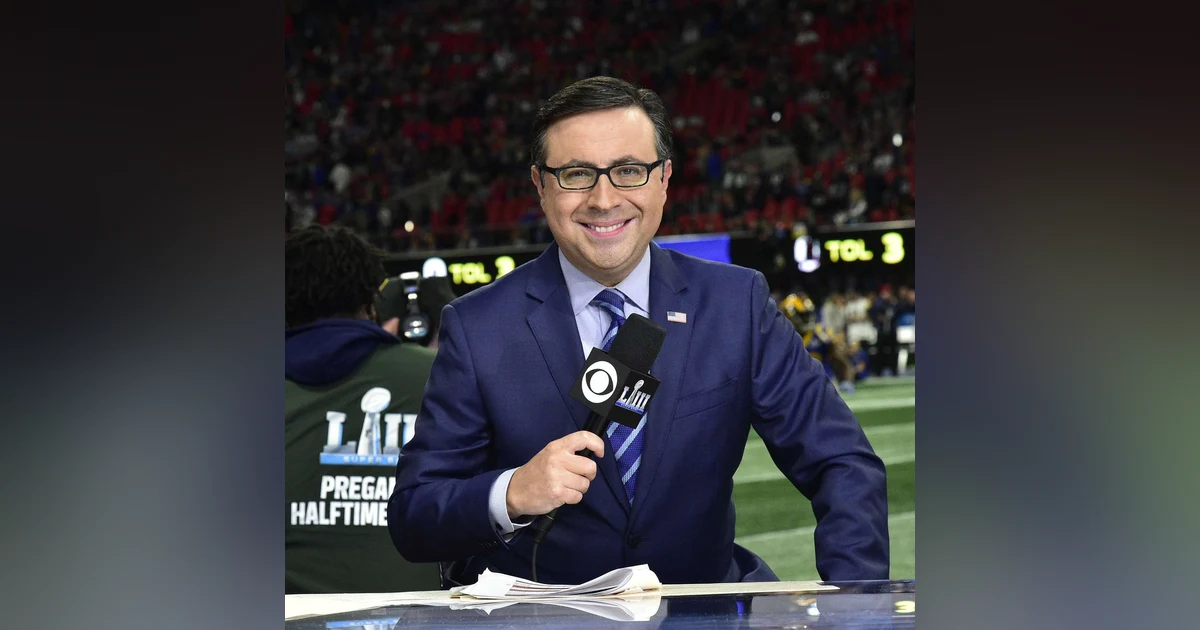
Ian Eagle's Playbook for Success: Lessons From Behind The Mic (Part 1)


 Apple Podcasts

 Spotify

 Castro

 RSS Feed

 Youtube Music
Ever wondered how someone becomes one of the most iconic voices in sports broadcasting? In this first part of a two-part series, we explore Ian Eagle's incredible career journey—from a young sports enthusiast who grew up watching his parents perform at legendary Catskills resorts to becoming the voice of the NCAA Men’s College Basketball Tournament on CBS, the network’s #2 NFL play caller and a favorite voice of the NBA on Turner, TBS and Yes.
Raised in a creative household with a comedian father and an actress-singer mother, Ian’s early exposure to performance helped shape his love for sports and storytelling. You'll hear revealing stories about Ian’s youth, his transformative experiences at Syracuse University, and influential mentors like Mike Tirico and Bob Costas who helped guide his path.
In this episode, Ian shares:
- How his upbringing and early passions shaped his career ambitions.
- How he broke into the business.
- Behind-the-scenes insights into the rigorous preparation that sets his broadcasts apart.
Whether you’re a fan of sports or simply someone looking for inspiration, this episode is packed with valuable lessons about perseverance, preparation, and seizing opportunities. Step behind the microphone with Ian Eagle and discover what it takes to excel in the world of sports broadcasting.
To discover more episodes or connect with us:
0:00 Hello and welcome to the Season 5 premiere of no Wrong Choices, the podcast that explores the career journeys of interesting and accomplished people in pursuit of great stories and actionable insights. I'm Larry Samuels, and in just a moment I'll be joined by my co-hosts, tushar Saxena and Larry Shea. But before we kick off, we have a small favor to ask. If you enjoy what we do, please take a moment to support us by following no Wrong Choices on your favorite podcast platform, such as Spotify, apple Podcasts or YouTube. You can also connect with us on LinkedIn, facebook, instagram Threads and X, or by visiting our website at norongchoicescom.
0:41 Your support enables us to keep bringing these great stories to light. Now let's get started. This episode features one of the most recognizable voices in sports Ian Eagle. Ian is best known as the lead play-by-play commentator for the NCAA men's basketball tournament on CBS, his colorful play calling on CBS's number two NFL broadcast team, and as a favorite voice of the NBA on Turner TBS and yes, tushar, as somebody who has known Ian for a long time, I think you've actually had the opportunity to see the overwhelming majority of his journey. You are undoubtedly the right person to kick off season five.
1:21 Well, let me tell you this is a great way to kick off this new season. Ian and I've known ian for a long time, as you said I got I was working with him many years ago over at wfan, and one thing we all knew, when we were hurt when we heard ian eagle on the air, uh, is that ian eagle was a broadcast prodigy. If there was a guy who was ever meant to be on the air, call games or do sports, talk radio, that guy is Ian Eagle, one of the funniest guys you'll ever meet. The one impression that I've always taken from Ian over all these years is how genuine of a person he is. Right, he is very engaged with you when you talk to him.
2:02 He's very interested in you when you engage him in conversation, very interested in you when you, when you have, when you engage him in conversation, and he's always so willing to help anyone else with advice, uh, career advice at any point, like and it doesn't matter if you haven't seen him in years I and I have reconnected now at my current gig with cbs. He's been obviously over there for a long time. I started relatively recently, but I am so happy to once again say that Ian Eagle and I are colleagues working together at another media company in New York. I think we're going to have a lot of fun. Actually, not even that I know we're going to have a lot of fun with Ian Eagle because this is just one of the funniest human beings I have ever met in my life. So trust me, you will have a lot of fun listening to Ian.
2:45 Eagle, yeah, and this kind of gets us in the mood for some football and some big games. And you know a lot of sportscasters, you know, just do the game and you're like, yeah, great, ian is that special, rare breed of like smart and edgy and sarcastic and witty and quick. I love listening to his games. You know you're listening to a big game when Ian Eagle is on the call. So you know there's a lot of behind the scenes stuff that happens with this podcast. You know we do a lot of research, we put a lot into it and I started digging into Ian Eagle's background and his life story and his career journey. And just a fascinating dude man You're going to learn a lot about a guy who is not just a face and a voice on television.
3:30 He has a wealth of knowledge about entertaining and you're about to hear, kind of how he's put together. And great dude, wonderful to talk to and you guys are all in for a big treat. Absolutely. I can't wait to dig into his roots and the cat skills, which are going to be undoubtedly a great story. So with that, here is Ian Eagle Now joining. No Wrong Choices is one of the most recognizable voices in sports play-by-play announcer, ian Eagle. Among Ian's many projects, he serves as the lead voice of the ncaa men's basketball tournament on cbs, calls games for the network's number two nfl broadcast team and is a favorite voice within the nba world, highlighted by his work with tnt tbs.
4:16 And, yes, he was also named the 2022 national sportscaster of the year. I and thank you so much for joining us. Feels like this is your life. I feel like my fourth grade teacher, richard Frank, is now going to join us to discuss a bit of my youth. No, I appreciate the introduction Great to be with you guys and fun time of year. So this is where it all begins. And you're getting me on the back end of free time, so I am very serene, I'm zen, but I'm ready for what's to come. All right. So full disclosure, as I do every once in a while here.
4:56 I've actually known Ian Eagle for what? 30 years now, almost. I don't like to count the numbers per se, sure I? I like to keep it fresh. It's like we're we're new friends. This is like a new relationship, but yeah it. It probably has been close to 30 years. That's insane. To which is an? insane thing to say because, uh, I remember, because I actually had the opportunity to uh intern and work at WFAN with Ian many years ago, when, ian, I think at that point you still may have actually been a producer who started doing updates on the weekends over at FAN. So it's a long journey, man.
5:37 Yeah, the story behind that. So I joined WFAN Radio in May of 1990. I had just graduated college, I had interned there the summer before and it is a reminder about, even in this day and age, where we text, we email and oftentimes it is impersonal, our communication At the time it was very personal and it was very intimate and I made a strong enough impression as an intern to get a call right before spring break of my senior year. There's a job that's opening up as a producer. We know it's not what you want to do ultimately, but we just wanted to see if you'd like to come in and interview, which I did.
6:22 And I ended up meeting with Mark Mason who was the program director at the time. It was the 7 and Midnight Shift producer job. Eric Spitz was moving on to a different role within the station, leaving that day part, and there was going to be an opening, and I actually asked Eric his opinion. Hey, do you think I should interview for this? He said yes, great experience. You're not going to get the job. He didn't make that point. There were a couple of candidates internal that were qualified for it, had done their time there. So I show up for the job interview during spring break went back to my dad's house in Forest Hills. Queens went to Astoria, met with Mark Mason.
7:05 Within two minutes of the meeting I could sense that it was going very well. He was laughing at my jokes. We had good back and forth and he asked me well, when can you start? I was like, oh man. That's a hell of an interview, very direct. I said, well, I graduated May 10th, I could start May 12th, I need a day to get my life in order and I'd be ready to go. He said, great, that would be great and that was it. I walked out of there and I said how'd it go? I said I think it went really well.
7:47 He's like all right, I'll call you in a few days. I get back to my dad's place. I'm going to drive back to Syracuse and I was in the driveway like packing up my stuff and my father jogs out I don't want to say runs. He jogged out or a brisk, walk out of the house and said hey, there's a phone call for you before you go. I said who is it? It's Eric Spitz. And I pick up the phone and Eric says what the hell did you say to Mark Mason? I said I don't know. I'm telling you we clicked. He wants to offer you the job. He's ready to go. So I took the job, even though I wanted to be on the air. I just thought a chance to get back home and work at the radio station that I wanted to be a part of so badly, and even by osmosis I almost looked at it as graduate school and that's really what it turned out to be.
8:42 But they told me very strong terms Do not take this job if you want to be on the air. This is not going to lead to that and I said I get it, I'm going to take the job. So I take the job. I'm producing on a nightly basis. I'm working with Howie Rose. It was a crash course on professional radio and high level radio at that. Howie is an incredible talent. Fast forward, a year goes by, I'm getting antsy and I'm doing my job and I'm trying to do it to the best of my ability. But I am feeling the itch and I think to myself maybe I need to make a move and go somewhere else if they're not going to give me my shot.
9:22 I had had a job offer in Buffalo on the air, had a job offer in West Virginia on the air, so I contemplated those before I took the FAN job. And, as cliche as it sounds, it is September of 91. And there was the sports director at the time, the great Stan Martin, who was a wonderful guy, truly just a joy. But he would make the schedule the update schedule. I was in my cubicle getting ready for a Friday night show and Stan is on the phone. And Stan was very dramatic. He came from a bit of an acting background and I have no idea what the phone call is. I just hear one end of the phone and it's him saying hello, what?
10:06 No, really, no, no, a lot of that. And he hangs up and he turns around. He looks at me. He says you want to be on the air, don't you? Yes, he said I don't want to do the voice or it might affect me. He said go make a quick two minute update. One take in the back and give me the tape. And I said what is this for stan? He goes just do it, man, that was it, okay. So I go to the back and I had been doing updates on my own just to stay into the mindset of doing it and writing them and using tape.
10:54 At the time we had carts, yep back. One take handed him the the update. He went to the back and then he came back out. He said you're on the schedule. Sunday. Pat harris has pneumonia, and that was it. Wow, harris, never worked again, that's it wasn't, it wasn't quite wally pip blue gary I'm not, I know I know, but I ended up getting another shift the following week and the week after and the week after, and that led to many opportunities on air that were not coming my way until that one fateful day. So that is a true reminder of you wake up in the morning, you have no idea if that's the day that's going to change your life or alter it, and that truly was the day where everything really changed, for me at least at WFAN, and it kept me on the right road and on the tracks and ultimately took advantage of all the other things that popped up along the way.
11:57 I just want to say we've been friends for 30 years, but I appreciate everything else. I mean, we were going to get it. Well, obviously, we were going to get into the FAN days with you as well, but OK, so we'll take it back to the beginning, because I've known you for a long time. This was always your dream to do this job that you're doing currently, wasn't it? It was as far back as eight years old. This was a legitimate objective and goal and told my parents such at that age. My parents were entertainers. Dad was a standup comedian, actor, trumpet player. My mom was an actress, a singer. So I grew up in a household that had no boundaries as to what you could do, and that was very empowering in that I was encouraged to look outside the box.
12:50 So when I told them that I wanted to be a sportscaster, they both told me that that's what I would do. And when you're eight years old, that's all you need to hear to believe it. So back then we're talking about the seventies, all you need to hear to believe it. So you know, back then we're talking about the seventies. There was no place to do it. I didn't go to a high school that that had the facilities to do it, other than performances. Here and there there were opportunities to show that. I was more than willing to go front and center and I was open to the idea of a microphone or a camera. None of that intimidated me and I think there was just an inner belief that I could do this and I went to college at Syracuse with that belief.
13:39 And then you get rocked a little bit when you realize that there are a bunch of other people that are also confident and have ability and an aptitude for it. And then that's where the next step begins of trying to polish your craft and work at it and truly become a student of it, of it. And other than a freshman year where I was still balancing the idea of what college was supposed to be partying and being very social and joining a fraternity and doing all the things that I envisioned I got very serious about it. The start of sophomore year, to the point where I truly committed to it, caught a couple of breaks along the way.
14:26 I was at a high school football game covering it for one of the college radio stations, and on the sideline is a new sports anchor in town. Although he was still a student at the school, he was a senior and he had gotten the weekend job at the CBS affiliate in Syracuse. He was a senior and he had gotten the weekend job at the CBS affiliate in Syracuse. And the guy that I went to the football game with another radio guy- said is that Mike Tirico there? Look at that. I said, yeah, yeah, I think it is. He said, well, we should introduce ourselves. I said why? He said he'd love to meet us. This guy's doing weekend sports, he wants to get out into the community.
15:07 Right, I went, okay, that was enough for me. So we went over, introduced ourselves. He was very happy to meet us. What's your background? Oh, I'm from Queens. I'm from Queens, so really he's from Bayside. So, boom, instantly you feel a connection. And he also happened to be incredibly affable and gracious and everything that you see today is what he was back in 1987. So at the end of it he said hey, if you guys want to come check out the TV station, love to have you. He didn't have to do that. I followed up. I went, I became his intern, I later became his producer.
15:48 I later became a radio producer for him because he started his own show my senior year and then, when he couldn't do it, he would have me host the show. So these are small snippets that I look back on and think to myself it could go one way or the other and things lined up because I was open to it, I said, yes, a lot. I went in with a really good attitude, no matter what the situation was, I brought positivity and I made sure that I introduced myself to people, knew their names, learned their background, took an actual interest in them as a human being, actual interest in them as a human being.
16:36 And, tushar, I can tell you without any pause that I know our experience was a good one when you were at FAN Radio, because I just didn't know any other way. I treated people with respect and that has been a common thread throughout my life and throughout my career. You are giving amazing career journey lessons to people out there about being personable and being open and ready and willing. And in doing my research, I really want to follow up on the beginning of your family life too, because I do feel that they played a major part in you being able to present yourself to the world in the way that you do on a day-to-day basis today. I learned that you were put on stage right At the age of six and you realized hey, no big deal, I could do this.
17:22 From your mom you're learning the show must go on, because her voice would be shot. I mean, these are life lessons that you're carrying on to today. Talk a little bit more about your mom, your dad, just your upbringing, because I really think that affected a lot. Yeah, guys, I didn't know any different. It was not normal by any stretch. But you don't know what you don't know. I recognize that it didn't feel the same as my friend's family situation, but I never looked at it as odd or woe is me. My parents were on the road a great deal. They took me on the road with them until a certain age when I had my own stuff going on and I couldn't just take off of school for three straight days.
18:12 So by about eight years old I got into a more normal routine. My parents had put me in a school we lived in Rego Park, so not quite Forest Hills, it was right on the edge of Forest Hills and they put me in Montessori School, which was a progressive school. It was a melting pot. The teachers were not traditional in any way, the classes were not traditional and I think because of that it did open up my brain a bit to the idea that it doesn't have to be conventional and even your views are not necessarily conventional.
18:53 They were open to all sorts of opinions and not just raising your hand to speak, but informally it was a very open dialogue. So we moved to Forest Hills in 1977. And I remember this very vividly. We go to the local public school in between what is second grade for me and what my next school year is going to be and we go and meet with the principal and I'm told to bring my work, my latest work, and the principal was Dr Charles Bechtold, tall man, very nice guy.
19:34 We sit down in his office and he's going through what it's going to look like next year, going to start the school year in September, and now he takes a look at my book and he's looking through the paper and he stops and looks at my dad and says he's done all the work for third grade and my dad said okay, so what are the options? And he said, well, we can put them in fourth grade. And my dad turns to me and says do you want to be in fourth grade, ian? I said yeah, that's fine, that sounds good, new York City public education. And Dr Bechtolt said okay, great, and that was it.
20:17 There was no paperwork, there was nothing. I show up the next year and I'm in fourth grade and I have this whole new world of new people, new teachers, new dynamic, much more conventional, very different, but I do remember bringing with me the mentality of a different sort of angle on how all of this stuff works. So my parents were very much grinders in how they went about their business and their work and my father really didn't have the kind of success that he dreamed of until he was 50 years old.
21:02 That was the first real taste of financial success and public reaction to what he was doing. He was a comic and a trumpet player, played in big bands, played with the likes of Buddy Rich, dropped out of high school at the age of 16. Wow, in Brooklyn Erasmus Hall I have photos that my father's wife his widow sent me that I had never seen before. She sent them to me about three months ago and I'm just blown away by how young he was and what he was doing. He was on the road at 16 years old making a living and then eventually Buddy Hackett convinced him.
21:49 Hey, you're funny, you should be doing stand-up. No. Buddy. Hackett says that when Buddy Hackett tells you you're funny, or the way my dad said it, Buddy said, hey, you're funny, you should be out there. And that was the impetus for him to do it and to break away from the band and be front and center. My mom was a child star in Chicago. I have photos of her at six on the radio singing. She was considered well beyond her years at the time and how that manifested itself and she dropped out of high school at the age of 16.
22:35 They were 19 years apart in age. So the fact that it was congruous in that way that they somehow met. They met because my mother opened for my father at the Playboy Club in Chicago. That's how they meet in life Wow. It's a different era, so good. The late 60s produced some really interesting stories, so there's a lot there. There's a lot of meat on the bone and, yes, larry, it did shape me in ways that I didn't even imagine. I knew that it was different, that it was different, but I never led on to anybody else that it was different.
23:18 I acclimated and adjusted based on my circumstances and even skipping a grade. I wasn't leading with that when I showed up for fourth grade. Hey, you know, I'm supposed to be in third grade here no-transcript.
24:04 we did our research was becoming Dominic the Xerox guy. Is that right? I vividly remember that character. Oh yeah, yeah, no that was a huge commercial at the time. It was for xerox. As you mentioned, it was the first commercial that ever used a religious figure, so this was not one of those he was a monk in that he was a monk this was not one of those. Hey, we'll just kind of go with the same thing that the other, that the other brands are doing. They, they really were creative. A gentleman who just recently passed away by the name of Alan Kay, who was a brilliant ad man he was the one that that came up with the idea and another claim to fame for for Alan Kay, just to give him his due.
24:45 He came up with the slogan If you see something, say something. That was him. Wow, which we still use today. Yeah, give you a little insight into his fertile mind, and if you go on YouTube it's a quick search Brother Dominic Xerox. It really was a beautiful commercial and it spurred a number of commercials for Xerox and for him. It opened up this door that had not existed. He ended up doing about 50 different commercials for various companies Fleischmann's Margarine, gillette, coppertone, noodles, soup, you name it.
25:26 He would sell it and he got really hot in that area and he got really hot in that area. Anything he went up for. They were looking for a cherubic gentleman with a fun face and great facial reactions. He was the guy. In addition, he then dabbled in Hollywood. He was on three different pilots that aired on network television back at a time where we only had CBS, nbc, abc and then you know a couple of independent channels and PBS, and none of them got picked up. They all aired and none of them were at a level that the networks were going to go with it and that would have changed his life and probably would have changed my life, because we would have moved to LA and then who knows if Syracuse is in the mix for me.
26:15 So I do think of things sometimes and that sliding doors theory of how life can be different based on your circumstances. For sure. So the window between this is going to sound, I don't know, a little hokey, but the window between fourth grade and 12th grade. You know what are you doing to prepare yourself to get into the best broadcasting university in the country at Newhouse and Syracuse. Well right, I get it, I get it. It's like a West Side Story. Sorry, tujo, it's not a problem.
26:57 I didn't even know I was doing it at the time because it was very natural. I was completely immersing myself in sports in general, so anything that I could get my hands on, baseball was my number one sport by far. But it didn't end there. I was a huge football fan and basketball fan and hockey fan and the Olympics. I couldn't get enough. So little do you know as a kid that you're building this dossier of knowledge and a base that is going to serve you well your cataloging memories and you're doing it in a manner that is not, for any other reason, no agenda other than I just had pure love for it.
27:49 And running parallel with that was the broadcasting side. The curiosity we would go to Shea Stadium grew up 10 minutes from there and the Mets were not very good. This was when Joe Torre was managing the squad and my dad, because of whatever minor celebrity it had brought to him, as the monk. There were companies and teams and various groups that wanted him to appear in a monk outfit, including the Mets. So in 1978, he brings me along and he's there to bless the team. They lost 100 games that year, so it didn't work, so it didn't help.
28:30 Bruce Beauclair didn't all of a sudden become a 325 hitter, but it did afford me the opportunity to go behind the scenes. I got a bat from Lenny Randall, I got a helmet from Lee Mazzilli. This just intensified my love of sports, of sports, and even at the game I'm staring at Bob Murphy and Ralph Kiner and Lindsay Nelson in the broadcast booth. I'm just tantalized by the idea that this is a way that you can make a buck. Yeah, be around the ballpark, talk to the athletes, describe what you see.
29:12 And that never escaped me. I just always had that interest and curiosity. Same with a Nick game or a Ranger game. The game would be going on and I would just lock in on Marv Albert and watch him do his thing. And I do think it plants seeds in you and it resonates with you in some way. And for me that's never gone away. That almost youthful exuberance of this job and this vocation has stuck with me for all these years. Obviously, you're building yourself to become the broadcaster that you are at a very young age. You know you're building yourself to become the broadcaster, that you are at a very young age, which means that you've got to get some kind of teaching and that's going to come from your parents.
29:58 So I'm going to assume and I'm going to touch on Syracuse after in just a second, but I'm going to assume that at some point, like your parents are in showbiz, so you have the greatest, essentially, encyclopedia of knowledge in front of you where your parents can give you pointers. Was that? What was happening? Is that you know, dad, what does this sound like? Or your father was saying hey, look, if you want to, if you really want to make it in this industry, this is what you have to do. Your mom saying the same thing yeah, yeah, it's really interesting. I lost my mom when I was 19. She died of lung cancer. Two-pack-a-day smoker which for a gifted singer, just makes no sense that that would be a habit.
30:41 She was alcoholic. She was anorexic. There were a lot of challenges there. She was really brilliant. She did not graduate high school. As I mentioned, she dropped out. She completed the New York Times crossword puzzle every Sunday, every Sunday. Wow, she must have been a voracious reader, yes, blown away by her intellect and her IQ, but, with that said, then did irrational things in her life, things that made no sense. That's what's so amazing about the human condition and so perplexing as well that someone is consciously hurting themselves while they're doing this. They got divorced, so that created a very large gap Geographically.
31:29 She was living on the West Coast. My father was East Coast. I stayed with my father. That's where my life was. My mother needed to go and do some things on her own. She eventually enjoyed her greatest success in Las Vegas, playing Judy Garland in a show called Legends. She was amazing. It was probably the role that she needed to play her whole life. It was probably the role that she needed to play her whole life. She completely lost herself in that role. She became Judy Garland in many ways. There's a documentary that was done on the show and it's pretty wild how much she immersed herself in this. You know to the point where you think, whoa, you've probably gone a little too far.
32:11 And she did so performance wise. I was just starting out doing college radio. She never really got a chance to hear me or see me do any of this. She had nothing but confidence in me and believed that I was going to be very successful and would say it over and over again. So, amidst whatever she was going through personally, she still had the wherewithal and the instincts to tell her son that you're going to do really well in life, and that's something that can build confidence. No doubt about it.
32:52 My dad, at the time that we're talking, was traveling somewhere in the neighborhood of 245 days a year. Wow, wow, wow. So this was not one of those typical sit at the dinner table chat about your day. What happened with Xerox was incredible for him. What they quickly realized was that he was a secret weapon for them and they would send him on the road to appear at openings of Kinko's. Or if Ford Motor Company brought in Xerox copiers to their main offices, he would show up.
33:37 And it was personal appearances and because of his standup comedy background and because of his humanity, he's just an incredible off the charts people person. The combination of those skills led him to be very successful for Xerox and they just kept booking him. You got to go to Lexington, you got to go to Akron, we need you in Vegas, then we need you to go to Orlando and then from there, austin, you name it. He was in every city in the country in the monk outfit doing his thing, but it did take him away from New York.
34:19 So I grew up basically with a housekeeper that lived in the home and I was highly independent from a very young age. I was doing my homework on my own, I was waking up on my own, I was going to bed on my own I'm talking about from the age of nine on Wow, wow, wow. So when this is all you know, it doesn't seem odd. You? figure it out or you don't. Figure it out or you don't. So back to your question, tushar. My father never really sat down and criticized my work or gave me specific pointers. He was not a huge sports fan before I started doing this.
35:03 When I showed an interest in sports he opened up part of his brain to it, but it really wasn't until I started doing this for a living that he then committed as a sports fan. So there was nothing from a sports knowledge standpoint that he could share with me. And then broadcasting was not their thing, so technically there was not much that they could do in that area. What they could do was provide me with a blueprint for work ethic, which was insane both of theirs and then performance, which I just saw with my own eyes watching them on stage or watching them on TV.
35:46 My mom was in a few soap operas as well, so I think that was inspirational in many ways and was a North star for me in recognizing that you've got to sometimes summon something within yourself in order to do this job and do it well and be consistent at it. That's been a big part for me that I wanted to get to that place where I was consistently good at this, not a good call here, or a nice moment or a phrase that caught people's attention. Can you consistently deliver, doing game after game after game after game?
36:28 Was Syracuse always the choice for you, or did you have a number of different schools that had solid broadcasting backgrounds? I got turned down at Fordham. So that was no, I didn't, I had you. There was a moment like damn right, you did we only want good people at. Fordham. No, syracuse was the number one choice and, and honestly it was because there was an article in sports illustrated. We all remember when sports illustrated had a very serious impact on sure absolutely magazine yes, stacking the magazines and keeping them and reading back issues and being blown away by the work that they did.
37:14 There was an article in Sports Illustrated a broadcaster by the name of Greg Papa who is the voice of the San Francisco 49ers. He did the Warriors for many years. He was the feature, he was a senior at Syracuse and it was called the Cradle of Sportscasters and that caught my eye and I believe the year was 84. So I'm a sophomore in high school and I thought to myself they listed the lineage from Marty Glickman to Dick Stockton to Marv to Andy Musser to Len Berman, on and on and on.
37:56 And I said to myself that's where I have to go and that was my number one choice. I did apply to a bunch of schools. I was fortunate enough to get into a bunch of schools, but Syracuse was always the top choice, yeah. I love how you've set this up for us, because there's a real entertainment aspect of the apple doesn't fall far from the tree. We hear it in your calls. You know anytime you're doing a game, and now you've set the path to Syracuse. Where are you honing those chops? Do you learn to do the stuff at Syracuse, or did it start way earlier than then? You know just in your room calling the game when you're watching TV. Where does it begin?
38:37 Where you're starting to hone your craft? All of the above Growing up in New York with the surplus of teams in the area. If you turn your radio on, you were going to get a game, and it could have been John Sterling doing the Islanders, it could have been Marv Albert doing the Rangers, Could have been Marv Albert doing the Knicks. Eventually, when the Nets rolled around, that was another option Marty Glickman, originally the Giants, then the Jets Giants, then the Jets and then the Yankees, the Mets. They were all there and all available. So it really began there.
39:26 And then, yes, doing play-by-play in your bedroom, setting up your bed like a baseball field and literally calling the plays as you go, getting in the shower and working with the space, great acoustics, play-by-play of whatever comes to mind. That was always part of the mindset. And then playing pickup basketball with your friends and calling play-by-play and your friends wanting to punch you in the face of course they don't want to hear play-by-play I know that too, I know that feeling too. So all of the above and then get to syracuse, and there is a very specific path that you need to follow.
40:09 So there are two radio stations there college radio stations, waer, which all of the people that I mentioned earlier worked, bob Costas, who I didn't mention earlier, but was really the one that captured my imagination when I got to college. That was the one that I truly tried to emulate. I just your style is very similar that I truly tried to emulate. I just your style is very similar, really respected Very similar, respected his intellect, respected occasional sarcasm and the fact that he could do any role that you asked of him. You want him to host he could do it. You want him to do play-by-play?
40:49 He could do it. You want him to interview someone? He could do it. You want him to do play-by-play? He could do it. You want him to interview someone, he could do it. And that show that he did on NBC later with Bob Costas, I thought was brilliant, and the variety of guests, I think. Back he had one particular episode with Mary Lou Henner of Taxi fame, and it was one of the best episodes of television I had ever seen, one of the best interviews I had ever said, would you say to yourself like, oh yeah, I want to check out mary lou henner and what she's got going on. She's really interesting. By the way, she has a photographic memory and has very specific memories of every day of her life. And then bob threw out a, a random day, and that happened to be the day that she lost her virginity and that brought oh geez.
41:34 Oh, you can Wait. What is this episode? Hold on a second. What are? we doing here. So I just knew that these two radio stations WJPZZ89, the other one were a part of the path and showed up to a meeting for WAR. There were a hundred people in there and they mentioned that the way you start is you have to show up at five in the morning on the day that you're assigned and just write the sportscast. You don't even get to read your sportscast into a microphone and then, once your writing is good enough, we'll allow you to make a tape. And then that process is you'll make tapes until we determine that you're good enough to be on the air.
42:20 And I sat in that meeting and thought to myself wow, none of that sounds enjoyable. Not one bit, I go to the other radio station and they had a piece of copy. They said read this into the microphone. I did. They said oh, you're pretty good. You available next week? Yeah, what do I have going on? I'm a freshman in college. I just got here, so I started at Z89. War was really the place you needed to be and eventually somebody reached out. A gentleman by the name of Kevin Martinez, who was a WAR, now is very high up the ladder with the Seattle Mariners.
43:01 I thought he was a terrific broadcaster at the time. He worked at both. He called me. He said hey, there's a chance for you here. You should come over and go through the process. So I was now a sophomore. I said well, would I have to show up at five in the morning and write? He said yes, it's part of the deal. I said no. I said yes that time and eventually it all worked out and I got cleared at WAR. What ends up happening? You're doing basically play-by-play, an impression of whoever your favorite announcer is. When you start and I was doing an impression of Marv Albert I was doing Marv's inflections and a little bit of his voice quality and a lot of the vernacular, and then eventually, when you get your sea legs.
43:54 You start to try to find and discover yourself within play-by-play that it is a blank canvas, that you can take it any direction that you want to take it. And I did gain confidence not only by doing it but by also listening to upperclassmen, and at the time there were some really good ones Charlie Polillo, who is a talk show host in Houston, excellent play-by-play guy and would listen to his stuff over and over again. Sean Colthard, who is now known as Michael Cole in the wrestling world. Yeah, wow yeah.
44:34 Sean was at Syracuse, I thought he was outstanding and would listen to his stuff and begin to incorporate some of what they were doing. So, combination of mimicking and then just reps, going into the stands literally with a tape recorder and calling the game and not worrying about the people that were around you turning around or saying something untoward, it didn't matter, you would lock into your world and that was the only way to do it. By the way, there was no calling off a monitor or going into an edit bay. There was none of that. You had to go there and you had to call it, and I slowly started finding improvement in key areas that I needed to improve Shortening my sentences, editing on the fly, picking out the most important part of the play in front of you and then punctuating, finding when to use a period at the end, when to use an exclamation point, then how to vary up your vocabulary, not say the same thing every time.
45:39 And then, by the time I got to my senior year after interning at FAN and, by the way, at FAN, as Tushar will tell you, there was downtime. I had three shifts as an intern. One of them was a weekend shift. There was not a whole lot going on in the weekends. The newsroom was empty. We had three shifts as an intern. One of them was a weekend shift. There was not a whole lot going on in the weekends. The newsroom was empty. We would have to log a Met game during the summer. But I was free to read the media guides, which I did. I memorized the name and background of every play-by-play announcer in the four major sports. Name and background of every play-by-play announcer in the four major sports. And no one told me you should do that.
46:19 I just realized that this was something that I needed to know If I wanted to do this for a living. I needed to educate myself. How did Ken Wilson become the voice of the St Louis Blues? Well, he did AAA baseball in Hawaii. Looking at his path, recognizing that there are different ways to get to where you eventually want to get to, that was a big part of it. And then they had reel-to-reels of NFL play-by-play hours and I just would roll the reel-to-reel onto a cassette tape both sides and I did, I'd say, four cassette tapes worth of just NFL play-by-play. Jim Gordon of the New York Giants, kevin Harlan of the Kansas City Chiefs at the time, wayne Larravee was doing the Chicago Bears, jim Irwin was doing the Green Bay Packers, rick Weaver was doing the Miami Dolphins.
47:14 I could go on and on and on. I just listened to it religiously. Every drive that I made at that time I would pop in the play-by-play and muscle memory was created. Getting ready for my senior year, I knew I was going to get a bunch of football games and I wanted to be ready for it. I knew I was going to get a bunch of football games and I wanted to be ready for it and it just helped in terms of delivery and how to end a call, how to get into your play-by-play. All of that was part of the lesson of developing that muscle and trying to figure out how to best get to a place where I would be comfortable on the air doing play-by-play. So take us forward. You're at the fan, you're doing updates, you're getting established within the New York market.
47:59 What was your first big moment? Doing play-by-play as a pro? Well, this is really wild to think now, because the odds of it happening this way are very slim. I am doing updates, I'm working with Mike and the Mad Dog, so I'm taking off the seven to midnight shift. I'm placed on the drive time shift as the board operator for Mike and the Mad Dog. But the way it's sold to me is this will free you up in case we need you to do something at night. That will now be available for you to go cover a game which ended up happening.
48:40 I would do the shift and I would go cover the devil's game and get sound and do voicers from there. So they were living up to their end of the bargain. The part that I didn't know which then happened Jody McDonald left the overnight on weekends. Steve Summers, of course, did weekday overnights. Jody Mack did weekend overnights. He left to take a job at a new sports radio station in Philadelphia, wip radio. That job opens up and I was asked if I was interested. That job opens up and I was asked if I was interested. I said I'm very much interested and I was told okay, but you still have to do Mike and the Mad Dog Monday through Friday. Oh, wow, so I was working seven days a week for one full year.
49:24 I would work the board Monday through Friday for Mike and Chris, and then Friday night into Saturday morning I would host midnight to 6 am. I would try to get some sleep and then do it again Saturday night into Sunday. But what had happened for me being around Mike and Chris do a show and how to get into the topics and how to weave in callers, and I thought to myself who's going to call at 3 am on a Sunday morning?
50:07 And Tushar can validate this for me. You would be surprised. It's shocking, shocking. All I had to say was open phone lines at 718-937-6666. Bang, all four would light up in unison. Were some of the callers coming off a bender? Yes, probably. Those are the best callers the best, so that started to work a muscle for me of being extemporaneous and thinking on my feet and being entertaining and moving a show along even at that hour of the morning. Mark Chernoff takes over as the program director.
50:50 The radio station acquires the New York Jets and Mark Chernoff asks me if I'm interested in hosting pre and post game for the Jets. This is 1993. I jump at the chance, I say yes and that really gave me my first little taste of real estate at FAN, because this was a big deal. They were putting a lot of trust in me to do it and I delivered for them. I took it very seriously. It mattered to me. I had the experience of doing talk so I knew how to handle that. But I also had the experience of other parts of the business dealing with athletes going to Jets camp, getting interviews, recognizing how to tell a story and then the instant reaction after the game, which was important.
51:44 You were a sounding board for the fans that had just watched the game or listened to the game the next year. So this is 1993, 1994, I'm at the radio station, I have an update shift. I open up the New York Post preparing for the update shift and I see in Phil Mushnick's column that Howard David, the longtime voice of the New Jersey Nets, would be leaving the position. I think to myself. I had a dream two weeks earlier, a bizarre dream that I was doing a net game and my father was in attendance and it really came out of left field. I remember telling my wife about the dream and she's like yeah, that's weird. I was at the Meadowlands and calling a net game.
52:25 It was bizarre and literally this pops up in Phil Mosnick's column. And I think to myself this is a sign of some sort. And I get on the phone. I called two people. I called Russ Salzberg, who was hosting at WFA at the time, and I called Don Sperling, who was working at NBA Entertainment at the time. I had done some voiceover work for them and I asked them both hey, do you know anything about this? They both said I'll get back to you for them. And I asked them both hey, do you know anything about this? They both said I'll get back to you. And they both did. And they said both of them you need to get in touch with Amy Shear, director of broadcasting with the New Jersey Nets. I do, I reach out. She said, hey, we're kind of deep in the process.
53:06 But if you want to drop a tape off, be my guest, so I do. To drop a tape off, be my guest, so I do. I'm living in Manhattan at the time Upper East Side 85th and 2nd. Get in the car, drive to East Rutherford. I'm not a New Jersey guy. I know very little about New Jersey at that time. I don't understand jug handles. I have no idea. What do you mean? I want to get over there. I want to get left. Relax, you got to go right to get left. I blew by the exit. What? do you mean I? want to get over there. I want to get left relax, you gotta go right to get left. I blew by the exit. What do you mean? Go? Right to get left that makes no sense whatsoever I have experience, I've done the van wick. What? are you talking about? So I dropped the tape off. She takes it, she comes down to meet me, in fact, so we have a personal moment.
53:50 I said, out of curiosity, how deep are you in the process? She said we're pretty deep. We're down to a couple of candidates. But I'm going to listen to your stuff and if I like it, I'll play it for my boss. This was all college play by play. Yep. And if I like it I'll play it for my boss. This was all college play-by-play, yep. So I included a Seton Hall-Syracuse game. That was at the Meadowlands and it was a game winner for Seton Hall. Ollie Taylor was a guard for the Pirates and he beat Syracuse at the buzzer. My senior year. Syracuse had a great team Derek Coleman, stevie Thompson, david Johnson they should have been a Final Four team that year. Billy Owens and that's on the tape.
54:33 She calls me the next day she said really liked your stuff. I played it for my boss, jim Lamparello. He liked your stuff. I said great. She said we just need some more recent stuff. Do you have some recent stuff? I said we just need some more recent stuff. Do you have some recent stuff? I said absolutely yes, I had no recent stuff. I had nothing. That was my most recent play-by-play. That was the recent stuff right. My most recent play-by-play was four years earlier, as a senior in college. So I reached out to a friend that I had worked with a bit at NBA Entertainment doing these voiceovers. I called him and said hey look, is there any way I can get in there and make a tape off of a game from a monitor, and could you pipe in crowd noise?
55:22 He said, yeah, I think we could do that. So I drove over there to Secaucus. I called a knick-knack playoff game. They recorded it. They put crowd noise in. I go directly to Amy Shear. This is a day later. I hand her that tape and then I get a call the next day saying that our team president, john Spolstra Eric Spolstra's dad would like to meet with you. And I said to Amy I said, well, how many people are in the running here? And she said it's down to you and another guy. Wow, holy shit, wow, wow.
56:04 This all happened in four days. Four days after seeing that's a very net thing to do, by the way, deep in the process. You're right, that's an excellent point by you. So I end up meeting with John Spolstra and, very similar to my sit down with Mark Mason, I just felt instantly connected. We hit it off and I took a bit of a risk at the end of it. We spoke for about 30 minutes and right at the end of our conversation I said hey look, john, I don't know how this is going to go.
56:45 This is the one thing that I do know. I believe I'm going to be really successful in this business and if I get this job, you will always be known as the one that gave me my first serious break. And he smiled back at me, and that can go on a two ways either the person on the other end things or, fortunately, his reaction was a positive one Shook my hand. I walked out, my wife and I it was our one year anniversary we flew to San Francisco and did San Francisco Sonoma wine country, napa, like, really went for it a year later and had a voicemail on my answer machine in New York from Amy Shearer saying please call me.
57:47 We pulled over on the side of a road. I got on a pay phone and called her and she said you got the gig and that was it. That really was the break. So, larry, to your question break. So you know, larry to your question. That was the break, and then everything else beyond that was me trying to figure out how to do this job well, because I really was not qualified at that point to do it your preparation for all this stuff. I mean, obviously you are, you're a font of knowledge. I I was joking with the guys before, uh, before we came on a few days ago, which was, you know, I remember back in our FAN days for those who don't remember the old game which was Six Degrees of Kevin Bacon that you know, any actor out there, he's six degree.
58:39 You can get Kevin Bacon within six moves or not, and I always remember you as just this, the king of that game. You could, absolutely it didn't matter who it was, like errol flynn. Yes, I can get errol flynn in in six moves. But your preparation, talk a bit about that. That, the the amount of preparation that you go into, because obviously a lot of what you sound like sounds so natural. I mean, a lot of us always said ian's a prodigy, um, but you worked hard at this. This is, this was not. This was not something where you just sat down in front of a mic, turned it on and then went. You spent a lot of time honing that skill to become prepared yeah, too sure.
59:22 I think how you separate yourself in this business is based on that. So for a Sunday football game, of course what you do in that three-hour period is the performance part and it goes without saying you must do well in those three hours. But what you do Monday through Saturday is probably the part that defines you a bit more, because that's where the work is done. So if that's familiarizing yourself with every player and biographical personal, and then every storyline that needs to be covered goes without saying, and then it's the next level, can you connect with the athletes in a way that extracts information that wasn't in the newspaper the entire week?
1:00:25 That isn't the low-hanging fruit that is available. It's interesting With the internet, I think it's changed the game in many ways. Certainly it's changed the game in terms of preparation because there's so much information available, but it's also changed the game because fans are more informed than ever before. You cannot bs a true fan. Yeah, they're on it. They know their team team, they know their sport, they know the matchup. Sometimes they know it at a level that you now need to match. So if you're doing rudimentary fundamental parts of covering a game, that's all good for the general fan, but you have to know that there is a diehard that is so consumed by this, so I try to remind myself of that.
1:01:13 Every broadcast and it doesn't matter if it's a big network broadcast, a local broadcast, a radio broadcast, a podcast, an internet broadcast, it doesn't matter. Your reputation means everything, and that's how I've tried to view this, and maybe it did help me in many ways that a Nets-Wizards game on a Tuesday night is equally important to me as the Ravens and the Steelers. A big Sunday, one o'clock window. I just don't. I don't see the difference in terms of preparation and performance.
1:01:56 Those two things are non-negotiables If you're going to do this job well.