From Corporate Heights to Startup Success with Linda Sawyer & Alison Matz

 Apple Podcasts

 Spotify

 Castro

 RSS Feed

 Youtube Music

 YouTube
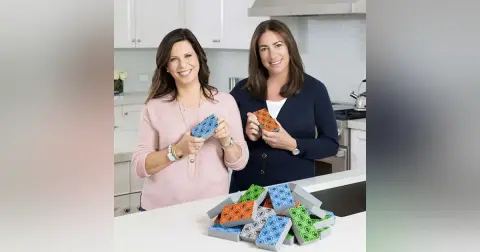
What makes two lifelong friends walk away from the pinnacle of their careers to start something completely new? Meet former Advertising CEO Linda Sawyer and former Magazine Publisher Alison Matz, the founders of Skura Style. After reaching the heights of success in their industries, they took a leap of faith to create a smarter, more beautiful kitchen sponge—so good that it caught the attention of Hollywood star Eva Mendes, who joined them as a partner. As their business grew, Linda and Alison never looked back.
In this episode, they share how their friendship, competitive drive, and entrepreneurial spirit fueled their journey to build a thriving brand from scratch. Discover how they overcame challenges, built their brand, and turned a simple idea into a game-changing business.
Tune in to gain valuable insights into entrepreneurship, resilience, and how to turn your passion into a successful venture.
To discover more episodes or connect with us:
00:00 - Entrepreneurial Journey of Skura Style
06:11 - Childhood Friendship Drives Business Success
10:16 - Business Partnership
16:07 - Revolutionizing Kitchen Sponges With Skura
27:49 - Brand Development and Partnership Expansion
39:47 - Strategies for Scaling a Startup
44:43 - Overcoming Fear and Finding Opportunity
49:31 - Brand Expansion and Retail Partnerships
0:00 Now joining no Wrong Choices are the lifelong friends and founders of the company Skura Style, linda Sawyer and Allison Matz. Linda and Allison are bringing us a very unique and inspiring story, as they have realized the dream that many of us had as kids creating a business, a band, a restaurant, going to outer space, whatever it may be, with one of our best friends. And what makes this even more remarkable is that they both walked away from very big jobs in media and advertising to do it. Linda and Allison, thank you so much for joining us, thanks for having us. So, before we go back to the beginning because this is a career journey podcast, we do like to let our guests set the stage for us in terms of where they wound up.
0:44 So if you would and we'll go one at a time if you could tell us just a little bit about the company, about Skura Style, and, at the same time, tell us the job that you walked away from to start this company. So, linda, I'll start with you. Give us a little bit of background and what did you walk away from to start this business? Sure Well, I spent my career prior to launching the company in advertising. I began in the business. I worked at probably five different very large advertising agencies. I worked in the account management capacity, so being a liaison with the client, with the marketing focus and then I joined Deutsche Advertising when it was quite a small agency it was 40 people and I had the opportunity to kind of rise through the ranks, do a number of jobs before I ultimately became the North American CEO and I was in that position for 10 years and then I became chairman for two.
1:44 So, and by the time I left, we were over a thousand people. Wow, worked with amazing brands and companies, and one company in particular that we worked with for many, many years was Ikea, and I had a very personal hand in their growth throughout the years, and we'll talk a little bit about it when we get into the company, but it definitely had a profound impact and and a lot of we've gleaned a lot of learning from them as well. And you know, having said that, as much as I had this amazing journey and I loved what I did and Deutsche, in a way, being there so long, 27 years, was like a second family, I always knew that there was another chapter in me and a very entrepreneurial spirit, and because I've worked with so many brands that you know, it just gave me such an incredibly robust background in so many industries that I just always really dreamed about doing something.
2:44 And, as you said, alison and I have been best friends since second grade. I should tell you about her career, but we led a lot of parallels in terms of you know, we shared a lot of our management philosophy and our approach to business and we always said, like, let's one of these days, try to really make this work and come up with something to do together. Very, very cool. Yeah, so I'll let Alison introduce herself, and then we can give you the inspiration behind Skura. Perfect. Yeah, so my career primarily was spent in the magazine publishing world and I worked at a lot of different consumer magazines, mostly at Conde Nast and Meredith, and I started, I started my early career working in the ad agency side, in media, and then I quickly jumped into the publishing world, rose up through the ranks of advertising sales and ultimately became a publisher and, you know, led lots of different well-known magazines from in the fashion, beauty, home space, from Teen Vogue to Glamour, brides, more, house and Garden, martha Stewart, I mean a whole range.
3:55 And it was fabulous, I mean it was, you know, working in that industry, at the most prestigious industry, at the most prestigious influential publications, was an absolute dream. I loved it and it, you know it was fun, it was social, it was, you know, challenging it was. You know it was sort of part of a childhood dream for me. And then, you know, before starting this company with Linda, I had a few mini career reinventions. I left the publishing world actually went back to the ad agency side and led sales and biz dev team for a media agency immediately before starting Skur.
4:37 So it was a little full circle for me but had also, you know, started to get this entrepreneurial itch, you know, almost 20 years ago, and part of it was, you know, interfacing with so many brands, seeing so many you know, sort of the emergence of disruptor brands coming into the scene, and sort of listening to those stories, reading the books and kind of it was very exciting and I was like, wow, you know, that seems really cool and Linda and I would start to talk about, you know, what could we do. And I think that entrepreneurial itch for me also stemmed from I have this sort of constant curiosity, if you know, if I'm not learning something new every day, I'm not happy, kind of philosophy, and I knew the only way to keep that satisfied.
5:24 Really, when you're at the pinnacle of your career, being a magazine publisher at a leading publication, it's like okay, you're kind of at the top and the learning wasn't there as much. So it's like okay, I got to do something else. And so it sort of started that thought process in my head of like I, you know what's next. For sure, and you know, it's funny, as you say, that I think about the wiring of a person who can get to that point. And the wiring of somebody like that is wants to keep going, wants to keep getting challenged and wants to keep learning, and complacency is not a thing, so it makes all the sense in the world. Yeah, and I love that. It's going to set us up for this conversation so nicely.
6:05 I have the fun part, though. I get to put you guys in the time machine and start at the beginning. So I know the story, but everybody else needs to hear it. Let's bring you back to your seven-year-old selves. And who won that spelling bee? I did. I did. But I have since redeemed myself. She stole my crown several times, but Pully is P-U-L-L-E-Y. Oh, there you go. There you go. I knew, I knew that you would remember the word. But so yeah how did you, how did you meet? Talk about the story though, yeah, yeah. We were in the same class and we, you know, pretty quickly became friends and I look back and I think there are a lot of aspects to both of our personalities that existed back then and we were in the second wide, you know grade, wide spelling bee and naturally it came down to the two of us and I just completely, you know, choked on the word pulley, and Allison did win the big book, little Women, which I was surprised I have one on my coffee table here that she's giving.
7:23 That's great, if not to rub it in or to be nice, I can't decide which. It is A little of both. It's kind of cool because we definitely were very competitive with ourselves actually, first and foremost, and it's just such a charming story and it's certainly where it ended up rising to and, as you can imagine, people from our yesteryear, whether it's from high school and growing up, are just marveled to see the two of us do what we're doing together and that we came from some humbles, but we made beginnings. That's great. Even our kind of earlier career paths.
8:05 There was a lot of parallels, you know, linda went into advertising, I went into media but there was, you know, always sort of like a shared interest in, you know, similar kinds of industries and you know a lot of conversation that, you know, I was always intrigued with what she was doing, likewise with me, you know, and so a lot of shared interest there. And, I'm sure, a great sounding board, as both of you were trying to solve problems or work through challenges in your respective industries or in your respective journeys. To have that person there must have been just so incredibly helpful. I'm curious about the competitive aspect so we have the spelling bee you're friends. Competitive aspect so we have the spelling bee you're friends.
8:47 Was there a competitive sort of spirit there between the two of you that may have driven you both over time? Again, I think it was less competitive against one another. I think it was more about being self-competitive. Actually, I think we were both very, very driven and ambitious and, like Alison said, have a lot of need to learn and curiosity and self-challenge. So it's really about the self-challenge aspect that I think we shared and you know we both you know asc a complimentary friendship in that we were experiencing publishing and advertising are quite different in a lot of ways, but there were enough parallels that there was a lot of relatability into the way we thought about things and it was nice to be able to share, kind of some of those more stories.
9:40 And I know, for me, the experience of working with so many brands. You know I almost felt like it was like an MBA on steroids because I got to see really smart business decision making, but I also inherited a lot of bad business decisions and so for me, you know, the opportunity to have that kind of control to really, you know, navigate and direct and steer those decisions was very appealing and one of the reasons I was excited about taking that leap too. Yeah, so we're going to talk about the product and the company and on all of that as we dig in. But I'm just so curious about your relationship as you moved on together through the years.
10:22 I mean, it sounds like this was kind of always the plan that you both almost needed to find that jumping off point where you could do something meaningful together. I mean, was that it or did it just? Was it more organic? How did that come about? I mean, I think it was organic. I mean I think when we look at our lives, you know, meeting in second grade and you know the famous spelling bee, and then just you know, meeting in second grade and you know the famous spelling bee, and then just you know our going off to college and staying friends, and you know we, our lives, professionally and personally, have been very parallel. I mean we, you know we stayed friends through all these different life cycles and life stages and you know we got married at around the same time. Our firstborn children are nine days apart.
11:04 So you know we I mean this is so crazy we moved to the same suburb from New York City. We would insult each other on what we're ordering before we order, because we inevitably get the same thing. What are? you ordering. You know, there was this life alignment. I think that has helped us be such amazing business partners, because we've been together through so many different things, different stages of life, both on, you know, professional levels and personal levels, and our families are, you know, are like family. You know, the kids are like cousins, you know, it's that kind of a relationship.
11:45 So the history is deep and it is a good foundation. I mean, when that history is so deep and it works, it's a great formula for successful business partnership works. It's a great formula for successful business partnership. That's great, and it's, I'd say, in business, ends up being such a shortcut, like we work so ridiculously efficiency, because we're so aligned, and the way we can kind of communicate, it's almost like we can finish each other's sentences, yet we are also, you know, bring different kinds of styles and points of view that are very helpful too. Yeah, you guys are painting a very rosy picture of a partnership. I'm just thinking of my best friend and I'm like would I want to start a business?
12:26 with my best friend I mean what's the? is there a trepidation? Was there a trepidation at all, or it just all aligned? We had practice it until we finally really got focused and kind of made a commitment to meet every Sunday. But in effect that was the ultimate test drive and I think if it wasn't going to work it would have come out through then. And it just required such dedication, such tenacity and we really got to see the way we like could work in action, not just kind of like philosophically or hypothetically.
13:19 It was really like, you know, in the trenches writing business plans, going to manufacturers. You know, it's the whole bit. So we really worked for 10 years before we cemented this. That's so interesting. And you had huge jobs at the same time and families. I don't know how you found the way to do that. Well, and that's really where the test driving, the practice, was. If we were, if Linda and I were going to get together, spending precious hours on a weekend when we had children younger children and the fact that we wanted to be working together, as we were moonlighting initially on this, was truly a test that it was going to work, so it was an every Sunday thing.
14:00 Did I hear you say? Is that how it would come about? Like Sundays you'd get together? and sacrifice that family Even a brand new day Scour a Sunday, scour a Sundays. I love that. That's. That's fantastic. So it was a one day a week process for how long before you cut the cord and jumped in full steam. Talk about, I'm sure. And then you know writing a business plan. You know conceiving of of a product, finding you know someone to help us design it. Then you know, oh, we can't figure out how to get it made.
14:43 Oh right, you know a lot of it was, you know, conceptual work. Yeah, and, and then, and then stops and starts because like would get in the way. You know, so there were, you know there were, were. We would go six months sometimes without you know we're like, oh my god, this is crazy. And then we would abort, and then we would go like, wait a minute, we've got to go back to that. It's too good of an idea yeah, I mean I I've heard a lot of entrepreneurs say the same question, like why hasn't anyone done this before? And we, we hit some walls that were like now we know why no one's done this before? Because there were some significant manufacturing challenges. And, you know, we almost a couple times aborted because we were like maybe this really is why no one's done this.
15:29 But in a way, our kind of healthy naivete in terms of not coming from that world and not knowing what the maybe rules are and boundaries of manufacturing, we just kind of challenged convention and kept pushing, pushing till we found, you know where we wanted to be. So let's define this. We've been saying it, we've been saying this. Let's define what Skura style is, and then come back to where the idea came from. So, allison, why don't you take that one? Yeah Well, skura Style is a lifestyle brand centered around kitchen wellness and kitchen well-being. It's a brand whose centerpiece and kind of hero product is the most amazing sponge in the world.
16:17 It is yes. There it is. Larry Shea is showing it to us right now, for those who are listening and not watching. It has just incredible functional benefits and is so far superior to any kitchen sponge on the market. And it has beautiful design and it is what we call a smart sponge, because it tells you when it's time to replace it, because kitchen sponges are disgusting and people keep them too long. And ours has a mechanism, which is the monogram, which is the design that fades with use after about one to two weeks to tell you when it's time to replace, and that was designed based on leading microbiologists guidance on when you should toss your sponge, which is once two weeks.
17:01 But then we, you know, we really wanted to, you know, create a company that all our products have to be functionally superior to what's in the market. They have to be beautiful, they have to kind of take what some people see as a chore and make it a joy, you know, add a little dose of joy to your routine. And it's really been. Building this brand and the product lineup has been a labor of love. I mean, we, you know, we love everything that we put, bring to market, and so do our customers, which is important. And where did the idea come from, Linda? Why don't you take that one? I am a real home design enthusiast. I think Allison is too.
17:42 You know we have a passion for beautiful design and, as I had mentioned, I also worked for many years with Ikea, so I just loved, you know, working in that space. But I'm also a total clean fanatic and clean freak and it is like just um the thing for me. It's a very emotional thing. It's it's not a functional chore, it it makes me feel um like in control that I, you know I'm accomplishing something. It's meditative in a lot of ways for me. And um, I was always, over the years, amazed at the fact that the kitchen, every inch of it, has experienced so much design, innovation and not just design, but performance as well.
18:27 And even like the most benign products like paper towel holders and dish racks and even garbage cans, have evolved so much and are beautiful and they work better than ever. And I was always struck by the fact that this one product's front and center, the kitchen sponge. It was just such a dichotomy. It completely did not keep pace with everything else. It was ugly, institutional looking, harsh colors, smelled. I'm thinking of the two in our kitchen right now which were going to be replaced after this conversation. Oh no, it didn't make any sense to me. And so, as Allison had said, we had talked about, you know, the idea that I'd be excited to do something together.
19:11 And when I said, you know, I've always had this crazy pet peeve over the years, and when I told her what it was, she was like, wow, you know, I hadn't thought about it either, but I'm a spongophobe Like I won't even keep one. They're so disgusting. And it was at a time when all these disruptor brands had emerged, like you know, dollar, shave and Harry's and Casper, and so it was also sort of like an interesting way to think of, like, yeah, talk about a sleepy, neglected category, that just what is going on. So we started researching it and what we discovered was that the sponge that most people have in the US market, which is the yellow and green or blue and blue Scotch Brite, which is owned owned by 3m they have pretty much had the same design since the late 1940s and that's, you know, kind of laughing all the way in the bank and you know just, and and so we said, well, let's I mean, we can't be the only ones that feel this way let's start to do some consumer research.
20:12 And sure enough, and surprisingly, when you scratch the surface, there truly is a universal hate affair. Like people were totally dissatisfied but they said you know, the reason I don't think about it a lot is because there's no alternatives out there. So we said there is something clearly here. And that's when we really went into full gear and kind of went on a mission to create a sponge you could actually love and we thought why not have the vision to elevate this whole thing not just functionally better but, like you know, make it a beautiful experience? It's something everyone does every day, multiple times a day, and that there was an opportunity to like kind of create joy and improve an everyday experience.
20:56 Yeah, it is improved too. I've been using it for like three or four days. It's better. Let's just be real. Are there patented elements? You called it a smart sponge, and so I know that it fades and that tells you, hey, it's time to replace this. I believe it's made of polyurethane, is that correct? So is there patented elements? Did you have to get things patented? Lawyers involved in all of that? No, there's no, there's no patents there. They're, you know, the, the materials that we use. We are not the first people to ever use them, but there's not really much in the market today. In our combination materials, materials, our fade to change technology is proprietary and is, you know, really a key benefit to the product that makes it unique.
21:44 And then there's the design. I mean, I think one of the things that we encountered when we started talking to manufacturers is like, well, why would you go to the length to make it gray when all of our stock is in blue or, you know, green, and that's going to cost more. And you know, like we were so meticulous about the coding colors. And you know, and and and how the fade to change technology would work. And, like you know, you're making this product more expensive and we're like it doesn't matter, it's going to be better and it's going to look better. So it and and it's, you know, interesting. I think that most, you know very few consumer product goods are have patents. You know there's not a lot of you know unique inventions, if you will, in everyday items, and I think it's more about the, you know, clever combination of how you package materials together and how you, you know, all the unique features that you know make this, you know, special and unmistakable and uniquely Skura.
22:43 Talk to us a little bit about the product development process. Meaning, you have an idea, you now want to bring this to life. I mean, who do you call? Like I have an idea for a sponge. Who's the sponge guy? Like, who are you calling to to create this? who's sponge worthy? how do you go through that, that that whole journey? well, I'll google queen for sure it's like I when I get a bug in my head. It's like I just don't stop and but I think what we had gone. We, one day, we, we went to the houseware show in Chicago and we walked the floor in like 20 minutes. We were like, is there anything here?
23:23 And then we saw some things that looked potentially interesting and we got introduced to a supplier out of the country and started to learn a little bit about foam, but the scouring surfaces were not right. And then um, and then you know, I was, we've got to figure this out. And then we, you know, found this, uh, a U S based company, and um reached out to them and went and had some meetings and started talking about our vision. They thought we were out of our minds, though, again because of the you know the, the colors and the combinations and how meticulous we were, and again, so it was really just this relentless kind of we have to figure this out.
24:08 And you know, we have a product right now that we're trying to develop, that we've been told by, you know, our, you know product development team and our, you know suppliers, like can't be done, can't be done. Well, we're not accepting it. Like we will figure out how to get it made. You know we can't make it today, but you know we will out how to get it made it. You know we can't make it today, but you know we will and um. So it was just kind of um and and part of you know linda talked about it's like being naive of like well, why can't it be done? I don't believe it can't be done and um, maybe that helped absolutely without kind of what you don't know worked in this situation absolutely were there previous incarnations, or you always just had the one path, like how does the production aspect work in terms of, I don't know, make a hundred and let's see what they look like, or how does that?
24:56 How does that happen? Yeah, well, we so our designer. Actually, we were introduced to him through one of my contacts at Ikea and he was a former big designer for Ikea. He is Swedish and so we were very fortunate that we met him and engaged him and we love, like kind of, the Scandinavian sensibility of design clean and fresh and modern, very happy, and in a lot of ways he has served as our muse. In fact, skura is a Swedish word use. In fact, scourer is a Swedish word which means scour and scrub, so all full circle. And so he was really instrumental because he's really, you know as well, an industrial engineer, so he was really able to be very involved in the manufacturing aspect.
25:41 But we had started with sponges that were completely different shapes, and learn through the process like that would have been completely, you know, just cost prohibitive in terms of molds and things like that. So it was, you know, a journey of learning along the way, and so we went through a lot of design iterations, but once it became clear also what the parameters were for manufacturing, I mean the printing aspect of coming up with that beta change technology was really fascinating and that took a really long time. And again, the companies from the Hewlett-Packard's that were on the phone hours understanding different ink resolutions and how that works, and testing and me coming up with disgusting combinations you can imagine.
26:27 There was a lot of ink home testing. I never thought about that. You've imagine it was not an in-home testing. I never thought about that. You've got to test it. Oh my God, I was watching this concoction at a photography studio because we wanted to, and people are staring at me like what a freak. What did she have? What happens if you mix coarse salt, hot sauce, vinegar Nice? I think it would hurt yeah. You guys are putting it through the paces. I've also heard of people sticking a sponge in a microwave right to get rid of the bacteria and things like that. I mean it's a brilliant idea. It really is. Where is it made? Where is the company that makes the actual sponge?
27:08 Yeah, so they're made domestically in the United States. Not all of our products are sourced domestically. Certain manufacturing factories simply do not exist here. That's the reality. But when we can manufacture domestically, we do, and so our hero product is made here in the States. So take us to the moment when because you talked about 10 years and Sundays and moats and everything else trying to figure out your marketplace when was the day where you're like, okay, we've got it, let's go? Like do you remember that moment and can you describe it to us? And then what happened? Linda, do you want to take that one?
27:48 Sure. Well, you know, what was amazing is that, first of all, the whole process was very much lensed through our background, which is marketing and branding and understanding that, and it's a really fascinating way to approach developing products, because a lot of entrepreneurs were more familiar with the manufacturing and that's what they start with and they're like oh, I better figure out what my brand is after. So, in a way, that was like kind of the touch point that we lensed everything through which made every aspect of our development so thoughtful and strategic. And so we I mean we had a plan that was so thorough down to like you know the, you know our positioning and the competition and our pricing and the even ad-like objects to bring to like what this, like brand would be.
28:38 And we would like pat ourselves on the back when we were leaving a scura sunday and go, oh shit, we don't have the product, you're out. And so when we finally really had the confidence, which was, as I said, a lot of testing, we were very fortunate that our manufacturer hung in with us, because allison told you they thought we were nuts and um, and then that we got down the bait to change technology and tested colors and everything and we had real prototypes. We're like we're ready to like try to go raise money and get this thing off the ground, and it was really exciting because it was just so tight and comprehensive, but it was a day's worth of work Wow.
29:24 Yeah, yeah, so there was no two weeks notice at that point. Worth of work. Wow, yeah, yeah, so there was no two weeks notice at that point. You're basically still like holding on and and roles and responsibilities are set, but you have to raise capital. Is that how how the next step happened? Yeah, Because we, we wanted to do it right. I mean, we felt like, if we're going to launch this thing and because you know, technically certain aspects aren't proprietary and not that, you know it's pretty challenging to aggregate the materials and the way we've done it for anyone to copy it, but we wanted to, like, make a big, bold statement and, you know, be the true, like first, to market advantage. So how long did that take place before you're like OK, cutting the cord, here we go.
30:09 Probably took like three to five months yeah. Okay, you know, once we knew we could get this product made and we were very confident, that's when we decided to kind of plan the leap and Linda, you know, initially announced that she was going to be stepping down from her position at Deutsch. And it was, you know, news in the advertising world, big news, and some of her, you know, former colleagues and competitors, you know, and she teased that she was starting a venture. And she teased that she was starting a venture and Linda was and is highly regarded and respected and some of her competitors said what are you doing?
30:56 Whatever it is I want in, literally, and that kind of kickstarted our fundraising because a lot of our early stage investors came from that world. And in fact there was one investor who Linda had to literally say please let me fly down to Florida and show you what we're doing, Don't just send me money. I mean literally, it was just, you know that betting that much on the person. But you know, once we got some initial pledges, it sort of, you know, then we expanded our circles and we decided we wanted to get some women investors and we so we tapped our networks further, but it was, you know, our fundraising efforts were really through our professional networks and, and a lot of it was because people were seeing it through the same lens as we did, which is the brand, possibilities and a belief in us as well.
31:48 So take us to day one. Tell us about the first product to legitimately sell, not a friend, not a cousin, not an aunt or an uncle like the first one that sold. Describe that moment and where did it happen. Tell us about that inception point. Well, it's hard to say the exact one, because it was, you know, we launched, it was like the website went live and it was like boom, you know, and then the ad started to run and um, and we did a press release and, you know, orders started to come in and we were watching it and it was, it was like, you know, like ka-ching, ka-ching. It was very exciting, that's got to be so much fun. Hear the beep in your computers Beep, beep Also.
32:31 Yeah, we, you know we worked with PR firm Kaplo and we very much believe in the power of PR and we did a lot of, you know, before. We launched outreach and had meetings with a lot of the top publications and you would think that we were sharing with them a cure for cancer. Sometimes it was a little embarrassing because you know, they see so many of the same things over and over, like OK, it's a new color, it's a new this. And we kind of piqued their interest and teased them on what this thing could be. And when we finally tried to get them to them to figure out, they couldn't, you know, guess.
33:12 And then when we laid out kind of the argument to set up and put out there, they were like, oh, wow, you know. So we garnered a lot of press um out of the gate and it was again, it wasn't just the unbelievably high quality profile of the outlets, but they were gushing. I mean, the enthusiasm was so exciting to them that this was truly a differentiated product, that people wanted and needed. Yeah, they say the best way to make money is make money while you sleep, right? So it sounds like the toll was ringing while you guys were sleeping, which is kind of cool. Eventually, you took on another partner. How did this transpire, and I'll tell you what.
33:53 If you want to make a call right now I think we have a spot on this Zoom call to pop someone else in, we can turn this into a five box relatively quickly. But no, a wonderful partner came on board, Ava Mendez, and we need to know how that happened. Sounds amazing. Yeah Well, so you know, during the pandemic I'm sure you all experienced this, but it was, you know all of a sudden it was like every meal at home breakfast, lunch, dinner, you know you know a lot of people you know had fuller houses and you know it was. You know wash, you know it was wash. You know eat, wash, rinse, repeat constantly. Plus this sort of frenzy for cleaning products. You know there was the paper towel shortage, the wipe shortage.
34:34 That was, you know, all people. You know the average customer doesn't know the difference between antiviral, but you know there was this, you know, interest in, you know, cleaning it and the pandemic kind of also unleashed germophobia in a big way for people. So Ava, who you know was, for the most part, you know, stay at home mom, two young kids had kind of, you know, stopped acting for a while, was just like us, you know, at home with two kids. You know, eat, wash, rinse, repeat. And she also has, she kind of rivals Linda in her passion for dishwashing.
35:15 She loves it, it's meditative, it's not a chore, she's really into it. And she was, you know, trying every kind of product in the market and discovered our product and fell in love and then, you know, looked into it. So our backstory that we're two women, she's a real supporter of women and women's businesses and there was outreach and we were put in touch and we met over zoom Cause it was, you know, pretty deep in the pandemic and it was like we met our lost, long soulmate. It was like we spoke the same language of sponge, like you can listen to our conversation, the way that we she was talking about our product in the way that we believe only we talk about it, like what the hell you know?
36:01 It was really crazy. That's great. And a few times she was like apologizing. She was like, no, this may sound crazy, but and we're like, this is how we're the same crazy. That's fantastic. Yeah, and so, you know, it was sort of this really fun. You know, we had a couple of conversations and we started to talk about, um, you know, and of course we had been watching as we were students of, like, the early, you know, disruptor brands. Now we're, you know, studying like all these celebrity brands, but it's like, you know, another tequila, another hair care, another, you know, skincare, um, but we we always, you know, we always like, wonder, like would be, you know, wonder what, if there was a celebrity involved and um, and then Ava emerged and and we're like, the authenticity was, passion was so there and her desire to get involved, you know.
36:52 And so we started to talk about, you know, what it would look like if she, you know, joined the company as a co-owner. And here we are and it's been terrific. She is, you know, a wonderful business partner and she has really great business instincts, she's very creative and she has a beautiful design aesthetic and so she's been quite hands-on, as we've also. You know the goal was always to evolve and be an omni-channel brand. You know the goal was always to evolve and be an omni-channel brand and starting, you know, as a DTC native and you know expanding that she has been very also involved in all of our discussions with retailers and so she plays a very hands-on role.
37:40 Yeah, I took the quiz that was on your website. Apparently, I love to scrub I don't know what that means I got the same answer. You love to scrub. I don't know. I got the same answer but it's funny because I was on your website I'm watching, like videos of her talking about um waking up to a clean house. When she was younger she just made me want to clean my house. It was amazing. I'm like this is pretty inspirational stuff. So in that way I guess it was a no-brainer. I mean, wonderful face for the franchise and she was just going to. She spoke your language, like you guys said. Right, I mean that that was kind of all that was to it yeah, I mean authenticity. It's like, you know it's, when she speaks about it it's, it's actually contagious, it's, it's so it is.
38:23 It's like they're her babies now and you know she. So you know we weren't just looking for a face for the brand. You know it only made sense if it was something that could, you know, truly bring something to the table and she does every day. But also the other thing, you know that was sort of that's been fun for us, is that Ava, you know sort of unexpected. I mean, you know, if you think about it, you know here's a woman who could put her face on anything really, and what sponge brand would have the nerve to have someone? you know, it's like, you know, it's sort of, you know, you know, in some ways it's like so unexpected and you know, but it's like you know, our sponge is, you know, beautiful enough and sexy enough for, you know, Eva Mendez to put her face on it.
39:13 You know, and it's you know there's that much more authentic. You know, because it's not. You know it's, it's real, it's it's life, it's, it's part of our day to day. I mean, it's so genuine and authentic. I'm curious about, and I don't know what metric to use, but you started on Sundays. You had your idea, the product launched fast forward X number of years In terms of scale. How? big have you guys or ladies I keep doing that. How big have you ladies become? How big is your staff? How big of a company is this? One of the things that I think has been a good strategy for us is we stay super nimble, because in a startup to early stage young company it's like dog years and your units change all the time.
39:59 So we stay pretty lean on full-time staffing because what we need today is different than we're going to need in six months. But right, you know we're at about 20 people right now. You know, plus you know additional kind of. You know part-time and contract and agencies and support how big we want to be. It's you know we think this has the potential to become the dominant player. I mean because it's just so much better. Yeah. Yeah, looking out there, I mean we're ready to take on, you know, big sponge for sure. For sure. I just I love the stories of scaling. You know it's been a part of my background, a part of my career has been scaling businesses, so I just love hearing those stories.
40:42 Yeah, you're really giving us a masterclass of how you take an idea and build a company slowly. It took some time, of course, because you had other commitments, family, other work, but you're really. You're really giving us a good pathway as to how anybody could take any idea and kind of bring it to fruition on a different level. No-transcript.
41:28 I'm really putting you on the spot, I know I mean. First of all, the thing is that you can have all the best plans in the world and 90% of them aren't going to come through and happen the way you'd like to think they would, and so you're sort of off the throne. Curveballs we are every day, and I think one thing we're particularly good at is managing those to say, well, maybe this curveball actually represents an opportunity to think about this in a different way that we otherwise wouldn't have. And so, you know, we once faced a situation with our warehouse and fulfillment center, which is like the backbone of our operation. It's so critical where, based on, you know, pick up in a very strong way the way they had performed, but like we were in danger of our products being locked up in there.
42:36 So I mean, talk about a scramble and ultimately it led. You know, it's probably a change we wouldn't have made, but we made it and it ended up putting us a path to a better place. So sometimes you're forced to make these very difficult decisions and they're really not ideal in the way they play out. So no wrong choices, right. Yes, right, no wrong choices. That's the thing. You know, and there've been a number of things like that. You know, there've, you know, been certain hires we've made. That you know, we were, you know, just unfortunately didn't anticipate that they wouldn't work out in the way that they did. So you know, naturally there have been a lot of stumbling blocks.
43:19 But again, I think because Allison and I, I think because we're so decisive and we're very analytical, that we just kind of deal with it head on and don't get thrown by it and know that there will always be a solution to every problem. They're just things. So the question I have next is, I guess on behalf of the executive who's sitting in their office right now, who has all kinds of ideas running through their mind of products or a business that they'd love to launch what advice do you have for that person who is thinking about making a leap or has an idea that they want to bring to life?
44:00 Allison, take it away. Well, I think it first of all is you know, a lot of people have ideas, but it's really important to study the marketplace, or the marketplace chatter, because, just because you think it's a good idea, you got to make sure that you know that the market is going to think so as well. So, you know, you got to make sure that you know that the market is going to think so as well. So you know, we did research. You know I wouldn't touch a sponge, so I thought a great sponge was a great idea. Linda, you know, is obsessed with washing her dishes, so a great sponge is a good idea. But we couldn't just make a decision based on what the two of us thought. So we, you know, we had to really pressure test the idea. But I think it's beyond that.
44:43 I think it's a lot of self-searching of like. It's hard to do this really, really hard, and there's a lot of risk. There's a lot, you know, you give up a lot, you work harder than you ever imagined and it's sort of like you have to weigh, like you know what's scarier to me doing doing it or not doing it? Right, I mean, that was, you know, for me the barometer of like. To me it was too scary to not leap off the cliff because I knew that I was going to live with lifelong regret if I didn't. Some people it's like you know what. It's too scary to do it, so I'm not. So. That's you know. That's part of the you know. If you think you have, if you pressure test the idea but you still then have to pressure test yourself.
45:24 Linda. Yeah, I mean, I think too it's like it's important to identify an idea that really solves a pain point, and preferably a pain point that you interact with every day. I mean, I get you know a lot of people. They say they have a lot of good ideas but they're like I just am actually having more trouble landing like what it should be. And I always say, you know, sometimes a really good way to think about it is to like audit a regular every day in your life. And and because the thing is you get used to things that are inconvenient, you get you have all these work, get used to things that are inconvenient. You get you have all these workarounds for things that aren't quite right, and we have tons of them.
46:07 So the idea is to kind of identify something that really it could be the simplest tweak that will make such a big difference, but that you don't think about it because that doesn't exist. And you, as I said, that you don't think about it because that doesn't exist and you, as I said, have become accustomed to, you know, dealing with inferior pain points all the time, but it doesn't. The other thing is it doesn't have to be this massive. You know we live in a world of technology where a lot of people feel like it's not this huge technology, like is it, you know, the next big thing? But it again it can be. To me it's about improving aspects of everyday life. I think you know outside there was Larry Page from Google.
46:51 Like way back when we started thinking about it he was like does it pass the toothbrush test? Is it something that you will use multiple times a day and actually make you or your life better? And you know we were like, yeah, this sponge is going to pass the toothbrush test. I love that, Because you both talked about such important things, but different things. You know, you identifying a pressure point in the industry and fixing it, and your courageousness of actually taking that leap. And what are you going to regret more? That you started it or that you didn't it? And I and I think those are all great points for anyone out there with an idea. Um. So again the fun part, a little bit different. But let's go back in the time machine.
47:31 What would you tell your seven-year-old selves if you could go back in time? wow, wow, hmm, I mean I, I know for me like I I mean I came from an unusual upbringing because I grew up reading marketing briefs so I had like a very uh I I was like in the corporate world way before I was in the corporate world and I think, um, you know, maybe my seriousness about my like ambition level going so far back was like so intense. That lighten up a little. I think I was always toughest on myself in terms of my own expectations of where I would end up, and obviously in a very good place, but I think I could have had a little more levity in my way of going about it.
48:24 Love it. Allison. Yeah, I think along those lines. It was sort of like this overachievement and like need for, you know, continued success on success, kind of a thing, whereas I watch, you know, some younger people today and their, their path is is just so much more fluid. It's like, you know, I'm going to take a year off and go, you know, walk through Spain, or I'm going to, you know, and it's like all those things lead to something and I would have never, I couldn't have done that as a young person and I wish that I could have. And I also think that this idea and it's, you know, when you're living it, it's hard to believe like things happen for a reason and sometimes, when there are setbacks, they're actually really going to lead to better things.
49:12 So it's like trying to teach that to a young person that it really is true and if I could have talked to myself, yeah, and that there are no wrong choices. We learn from every experience. You're helping us. You're helping us, not mine. Thank, you both for that, so this has been remarkable. And before we wrap, of course, we want to give you an opportunity to direct people to where they can connect with your brand. So where can people find your products? Lots of places. Yeah, so Skurstyle, it's S-K-U-R-A-S-T-Y-L-Ecom is our website and you can buy the full line of our classic products there.
49:54 You can also buy our classic products on Amazon, on walmartcom, at Sur La Tabla stores and at surlatablacom. And then we have a new collection that Ava designed that is currently some slightly different colorways and a beautiful tweak of our pattern, and that is available at selecttargetstores and targetcom. Well, both of you, Allison, Linda, Linda, do you want to say anything else? Oh no, and it looked like you were about to engage. I was just going to say, and then in Q4, I expect some other big, exciting retailers. Yes, there will be other big places to buy Big big places, big big places to buy Amazing.
50:38 Amazing. Yeah, congratulations to you both. This is just such a remarkable story and, you know, for us, part of the ways that we're going to be, you know, telling the world about this is really ties back to the friendship and the fact that you had the opportunity to take this journey together, which is almost unheard of and just so incredibly special. So, alice and Linda, inspiringiring yeah, thank you so much for joining us. Thank you, it was really fun. Thank you. Thank you for having us. Thank you.