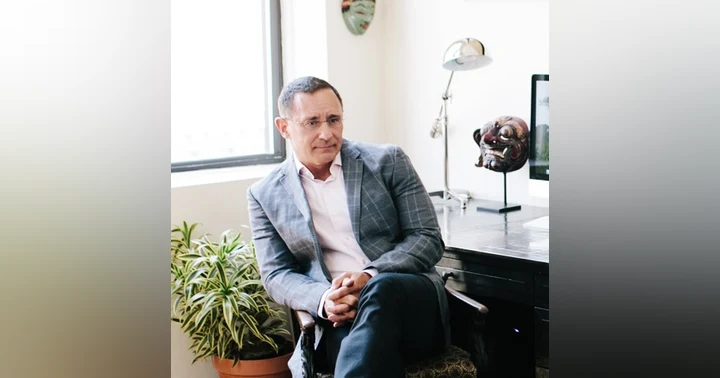
Finding Purpose Through Advocacy and Mental Health, Featuring LCSW Andrew Chiodo
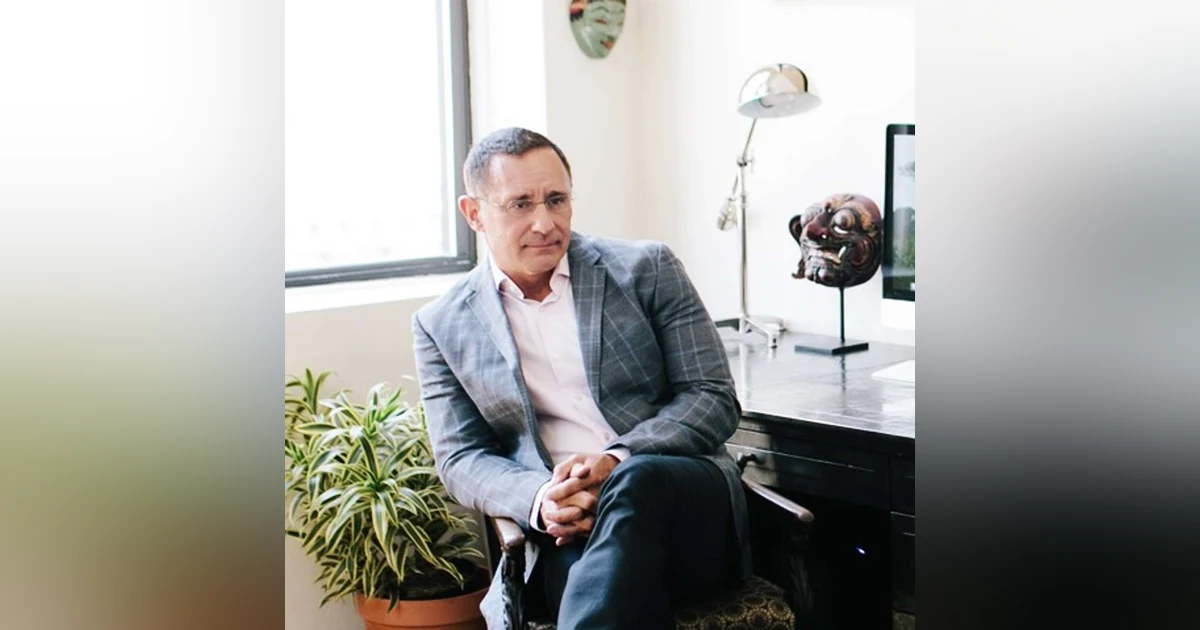

How do life’s biggest challenges shape the work we do? For Andrew Chiodo, a Licensed Clinical Social Worker and Therapist, the path to helping others started with understanding himself. Growing up gay in a traditional Brooklyn neighborhood, he had to navigate a world that didn’t always accept him. Then, as the AIDS crisis devastated his community, he found himself on the frontlines—advocating, fighting, and supporting friends through unthinkable loss. But through it all, Andrew discovered som...

 Apple Podcasts

 Spotify

 Castro

 RSS Feed

 Youtube Music
How do life’s biggest challenges shape the work we do?
For Andrew Chiodo, a Licensed Clinical Social Worker and Therapist, the path to helping others started with understanding himself. Growing up gay in a traditional Brooklyn neighborhood, he had to navigate a world that didn’t always accept him. Then, as the AIDS crisis devastated his community, he found himself on the frontlines—advocating, fighting, and supporting friends through unthinkable loss.
But through it all, Andrew discovered something powerful: his struggles weren’t just obstacles—they were shaping his purpose. His journey from activism to social work led him to a career of helping others find clarity, resilience, and healing.
In this episode of No Wrong Choices, we explore how Andrew turned personal adversity into a lifelong mission, what it takes to thrive as a therapist, and the lessons we can all take from his path.
If you’ve ever wondered how to turn life’s challenges into something meaningful, this is an episode you won’t want to miss.
Key Highlights:
- Navigating identity while growing up in a traditional Brooklyn family.
- The impact of the AIDS crisis and his role in LGBTQ+ advocacy.
- How activism led him to a career in mental health and social work.
- The mindset therapists use to support others while managing their own emotions.
- Practical advice for anyone considering a career in therapy or social work.
Listen now on your favorite podcast platform!
To discover more episodes or connect with us:
0:02 Some struggles shape us, others define our purpose. Those are the themes we explore in this episode of no Wrong Choices, featuring the licensed clinical social worker and therapist, andrew Chiodo. Thank you so much for joining us. I'm Larry Samuel, soon to be joined by my collaborators Tushar Saxena and Larry Shea. Before we kick off, please be sure to support us by liking, following or subscribing to the show, wherever you get your podcasts. Now let's get started, andrew. Thank you so much for joining us. Pleasure, larry. It's a delight to be here with you and I'm happy to share the stories and the arc of the career.
0:43 Why don't you set the stage for us and just tell us you know, in your own words, who is Andrew Chiodo and what do you do? So, as of today and since 08, 2008, I'm a psychotherapist, licensed clinical social worker in private practice in the Flatiron District, wherein I treat individuals, couples, families and adolescents for a variety of psychiatric disorders, ranging from depression and anxiety to ADHD, bulimia, gambling addictions and some alcohol and drug addictions.
1:26 Um, that's been an outgrowth of many years of being in hospitals and what preceded that, which got me into the work, is a is a whole other story, um, which we can get to, but that's been the primary practice for 17 years privately. Got it All right, so let's begin at the beginning. You know, were you always a kid who wanted to help people? Did you feel that you were built to do do? Were you built to be a caretaker, so to speak?
2:21 Well, I grew up in a sliver of Brooklyn called Diker Heights, which was, for better or worse in those days in the late 60s, early 70s, very protected by the mafia and very intense, and so it was very Catholic. We went to church every Sunday. It was very Catholic, we went to church every Sunday, and in my household the drill was there was Jesus Christ there was the Pope and there was Frank Sinatra, Not necessarily in that order. That was it.
3:03 Like you know, you genuflected at. Francis, albert and you were good. So, but from a very early age I would say six or seven I understood that I was different, and by that I mean I understood that I had an attraction to men, but I couldn't, you know, it's not something you verbalize, it's unconscious. And so, as a result of that, you one, I started to sort of pull back because I understood it was dangerous. I don't know how I understood it, but I did, and I calibrated my movements, my behavior, to the environment, and so I was very sensitive. I was a really sensitive kid, but perceptive, and understood that if I make a wrong move or if I'm to something, I could get my ass kicked.
3:49 And that happened on occasion, as it did to many other kids in the neighborhood. And so I understood how to navigate a neighborhood that was very complicated and very kind of intense, because our parents were raised by immigrants and they had one foot in the old world and one foot in the new world. They wanted us to assimilate, and so going to Catholic school from grades one through eight was intense and hard, and I understood that. When it came time to go to high school, my parents said do you want to go to Catholic school and I said no.
4:33 So they put me in New Utrecht High School in Bensonhurst, brooklyn, where I quickly gravitated to the school's literary magazine and became the editor and started to dabble with writing and words. And I was a kid who was always had his head in a book or his face in a book, or I'd go to the bleaker street cinema in those days and watch foreign movies. And I wanted to meet guys at 15 or 16. And I knew it wasn't going to happen in Bay Ridge, brooklyn or Diker Heights, and so I ventured in. Beginning sophomore, junior year of high school, I was in the city every weekend, I was at museums and I wound up working in Red Hook in those days, which was very rough, and at a paper company, and met a fellow of mine, a friend, and he was about six years older.
5:29 And soon enough in my late adolescence, like 16, 17, 18, I found myself in the. You know it was post stonewall, it was hedonistic, it was fluid, and I found myself at underground gay discos and studio 54. And I was doing all sorts of stuff that was I shouldn't have been doing, but I did it and it was an education and it was a lot of fun. I want to ask you just real quick I need to interject because that's such a huge part of the layers of the onion that are you basically, how did that affect you, kind of hiding that aspect of your life for your entire childhood and only letting it out in certain areas?
6:11 I mean that must have had a profound effect on you in terms of how you navigated the world. I learned how to compartmentalize very quickly and to show parts of myself to some people and not to others, how to read a room very quickly, how to deflect with humor, how to please people so that they would not get too close to me, so that they would know. Now that was there. When I got to New York and started to really develop a community, I busted out and was, you know, ready, and so I met my first partner in 1983.
6:53 And we were fortunate to have. We had a great setup on Perry Street in the village and we had a floor through brownstone and it was a good relationship and we we both were writers and I started writing fiction. Um, I wrote for a literary magazine called Christopher Street, which at that time was the literary magazine of the day for gay people, and also for the New York Native, which was a newspaper, and I did restaurant reviews and theater reviews. But at the same time that that was happening, there started to become rumors in the community that this strange gay cancer was happening and nobody knew anything.
7:35 And Ronald Reagan had just been ushered into the White House along with the religious right and all of a sudden everything went from a big party to a big hangover and all of a sudden we found ourselves at the sides of our friends at hospital beds, at clinics. I was giving eulogies, and this is not an exaggeration. I think I was giving eulogies, and this is not an exaggeration. I think I was giving eulogies every quarter for somebody. So, like you know, four, five, six a year, and so all our friends, virtually all our friends, passed and, wow, we couldn't fathom what was happening.
8:26 So we um mobilized and joined act up, which at that time was run by larry kramer of, who founded the gay men's health crisis. And so we did dyans and we did all sorts of stunts with the stock exchange, and we went to washington and we marched and we laid down in streets and I dealt with families who were throwing their kids out of their houses, and these kids didn't have men, didn't have anything anywhere to go, and we watched robust, healthy, 20-something and 30-something men architects, lawyers, doctors, designers robust guys in the prime of their life shrink to what looks like sort of what you see in the sorrow and the pity in concentration camps.
9:12 And so it was a profound. The 80s were transformative in that way, and we were doing social work without knowing we were doing social work. You know, we just did it. We rolled up our sleeves, men and women, and got to work and by 1989, I decided you know I'm doing this and you know my writing wasn't making money and I figured I got it Meaning being an advocate and being a voice for being a voice, being an advocate. An advocate, you know, advocating for people in hospitals so that their partners could be at their sides. And the doctors were, some were great, some were not um, so we were doing a lot of social work and I decided I should just go do this.
9:57 And so I went and got accepted into hunter college school of social work on 77th street and that was a great fit because it was very community organized. Um, it wasn't so clinical as it was grassroots, yeah, in its in terms of the program that you entered into. Yeah, the school program in terms and, and the school was very like. You couldn't say at hunter that you wanted to do private practice and I didn't want to do it at the time. But you couldn't say at Hunter that you wanted to do private practice and I didn't want to do it at the time. But you couldn't say that because then you would be like I don't know, looked not so well upon. So if you're ostracized, really yeah, not ostracized. But if you wanted to do community organizing and you want to do advocacy, it was very sort of strike oriented and very right up my alley, whereas NYU and Fordham were very clinical and great, but clinical, so graduated in 92 and found and then got a job at, luckily a plum job at Mount Sinai.
11:01 Before we explore that, I'm curious. You went into the program and, with everything that you had gone through up until that point, what was your vision? Like you knew, you wanted to focus and do something, I guess more structured around what you were already doing, but did you have a vision for how you were going to make an impact on the other side of school for how you were going to make an impact on the other side of school. It's an interesting question. I don't know if at the time I had a strong vision, but I saw myself as advocating for the marginalized and the downtrodden I don't know what the right word is for people who didn't have a voice and felt very strongly and committed to this population.
11:55 And that's where I segued into Sinai, where I worked with severely and persistently mentally ill patients who were underprivileged and very ill, and in that setting. I learned because it's a medical model setting in the hospital. We attended rounds, there was medication groups, there was a lot of you know. We dealt with very sick schizophrenics, bipolar patients, personality disordered patients every day, and so it was trial by fire in the trenches.
12:36 I didn't know I was going to land there. When I was in school I had no idea I'd wind up in a psych program. But I did and I took to it and I learned a lot and I had a great mentor who was this woman. This woman, elaine Hobson was her name and she was all of five foot two and had hair down to her ankles and was bottomlessly compassionate and terrifyingly strong. And I wanted that. I wanted to inhabit that world, and so it was a great experience from 94 to 2000.
13:20 I want to step back just a little bit and talk to you about and ask you about your career, getting into it, as to how your family reacted to it. And then I mean, maybe does that maybe coincide a bit with when did you come out to your parents about, about, about being gay? And then when you obviously you are treating those, as you say, who are on the marginalized, on the, on the, on the outs, not the, but the fringes of society, so to speak, at that point how did they accept your career choice? Well, they were really good, actually, about the writing as well as the as the social work.
14:02 As the social work, they were high school graduates, middle class people who worked very hard to put their kids through school. They were it's a funny story. When I came out to my parents, they were confused and befuddled and the only thing they knew how to do was go to a priest and say you know, my son just came out to me and I don't know what to do. And I, they must've gotten a gay priest, because the priest said you know, do you love your son? And my mother and father said of course we love our son. And they said well then, that's all you need to know. Yep, that's a great answer.
14:42 How old were? How old yeah? I was uh 22 okay and you were in school. You were in school at this point. I was in school at this point I was dating women, but not dating women. I had beards, I didn't have beards. Um, it was, it was again. It was all fluid but they in six months they were great, like they were. They were great and I was very fortunate because I watched kids come out in Brooklyn and they got the crap beat out of them by their parents. I mean I can imagine growing up in such an insular community hardcore Catholic as you say for them to be very cool about it is great.
15:26 Yeah, I was very lucky and they were very impressed, if I can use that word, with my choice of career and what I was doing, because they were FDR Democrats and they believed in, you know, helping others and being there for people and they were Christian. You know they others and uh, being there for people, um, and they were Christian. You know, they were really Christian people in the best sense of that word. Um, so they were very supportive. Um, I have one older brother who was also very supportive, so fortunately, no complaints there and they were very welcoming of my partners and you know, and very just very humane about the whole thing.
16:11 So I was very fortunate and that allowed me, I think, to feel good about what I was doing. So you know that's not always the case that a family supports, especially during that era and where you come from the background, etc. So that is a good thing. So you're at Hunter College for social work, and how long a program is that? How long are you going to be there? So were you thinking about private practice at that time? At that time you said you didn't really say that out loud, but is it in the back of your mind that you want to do private practice, or are you still just all about the community?
16:54 And I'm just going to fall in line here for a minute. So it's a two-year program at Hunter College and you have two days of classwork and three days of internship and what I was doing was doing that and then I was supporting myself through from five to 12. I'd go to school five to 12. I was word processing, if you recall that term. I had a brother. I vividly remember that. I was working with high-end attorneys at law firms and just you know, sort of proofreading, word processing, getting out at midnight, going home or sometimes going to the Odeon for a burger and doing the same thing for two years.
17:44 And so it was in the back of my mind that I wanted to do private practice. But I also knew that that was way down the line, because I knew I needed to get real training, because I really didn't know what I was doing. I knew how to, I knew how to care for people, I knew how to be empathic, but I didn't have tools in my toolkit yet. And it was only at Sinai when I learned how to do what we call psychodynamic therapy, cognitive behavioral therapy, dialectical behavioral therapy excuse me that. I started to feel like I could start to really treat people in a real way, and Sinai gave that to me in spades, like they were great.
18:33 And still in 19,. In 2000, I was recruited by Cabrini Medical Center to run their psychiatric day treatment program. Ironically, it's the hospital where my father was born, so I had a certain affinity for it. Um, it was called Christopher Columbus Hospital in the twenties, um, and so I ran that program and during that time. That was very interesting because 9-11 happened. And you know I can tell you an anecdote that's funny and not funny about 9-11, because I was at that time I was supervising psychiatry residents, social work interns, non-clinical staff and clinical staff, because I was wearing a clinical hat and an administrative hat.
19:28 I was responsible for all the clinicians as well as the audits from regulatory agencies that gave us our accreditation. So I sort of learned how to be a half a lawyer and a full-time clinician and I was supervising a social work intern on the morning of 9-11, at about 8.45, before anything had happened, and I didn't know. You know, in those days, right, we only got our news from radio or TV, and so I'm talking to the social work intern and reading her notes and we're talking and the policy at Cabrini was if a patient was going to be absent, they had to call me and they had to tell me why.
20:12 Because I had to assess, you know, somebody's suicidal, is somebody not feeling well, blah, blah, blah. So a patient calls me and says, andrew, I'm not coming into work today because a plane has hit the World Trade Center. Says, andrew, I'm not coming into work today because a plane has hit the World Trade Center and I said OK, I'm going to call you back because I was in the middle of something. And I said are you OK? And she said yeah, I'm OK. I said OK, fine. So I turned to the intern and I say, and I relate what I just heard, and I say so you know, this is somebody who's not necessarily medication compliant and sometimes they can lapse into psychosis and sound like a psychotic episode.
20:54 Yeah, the phone rings three minutes later. It's my boss and he says get up here right now we got a problem, right, yeah, bingo. So now we have to sort of contain 30 psych patients who are we're all traumatized right, all of us are traumatized and manage them, manage us, manage the staff and and figure out what to do, because we're all waiting for people to come in and sort of all hands on deck, nobody's coming in to the ER or anybody, as we know, right, you know. So that was kind of a moment at Cabrini that was very intense, a bookend to that which is nicer.
21:41 Is that one of the things we did at Cabrini, wherein we had very many talented patients? They did artwork which we had framed and we turned the whole center into a gallery oh nice, it was really great and invited the hospital to come in and purchase and there was beautiful artwork and so people purchased. It was great PR for our program and I think the patients donated the monies to a 9-11 fund. Obviously, as you said, you wore two hats administrative and clinical. Was there ever a point in your career where you said I want to go one way or the other Because I mean these? You know, as a social worker, I think and you correct me if I'm wrong these really are only kind of the two paths you can go, and so many go the administrative route.
22:30 What is the biggest difference? And then, in your case, what made you want to go one way or the other? Well, I liked both ways, because the clinical allowed me to be with people and to train and to be in the human section of it, and the administrative piece satisfied my closet OCD, which you know you have to dot your I's, cross your T's, make sure your chart notes are right, get your performance improvement numbers up, and so I was very I'm wired for that and so I really it was a welcome relief for me to step away from clinical stuff and focus in on charts.
23:19 I know that sounds really dry. That's okay, it's you. It was really dry. That's okay, it's you. I'm the exact opposite. Detail does not exist in my universe. So it was a way I I guess it was a way I coped, but I felt I could master it, like I could get my arms around it. You can't always get your arms around people and their pathology, but you could around a chart note and we always got like the top not to toot my own horn, but we always got the top accreditation. We always came in with flying colors.
24:00 My staff was always great and they were wonderful. So it was a really good to answer the question a really good combination that worked both from a human place and a I don't know paperwork place and kept me sane a little bit. But it meant going in on weekends and looking at charts and you know it was a lot of work. All right, so what is the biggest difference, then, between an administrative social worker and a clinical social worker, outside of the paperwork portion of it? So that's a good question, because in the hospital system, especially at North General, they wanted numbers.
24:44 They wanted us to get patients in. They would double book patients. I didn't agree with this, but I did it. They would double book patients. They were all about getting the, getting the funds and the clinic. I had to really balance the clinicians because the clinicians were like, why are they double booking us? And inevitably when you double book somebody, the truth is only one person shows you right. You book one person, you don't get a client, you don't get money and so you don't make income, you don't make revenue that way. And so that's the biggest difference was trying to bridge the understanding that we needed to get financing and revenue and provide good clinical care and those things can be at odds with each other.
25:34 And that was hard because sometimes two people would show up and somebody would have to wait. The clinician would be stressed Were they doing their best work, knowing they had somebody right outside waiting to come in. It was hard. That would be the biggest difference and hospitals have to do that and for better or worse and I'm not proud of this, but Cabrini and North General both and St Vincent's all went under no longer hospitals in New York City and they went under because they were not administratively managed well. So, Andrew, can you tell us when you made the decision that you were ready to go out on your own, so to speak, and start your own practice?
26:22 And start your own practice. Sure, it was that was 08, 18 years after having worked in three hospitals, that I felt confident enough to pull the plug on institutions and plug in the plug on private therapy. And how do you do that? Do you hang a shingle? Do you place an ad? How do you get started? Well, it helped me that my boss quit. My boss at North General quit and I didn't want to work for anybody else, so I thought I'm out and I was already starting a private practice part-time in the evenings.
27:04 And then I used my network from Sinai Cabrini, north General. I had a lot of psychiatrist friends, a lot of social worker friends, and I used that word of mouth and my network to build a practice which took me a good seven years. Before I was at 45 patients a week and now I'm at about 35, and that's a good number for me. So this question kind of goes without saying that everybody, this field isn't for everybody, right? It takes a very, I think, special person to be a therapist. But I have to ask this question, jokingly but not really jokingly how sick do you get of listening to people's problems all day long?
27:54 Because that's not for everybody, right? It takes, like you said, some real empathy and some real care and some real understanding to, day after day, you have your own problems. You're dealing with somebody else's, that's that's a lot. Yeah, you know, I think in the beginning it's really, really, really hard because you're not, it's an untrained muscle. So if you think of it like going to the gym and working a certain muscle that gets stronger and stronger and stronger over the years, I can sit down now, now and um, and it's the rare occasion that I get a really boring patient, although I've had them and uh what qualifies as a boring question.
28:44 Problems are rudimentary. Good question. People who are I have to do, I have to be delicate here, people who are repetitive and sort of bring in the same problem every week, every week, every week, without really listening, and you have to know when to intervene, really listen, and you have to know when to intervene so I can, someone can come into the office at a first meeting and usually nowadays I can see what the path is for them. But I'm not, I'm not going to say that I have to wait and I have to be patient and I have to know when to when are they? ready to hear this? You know, know, when are they ready to hear that they're acting like their mother, who they complained to me about for the last six months?
29:29 I'd assume that's what, to me that that seems like the essence of the boring patient you know, and so it just requires and I think this is where karate and meditation helped me be very patient. It's the work, it's like anything. It's like you go to work and you're a lawyer. There are things about doing, being a lawyer that are not so interesting, but you have to do them and you learn how to do them. And how does one? How does a therapist separate his problems right? Because I've gone through parental deaths, deaths of friends, my own sort of personal challenges.
30:14 How do I do that while I'm sitting in front of somebody who's also, you know, telling me their stuff, you know telling me their stuff. In a way, it's kind of easier to listen to somebody else and shelve your own problems and then come back to them later in the day. It really does prevent you from ruminating about your own worries because you have to pay attention, and so that was always harder in the first half of my career and much less hard in the second half.
30:55 You know I'm wondering about the first part of your career as a young therapist. How do you get comfortable, meaning I imagine there's a lot of pressure on you to learn your craft. I mean, if you screw up, I mean I can't imagine what those consequences could potentially be Like. How do you get comfortable and what are those emotions early on? And what are those emotions early on? You have to be able to tolerate a lot, a lot, a lot of discomfort in the work. It's essential you can't take things personally and you have to be okay with screwing up and you have to own it.
31:41 And I've screwed up and I've said to patients I'm sorry, that was the wrong thing to say, so I apologize. And if you do that, you're home free, because patients always know it's my experience at least, and especially with very sick patients they always know when you're lying or not telling them. They always know. Obviously, your clients unburden themselves with problems to you and you work through it. That's got to be a lot for any therapist, for you, for anybody else. So who do you speak to? Do therapists need therapists? In the beginning absolutely In the beginning I was seeing you have a number of different things.
32:22 A I was blessed with a very good supervisor who I met weekly. B we had group supervision. C I had an outside group. I would meet with a therapist to talk about cases um, and I had my own um. I would journal or keep a track record of my notes. But you have to have people around to talk to. You can't do this work in isolation. It's a mistake. You have to be able to talk about what's being evoked in you by clients.
33:08 Because clients evoke a lot of feelings. How should a patient go about choosing a therapist that will work for? them a. They should interview at least three. First and foremost, you're a consumer. You're looking for a therapist. You should interview people. Um, you should assess the energy in the room itself and feel like it's this person really listening to me. They do. Are they getting me? Um, I had a patient recently come in and said to me my wife thinks I should be in therapy. I said, all right, why? And he said, well, I have problems communicating.
33:51 And after I went to AI to look for interventions, I thought I'd come to you, wow. And I said, well, how did AI help? And they said, well, wow. And uh, I said, well, how did ai help? And they said, well, you know ai, and we can segue into this for a second. Ai was very pragmatic and cognitive, behaviorally oriented. I said so, why are you here? He said, well, I think I need a human touch. I said, okay, we can work with that. You know? Uh, he said I've interviewed three other people. And uh, he said I think I'm going to pick you. I said, well, lucky me. You over AI, you over the machine.
34:32 I want to check with AI once more and so we're working together and he's a great guy. But like that's how you do it right, like you have your consumer, you shouldn't just buy into anybody, because there are a lot of coops out there all right. So I I want to kind of touch on this word that you've used a lot about working together, right? Um, obviously, as a therapist, your idea is to listen to your patient and then, uh, you know, give them feedback. How much of how much of the work is on the onus of the patient themselves to work through their problem? What does that mean for a patient to have to work on their issues?
35:13 So it's always a collaboration between therapist and patient, because the patient does it with the assistance of the therapist, but it is ultimately the patient's will and motivation to change that is essential for a successful outcome. You use will and motivation. Is there any notion, if I can say, like I do, hold people's feet to the fire about what they say they're going to do and what they don't do?
36:01 And what they don't do, you know, for people with real mental illness now I'm not talking about, like I had a fight with my girlfriend or my boss yelled at me and I'm, you know, I can't deal with it People with real, serious mental illness I'll often say, listen, this isn't your fault, but it's your responsibility, it's not your fault that you have bipolar disorder, that you have severe clinical depression, but it is your responsibility to manage it. I'm curious and this is where I was going to head next how has your practice, how has your approach changed?
36:41 I mean, you've been at this for respectfully, for a while. You're a very experienced guy and you've seen the world flip upside down in the time that you've been practicing. With the introduction, in some ways, of the internet and then social media and mobile phones and everything else, how has that impacted how you treat patients and your day-to-day? It has impacted it greatly, Like young men and women in their 20s and 30s who are trying to date and are using dating apps. When they talk to me about how they use dating apps, it sounds like they're shopping for patio furniture Wow like they're shopping for patio furniture.
37:31 Wow, oh, harvard, no, I don't want, I don't want the harvard. No, no, no. Columbia, no, you know, I want, I want state schools. I'm like what? Like it's. It's surreal, it's like it's a, it's a whole new, and this is where I sound older. It is a whole new and this is where I sound older. It is a whole new field of pathology, because now you have parents who want to check it. You know parents who were raised, who were in their 30s, raised with phones. They want to check out too. So now they're not parenting in the way they ought to be parenting and they're giving their kids screens to babysit them. And so now the whole household is dysregulated, because not only are people getting different information, but they're also they're living virtually versus living presently, presently.
38:23 Thank you yeah yeah, they're living virtually. That's a big change one that is a, has been now has been a little daunting for me because I have a a very modest I think healthy relationship to the phone. It's a, it's an instrument to be used for for you know, for practical reasons for me, but I don't engage so much in social media. But I truly feel for the kids growing up that this is going to be, that this is the tip of the epidemic right now.
39:09 But we're headed into something very isolationist where kids are in their bedroom with the door closed doing God knows what on their phone. Let's try something fun doing God knows what on their phone. Let's try something fun. I was trying to think of some good movies that had therapists in them, like a Dr Melfi with the Sopranos or maybe you see yourself in one of these people or Richard Dreyfuss in what About Bob right, one of my favorites or Stutz, but bigger than that. There's a lot of documentaries and things on HBO, things of that nature that are like literally open sessions, like in treatment and couples therapy, and you see it so open now on TV and in entertainment.
39:54 I'm wondering if there's any benefit to that. Could you watch something like that and take something from it? Oh, I do a little bit of that. Or do you look at it and say this is opening a can of worms? That? I'm not sure should be open. I think it's a mixed bag. I'll tell you, in the 90s we used the Sopranos I taught family therapy vis-a-vis the Sopranos, because it was so brilliantly written, so spot on and so hilarious, and as an Italian American, I could relate to it in tenfold, and so it was hilarious and smart. That said, I've watched Shrinking with Harrison Ford.
40:37 That's great, adorable and completely unrealistic. And there's a couples's therapy show I'm not sure the name of it where they right, I think might even be called couple's therapy, I think for people who are thinking about therapy as a possibility. I don't think they can do. You know it's okay. I think they can do it. It can be helpful. I've yet to see, apart maybe from dr malfi, um, a truly maybe gabriel burn in in treatment. He was pretty good, he was pretty good. Um, I have to give barbara streisand a thumbs down for the Prince of Tides.
41:22 Love her voice, not the case, and I never saw what About Bob, so I can't. Oh, I love that. Gotta see that movie you gotta see that movie you gotta see that. Also interesting Stutz with Jonah Hill. Jonah Hill has gone through a lot of mental issues and he put his whole process on display with this therapist in like an hour and a half documentary. I mean, what do you think about something like that? I mean, I got a lot out of it but I haven't seen it and I will see it now after this conversation. The movie that I saw most recently, while it didn't have a psychiatrist in it but was loaded with psychiatric and psychological overtones, was a movie called All of Us Strangers with the Irish actor they're both Irish Andrew Scott and Paul Mescal.
42:20 Scott and Paul Mescal, if you have an opportunity. It's a beautiful rendering of a man who tries to reckon with his past and goes back in time and has imaginary conversations with his parents. That, if you're not a mess, after that 90 minutes there's something wrong with you Right. Seek therapy right. What about a film like Silver Linings Playbook? I don't want to have you review every movie that's involving therapy or therapy. Bradley Cooper did a great job of portraying a bipolar patient.
43:00 He was terrific. I fell asleep in it twice. Really, I never got through it. I saw it once in the theater. That's a good movie. I like to sleep. I loved it. It's kind of my go-to feel-good movie when I'm a little down, yeah. You know I thought it was okay, but that's just a personal opinion. Streisand also did a film called Nuts. Just a personal opinion. Um, streisand also did a film called nuts, which was also terrible. She should strike out on that front. But I guess the earliest one was like now I'm dating myself. One flew over the cuckoo's nest oh well classical classics absolutely, of course nicholson, which was pretty, pretty good.
43:42 Of course. Of course, of course. Of course, of course, of course, of course, of course, of course, of course, of course, of course, of course, of course, of course, of course, of course, of course, of course, of course, of course, of course, of course, of course, of course, of course. So, andrew, as we move towards the end, we always ask our guests for advice. So somebody who would like to follow in your footsteps and become a therapist. What advice do you have for them as they get started on this career path? You know why they're doing it, this career path, you know why they're doing it.
44:27 You often hear people say you know I went into therapy to. They won't say it, but you can surmise that people go into therapy to fix their own problems. That's not a reason to be a therapist. You should know oneself and you should know why you want to do this. You should know yourself in a way. Well in the old days, in the new days, I would just say you should have a good course of treatment yourself before you entertain the idea of becoming a therapist. That's great advice. You know, you should really understand why you want to do this, because somebody's putting their mental health in your hands. You better really take it seriously, andrew.
45:11 This has really been wonderful. Thank you so much for joining us. So that was Andrew Chiodo, with an incredibly powerful story about purpose and really finding your purpose. Larry Shea, what are your takeaways? Yeah, this is not a profession for the faint of heart. I would say you really have to enjoy helping people and really love to dig into the nitty gritty of what makes people tick. You know we all have problems. We all need people like this to work out those problems. But it takes a special person, I think, to really dig into it and so you could feel that love when he's talking about his profession.
45:52 You know I took so much out of it. You know, know why you're doing it, know oneself and have a good course of treatment for yourself. You know T, I think you asked do therapists need therapists? You know like it's a valid thing. You know you could really tell how his younger life kind of shaped his career journey. You know, and he talked about it as well. He said you know he appreciates that he found a career path that fit who he was and that's something to remember. With whatever career path you're taking, you know, make sure that it fits your personality, make sure it fits who you are. And there was also an interesting thing that he talked about with he needed the detail-oriented work of the administrative side because it kind of handled his closet OCD which I found interesting.
46:39 And then the clinical stuff allowed him to be with people and train, because you could tell what by the way he talks. He needs people. He's a people person, so I took so much out of this. It was a really insightful discussion you know, the one thing I took a few things I took away from this is that my, my mother, uh, is a retired psychologist and yes, uh, absolutely uh. The one thing he said much, much went to today going to this profession with your eyes open. But I think the other part of that was understand what it is. You want to get out of this profession as well. Right, you're not going to go into it with an idea that I'm going to heal myself through my patients. That's not going to happen and that's not your job either. Right, as you said, shay, is that this is not a job for everyone.
47:23 Not everyone should be doing this. But I think the one thing that I really took away from this was you know, when everyone goes to the doctor at some point in their life, right, whether it be you know, your uh, your your internist, your uh, your your orthopedist or whatever. But in a lot of cases, you know, it's a kind of a clumsy, it's kind of a clumsy example, but it's like going to a mechanic. You say, hey, when I raise my arm like this, this hurts, or I'm coughing and have this problem and can you fix it? Now, for the most part, those doctors say, okay, take this pill or we have to do this X-ray and they can find a problem. That's not always the case in this profession. You are responsible for putting in a lot of the work that is going to make you well and it could take a long time, right, yeah, we can go to physical therapy and work out.
48:12 You know aches and pains, but for the most part, we know what's going to happen at the end of that journey. This is not always the case. We hope that we find a reasonable end to whatever the problem is, but the reality is that you know it is a real process and you are responsible for making yourself well, as well as the person who is treating you. That was a really, really telling statement and you know, it gave me greater insight into what my own mother did for so many years, and that's what I really took away from speaking. Speaking with andrew. He's a great guy and he obviously loves his patients and you know what he goes out of his way to try and make his patients better, which is a key for any for any health caregiver absolutely, and I I think for me, what what I'll walk away with aside from all of that is is kind of how he wound up where he is.
49:20 You know, he's somebody who spent a lot of time exploring his own world and his owns and the impact that that had upon him. To find a way to turn all of that around and to focus his passions and to really make a difference and to create a life around his love for others made a huge impact upon me and I'm so glad that we had the opportunity to talk to Andrew today. I took away so much from that conversation. Andrew, thank you so much for joining us today. For anybody out there who'd like to learn more about Andrew, you can visit his website at andrewciottocom. Once again, he is a licensed clinical social worker and therapist based here in New York City.
50:04 We also thank you for joining us. If this episode made you think of someone who could be a great guest, please send us a note through the contact page of our website at norongchoicescom. While you're there, please check out our blog for a deeper look into each of our guests and episodes. As mentioned at the start. Don't forget to like and follow us on your favorite podcast platform and to connect with us on social media, you can find us on LinkedIn, Instagram, Facebook, YouTube, TikTok and X. Your support helps us to keep bringing these incredible stories to life. On behalf of Larry Shea, Tushar Saxena and me, Larry Samuels, thank you again for joining us.
50:45 We'll be back next week with another inspiring episode of no Wrong Choices.