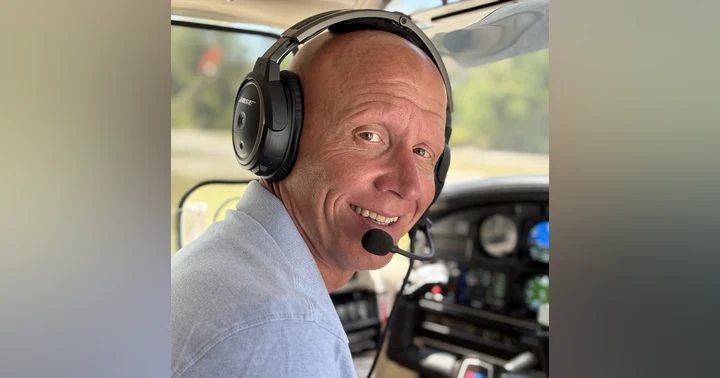
Captain Ken Petschauer: From Childhood Dreamer to JetBlue Captain (Part 1)
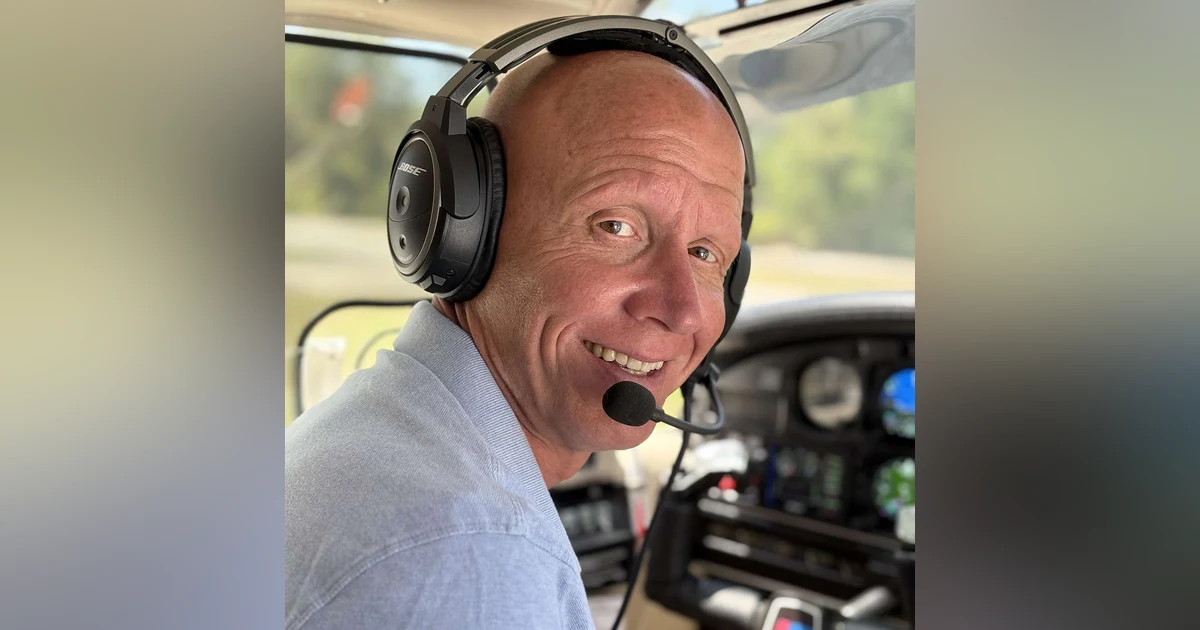

What does it take to turn a childhood dream of flying into a 30-year aviation career? In this first part of our two-part conversation, we explore the incredible journey of Captain Ken Petschauer, a veteran JetBlue pilot with over 16,000 flight hours. From soloing a plane at age 17 before he could legally drive, to navigating the cockpit of some of the most iconic commercial aircraft, Ken’s story is one of passion, perseverance, and precision. Raised in New York City with a deep love for aviat...

 Apple Podcasts

 Spotify

 Castro

 RSS Feed

 Youtube Music
What does it take to turn a childhood dream of flying into a 30-year aviation career?
In this first part of our two-part conversation, we explore the incredible journey of Captain Ken Petschauer, a veteran JetBlue pilot with over 16,000 flight hours. From soloing a plane at age 17 before he could legally drive, to navigating the cockpit of some of the most iconic commercial aircraft, Ken’s story is one of passion, perseverance, and precision.
Raised in New York City with a deep love for aviation, Ken shares how early mentorship, academic focus, and relentless curiosity helped him build a life in the skies. Along the way, we learn about the complex path to becoming an airline pilot, the real-world experience behind flight simulators, and what it’s like to live out your dream at 35,000 feet.
Whether you're fascinated by aviation or inspired by people who relentlessly pursue their goals, Ken’s journey delivers career insights that soar.
Episode Highlights:
- Getting his first pilot license before a driver’s license
- Overcoming early career roadblocks and economic turbulence
- The real path to becoming a commercial airline pilot
- Favorite aircraft, simulator secrets, and life as a JetBlue captain
- Balancing adventure, family, and flying
Don’t miss this engaging episode that explores what it truly takes to chase your passion and land your dream job in the skies. Tune in next week for Part 2, where Ken shares how he handles high-stakes decision-making, airline culture, and lessons from a life in the air.
To discover more episodes or connect with us:
00:00 - Ken's Early Aviation Journey
03:13 - Personal Life and Passions
06:34 - Educational Path to Becoming a Pilot
12:00 - The Process of Getting a Pilot's License
18:23 - First Real Flying Jobs
22:46 - Airline Career and Training Simulators
30:11 - Pilot Lifestyle and Work Schedule
40:03 - Episode Wrap-Up and Next Week's Preview
0:03 At 16, I probably took my first flying lesson. I soloed at 17. It's just always been my dream. Fortunate enough to live my dream for sure, the fear goes away because when you're in there in the cockpit it's like home. You're used to the sounds and everything. I became a graduate research assistant. I had some pretty good mentors then because they grabbed me by the throat and said don't throw this away. And I'm glad I didn't because it really helped me in my career. When you get into the crazy stuff, when they make us do these recoveries from 65 degree banks and all that other stuff, you have to basically turn the motion off because you'll either make yourself sick or damage the simulator because it can't you know it can't give you G's but you swear you're accelerating or decelerating in that simulator.
0:54 Hello and welcome to the Career Journey Podcast No Wrong Choices. I'm Larry Samuels and I'll soon be joined by Tushar Saxena and Larry Shea. Our guest today is Captain Ken Petschauer of JetBlue Airways. Before we bring him in, please be sure to like, follow and subscribe to the show wherever you're listening. Your support enables us to keep bringing these great stories to life. Now let's get started Now. Joining no Wrong Choices is Captain Ken Petschauer of JetBlue Airways. Ken is a pilot who's been in the air for more than 30 years and logged more than 16,000 flight hours. I can't begin to imagine how many miles that is and, interestingly, he is also a ski patroller for the National Ski Patrol.
1:41 Ken, thank you so much for joining us. Thanks, guys, glad to be here. Been looking forward to it as we look at you. You say that now yeah right. I feel like I need to ask this question going in. Are you actually talking to us from an airplane hangar? I actually am talking to you from my hangar right behind my house, the credibility is off the charts, yeah. from my hangar right behind my house. The credibility is off the charts, yeah. So, ken, we like to set up our conversations by giving our guests the opportunity to tell us who they are and what they do. I can run through a list, but it is nothing more than a list of bullet points. You know you better than anybody else, so please set the stage for us.
2:22 Who is Captain Ken Petchour and what do you do? So I guess first you know the personal stuff. I'm married to a beautiful wife of 12 years. Her name's Alicia. She's very patient and amazing. You can yeah, you can imagine, and we have probably the best beagle hound ever created. He's eight years old and actually he's two, but they say that's a good thing. That is a good thing. Yeah, he's pretty neat. We're fortunate. We live a great lifestyle, very active. You know, I'm always outside. I don't actually sit still very well, which is kind of weird because my job kind of requires that, but for some reason that's different.
3:03 So it always seems like we're out doing something. I'm always running or skiing in the winter or hiking. I've been lucky to have great adventures in my life. I've done long distance sailboat racing and small boats and adventure racing and helicopter skiing and all kinds of stuff. So always looking for another challenge or something that's new or different, kind of like this. And I'm also like the computer geek around here. It seems like I'm forever going to somebody's house to fix their Wi-Fi or build them a computer or fix something for them. I'm always tinkering with gadgets and electronics and 3D printing and things like that, always tinkering with gadgets and electronics and 3D printing and things like that.
3:48 We also really like you know, new adventures. So we'll take the plane to towns and cities that we haven't been to before. My wife's big into history, so we like to go to historic towns and do stuff like that, and we also spend a lot of time up in North Carolina. That's where we do most of the skiing. I have a little cabin up there in the mountains, so that's pretty much what we do without getting too detailed Excellent. And then, professionally, I am a pilot for JetBlue. I've been with them now for 22 years and have before that I was with TWA. I don't know if you guys remember that airline. Sure, of course. What was that movie with the guy who was the great scam artist? who uh, oh, uh, catch me if you can catch me if you can, right, oh, I got all kinds of history about that, because that building, all wing building, that the jet blue hangar is behind I worked out of that building when I first got hired.
4:37 Oh wow. So I got to fly some of the jurassic jets we call them, you know the 727s and the DC nines and stuff. So so I did that for a while. So I have like 28 years being an airline pilot and 38 years, pretty much flying airplanes Very cool it's. It leads into my my personal life too, because we do like dog rescues in our airplane and things like that. It's just part of our life. Hey, ken, so good to meet you. This is Larry Shea. I get the fun part bringing you back to the beginning and the dream. Let's dig into it. Do you remember the first time you were in a plane and did that oh God, absolutely Did that become the dream Like at that moment you're like this is the best thing ever.
5:25 This is what I'm going to do for the rest of my life. So my dad was a pilot but he had been out of actually flying airplanes for many years before I was born. He has a very unique story where he came over from Europe and went back and came back and so he was out of flying when I was born and he was in the travel business but for some reason and he didn't talk about it that much. We would always talk about it once in a while. But at about eight years old I just always loved airplanes. You know, if he had to go to the airport to drop off tickets or something, I'd always want to go Just smell the jet fuel and look at the airplanes at Kennedy and LaGuardia. I always liked Kennedy better because I had the bigger airplanes and the foreign carriers. He just always wanted to do it and then when he saw that I was getting this interest, then I was fortunate, you know, supported me and I started flying like as soon as I was able.
6:16 Yeah, I think at 16, I probably took my first flying lesson. I soloed at 17. It's just always been my dream. Yeah, fortunate enough to live my dream for sure. So what was that first plan? And, by the way, this is a Tushar speaking there, ken. What was that first plan? And, by the way, this is a two shots being there, ken. What was that first plan that you ever got your hands on? that you were able to begin your flying lessons in. So yeah, the first time I ever was in a small plane it was years, I was probably only 12 or so my uncle actually took us up in a plane for like a discovery flight. They just put us all in a plane and we flew around and at that point already I was very much into airplanes and I was running a flight simulator on the old Apple IIe computer. You know, every five seconds it would kind of turn a little bit, you know, and had been studying the books from my dad's old books and the new books and learning about everything.
6:59 So the pilot was like, oh my God, you know about all these things already and I'm like oh yeah, you know this is what I want to do. But the first real, like when I first started taking flying lessons was, you know, right at about 17 when I started actually taking lessons. And that airplane I'll never forget it. It's a Cherokee 140, a Piper Cherokee 140. And I can still remember what it looks like. I remember the end number on it, it was 7597, Romeo. I even tried to find it. Oh wow there are people who have, you know, found the airplane. They sold it and actually bought it, and I was thinking about doing that or something like that, but it's gone. It's you know. I don't know what happened to it, but it's no longer registered. So All right. So I can only imagine that, obviously, when you're taking lessons at 16, you don't even have your driver's license yet Correct.
7:45 So what was it like, or what was that feeling like, when you know you're going to school, you're growing up and you're telling your friends, yeah, I'm going to go up and solo on a plane, and they're looking at you cross-eyed like you can't even drive a car, but people are putting you behind the wheel of a plane. That was, you know, unique. I grew up in New York city, right, so you couldn't even drive till you were, I think you couldn't get your license till you were 19. And you didn't. You didn't start driving at like 15 or 16. Even, I think, at 18, I could do it, cause I went to, like I did it, in high school, you know. So I did driver's ed so I could get it to license at 18. But, um, but yeah, when I first started flying, my brother or my dad would drive me out to Long Island.
8:26 I get an airplane. You know, once I had a few hours and it had soloed and was flying by myself, I'd fly the airplane myself over to Connecticut and back, you know, at 17. And I, and then they'd have to wait because I couldn't drive the car. All right, I also. I've also got to ask you did you ever give flying lessons when you were still not allowed to drive at that point? No, no, no, no, because I have an odd story. On my 45th birthday I went to get flying lessons for the first time. I said I'm going to try, try something never tried before, want to fly a plane. We flew a cessna, but the kid and a mean kid in a very literal sense did not have his driver's license and is teaching me how to fly a plane. I want to know if this is like, if I am unique, or if this is kind of across the industry and if it is.
9:08 That's frightening. No, you have to be. It would take longer to get your CFI. The CFI, the certified flight instructor certificate. It's like one of the. It's one of the hardest ones to get. You know it's way down the road. You have a bunch of time before you become a CFI. So I doubt he was that young. I don't know how old. He might not have driver's license and could have been, you know, whatever age. Well, that's even, that's even worse to say if he was of age to get a license and had it suspended, but he's flying around. That's worse. I want to get into the process. I want to get into the the process of of you know what it takes to get your license Just before we do that. Do you ever have any trouble with heights in general? Because, like, I'm afraid of heights when I'm in an airplane I'm like, oh boy, I'm like the white knuckler.
9:51 Yeah, yeah. So it's not about heights. I don't like heights either. Like you know, pilots and ladders are not a good mix. Okay, because we tend to fall off. God. It's just ironic how many stories you hear about I was trimming my trees or I was cleaning out my gutters and you know I'm in the guys off for six weeks or six months and all he breaks fixes his back. But um, I don't like heights either. If I'm, I did a lot of sailboat racing and they would send me up the mast. Okay, when you're on the mast of the sailboat and it's tipping on a 44 foot boat, you can imagine how high the mass is. That thing is swaying back and forth Even though I'm strapped in. I did not like that as far as height. So when you're flying, for some reason, it's just, it's not the same.
10:32 It may be for other people, but that's not like if I'm standing on the edge of a building I'd be like oh God you know. But in the plane I, and I think that's the same for a lot of people, but I'm not sure. I'm sure some other people have acrophobia in every phase. I want to get to the journey, but before we do that, I have to ask this question when you talk about climbing up a mast, so were you always like the adventurous kid? You're taking flying lessons, you're on a boat, you're climbing a mast. Who were you as a kid? Were you always doing stuff like that? It's funny, I guess inside I always was and I guess to me flying is just what all I've ever known and all I've ever done, so to me to do it.
11:14 It wasn't like he asked earlier about. You know what did you tell your friends in high school when you're going? Well, my friends just knew I kind of did it and I didn't really talk it up much. You know, the parents like don't brag about it. You know what I mean, don't? So, I just that's just what I did. Everybody I knew I kind of did it. So I guess that in itself is very adventurous to me. It wasn't that's all I wanted to do. It's all I was going to do and it didn't seem adventurous. But, and as I got older, then I started doing these other crazy things, like these long distance races and working on sailboats and crossing the Gulf and everything in a 40 foot boat and, you know, being sent up to Vasquez. I was the light guy. They didn't want to crank the heavy guy, the BG.
11:54 They call him the big guy, you know, and anyone crank him up? So let's, let's focus the journey a little bit. You're young, you're you're flying. A little bit You're young, you're flying. Was the vision at the age of 16 or 17 to learn how to fly, or was it to become a pilot and for that to be your career, going forward? It was always to be a pilot. Okay, just always wanted to be a pilot, you know, and specifically an airline pilot. Military would always be fun. Hey, you could do a military career, fly, you know a fighter jet, you know who didn't want to do that as a? And then go on to a military career, just as my career progressed. The timing of it. There were no flying slots. After Vietnam, the government downsized things.
12:35 There were very few flying spots, so a military career in aviation wasn't as available, if that makes sense. What kind of schooling does that require? In high school are you able to kind of build that skill set? Obviously you're doing your own private lessons at that point. But like, if you're going to get a degree in I guess in aviation, if that's what you did, or avionics for that sense, what does that schooling look like? Back when I was going to go through and get hired. By the time I would be of age and have the experience to get hired, you needed a four-year degree and it could be in anything. It didn't have to be in aviation. That was going to be our next question, so you could have a degree in English and still become a pilot.
13:16 Correct, but you had to have some four-year degree. Now that's even changed because of supply and demand. But the path I decided to take because I knew it was going to be a very competitive environment by the time I would be ready and I was always just interested in aeronautics, aviation itself. I went to Henry Riddle Aeronautical University, which is, you know, they call it the Harvard of the skies or whatever, but that was like the school to go to. There's several other ones Purdue has an excellent aviation program, among others but that was one of the schools to go to if you wanted to be an airline pilot and that would give you the advantage that when you do go to get hired you can show hey, listen, my whole life has been dedicated to this.
13:58 So if it's you. Compared to someone else, they're going to go well. This guy's dedicated his whole life and education to this specific goal. Hopefully, we would rather hire him. So that's the schooling aspect to the four-year degree part of it. I didn't know that. That's fascinating. And again, you said supply and demand. It doesn't really happen today. What is the actual process, though, to get the pilot's license? Is it a certain amount of hours, obviously, taking off and landing, or critical? What is the process like? Lead us through that a little bit. There are several levels of licenses that you can get. There's like the lowest one. Right now they have what they call like a sport pilot license, but really if you're going to go into flying as a career or even private, they call it.
14:40 The first level of certificate is called a private pilot certificate and that has its own specific value of flight hours you're required to have at a minimum. Most people take a little bit more because if you fly every day you can do it maybe in the minimum. If you fly once a week, you do lose some skills over the week that you haven't done it or the timing you have to do it. So, but basically there's a certain amount of time of flying the airplane, doing work in the pattern take off, some landings and stalls and steep turns and all these other maneuvers you have to be proficient at. And then you have to do what they call cross countries. So you actually have to go and fly to different airports that are a certain distance away all by yourself to prove that you can do it.
15:25 And you do several of those, of course at different distances, and then you know, you get back with your instructor, you practice up your maneuvers and then you can take your checkride, but there's a specific minimum numbers hours, and that's changed a little bit too. And if you go through a program though, like Emory Riddle or some of these other flight schools, they have very specific programs where you're going to start at the private pilot level, let's say, and progress all the way through up to, like, your certified flight instructor rating. Since it's a very, very structured school, they have some waivers that you can actually have a little bit less flight time Right, it's very structured, as opposed to just going down to Joe's flight school on the corner and taking lessons from that kind of person.
16:10 So there are several levels. You have to first get your private pilot and then instrument rating, and then a commercial pilot, and then eventually, probably, flight instructor and eventually, once you get your 1500 hours and flight journaling, you have to be what they call an ATP or an airline transport pilot. OK, so set the levels aside for a second and answer this question for me True or false? Ultimately, flying a plane isn't much harder than driving a car once you've had all that proper training. Correct, really. Yeah, shocking answer. Flying is not. You know, it's not rocket science, it's a skill? Well, it sort of is, isn't it? Yeah, Flying is not. You know, it's not rocket science. It's a skill. Well, it sort of is, isn't it? Yeah, well, it seems like it when you add all that stuff in.
16:53 You know I also did mention in all of these too, there's lots of ground school. With all of this too, the ground school books are enormous and there's lots involved with that, and typically you try to get your written tests done before the practical test or you have to before you take the practical test to get your license. But there's a lot to it and depending on what level you're in, you don't have to learn it at all those levels. Flying itself isn't difficult, it's just the consequences for mistakes are much greater. Yes, of course the takeoff and the landing. those are the hard parts. The staying in the air not that hard yeah everybody thinks that landing is the hardest or whatever it can be. It just makes it so challenging because it's different every time.
17:35 You can't just go okay, do this, hold this for three seconds, pull back this much, hold this for three seconds. And it works, because the atmosphere is constantly changing. It's never exactly the same. I tell people go, take your car, put two cones out and parallel park it 20 times and be one inch from the curb, or three inches from the curb, or six inches, and do that 20 times and see how much times you get exactly right. And then add, you know, ice or something. Can you tell us about the first time you landed an airplane? How old were you and what were those emotions? Oh man, well, I was 17 years old and you kind of know that solo is coming. You know it's the instructors preparing you for it.
18:18 We took off out of Farmingdale that's where I was doing my lessons from and flew over to Bridgeport, connecticut, and I did like two landings and he said, pull over there on that ramp. And he just got out and I was like oh, wow. Yeah, I remember vividly. I remember what I was wearing, I remember the runway. I remember all of it because it's just, it's an amazing feeling and accomplishment and the fear goes away because when you're in there in the cockpit it's like home. You're used to the sounds and everything. The funny thing everybody tells about their first solo is the instructor gets out and says hey, just so you know, you're going to be in this airplane alone for the first time.
19:00 My 180 pounds is not going to be in it. So on takeoff it's going to climb much better than you're used to, you know, and stuff like that. Right, and you're like, oh geez, give me something else to think about. After you got out of your aviation school, what was that first move for you? Career wise after that. So it was a little different for me than in some maybe. I graduated with my four year degree and it was a terrible time. Where were you? What was your rank in your class? You don't really know, honestly, you know, how that all works. I mean famously. The late Senator John McCain was, I think, last in his class at the Naval Academy. It turned out it was a terrific flyer as well.
19:45 Absolutely. Yeah, you know, and it's like they said we're going to call the guy who graduates last from medical school doctor. Right, I like that, but just my luck. It was a terrible time. The industry they had hundreds of pilots, if not thousands of pilots on furlough. The economy was bad. Nobody was hiring. The supply and demand part of it was terrible. There were pilots all over the place and you couldn't even really find like flight instructor jobs or which now are a dime, a dozen or anything, I mean it was just like very little flying, so it was very discouraging. I was fortunate I was using my computer geekery skills and I was working at the university in their airway science simulation laboratory, working on flight simulators and I had gotten put in charge of a project to run their air traffic control training simulator.
20:32 And when I went to leave, they're like you can't leave, you run this whole thing. And I was like, well, no, I'm going to go. I got to go find a flying job, I'm a pilot. And they were like no, you can't go. And they actually offered me a free master's degree. Oh wow, to stay. So I became a graduate research assistant for them and they actually offered me a free master's degree to stay. So I became a graduate research assistant for them and I had some pretty good mentors then because they grabbed me by the throat and said don't throw this away. You'll fly on the side. You continue flying. You know a lot of people around here will get you know, we'll get you some flight instructor hours, but don't throw this away. And I'm glad I didn't, because it really helped me in my career. So I stayed and did a master's degree about a year and a half from there.
21:13 So got that done and then things started looking a little bit better. So my first job was basically flight instructing, which is pretty much typical. I got a flight instructor job in Orlando and I was also doing traffic reports, so I was flying with radio personalities with us in the airplane and we were transmitting live from the airplane and that was a whole hoot. I've got all kinds of stories about that. What was the station? It was a TV. It was like four or five stations in Orlando and it was funny, they still had four or five stations. Yeah right, exactly. And it was weird because you know know I was never into the entertainment industry or whatever, but I, you know I'd go check check out the plane, have to get the copy for them to read, all the you know off the fax machine of all their you know advertisers.
21:57 I had to read and the guys, it was either one reporter or two reporters, two airplanes to go up at the same time, sky one and sky two, and they were the traffic twins on one station and on the other station. They each had their own personalities. They were the traffic twins on one station and on the other station. They each had their own personalities. They were different people. So it was just pretty unique. One guy was this, another this, and on that station they were the traffic twins. It was pretty interesting. So is this the first instance where somebody is actually paying you to fly an airplane? Yes, flight instructing and flying. The traffic reports my first real flying job. You talk about living the dream. That's the dream right there, right. And how old are you at this point? Probably 22.
22:37 That's nice, right there, that's nice. Yeah, I mean I graduated in college at 21. So I was probably 22 or 23 because I started this right as I was finishing my master's degree. Okay, this is as good a place to ask this as any Favorite airplane to fly, and why? 757, no doubt. Okay, why. Yeah. I flew it for TWA. It's just sexy Flew, amazing. It was before the over automated what I call jets that we have today. Uh, it still had like analog gauges, yet enough computers in it, like with a flight management system, you know the moving map and stuff like that, which was relatively new at the time.
23:22 A great mixture of that and it was just incredibly powerful. You could go go in and out of just about any field, never have to worry about temperature, heat, weight, anything like that. It was just a perfect balance. It was a great great Boeing airplane. Very cool. So you talked about the different levels of license that you can get and so forth. How transferable is it from this plane to that plane? To that plane, I assume you have to be certified for a specific aircraft. How much does the knowledge transfer from one plane to another? essentially, Quite, honestly, a lot of the knowledge transfers you can, especially with smaller airplanes like I have a single engine airplane.
24:03 If you have a twin engine airplane it's a little different. You have to have a different rating. Of course I have that rating. If you have a twin engine airplane it's a little different. You have to have a different rating. Of course I have that rating. And with small airplanes it's typically you can fly it. The biggest restrictions are what the insurance company allow you to do, right, but the regulation wise. In order to fly from like an Airbus, which I'm flying now, or go fly to 787, you need what they call a type rating. So if it weighs more than 12,500 pounds, which all of those weigh over that, you need what they call a type rating. So typically how that works is if I'm in an airline that has multiple different fleets of airplanes and I want to go fly the other airplane, I want to bid to fly in the bigger airplane or the smaller airplane or whatever. They just train you on it and you do it in their simulators and you get a type rating in that airplane and now you're qualified on that airplane.
24:51 You can't switch Like I can't go fly, even if you were previously on that airplane. You can't just switch fleets. You're only certified on one fleet. They changed that years ago. There was a time where you could do multiple, but it's just gotten so complicated with all the electronics and computers and systems that that's just not possible anymore how real is the simulation experience? it is, it is. The fidelity is unbelievable. It's so accurate. As we're taxiing, I can feel the turtles. We call them, you know, you know, in the runway lights in the center line they'll have a a taxi. They're green and they look like a turtle, so we call them kill a turtle. Yeah, I'm killing turtles.
25:31 As you go over the bump, bump, bump, you feel that as you're taxiing. If you're at the gate in the simulator and it's cold and windy, you feel the simulator actually moving with the wind. Oh, wow, you can see cars on the road. You can see cars on the road. You can see that they have headlights on. You can see everything. You know buildings have the names of whatever businesses are there. I mean, it's just. The fidelity is just, is incredible. And the motion also. When you get into the crazy stuff, when they make us do these recoveries from 65 degree banks and all that stuff, you have to basically turn the motion off because you'll either make yourself sick or damage the simulator because it can't give you Gs.
26:15 But you swear you're accelerating or decelerating in that simulator and if you ever watch one from the outside, it's incredible how much they move to simulate the stopping, like when you land and you throw the reverse on and slam onto brakes and you're in your shoulder harnesses and the problem is it can't really give you that release of it again. Yeah, it seemed like that's. The visuals actually go dark and before they reposition you because it'll make you instantly sick. Wow, yeah, I'm imagining what is the captain kirk thing? They the kobayashi maru that he had so for those who do not follow star trek, as captain kirk was learning, they threw like these crazy crises at him that he had to solve in order to get approved, and and that's what I'm imagining with you as you're going through these different simulations are crazy scenarios getting thrown at you that you need to handle and get through in order to get certified and approved.
27:15 There's nothing crazy. They don't want to negative train you either, right, you don't want to be up there cowboying it and stuff like that. We have very specific procedures for very specific incidences. So you do get a lot of failures, but that's the whole idea. And every time you go back to training. When I used to train, I was a check pilot for the airline and when I was a fleet captain I was actually training check pilots. So sometimes we would give those guys a little bit more than we would give someone else just to build confidence. And I mean you can do all kinds of stuff failing landing gear and engines falling off and but we do get quite a bit. I just went through my recurrent training and you get engine fires and hydraulic failures and all kinds of things like that, because that's what we need to deal with.
27:58 That's really why we're there, right? oh, yeah, yeah. So let's talk a little bit now. Let's get back on the career path a little bit. So you've been flying around, you've been dabbing into, you know, you're a local celebrity, flying TV and radio personalities around. What would you say is your first real job from that? I mean, obviously that's a real gig, but I'm saying, like your first, let's say, real job after that? When you get your flight time right. Oh, you get my flight time. You have to have so many hours Nowadays it's like 1,500 hours to get on with the airlines and you need a lot of what they call multi-time, right, so two engine time, they want that. So you need 1,500 hours basically to get hired an airline. There are some waivers if you went to one of those Amity Riddle schools in a specific and that makes sense.
28:40 Or sometimes the military guys. They get to get a break because they don't get to fly as much, but they're also in a very structured program. It's so much about safety and threat and error management and systems and meteorology and everything else that goes along with it that the flying is actually a smaller portion of the full education in aviation? Yeah, I mean that portion. But, like I said, your first big gig after that after yeah. First big gig. Yeah, this business is very small and I had a friend who had a friend who was a retired former TWA pilot who had run a corporate flight department out in San Jose, california. So I'm in Orlando and it was hey, you know, if you come out here, I can get you some time.
29:25 And they had a Cheyenne 3, which is a turboprop, awesome airplane, and they also flew another twin and they're going to start up like a charter operation and they need a first officer and with my qualifications I would actually qualify to be the first officer on that airplane for them and said hey, we're going to start this operation up If you get out here. There's no guarantee of a job or how much money you're going to make, but I can get you to twin time and the multi-time and some turbine time also, because we also fly part 91 a lot and we'll get you trained. And I was like holy cow I jumped in the car. You all moved cross country. You didn't hop on a plane. Yeah right, Exactly. Yeah, I had no clue where I was going.
30:07 I didn't know what exit to get off. When I was there it was before Google Maps and all that stuff. It turned out to be great. It started real slow. I got another flight instructor job out there, also to supplement income, and I started doing that and that started to work out pretty well and then, as I was doing well for those guys again, it's a small business you know other guys out there in the San Jose area a lot of little charters and stuff wanted pilots that they could train. And I got phone calls from him going hey, you know, if you've got time, can you come and fly with me? And I flew with a bunch of other guys and turboprops and stuff like that to build all my flight time so I could get hired with TWA.
30:48 Let's talk about moving to TWA. How do you get that gig specifically? And then, how big of a learning curve is it? How different is it to work for a larger airline compared to a smaller company? That's a charter or a flight school or something of that nature. What was the learning curve? How different was it? Yeah, I mean it was tectonically different. When they hire pilots, it's a seniority-based system and when they hire you, they still had the 727 and the L-1011 and the 747, which all had flight engineers. I don't know if you guys remember that was a third pilot up there and you're a pilot and you're hired as a pilot, but you don't have the seniority to hold that yet, so you'd be a flight engineer, and this is where, like my education, was just made the right decision because, even though I didn't have the amount of flight time that their average pilot that they were hiring had, because the hiring floodgates had opened, I got hired in February of 96.
31:47 The hiring floodgates all of a sudden opened again in mid to late 95. So in 96, they still had a lot of pilots that they could hire that had a lot of experience. I met their minimum requirements but I wasn't what you would call normally would be competitive, just with flight time. But my background was unique and different and because I had like a bunch of this turbine time now of my time because I was flying with this guy and my educational background. So when I was sitting in the interview the first question she asked me is like you know, you've got, you know, a master's degree. It wasn't common to have an aeronautics master's degree. You know, you've got you know a master's degree. It wasn't common to have an aeronautics master's degree. You know, back then and especially my young age she was like 22 or 24, whatever I was and you've got this kind of flight time which is lower than what we normally see when you meet our minimums.
32:36 But you know, you're sitting here because you're different. Tell me about that, because in my resume and stuff. I showed how I had gotten this. You know what worked on this, these projects so that helped me get get hired. So I was very different. I also was working on the flight simulator. They actually gave me my flight test in and I was showing the guy giving me my flight test for my interview how to work oh, that's great I had what they call dynamic control loading. That would like feel like you're flying, and he couldn't get it working. I'm like like oh, here, we're going here. And he's like how do you know that? I said I helped build that. And he's like okay, then. And also the guy I was flying for was a former TVA pilot, so I knew all their call outs, all their procedures. So it you know it went well.
33:17 And then getting hired with that was very different because I had never been a flight engineer before. But again, going through every riddle, I had taken a class on being a flight engineer in the 727. The education choice was the right choice, so it was not that big of a deal, but it was huge and a big advantage because, as opposed to sitting in a pilot seat and all of a sudden going eight miles a minute, you know you got to spend a little bit of time in the engineer seat and getting used to the airline environment and how it worked. So it made it a lot easier when I transitioned to first officer. And what does that mean? You're in the flight engineer seat, I'm thinking about the steps.
33:57 So you're a flight engineer, then you're a co-pilot, I imagine, and then you're the pilot. So describe the roles in a cockpit. The flight engineer basically ran all the systems. So there were no real computers running everything. You were responsible for balancing the fuel and all the electricity and it was quite complicated. You had three or four generators, you had six, eight, 10 fuel tanks. You had to pump the fuel back and forth. I mean it was very, very complicated. That's why you needed a whole separate person just to manage the systems of the airplane. Even back in the DC-9 days, when they got rid of flight engineers, a lot of that is automated, even though it's not really computerized. It was relays and stuff like that that would take care of a lot of those systems.
34:41 So nowadays you have the pilot flying and the pilot monitoring. You've got the captain, who's ultimately in charge, and then the first officer, who's second in command, and basically we swap roles, like when we I mean the captain's always the captain, but we swap flying roles. So on one leg I'll be the pilot flying and he's the pilot monitoring, and on the next leg we switch and they do the landing, unless it's really bad weather, an inexperienced first officer or certain weather conditions where they require the captain to land. All right. So I want to talk a little bit about the culture aspect of, because I picture you like when you're doing essentially like a flight, school or charter you essentially are showing up in like jeans and a bowling shirt.
35:24 That's right, but obviously, when you're working in a corporate environment, the culture has to be considerably different. The instrumentation, as you mentioned, is different. So what's that like when you're entering that type of a more structured environment, like a TWA, JetBlue, etc. It's actually easier because everything is so spilled out exactly how you do everything. The manuals are large, the procedures are detailed and there's a procedure for everything. So it's almost easier than when you're with a flight department that doesn't have quite the rigid standards of the airline. Far Part 121, we call it, that's the regulations that are underneath standards.
36:05 So it doesn't mean that they're unsafe or anything, it's just you could be flying with different guys that maybe do things a little bit different here, or checklist use, stuff like that. When you fly for the airline, everything is specific to that airline. It's actually easier because you know exactly what to study, exactly what's expected of you and exactly what the other guy is going to do. And when you say you have a checklist, I mean, do you have a literal clipboard? You got to mark stuff off Absolutely. Yeah, so you don't mark stuff up, but it's a card, it's a checklist. Right, this checklist, that checklist. So when you're trained to come into the airplane to get it ready to fly, there's two things. You have what they call a flow. So I sit in my seat and I take a flow with my hand.
36:45 I go up and down every switch and every panel to make sure everything's exactly where I want it, and then we check it with a checklist to make sure all the critical items have been accomplished. You don't think about that part of it when you're a passenger on an airplane that you know. I will now. You do now right, like somebody's been there for an hour and a half running through every single button and switch and they're going to be there. And you're going to be there an hour afterwards, right, doing your post-flight stuff, correct? post-flight's pretty quick. I mean post-flight, we're off. I mean we can be off before some of the passengers are. Depending on how you know many people are on the plane, post-flight is not all that much, especially if another crew is coming in, if they're already waiting in the jetway or anything.
37:27 We shut the engines down, we do our securing checklist and I like to say goodbye to the passengers. I kind of live the airline pilot life. But if we have to get to the hotel because we need rest or something like that, we can leave it. It's powered up and it's fine. We are really careful to make sure that if they had done some maintenance, that everything is exactly where it needs to be before we go and the checklist is like the final backstop. The airplane warns you to. You know it's got warning systems like your car, but the checklist is the final backstop. Very cool. So, since we're on this part, talk about the lifestyle. Talk about living in a hotel room, talk about traveling all the time, what your days off are like.
38:10 Do you get four in a row because you've been flying for five in a row? How does this? How does it work? Obviously, it's different with each airline, but what's the general lifestyle of a pilot? You'd be surprised. It's very similar across all the major airlines. It's all unionized and we all have contracts that we know that we have the same basic contracts. Right, there's just some minor differences in it. And what's so nice is it's very flexible in most airlines and if you live close to base, like I do, I just drive an hour to the airport. It makes it a different life. It's much easier if you live in bays and don't what they call commute. The typical schedule for a line pilot like myself meaning just flying a regular line of time we call it is somewhere between 15 to 17 days a month is what you work, and I typically fly two to four day trips.
39:04 So we have all kinds of trips one day trips, two day trips, three day trips, four day trips, five day trips. The guys that live really close to the airport, they like the turns we call like a one day trip where you just go to the airport, fly to Kennedy and back, or maybe do three legs that day, like a triangle or something, because they're home every night. So you can actually live this lifestyle and actually do that. Now you got to be pretty senior, probably, and live very close to the airport. I prefer since I have to drive an hour each way, it's too much to do. Turns to fly three and four day trips. Typically you go out, fly two to three legs a day, lay over, do the same thing the next day and the same thing the next day for three or four days. We have very flexible schedules. We can trade with other guys and you can swap trips and you can do other things.
39:48 It's pretty nice to be able to move my schedule around. Like when I'm doing the ski patrol stuff in the winter. I move all my flying to like the beginning of the month on one month and then the end of the month and the next month, so I get two weeks off in between. Oh, that's great. Right, so it works out really well. Now there are very strict rules, like you had mentioned. We can't fly so many over so many hours in a day and that depends on what time of day you started. If you're flying into the WACL, you know the window of circadian low for your body. Then you can't fly as many hours and you need more hours rest in between flights. So it's very complicated, but we got computers to help us with that. to say, okay, yeah this is a legal trip. That's not a legal trip. It's usually not a problem, unless we run into delays and cancellations and all kinds of stuff, which is a large headache.
40:33 What is the maximum number of hours you're allowed to fly in a day? Typically nine. Okay. Yeah, it could be eight. It just depends if you started like two in the morning or three in the morning. It's typically nine hours and it's also based on how many legs you fly and the time of day you showed, but it's typically about nine hours by the time I'm off duty. Sometimes it could be 12 to 14 hours. It can be some pretty long days sometimes, but you get used to it and you get used to living in hotels. You had asked me. It's just a lifestyle and you make the best of it. You know, and there are great times too, like I can bring my wife on if I have a long layover in DC or something. Well, we're going to go do some museums or something right.
41:13 Or we're down in the Caribbean at a nice resort and you can bring family or friends and stuff like that with you. Beats working for a living. That concludes part one of this great conversation with Captain Ken Petchour. We'll pick things up right where we left off next week. Thank you again for joining us. If this episode made you think of somebody who could be a great guest, we'd love to hear from you. Please reach out to us through the contact page of our website, which can be found at NoWrongChoicescom. While you're there, check out the blog for a deeper look at our takeaways from each episode. You can also connect with us on social media. We're on LinkedIn, instagram, facebook, youtube and X.
41:54 On behalf of Larry Shape, tushar Saxena and me, larry Samuels. Thank you again for listening.