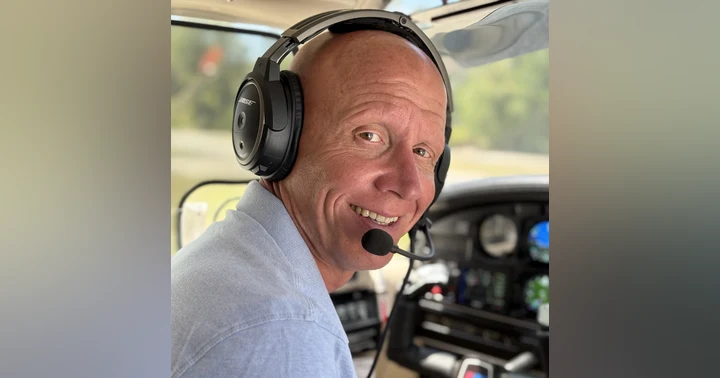
Beyond the Cockpit Door with Captain Ken Petschauer (Part 2)
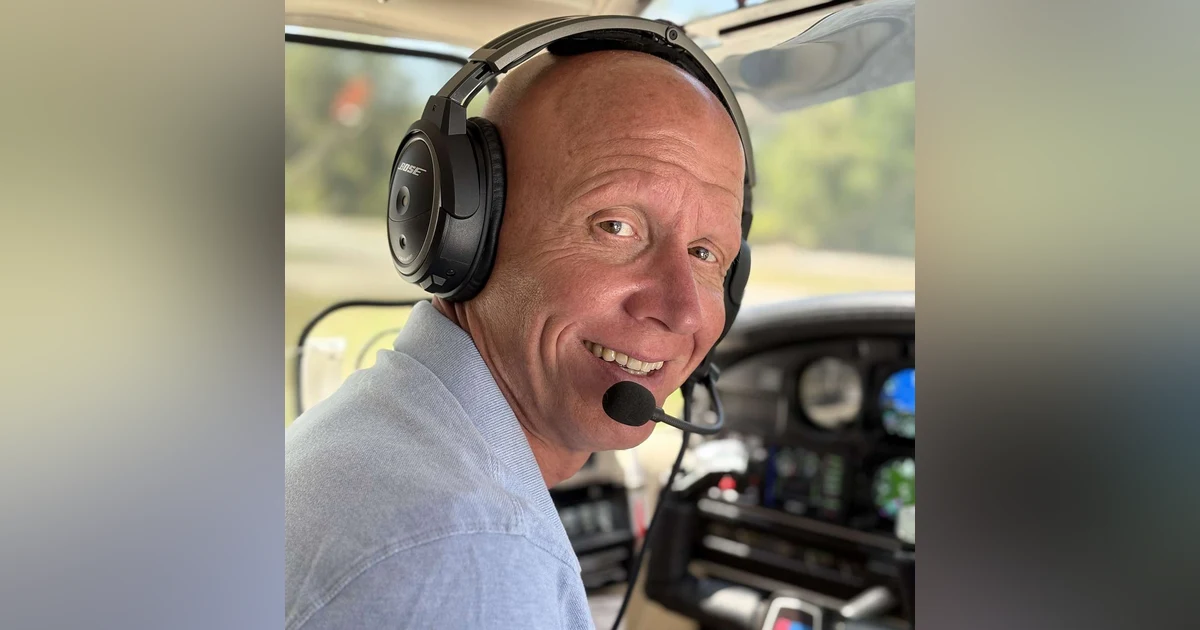

What really happens beyond the cockpit door? In this captivating second part of our conversation with Captain Ken Petschauer, we reveal the realities of life in the pilot’s seat—from the intense preparation required to fly safely, to the leadership, split-second decision-making, and resilience needed to handle high-stress situations. Captain Petschauer shares hard-earned insights from his 30+ year career as a pilot, including how aviators manage emergencies, stay medically certified, navigate...

 Apple Podcasts

 Spotify

 Castro

 RSS Feed

 Youtube Music
What really happens beyond the cockpit door?
In this captivating second part of our conversation with Captain Ken Petschauer, we reveal the realities of life in the pilot’s seat—from the intense preparation required to fly safely, to the leadership, split-second decision-making, and resilience needed to handle high-stress situations.
Captain Petschauer shares hard-earned insights from his 30+ year career as a pilot, including how aviators manage emergencies, stay medically certified, navigate changes post-9/11, and maintain calm in the sky and on the ground. He also clears up some of aviation’s biggest mysteries—like why your seat needs to be upright for takeoff and landing, and whether leaving your phone on really impacts the flight.
Key Highlights:
- Managing High-Stakes Pressure: How pilots are trained to stay calm and make critical decisions even under extreme circumstances.
- The Path to Captain: What it really takes to move from co-pilot to captain—and the unexpected emotions that come with it.
- Behind-the-Scenes Secrets: Fascinating details passengers rarely hear about flying, airplane design, and cockpit life—including why those little airplane rules actually matter.
- Career Lessons: Ken’s advice for aspiring pilots (and anyone navigating tough career moments).
Whether you're a frequent flyer, an aviation enthusiast, or someone chasing a dream of your own, Captain Petschauer’s story is filled with incredible insights, humor, and inspiration. ✈️
To discover more episodes or connect with us:
0:02 I remember, like the first time you're a captain, you got this hundred million dollar jet right, you're signing a book and you're the captain. And here you are and you feel like you're borrowing dad's car for the first time. I briefed the flight attendant about what's going to happen. Everything's going to be normal, it's no big deal. We're just going to touch down a little bit faster. You probably wouldn't even notice if I didn't tell you, but you're going to see the emergency equipment out there. Just in case you know, our brakes overheat or something. Okay, no problem, ken, you know it's all good, captain, we're fine. And then, like 20 minutes later, I get a ding from the flight attendant in the back and she's like in tears. You could ask any pilot in that cockpit and go the engine quit right now. Where would we go? And they're going to know the answer immediately.
0:43 I know exactly where I'm going. I don't even have to think about it. We always know that. Why does my seat need to be in the upright position? How real is it that I have to make sure that my cell phone and my computer is off on takeoff and landing, and then why can I turn it back on when we're at 35,000 feet? And then why can I turn? it back on when we're at 35,000 feet. Hello and welcome to the Career Journey podcast. No Wrong Choices. This is part two of our conversation with Captain Ken Petschauer of JetBlue Airlines. I'm Larry Samuels, soon to be joined by Tushar Saxena and Larry Shea. Before we rejoin the conversation, please be sure to like, follow and subscribe to the show wherever you're listening right now.
1:31 We now pick things up with me, asking Ken about the lifestyle of a pilot. What are the physical requirements of the job? When you and I did a pre-call before the interview, we talked a little bit about some things that surprised me in terms of the number of hours before you can have a drink and then fly, not being able to take NyQuil drug testing. I'm sort of curious about all that stuff, like what are some of those requirements and conditions that you have to satisfy in order to fly? So to maintain your license you also have to have what they call a medical certificate. So ultimately you need to have passed your FAA medical. The FAA medical itself is not some strict super thing like the military or whatever. It's basically a screening.
2:13 You know your blood pressure can't be above this. Your vision has to be this blah, blah, blah. You know vision can all be corrected. You know your hearing has to be a certain level. Of course you can wear hearing aids if you need to. The. You know your hearing has to be a certain level. Of course you can wear hearing aids if you need to. The problem is medications. If you take NyQuil, technically you can't fly, for I think it's 60 hours If you take. NyQuil, you can't fly for 60 hours afterwards. Correct, I think it's 60. It's either 48 or 60, something like that. Either way, that's a hell of a long time Exactly. And doctor friends of mine are like why? I guess it's because of the antihistamine. If you take Zyrtec you can't fly, for it's really high too. It's like 48 hours or something. So you have to be really careful about that. So it's not something we really, you know, bitch and moan about.
2:55 Really, Pilots whine about everything. Right, we whine worse than the jet engine. But the difference between a pilot and a jet engine you can shut the jet engine off. Airplane humor. Yeah, I got a thousand of them, but you just have you know, accept it. It's just like we talked about. You can't have, you know, DUIs. I would hope so. Every time you do your medical you have to attest that you have any convictions with your licenses or driving or anything. Have you had any convictions with your licenses or driving or anything? So it's pretty strict with that. But it's always been, at least in my world, because it's all I ever wanted to do and my whole life is dedicated to it. It's just always been that way. So it's not really restrictive, but you do have to be really careful and if you have any problems that come in the future as you get older you know high blood pressure or anything like that you can absolutely mitigate those with normal medications.
3:49 But they are pretty picky about certain things like heart attacks and people with stents and stuff like that. They're very, very strict. But there's a very strict protocol to go to and there's people to help with that with the union, like our aeromedical committee and stuff like that. They're excellent at that. All right. So I've got a couple of questions I want to ask you, the first being well, if that's the case, I mean, do you know many pilots who've had their license stripped, unfortunately? most of the time, uh guys medical out, so they either get some disqualifying heart issue or is that? is that maybe? Is that an age thing too, or or no? well it could be. I mean, if if the heart thing is age related, but I know so you do an ekg every year and you do your first one when you're young, you don't have to do it.
4:31 You do your first one, I believe, at 35 as a baseline, and then, once you hit 40 years old, you have to do an ekg every year. We've actually had guys that are pretty young and it turns out that they've had an issue that didn't show up because they've never gotten an EKG before. It's either repairable or they're out for a while until it gets repaired, which a lot of things are, but there are some disqualifying ones and unfortunately they just can't fly, all right. So then I guess the flip side to that is then how easy or hard is it to then get reinstated? If you had your license stripped tomorrow, could you then, if you had the problem fixed within a month, then the next month, start flying again? Or is it like, okay, you got it stripped on tomorrow, well, you can't fly again for six months, something along those lines?
5:15 Yeah, Head injuries are a big one TBIs, traumatic brain injuries or people who, if you get knocked unconscious or something, you have to go through a whole program and you're out. I was told this hadn't happened to me. I don't know, but you're out for at least a year or something like that. Wow, so they'll make your way to you. And it's frustrating because the FAA is way behind with getting these approved and people have had their paperwork in for months and months and months and they're just waiting for their waiver to get signed or whatever to go back and get their medical ticket so they can start flying again. So that part is pretty frustrating. While we're on this particular subject, I would think it would be very stressful. I mean, you're in charge of a lot of lives.
5:55 You know lives at stake, and safety is, of course, a main issue. Do you get stressed, and how do you manage that stress? And have you known other pilots who've just it's become too much for them? Yeah, you know I get that question a lot also. You know all the responsibility and all that, but it's you know again, flying from such a young age and knowing it from the beginning, it's just, it's just something you accept. And you know, I have to say, as I got older you think about it more you go wow, there are a lot of people back there, we're counting on you, man. Yeah, exactly, it's universal across the board. We're always told like hey, don't worry about the people back there, worry about yourself, worry about keeping yourself okay, because if I'm okay, they're going to be okay that standards are so tight that you're nowhere near having an accident, incident violation, whatever you want to call it, or bending metal, you know, or injuring somebody, you know that's the biggest thing.
6:49 Oh God, you don't want to bend metal. You know meaning. Oh, you're taxiing in and you didn't see something. You hit the wing, oh whatever. But you know that's embarrassing enough, but God forbid, you would actually injure anybody. You know that's our biggest fear. But I don't think we feel stress that way, for I'm sure some people may and maybe when you first start doing it, I remember, like the first time you're a captain, you got this a hundred million dollar jet right and you're signing a book, and you're the captain and here you are and you feel like you're borrowing dad's car for the first time. And I remember, like, is that light supposed to be on?
7:31 You know I don anticipated present themselves once in a while. Can you share with us an example of a flight where something went really wrong and you had to work your way through that? I've had some issues. You know nothing, my hair's on fire, doing mop too, or anything. I've had a couple of times where, like, the pressurization went out and, as opposed to the masks dropping, I actually was able to descend quick enough that the mask didn't drop, because that would really freak people out back there. I've had several of those. I've had a specific one where it was a newer airplane and for some reason there was an issue with the flaps and the flaps and flats would not come out, so I had to land with a clean wing.
8:15 That means touching down at a very high speed, holy cow. And a very different attitude. And I had cleared an emergency, of course, and called out all the equipment and the trucks and attitude. And I had cleared an emergency, of course, and called out all the equipment and the trucks and everything. And, yeah, I briefed the passengers and everything. And it's kind of ironic because a lot of our training is, of course, threat, neuro-management and leadership and communication and managing stress, fatigue and things like that. I remember on this one occasion I knew it was going to happen for a long time because we were on a long flight I briefed the flight attendant about what's going to happen. Everything's going to be normal, it's no big deal, we're just going to touch down a little bit faster. You probably wouldn't even notice if I didn't tell you, but you're going to see the emergency equipment out there just in case you know, our brakes overheat or something.
8:57 Okay, no problem, ken, you know all good, captain we're we're fine, and then, like 20 minutes later, I get a ding from the flight attendant in the back and she's like in tears, oh geez, she's all freaked out and I'm like what did the other boys here to tell you? I was like, okay, come on up here. I brought her up into the jump seat, sat her down. I was like hey it's okay, we actually trained for this. This is one of the things we actually trained for, so it's no big. And then when she saw how we were all good and all was going to be okay, everything was fine. But she had never been in any even minor incident, so it just kind of freaked her out a little bit.
9:38 All right. So obviously, now as a captain, you are the leader of that aircraft, whichever aircraft you're on. So I want to talk a little bit about the transition. As you said, you started as a flight engineer to a co-pilot and then obviously now to a captain. What's that transition? We're talking about hours and flight time, stick time, et cetera. What does that transition look like? It's mainly a seniority based system. Typically, you're going to start out as a first officer, of course, but there's no minimum amount of time beyond like a few hundred hours with the airline before you could upgrade to captain. It's not as if you'll say you had, I have a thousand hours and now I am a captain. It's just when there's another slot that opens, you're eligible, correct, and if you're senior enough to hold it you know, except for the fact that if you're like brand new with the company, they don't let you upgrade to CAP until you have like 500 hours or something like that, and then when you do that, you go to CAP school basically.
10:33 So you know, it's additional leadership training and, of course, airplane training. On the airplane you're going on whether or not you're going to switch airplanes or you're just going to move your mag over to the left side on the same airplane, but it's a full course of training from the left seat and a bunch of additional like leadership training and the like. We've really jumped off the career journey path a little bit, so I just want to, I want to make sure we cover it, you know. So TWA to JetBlue was there anything in between? And how does that JetBlue job become available to you? That was kind of like the biggest. You know, I was going to say turbulence, Clever huh. We don't use the word turbulence, by the way. It's always bumps, just so you know. And it's never thunderstorms, it's showers.
11:15 Right. That's part of captain training. So I was with TWA. Everything was going fine, and then there was a huge downturn in industry, of course, after 9-11, which was a tragedy. And then American Airlines acquired TWA. In that acquisition I basically lost a bunch of seniority. So when the downturn in the industry happened, I got furloughed. So I went from being in the right seat of a 767 flying overseas to being furloughed on the street in just a few months. So it was pretty devastating. The good thing is I was on the street only for eight months. I got hired with JetBlue, which was growing like crazy.
11:56 So that was great because you gain a lot of seniority. Of course, in order to get hired with them, I already had all these years experience Back then. You can get hired with 1,500 hours. Most guys then had 7,000, 8,000, 9,000 hours already, so it kind of stunk. I had to start over. But the good part about that I was with a new, young, growing airline and I got to be captain pretty quickly because they were getting airplanes like crazy. And it also gave me the opportunity to get into management and become the fleet captain on the new fleet of airplanes that they had, which was an incredible part of my career because it was extremely educational. A lot of work, but extremely educational.
12:36 That's basically how that works. So I switch airlines and you start all over as far as seniority, of course, but start working your way back up the ladder. And how many years later are you still there? 22. It sounds like a nice ladder to me. Yeah, it's been great. I was so lucky to have the excitement of doing the whole management fleet captain thing and upgrading early and doing all kinds of fun stuff and being involved. What does it mean to be a fleet captain? So it's a very technical job. It's not like a chief pilot. Chief pilots deal with, you know, guys who come into the office and have days off and vacation issues and all things like that.
13:17 Chief pilot is more administrative. Fleet captain is more technical. So you're in charge of all the basically the procedures, manuals and the checklists and the check pilots and training the check pilots and working with. Well, that's like a perfect job for you. Oh, my god, as a geek, yeah, I was like in my glory. I was down in brazil a lot because it was embryo airplanes that we had gotten. Uh, I got to work with the manufacturers and with maintenance and it was. It was an unbelievable experience and education, like you wouldn't believe, which has really served me well in my career because I understand how this all works, because I've written some of the manuals and written the procedures and got to do a lot of neat flying with brand new airplanes and stuff we don't normally do or we wouldn't do with passengers on board.
14:02 You know, earlier you referenced 9-11 and I think we would be remiss, you know, if we didn't ask this next question. You've been flying for a long time. You flew before 9-11. You've flown after 9-11. We've all, as passengers, seen the universe flip upside down because of that event. Seeing the universe flip upside down because of that event, as a captain, how has your life changed? And you know what are the emotions around that. You know. Do you look? at your flights and look at the experience differently than you did before. Yeah, you know, 9-11 changed everything. It changed the industry a lot as far as security and all the issues that go around with that.
14:46 Other than that, I mean, there's just more of a feeling of wanting to be safe and knowing that the whole mentality in the back of the airplane that no one's going to ever let something like this happen again. I guess we all feel more secure. It was just. It was a very tough and somber time that they would hit us, because the industry took it very hard, because it was like they were attacking us. You know what I mean? I mean no, it was everybody. Everybody took it very, very seriously, and what's funny now is so many of the younger flight attendants we fly with now and a lot of young pilots. They were very young when it happened, or not even born, so it's almost like we're forgetting, but those that were there and lived through it will never forget that.
15:33 I guess we've kind of we've covered a bit about how the industry has changed, change gears a small bit and talk about staffing right. This notion of you are the captain of a crew, so is it typical for you to work with a similar co-pilot crew as first officer, or not? especially if it's a guy who also likes to fly three and four day trips, chances are you're going to get a few of them together. So you typically fly with the people from your base.
16:14 As far as flight attendants go, that you just never know when you're beginning a trip. At the beginning of a trip, you're probably going to have Orlando based flight attendants, but when? If I fly, so, pilots yes, more, yes. I mean, yeah, we'll fly, but it's not always the same guy. Sometimes you see a guy. You don't see him for years. You see him walking down the trim like hey, I haven't seen you for years. Where have you been? And? they're like oh, I'm bidding this now or whatever, so you don't get to see them, right. But the thing is, no matter what pilot you fly with, everybody does it exactly the same. There's always some tiny nuances, right? So bring us behind the cockpit door.
16:54 What's something that the normal passenger doesn't know about flying in a commercial aircraft? People always wonder that, like what goes on behind the door On takeoff and landing. We are very busy. Our busiest time is when they close that door right. The cabin door closes. She comes up, says cabin is secure, captain, and slams the cockpit door and we are really busy. From pushback to takeoff, probably up to at least 10, if not 18,000 feet, we're very busy. We're talking, we're running checklists, we're starting engines. A lot of times you know it's going to be a long taxi out to save fuel. We'll start one engine and have to start it. We have to time that. And taxiing in today's modern airports can be very challenging, especially in like O'Hare Kennedy.
17:45 We know them like the back of our hand but the threat there is. We know them like the back of our hand. I may have taxied out. You saw that not too long ago that American airplane taxied across the runway. They had probably taxied at kennedy a thousand times. But you have a, you know, an expectation bias too. You know that we're going to get this taxiway to that taxiway, blah, blah and, and you know you have a brain fart or whatever. So we're backing each other up with that. So very, very busy during those times. And in cruise, you know, you know obviously the autopilot's on all the time. In cruise we are monitoring the instruments and if we're international, then we have a little more work to do. If we're over the water, we have to make position reports, believe it or not. Still, over HF radio on a lot of the airplanes, yeah, dander, dander, right, right.
18:28 It's like Rangoon, rangoon, which just shocks me still but, we do have Datalink in some of the airplanes and SATCOM now, but some of the airplanes still they're using HF radio. So we're monitoring our progress far more closely, because we're out over the water. We don't have navigation fixes out there. Of course we're all GPS, but the problem is what happens if they fail. Yeah, so we're not nearly as talkative while we're in cruise. We're just monitoring the instruments and trying to. You know, look out the window. So you mentioned going over the water before and I'm just going to give you, like the normal passenger thought that I always have when I'm driving a car and something goes wrong, I can pull over to the side of the road and deal with it.
19:09 When you are over the ocean hours from anywhere to land, is this an irrational fear that I have? What do you think about that? As a pilot, we are hyper aware of that. When we're out there, right, we literally have exact, specific procedures. So the worst thing that you would think of you can always think of the worst things but like we're cruising along, we're going from Kennedy to Barbados, whatever, four hour flight out over the middle of the marina triangle, middle of the night, thunderstorms around, whatever, and the engine quits. Right, we'd say, oh my God, we never dispatch okay or go out there that we can't get on one engine to airport within an hour and we're specifically trained.
19:55 If that happens, man, we're going to snap into action. We're going to turn 90 degrees off the airway or a 45 degree angle off the airway to where so many miles displaced so we don't run into any other airplanes because we're going to have to start down. You can't hold altitude at one engine. High altitude. You can go down to like 20,000 feet. You can't be in the 30s Trying to get a hold of ATC, to get the new clearance. We already know where we're going At any time. You could ask any pilot in that cockpit and go did you put right now? Where would we go? And they're going to know the answer immediately. It's in the box, we have it programmed and anytime. We hit that with a full equitime point where it's okay.
20:36 Am I going to Bermuda, or am I going to Provo, which is Provenciales? I know exactly where I'm going, I don't even have to think about it, we always know that. And then the guys that do like over to Europe, where it's further, they may be allowed to go up to two hours away or longer, depending on the airplane. But that airplane they're trained for that and the airplane is certified for that. It goes through some more testing and stricter maintenance and stuff like that, so that you never have to worry about we always know where we're going. That's basic irrational fear of mine. Yeah, basic airmanship. Yeah, I should be able to have a passenger call up and you could call and go hey, where are we going? I'm going to the bermuda. all right, so I guess, uh, one question that we've seen recently is this notion of airspace, especially over yeah, I know, and DC issues yeah.
21:19 Over busy airports. Sure, the DC issues. Obviously Is there too much air traffic now. Not really. It's not any worse than it has been forever. The problem is we do have some staffing issues with ATC. That's been going on for many, many, many years. This is nothing new. There's a whole thing of how they were training controllers and hiring controllers and all that stuff. That's been going on forever. So there are times now where we even get delays, like before I even leave New York to come to Florida. It says any aircraft crossing this line they show you on there it's going to be delayed 80 minutes, 91 minutes, whatever due to staffing. They show you on there is going to be delayed 80 minutes, 91 minutes, whatever, due to staffing. And that's because one of the centers somebody has whatever.
22:02 A staffing issue means that they have to delay the flights and space them out further so they can't be 10 miles of trail. They may make you have to be 20 miles of trail so they have to space everybody out. So the airspace now is not really any more crowded than it's ever been. Everybody's worried about the DCA stuff. That was very unique with the military flight, which they've now canceled. They've canceled those routes actually that they don't exist anymore. But as far as how crowded the skies are compared to how they've been in the past, it really hasn't changed very much and we have some great technology on the airplane and in air traffic control to mitigate those risks. Speaking of air traffic control. Am I the only one who doesn't understand a word that's being said when they play that on my television?
22:48 It's like your own language or something. Yeah, well, we definitely have our own language. Yes, my wife, I can, and I'm also really good at listening to like three or four things at once. It's just something that you pick up, like when you first get in you're taking flying lessons, you're like what. But once you practice and learn and new pilots like private pilots they actually have online training for that where you hear tapes and you just start to pick it up because you kind of know what to expect. Tushar, you should do that. I'd like you to learn that language and tell us a story once in a while. There's a lot of cursing, but I'm perfect. No, yeah, my wife. She's like are you listening to me? I might not have heard her, but I can read back exactly what she said. You know, and she's like you don't really know what they said.
23:35 I'm always like I'm glad they understand that, because I have no idea. But then again it's usually played during a crash situation. Yeah, yeah, yeah, Maybe things didn't go well. Internationally. It can be a challenge. I'll tell you that. You know we fly the Dominican Republic and other places like that. Sometimes, or when I used to fly to Europe and over to Cairo and places like that, sometimes you're like what did he say? As a matter of fact, they sent me down. I was down in Brazil bringing an airplane back you know a brand new airplane when I was the fleet captain and they said, hey, can you take so-and-so with you? You know he's very new on the airplane but you know you're a Czech airman so you can let him fly and he gets some experience, experienced, you know, sim instructor and all that stuff. But he speaks the language. Even he's really going to help you. And I said, great.
24:16 So we got down there and we were getting a clearance. I said, well, you get the clearance because you understand that. And the guy reads off the clearance and his Portuguese accent. And I'll never forget the look on this kid's face. He looked at me with all the blood draining out of his face and he said what the F did he just say, and I just started laughing. I'm like they sent you down to me because you speak the language. You know, it was just so funny, I didn't expect it to be that way. So quick, quick one here before we get to some advice and some other fun stuff we have here. Have you ever gotten into a fight with another pilot like and had to resolve something like while you were in the cockpit? No, no, no, no. There were stories of guys arguing over politics or religion or whatever, but that's extremely rare.
25:02 We pretty much police ourselves very well. It's a very small field, I joke. You can't talk bad about anybody because somebody will say, oh, do you know, captain Sozo? And I go oh is that jerk and you're like, oh, it's my dad, that kind of stuff. Do you know who the bad pilots are too, though, and can you point them? out, so I'm not on that plane next time. Yeah, yeah, yeah right. And we'll make them wear our red leggings. Make them wear that scarlet letter. All right, so I have no idea what they said. How many languages can you speak? Yeah, I only speak English.
25:42 I do speak some German, but the international language of aviation is English, so all air traffic controllers are required to speak English. And it can be challenging with the accent sometimes and you have to ask them to repeat and repeat, but most of the time we already know how they're going to clear us. We have the approach plates, we know what the names of the fixes are and stuff like that. So you have a lot of help with that and, quite honestly, once you fly to a certain place and listen to it a little bit, you actually learn to pick it up. Why do all captains seem to have the same voice? You know, the same soothing voice, we'll be flying at 35,000 feet. Actually, you know, and believe it or not, that's something like we practiced from a kid when he first started flying Right.
26:24 But there is actually some truth to that. So everybody says to, like when I make my PM, like, hey, folks, welcome aboard. Like, like, you got that pilot voice down. You know, it's funny because ski patrol, like you have to talk on radios too, and they're like man, you got that pilot voice on the radio. Everybody knows who you are. But part of that too, on the airline is that background humming. You hear? That's another good question, that's a great question. Yes, absolutely. You know what that is. That's 400 hertz, 400 cycles. So most power is 60 cycles in your house, but airlines, airliners, run on 400 cycles. So that's what that sound is Okay, now, I know, now I know that sound is yeah, and it helps your voice and a lot of scotch. Why does my seat need to be in the upright position?
27:07 In case we got to evacuate. Okay, fair enough. So if we're on takeoff and we reject the takeoff or something happens, we slide off whatever we got to evacuate. You don't want the seat down because you won't be able to egress. Also, this is kind of cool If you ever sit in the exit row right, the seats in front of the exit won't recline because they don't want them coming back to block the exit. But also, if you look at your and this is secret you can win some money with this if you have somebody. If you look at the tray table, it has the little knob you turn to drop the tray. If you look at the ones in the exit row, they're blocked from going one direction. That's in case you're egressing the airplane that you don't accidentally pop the tray table down and block the people flying. I would never have thought of this in a million years.
27:49 I got lots of them, if you ever see the little triangles up above the window, above the wing. Sure. That's where, if I had a problem with the flaps and slats and doesn't know what position they were in, I would tell the flight attendant to go to and look out that window and it'll tell me what position the flaps and slats are in because it's marked on there. So if you look next time you see the flaps and sort of slats down in the back and the flaps you can see marks and it'll say 30, 20 or something like that. Is it still glamorous to fly? We always hear stories about people getting in arguments on flights and not not pilots I'm talking about like passengers, right? Is it still as glamorous to fly as it once was I? I remember when my father would take us, the family, flying. He would wear a suit. Yeah, yeah. No, it's not as glamorous as it was.
28:31 I started in 96, so I missed the real heyday of all that. But it was a lot different when I commuted, because I commuted at TWA. I lived in Florida and had to go to New York to fly. We still had to wear a sport coat when I commuted. You know if I wasn't in uniform. So, but it seems like it's not just this happened in aviation, this has happened everywhere. Everything has just changed. That way it is less glamorous, but everything is, I guess is the right answer. That is the right answer. Okay, once a plane has firmly landed on the ground, the correct thing to do as a passenger is applause or no applause.
29:12 You know what's funny about that? All of a sudden that's coming up and people didn't really ever clap unless it was like a really bumpy flight or a really bumpy approach and they were just happy to be alive Alive. Really bumpy approach and they were just happy to be alive alive. But when we fly to, like puerto rico, san juan, they'll clap every single time of course they're going someplace nice. You're taking them someplace nice every time it's a culture thing. There's no doubt it's a culture thing, and we can hear it a lot of times too, so we like it. So yeah, do it right, okay, what is your favorite airplane movie? I don't mean the comedy airplane movie, although it could be your favorite, but any movie about flying or planes. I guess it probably is airplane. I like airplane.
29:53 Surely you cannot be serious. Yeah, yeah, right, exactly. Don't call me Shirley, and have you been to Macho Grande? Absolutely Airport. All those movies are good but like people can't, like my wife can't watch an airplane movie with me because she's like all he does point out all the errors. You know I cannot do that well, ken, this has been um. It's such a great conversation. You know we talked to so many. Another two hours worth of questions. Yeah, hey, bring them on, bring them on we do, which is why I'm trying to point us towards an exit, because this could go on for another three hours. That's it. Let's talk about flying cars. Here we go. So, ken, somebody who wants to get into this business today, who wants to follow in your footsteps and of course it's difficult to do that because the footsteps always change, industries change, etc.
30:45 Etc but a young person who wants to get into flying, who wants to become a pilot, what advice do you have for them? First of all, make sure you really want to do it. It takes a lot of commitment and a lot of time and a lot of money, unfortunately, to get into it, so make sure you want to do it. If it's somebody who's not sure, go to your local flight school, take what they call a discovery flight and go actually fly with a flight instructor. It'll actually let you manipulate the controls and fly around and make sure it's something you really want to do. The Experimental Aircraft Association also has free flights that we do for kids. The biggest unfortunate block is financially and the best thing probably to do is go to a flight school that just teaches flight school pilots.
31:25 And if you have probably to do is go to a flight school that just teaches flight school pilots and you know, if you have the resources, definitely get some kind of degree. If you can go to like a school like Emory Riddle, obviously if money's not an option, that's the way to go or to one of the flight schools that you go to that just teach you the flying part and get you all the way through. Just you know you got to commit to it because it's really hard to start and stop and start and stop. I had one I wanted to wrap up with and you gave me another one real quick to pop in there. Are you ever too old to fly? No, so we have to retire now at 65. It used to be 60. Now it's 65. We got no choice. You got to retire at 65. Let me, let me change that. Are you ever too old to learn how to fly?
32:05 No, I taught a guy who was in his 70s when I was a young flight instructor and he just always wanted to learn and he did fine and you can fly. So private flying is very different. You don't need the same medical standards. You still have to get a medical, but it's not. They call it basic med now and you can actually go to like a regular doctor and then the FBA can sign off on it just to make sure you're not going to have a heart attack or something like that. I say this because now you are inspiring me to fly to go back and maybe learn, take lessons again. Have you ever been?
32:46 well, you say you've. I know we're gonna, we've got it, we've got to wrap up. But I got one more question how real is it that I have to make sure that my cell phone and my computer is off on takeoff and landing and then why can I turn it back on when, the when, when we're at 35 000 feet? so there is a real problem with the cellular phones. Okay, I could hear, like when I back when I flew the MD-80, much older airplane we could actually hear in the radio and you'll hear it sometimes in your car or if you have a like a radio around and your phone is laying next to it, like that beep beep, beep, beep, beep sound. That's that sound of the cellular and you can actually hear it in the radio sometimes and in the older airplanes it would actually affect our compasses. It would actually make them turn and jitter, that point I understand, but now more the modern craft.
33:30 Yeah, so the modern ones have all had a modification done and testing done to make sure that it doesn't interfere with the aircraft system. That being said, a lot of the airlines just institute policies like that because they don't want people either talking on their phone or using it at certain times and they just want everything stowed in case of an emergency and stuff like that. So it's more safety and a lot of airlines can make up kind of their own rules with that. So you'll notice some airlines make you do things a little bit different than the other and you know the FAA requires certain things but the airlines can make up pretty much whatever they want and it's you know most of it has a safety aspect.
34:11 Ken one more. I'd be remiss if I didn't ask it what's your most memorable flight and why. That's a good question. Probably my first flight as a captain. It's like the culmination of your career. Like you know your career goals From where to where. It was from Orlando, from Kennedy to Orlando. It was with JetBlue. Similarly, your first podcast experience will be something that you remember forever and hang on to Never forget it. As we've refused to let you leave. Because this has been so incredibly interesting. Thank you for the time, thank you for the look inside of I think, what, to a lot of us, is a very mysterious industry.
34:55 It's sexy, it's interesting, it's exciting and in a lot of ways, it's mysterious, and you gave us a look that you know not a lot of people have been able to get their hands on, so to speak, or their ears on. So thank you so much for joining us. Well, thanks very much for having me. I like what you just said too. It's nice to get this stuff out there too, because there is like a lot of mystery behind it. It's not that mysterious, it's just. It's good to have interesting conversations that people would be interested in. So, got any other questions at any time, you know, just hit me up. I'll answer them all I might not all be right. But if I don't know the answer, I'll just make it up. But they'll be entertaining. There's no question about that, Ken.
35:36 Thank you so much for joining us. Thanks guys, I appreciate it. So that concludes what I consider to be a fantastic and really riveting conversation with Captain Ken Petschauer of JetBlue Airlines, giving us, in a way, a look inside of a very mysterious and unknown world that not many of us get to look into. So I'm very appreciative for that. Larry Shea, what are your takeaways? Yeah, I absolutely love this conversation. I'm going to be real with you. I'm a scared flyer, so I don't know if this gave me peace of mind or what, but I'm always fascinated with just big metal boxes hurtling through the sky.
36:17 I mean, let's just start right there. And I can't imagine how powerful you must feel behind that windshield and the sense of responsibility, knowing that you have a full passenger deck behind you. You know so so many nuggets. I mean all the little stuff about like if you take NyQuil you can't fly for 60 hours, and stuff. Like I mean, it's so many fascinating little pieces of information. I found his advice to be quite interesting Just make sure you really want to do it and you've got to commit to it. I mean, we could say that for a lot of professions, but I think he hit the nail on the head when it comes to this one. So yeah, a lot of fascinating little nuggets and just a great, great conversation and a great guy.
37:00 I'm flying JetBlue all the time now, or at least the flights that he's on, that's for sure, that's right. I got to tell you is that, you know, I was so surprised by how candid he was, which is one thing. I didn't think he'd be as candid as he was and, let's be honest, I mean, we really did have at least another three hours worth of questions. If he wanted to stay on, we probably could turn this into a 10 part, a 10 part interview. That's absolutely like a mini series. Absolutely a whole season could have just been good. Pilot um yeah, I mean, shay, you kind of hit the nail on the head is that you know to, to pretty much know, when you're a, you're a child, that this is what you want to do for a living? I mean, that takes a lot of focus. And not only does it take focus, but to make that, make that dream a reality, is just as impressive.
37:45 I think you're right in saying that I would be far more comfortable with having pilots like him in the cockpit, knowing how serious they take their job. We all kind of wonder why they all have the same voice when it comes over on the radio to tell us that we're at 35,000 feet. We all kind of joke about stuff like that, but there really is a mentality to being not only a pilot of such a craft but being the captain of that crew. And look, I am happy that Ken Petschauer is the guy in the cockpit. He obviously will make life easy for all of us knowing there and you're right, shay, from here on out I will be looking for Ken Petschauer on the flights that I take down to Florida and take that flight only.
38:26 You know I feel really lucky that we had Ken on today. I forget who brought the idea forward of getting a pilot Larry Tushar, one of you and Ken popped into my head right away because I remember meeting him a long time ago and my memory was of this really, really funny guy and he certainly lived up to all of my expectations. Today, in terms of the conversation itself, you know, to me a big takeaway is lean into your mentors they certainly had a big impact upon Ken's career and also keep an open mind. Grab the opportunities that come your way. I think one of the stories he told was of working for, I guess, a television station in Orlando as the traffic pilot and you know, it might have sounded sort of silly at the time, he might have wondered why he was doing it, but in the end it's crystal clear that that was a really smart choice and it led to incredible things on the other side.
39:26 So great stuff there and I guess, in terms of opening my eyes to the industry, I can now say I understand why my seat has to be in the upright position and I now know why I have to turn off my telephone. So, ken, thank you for all of that and thank you for joining this episode of no Wrong Choices. We also thank you for joining us. If this episode made you think of somebody who could be a great guest, we'd love to hear from you. Please reach out to us through the contact page of our website at norongchoicescom to let us know. While you're there, check out the blog for a deeper look at our takeaways from each episode. You can also connect with us on social media. We you're there, check out the blog for a deeper look at our takeaways from each episode. You can also connect with us on social media.
40:08 We're on LinkedIn, instagram, facebook, youtube and X. On behalf of Larry Shave, tushar Saxena and me, larry Samuels. Thank you again for listening. We'll be back next week with another inspiring episode.