Best Of: Ian Eagle on Broadcasting, Teamwork, and Family (Part 2)
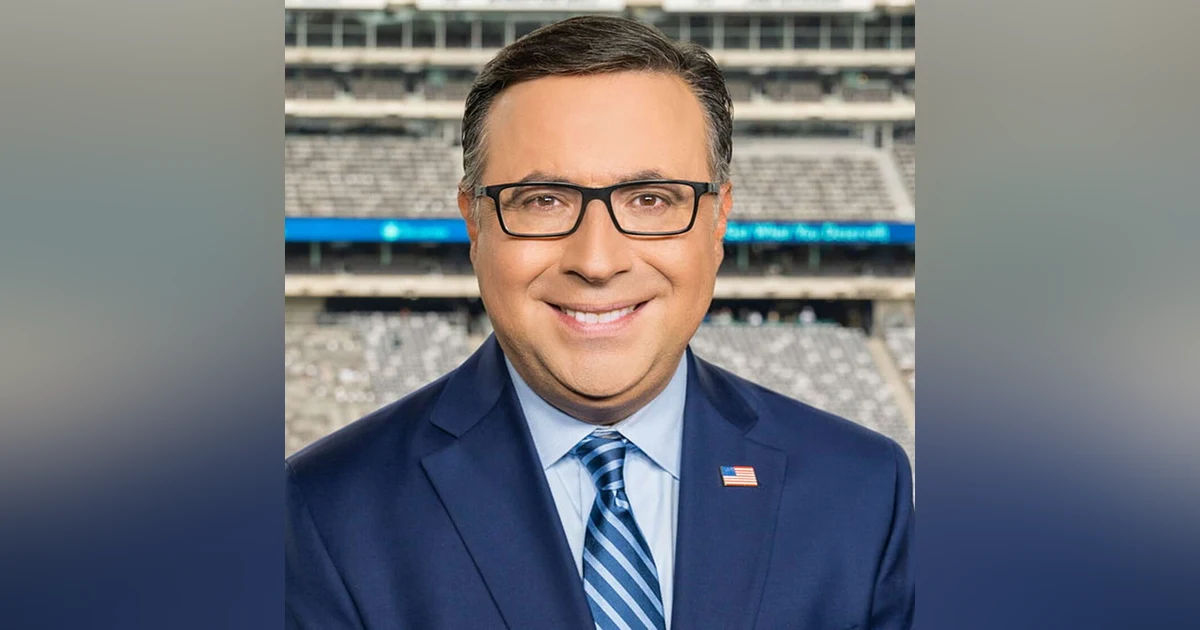

What does it take to thrive behind the mic—and still be present for your family at home? In this Best Of replay episode, we continue our conversation with acclaimed sportscaster Ian Eagle, the voice of the NCAA Men’s Basketball Tournament, the NFL on CBS, and the NBA on TNT and YES Network. While Part 1 explored Ian’s early career and creative roots, Part 2 takes us behind the mic and into the relationships, lessons, and values that shaped his rise to the top of the sports broadcasting world....

 Apple Podcasts

 Spotify

 Castro

 RSS Feed

 Youtube Music

 YouTube
What does it take to thrive behind the mic—and still be present for your family at home?
In this Best Of replay episode, we continue our conversation with acclaimed sportscaster Ian Eagle, the voice of the NCAA Men’s Basketball Tournament, the NFL on CBS, and the NBA on TNT and YES Network.
While Part 1 explored Ian’s early career and creative roots, Part 2 takes us behind the mic and into the relationships, lessons, and values that shaped his rise to the top of the sports broadcasting world. Ian shares revealing stories—from learning on the job with childhood heroes to mentoring new voices like his son, rising broadcaster Noah Eagle.
Episode Highlights:
- What Ian learned from working with over 170 broadcast partners
- The role of listening, empathy, and preparation in delivering a great call
- How a last-minute assignment launched his NCAA Tournament career
- The emotional story behind watching his son call the Olympics
- Insightful career advice for aspiring broadcasters—and why “the tape doesn’t lie”
Whether you're a sports fan, a media professional, or someone exploring your own career path, Ian’s reflections on communication, humility, and personal growth offer valuable inspiration.
To discover more episodes or connect with us:
00:00 - Welcome Back with Ian Eagle
01:29 - The Secret of Broadcasting Chemistry
05:28 - First Day as Jets Broadcaster
10:47 - First Nets Broadcast Disaster
19:53 - Working with 171 Different Partners
29:41 - Balancing Family Life and Broadcasting Career
40:27 - Noah Eagle's Olympic Success
46:03 - Advice for Aspiring Broadcasters
0:00 Hello and welcome to no Wrong Choices. I'm Larry Samuels, soon to be joined by Tushar Saxena and Larry Shea. This episode is part two of our conversation with the highly respected play-by-play commentator, ian Eagle. Ian is known for his work as the lead voice of the NCAA Men's College Basketball Tournament on CBS and coverage of the NFL and NBA. In episode one, we explored the evolution of Ian's career dreams, his creative family roots and how he broke into the business. Now we'll dig into how he hit the big time, the importance of teamwork and the emergence of the Eagle family legacy, as his son, noah, is a rising star in the business as well.
0:40 Ian also provides great advice for any young broadcaster hoping to break into the business. We'll pick things up with Larry Shea asking Ayan about the importance of being a good listener, which proves to be a perfect setup for the Ayan Eagle that I love to hear on a broadcast. I often think about an announcer what are they going to say? Whereas I think it might be more important to listen to your partner and working with them, in a way. How important is the listening aspect? Because you're the king of working off of something they say, whether it be innocuous or not, and making it hilarious or interesting or sarcastic, like you said. So how important is that aspect of it rather than what am I going to say next?
1:25 I'm sorry, larry, I didn't hear your question. Perfect Perfect. And there it is Well done. No, it's the secret back to Mike and the Mad Dog in many ways and their ability to have natural chemistry. Their styles just worked. There was a yin and yang to what they were doing, mundane Wednesday afternoon, to find something, some grain of gold, that then they turned into a masterpiece of radio.
2:13 So that year 1992, being intimately involved, I also was Chris's chauffeur for the year because I lived on the Upper East Side, he lived midtown. I drove him home every day for a year. So you're getting a different level of relationship when you're now with someone an extra 35 minutes at the end of your day, going over the 59th Street Bridge and shooting the breeze and getting into personal stuff, not just radio but real personal. So I got to know the human and Mike was great to me as well. I got to know him on a human level and I do think it played a role in how I ended up working with analysts.
3:03 I had a eureka moment when I got that jet job. So it's 1993. I'm 24 years old, I've been handed the keys to a very important new part of the radio station, which is New York Jets football, and I'm told that my co-host for the pre and post game will be Freeman McNeil, the former Jets running back, who, just as an aside, was my favorite Jet growing up, so you just have that in and of itself. By the way, I did a show called Friday Night Hoops the year before for FAN, and my co-host was Bernard King happened to be my favorite basketball player growing up.
3:51 So when you're put in these positions at a young age and they are the neophytes in radio and they're leaning on you, I realized very quickly that I had to take on an ownership role in the relationship. But that also meant making them look good. So I'm going to clean up the story. But Freeman McNeil the first time I meet him is the first pregame that we're doing for the preseason, so it's the first broadcast. He comes to the studio, the Jets are on the road.
4:33 He comes to the studio two hours before the game, so we have about an hour to get to know one another and we just chat. We have a lovely conversation about his wife, his kids, about his post-playing career. Couldn't have gone any better. After about an hour I excuse myself. I tell him hey, I need to go in the other room just prepare some notes for the show. I'll come and get you when we're about 15 minutes out, great. So I leave Rumi McNeil in the back. I go, do my stuff. I grab him. We now go into the main studio. We're sitting there. It's 10 minutes to the top of the hour. It's five minutes to the top of the hour. I'm nodding at him.
5:13 He's not. He has zero experience. He has never done anything in media. It's now one minute until the top of the hour when the show is going to start. It's my first show, as well as the host of Jets pre and post game, and again I'm just going to clean it up. I said you good? He said yeah, yeah, yeah. He said hey one thing. I said yeah, forward op says 45 seconds. He says don't screw me here Cleaning it up. I said what he said you know, don't screw me here. I said no, no, no, freeman, I'm not going to screw you, I'm going to make you look good.
5:56 And he smiled. I said we're going to do really well here. I said everything that we were doing in the other room we're going to do here. He went okay, yeah, yeah, perfect, and that was it. And I realized in that moment this is a guy that played in the Rose Bowl in the NFL high level in front of 75,000 people, 100,000 people, in his college days. But in this moment, 30 seconds before going on air, he was uncomfortable. Yeah. And it was my job to make him comfortable and that really hit home for me and I've taken that with me for the rest of my career.
6:39 When I'm working with new partners, old partners, that's the job. The job is to make that person comfortable so they can do their best work, and it's your job to be malleable. I can't force someone to go along with the humor if they're not humorous, so pull back, don't do that. I can't force someone to talk strategy. If they're not comfortable talking strategy, fine, we'll find another way. X's and O's player backgrounds, biography If they're not into it, it's not my job to force them.
7:22 It's my job to find what they are comfortable with and really highlight that part of their personality. You know, when I think about Freeman being nervous going into that first broadcast, it made me think about your first broadcast with the Nets doing play-by-play. That moment. What were your emotions walking into that building that day? The game was in Houston and the Rockets were getting their championship rings. I was working with Michael Corrin, who could not have been a nicer human being and a better person to work with Terrific.
8:03 He was just as perfect a partner as I could have been possibly paired with in that time. He was a former net, played a little bit with the Washington Bullets. He was a star at North Carolina, New Jersey, guy from Jersey City through and through and, by his own admission, not a polished media guy, but he was himself and he came through. A polished media guy, but he was himself and he came through. So we sit down now we're going to call the game in Houston and we've got an engineer. He's got really old equipment and I put the headset on and it's not comfortable and I just reminded myself hey, this is what you've worked towards, this is your opportunity.
8:45 I'm doing this in relative anonymity. The Nets were certainly not getting big ratings and on radio at that time I'm not sure people even knew where to find them. They were on 1560 AM, if I remember correctly. Wow. Were you on WPAT at the time. I think it was also on selected radio stations throughout New Jersey. Wpat was one of those. There was the station out in the Rutgers area. I have the information back here. In fact I could get it right now. I have it framed. I'm not joking of the press release that came out with the. In fact I could get it right now. I have it framed.
9:25 I'm not joking of the press release that came out with the Nats. I could give the whole radio network. It was five of them in New Jersey, so New Brunswick was one of them. And I just reminded myself hey, do your thing, you're going to be able to pull this off and we're about five minutes from air and I realize they're going to do the ceremony now and we have a pre-game show that we have to do. David stern is there and I turned to the engineer. I said hey, we're going to need you to to pot up pa. The public address announcer goes pa, this is in hou in Houston. I said yeah, yeah, pa, he goes.
10:05 Oh, we don't have PA. I said so you don't have PA. He goes, we don't have PA. I said, okay, is there a way to get PA? He goes, can't get you the PA. So I look at Mike and Mike says don't worry. So I look at Mike and Mike says don't worry. Well, no, meanwhile we're talking and it's all happening. Thunderous applause, they're getting their rings Hakeem Olajuwon, sam Cassell, robert Ory and I can't hear myself. I can't hear Mike. I'm leading to sound that they fire at the studio. I can't hear that. This is the worst possible way to start my play-by-play career.
10:48 In addition, now I don't sweat normally in life. I start feeling myself like flop sweat and because the headsets are so decrepit and old, the material on the earpiece of the headset is cracking and it's black. You know what I'm talking about. I'm trying to describe. Yeah. Your ears are black? Yes, and it's like there's a film to it. So we get through the pregame. I start calling it. The game is really fast. I'm realizing quickly like oh boy, and I'm just trying to keep up. And we get to the first break and Mike says hey, you know you're doing well, just you know lock in.
11:32 And it gets better as the game goes on. Halftime hits and I see Mike like clearing some stuff, like because he looked at me and he's, he's doing this, but I don't put two and two together but we finished the game. Not memorable by any stretch, but I get through it. And now we're flying from there to dallas. There's a a storm in texas like the state has never seen. What should be an up and down 40 minutes is not. We are circling for hours. It feels it's like a two-hour ordeal.
12:14 And we're up dropping grown men, nba players are shrieking and I'm just sitting in in my seat. What the hell is going on? We land, we get to the hotel, I get to my room. Finally, I just want to get out of these clothes, sweat, soaked, and I look in the mirror and my ears are caked with this black substance. It's in my ear, it's behind my lobe. I'm like, oh Mike. And finally, the next day I meet Mike for lunch. I go dude, why didn't you tell me he goes? You were having a rough enough night.
12:59 I don't want to. He was entertaining himself. Oh, my God. The second broadcast was much better. The third broadcast was even better than that. Did they find the PA? No, no PA. We don't have PA, that's brilliant. So, uh, just to give folks an idea, how many people have you worked with uh play-by-play analysts in your career? at this point I think I'm at 171, I believe I got to check the latest numbers. I do keep a running list. It's funny Bill Raftery and I worked together for so many years and that meant a lot of lunches with him. It also meant a lot of beers and a lot of wine and Sambuca. And we were at lunch in Milwaukee one day, just me and him.
13:41 And I asked him. I said hey, how many partners have you had? He goes oh, that's a great question, bird. And he takes out the napkin and he's writing on the napkin and he starts writing names down on the napkins. He gets about 10 deep and he goes ah, there's too many. And he just crumbles up the napkin and he throws it away. And it hit me in that moment If I get into a similar situation I'm talking about this is my second year doing it, so it's probably 1996. If I get into a similar situation, I'm going to keep a running list, and I have, and it's pretty wild to look back on. So I think I'm somewhere in that neighborhood about 171.
14:24 That means a lot of personalities you've got to judge, yeah, and that's what it is Truly. Something else that you don't realize that will play a role later in your life is how you connect with other people and the importance of finding common ground and being a good teammate and being a good partner. So I can look back on my youth, being put in very unique circumstances based on my parents and what they did for a living, based on their situation, flying cross-country by myself at the age of eight and now having to fend for yourself and being plopped next to some person on the flight and that person chatting with you and having the ability.
15:14 I sat next to a blind man. I remember this quite vividly and we spoke for five consecutive hours. And we spoke for five consecutive hours. I don't know if he had any idea how old I was truly, until the end, when he said how old are you? By the way, I said I'm eight. I just talked to this kid for five hours. And he asked which I probably shouldn't have given, but he was really a nice man. He said well, what's your name? And I gave him my name and he said you know where do you live? And I said Forest Hills. I didn't give him my address and he ended up sending a letter to my parents and and it detailed just how impressed he was by someone that could carry say truly interested, and then being interesting in your own right.
16:13 Do you have something to say? Do you have a point of view? Are you well read? Are you learned? What else other than sports occupies your time? I think it served me well. I didn't realize it at the time, but I can look back now and see all of these different experiences that played a role in having that confidence to A do this job and then B do it with others that were at the top of their respective fields as athletes or coaches, and still find a level playing field in which to operate.
17:15 I obviously know you as the voice of the NFL, or one of the voices of the NFL, one of the voices of the NBA, but my particular favorite of yours is as the voice of the NCAA. You, to me, have so many great calls from your time calling college basketball, whether it be regular season, but especially the tournament. If you had to rank out your favorite times of the year, your favorite sports to call, which would they be? The college basketball part of it was very unexpected. This was not something that I anticipated in my career and certainly didn't go into this thinking one day that I could do the final four.
17:56 That was not even on my radar. To be perfectly frank, I get the job in 1998 in an almost excuse me fashion. Cbs was doing the Winter Olympics in Nagano and they needed three play-by-play announcers for that weekend just before the Olympics started, because all of their announcers were in Japan. And I got a call and it happened to be all-star weekend in the NBA and I did Vanderbilt at Arkansas on February 7th 1998. And nothing of note took place in that game, nothing.
18:40 It was a typical SEC game. Arkansas was really good. It came down to the wire. Arkansas pulled away one by eight or nine points in the end. But my agent got a call from Terry Ewert who was taking over as the executive producer of CBS Sports once the Olympics ended and he said I was very impressed with how Ian handled the traffic. You don't know, terry Ewert, but that's an excellent impression. Was he at NBC? I think I may have met him. He was. He was. Yes, terry was at. NBC. Yes, terry was a very good guy and actually lived not far from me in New Jersey.
19:24 And my agent then calls me and said did you like help get the cars out after the game? I said no, I did not. I said why. He said well, he was very impressed by how you handled the traffic. I said yes, the traffic of the broadcast, I think, is what he means, and this is your question. Yeah, well, did you? fire him Eventually? Yes, what do? you think I do for a living buddy. For a different reason. That's probably a whole other podcast in and of itself. So I said, great, they end up calling me to see if I was available for a Syracuse-Georgetown game on February 21st.
20:06 I was not. I had a net pacer game. I had nothing in my deal that let me out of these games. I had to turn it down, which was crushing. That was a dream, to maybe one day do Syracuse-Georgetown. And the woman on the phone, maddie Hetzel, who worked at CBS for many years. She said, oh well, that's a shame. She said I'll let you know when our tournament seminar is and you'll block out the dates for that. I said, okay, I'm thinking she doesn't know. She's just saying, because I was maybe supposed to do this game, that I was doing the tournament. So I call my agent, the same one that thought I was directing traffic out of the game.
20:48 I said, hey, just check, maybe with Terry Ewert Am I doing the tournament? And my agent said, no, I don't think so I'll check. Calls me. Two hours later. He said yeah, you are doing the NCAA tournament. So then I had to actually call my bosses at MSG, that's who oversaw the Nets production at the time. It was all under the cable vision umbrella and get permission, which Mike McCarthy was my boss. He did give me permission to take two Nets games off. I flew to Sacramento. I did the NCAA tournament. I was at the seminar and that just happened to be when CBS got the rights to the NFL, literally that week.
21:35 Usa, did you remember when the USA Today used to come to your hotel room? door, just sitting there, absolutely. And you know I was. I'd read the red and then I'd look at the purple section and then I'd look at the map. Maybe on the main section. Main section I'd throw away. I don't care about the green section, and in the red section Rudy Marski had a column and the headline CBS gets the rights to the AFC package and that was it. I was in the right place, right time. I did well at the tournament and then I had been doing the Talk about the difference between the sports, you know.
22:26 I mean NCAA, nba is very different Basketball flow, different energy, different everything compared to NFL. I mean I want to take this conversation and talk about my UConn Huskies and how amazing they are, but we'll stay away from that for a minute, Larry. We'll stay away from that Juggernaut. Yeah, I mean they have a chance to three-peat. I mean, what are the you know? But I want you to talk about the rhythm and how you prepare for three various, very different energetic sports. I mean, people think NCAA and NBA are the same. It's such different energy, I think, isn't it? Yeah, oh, you nailed it and we'll start there. Nba is very highlight driven.
23:08 It's very high energy. Don't look at your notes because you could miss the dunk of the year at any moment of any game. And I learned that the hard way. When you start and you look down at your notes and now miss the dunk of the year. So that happens once. You don't let that happen again. The difference, I would say, is pacing and the level of play. Nba a two-on-one break there's a 95% chance they're going to finish. Lay up, dunk, what have you? Two-on-one break college basketball lower that number. That's now 55%.
23:50 Let's say so as a play-by-play announcer. Nba your mind is working in a manner to anticipate what's going to happen. A three-pointer on the way in the NBA 40% chance it's going in. So you have to be ready for that call. You have to be ready to deliver. College basketball percentage isn't as high. You have to be ready for that. So what I learned was pacing was very different. And then atmosphere, ambiance is very different. You do a game at UConn, at Gampel regular season game, uconn goes on a 12-0 run.
24:31 I had it this past year against Seton Hall. It was, I think, a more extended run. Even than that. They tended to do that Crazy. Yes, the place is going crazy. You can barely hear yourself on air. You're trying your best to cut through and get in before the crowd erupts. Nba game 12-0 run. Yeah, crowd's into it, but game 38 of 82, there's not going to be the same fervor. So that's just being a smart broadcaster, that's recognizing that situations are different. You can't call it the same way.
25:13 You can't apply your approach in the same manner. You've got to attack it differently. Final four completely different Huge, cavernous venue in Phoenix. My setup is different. The floor is elevated. Your sight lines are not what they are normally when you're calling a game where you're above it, the table. They gave us higher chairs so it's just a little different feel, but your angle is different. So things that are automatic where your eyes go.
25:53 I had to adjust that first few minutes of the first game of the final four of oh, wait, a second. Normally I look this way. I'm going to have to make a change here and you do adjust. I've called literally thousands of basketball games Adjust, figure it out, problem solve. So those are some fundamental differences. Football, to me, is an analyst sport on television. It really is. It's set up for the analyst, it's play, it's replay one look, two look and then get back into the next play. I do my best to be efficient in my calls and not be verbose when it comes to football.
26:41 Try to just highlight the best moment of what you just saw and pick out the most important and pivotal part of that play. Time and time again, if it's a cut, if it's a juke move, if it's a dive, if it's a snag, how can you describe it? How can you pick the perfect word in that moment, as all these words are flying through your head and that's probably the essence of this where you hope to get to a place, when you're calling play-by-play, where you feel like you're in it and not hovering above it, and that's a really fine line.
27:22 There are plenty of excellent announcers that probably never feel that comfortable. Where they're in it, where the play is happening and it's automatic, it's firing synopses in your brain of what it is. You want to say how you want to say it, and if you're hovering above it, it's more reactionary and you're tagging as opposed to calling, and there is a nuance to it, no doubt about it. All right, let's talk a little bit about your family life and meaning. You know you mentioned at the beginning about how you kind of raised yourself.
28:04 Your father was on the road a good portion of the year, home, maybe a hundred days a year. It's kind of come full circle in that sense. Right, because you are on the road a good time a good portion of the year. I mean to have you now for this much time has really been. Look it was, it was the yalta conference trying to get people, trying to get you to agree. Agree to this was great, because to get this much time with you is such I know how precious your time is. Your free time is how under, and I know your wife. I've known your wife for a little while. She's unbelievably understanding and she's the best. Your kid's extremely talented. How do they deal with their dad not being around? You know, let's say, for six or seven months of the year, not?
28:45 being around, you know, let's say, for six or seven months of the year. Yeah, the way I view it is, I did not see what my childhood was like as a realistic possibility for my kid's childhood. There was no way. You know, unfortunately, my dad he went to one little league game. My mom went to zero. That's just how it was. It wasn't because they didn't want to be there, it was because they couldn't. I was a tennis player growing up. My father went to zero matches of my high school career, zero Mother, same deal. So you have one of two choices you can either get really angry and bitter about it and then that is something you carry with you for the rest of your life, or you can try to peel it away and understand the situation.
29:34 This is what my parents needed to do in order to fulfill their life and make money and be creative and be happy. Hell put food on the table right. For me. Yes, the career took me in this direction and it required a great deal of time on the road, but it didn't take away my ability to connect with my kids, to be involved in their lives and to do everything in my power to get back home every chance that I had.
30:15 So, if there were opportunities, even though logic would tell you, well, you can't, you can't fly home in between, right, yeah, I can and I will. And that went a long way. Both my kids knew that when they had me there, they had my full attention. I wasn't yesing them, I wasn't nodding, I wasn't disinterested. It was the opposite. I was engaged, I cared about their lives, I cared about them as people, and the lessons they were learning from me were also very valuable that I loved my work, that anyone I met I was kind to didn't matter the situation and I think a lot of that rubbed off on them is a rock star and was so instrumental in keeping them grounded and reminding them of what was important and priorities in life.
31:10 And what you put into situations is hopefully what you'll get out. But don't put it in just to get it out. Put it in because it's the right thing to do, and Noah and Aaron are two really well-adjusted and wonderful people. More than anything else, you could put them in any situation and they will get by. Not just get by but thrive, because they have that sense of what life is supposed to be. So really proud of them and what they took away from this upbringing. And look, there were a lot of laughs.
31:51 It was very fun. I think they saw real love and joy between their parents and that goes a long way in shaping happiness and you just hope that they get to do the things that they want to do. That's really what it comes down to when you're trying to pass it on and pay it forward. You can't shield them from everything in life, but you can help show them the way. Looking from the outside, as a father of a five-year-old. So I have a lot of work to do. Still, I aspire to pass some of my passions and some of my loves onto my son, and you're an inspiration in that regard.
32:44 Knowing that your son just called the Olympics, I mean, talk to us a little bit about how it feels to know that you were able to inspire your son in such a way that he's, in a way, carrying a family tradition forward. It's the ultimate compliment. It's the ultimate compliment, but it didn't have to be this way and I think that's why it has worked. He was never pushed towards this, he was never urged to do this and not me or my wife wanting him to do this.
33:33 So once you get to that place, then it's real, it's authentic, it's not. Hey, you should maybe think about this. I think the other part too, just thinking about your five-year-old there's one school of thought of, hey, I'm going to teach you everything that I know and yes, of course that's that's what you want, but it's not in a lecture form, of course, it's in living, yep, and watching, showing them and them observing. That's the part I knew. My son was very observant, it from a very young age you could tell he was taking all of it in all the time, perceptive, sometimes to a fault where you can see too much.
34:25 And then that affects your experience, because you think one thing, based on something that you noticed in a situation, the part that I didn't quite realize until now, as I look back all of the, the work that I was doing, the way in which I did it, the way in which I conducted myself when he joined me in the broadcast booth, the fact that I knew people's names. I knew their wives' names or their husbands' names or their kids' names. I never told him hey, by the way, this is what you should do in life. He just watched, he just took it in. He saw that that's the better way, that's the right way to take real interest in another human being.
35:17 So, yeah, as we get inundated with, becoming so caught up in texting and emails and direct messages, there is still something about the human condition that people respond to real, true admiration and respect, and that's the part that both of my kids, I think, saw more than anything else Amidst any successes. That's what really rang true for them. How did it feel watching your son call the Olympics? What were those emotions?
35:59 Incredibly surreal. My wife and I looked at one another countless times during the Olympics and thought how, how did this happen? How it was a thrill. It was very much a proud moment for our family. Obviously I was nervous as someone just watching the game because the games were so thrilling and dramatic. And then I was nervous as a father watching my son call the Olympics and knowing that there were a lot of people that were locked in on this and the women's championship in particular, because it was the last thing that happened, the final call.
36:56 I just know way too much as a play-by-play announcer where your head can go, where your eyes could go. So the player from France made her move down by three, took the final shot, stepped just inside the three-point line, banked it in the fact that Noah called it a two-pointer as he saw it in the air. Proud moment yeah, Recognized in that moment that the US was going to win the gold and continued with his call. Gold and continued with his call. That's the stuff that it can easily go sideways easily for any play by play.
37:40 Announcer. So that was really something for me to to see him handle that in the way that he did it was. It was pretty wild, pretty amazing. So I have a couple of things there that, um. One, I know why you and your wife are sitting around saying how and why, because, like anyone who's in the business, we never want our kids to go in the business. So it's like we did a bad job in making sure our kids had like a real job. But two, I remember texting with you a little bit during the Olympics and asking you the olympics and asking you hey, aren't you, are you in france? And I did this. When you said no, I was like I did this because hearing noah call games, I was like how is it?
38:23 Just, it sounded like you, it sounded like iron eagle calling games. Then when you tell me, no, noah's doing the tournament, I couldn't believe it. And yes, you're right, his calls on the women's game, uh, the women's championship game unbelievable. But I guarantee you, and I'm telling you, telling you this now we will be hearing noah eagle's calls of that men's champion, of both the serbia game and especially the france championship game. They, they will, they will be on parts of highlight reels for the olympics, forever, forever. And there are there were moments in there where I was laughing to myself, saying this is exactly like the way he was able to weave in so many, uh, so many, um, uh, let's say, modern day references or pop culture references, which something you do a great deal.
39:09 You know weaving in steph curry is inevitable. You know weaving in Steph Curry is inevitable. You know, from the Avengers, the other thing is inevitable. Hearing that made me maybe just realize hey look, my friend has has taught this, as he's learned, he's learned from one of the feet, from the feet of the master, and I am proud of your son. I know you're you're extremely proud of your son, but I am proud of your son. I know you're extremely proud of your son, but I am proud of your son too. Thank you, because I can remember the tournament that you actually interviewed your son when he was going to do his first game of the tournament for Syracuse, yes, syracuse, miami. You interviewed him in a pregame against Miami. I write it's Syracuse, miami.
39:49 You interviewed him for Westwood one and it was because it was such a unique experience, father and son calling the game um. I don't know if I really have a question, except to say I appreciate everything you said. Trust me I don't know if no, it means a lot. It means a lot thank you guys, truly appreciate it except to say at this point you know, obviously you have given, your son has learned at your feet and so the advice you've given him maybe it's very little, but he has obviously. No, there's a lot of advice there, and it's not in the form that people would assume with a laundry list of criticisms after a game. Absolutely. You're not critiquing. No, it's done in a completely different manner and it's in the flow of conversation.
40:31 And it's in the flow of conversation. It might pop up when we're talking about something else and something that I noticed from a previous game or a previous broadcast might be a question that he has, but there's a clear separation between church and state, but there's also an open line of communication. He knows that at any moment, any day, any hour, he can ask me something in regards to what he's doing and know that I've probably done it and had to do it, and can explain approach. Certainly, when he started doing play-by-play, there were a lot of questions as to how to prepare and how to get your thoughts organized and then how to deliver.
41:19 In the moment, he's watched more of my stuff than any human being out there. So, yes, it's not shocking that his style might be similar and congruent to mine and in some way it's just in him, literally the genes, and then in his brain, because he's just he's viewed so many of my games from his adolescence to now. We said it before, the apple doesn't fall far from the tree, right? So that makes a lot of sense. I can't imagine the pride you feel with that and how special that is.
42:01 Let's face it, there's 100 questions I'm never going to get to here, but I have to ask this one as we come close to winding down here, which is you know, it's a different age now. It's a different era. You know, how much more deliberate or careful do you have to be, Because your calls ride that razor's edge of pop culture and sarcasm, et cetera. We've talked about it. How much more deliberate do you have to be than, say, Howard Cosell during his time? I mean, people are ready to pounce, right? They are. They are, and I think everyone recognizes that. There are people out there that are looking for the gotcha moment.
42:42 So I think it's one of those things that's hard to describe. But you really have to trust your instincts in situations and in my case my instincts have led me to a really good place. But that doesn't mean that the next broadcast you have your instincts fail you, you didn't get as much sleep as you would have liked, or you misheard what your producer said, or you misinterpreted something that you saw and, boom in a flash, you can get yourself into some serious trouble. I just fall back on my main tenets of doing this job.
43:25 I'm never going to say anything about somebody that I wouldn't say to their face. So mocking someone, trying to make someone the butt of a joke when they shouldn't be the butt of a joke to me that's off limits. By play with analysts, you know the dynamic that you have and you know where the boundaries are. You've got to follow them and you've got to be smart and prudent in relation to it. And then a cute line here, a clever saying there you better be sure.
44:05 yeah I do take some chances? yes, I do, but I feel like I've got, you know the the animal house proverbial, one on one shoulder the angel angel and the devil yes, and the devil can chime in occasionally, but you can't go full devil. I think he was talking to lawrence in that, in that scene too right larry larry law. I like the theme here, yes, yes. So as we wrap up each of our shows, the underlying theme here is to help younger people who are starting on a path to potentially get through that path a little bit faster.
44:48 So in today's world, with media proliferation being as wide as it is, there are probably a lot of opportunities for folks to practice and to develop some chops. What advice do you have for a young person who wants to break into this business and take a swing at becoming a play-by-play guy? The positive is there are more places to do it than ever before. The negative is that there are more people that want to do it than ever before. So you have to go in eyes wide open that this is a very competitive field the part that I've always believed in.
45:30 That, I think, is still true today. Maybe the mechanism in which you share this is different, but the basic essence of it is the same. The tape doesn't lie, and I'm a true believer in that. You can record play-by-play, you can record a sportscast, you can record an opening monologue, you can record an interview, you can record any of these things. And when you play it back for somebody, if someone is really good at this and stands out, the tape will not lie. You will know TV, radio, podcast, it doesn't matter. So that's the first step.
46:12 If you're ultra talented, you will do something in this business. How you handle it? I don't know how you navigate through relationships. I don't know how you handle success. I don't know how you handle failure all of that is unknown. But if the talent is there, there will be a place for you to do it. The second part, which I think most people fall into the category, is all right. Well, how do you get started? Well, it requires you to come out of your shell and do it.
46:54 Don't talk about doing it, don't ponder doing it. You have to do it In this day and age, with a laptop, with a phone, with a microphone. It's all there, it's all available, you have all the tools in which to do it, but you have to go, do it. And then, by the way, you have to then do it for somebody else, so not just for yourself, but now you have to venture into that other area of the world, which is other humans, and try to connect with people, try to network with people. Take any opportunity that comes about, If it gets you in that place, even if it's not the job that you ultimately want.
47:39 Get there, osmosis, observe, be in the background. You've got to see it, you've got to understand it, and only then can you visualize yourself doing it. And only then can you visualize yourself doing it. But first step is taking the bull by the horns and doing it. Ian, you've been extremely generous with your time for us. You got it guys. I really really appreciate it. But I'm going to tell you that I'll say it again, guys, that there are lots of times I tell people that in this industry you get jaded with the people you meet. You meet a lot of folks. But the one thing I am always proud to say, always proud to say, that I am a friend of Ian Eagle and I know Ian Eagle because you know, very, very few people in this, in this industry, are what you would call really good guys, and this is the salt of the earth.
48:31 I mean, you know, and I really appreciate it, my friendship is very important to us, very, very important to us, and I'm, you know, I'm unhappy and I'm extremely happy to once again call you a colleague. We're both over. Yeah, it's great. So I mean, I'm extremely happy to call you a colleague. I'm sorry, what's your name again? perfect way to end every episode should end with tushar getting roasted yes, we're gonna make a best of episode of that alone. I thank you. Thank you so much really appreciate it again. I really appreciate it so that marks the conclusion of our incredible conversation with Ian Eagle T Tushar.
49:14 Thank you so much for bringing him forward. Well, I knew we'd have a great time with Ian. I mean what we experienced through these two episodes I was lucky enough to experience for years at WFAN and then obviously further on down the line, he is obviously one of the most compassionate, one of the nicest, one of the friendliest people I've ever known. You know what really struck me throughout this entire interview after hearing it back even for us, because you know, obviously, when we're in it we don't always really get to, we don't really observe what's happening in it. But as I had a chance to kind of listen back to this interview, we laughed a lot. We laughed a whole lot because and that really is to me like that epitomizes who iron eagle is he's one of the funniest people I know as well and he's so, he's so good at making everyone feel at ease, feel calm and like we're, like we've all been friends forever, right, just sitting down at a table and then talking to him about his career, talking to him about life, and that is what Iron Eagle is to a T.
50:16 Yeah, he really gave a lot of advice, too right. He really showed you and told you how to get into this business and how to succeed in this business. I mean the ability to be interested and interesting. I'm just like fascinated with that. And you hear that when what a great line, that is right, yeah. And just like when he's doing his calls, I mean just the wittiness, the, the. You know he doesn't talk above you, he talks to you but it's like things you didn't think about and he brings perspectives that you didn't realize were there, that could be touched upon. But the advice you know how do you get started and we really hope a lot of people take his advice. You know the tape doesn't lie. You got to just do it.
51:00 You know, get yourself in front of a microphone All the tools are available to everybody and just really let your life kind of be put on that tape. And you hear that when you hear Ian Eagle's calls, you know, take the bull by the horns, take any opportunity that comes your way, even if you don't want to do it in the moment, because it's going to give you experience and you could see how a lifetime of those opportunities have led to ian eagle being at the top of his field and a great listen for any broadcast look it's. It's okay to not be good when you start out, because no one's born being able to do this stuff, right, I mean even I am being able to do anything exactly. No one's born I was I wasn't born to do talk radio.
51:42 I wasn't born to do, you know, to do the career, that path that I was. But we all have to learn it some way or another. And and you know, I'm with great advice there, right, you know, sometimes what you need to do is basically take the bull by the horns, as you you said, chase, and just do it right. So practice makes perfect. And if it doesn't make perfect, it at least brings you further closer to that notion of perfection. And the more you get used to doing it, the more comfortable you get in doing it over and over and over, it's like working out right. You got to flex that muscle. The more you flex that muscle, the easier it gets to do. Absolutely, and for me, one of the key takeaways was his ability to create genuine relationships, his ability to listen and his ability to connect with others.
52:28 He talked about the fact that he's worked with 171 partners throughout his career, and everybody's different. Somebody's an analyst, somebody's a joker. Somebody can't make a joke. To save their lives, he needs to be able to take a step back and understand who he's with, and his job is to make that other person look good and to set them up for success, and that's his primary objective every time. So I thought that was pretty compelling. And going back to the Mike Tirico story that he told about when he was back at Syracuse way back, when you need to say hi, introduce yourself, make a connection, keep that connection, grow that connection, and Ayan is somebody who clearly is good at that and, based upon everything I've learned about him through my network, through Tushar and others, this is a guy that people love because it's real, it's genuine, he keeps it, he protects those relationships and they endure.
53:31 You know, and you said it just a moment ago, the idea that you know going up to someone and saying hi, we say it all the time here is that you know, sometimes networking and getting that next job or getting that first job, sometimes this is a contact sport. It's about going out and saying hello and making yourself open to rejection, if it sometimes will be the case, but also the notion of hey, you know what, if you make that first relationship, it can lead to better things down the line. And you said about 170 partners he's dealt with over the years. That's also 170 friends. That's exactly right. That's exactly right. Well, I now consider him to be a friend of ours. I'm incredibly thankful that he was willing to spend all that time with us.
54:13 He was so gracious, so generous and this really has been one of my favorite conversations that we've had here on this show. So, ian Eagle, thank you so much for joining this episode of no Wrong Choices. On behalf of Tushar Saxena, larry Shea and me, larry Samuels, thank you for listening to no Wrong Choices. If you enjoyed this episode, please be sure to follow us on your favorite podcast platform and to give us a great review. Also, if this episode made you think of somebody who could be a great guest, please let us know via our website at norongchoicescom or via our social media channels, which include LinkedIn, instagram, facebook, youtube Threads and X.
54:57 Thank you again for listening. We'll be back with a new episode next week.