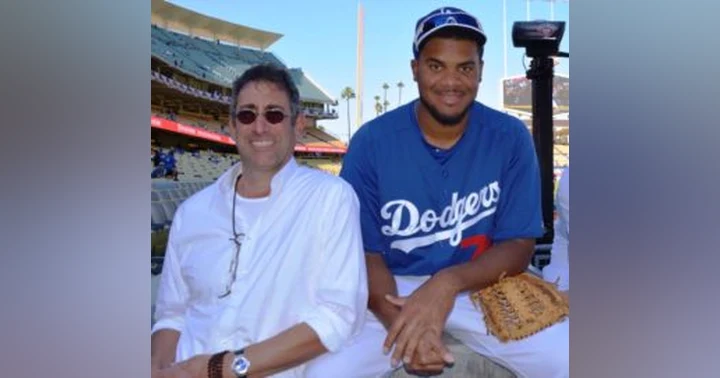
Behind The Scenes of Talent Management with Sports Agent Adam Katz



 Apple Podcasts

 Spotify

 Castro

 RSS Feed

 Youtube Music

 YouTube
What does it take to represent Hall of Fame athletes and negotiate with legendary figures like George Steinbrenner? In this episode of No Wrong Choices, we explore the remarkable career of sports agent Adam Katz. With over 40 years in the sports management business, Adam has represented iconic players like Sammy Sosa and worked with Hall of Famers, navigating high-stakes negotiations with some of the most powerful figures in sports.
Adam shares his journey from growing up around sports and law to becoming one of the most respected agents in the industry. He offers rare insights into the competitive world of player representation, the critical importance of composure, and the art of negotiation. You'll also hear Adam’s advice for aspiring agents and young professionals looking to break into the business, and how he managed to thrive in such a cutthroat industry.
Whether you're a sports fan, interested in legal careers, or just love behind-the-scenes stories from the world of sports, this episode is packed with valuable insights and lessons that anyone can apply to their own career journey.
To discover more episodes or connect with us:
0:02 Hello and welcome to no Wrong Choices, the podcast that explores the career journeys of interesting and accomplished people in pursuit of great stories and actionable insights. I'm Larry Samuels, and in just a moment I'll be joined by my co-hosts, tushar Saxena and Larry Shea. But before we kick off, we have a small favor to ask If you enjoy what we do. Please take a moment to support us by following no Wrong Choices on your favorite podcast platform, such as Spotify, apple Podcasts or YouTube. We also ask that you connect with us on LinkedIn, facebook, instagram Threads and X, or by visiting our website at norongchoicescom. On our site, you can sign up for our subscriber list or explore our blog, which digs into each one of the episodes that we're putting forward.
0:49 Your support helps us keep bringing these great stories to light. Now let's get started. This episode features the sports agent, adam Katz. Adam has worked in the sports management business for over 40 years, with a primary focus on baseball. He has represented icons like Sammy Sosa and has sat across the table from legends like George Steinbrenner. Adam is currently the co-managing executive baseball at Wasserman Sports. Larry Shea, I guess we're all big baseball fans on this program, so I can't really single you out as the lead baseball guy. However, why don't you lead us into what is going to be a great conversation? Somebody has to take it right.
1:30 Yeah, this is going to be a great conversation. You know, this is the guy. You know, when free agency starts in baseball, you're like he is in the room where it happens and you're rooting for this guy. Like, please, please, go talk to my guys, please need your player, whatever you know, um, but this is a mysterious world, a strange world. Um, you know, you gotta have a lot of moxie, you gotta have a lot of uh savvy and, um, I think we're gonna get a lot of that from adam katz here today, because you know, you can't be clueless going into a negotiation and trying to uh sell your players, so to speak. So this is going to be fascinating. We don't know what this world is like, but he's about to share the whole thing with us.
2:13 So that's, that's pretty cool. I think most of us have an idea of what this job is like by watching the movie Jerry Maguire um, that's true. So we think, maybe it's not really that. Yeah, we think we think we do. We think we do right. We think I think you hit the nail right on the head there, shay is that a lot of this job in many senses might be about balls. As long as you kind of believe in yourself and know what your client can do, you can kind of dictate terms. I guess in some sense, we always kind of wonder why is that guy worth so much money? Or why is this guy worth so much money? Well, now we'll get insight into why that is the case with one of the best in the business, and I really can't wait to speak to him. Yeah, and for me, I can't wait to figure out exactly who the guy is. You know, who is an agent, who becomes an agent, what does it take to break into that business and to succeed in that business?
3:00 So I think we're going to learn a lot from Adam. So here is Adam Katz. Adam, thank you so much for joining us. Happy to be here, nice to see you guys. How are we doing? Very good, great Thanks for joining us, hey, adam. I guess probably the one question everyone asks you is. Are you the? real life Jerry Maguire? No, that was not. No, that was theatrics. And Jeff Morad, my friend of mine, it was a competitor in the 80s he claims that he's the original and Lee Steinberg, they claim to be the original Jerry Maguire, so they can have it. I had heard it was Lee Steinberg actually, so yeah, that's, it was a it was a.
3:42 I flew with Cameron Crowe once and asked him about it. It was a. It was a confluence and a collaboration of about 30 sports agents. I'm not surprised, I'm not surprised Me and Jeff like to take the crown for that. Well, Adam, before we go back to the beginning of the journey, just to kind of set the stage for us. So you're not, you know, Jerry Maguire, but what is it that you do as an agent on a day-to-day basis? What is that job? You want to do that before how we started. That's cool. So the essence of the job is the owners have a group which is called the LRD or the Labor Relations Group and the players have a group called the Players Union, as everybody knows, and they bargain for the collective bargaining agreement and the real definition of the job is I protect players' rights under the collective bargaining agreement where salaries are the sexiest, most visible of the job, but it's all kinds of stuff that you do to protect players.
4:53 Yeah, you do so much for the players. In my research it seems that this was kind of the dream from an early time, right. I mean I read middle school that you kind of knew that this was the path that you wanted to go down. Is that accurate? I had a murky idea of the profession because when I was, I think, 10 or 11, my father was a lawyer in a small town in Pennsylvania and was very close friends with a guy named Tom Rich R-E-I-C-H, who was like the original baseball agent. He would be on Mount Rushmore baseball agents and I knew him and he introduced me to Doc Ellis as a 10 or 11 year old.
5:42 Wow, quite the influence. And Doc sort of took me on as like a little nephew and would take me in the clubhouse and would meet me in Baltimore and treated me with such kindness that I knew the industry existed. So I got a taste of it as an early age. 10, 11, 12 in there, Yep. So you grew up a big baseball fan and now obviously you said you wanted to be an agent, but your father was a lawyer. Now I can say that my father's family the family side all lawyers. So for me at a very young age it was like, okay, this is probably the family business I'm going to go into. Did you ever at any point when you were a kid say to yourself my father was a very esteemed lawyer, I want to be a lawyer as well, or was it always I will be an agent and then maybe move on to something else after that?
6:35 maybe bring in law as another piece to it. Well, first I was a pretty decent little local basketball player. I loved playing and I was pretty good at it and tennis. So I knew that I at 10, 11, 12, I wanted to play. You were going to be an athlete. I was going to be an athlete and then, when I was 16, 17, 18, I realized that this was it, you know, and I would try and play division three sports and then that would be the end of it. So I knew that I would law. The law degree was coming, so I didn't know what I was going to do with the law degree, but I knew that that was what I was going to do. Right Was becoming an agent in the back of your mind at all as you went into college. No, it was like sort of way in the back.
7:16 So I get my. I went to a pretty good law school, went to Notre Dame for law school and the kids there who are still my some of my closest friends were so talented, were so smart and so gifted. I thought, oh my goodness, I can't dream of competing against these guys my whole adult life. And I'm like how about agency? You knew Tom Rich as a kid. Why don't you make a run at trying to get into the sports business? So I just pivoted because I knew I didn't want to be a real lawyer, like a litigator. I didn't want to compete with those. You didn't want to go to a courtroom, I got you. I didn't want to compete with those kids.
7:57 I would have moved mine to courtroom. They were so smart and ahead of me, so I figured sports might be a good pivot for me. But even that aspect of it, you still have to get that law degree right. So you had to be somewhat good in school, somewhat smart and somewhat, you know, enjoyed the educational aspect of it. No, I was an okay student once I got junior senior year in college and an okay better law student Once I got junior senior year in college and an okay, better law student. But you don't need to be a lawyer to do the agent thing. I think the very, very high caliber good ones are lawyers, but there are several agents that have made a career that are not lawyers.
8:39 So with your father being a lawyer, was there pressure to go into the business? With your father being a lawyer, was? there pressure to go into the business? No, my dad was born in the late 20s and there was pressure to get all A's and be a good athlete and he didn't say much other than that. Okay. So he just wanted me to just be good at whatever I was doing and be nice to my mother and my siblings. He didn't have a lot of rules. He didn't want to break them. So, uh, so, okay, so the first gig for you uh, now in your college years, I would say interning probably was, was, was a bigger thing. It was probably less of a thing then than it is now. But did you ever? Then, as you said yourself, hey, I know, tom rich, I can go back to that route and see what, see what comes of.
9:23 So did you say to yourself, okay, here's my first foray into the business, tom Rich, can you help me? Or how did you get back into the business, so to speak? That's not how it happened. I actually, after my first year of law school, clerked in my dad's law firm and got shoved around and roughed up by people I knew my whole life. And then after my second year I clerked for a fancy Philadelphia law firm, steve Kozin. What a nice guy he was. I think he's still around in his 90s. And then I didn't really pivot to sports until we started applying for jobs at Notre Dame and these kids were. They were just ahead of me and I'm like this is not me Right.
10:07 I was going to go teach and coach or try and sports law or I didn't know what I was going to do and I knew I wasn't going to compete with those kids. You, um, you seem to identify pretty early that you couldn't compete with them. What was the weakness there? Was it negotiating? I mean, obviously you didn't want to get into the courtroom, but what was the weakness that you saw Like? As far as I'm never going to be able to do what they're doing on that level, let me try to pivot. Well, it's partly shtick. I could compete with them, but they were better readers and writers, I could negotiate, and my social IQ and my natural sales skills were always a little better than theirs anyway, so it was a good matchup for me to be in this side of the business.
10:53 Yeah, so when did you make the pivot? So when did you make the pivot over to a sports agency? Well, because I was a basketball freak. I'm a third year law student and I started I wanted to be basketball because that's what I played. And I called Larry Fleischer and begged and appealed and for a job and I said I can bring you Sam Bowie. And Sam Bowie was a player from my hometown that played at Kentucky, from my hometown that played at Kentucky, and of course I couldn't bring him Sam Bowie at all. And he told me, but I knew Sam since I was five, so I said I think I can get him, which I could not. Right, and he said, adam, first of all, I don't have a job and second, of all, I already have Sam Bowie, that's great, I love it.
11:43 So that's where the door opened for you, that's where you started to to first, uh, break in. So to speak. No, then I just was like looking. Then I knew tom rich existed and wrote him about 100 letters and called him 50 times and I got nowhere. And then I started looking at small private schools to teach and coach. And then I just kept bothering and badgering Tom and he finally said fine, I'm not going to pay you. But I said you don't have to pay me, just let me show you what I can do for six months. And he paid me a hundred dollar bills out of his pocket for the first year.
12:23 I did not, that was it. I came around, drove him around, not on the payroll. He gave me $100 bills to make cheap rent. And that was my question what were your responsibilities? You're literally just like a chauffeur or something at that point. What did he thrust on you that you're like? All right, he's starting to trust me more. I could do this. Well, he trusted me to drive around his famous girlfriend. Okay, jennifer O'Neill. Go, google her. She was in Summer of 42. Yes, exquisite, spectacular. So I got to drive Jennifer around and she was great and I could play tennis.
13:05 So I could play tennis with Tom and Billy, his number two. That was my highest use he spent more money on champagne than he did on me. I'm sure he did, I'm sure he did. That's great. That's great when did he first give you a real responsibility? What was that first project? He didn't give me anything. I took it. I became very close. I just started going to the bars where the players were and started recruiting and showed an aptitude for signing a young player. I could just do that. I could go to the bars, run the basketball floor, play basketball with people and convince them to join with Tom's agency.
13:46 And then I got very close with a famous Hall of Famer soon to be Hall of Famer named Tim Raines. Do you guys? know that name. Tim and I became extremely close and like family, and that's what did it. I just got so close to him that tim would introduce me to young players and say you got to be without him, you got to be without him. that's, that's it your time with tom rich that early though, that early time with tom rich, was that basically the time that's that solidified to you, that made it that convinced you that this is the route I want to go down? Fancy cars, beautiful women, beautiful women hanging out with, hanging out at the bars, with big time with, you know, with young athletes and just being able to talk to people.
14:32 Well, it wasn't the cars or the women, it was that it matched up with my skillset. I knew that I love sports. I was a little jock, and it matched my skillset for sales and social IQ, I guess. So I sort of said this is a good fit for me and I'll thrive in this business. I thought that I might and I did. Yeah, I'm getting the impression that gift of the gab was kind of how you like solidified a lot of these relationships and got things going. How competitive was it? And did did the fact that you played sports and you were competitive naturally help you in getting those clients and pulling people in?
15:13 Yeah, it's fiercely competitive because you could fit every baseball player worth representing on the bottom floor of your house Wow. And there's thousands and thousands of people that want to be in. So it's very competitive, which I liked, and being that I could play basketball with them and drink beer with them and sort of hang out and not be starstruck, it just worked and I just had an aptitude for it. I have no other explanation for that what was the role once you got them? You know meaning. We have this uh vision of what it's like to be a manager, an agent, always present, always there, always on call, like what was expected of you when you brought these guys in.
16:06 Well, early the first six months it was drive and have a good backhand and keep your mouth shut, drop me at the hotel. But then I started figuring it out and Tom Rich had a number two guy who was a big guy named Billy Landman and he really made our shop tick. And Billy saw that I could do this and started spoon feeding me relationships. Should I rattle off some names? Yeah, sure. Dave Parker, mario Soto, tony Pena and front office people like Murray Cook and Al Rosen at the Giants and Terry Poole and Bob Knepper he just spoon fed Kent to Colby Love.
16:55 Kent to Colby. I was only 24 and a half 25, and I got thrown into the fire with guys that were older than me and I started doing the work. I just started representing them and pretending like I was the agent. So what was that first big contract that you were able to finally get done on your own? Well, Tom did for 24, 25,. Tom and Billy did them, and then I think I did Lance Parrish's first contract with the Phillies Green. Tigers catcher Absolutely. And to Colby work. I did Tom Hume work with Cincinnati. I did some good work for Dave Parker, so I got thrown into the fire at an extremely early age.
17:42 We're talking this is 40 years ago, so it's a long time ago. Wow, you mentioned before that it's not just signing the contract, right, like that's part of it, but there's handling promotions, getting them sponsorships, things of that nature, handling their finances. What are the other aspects of what it is that you're doing besides just getting them signed to whatever team or organization they're a part of? well, I always tell people fundamentally the job is to get player, keep player, do contract, collect your fees, those four okay yeah, and then, like it's, it varies. So willie mcgee was one of my favorite clients ever, a Cardinal, and Willie wanted nothing.
18:26 He wanted me to do his contract and go home and he was great while I did his contract but wanted nothing else, and Sammy Sosa wanted everything else. I had to ship the dogs from the Dominican to Miami. Oh geez, wow, I didn't do to help Sammy, so it just depends. Each player is like it's like a snowflake. They're all different. They all have different demands and expectations. What were some of the craziest demands and expectations? No, nothing crazy. Had some legal squabbles with some guys that I can't get into too much and some you know people get into trouble and you help them out, and that just requires critical thinking and a lawyer, if you need one.
19:15 So you're 25 years old, You're negotiating deals with I assume general managers of these major league teams with, I assume, general managers of these major league teams, how are they treating a 25-year-old kid at the negotiating table Like? What was that like for you? Some. They were sweet and kind and helpful. That does not sound right at all. Let's just say it might have been something to do with 25-year-old Adam. They were great to me and brought me along and I owe them Fun football deal for and this was when I was 26, 27, I did a football deal with the Rams, with a guy named John Shaw who was like a icon in the football business, and I had a running back named Barry Redden who lived in my town in Sarasota and I had to do a deal for Barry Redden.
20:09 It was a big deal and I didn't know what I was doing. John shaw was just so nice and kind and supportive and said all you have to do is help me with my rotisserie baseball and I'll help you through this oh, that's great. Yeah, he was terrific. That's amazing how many of the, how many, let's say, of the gf, how many of the front office folks did you eventually or have you ever represented later on, like helping them with deals et cetera later on down the line? None, no executives. It's something that we're thinking about pursuing now, but in a measured way, but no executives. I started with managers maybe 10 or 15 years.
20:54 How long has Aaron Boone been doing this? Six years 17. I think I fell into that because Aaron needed. You know, I represented Aaron as a player and then at ESPN, in natural order of things, we stayed together because we're so close and I helped him with his managerial career and can continue to help him. Right. I have to ask, cause you know we're talking about an age you know 25, 26, you're you are really just out of college. I'm always curious how much of what you were doing on a day-to-day basis at that point was gleaned from college. Or was it all just on the job, peers learning as you go and people helping you in the job, like did you use anything from the collegiate days in terms of education?
21:41 none, you use nothing right no, but it was a fundamental building block to get you there. How to hold your fork and knife, how to conduct yourself at a dinner table, just how to handle yourself, all that stuff was invaluable, but in an abstract, murky way. Interesting. When you walk into a negotiation and I know you said a lot of these guys were helpful to you and they brought you along and they were courteous and considerate how are you preparing beforehand? When you're putting the value of your player on the table, how are you demonstrating that value and making that argument?
22:23 I don't know how other guys do it. I know how I do it and I in my mind I have an idea of where it should go and all evidence to the contrary. I'm very quiet in negotiations because I feel like your adversary or your counterpart will ultimately do 70 of the work. If you're credible and prepared and stay quiet, the work gets done for you and then it's sort of fine. Water finds its level. So I I'm not one of those guys that goes in like I'll just pick one out of the air. When I did Mo Vaughn's 80 million with the Angels, I did not go in looking for 80 million and a dollar.
23:05 I went in looking for a number way up there and there were some comps and I knew Kevin Brown was coming in a couple of weeks and I had an interesting adversary which was sort of friendly with the Angels, named Mark Rosenthal. He passed away and we just navigated it and I did it by being courteous and polite and kind and quiet. And then water finds its level. All right. So what about a difficult negotiation? Obviously they they can't all be nice guys. Some of them are going to go in and try to take you try to make sure that they get the lowest contract have to pay out the lowest amount of money as possible.
23:46 So you're gonna obviously have difficult negotiations. How do you deal with that type of negotiation? in the 80s and 90s I yelled and threw shit, and now I just keep cool and calm. I would have to say at this point you've got to rep. You didn't have a rep then You've got to rep now. Well, water finds its level and deadlines matter, and then people move and it almost always works out. People get frantic and there's no room for that. It's better to be composed and quiet and let water find its level. And then all of a sudden you're finding yourself doing A deals across the board.
24:29 What is the absolute hardest part of the job? Is it that? Is it when a negotiation goes south a little bit? Is the absolute hardest part of the job. Is it that? Is it when a negotiation goes south a little bit? No, the hardest part of the job is how competitive it is, and sometimes even in your own shop people are competitive. So the competitive, self-promote this business attracts people that are very aspirational and ambitious and high caliber and they want to succeed at a high level at most costs. So that's the part that is. You know, gets old and tired after a while. Something I've always been curious about is the arbitration process.
25:12 When you're making an argument again on behalf of a player and you're in the arbitration window, it feels like that can get very personal in some ways. Are the players present for those conversations and do they hear the arguments that are being made against their value by management? Not in the phone negotiations before the arbitration. If you can't come to you know you guys probably know the rules in baseball arbitration If you can't come to terms you go to the judge or a panel winner, take all.
25:54 So it promotes settling because no one wants if the two numbers are if I'm at 4 million and the club is at 3 million, I don't want it to be at three and they don't want it at four. You don't want to risk it so you settle at three and a half. So for the phone work in advance, I haven't had too many players that insisted on involving themselves. Once you get into the arbitration room then they're there in a suit and tie and they hear it and they hear why he's worth three million and not four. And some guys get their feelings hurt and some guys handle it very well for, and some guys get their feelings hurt and some guys handle it very well.
26:38 So if that's the case and obviously you probably have, you've been in the arbitration room, I'm assuming, a number of times. Um, how do you deal with an? How do you deal with a player that you know, comes away with hard feelings and said you know what? They must obviously say that look, I'm, I've done so much for for x club. How can they just come out and say this that I am not bringing X amount of value to the team? Everybody's different. You just have to be a good psychologist and critical thinker and support and loving they have to put it in the rearview mirror. It's over. You've got to move. You've got to go play. Is that basically it? You've got to deal with it. This is business, is business. Well, in a nice, kind, courteous, loving way.
27:21 But yeah, you've got to wear it and go, that's right. I imagine being a therapist is a very big part of your job, right? It is, it is. Thankfully, I've had lots of therapy myself, so you're an expert. Okay, so we asked you the worst parts of the job. What are the best parts? Is it the seats Access? What's the best perk you got? It's not what you think. It's like a little, even though clubs would say the agents blah, we don't like agents. But you make these friendships and relationships that are really lifelong with players and front office and media and colleagues in the office.
28:05 It becomes your second family. So meaningful, loving, productive relationships is by far the best part for me. I'm sure, as with anything, yeah, I would think Loving productive relationships is by far the best part for me, I'm sure, as with anything, yeah, I would think, coming back to your journey a little bit. So you start with Tom Rich. How long are you there? How long are you guys together? I started like six months after I graduated and I stayed with Tom up until well 18 years ago we were acquired by Casey Wasserman.
28:46 Okay, and Tom came along with me. He did not love the idea, but he did it reluctantly. I sort of pushed for it, and he had a long deal with Casey. When his deal was up he was deep into his 60s, I think, and so he was done and I stayed with Casey, which was a great move for me, because nobody liked Casey Wasserman, he's terrific. When you look at because I know you were involved with Tom, I believe, Arne Tellem, was he also a major influence on your career? Is that right? Very major. So Tom and I were in business together and I was like a malcontent-y moment and I went to Arne and I'm like, oh, this business. I was like getting frustrated, and what am I doing here?
29:29 He said don't do anything. I'm going to Casey Wasserman and you come along with me and bring Tom and your gang. I said that sounds fun and interesting. So I went to Tom and some others in my shop at that time and they were like reluctant and blah about it, but they allowed me to pursue it and we I muscled the deal through and got to work with Orn for 10 years until he left for the Pistons. Okay. And how different are all these agents? I mean, you say everybody has their own unique style, their own kind of way of doing things. Are you picking something from this guy and something from that person and kind of melding it into your own approach from that person?
30:15 and kind of melding it into your own approach. Absolutely Everybody's different and you know, one of my favorite quotes is Oscar Wilde be yourself, because everybody else is taken. It's good to pick and choose and pull good things and I did learn a lot from Tom and Arne and Craig Landis and Paul Kinzer. I learned a lot from them, but you've got to be yourself when you do this. All right. So you said before about this notion of obviously being an agent is a very cutthroat business. Obviously those are in it. Those who are in in rival agencies are cutthroat. Even within your own agency can sometimes be cutthroat. So when you're dealing with a, with a essentially a pack of alphas in terms of your own shop A, does that give you a thicker skin and allow you to kind of add to your arsenal of how you deal with other people, or does it harden you to the business?
31:09 Both you know you better have thick skin in this business because you can have a player and lose them in a minute. The list of guys I've lost is long and painful, but I've built this practice. Guys have come to me from other agencies. So it's just the way it is and you better have a thick skin or you won't make it, and the deal-making is very challenging. It takes big stones and preparedness. Our young people now at Wasserman are extraordinary and there's no way I can do anything without them. It's tough and you better have some thick skin to do this job.
31:52 How then do you go about? Let's say, I wouldn't say poaching, but if a client from another agency comes to you and they say, hey, we want better representation, um, what's the pitch? There is that, hey, look you're. You seem to be doing very well over there. You know what are you coming. What are you coming to us for? Is that another one of these type of negotiations where you wait for them to speak first or you say this is what we're going to do for you? Every single one is completely different. So I'm not going to use names. But I'm chasing a guy this week and he knows that he's got a small low profile agent and he's been thinking about leaving and he knows my young colleague and he set up a meeting.
32:35 So I'm going to be fortunate to have a meeting and I'll just identify. I'm told he's very smart, very deliberate, so I'll just identify that the work we do is A-plus across the board. We're about integrity, we're about honor, we're about depth of staff, we're about ferocity of advocacy and we think you'll be happy and give me a chance for a year and we'll see where it goes. That'll be my show, hey Otani. It's not that kind of a player. We'll revisit in a few months and I'll tell you who it is. How do you handle stress? This is obviously one of the most stressful types of positions that I think anybody can have.
33:16 I mean, things go to the nth hour. There's people breaking off negotiations. Like you said, it takes stones. You really got to make your play and make it make it proper. How do you handle the stress that went and decompress when everything is done, or even in the heat of the moment? well, well, alcohol for the 80s and 90s and yoga and meditation. Now I don't feel it quite as much at this stage. But I breathe, I exercise, I eat right. I try and be a good dad, I try and be a good colleague, I try and be a good brother and son and go to bed and that's how I handle it smarts.
33:59 So at this point in your life, obviously you said obviously, I guess maturity, uh, and longevity has allowed you to kind of deal with the ebbs and flows of the business. Don't forget the word durability. I always durability as well. I guess long I always think that longevity means durability at the same time. But you're right longevity, longevity and durability have allowed you to kind of deal with the swings. Um, do you still? Do you still get the same juice from the, from from what you do, from when you did when you were 25, 26? somewhat I do, and it still stings and it still hurts and it's still joyful and it's still rewarding. But yeah, I do.
34:39 Good question. What's the day to day? Are you up early, late, you know, at games, always on the phone, like what is the regimen and the routine? I like to. I'm up very early. I'm up like at six, six, 30 and get my coffee and work from my room for a couple of two, three hours and then I go try and work out and I try and do the office for several hours and I'm either maintaining my existing guys or recruiting some new guys, or being a Swiss army knife in the office for the young guys if they need any help, which they don't. They're extraordinarily talented and I wish they needed me more than they do, but they don't because they're so gifted in their own right at this point.
35:25 So I'm sort of a Swiss Army knife. I represent a dozen players, a couple of managers and help where I can help. But do they expect you to be in person? Are you always watching games Like what, what's the? What are the demands from that vantage point? Some players wanted me on site. I never was a go to the ball. I didn't love going to the ballpark because I always felt like it wasn't a high use of my time Right To park and sit in those seats and eat crappy food. I'd rather be in the gym or with my son. So but you know I go to the ballpark and show up for batting practice, see my guys be present, you know, be of presence, but it's never thought the ballpark was a high use of my time.
36:15 How do you handle the client who doesn't see his career going the way he wants? He's maybe unhappy with the services. How often does that happen and how do you handle that? Do you say sometimes, you know what, maybe we're not the best agency for you? Often does that happen, and how do you handle that? Do you say sometimes, you know what, maybe we're not the best agency for you? How does that work? Well, it happens more frequently than I want it to happen and it requires social skills and love and communication and rapport and critical thinking, just like any other problem in life. What it requires, and eight out of 10 times it works out, and a couple two out of 10 times you get fired.
36:55 Or you know, I've terminated one or two relationships, but not many. So you end the relationship and you move along and it's painful, it's unpleasant, yeah. Are you still a sports fan at this point? die hard, but I don't. I don't root for teams, I root for my players to be healthy and to play good. I guess that's my question? I guess I guess that's my question. Like you know, as you said, like you know, you grew up. You grew up a baseball fan, still still probably a very big baseball fan. Do you have that ability to say that I can root for a single team? Like you know, the three of us here were Yankee fans, so for us, our allegiance is with that team, that organization.
37:36 But I guess if we were in your position, the point of view changes. It does, I sort of, because I love Carlos Mendoza and aaron so much, I sort of find myself pulling for the mets and the yankees. No, one's perfect when you say with the mets walked into the wrong room when kenley danson is pitching for the red socks against the yankees. Yeah, I'm rooting for kenley to pitch well and be healthy and the somehow or another the yankees. I'm rooting for Kenley to pitch well and be healthy and somehow or another, the Yankees to win. It sort of gets funky at times, but mostly it's a. It's very rotisserie, it's very rotisserie.
38:18 I'm sure I want to ask you about and this is a difficult question because it has nothing to do with you, but since we have you on the docket here, we hear stories there's been documentaries about agents who take advantage of ballplayers and hurt them in a lot of ways because you're managing a lot of aspects of their life. How much does that sully you know your reputation, or how do you look at those agents? Are they excommunicated from doing business like? How does it work as far as a peer, when somebody takes advantage of a player like that? well, I've been extremely fortunate and lucky that I got mentored by people that had high honor and integrity and caliber, so I always ran a very clean shop.
39:07 So I know who I am and when I see agents that are misbehaving or take advantage of young guys, you know. It's just, it's an observation and you try and take their players. It's an observation and you try and take their players and I know who I am. I'm not going to. I don't let it impact how I view the industry or myself, because I know how I've conducted myself and. I'm pleased with it and I know that I've acted appropriately and admirably and I observe it and try and steal their players. Yeah love it. Is the business still enjoyable for you?
39:54 Yeah, a little less, but yeah, it's still very. Why less? I love the action, I love the ups and downs. I don't want to, I'm not my job. I don't view myself, I view myself not as a sports agent. I'm Adam, but you know, the body blows can be a little harder to take when you get older. Sure, so that's it. Otherwise, I love it. How has the industry changed? I mean, you've been in the business for 30 years. We've seen the internet come along 40 years, 40. , 40 years. Yeah. How has the world changed around you and what are some of your biggest observations about that?
40:35 It used to be well just as competitive, but it used to be more beltway politics no emails, no cell phones, no pictures, not a lot of metrics, not a lot of analytics, just a lot of touch field, beltway politics. And then it became you better than in the 90s and 2000s. You better be prepared and data and analytics and metrics and young. James Bill James Moneyball Right. You got it and it's sort of change you better adapt or die, as billy bean said in that movie money. So you make the adjustment and we have talented young agents that run arbitration or analytics and metrics department and I, you know, I there's, I'm nothing without them.
41:23 They're important part of it. That's a big difference is one era better than the other. Let's say, you know, obviously we see players now, differently from Bill James and the Moneyball era that's taken over. As a young agent, when you didn't have to deal with any of that, right where it was simply hey look, this guy hit 25 home runs, drove in 95 RBIs. You know, this guy's a star. The idea of having the quantitative, having quantitative statistics, or having quantitative, or boiling everybody down to a number, has that taken away from the sport as a whole, in your opinion? No, it hasn't taken. I may have been better suited to the freewheeling beltway politics.
42:05 Yeah, I may have been suited to the freewheeling beltway politics. I may have been. But there's still wiggle. There's still plenty of room between ordinary and excellent Now, even with data analytics and metrics the difference between exceptional agents us and average analytic, average agents them there's still a lot of room to be excellent in this business. So you just have to be more prepared, more precise, more competitive to get there. But I may have been better suited for the 80s and 90s possibly. Is this business still for everybody? For very few. We don't want to discourage any of your listeners or watching.
42:49 You always want to encourage young people to pursue, pursue, pursue. But it's tough. What advice do you have for young people who want to break into this business? To be a good son or daughter, to be a good sibling, to have a balanced life, to go to Europe to drink, to fall down, to get up, to know how to hold your fork and knife, to have just balance and be a good, productive person. That's the most appealing thing for me when I'm looking for a young person to hire a young person to hire 40 plus years. You must have a pinch me moment, a moment of bliss where you're like I can't believe.
43:32 This is what I do for a living and this is what I get to do every day. Is there a moment like that that comes to your mind? I'm sure there's a few. There's a handful the Sammy Sosa stuff, because I got to go to the White House. I got to hang out with Donald Trump and had a boy crush on Sammy. I got to hang out with those guys. Ken Caminiti is a name, I don't know if you remember, but he Of course Sure Late. Ken Caminiti. He was the best third baseman I ever saw for short window, so that was. That was super exciting, and I had a shortstop named Ray Ordonez for the Mets. Absolutely Great glove.
44:13 For three years he was the best thing I ever saw. So there there was like. But I also got joy out of representing a guy named Casey Candell. He, his, he. He was a utility player for the Expos and Astros so I loved him so much I got great joy out of working for him too. So you must know it. When you see it, then right, like you talk about those players and I could see you light up a little bit, like when you see that and you're like, and this guy is my client now, like you know it in the moment. You know it. When you have good, meaningful, loving rapport with a human, just like you guys, with whatever you're doing you know when something's rewarding and good, you know it and can grab it and touch it and it's great.
44:59 That's why, why we do all this stuff yeah, right, uh, are you the greatest rotisserie player of all time? I'm not because I've never done rotisserie, anything Never. Have you ever helped? Have you ever helped anybody with their rotisserie team? I've helped a handful of people. Yes, sir, are you the greatest consultant? When are they coming? off the injured list. Please tell me. I've been going to take a text or a call. Since we're talking about money, we're not going to ask you specifically, but are all the percentages essentially agreed upon or are there variances with agent to agent? A percentage point here and a percentage point there? It sort of seems like it's evolved customarily to be in the 5% range.
45:44 There's some agents out there I'm not going to name drop. There's some agents out there I'm not going to name drop, but there's some agents I know in basketball, for example, even though I'm in the baseball side, that do flat fees and can induce is the wrong word but get to players with their fee structure. So most agents try to hold the fees into the 5% range. Sometimes you struggle with that, but mostly we were able to do that. And has that changed over the years? It's been pretty steady. Like that there's people come along that do hourly or flat fees and they come and go and the big agents, the high caliber ones, sort of hold it together got it a couple of just quick hits before we let you go and we thank you for all this time.
46:37 When you look back and I imagine whatever your answer is, it's going to be somebody somebody who's retired who was the most difficult person to negotiate with. Oh boy, With a team, with a team a team, yeah, like a GM and exact that was that on the other side of the table, like who was somebody who was really tough and gave you a hard time? Nobody gave me a hard time. I'm not going to like I said they could be retired now. Nobody cares. I had a little extra trouble with this one and that one, but no real Everybody worked out just fine with everybody. Okay. I'm so curious because it's so behind the scenes.
47:20 You're in the room where it happens, I mean that's kind of an amazing thing. Or at least on the phone call where it happens. Where it happens, you know, I mean that's kind of an amazing thing. Or at least on the phone call where it happens. Did you have go-to guys where you're like you know I'm going to. I have a better relationship with this guy so it's easier for me to pick up the phone, as opposed to that guy who you know. I had a hard time with him last time. I don't even want to go there, like let me, let me stick to the guys I know and get Well in free agency you're dealing with, you know you deal with the teams that are interested in your player and the employee of the club that's charged with dealing with Adam Katz. With that free agent Right you get what you get and in regular dealings with a club you don't get to choose.
48:03 Normally you deal with the boss, you get the general manager or the president and that's it that mean george steinbrenner talking george well, not anymore back in the day he screamed at me a time or two can you tell the story. Can you tell any of the background? sure, there I represented, uh, the closer, uh, wetland, no, john John Wettland, yes, yeah, and I negotiated a deal for X I can't remember what it was three, four, five million bucks, and so long ago. And my partner it was extremely close with George said oh, you don't have to pay, that we'll defer some, and if you defer money you're diminishing the value of the contract.
48:48 Deferring money is nothing more than diminishing the value. So I said, tom, you can't defer the money. And I said the deal is done with the players union and the player. And you can't do that. And George got mad at me because Tom was my boss at that time. And George called me up and gave it to me. Really he called you. He went to call you. I'm imagining uh Costanza right now in Seinfeld thank Larry David, and that's exactly what happened right here, buddy, I love it. I love it. Um, we hear about deals all the time that last for like 20 years. The Mets have one right that they have to pay, Bobby.
49:29 Bonilla. I mean, how does a deal go that like sideways? I guess is the question a very close friend of mine, dennis Gilbert, but several players. Tom Rich was the first guy to do deferred deals and he did it routinely before Dennis did. But the Bonita deal was a long deal with a lot of deferrals and Dennis gets a lot of credit for having done that, but it was not innovative at the time. Is it benefit for player and team or just Bob, because he's collecting a check for the next 20 years? Well, it depends on the time. Is it benefit for player and team or just Bobby, cause he's collecting a check for the next 20.
50:10 It depends on the term. It depends what his base salary was. If it was, if he was an inappropriately low base salary and he deferred money at a bad interest rate and it sucked for the player. He had a good salary and a good terms on his deferral. It was a good for the player and I not in a place to comment on it. Fair enough, okay, so before we close you out, then, adam. So advice you have to give advice to a young kid who wants to come up. I think you said it yourself you don't want to discourage everyone from doing it, but obviously this is not a job for the faint of heart. So what's that advice you have for a young kid who wants to follow in those footsteps? Well, get connected with a player that will be a fee generator.
50:53 That would be the first way. Get connected to the Sam Bowie of your life yeah, the Doc Ellis of your life, the Doc Ellis and then go to the big agencies and say I have Sam Bowie, which I never had, by the way. So get connected with a player that will be a fee generator to get a job. Or just be a dazzling student human balance candidate and go to the big agencies and be willing to work for nothing and show yourself. That's it. Is it still necessary? Is it still necessary Because you said it before, that while college you felt was a good building block, it was not necessarily something you pulled your skill sets from in your career?
51:35 Would you look at someone who, let's say, has a great deal of moxie and is able to kind of think quick on their feet, or would you look more at someone who has a college background, the ground floor level already put in, and then move forward with their career? I did not intend to diminish my college or law school years. Those relationships and taking those classes and struggling through all those things you struggle through at college and law school helped me be the young agent I was when I was 24, 25. But my history class didn't help me. My contracts class didn't help me.
52:18 My tax class didn't help me. It just helped prepare me. It was building blocks fundamentally as a human, as a young adult. So I didn't mean to diminish those years because they were extremely important. I have no doubt. Well, Adam, your journey and your story, and I'm sure we could keep this interview going for another two hours, but that wouldn't be very nice. It wouldn't be fair to you. It'd be great for us. I hope you guys got something out of it and I hope the kids enjoy it and anybody can reach to me anytime they want. Awesome, Adam. Thank you so much for the time. You're most welcome. I enjoyed it. So that was the player agent, adam Katz, who I feel very fortunate I was able to secure and convince to join us this week.
53:04 And what a great guy and what an incredible look inside of sort of a secretive world that none of us really get a chance to peer into. Larry Shea what are your thoughts? start with that. But yeah, his advice I thought his advice throughout the whole interview was just priceless. You know that this is not a job for everybody, that you better have thick skin and big stones. You know we talked about big stones in the beginning of this, leading into this interview, and he even mentioned it. So, and how do you become an agent? You know how do you do this? Well, two ways. You either get connected to a player that's a fee generator, or you become an interesting person.
53:48 He said go to Europe, you know, be a dazzling student with balance. But he also said you know, you know you got to know how to conduct yourself. You know, live life right. And you got to know how to conduct yourself at the dinner table, how to hold your fork and knife. And my favorite, my absolute favorite quote of his was the Oscar Wilde quote be yourself, because everybody else has taken. I mean, that is priceless advice. So he really did bring us into the room where it happens and you see why he's so successful Very savvy, very smart, very cool interview. Let's be honest, he might not be able to play fantasy baseball, but I know for a fact he is the greatest fantasy baseball consultant a person could have let's let's be honest about speed.
54:33 Oh my god. Also, too, I think I'd hate to play poker against this guy. Let's be honest. Because you know you got to have guts to walk into the room and say look, my client, my client's worth 100 million dollars over 10 years, or you 10 years, or whatever the amount of money is, because you know that the other person across the table from you is saying that I got to squeeze you for every dollar you're worth. The other thing I took away from this is maybe it takes away from your ability to be a fan of sports. So when you get into this world, you suddenly stop being a fan of a team, like if you grew up being a Yankee fan. You can maybe never really be a yankee fan ever again, but you will then, of course, become fans of players because you represent guys all over the league at some point.
55:14 So I can maybe live with that a little bit more. But to me it takes away a certain amount. There's a certain sadness to that and that you kind of lose that ability to root for a team, root for the home team, but then again you open again. You open up your world to rooting for everybody, in a sense Players, you're rooting for players your clients basically so, I think, some of my key takeaways. The one word that comes to mind is composure. Adam is confident, he is savvy, he is funny and he's very composed. He definitely knew what roads he was willing to go down with our conversation. There were other roads he was not willing to go down with our conversation, all of which he handled incredibly savvily, if that's the right word.
56:00 Interesting talking to him about being in the room with some of these really intense discussions and negotiations, and it always seemed to come back to just be quiet, just be cool. Everything's going to work itself out, everything will be fine. Keep it composed, stay grounded and that's a really important takeaway for any job, any career, in any business. You really need to learn how to keep your emotions in check and stay composed and stay present and stay aware of what's going on around you, and Adam clearly seems to have a really good grasp of that.
56:41 Isn't that like the first thing we see whenever we see sometimes the art of negotiation? Of that? Isn't that like the first thing we see whenever we see sometimes the art of negotiation? The first person that speaks is usually the one that loses. So in this case, this is very much the idea that hey, sit back and listen, you'll hear what the quote unquote problems are, and then you just counter back and then somewhere in the middle you'll reach an agreement. Yeah, and he really rode this razor's edge between complete confidence and self-deprecation right, like it was right. It's exactly right there and but you're, but you're right, it was just over overlyingly cool, you know, like the whole thing, and uh, you could tell he's very successful in negotiating. Nobody gave this guy a hard time, he said it himself.
57:23 That's exactly right, and you know, if there's anybody out there that I want to have a beer with that we've spoken to on this show. I think, he's the guy. And you know, we kind of left a lot of stories on the table there that we didn't really dig into, such as etc. Etc. Because it would have been a four hour interview. So with that, adam, thank you so much for joining this episode of no Wrong Choices On behalf of Tushar Saxena, larry Shea and me. Larry Samuels, thank you for joining this episode of no Wrong Choices. Please be sure to follow us on your favorite podcast platform, such as Apple, spotify and YouTube, and to give us a great review if you enjoyed this and other stories.
58:05 You can also connect with us on LinkedIn, facebook, instagram Threads and X, or visit our website at noronkchoicescom to sign up and become a part of our community. Thanks again for tuning in and always remember there are no wrong choices on the path to success, only opportunities, because we learn from every experience.