Becoming A Major League Umpire with Jim Reynolds (Part 1)

 Apple Podcasts
 Spotify
 Castro
 RSS Feed
 Youtube Music
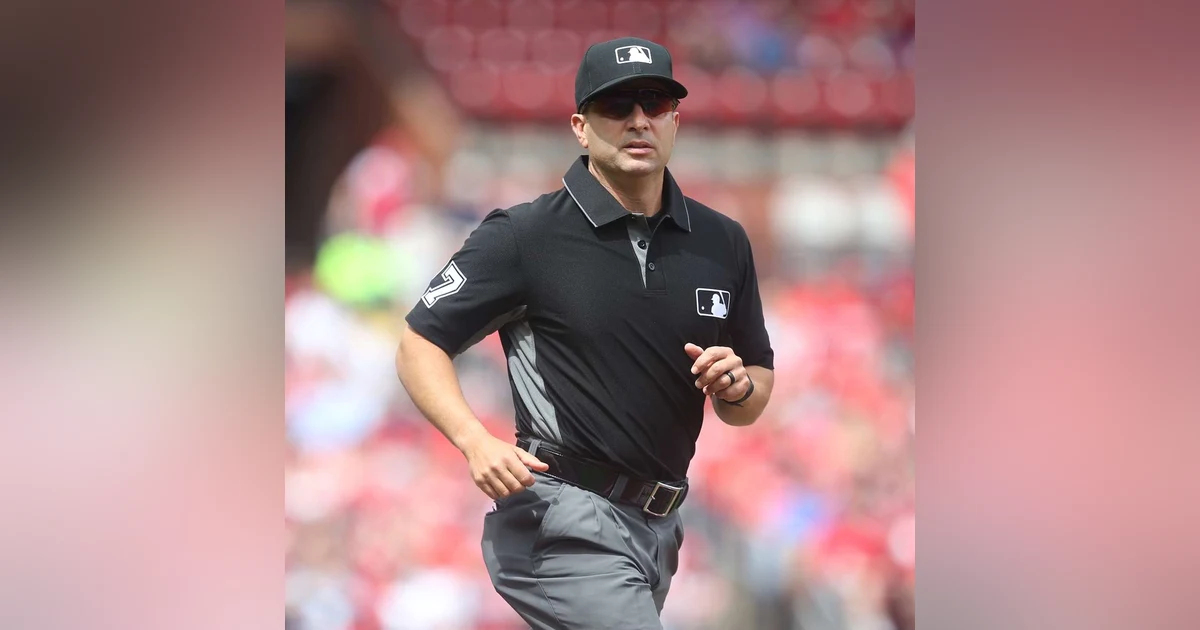
 Blind faith, sacrifice and hard work define the journey Jim Reynolds took from a college umpiring class to the Major Leagues. Jim, a recently retired MLB Umpire and Crew Chief who spent 24 years in the big leagues, shares how he stumbled on to his path, shines a light on the rigorous umpire training process and proves that absolute commitment to a dream can pay off. This is the first of 2 episodes. Jim discusses life as a Major League Umpire in Episode 2.
To discover more episodes or connect with us:
Do we already want to set this one up for us?
Tushar SaxenaI think this is a great way to start our second season first. You know, this is really one of those one of those professions. While we all kind of like it, I never think I really thought about how do you get fair fifth. And the journey it takes to get their fifth. And you're right, this is our first two-fart episode of our entire scale. And I think it's one of the best ways to start off seeing two with our first two-fart episode.
Larry SheaYeah, this is we always talk about choosing green.
Tushar SaxenaAll of his dreams and we could all be so lucky like all have a pick of the best. And it was an athlete. It was an athlete in high school, but it's good his limitations, right? But for most of us, we'll never have the best feet in the house. And this guy has the best of the best feet in the house, and we have the best feet in the house to hear his story.
Larry SamuelsSo with that, here is Jim Reynolds. Jim, thank you so much for joining us today.
SPEAKER_01Oh it's a pleasure to be here, guys. Thanks for having me. Speaking of wrong choices, you know, I I picked a job or a profession that I I you know upset half the people all the time. So half the people thought I made a wrong choice on a daily basis. Yeah.
Tushar SaxenaThat was actually going to be the first I'm going to ask you, Jim. Is that now, after all those years in the Bigs, have you finally been able to get that eye surgery with so many fans, players, and managers probably suggested you get during your time in the Bigs?
SPEAKER_01Yeah, no. Um, we're enjoying uh retirement life. Even, you know, I I've explained to people, like, has it set in yet? And I'm like, well, no, because basically our off season was always like four months of retirement. It was uh, you know, we're usually done, you know, especially towards the end of my career, towards done usually towards uh the end of October, and then we really don't go back to work until March. So my family had November, December, January, February off. So um I think for me it'll hit more come March and April. Uh I live out in Phoenix now, which is a spring, a spring training site. One of the reasons we lived here and live here was, you know, for umpires, you know, the Mets fans, Yankee fans, Red Sox fans, um, you know, they play half their games in in Boston or New York, right? And for us, we were always on the road. We were always on the road for you know uh six straight months. You know, we get four one week. So for us, uh being home during spring training was a uh a big deal in a in a uh you know, a month that we wouldn't give back by moving out of Phoenix and or or Florida. So we've been in Phoenix pretty much all the time.
Larry SheaSo let's start at the beginning, Jim, because I think you know, we really want to hear like your journey. This is one of those jobs that's you know, obviously, you know, uh I call it a penthouse, right? And you guys are up in the major leagues and there's only so many of these positions, and everybody's waiting for you to move out so they can move into that penthouse, you know? This is a big deal that you're retiring, right? But there's only so many of these jobs. Take me back to the beginning. Were you a baseball fan as a kid? Did you play a lot of sports? Take me all the way back.
SPEAKER_01Yeah, um, so I grew up in New England, right? I was born outside of Boston in in uh in Marlborough Mast. And then uh my father was in the insurance business, and that took him uh to Chicago for you know when I was four for a couple years, and then back to Hartford, Connecticut, where I basically grew up. Um huge uh my family, right? My dad was a Red Sox fan uh growing up, and so that's where I attended games, mostly you know, going to Fenway or New York, right? Yankee Stadium. Um and you know, Hartford's always been the line of everybody from Hartford. Hartford's like the line of delineation for people who don't know in in new in in in in back in New England. If you're north of uh Hartford, you're a Red Sox fan. If you're south of Hartford, you're probably a Yankee fan, and Hartford was kind of a mixed bag. So I spent, you know, growing up, I played.
Larry SheaJim, I'll take it, I'll take it one step further. I'm a fellow nutmegger. I had one grandfather who was a Yankee fan, another grandfather who was a Red Sox fan, right? It's split with families, it's split with the state. Absolutely.
SPEAKER_01My my grandfather, why my mom's father grew up downstate, and they were all Yankee fans, and that's why I would go to Yankee Stadium, and and my uh my father's father grew up in Massachusetts, and and that's why I would go to the Red Sox games. So, you know, um I was lucky enough to have uh you know grandfathers who were baseball fans too, and they would take me to games uh when when we when they had the time to do that. Um so that's you know where I grew up. I played baseball growing up. I played football and basketball at uh in in high school, and then uh I went to the University of Connecticut, and uh um I that's where I started uh umpiring. Um they had a one Andy Bailock at the University of Connecticut, a longtime baseball coach at the time uh up there, had a one-credit program. UConn was one of the few Division I programs that had a J V team. And the way that he would um help with expenses was that he ran a one-credit umpire program. And the kids in that or the students in that class would do uh the JV regular season and the varsity fall games. Now, uh I knew nothing about the program when I went to the University of Connecticut and liked it, like believe it or not, uh it every week of the first week of school, there's always been a fire drill since I've been in kindergarten, right? And they did the same thing at the University of Connecticut. I'm in my dorm room, I lived in the jungle. The people who are Yukon uh people here. Oh, yes, the jungle. I lived in the jungle, and the first week of school in September, they they had a fire drill, and I walked outside, and and again, this is my freshman year in 9 uh 87. Um walked outside and we're waiting, and I had my South Catholic uh baseball jacket on. And back at that time in Connecticut, all the Catholic schools, high schools played in the same conference. And I'm standing outside of my dorm, and there's a kid, a guy wearing a St. Joe's football jacket. And so I walked up to him, I said, Oh, you played at St. Joe's, and we get to talking, and uh, you know, he played baseball and football just like I did. And uh and so we got talking, and you know, we we got to become friends. And he's the guy that I learned about this uh umpire program from. His father was a high school official who uh officiated uh football. And on his high school uh football crew was a guy named John Hirschbeck, who was in the minor leagues at the time, turned out to be a longtime, you know, one of the best uh umpires in the in American League. Um yeah, John Hirschbeck. And so uh uh this guy's this kid who I met father um knew John and and he had met John and he's like, I always wanted to be an umpire. So so he was doing this one credit program. Um and so for two years he tried to get me involved and tried to get me involved and tried to get me involved, and you know, I was uh I just didn't didn't really want to do it. I had no intent on doing it. And the junior he's like, you gotta try this. And so I'm like, okay. So uh it was it was great for me. It was challenging, it was fun, um, and we got you know fed to the wolves basically. We were it was baptism by fire. I had never umpired before in my life, and you know, next thing you know, I'm out there. We go to class once a week uh prior to the season starting. Uh Ms. Coach Baylock would would would uh teach you the rules and teach you some positioning stuff. Um and then you know, when the when the uh varsity fall game started my junior year, we'd go out there and and umpire these games. We didn't really know what we were doing looking back on it now. Now back then the Big East was Mo Bog. We had no idea, right? Like, you know, back then it was the first pitch I ever saw in my life, standing behind a catcher under the old football stadium, because that's where they would do their preseason stuff, because it was so cold out. Um, it was Charlie Nagy, who uh had graduated already but had come back to do some throwing. Now, Charlie Nagy was a long time pitcher in the major leagues. And I remember with the Indies, absolutely, yeah. Yeah, absolutely. And that was the first pitch I ever saw standing behind a catcher. Um, Merrick Jrbinsky was the catcher. Um he was a big kid, and I didn't know have any idea what I was doing. And um those those were the first pitches, and I remember Charlie Nagy throwing sliders, and again, I was a I was a B plus uh small school baseball player, right? And I remember, oh, that's what a slider is supposed to look like, and you know, oh I was like, oh, okay, because I used to think I could throw a slider, and I'm like, okay, this is what this is what it really looks like. And then, you know, we'd go out and and do and the coaches were understanding, and you know, the players understood, but that was back in the day when the big east, you know, the UConn was in the big east, so they were, you know, they were doing fall games, Mo Vaughn, Lou Merlone, uh Bigio, all those guys were playing back then. You know, I didn't know who any of them were, but they were all, you know, those are the guys that I started umpiring when I was young and had and I guys, I'm telling you, I had no idea. It would be like you know, me handing you guys two whistles and going to tell you to work an NBA game.
Larry SamuelsYou know, I it it was it was just I could definitely screw up an NBA game.
SPEAKER_01We still think we can do it until we have to get out there, right? So um I was a communication journalism major, um, and so we did it. We did the varsity fall games my junior year, and then the JB regular season games in the spring. Um, and you know, here's how the coach would take care of us he'd give you a little $25 Jonathan food card, you know, it's like the local uh the school-run cafeteria kind of thing, and that's how we got paid. And it was it was my buddy Danny and I, and then we were, you know, he's like, I'm going to umpire school after this year. And I'm like, there's a school, and he kind of told me about that, and uh, I'm like, I'm going to. And then our parents convinced us to to get our degrees. So we we did that. Uh I did it again. And it was a good way for me to make some money in the summer. So after that's the after that my junior at the University of Connecticut, I went back home, joined the local board, and worked all summer. And it was great for me, right? Like I had I had a regular summer job, and then at night I would go and work some games, and it was great to have you know extra money in your pocket. You know, when you were in college at the University of Connecticut, it was you know, you had $20 on in your pocket on the weekend, you were loaded, right? And so that's back in the day when they had nickel night, right? So you couldn't you couldn't drink it away.
Larry SamuelsBut um sure, nickel night and uh quarter night, right? You flip the quarter, and if you won, you got the bear if you lost.
SPEAKER_01Yeah, two hot dogs and two. That's back in the day. And so um our senior year, we did it, and I was a communication journalism major, and I had an I actually had an internship at the uh CBS affiliated Hartford the whole year. I did two semesters putting together the night beat, they called it the night beat sports, the 1130 sports, where I would cut um video from the games that they knew they were going to show highlights to, um, cut video and write write copy for that and get that over to the sportscasters.
Tushar SaxenaAnd I enjoyed that a lot. So was that really what you went to school for? Because obviously it seems like in some senses you just took the umpiring course as a lark, you fell in love with it, but in reality, you know, even you just kind of said it like, you know, there was a co there's a school for umpiring. You wr you weren't you you didn't seem to be sold on it, but you still you you know but you still seem to be like you had an idea of a job that you wanted to have, and it seemed to be like you want to be a sports journalist.
SPEAKER_01Yeah, yeah, that's exactly right. Uh so uh starting my sophomore year, I was writing for the school newspaper. Me and a another friend of mine were writing a sports column, a once-a-week sports column. It's something that I enjoyed. Um uh, you know, I had this job at the CBS affiliate my senior year and really enjoyed that and really enjoyed learning about that. My intent was never umpiring ever. It was a great way to earn some extra money. It's something I found challenging. And when my buddy Danny's like, hey, let's go to umpire school, I I didn't have any idea what he was talking about or looking into it. And so when we got to my senior year, um the CBS, the people at CBS are like, Hey, why why don't we take some time and put together an on-air, you know, tape for you um to do so. Yeah, to and and it was an opportunity that I wasn't expecting either, right? Like they were, hey, we'd love to have you here. Let's let's talk a little bit about that. And I'm like, Well, yeah, okay. And and we we did that, and uh they're like, hey, uh, you know, maybe So you produced the tape.
Larry SamuelsYou had a demo.
Tushar SaxenaYeah, I did, which was something that I they wanted you to so they wanted to bring you in as like an an anchor or a reporter?
SPEAKER_01Oh, I I'm not sure what they wanted to do, but they took the time to do that for me, which again, uh like I didn't understand how big of a deal that was. Wow, but it was because uh even if they weren't interested, they thought that it would be good for me to have to be able to use to shop around because they knew I was very interested in doing this stuff, right? And and again, I was a little naive there. But I said to them, right, they have me put this tape together, and they again it shows you, I think, how interested they were. Me being a little bit naive said, Well, I'm going to umpire school in January, and I really want to try this. And they're like, Okay. And and I told them a little bit about it, and I said, Yeah, there's three umpire schools going on simultaneously in Florida. There's about a total of about 450 students, about 150 at each school. And at the end of January, each school will send their top 15 prospects to a kind of I the term I use is like a top gun camp that's run by Major League Baseball. At that point, the 45, at that point, the 45 students will spend a week together, they'll be evaluated, and then the top students are placed in the lowest levels of the minor league rookie ball, right? So when I was telling the people at CBS this, I'm like, yeah, that I'll I'll be back in January. Right? Like this. Yeah, like this is like a reality TV show that you're about to live for the next day. I'm gonna give it a shot. Um and so uh that's how I got into this, right? And me and my buddy Dan went and did this. And we went to Umpire School, and I remember um I remember getting to Umpire School. We yeah, I had to make some money. My parents were really supportive of me going to college, and they helped, they, you know, they were the primary financial backing of my college. I I had some jobs and I contributed, but I didn't they were supportive of me trying this, right? And so that's what I did. I uh I I earned some money. I worked at the produce docs in Hartford to make the money to go to Umpire School. Um, it was a five-week camp. My my camp actually, when we had signed up, it was a school that was supposed to be in Florida and then moved to Phoenix. So I ended up we ended up going to school in Phoenix. Um uh in in fact, I actually live now about two miles from where I went to umpire school, which is kind of a small world kind of thing. Oh, that's great.
Larry SamuelsIt all comes back around.
SPEAKER_01Yeah, it was my first time west of the Mississippi in my life, probably my fourth plain flight. So my buddy and I went to umpire school. Um we did well. Um, we both got selected to go to the top gun camp in Florida. Um, and then we were both selected to work in the minor leagues.
Larry SamuelsUh long story short. So, what is umpire school? Like, like what happens day to day? What what is that journey? Are there tests? Are there exams? Are there push-ups? Like what are you doing every day?
SPEAKER_01Um it's a lot like training camp, a boot camp, I would uh suspect, without without the uh without the guns. Um it is a a school and without the bulletizer. Yeah, nobody's gonna die. So there's a lot of screaming instructors. Um it it it it is run very much like basic training. Um they don't care if you have any experience or not. Um they're there to break down you down, build you up from day one until the last day of camp to see if you can umpire. In fact, some of the guys who Do they heckle you? Yeah, oh there's screen by the end of it, yeah, you're in arguments and there's in all of its stage. One of the and I remember the first day, like I was I, you know, I'm 5'10, but back then I was like 165, and and I remember, you know, you show up and you got your coat and tie on, and there's a there's the night before school starts, and everybody we're in Phoenix, right? And it so we're all out by the pool and they've got it all set up, and there's 150 students and there's chairs, and everybody sits down. And Jim Evans, who was the major league umpire who was running the school, and he had his you know 10 or 12 instructors, a couple big young big league guys, and then mostly minor league guys who were the day-to-day instructors. And I remember he asked everybody, you know, stand up, introduce yourself, give your umpiring background. Um, and I remember just everybody looked like they were 6'4, like ex-football players. And I'm like, these guys like I work the SEC semifinals, and I think and I'm like, I got no chance. No chance. Um and and then you get out on the field and you you follow instruction well and you work hard and you put your head down. And and again, I think sometimes, um, and I I would think that basing I I think that instructors in the army that are teaching you how to fire a weapon sometimes find it easier to teach people who really don't have any habits. And a lot of these guys, a lot of the guys that I went to umpire school, and again, of the 150 guys, I want to be fair here, about 80 of them were actually looking for a job in the minor league. The other 70 were amateur umpires that were looking to get better.
Larry SheaSo at this point, you're at umpire school. You're there's obviously something that kind of sets you apart, though, Jim, because it's such a small amount of people that are successful at this, are placed and and actually go on to bigger and better things. You're one of those people. Is it is it you're a good student? You paid attention to detail, all of the above. Tell me toot your own horn a little bit. Tell me what separated you from the from the rest.
SPEAKER_01I think and it's a you know, I haven't really looked back on that in a while, so it it's it's a really good question. But I I think what you set my my buddy and I, Danny, apart from everybody was we took it as like a five-week job interview. We were serious about it. Um, and you know, there were some guys on there, man, they pay three grand. They're like, how about the fact that I'm in Phoenix for three thousand dollars for a month? They live in like you know, like a spring vac break vacation. Um, and so Danny and I, and again, right? Like uh I went to when I went to the University of Connecticut, I went to a kid that my roommate, my first year, was a kid that I went to high school with. So the familiarity, we were in it together, we wanted both to succeed, we were rooting for each other. All of that stuff helped. And and again, I think the biggest thing that Danny and I did was we took it like a five-week job interview. Very rarely did we go out at night. You know, there were guys going out every night, you know, drinking and coming, showing up, and they're hungover. And and Danny and I were were in the rule book, we were practicing what they wanted us to work on that day. Why, you know, um, whether it be our plate stands in the mirror of the of the uh of the bathroom in our hotel room. Whether it be mechanics, practicing mechanics in the mirror, those kind of things. Um and we kind of looked apart, right? We were athletic looking guys. We weren't heavy, we weren't short, we weren't we were we could run, we looked we looked like athletes out there. So I think that's the kind of stuff that helped us early. Um and then and then and then we took it really serious and we did well. And that's that's how it went for five weeks. Um you could start to see who was getting it and who wasn't um very easily uh after about two or three weeks. And and and then you kind of start kind of hanging out with other guys that you go, that guy knows what he's doing, let's hang out with them, let's let's pick each other's brains, let's work together. And I think there was a little bit of a group of five or six of us that uh felt like we were doing well um and were kind of helping each other through this.
Tushar SaxenaSo what happens at the end of five weeks at this point? So the what what's the next step after five weeks?
SPEAKER_01Five weeks, they call you in on the last day and they tell you whether they have a spot for you at the umpire development program, which was the top gun program, the the the program, the the one-week program that was being run by Major League Baseball at the time. Uh and they were gonna send you there. It was immediately following Umpire School, or they told you that they didn't have a spot for you and uh that you just went home, right? And so Danny and I were lucky enough to get a spot. Um and and so uh there was a group of 15 of us, and uh they flew us from Phoenix to or Orlando, and the uh school was being held at the time at the Royals, it was called Baseball City. There was the Royals Complex right outside of Orlando. We spent a week there, um, and then very similar, right? Like very similar. They take you through on field stuff, there's arguments, there's all this stuff. Um, and then there's an evaluation day in which they either have a spot for you in the minor leagues or they don't. Um, the guys that they didn't were put on a wait list, um, and the guys who they weren't interested in all were just were just sent home. And so Danny and I were lucky enough to get a spot uh in the minor leagues. Um and you don't find out that where you're going at that point, you just found out that you're gonna be working as a minor league umpire in rookie ball the following year, or that year. Um, and so we're excited, we were grateful for the opportunity. Um and then the top end of a group, the group got immediately assigned to one of the spring minor league spring training camps with the team, and Danny did. Uh he got assigned to Port Charlotte uh with the Rangers, and then I didn't. And they had uh a place down there called Capoco Beach where a lot of college teams at that time would come and play games. So you lived in a dorm, you worked two or three games a day, you made a little bit of money, and with the possibility that if a spot opened up in spring training, um that you could possibly get assigned to a spring training camp. Well, that that's what happened for me. Uh a spot came open, I was assigned to the Braves camp, and and so when Braves Spring Training opened up, I immediately went there.
Larry SamuelsSweet, my God. Yeah, come on. Yeah. So what does that mean? Like, are you on the practice fields calling games and stuff like that?
SPEAKER_01So what was neat about the Braves camp is their major league and minor league facilities were all in one place. And so you get assigned to the camp, you meet the other minor, there are my there's a minor league camp for umpires, and what would happen is if the Braves played the Cardinals that day, the Cardinals minor leagues teams would come over and there would be an A-ball game on the backfields, a double A game, a AAA game, right? And you would work those. Um and so being a rookie ball umpire predominantly worked the rookie league level games, but there were times where the triple-A crew chief of the minor league camp would say, Hey, come work the bases with me uh in the triple-A game, or come work the plate. Uh, I remember one day that um I was working on one of the backfields, and what happens a lot of times early in spring training um is that at the big league level, a lot of their pitchers will pitch one or two innings in a big league game, but there's not enough innings for them to get the work that they need in. So a lot of the big league pitchers would come down and throw in the minor league games for a couple innings. And I remember one day, one day I got I I I'm I'm working the plate, and here comes Glavin and and what and one of the big league catchers because that's who would catch those guys. And I I just remember I as clear as day to this day. I remember Glavin comes out, I talk to the catcher a little bit, hey, how you doing? Yep, whatever. And and uh I remember first pitch he throws, he he he sets up on the outside part of the plate and I call it a strike, or my version of what a strike, and then and then he moves a little bit off the plate and he hits the glove and I call it a strike, and then I remember he moves even further out and I ball it, and then I remember the catcher coming right back to the spot where I called it the last strike. He was finding out what my zone was, but that's how good those guys were. And I was like, holy cow! It was more is it was as eye-opening for me as I think anything, anything in my career. I'm like, that's how they were trying to learn the umpire.
Larry SamuelsThat that's what that process was.
SPEAKER_01Even a rookie ball umpire, right? And they had their process. This is how they went out and pitched back then, before the box, before the the strike zone, before all that. It was consistency. The biggest part of our job back then, and you know, you'll learn this later, especially when you get to the big leagues, was you didn't have to be right, you just had to be consistent, consistently good, right? It wasn't about being whether that pitch was like an eighth of an inch off the plate, like it is now, right? Like it was about okay, that's a reasonable strike, and I need you to be consistent. That's all both teams ever asked for back then. And so that was very eye-opening for me.
Tushar SaxenaI gotta ask you this point. Like, how old are you? What year was this, and how old are you at this point? Because it, I mean, I'm assuming you're probably no more than 25 at this moment, right?
SPEAKER_01Yeah, no, I was I graduated uh uh in 91 uh in May of 91 and went um high school in January of 92. So at that point, uh I was You're still 22 at this point. 23, yeah, I was 23.
Tushar SaxenaOkay, 23, all right.
SPEAKER_01Yep. Um, and so uh yeah.
Tushar SaxenaAnd so my God, to be watching this as a as a 23-year-old, holy cow, man.
SPEAKER_01Yeah, that's that's baseball heaven.
Tushar SaxenaJesus.
SPEAKER_01Yeah, yeah, right. Like, but again, man, I don't I I'm I'm so focused on what I'm doing. There are a lot of times I would walk off the field and somebody would be like, who won? I'm like, I'm not quite sure. I don't think we played the bottom of the I don't know. Which I totally get. Yeah, I don't think we played the bottom of the ninth, so the home team won. Um so yeah, like and it, you know, it it was it was very, very, very overwhelming, the whole experience. Being a baseball fan growing up and understanding where you are and having this new skill set that you're working on and and the pressure and all this stuff. I I remember one time, you know, growing up, uh, I learned to play golf from my grandfather about the age of 12. I started playing, and probably by the time I got to college, I was a better player than my father. And but I never beat him. And then after my first year in the minor leagues, we played like one of the first days after rookie ball, and he shot 38 on the front, and he was down three. And he goes, he goes, Oh my god, you you might beat me. I go, Dad, playing you in golf is not pressure anymore to me. Like that was that was pressure.
Larry SamuelsI got yelled at in school every day.
SPEAKER_01These guys want to kill me every day out in the minor leagues. I said, This isn't pressure anymore to me. So I I think all of that, um, you know, looking back on it, uh, you know, it was a really neat experience. The first person who ever signed any one of my checks, you got a check from the Braves. Well, the guy that signed my check was Hank Aaron because he was he was working for the Braves at that point.
SPEAKER_05God. Oh wow.
SPEAKER_01So it was like $623 for the three weeks or four weeks, you know, three weeks or four weeks I was down in in um in in in the Braves camp. I had to cash it because I had a I was I wasn't making any money. And so, but I think I remember taking a picture or a photocopy of it, right? Making a copy of that.
Larry SamuelsI was gonna ask you that question. I assumed you had to cash it at that point in your life. At a different point you would have saved it and framed it.
SPEAKER_01Absolutely. So I I I think uh I think I have a copy of it somewhere. I you know, I like but uh yeah, that's that's what it was. So uh Danny was over in uh Port Charlotte on the other side of the state. I was in uh in uh West Palm Beach with the Braves, so we're on different coasts. Uh the next thing, because rookie ball doesn't happen, uh it doesn't start until mid-June, early June. Uh we go to a we get assigned to an extended spring training camp. Both Danny and I get assigned to the same extended spring training camp in Sarasota, Florida, which was living on the beach. There was a place called Harry Blacks. He owned six condos and it was right on the beach, and we stayed there, and it was uh, you know, we worked so my first year in baseball, which could have been very overwhelming. Not only were Danny and I roommates at uh Umpire School, we were crewmates in extended spring training, and then we both got assigned to the New York Penn League where we were we we got a chance to work together. Uh and so it made my first year in baseball very, very easy because you got your best friend there, you're going through new experiences. Uh we made some friends along the way that were in other leagues that we both were friendly with that we could pick up the phone and talk about all this, right? Um, because you're going through so many new things, and hey, should I have handled it this way, this way, how we do it? And and it it just made the experience really, really easy.
Larry SheaDefinitely. I I still want to go back to the fact that you took argument class because that sounds like an awful lot of fun to me. But no, I won't. We should get two char an argument class, I think, is actually. No, you should not. Because you got to get better at it, too. You're really not. No, no, no, no, no.
Larry SamuelsNo, no, no.
Larry SheaSo that's the first so that's your introduction, and what a great first year. Like you said, you're hanging with your friend. It's a it's an incredible experience. Where does it go from there? What happens next?
SPEAKER_01You know, uh, just like the players, umpires work their way up through the minor leagues. And the difference is um, one of the biggest differences, or the biggest difference is for umpires, officials on any level, it's about seeing pitches and plays. And the more experience you have, the better you are. Guys like Nomar and Derek, who were the minor league guys, the big studs, when I when I was going through the minors for the Red Sox and Yankees, and I use those guys because it's it's it's who people in New England can relate to. Uh once they realize those guys can play at a certain level, they try to get them to the big leagues, right? They want to make sure that you know they see pitches and plays too, but they need two or three years in the minors. Big league prospects as players spend two years in the minors, big league prospects as officials and umpires spend anywhere from seven to ten years in the minors. And so we work our way up, we're evaluated by supervisors throughout the season, and then they make they make uh suggestions on who should be promoted to the next level. So for me, I went from rookie ball in the New York Penn League, which was nice, right? Like I worked my way up. I went from the Penn League uh in 92 to uh the South Atlantic League in '93, which was North Carolina, South Carolina, Georgia, that kind of uh area. Uh that was that was low A ball. Then I got moved to high A in the California League the following year in 94. In 95, I came back home and worked in the Eastern League, and that was great. Um I had uh three teams in Connecticut. Um, so I was living at home when I could. Um and then I got fired out of that league for living at home.
Larry SheaFired?
SPEAKER_01I got fired out of the Eastern League because they had a deal with the teams that were providing free hotels, but I was a half hour from home. So I would stay at home, I would check into the room, uh, put the do not disturb sign, and then go to my house where my mom would make us good meals instead of stay staying in the welfare hotel that the New Britain had had us, right?
Larry SamuelsThat's great.
SPEAKER_01Well, the guy had to make go in the room and saw that it wasn't messed up, and we got fined, me and my partner got fined $250 each, and the following year we weren't asked back, which was if I see you know John Levinda again, I'm gonna I'm gonna give him a piece of my mind, but that's all right. Um uh and so South Atlantic League, and and uh that was uh my second year in AA, first year in AA 95 was the Eastern League, second year in 96 South Atlantic League. Um that's between 96 and 97 uh was the first chance I had an opportunity to work Major League Spring Training Games. So I was getting promoted to AAA. Um there are games uh on the Major League schedule that are always filled in by minor league guys, um, and I had an opportunity, and this is really where my first big break came from. Uh I had the opportunity to work a game in I want to say Richmond, Virginia. And it was the home at the time Al Clark lived in that area, so he always worked the that game. Well, I learned somebody said, Hey, always bring your plate stuff. Always bring your plate stuff. And I was supposed to work the bases with one other minor league guy, and Al Clark was supposed to work the plate, and I walked in there with my all my plate stuff, and and and he's like, You brought your plate stuff? I go, Yeah, I'd love to work the plate if you let me. He's like, sure, because they didn't want to work the plate spring training games.
SPEAKER_05Wow, a good thinking.
SPEAKER_01And he's like, Yeah, sure. And I remember about seven innings, he came down, he's like, You're doing a great job. I'm gonna make sure Marty Springsted uh knows about this. Now, Marty Springstead was the American supervisor of umpires. I'm like, yeah, awesome! And the game ended, and you know, it was pretty uneventful. But it, you know, at that time it was about who you were and the kind of job you did. And I walk out there and I've got my Eastern League hat on, and and I've got the I've got the Braves and the Reds, I think, right? And they all know. They look at one look at my hat, and it's like, okay, we got a double-A kid today. Um, and so that was my first big league spring training game. Um, and then I went to uh the it was the international league at the time. I spent 97 in the international league, and then got transferred uh to the American Association, which was more East Coast. The International League was more at the time uh more um Central America. Um and then I got uh American, I'm sorry, the American Association in 97 was more Central America, Central uh the US, um and then uh the East uh the other league that I went to, um the International League was more East Coast, um, and that was 98. And then between that time, between my first year in AAA and my second year in AAA, the American League kind of what they call bought my contract, which means they're the ones that gave me a full spring training schedule. They're the ones that was back when there were two separate leagues. You were either American League was interested in you or the National League was interested in you, and and you worked spring training for them.
Larry SamuelsAnd so I And do you know why they bought your contract?
SPEAKER_01Like why did you was I got on the radar with Al Clark in the year prior, that year they sent somebody out to take a look at me in AAA. So a scout, an umpire scout. Yeah, there's there's there were major league umpire scouts that went around and looked at guys to know who they liked and didn't like. And I think uh the guy's name was Phil Jansen. I think he liked what he saw, um liked the potential, like my attitude, those kind of things. And and uh you know, they gave me a chance to work a full spring training schedule and uh that year. Um and then there were some other indications, right? There's there's fall baseball, the Arizona Fall League that I got sent to the following year. I got American League Spring Training again, and then in in 99, everything blew up in the umpire world.
Tushar SaxenaWhat does that mean? So, Jim, before before we get to 99, I want to ask a quick question here. So you're doing all this umping, right? You're doing the East Coast League, you're going out west, you're going down to Central America. What is the what's the travel like for this? I mean, you know, how how many days a year are you on the road? Or is it just like I'm on the road for or I'm I'm umping three months a year and then I go home, or or then I'm out for another six days, six to eight weeks, and then I go home. What is it, what's the time constraint at this point?
SPEAKER_01So rookie ball was uh like a two a month at two and a half two-month season, and I got paid thirteen hundred dollars and then I was done. Um but what what minor league baseball does is they have winter leagues, fall leagues, that they keep their prospects working. And so I was always I was always at a level with them where I was getting those kind of leagues. So a lot of times it was um, let's take a regular minor league, full minor league season. I would work spring training the whole month of March, April our league would start, that would end at the end of August, work some playoffs in September, and then you would go to uh uh instructional league, and that would start mid-September to the end of October, and then you had some time off. I was also lucky enough to get selected to teach at one of the major league on priority schools and did that for the first five or six years of my Miley career. So I stayed kind of busy. You stay busy, you don't make a lot of money. Um, it was very hard to get dates back in Connecticut because it was like, hey, I'm 27 years old, I'm living with my parents, and I don't own a car. Would you mind picking it? It's like, hey, how are you doing? Good thing you were so handsome. That must have helped. Yeah, yeah, let me tell you something. Um that was just so far. And it and I'm not really high on that level either. But um uh and so yeah, I lived, I lived at home, I stayed busy probably, you know, nine, nine months, nine, ten months out of the year, and and and you just kind of grind your way through. I was one of those guys, by the time that I got to double-A, I was like, okay, this is what I really want to try to do. Like, I wasn't messing around anymore. I was locked in. I was I was picking the brains of anybody that I thought was any good. I was aligning myself with those guys to see what kind of work ethic, how they got better, you know, always asking why, why, why, why you do this, why are you doing that, working my butt off, and I and I really didn't want to have any serious relationships at that point because I didn't want there to be any distractions. There were guys who went through the minor leagues that had families and kids, and I just never knew how they did it.
Larry SamuelsSo that was part one of our conversation with Jim Reynolds, and uh what an incredibly interesting story. Larry Shea, what are your thoughts?
Larry SheaYeah, what a journey. I mean, you could really see uh first of all, fascinating that he didn't dream of becoming a Major League Baseball umpire, right? This is just something like, oh, take this class with me. It was a total arc.
Tushar SaxenaIt was a total arc.
Larry SheaTotal arc. And it ends up becoming his perfection later on, which we'll find out about. But you know, fascinating the journey, fascinating the odds that he has to overcome to try to just make any headway in his perfection whatsoever. Yeah, the fact that it's an afterthought is all you know still very, very mesmerizing to me. Um yeah, there's a lot of lot of things that go into his uh his journey as a young man, um, where it becomes his dream, right? It's not his dream as a young child, but it becomes his dream. And uh sometimes that's the way life works out, right? We're chasing something and then we get lured by something else and it becomes a different part of our journey, but a dream nonetheless. So very interesting, the beginning states.
Tushar SaxenaYou know, when your passion becomes your profession, nothing is wrong, right? So in some ways I can relate with I can relate in a way to Jim's story with where he says, you know, I went to school to be a broadcaster, a sports broadcast journalist, right? I went to college to become a lawyer. And what happens? I went to my I went to the college radio station and I fell in love with it. So I turned my passion, which I didn't even know I had at the time, into my profession. And that is the great story of Jim Reynolds. I'll tell you one other thing that I can really relate to being broke early on in your career.
SPEAKER_00I made no money, and you can tell by that story, minor league umps make no money whatsoever.
Larry SamuelsYeah, that was that was crazy, and I have certainly lived that life uh as part of my journey. And, you know, we we talk about the meaning of the the title of our show, No Wrong Choices. I mean, it he literally is somebody who put himself out there and enrolled with it, made some choices, figured out, or figured, hey, let's let's see where this goes. And and needless to say, his journey worked out and as he uh sort of just uh stepped on a path and and and followed it. You know, the the story that that really stood out to me was um playing golf with his dad, you know, being in school at the umpire academy, the the Top Gun Academy, whatever he called it, where you know he's getting yelled at on a regular basis and dealing with argumentation and pressure and conflict and all those other things. And then he goes out and plays golf with his dad and he's beating his dad, which he was never able to do before because the pressure didn't matter anymore. All the stuff from school was preparing him for pretty much anything, and playing golf with his dad was certainly not going to be a problem from that point forward.
Larry SheaAnd I still think we need to send to our argument class because that would be well worth the price of advantage.
SPEAKER_00I'm very well versed in arguing.
Larry SamuelsYes, you yell and it's better to stop because don't give up and let's bag your way because it's not worth the pain and aggravation. Thank you very much.
Larry SheaThat is basically the claim. That might actually that might work in actually umpire argument at school, by the way. But um yeah, fascinating what sets them apart, right? Like I asked him specifically, like, what are you doing at this point that allows you to kind of break through? Because all these people are there chasing that same dream. And just that he took it seriously, right? Like there are a bunch of guys there, you know, who didn't take it seriously, and that's what you need to do if it's truly your dream, is to really focus, really dedicate, and really get down to brass tacks on what needs to be done, and that dedication goes through enough for him to make headway and get appointments at various places, and that matters. So your dedication matters. Remember that when you're out there chasing your dream.
Tushar SaxenaYou know what really also struck me, this other thing that struck me was the amount of time it takes to become, to maybe one day never become, but to become a prof a major league umpire, right? We think about guys in the minor leagues like you know, the Derek. I think the Derek Peters, the Omar Garcia Faris, even more modern-day athletes, right? If you are one of these quote-unquote bonus babies and you are seen as a top flight athlete who's gonna be a big contributor to your club, they basically try to shuttle you through the system, right? You're you're there maybe two to three years tops and then out. But for an umpire who has real skill to make it to the next level, you're talking about five times that.
Larry SamuelsThat is unbelievable. It's a massive sacrifice, and you have to have a great deal of uh confidence in yourself and faith in a way that what you're doing is is the right thing and and where you want to be to see something like this through. So that was part one of our conversation with Jim Reynolds. Part two is all about being a major league umpire. Depending upon when you're listening to this, being a major league umpire will either be released next week or it's up and available now. We thank Jim Reynolds for joining us, and all of you for listening to this episode of No Wrong Choices. Please be sure to follow our show on your favorite podcasting platform and to look for us on social media. We can be found on Twitter at the FellasNWC or search for No Wrong Choices on Facebook and Instagram. We also encourage you to visit our website at NoWrongChoices.com to learn more about us and to seek out bonus and classic content. On behalf of Larry Shay and Two Shares Taxena, I'm Larry Samuels, and we are the Fellas.