Harlem's Harmony: Allan Harris and his Jazz Legacy

 Apple Podcasts
 Spotify
 Castro
 RSS Feed
 Youtube Music
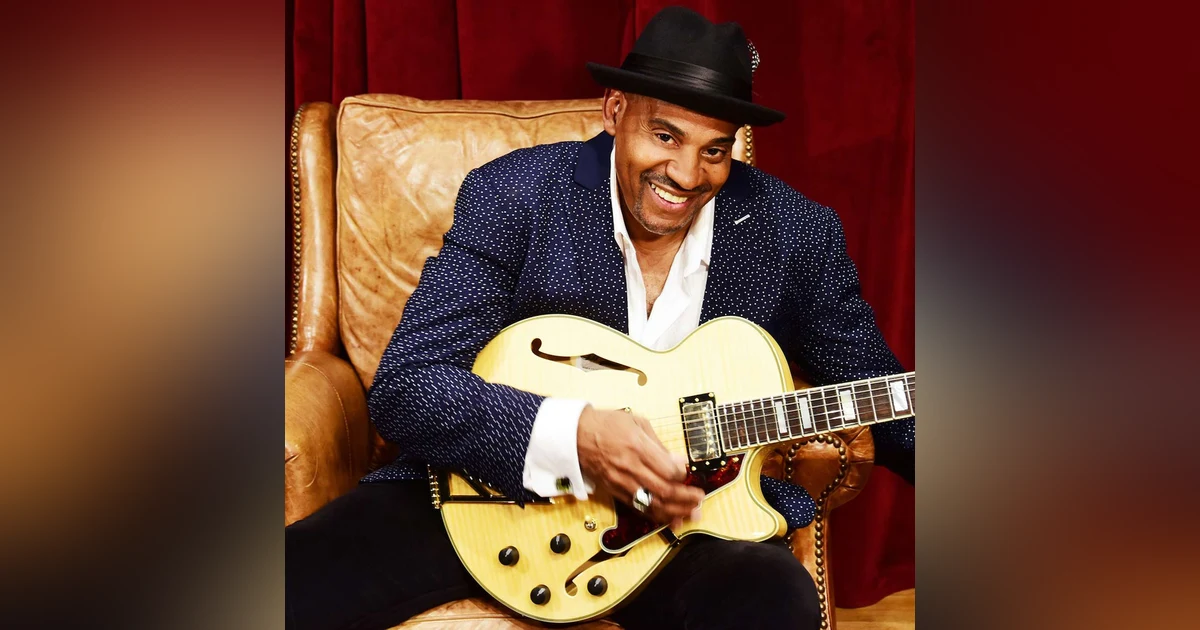
 Step into the world of music with award-winning Jazz vocalist, guitarist, and songwriter, Allan Harris. His musical odyssey kicked off right on the doorstep of Harlem's iconic Apollo Theatre. Join us as Allan delves into his vibrant journey, recounting his initial encounter with the legendary Jimi Hendrix, the pivotal influences that shaped his artistry, the dues he paid, and the profound moment he found his distinctive voice. Along the way, Allan regales us with anecdotes of encounters with icons like Ella Fitzgerald and Jackie Wilson, who frequented his Aunt's cherished restaurant on 126th Street in New York, weaving a tapestry of musical history before, between, and after their electrifying sets.
To discover more episodes or connect with us:
Hello, and thank you for joining No Wrong Choices. Along with Larry Chang and Two Char Saxeno, I'm Larry Samuels. This is a podcast about the adventures of life, where each episode features what we refer to as a dreamer who had an idea or a vision, chased it, and got there or got pretty darn close. If you enjoy these stories, please be sure to follow or like us on your podcasting platform of Choice or connect with us at NorongChoices.com. This episode features the veteran jazz vocalist, guitarist, and songwriter Alan Harris, who is based in Harlem, New York. Larry Shay is the only member of this podcast with a music degree. I think you are uh the perfect person to lead us out, so take it away.
Larry SheaYou know, every once in a while I have to pull out that music performance degree and show you guys where I put it next to it. Next to the meteorological degree, I have the music. No, uh I did. I studied music in college, and um it was a love affair of mine, and unfortunately I had to quit. It was drums percussion specifically, but I played a lot of jazz music in college, pop bands, things of that nature, and it was a thrill, and it's something I miss to this day because of injury. I had to stop playing. Um, so when you get an opportunity to talk to a professional musician like this, this caliber of player, somebody who's so dedicated to his craft and had to wear the business hat and the marketing hat and thread in his basement and figure out exactly how to master his instrument. It takes a lot of dedication. I know there's a lot of people out there who are super interested in getting inside the mind of a professional musician. This is your opportunity, and it's pretty exciting to talk to a guy of this caliber.
Tushar SaxenaYeah, I mean, as you said, Joe, I mean, you know, we're gonna learn a lot about how this is not Joe Friends, it's Joe Business. Um, you know, I grew up listening to folks like Charles Mingos, Jack Tegarden, uh, you know, Winton Marsalis, these are just a few of the names that kind of just pop into my head who have like influenced me, and I still listen to this blow. Uh so the the opportunity to listen to a man uh to get to speak to a guy like Alan Harris is you know it's kind of it's kind of uh once it's not once in a lifetime, but it's a very, it's a very rare opportunity to speak to an artist of this type of caliber, uh caliber, especially someone who is so high up in this, uh in the field of uh you know Jaw's American standards, you know, they're his mentors, or who, or or who else, but you know, Tony Bennett, you know, Brooke Sinatra, Nat King Cole, giants in the field, giants who are, you know, who are so ingrained in the American standard in the American standards book that, you know, you can't think of a single song out there that these men have not at one point, at one point or another, put on an album. And this is the type of caliber of artist that we're talking here today with Alan Harris.
Larry SamuelsAnd uh, you know, for me, as somebody who has seen him perform multiple times, you know, I've heard him tell his story on stage. I'm now looking forward to hearing him tell his story on a podcast. So with that, here is Alan Harris. Now joining No Wrong Choices is the award-winning Harlan-based jazz RB musician Alan Harris, who Tony Bennett once referred to as his favorite singer. Alan, thank you so much for joining us today.
Larry SheaOh, thank you for having me, guys. So, as a world-class musician, you know, you always have that moment, that that light that goes on when you're a child, perhaps, or or you hear a piece of music or something magical happens. Do you have that magical musical memory from your childhood or something that pointed you in the direction of this career path?
SPEAKER_00I have a myriad of them, but one that really stands out and I think is a little juicier than the other ones I have is uh what age are we when we're I can't remember when we're 10 years old, what age is that? What grade is that when you're 10?
Tushar SaxenaI want to say it's like I want to say it's like fourth grade. Yeah, fourth or fifth grade.
SPEAKER_00Yeah, okay. It was around that time I was uh I was in the uh I was about 10 years old. I was coming home from school, which was two blocks where I lived, with the Catholic school called St. Matthew's. And it was raining, and on my way home, I had to pass by um a barbershop called Cook's Barbershop, and he cut all the kids of color hair in the neighborhood. And if you didn't have any money, what you do is sign a book, and you'd pay at the parents would come in and pay at the end of the payday. He was a real wonderful guy. I remember walking, and they had a jukebox. It was a typical um barbershop, very stereotype, black guy sitting around reading a newspaper, listening to records, and uh listening to a jukebox and pontificating on what was happening during that time in the late 60s. And as I walked past, I saw a life-size poster on the picture window of the barbershop, which you usually put things up there. And it was a man of color, tall and lean, you know, light-skinned, buckskin uh suede jacket with fringes. He's playing a white stratocaster, had a psychedelic headband, big fro. And he was looking out the poster, the picture had looking from behind, looking out over this sea of faces in this big field of white, black, yellow faces, didn't matter. And they all had their mouth open and dancing in the poster. And the top of it said Jimi Hendrix, live at Woodstock. And it just blew my mind literally. Yeah, I know it blew my mind. As I was sitting there, I'm listening to the music coming out because they were playing Purple Haze, and all these elder men of color in there were just bitching and complaining. I remember one of them said, I knew, I knew him when he was playing with King Curtis. Then he went over there to England and started to play that white boy shit. Turn up the blues real loud. And I remember him throwing the album cover on the floor of the barbershop. And Mr. Cook came outside and said, Come on inside, get out of the ring. And I picked it up and just studied it. And he said, You want this record? I said, Yeah, I love it. I took it home and I wore that record out. And I think that was the impetus for me to really want to be uh entertainer and a singer and a guitarist to the point that I am now.
Tushar SaxenaBut you're obviously, I mean, obviously you're a renowned jazz aficionado, a jazz, uh jazz vocalist, jazz guitarist, and Hendrix is a as a rock icon. Did you want to, did you initially say, okay, I want to be, I want to be a rock god like like Hendrix?
SPEAKER_00No, not really. Uh, it wasn't that I wanted I wanted to emulate him. I w I was enamored with him as everyone else was in all the genres during that time, whether it was Motown or Country or Jazz. Everyone was enamored with Hendrix, not because of his playing, because of of what he brought to the table as a man of color in the industry. He was the first man of color that I looked at, and most people of color looked at as he didn't skin a grin. He wasn't sitting on a stump doing the blues, which I like, of course. He made no, he made he didn't make any excuses about what he was on the stage. He just was a warrior on par with Clapton and all of them, with Jeff Beck. And he was just a monster to me. And uh it affected my psyche, it empowered me to to venture into this world of music a little more strong than just being a wonderful jazz artist sitting behind a microphone doing standards from the songbook to people. He stretched the memory in my mind, the membrane in my mind.
Larry SamuelsSo, how did you get started? You you had the inspiration, you had the vision, you had the the role model, so to speak. How how did you start?
SPEAKER_00My mother was a classical pianist. You know, she's hammered North Carolina and she moved to New York with her family, of course. It was a conduit, Despair, diaspora, everybody. If you had money, it was doing the Harlem Renaissance. If you had money, you send it back home and to people and who could ever make it back up north. They had a place to stay until they got on their feet. My mother was a pro uh, she was a recipient of that, plus being a prodigy. She was the first graduating class of performing arts. And she wanted me to play piano, and she was a strict tactitioner, believe me. Basically, she was she bought it on cruelty back in those days. And uh, yeah, she she really did. She wanted her son to be neoclassical. And I remember one time I was listening to a blues record of Muddy Waters, and she freaked out.
Tushar SaxenaShe said, I'm not gonna have no son of mine sitting on them damn stomp singing that. Muddy Waters, she didn't want you to listen to.
SPEAKER_00Can you believe that? I know. Oh my god. I know. Thank but there was a foil. I had a I had a person uh um in the household who was her sister, who was an opera and blues singer, and I used to go upstairs to her place where she had it. She had the top floor and listened to her records. Anyway, she brought a friend of mine, Dwayne Morrison was his name. I remember in the third grade, he bought a guitar, and I knew how to play it, but I was enamored with it. And I used to go over his house and play Peter Gun, doom, doom, doom, doom, doom, doom, doom, doom, gyrate in front of the mirror, in front of all my friends. And so my aunt for my birthday bought me a guitar and she hid it upstairs because you want her mother to know I had it. And after seeing that poster with Jimmy Hendrix, it really prompted me to not just pick up the guitar and rock and roll, but just to study it more diligently until my mother found out about it, but that's another story.
Larry SheaI I'm always fascinated with that. So you kind of, I mean, if you really do want to look at it, you did have the best of both worlds, right? Because you need the tactician stuff, the the the discipline, right, that your mom's classical training maybe gave you. And then you also had your your grounded roots in, man, I just love this and I need to do it for my life, right? So you kind of did have the best of both worlds there.
SPEAKER_00Along, along with with that moment of discovery, you know, picking up the guitar and empowering myself from just that one moment in the rain looking at that picture on the the window. I also had the benefit of spending weekends every now and then at my Aunt Kate's my my Aunt Kate had a Soul Food restaurant at the Apollo Theater, right around the corner from the Apollo Theater called Kate's Soul Food. And if you Google or look up Jimmy Smith's album called Home Cooking, he's standing in front of it. And I'd go up there on Sunday with them. Back in those days, you know, a kid had to, I don't know how you were raised, but you know, you I was basically my family's indentured servant.
SPEAKER_01You know.
Larry SamuelsUntil the rent was passed along to someone else. You're right, you're right.
SPEAKER_00You know the old adage that if they would give you. Until you pay rent, until you, you know, until your name is on a mortgage, just shut up. That's what it was. That's it. So I grew up there, right. So I grew up there with my aunt and some other relatives, my mother, for Sundays. Uh it wasn't called Brunch at that time. Um, I don't know where that name came in the fold, but it's for people of color, it was just called Going to Eat on a Sunday afternoon. And I would go up there with them and sit there on one of the stools and watch a myriad of stars come and get their food between their shows. Because back then, stars performed the Apollo and they did five shows a day. Wow, wow. Yeah, I know. And children got in matinees on Sunday for free. So before the call came for me to go with them to uh next door, the Apollo seed the matinee, I would sit there and watch Sarah Vaughn or one of the Temptations come in, or um Duke Ellington would come in and they all have robes on or whatever, Jerry Butler, Climate Fad, and they'd get their favorite dish that my aunt knew what had what they wanted and cooked for them. They'd take it back to their dress rooms, which I never was privy to. And I would I just was enamored with that. And then couple that with me going to see them an hour later and seeing the same person I saw on the hair wrapped up, because everyone conked their hair back then and robes, I'd see them in these silk, unbelievable outfits and ruffled shirts singing these Motown songs, or Sarah Bon would come out or Ella Fitzgerald. So I had that to uh to straddle the rock and roll roll um influences that I was going through.
Larry SamuelsAlan, can you can you run through so you mentioned Ella Fitzgerald? Uh can you run through a list of the people that would come through that would blow our minds?
SPEAKER_00Well, what would blow what blew my mind I can just take it as from the uh a child of 10 or 12, which I was at the time, and what uh perked my interest, and I I can't speak for your audiences, but maybe I'm sure there's something they can glean from it. One of the few of the few of the artists that really blew me away was Jackie Wilson, for one. Seeing Jackie Wilson perform was just something out of a Cirque de Soleil going yeah at a chicken shack. He was just amazing what he did with his voice and everything. Little Anthony Imperials, of course the temptation. And and then you would see um you would see maybe Arthur Price Ock or Jerry Butler or um I never got I never got to see Sam Cook. That was a little bit for my time, you know. And uh um what else? Uh that that you know, oh I this is in my this is in my mind even to this day. My mother's not with us anymore, but I remember sitting there a half an hour prior to walking around the back of the restaurant to go to the apartment because we went in the back way. Uh um because she knew them. I remember my mother, my aunt, and all the other women who were in that little bevy with them let out a yell, a scream that was almost something from the Lawrence of Arabia. It was pretty daunting. Now you gotta bear in mind, I'm watching this woman who's very neoclassical, graduated from performing arts, you know, very stoic in that. I'm watching her lose her mind and scream, and they scream, oh Marvin, and Marvin Gay walks in. Oh my god. I know, I know. It was unbelievable. Unbelievable. My mother turned into like a 13-year-old little girl on the banks of some some, you know, on the banks of the Mississippi in Memphis somewhere. I couldn't believe it. My mother, she was asked, they they were gone. Oh my god, Marvin, yeah. They were screaming. My mother, this is my mother. Like I said, the woman who used to whoop my butt. I was just blown away.
Tushar SaxenaWho never wanted you to listen to Muddy Waters? Marvin Gay was encrypted. That was okay. That was okay.
SPEAKER_00Go figure, go figure. You know what I mean? I know. How dare she? How dare that woman? How dare she? But I remember uh, but this was really funny because my father was a very uh uh upright guy. He he came from uh Pennsylvania. He was a kid, he did rodeo and that. My father was wild, and then he was from that ilk of machismal stuff. He respected my mother, but she knew what bounded across. I remember going in the subway home with her, and I looked over and I said, Ma, wow, Marvin Gaye, you really like him? And she I could tell she was getting her head set together before she walked into the house with me, and she turned to me and she says, I have no idea what you're talking about, young man. Let's go home. I caught the I caught the vibe right then. I said, Okay. Yep. All right, okay, all right, Ma.
Tushar SaxenaYou know, there's certain things that are off limits all of all times. Oh, yeah, for sure.
Larry SamuelsSo, Alan, I I guess my question would be, you know, when did you start to take things seriously and really start to work at it? Like, like when did this become uh a craft that you were really honing?
SPEAKER_00I was I think I was 16 years old. Matter of fact, I know. I it's I really not um I knew. I was 16 years old, and it was I was in Pittsburgh at the time because my family had moved there because my grandfather had a has a farm there and we took it over. And I used to go into Pittsburgh when I was 16 and and be involved with a lot of jam sessions. And I I have mentored by this incredible drummer named Roger Humphreys. And Roger Humphreys played with George Benson, he played with Stanley Turanton. He was one of those journeymen who toured for a long time, then he got a family, and he stayed in Pittsburgh and taught, and he just really uh schooled a lot of young wannabe musicians, yours truly. And I remember I was in a band with him, with him, and he let me get on stage, and I started to sing a few songs and play the guitar, and he stopped in the middle of the song. It was a crowded evening, not there to see me, but to see him, and he let youngsters come up. As a matter of fact, one of the guys was in the band is a friend of mine, known for 30 something years, maybe 40 years, his bass player here in town called Leon Dorsey. Would you know him? No, no, no. Alright, he's an old friend of mine, he teaches at Berkeley. Anyway, I remember being on stage with him and we went, he said, let's he call out a standard, which I didn't know, but I was faking it. I figured I just played a little bit of RB riffs on the guitar. He stopped 30 seconds into the song, just stopped the whole band in front of a crowded, crowded uh house of crowded people on a Saturday night. And he said, Boy, you need to get off the stage. I said, Huh? Said, you need to learn the melody and learn the song. And then when you learn your crap, then you can come back. And I I I I I literally slank slanked off the stage, I remember. I did. I left my chords and one pedal I had a Wawa pedal and a big muff. I left it then, came back two days later to get it, and it took me a lot of courage to do that. That was a turning point where I really got serious. I really did. Because I sought out those instrumentalists who played with him, and they they had a lot of um, I would I wouldn't say their sympathy for me. Basically they felt sorry when it happened that night because it was pretty demonstrative. Even the crowd felt bad, but Roger Humphrey was that way, and to this day he laughs about that. He's he's 80 now, and I love him. See him in Pittsburgh all the time. And I remember that was my first foray into really becoming becoming serious, not just on my guitar, but serious of my vocal prowess. And uh that was a turning point.
Larry SheaThat's pretty amazing. You know, we all every musician has that train wreck moment or that moment of trepidation of you like, oh my god, I can't believe that just that just happened. And here you had it so early on in your career, the courage to get back up on that stage or to go and find the real book and study those jazz standards, right? And get those under your belt. Exactly. Must have taken, you know, some real moxie from from a 16 or however old you were kid back then, because that's a devastating moment at that point.
SPEAKER_00It was more than devastating, it was life-changing. And there was a moment there, I think it was maybe a month after that. It took me a month to really recover from that. I as I remember, uh, I didn't even touch the guitar for three weeks in my and I was pretty sullen. Um and um I think what pulled me out of it was um friends that I had been playing with who they were in a band that were doing Earthland and Fire and stuff like you know, that that ilk. And a couple of the members in the band had played with Roger every now and then, a jam session. And um they were the ones that were very sympathetic to me. And as I heard someone, I heard you mention the real book. One of them did give me the real book. They gave me the real book, and I remember going through it and learning the chords and learning the notation of it, and just sitting in my bedroom by myself and going through these songs. I said, I'm gonna learn 10 songs and go back and just knock Roger out, which I did. I learned, you know, I went back uh maybe two months later, and he made me wait an hour and a half before he called me up. Literally. He knew what he was doing. He was a very lesson. He knew human psyche, he really did. Yeah, yeah. I had to give him credit. And uh he waited an hour and a half, and he said, You're gonna come do a song, what are you gonna do? And I learned it was oh god, what was it? I can't remember now. You go to my head. Yes, you go to my head, you go to your head. And I sang it really straight, knack and colour sort of style. And that was the turning point for me, because not only did he welcome me into the into his little fold of artists who sat at his feet, he gave me the um the impetus and the courage to go further into this thing called um music.
Larry SheaThat's beautiful because we talk on the show all the time about those turning moments, right? Because it could have gone a lot different, you know, if you got up on stage and he didn't teach you that lesson that, hey, you better know this melody because we all know the melody, right? We all know what's supposed to happen up here. And so at this point in your life, you you're shredding, right? Like you're like sitting in your house, like doing everything you can to get up to speed with where you think you need to be as a musician.
SPEAKER_00I know. If I was until I met that wall that we all meet. Sure. There is a wall that everyone meets, and I met this wall, and it didn't deter me. I didn't smash into the wall, I didn't go around it or leap over the wall. I remember standing in front of it and really analyzing what it is I need to do to become one of those bricks in the wall. Because I'm not gonna get through it. And our case in point was it was 1975, and I had I had gotten an album from a guitar friend of mine by a guitarist named Pat Martino. And it was a record called Joyce Lake, and he was in town at a little boutique guitar shop that sat only 30 people, and I'd go in all the time playing Les Pauls and Straticasses. And once a month they would have special guests come in, they clear out the whole front of the store out, have tables in that, chairs, and Have an artist come and play wherever he was. And I remember Pat Martini was there. My wife for a birthday present surprised me and bought me tickets for it at that time. 75. I was dating her. And uh I went, and uh that was um a turning point for me because I realized I'm never gonna become that guitarist. You know, I'm gonna be, you know, I'm not gonna be a George Benson or Pat Martini or Pat Martino. I understand what they do, do a lot of practice. I could play a few songs on stage, but I'll never become that regimented and that genius on that level. But I can immerse myself into what they do and find out what I'm about. And that's what helped me.
Tushar SaxenaAt what age was this, roughly?
SPEAKER_00That age, I was 20. I was 20 years old at that at that time, 21.
Tushar SaxenaSo, roughly in your early 20s, did you say to yourself at some point, okay, I want to go from being a member of the band to being the leader of the band?
SPEAKER_00Well, the leader of the band happened uh not by um um wrote or it didn't happen because I planned it or set a goal, that's where I want to be. I became leader to the band because my synopsis and getting things done, coming from the background that I have with my mother and also my grandfather, we didn't even touch upon that, but I will. My grandfather, his training uh when I was 12 to 15 working with him in the field in the barn and whatever. He he uh what is what is the term? Something no fools, what is it, sweat no fools? What's the term?
Tushar SaxenaHe doesn't suffer any fool.
SPEAKER_00He doesn't suffer any fools, and he laid that on me. And he always I use that line all the time. My grandfather loved me. He had a he about I hate what he does. He had four lines, but that was a major one. The other one was uh do as I say, not as I do, or this this one, the famous one was this. There's three ways to do things, son. The right way, the wrong way, and my way. You know? So I really so I come from a background of of um of that, where you put your nose in the grindstone. When you're in the 20s, you're not really you're not really serious, but you're I let me say, uh I I I was thankful to be surrounded by my peers who are that age who were serious. And my friend Leon Dorsey, I remember he was going to Oberlin, another friend was going to Duquesne. Another guy, he's going to Berkeley. So I was surrounded by those uh my peers who did play R ⁇ B and blues and rock with me, but who ventured into jazz, and they came back with such uh knowledge of their instrument that not only do I become jealous, I became shameful at times playing with them because I wasn't up to their speed. And because I noticed how they would take a I mean, I was I was trying to learn this song Fragile from the Yes on the Yes album, Close to the Edge. And a guitar player friend of mine who three years prior to that, I could burn him. You know, I was just getting on safe and burn him. Because of his acumen at going to school, learning theory and that, playing jazz, he came back and just said, Oh, Alan, this is what Steve, uh, this is what Steve Howell's doing. But then I said, what the fuck? So that scared me. I said, I said, if it just in a matter of three years, he could repel himself from the arena, just being on stage with me and Bell Bottoms and Big Hair, and we're just jamming to the to earthwind and fire and shit like that. And just his association and studying the jazz real book, whatever, you take him along that line. I spent into that, I better get into bed with these guys. And that's it.
Larry SheaYeah, you wanted some of that, of course.
SPEAKER_00I wanted some of that, yes. Yeah, yes, yeah. So they brought you forward. They brought me not no, they they didn't even bring brought me forward, they kicked me forward. They kicked me for it, they kicked me for it. Because they were speaking a language that that unless that school and letters gave you that I was lacking. You know, I had my ear was up to par, of course, and my antics on stage was wonderful. I knew a lot of songs and that. But because of their knowledge of they were well read and versed in jazz at at their age, playing the album Trey Homebreys or something from Machine Gun Machine Head from Deep Purple was nothing for them.
Larry SamuelsSo, Alan, you're surrounded by this incredible talent. You've you've had so many you know great influences up to that point. When did you start to break through? Like, like what was that moment and what did that look like?
SPEAKER_00I wasn't cognizant of it, believe me. Because when you're 18, 19, 20, 21, 22, you know, you all you're thinking about is do you look good on stage and how's that little girl down there in the front row looks? You know what I mean? The important stuff, of course. The important stuff, you know. The whole reason you didn't. Right, exactly. You know, exactly. Uh but what what was the question again?
Larry SamuelsSo I don't want to go off the well, when did you start to break through? When when did the momentum of your career kick in?
SPEAKER_00When I started to learn some of these standards, and I noticed that the crowd that I was used to playing to, my crowd, my buddies, young crowd, you know, whatever, the crowd started to um to be saturated more with people who were a little more well-read. Well read. Instead of me reading uh Tolkien, they were bringing I was I was in the company of people in the audience who were reading Isaac Asimov and Herman Hesh and Siddata, who also knew who John Coltrane Love Supreme was, and who also knew what um Electric Ladyland was, as well as Trey Hombres. It was it was it was remarkable the journey that opened up for me, the world that opened up for me just from learning uh how to just becoming a little more well-read in my in my genre. So that was a turning point.
Larry SheaYou have a great quote that that you that you said, I'm a storyteller through the genre of jazz. Was it always gonna be jazz? Because it sounds like, you know, as Tushar alluded to earlier, you have influences from everywhere. The Jimi Hendrix stuff and you know, your mom's classical stuff. Was it always gonna be jazz?
SPEAKER_00When I was younger, jazz was jazz to me was boring because I didn't understand it. I didn't understand it. And when you don't understand something, either you run away from. Fortunately for me, I was good in so many other genres that I that there was a while where I just turned my back on jazz. I forgot, I don't know, jazz, you know, whatever, slime Family Stone, whatever, just get into that, whatever. Um until I started to, my peers, my group started to um be selective. And I w I hungered for more knowledge, not just on the stage and not just with music, just with events. You know, people who were well read came to my um my arena and introduced themselves, who were my age and who played their instruments just as well as I did. But they had something I didn't have. They had a knowledge of self through um self-awakening, which I didn't know at that time at age 20. I was just still feeling my oats and looking trim and whatever. And that that that perked my interest because I f I I um I went on tour, a mini tour with with a couple of guys that I had really um I was enamored with them. And uh they took me to a a resort to make some money. And at that resort that I was at, where they played, we played um five nights a week. Um they fed us, we had a hotel room, it was near the water, the beach, it was great. But that resort was full of a lot of people. It wasn't your typical club med Walt Disney sort of people, you know. The resort catered to a clientele whose children went to Brown, William and Mary, you know, uh Columbia University. They they they were children and people who were there at the resort who not only were well read, but they were well versed in a lot of things that enhanced the mind. And I and and I I I don't say I was jealous, I was intimidated by them. I really was. And that spurred me on to read, not just read more, but just to learn my instrument more than just listening and copying Jimmy Page licks or Herb Ellis licks or George Benson licks. I started to find out that through self-awareness and reading, I could develop my own sound, which I never really thought I could. And and that was a big turning point for me.
Tushar SaxenaAlan, I want to kind of you touched upon it just a moment ago, the uh the notion of life on the road. And I kind of want to I I want to touch on that a little bit. Like this idea of as a first of all, as a young musician, life on the road obviously, and life on the road for any musician is a big key to obviously getting your name out there and honing the craft, etc. But how has that transition now been as you have gone through your musical life? The notion of being on the road, is it easier now? Is it harder now? Was it much easier as a young as a younger man or tougher as a younger man?
SPEAKER_00It was that's a double-edged question. Um I think it was easier when I was younger because ignorance is bliss. You know, when you're young and you're just feeling your oats, you're just out, you're just out there in the pasture, just running wild, you know. Um as I got older, I started to look at other things other than just being on the road and having fun and having a drink and looking at pretty girls and where we're gonna go tonight. There's a jam session down, we're in, you know, we're in uh we're in Philadelphia doing a show or watching the TV.
Tushar SaxenaI mean the lifestyle is totally different, the lifestyle is totally different.
SPEAKER_00It is totally different, it definitely is. And um because of that, now that I'm older, the road to me now is a series of growth through coupled with just reuniting with old friends that I've garnished through the years. You know, and I I go see them and I see how they've they moved on with their lives, children, houses, whatever, and they come to my shows whatever town I'm in. And I had that experience. I'm an older guy now, and I'm just when I'm off the stage, we have dinner, I'm just going back and we're all talking about what we've been doing between not seeing each other. So the road is different for me now. Unfortunately, for the younger guys in my band, I'm learning to let them run free because some of the guys in my band are 15 years, 15 years younger than me, and that they don't understand why after the gig, I just want to go back to this friend's house out in the country, you know, you know, and they don't want to go with me. Oh, well, um, you know, there's a jam session downtown, Philadelphia. We want to go, you know, and there's a lot of chicks there. I said, okay. Well, I'm gonna go, you know, they got this wonderful malt, they got this whatever 16-year-old malt liquor, whatever it is there, and they want me to try out, and then we go to their house and we're just gonna talk. So the road is different for me now. It is. It's fun, but it's different.
Larry SheaSo you have, you know, you get that first experience on at that gig, and do you start gigging right away, you know, piecing it together with friends? Is it friends that are who hey, I need the vocalist, I need a guitar player, let's come along. There's another tour and another tour, or were there gaps? And was it hard to piece together that that lifetime of of music that you put together? I mean, that couldn't have been easy.
SPEAKER_00No, it's it's hard. It's hard if you aren't selfish with your talent. And let me explain it. I want to seem to come off as oh, Dorsey has to be here. Um, it's hard when when you have a myriad of your close friends, you you know, your young guy is hanging out, you're playing music, blah, blah, blah. He's dating this chick, you're dating that chick. And it's hard when you develop past them. You develop past them musically. But your heart is still with them as friends. And nothing's more than just than having to tell a fellow musician that they're really not good enough to to travel this road with you anymore. That's the hard part. Uh that's really hard part. And I admire artists who can do that without harming the friendship. When you're young, you you you don't have to wear with all that. You just say, well, look, I'm just gonna move on. And that that's that was the hardest thing. Because I still have I run into friends from those days who come to my shows every now and then. Now they're they're older, they have children, they've gone back to school and you know become lawyers, whatever it is. And they and I see they had that they had that longing look from the audience when I look at them, that look of their goal, but for the grace of God. You know, and also, but then you can also tell behind that that clouded look, there's also a little resentment of how I treated them at that time. Because I was young. And how do you tell someone when you're 20 years old that, you know, it's like leaving the girlfriend or the girlfriend dropping you, you know, when you moved on? Because it it's it's it's it's all about growth with music or with the arts, you know. When you find a group of another entourage, a group of people, another mentor, another whatever it is, and you're gonna grow, you have to make a hard choice in looking behind your sh over your shoulder. And those who can't grow with you, either you die with them in the sand or you move on across that hill, which I did many times. I'm still doing it now.
Larry SamuelsSo, Alan, as a as a part of that, as as you pushed on to the neck to that next phase, you know, how did you develop a stage presence? What what became your style? Who were your your mentors as you developed your presence?
SPEAKER_00There was a number of them. Uh and and the there's a there's a fence that separates some of them. I mean, there's a fence, there's the Americana, well, it's called Americana now, it wasn't back then, which in which uh enveloped rock and roll, blues, a little bit of soft country, folk, and of course R ⁇ B and funk. I mean, that that was that one side of it. The other side was the series that was was jazz. And I I I've I started to look at the artists in both genres, in all those genres, and I started not to emulate them, but to find out why does someone like Oscar Peterson, why does someone, why would someone sit there for three hours and watch The Grateful Dead or Robert Plant sing Stairway to Heaven? Or I I started to look at what it is that they are doing, not to just capture their audience and to enthrall them, that people really can listen, sit in a chair and listen to that record and go into another world. What is it? And it's telling a story. And I and and I had no idea what that was. And bear in mind I'm 25, 26, going on 30. I had no idea what telling the story was. I just figured you get on stage, you gyrate, you know, you if if you you play your acts, you sing the song, you do all your machinations with your band, and boom, you put on a great show and people clap, sweat, and that's it. But I realized that you have to repeat that night after night, which is why a lot of groups burn out and they change members in the band or they just walk away, you know. They just say, like Joe Perry from uh Journey. He just said, Fuck it. Excuse my language. Oops, sorry, I'm not supposed to come on. Okay. It's all right. But all right.
Larry SamuelsWe we put in, we we we we check the E for exclusive episode. Say what episode was getting an A.
SPEAKER_00Okay, good. All right. Well, and you look at some of these, you know, look at some of like Barry Sanders from the Detroit Lions, the halfback. When you look at people who are at the top of their game when you look at it from afar, the audience viewpoint, you say, why would they my favorite group? Why did they break up? And you realize that um it's a growth period. Because after a while, you become which is why I admire the stones. They're doing the same thing for 40 years over and over again. I don't know how they do it. But anyway, that's another story. Uh, you get to the point where you it's not that you become bored uh with what you've done, what's made you hit, or what why the audience come see you. It's just that where you were five years ago with the audience, they're still there. But you've grown. You've grown. The audience doesn't know that. They're still back at what they've heard you do five years ago and you did it well, and they want you to do it over and over again. And you have a choice. Either you find out how to grow and take your audience with you, or you become bitter, disband your band, and just wander from show to show, and next thing you know, you're doing Las Vegas or whatever. You know, you know. So did I answer that a little bit?
Larry SamuelsDo you have a trick of the trade, so to speak, for how you connect? Like when you walk in a room, is there something you do that grabs everybody right away that you've learned over the years?
SPEAKER_00Well, when I'm on stage, the first thing I do is um before I'm even on stage, is I study the arena or the environment that I'm going to play in. Because I make sure, and I'm adamant about that, I make sure that my band, as well as myself, get there way before the start time. And I've had band members, young of course, who bitch about that. You know, oh man, the game is at seven o'clock. Why are you get here at six? Because we need to feel the flavor of the room. I need to feel what kind of room.
Tushar SaxenaAn hour before they're bitching about that? Get out of here.
SPEAKER_00Yeah, yeah, you'd be surprised. And uh I said, you need to flavor the room. And they said, why? Well, it might be raining outside. The parking lot might be muddy, and people are mad because they got to walk through the mud to sit down. Or it might be a Thursday night, and the regular staff that they used to come seeing at the club isn't there. They have a substitute staff, or, and this has happened to me in my early development in my career, matter of fact, it happened just recently. They might be expecting another act and get there and find out that that act is substituted by me. Who and maybe a third of the people know who I am, two-thirds don't. So you have to actually read the audience way before you get on the stage, and I hang in the wings and I listen to their conversations, I listen to how they're and I and I tip one of the head waiters and I tell them, come backstage every once in a while and give me a check on what's happening. Let me know who's disgruntled, let me know what who's, you know, who I need to look out for in the audience, and just give me a feel of the playing field. And uh, and you become real good at that after a while. And and you get to a point where I'm at now where I don't even need to do that. I can tell immediately when I get there the whole energy level of the place, through the workers, to the staff, the sound crew, the roadies. I know everything. I I know the flavor of it. And on that mark, I alter my show to that. What show I might have done last night at Idaho Falls, you know, at Idaho, whatever, at whatever, Sioux Falls. Here I am in Des Moines, Iowa the next day, and it might be a different type of crowd. So I might do the same show, but I might have to alter the songs because they are not ready to hear Happy Song on the first set. You know, it's a goddamn blizzard outside. The corncrop ain't coming, you know, the tricks, the truck pool was canceled because the ground froze over, you know, and and uh Trump lost, you know, you know boy. Right. So you gotta yes, you gotta alter the you know, you gotta alter the the show. But that comes into play of you telling your story, you telling the story and knowing what it is you're going to say, not just coming out there and becoming just the monkey with the organ grinder. And uh that's that took a while, and I'm still learning that now, believe it or not. I think I don't think you ever get, you know. Yeah, you you never actually learn. It's like caros and a Rubicon, you know, you always you can't go back after a while. You gotta keep learning and learning your story.
Tushar SaxenaSo do you find do you find a bigger difference between uh because obviously you've traveled all across around the globe to many different audiences. So do you find a a bigger difference between American audiences uh and how receptive they are to you as compared to audiences in Europe, in Asia, in the Middle East, etc.
SPEAKER_00Yeah, of course. And the big difference is this we as Americans are haughty. And I'm not talking about arrogance, I'm not talking about bitching, I'm talking about we are haughty, and rightly so. Because the majority of the music that we play has been formulated here, you know, whether it's whatever background, whether it's Gershwin or whether it's British rock or just bunch of bunch of ex slays in the field hollowing blues or whatever it is. It's an amalgamation of all of us in this music called jazz, RB, and country. It is ours. Um of uh Old mentor of mine, a very wise man, who really was a great vocal coach, told me that this music that we have, this American music, whether it's jazz, whatever, is our gift to the world. So we carry that with us. Even people who don't know a damn thing about music, but they go to a concert. The American audience has almost a psychological chip on his shoulder. And rightly so. Not to the point where we beat our chest, we are the best. Let's go, you know, make America great again. I keep going into that. I don't know why. We'll talk about that in a minute. That's a different part of the city. Pull me back. Please pull me back. Put me back from the shore. Put me back. I know we're going that one. Um, yeah. Unlike most audiences, and I'm talking about from the south of the border to our European, to our Mediterranean folk, to Russia, to Japan, the American audience takes it for granted that this is our music. This is our music, and it is rightly so. It's our birthright as Americans. But on that note, there's a there's a a very, I wouldn't say ugly side, there's a very demonstrative side to us when you play for an American audience. American audience, you have to prove something to them. You really have to prove something to American audiences. Where audiences around the world, you can they are they just they're just happy to see you. Just play American music. Just play. And it's it's refreshing, but you have to come back to the American audience just to get a reality check. We had Elvis, we read Louis Armstrong, Duke Ellington, you know, Jimi Hendrix. I mean, everyone from Jeff Beck to to whatever from um what's his name, the the blind opera singer from Italy. Oh, uh uh uh, but you don't talk about everyone I know exactly. Everyone emulates us. Everybody emulates us. But we take it for granted. And so do so do we who are on the stage, who are telling stories. But when you go overseas for a while, which is why you see a lot of ex-pate pats who are musicians who say, I'm leaving America, hell was it gonna treat me? I'm a black guy, get better treatment in Europe, I'm going over there. After about four or five years, they come scurrying back. Oh God, I'm so glad to be back home. Didn't you like Europe? Oh, Europe was wonderful. We remember it was wonderful. We went everywhere, they treated us so right, but I need the grit. I missed America's grit. That's what it is.
Larry SamuelsAnd so we're already grit, is that what you're suggesting? Sorry, different podcasts.
Tushar SaxenaSo, Alan, I kind of want to just touch on one thing you said a moment ago about the about the lifestyle and how tough it is to be a musician. Like you said, this is not a this is not a profession for the faint of art. Um, but you know, obviously you were mentored, you were obviously mentored, and you said a moment ago, you have been mentored by by many musicians on your coming up. Do you take that responsibility or how do you take that responsibility now as obviously a senior member of the profession now? Do you do you want to be more of a mentor to younger musicians? Do you want to be a hands-on, or do you want to be more of a an aloof person, uh, an aloof kind of mentor?
SPEAKER_00I I no, I have to be, whether I want to be or not. I'm I'm like dragged into it. I'm dragged into this foyer, this this um this position of being a mentor, whether I want to or not. Why I say that? Because I'm very disenchanted and I'm very upset with what I see young artists have to experience to make their way financially that I didn't have to do. You know, that and let me let me uh reiterate, let me um expound upon that a little bit. Um I was there, I was sitting here during the pandemic, right before the pandemic, and they had the Grammys on, and they had um there was a song that won the Grammys with uh Menage, what's her name? And and Meggy Menage and Megan Stallion, that's her name. And it was called Megan Stallion, yeah. WAP, that was a song. And I don't know if I Yeah, I think it's a WAP WAP. You know what it stands for, right? Yeah, yeah. And I saw, okay, I said okay, you know, they were gonna make a dime, you know, they're making millions, which is cool. I'm not hating. But then I saw the I saw the performance that they did on stage. And if if you saw it, it was, I mean, I wish I had a dollar bill. I don't go to Trip-C clubs, but it was time, it was, it was, it was similar to that. But that's what it felt like. Not just did it win a Grammy, it influenced a myriad of young artists who watched that, who figured that that's what the direction I need to go into in order for me to make money and to make my mark, which was just PAP, in my opinion. And because of that, I have younger musicians in my band who every once in a while, they'll, in their free time on the tour bus, they'll play something that I'll have to turn and look at them as, and I feel like I'm my grandfather at these moments, where they're and these are and my musicians are very school, you know. Some of them come from Rutgers and Berkeley and New School and Manhattan School of Music. They're very school, but there's something that has seeped into the psyche of the youngsters now that I didn't I didn't have happen to me, and that is in order to make money, they will do anything. Anything. Which really is unbelievable because I'm looking at these young purveyors of my craft who are well read, well traveled, because I tr they they go they're on the road with me and who can play their ass off on their instruments, who are bopping up and down to these songs. I don't know a thing about you know, using the N-word or whatever. So I've almost taken it upon myself to not to guide them, but just to show them that what it is that we as Americans have gotten to this point where we, yes, there was civil rights, yes, there was racism, yes, yes, Jim Crow, yes, yes, yes, yes. But underneath all that, there still was self-worth that you had inside your house. You know, and and I try to tell my musicians that, even when you're on stage, you know, there's certain and you feel like some of that's faded. Not just faded, it's being done, it's being washed over like with a tsunami of of my niece said something to me that just encapsulated this, and she said it to me, and I and I use it all the time. I had to argue with her. She's she's 22 now, and she said this when you're 16 and she doesn't remember it, which when you're 16, you don't remember what you said when you're 22, of course. And I remember I was arguing with her, and she's playing this, I forgot what music it was, it was blaring. 11 o'clock at night. I ran upstairs, she was staying at me for 10 days, and I said, Look, Danielle, you gotta turn that shit off, please, just for a minute. And I was gonna take her to a to a club that we're performing tomorrow, you know. And I said, You really gotta turn it off. And she got mad, slammed the door, and I said, Oh, come on. So I opened the door and I said, Look, we need to talk. She said, turned to me and sucked her teeth and said, Uncle Alan, if you're so damn smart, why aren't you really rich? And she slammed the door on me. Bam! Yeah, that was deep. That was deep. Which which gave me a focus into what the youth now is exposed to, whether Kim Kardashian thing, the Kanye West, whatever. It's that is their whole mantra, their whole pillar of of of worth. You're your your worth in your uh youthful society that you roam in is based upon how much money can you accrue, no matter how Yeah. Your wallet. Yeah, your worth is your wallet. And it doesn't matter how you get it. Doesn't matter how you get it.
Larry SheaIt's frightening. That's such an important conversation. It is frightening. So how do let's put the bow on that though. How do you break through and help that younger generation? Because I know there's a younger generation right now listening to this podcast. There is who wants to be a great musician and be have the career that you've been able to have over the course of your life. So, how do you break through? What do you say to that that be the mentor? What do you say to that person who is kind of lost with today's society with what music is doing to to to young people today? What do you what do you say or do?
SPEAKER_00You have to expose them to you have to spend time with them instead of just turning your back and saying, Oh shit, you know, you never, whatever, whatever, do what you gotta do. You have to spend the time with them and expose them to the things and the the lessons and the rules of thumbs that we had to live under for a minute. Of course, they're not as tough skinned as we were, because they weren't I mean, when we were growing up, I mean, I don't know how old you guys are, you know, I can't say we're all right around fish. When you were growing up, it was it wasn't about I mean you had to go help your uncle. You had to wake up and you had to you you didn't sit at the table with a phone up to your ear, and you know you had to you whatever. And it's that's an example. So that's what I'm doing right now. And I learned you can't shout at these kids. You can't, you can't you can't tell them this is what you need to do.
Larry SheaWe we were indentured servants just like you, just so you know. Yes, we were.
SPEAKER_00Yeah, yeah, you were.
Larry SamuelsAnd my mind was in the form of delivering pizzas, but it was uh the same concept for sure. Mowing lawns, delivering pizzas, but we all were worked our butts off coming up.
SPEAKER_00I got no thing in a storm. I don't, you know, I don't really came in second.
unknownYeah.
Larry SamuelsOh, I didn't follow that. No, no, no participation points, no participation trophies, no skin, no scars.
SPEAKER_00Yes.
Larry SamuelsWell, I can't. Why weren't you in favor? That's what I got. I'd get I'd come up with a 90. Why didn't you get 95? It was not good, it was never good job. It was what's next.
Larry SheaAnd spend time with them. That was the that's a great answer. I mean, you gotta spend the time, like you said.
SPEAKER_00Yeah, but you have to gird your loins because being at the age that we are, spending time with them, you have to waddle through a lot of their youthful stuff that is really woo.
Larry SamuelsI mean, well, Alan, you know, now that you have perspective, you know, and you've done so much, as you look back across your career, you know, we we obviously did our our research coming into this conversation. We've all seen, you know, uh across the river, et cetera, et cetera. Um, you know, of you know, your big projects, you know, what are you the most proud of? If if you're able to single things out, what would you single out?
SPEAKER_00It's like one of those elevated questions, huh?
Tushar SaxenaDo you have a favorite child, so to speak?
SPEAKER_00I know it's a tough one. It's um, I I because at the moment of time that I did each an individual project, that's where my headset was at that time. Now there are maybe there's yeah, there may there is maybe one or two, I'll narrow it down to one, that even though I'm in this place where I'm at now, uh emotionally and mentally, it it still it it still resonates with me. I think Crosset River is the one. Crosset River is the one. Uh musically isn't is not as adept as my others, of course, but it what it's saying, it um I think it it reflects um it reflects my attempt to empower those, especially children, not just children of color, empowered children, who don't know about that history, that one part of the history of black America, which is the diaspora from the West, from the South to the West. Everyone knows from the South to the North, of course, but no one knows from the South to the West, which in my opinion was just as tatamount and just as important as that. And I try to bring that out in the show that I'm that I do.
Larry SamuelsYeah, which which we've all seen uh online and and and it's fantastic. Um I've seen you perform live a couple of times. I have not seen you do that, um, but I've certainly greatly enjoyed uh watching you perform. So, Alan, as we as as we look forward, we've talked a lot about the past. You know, what's next for Alan Harris?
SPEAKER_00I'm going on to well, just encapsulate real quick. I'm uh heading to Europe for the holidays, Italy and Turkey, and I'm doing some of the BBC Orchestra. I'm doing a tribute to there, I'm narrating and singing with the BBC Orchestra, uh, a tribute to Charlie Mingus, which is pretty daunting.
Larry SheaOh, it's great. Oh, yeah, Charlie Feng.
SPEAKER_00I did it earlier in the year and it came off really well, but now I have my teeth sunk into it. I've had months to really bury my heart into it, so I'll kill it. And I have that, then I come back in January, um, I gather my band together, and uh we do a cross the river tour, you know, in interspersed with some jazz stuff, you know. Oh wow from February 3rd until the beginning of April. I'm doing a whole thing from uh Cleveland to Lafayette, Louisiana from Texas. So I'm I'm starting that. Why? Because I'm prepping myself. I just got five weeks at 59th Street Theater. Oh wow. I did. It just happened ago. They want me to go in there.
Larry SheaCongratulations, that's great.
SPEAKER_00Thank you. Yeah. And I and so I'm not just revamping the show. I have uh the the artists now that I have performing with me on this tour are more adept at what they do than the than the the ones I had five years ago. And in depth, what I mean by that was they're they're not better players, they're just better personalities on stage, which can deliver the songs and the story.
Larry SamuelsThat's incredible. Well, Alan, you know, it your story is amazing. Your journey has been um you know surreal to see from the outside and to, I guess, experience a little bit through this conversation and through your performances. And you know, we we can't thank you enough for joining us.
SPEAKER_00Thank you for this moment with you. This is really nice. It's nice to, and I I don't want to seem uh real uh um Marcellous here, what it is, but it's nice to be talk to men of letters for a change. It really is. It really appreciates because usually when you do on these uh when I do um interviews, whatever, I'm usually dragging the interviewer along because they're set into one sort of format, which is nice. Thank you.
Larry SamuelsWhat an incredible opportunity that was for us to to talk to uh somebody who is such a master of their craft, um, whatever the craft may be, to to be so deep and have so much experience, but but to talk to an artist of of that caliber um was really quite the experience. You know, Touchard as somebody who is also a passionate musician, uh similar to Larry Shea, as we talked about off the top. Now, what what are your takeaways from that conversation?
Tushar SaxenaI'll tell you this. I was I was surprised by a couple of things. One, obviously, was the journey uh from you know the young musician and this notion of you know being having his worst moment and his best moment kind of being almost the same thing, you know, being thrown off stage by a mentor and then being kind of called back on stage by that same mentor relatively soon after, relatively soon afterwards, and being told, look, you have to improve. It it takes a it takes a lot of guts to first of all get thrown off stage and then understand what you did wrong and then have the courage to return and say, okay, I can, I can, I can uh redeem myself, right? So it takes a lot of courage to do that. And we talk about courage a lot on this when when we're doing the podcast. So it takes a lot of courage to do that. But the one the one thing that really struck me was, you know, he's become something of a, I don't want to say reluctant, but he's become a recome a mentor by default in some ways, right? That he's he feels this obligation to uh to mentor the younger generation of artists out there. And not everyone has to do that, not everyone feels they need to do that, but he feels that he has this real, he has a real calling, that he has to do this, because as he said, you know, that there that a lot of the this this younger generation of of musicians, although they have a lot of skill, they seem to have the the the value system in some ways may might have gone a little bit awry. That was that's what really struck me.
Larry SheaYeah, you mentioned a bunch of interesting stuff there, specifically getting kicked off stage when he was, you know, first starting out. That could have devastated and put a wall up in front of any other young, you know.
Tushar SaxenaIt probably would have devastated a lot of people.
Larry SheaI mean, what a difficult, you know, learning lesson this guy had so early on in his career. And it could have gone a number of different ways, but it does seem like in the conversation, he talks a lot about how a lot of those obstacles seem to be his inspiration for just getting better, right? To just finding himself and his art and where he wanted to go as a musician. And I think there is that that eureka moment as an artist where you do have to figure out. I mean, he talked about the Pat Matheny stuff. He was never gonna have the chops that certain guys had, right? But he knew how to do what he did well. And boy, did he. I mean, look what he's become. But it just goes to show you you don't have to shred like Pat Matheny. You don't have to, you know, sing like so-and-so. You just have to find what you do as an artist. That's what art is, right? It's looking within yourself. And he talked so much about it, looking within yourself and finding what it is that you do well and what you can entertain people with, what's gonna last. And when people think of you as an artist, what will give them that feeling of wholeness, right? Like, damn, like this guy knows exactly who he is, and he just rocked my world. And when I talk to Alan Harris, that's how I feel. He rocked my world. It was wonderful.
Larry SamuelsYeah. And picking up on that, you know, I think a little bit about the the stage presence access uh aspect, meaning how do you find your voice? How do you, you know, work your way into the crowd? How do you learn to work a room? Um, and you know, the the story of tipping the the lead waiter in a bar or a restaurant to get a feeler of vibe. It was so smart. It was incredible.
Larry SheaWhat did he refer to it? The the the fragrance of the room, what did he refer to? It was beautiful, right? Exactly. It was really great.
Larry SamuelsBut with that trade craft and to figure out how to just how to do stuff like that. I mean, this is a veteran who we just spoke to who uh was nice enough to share some of the tricks of the trade. So um, you know, what an incredible opportunity for us, and we hope that all of you enjoyed the conversation just as much as we did. So, our thanks go out to Alan Harris for joining this episode of No Wrong Choices. Be sure to check out all of his work highlighted by Kate Soulfood and cross that river, which he's going to be doing a production of very, very soon. Also, try to get out to see him live. He's really great. You can find his upcoming dates at allenharris.com. We also thank you for joining this episode of No Wrong Choices. We post about once a week, so please follow us here. If you'd like to connect with us, you can also look for us on social media. Our handle on Twitter and Instagram is the FellasNWC. We can be found on Facebook at No Wrong Choices or visit our website at NoWrongchoices.com. On behalf of Larry Shay and Touchar Saxena, I'm Larry Samuels, and we are the Fellas.