The Musical Journey of Guitarist Gaurav Bali


 Apple Podcasts

 Spotify

 Castro

 RSS Feed

 Youtube Music

 YouTube
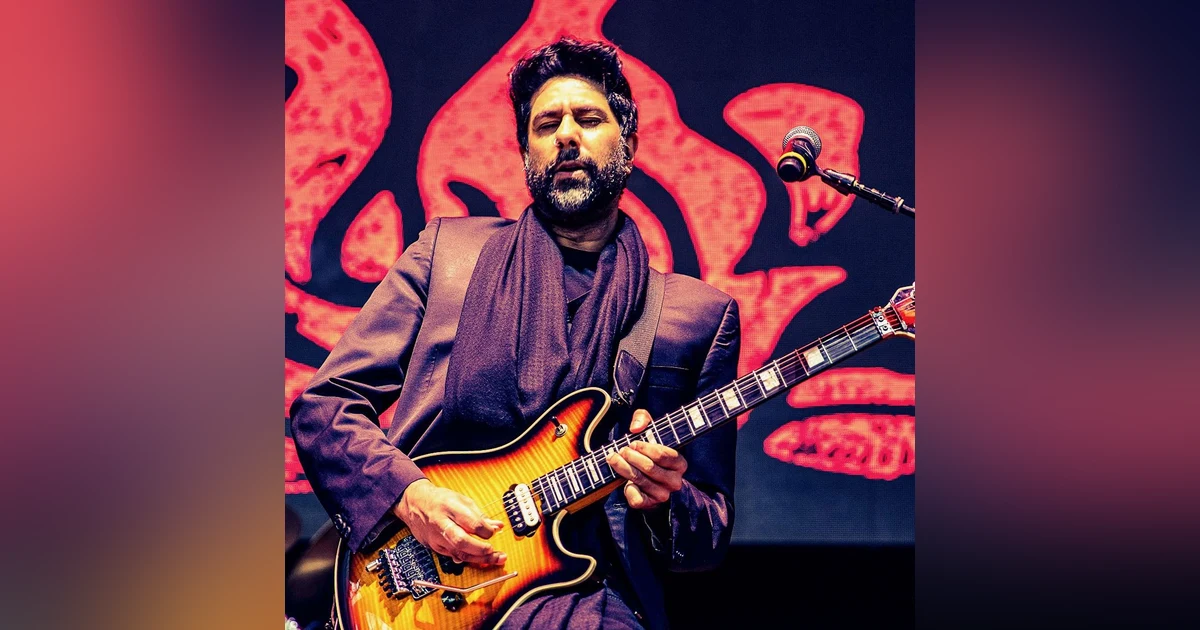
Love, sacrifice, support and commitment define the career journey of guitarist Gaurav Bali who has opened for big names, had a top 15 hit and spent decades on the road before pivoting towards a second career as a teacher. Gaurav shares an inside look at the life of a musician on this episode of No Wrong Choices.
Born of immigrants, Gaurav defied “traditional” expectations by pursuing a creative path. His parents’ support of his musical career was undoubtedly motivated by his grandfather’s story; he was a master sitarist and early mentor of the legend Ravi Shankar whose musical journey was cut short. The result has been a 30-year career that has seen Gaurav travel from rock to country, New York to Nashville and The Beacon to Grand Ole Opry. Gaurav even shared a meal with his late idol Eddie Van Halen (the cuisine will shock you). Today, Gaurav is a dedicated teacher in the process of scaling his School Of Rock.
Explore how to build a life in music during this episode of No Wrong Choices
To discover more episodes or connect with us:
00:02 - Unconventional Careers in the Music Industry
07:13 - Family Support and Childhood Sparks
17:21 - Discovering Passion and Influences in Music
27:30 - Finding Success in Music and Moving On
32:21 - Surreal Moments With Van Halen
43:53 - Fusion of Genres in Modern Music
53:17 - Life as a Musician
01:02:29 - An Inspiring Conversation With Gaurav Bali
01:09:10 - No Wrong Choices Podcast Community
0:02 Hello and welcome to no Wrong Choices, a podcast about the adventures of life that explores the career journeys of inspiring and interesting people. I'm Larry Samuels, soon to be joined by the other fellas, tushar Saxena and Larry Shad. For those who might be joining us for the first time, and for anyone else who hasn't done this yet, please support us by following no Wrong Choices on your podcasting platform of choice and by giving us a five star rating. We also ask that you join our community by following along on LinkedIn, facebook, instagram Threads and now X, by searching for the no Wrong Choices podcast. You can also connect with us at NoWrongChoicescom. This episode features the professional guitarist and teacher, gaurav Bali.
0:46 Gaurav is a very interesting guy who's made a career in the music industry, and Tushar has a long history with Gaurav, so you are, tushar, once again, the perfect person to set up this conversation. Yeah, so full disclosure, I grew up with Gaurav. Our families have known each other forever and, yeah, I've known Gaurav since he pretty much picked up the guitar and started playing back in the day. You know, it's odd too, because he and I have a very similar background. Not that I'm a musician by any stretch, not like him but the idea that we went into non-traditional careers for immigrant kids. Like a lot of immigrant families, you'll see that when they want their kids to go on to careers where they make a lot of money, not where they basically starve and live at home, which is what the two of us did when we were growing up, trust me, it'll be interesting to hear you know what is it like to be, not only to have an unconventional career that's outside of the norm to begin with, but one where you grow up in an immigrant household, where sometimes that type of a career is looked down upon, where it's not traditional, but two, how you make it work in such an atmosphere where success is extremely, extremely rare, extremely rare and you really have to put in your time and pay your dues to make that work.
2:05 Yeah, that's perfectly said, T. I mean this is a tough, tough path. I'm a musician. I played drums for about 25, 30 years, Not that I ever had aspirations of being a professional player, but I know the dedication and perseverance that it takes to make any kind of headway in this industry and it's a challenge. You know you have to constant hours of practice and shredding and learning and growing and finding your sound. I mean, that is all while you're trying to put food on the table. I mean, let's be real, you know. So this is. An artist's life is never, usually an easy one. Some people get lucky and it is. But I'm excited to hear what his story is, because usually an artist's life is about piecing together a lot of things in your life to make it work so that you can become successful.
2:53 But ultimately I'm imagining this is about him being a great player and being a great guy to work with, because that's what we seem to find is these successful people. Those are the common traits. Absolutely. And for me as a business person, as somebody who has an entrepreneurial spirit, knowing that he is gradually pivoting towards a school, a school of rock, so to speak, it's going to be fascinating to learn about how he is expanding that, how he is growing that, how he's setting it up. So with that, here is Gaurav Bali. Now, joining no wrong choices is the guitarist, songwriter and educator who was recently referred to as a rising star by the Nashville Voyager, gaurav Bali.
3:40 Gaurav, thank you so much for joining us. How? are you doing, guys? Thanks for having me. Very, very well, thank you, and I think, before we get too far into the conversation, we like to let our guests set things up for us. So, gaurav, in your own words, can you tell us who you are and what you do? Sure, sure. So my name is Gaurav Bali. I'm a guitarist and guitar teacher from the Northeast, from the New Jersey area, where Mr Tushar is from as well. We've known each other a very long time and, yeah, I've been playing since I was about 10 years old and that culminated in me starting to actually teach for my teacher in New Jersey when I was about 18.
4:25 So I've been doing that 30 years, which I can't believe I'm saying that, but it's true. And then for 15 years I was in an original rock band from New York which had a few record deals and made a bunch of albums, got to do some cool touring, meet some cool people, play some cool venues and live out a few of the things that we saw on MTV growing up in the 1980s and 90s. And then I left that project in, I think, fall of 2014. And then I actually ended up moving to Nashville for about seven years where I played with a few country artists at a great event band and started teaching again and basically decided that the second half of my life if you will, of the musical portion was going to be probably less traveling and performing and more just concentrating on teaching and the goal of opening a school and even doing some guitar courses and things like that.
5:26 So basically, I've been back home here in the Northeast since last November and I've just been focused 100% on teaching. So I've got about 27 students that I do online and I'm just kind of planning the next step, which is what you do these days YouTube channel and courses and hopefully opening a school and all that kind of stuff. So that's basically from a quick from age 10 to today. And that's it. So last class we're done. Have a good day, thank you Goodbye. Cool, I got a student. So, gaurav, I mean, obviously we are the children of immigrants, you and I.
6:07 So typically our parents did not want us to go into the way of, let's say, entertainment. So you're a musician. I went into the realm of sports media and then into news media, so we have not gone the traditional routes right. So, for those of you out there, most immigrant parents who come to America want their kids to go, let's say, into the big four careers they want them to go into, let's say, law, medicine, business, and then let's say, engineering. So, gaurav, my first question to you is how did your parents let you get away with this? Well who says, they have Right.
6:47 No, no. Well, my dad's side of the family is very musical, my grandfather actually. A lot of people don't believe it would be when I tell them this, but my granddad was actually a musician, played sitar. He conducted the orchestra on the radio in India A while back. I had pictures of him doing it here that I haven't framed and all that stuff. So I think my dad in particular saw that his dad had to sort of give up on that to do the like, to show what you were saying get married, have kids, the whole thing and he saw that he didn't get to do what he wanted and I think that a lot of people don't know probably had to do with why my dad has been really supportive, my mom also, of course.
7:33 So the direct answer to your question is of course, in the beginning they were encouraging it as a hobby. They weren't thrilled in the beginning when I said this is just what I want to try to do with my life, because of course it's so difficult and, like you said, you and I are over everything. As far as the immigrant plan, I literally have a hat that says Black Sheep that I grab all the time, or Brown Sheep, if you will, for us. But I think that once they saw how serious I was and I guess to a certain extent they saw that I was possibly good enough to actually do it for a career after a certain point and I think that's when, especially, my dad made a decision of OK, I can either hinder this or I can support it, I can help it.
8:20 So, luckily for me, he decided that he was actually going to be super, super supportive. I don't know if you remember, Tushar, in the house that my parents had previous to the apartment that they're in now, my dad actually took my college money and built me a recording studio. I do remember this. Yes, wow. So I had a little project studio and it was like a real studio. I wasn't just like, oh, it's a basement, and I bought him a four track recorder and a microphone. Literally, these father and son contractors came into our basement and built a shell within the basement, acoustically designed, with raised floors for wiring, separate control room and studio, with the window and the whole thing.
9:04 It was like a real little baby studio that. Actually that's how I learned how to record, how to write. You know the band that I mentioned. I was in from New York. We actually did all of our writing and demoing for our first album. We actually recorded our first album down there. Wow, when we got our first record deal, they flew in a producer from England and a local engineer and the engineer brought in all his stuff. This is long enough ago when Pro Tools was in its infancy, so this would have been like 2000. He brought this Mondo Pro Tools rig into the basement and we made our first record down there. That's how supportive they ended up being, which is crazy because, like you were saying, you would think that, since you and I didn't go into the even close to the big four, I didn't go to college either.
9:57 So forget it. The big four for me was I mean, that's not even close. I was way, way away from that. So, yeah, I lucked out. Man, I think I got. This is a bold statement, but I'll say it and hopefully they'll hear it when they listen to this. I think I got the coolest Indian parents on it. You probably did, because I'll be honest with you up until about five years ago. I'm still going to law school, apparently to my mother. I'm supposed to be going to law school, so when are you going to get to the? job. I know exactly. I'm not going to get a real job. I should see, if you can. Up until five years ago, I was still going. I was still on my plan to go to law school, yeah, yeah. No, I believe it, man. I mean it's very rare to have immigrant parents, especially Indian parents, because it's kind of like the whole reason they moved here was so that we could go to school, go to college here and get quote unquote real jobs and be professionals.
10:48 I do consider myself to be a professional, I just don't wear a stethoscope or go to court Makes sense. The support like that is so important when you're talking about something like this artistic, and I can really appreciate that, maybe even being unusual for culturally, that you would be supported like that by your family. But what was the thing when you were younger? You started playing. When you were 10, you said so. There had to be a moment, a spark, a something that happened prior to that. Did you see someone play? Did you hear a song? Give me back to that childhood spark when you actually said, hey, I need to play guitar, I need to play music.
11:29 This is going to be my life. Right, there's actually a few key moments. I think probably the first one and, don't worry, I'll console, consolidate it Basically and to show you probably remember this you know all of you guys, early 80s, the era of sitting around with your cousins or your friends with the radio on. They've got their own boombox and you're making mixtapes. Oh, my God yeah. Songs come on the radio and the first 20 seconds of the songs are cut off as you're trying to press, play and record together. So doing that was kind of first exposure to you know kind of pop music and Western music. My friend had come over also at the same, around the same time maybe even a little earlier, if you could believe this my six year old friend had come over with the first Ozzy Oz Born Solo album.
12:19 Wow, played it for me and that was the first electric guitar I heard. I don't even think I knew what it was at first, it was just the sound that sounded amazing to me. And then flash forward to what I was talking about, hanging out with my cousins making mixtapes and then one of my aunts had cable, so that's where MTV came in. So I would say probably like 1984, when Jump by Van Halen was huge, watching that video and you know there's this guy who I didn't know at the time was going to be my hero, eddie Van Halen. You know there's this guy up there and he's wearing, you know, a tiger stretch jacket and leopard skin pants and he's smiling from ear to ear.
13:00 He's playing this crazy red and white guitar. It just looked like fun and it just looked like he was having a blast. So that's kind of when I was like, okay, I'm going to play a guitar. That's where the lessons kind of started at 10. And then I did. To be honest, because of the teaching techniques of back then, I did end up actually getting bored and quitting for about a year. And then my 12th birthday came and my cousin and her brother who too sure you know you mentioned before who you guys went to high school together in the same high school. He is actually six years older than me, so he was. I don't have any brothers or sisters, but he was like the older sibling that kind of introduced me to all this stuff.
13:44 So on my 12th birthday he had his license. Already David Lee Roth had recently left Van Halen and was on his first solo tour. So he and his sister took me to my first concert on my 12th birthday at the Metalands, which was the David Lee Roth solo tour, and he had a guitar player named Steve. Vai playing with him, and he was an unknown at the time. Just this you know, this 26 year old kid from Long Island. He'd been in Frank's app, his band, for a little bit and he got the most coveted guitar gig on the planet playing with David Lee Roth after he left Van Halen. So that is what I always consider to be the moment that you know, quote unquote ruined my life, because, you know, I'm 12 years old and I'm at this concert and it was just sensory overload.
14:37 You know the lights and the sound and Steve Vai is running around the stage playing guitar and people are chanting his name and he's talking with the guitar and the whole thing, and I think that if I had to bring that to one moment, that was like the okay, you know, this is, this looks fun. I think this is what it's. You know, I think this is what it's going to be. So what action did that lead to? Like? What was that next step? Well, at that time I had, like I said, I had actually quit guitar for a couple of years. You know and this ties in now to my current story of you know, all the stuff that that guy kind of did for the first year when I was like 10 to 11, is the exact things that I do not do now, like it literally.
15:18 I didn't know this at the time, but it was actually shaping my future in a way, because now I have like this kind of checklist of like, well, you're not doing what that guy did, are you Okay? Good, we're good. So the next action really was to start playing again. So that night, you know, on my 12th birthday, it was like, okay, fine, this teacher wasn't cool, but I've got to do this. So I started playing again by myself. And then, throughout the course of the next couple of years, I was just sort of, you know, learning. There was a lot of new resources for guitar players coming out. Then you know a lot of song books and things like that. A lot of the big guitar players started. That's when they started doing their instructional videos, which, of course, in those days were VHS, if you remember.
15:58 And then, when I was 15, I kind of decided like, okay, I need, there's some things that I'm not getting. I want to go to the next level. I need lessons. So I ended up finding a great teacher in New Jersey and he's the one who actually taught me basically all of the theory and technique and all that kind of stuff that you know and that I ended up retaining for all these years and what I'm actually passing on to my students for the last couple of decades, along with, obviously, adding my own stuff. So yeah. I mean, I just decided I need to play, took lessons and then the next thing you know, the next step to being a rock star is looking for a band. So that's what I started doing right after high school.
16:41 Before we jump to the band, and I can't wait to hear that. I'm just curious. You mentioned this great teacher in New Jersey. Who was the teacher? Is it a no name? In some circles he is. His name is Ed Furman. He's in New Milford, New Jersey, or he was at the time. I think he's in Dumont now and he was. He's only seven years older than me, I think. So thinking back about it now when we met is kind of insane, because I was 15 and he was 22. And but again, when you're 15, even someone in their 20s just seems like there's so much right there, I mean guys you're both kids. Yeah, he's almost 60. Yeah, yeah. So he was in a prominent heavy metal band from the area that had gotten some national recognition that's, in touring, you know, in Europe and things like that for some of the bigger bands, and he was just a great teacher, great guy, great player.
17:35 And you know, he just had a very different style at the time, which was basically doing the opposite of what the original teacher that I told you about when I was 10 did. So like no music, books, kind of all memorizing stuff. He actually asked me what I liked, what I wanted to learn, which, again, I carried with me. That's the first thing I do with any potential student hey, what artists are you into, what kind of music are you into? That kind of thing. So he just taught me a lot of stuff that I've, like I said, I've retained throughout the years that I use. And that's what took me to the next level of kind of saying like, okay, you know, I want to do this as a career. And then, of course, the next super pivotal moment was when I was, I think, right after I graduated or right before I graduated high school.
18:23 He had an overflow of students and he said, hey, would you be interested in teaching the beginners and I was like I think 18 at the time, and I was like, really, and he said yeah, you could do it and I was like, oh okay, I never thought about it. So he's actually the one who had the confidence in me to get me started on that, and the literally within a week of doing it. Of course, the first couple of times I was nervous, you know, and I was stammering and I was like, oh I'm, you know, I was 18. I was just a little kid. And within a week I fell in love with it and I was like you know what, no matter what happens as far as, like a career in a band or whatever else I do, this is something that is.
19:07 It's a feeling that you can describe. When someone wants to play a song that they like, or a part of the song or something, you show them how to play it and then they practice it and then next thing, they know they're playing it and just the look of utter joy on their face. You know, I know it sounds kind of corny, but it's true. You know, to give someone that kind of happiness. Yeah, that's a gift. You know, for someone to go hey, I want to play this song, and now they can play it Absolutely. So I knew, I knew. Right then I can't believe I'm saying this, but yeah, I knew pretty much 30 years ago that you know that was going to be part of my life for us. And I'm going to pause right there because this is an important time in your life. You said like from the ages of 15 to 18.
19:48 This is this is all happening when you kind of rediscover lessons. You know you need to take that next step and go further with it. I guess my question is this is where you're finding your sound as a player, as an and as an artist, right, and you're doing your shredding and your, you know, minding your Ps and Qs with your theory and all that stuff. So how many hours a day are you practicing at this point to get to that level from the ages of, let's say, 15 to 18? More than my parents. Let's, let's, let's say enough to not get my home. That's fair, probably. Yeah, I mean as soon as, like I said, as soon as I started going to Ed, he just opened up a whole new world of technique and theory and just all of a sudden I was starting to realize, in all the things he was showing me, I was like, oh, wait a second.
20:38 That sounds like that solo from that song by Metallica that I love, you know. And then I just got super, super inspired to, you know, just kind of probably go a little bit overboard with it, but you know, maybe not. I think you know what's the, what's the rule? The 10,000 hours. Yeah, exactly, you're looking for yourself as an artist. I mean, you have to, you have to put in the song. Yeah, yeah. So I would say I started going to him probably when I was a sophomore in high school. So I think those first couple of years I must have been doing at least two hours every day, if not more. And then, my senior year of high school, I did a work study so that enabled me to go to school in the morning and then I did a half day and at first I worked somewhere else and then they let me do the teaching thing for Ed and the.
21:28 My high school to their credit actually, I believe did give me credit for those hours, for the work study so I could graduate. So I mean by my senior year I mean I was teaching and practicing, so I'm sure I was playing probably four hours a day, easy, you know, between the theory and the technique and then trying to learn songs and parts of songs and all that. Did you ever? I mean, obviously you come from a musical background. You talked about a moment ago that your grandfather, your grandfather's musical past. So did you ever at any point say to yourself not only do I want to play, did you channel some of that, some of that? You know, your musical, your musical bloodlines, in that sense?
22:09 Yeah, yeah, I mean, I would hope so. Unfortunately, the one kind of tragedy that came out of it was he passed away super young, so I actually never got a chance to meet him, which you know, which would have been amazing to you know, even as a little kid, to be able to go to India and visit and talk to him and things like that. But you know my grandmother, always she lived with us during my high school years, funny enough, when I was doing all this woodshed. So you know she, actually you know the one who was in the bedroom next door that you know poor lady had to listen to me practice, but you know what she was totally into it.
22:54 And when I was going through that thing of you know, inevitably not only do you want to sound like your heroes, but you want to look like them. So when the long hair came in and the hey, I want to get, you know, an earring and I want to get a nose ring and all that. She was actually the one, you know, when my dad was against it, believe it or not, she actually was, like you know what. Just leave him alone, he's an artist. I was going to say man you know, your parents let you go all the way and do that. That is amazing. Yeah, which is, like I said, it's comical in a way, because my dad, you know, he was against it at first, Like your hair's getting a little too long and you know you're definitely not getting a hearing. And then, basically, you know, when his mom was like, all right, chill out, he was like, okay, you know. So it was.
23:34 it was funny because my dad, you know, with his, with his mom in the house you know, luckily, you know, listen to her and just kind of chill out and let me do it. And in fact another quick story is that my junior year of high school, the summer between my junior and senior year, I was thinking of going to this music school in Hollywood after I graduated and they had a summer program. So I signed up for the summer program in the summer of 91, when I was 16, in Hollywood. So obviously my mom is mortified. She's like you're not going to. Hollywood and you're 16. And my dad was like, don't worry about it, he'll be fine. So, if you can believe this or not, I actually signed up for this summer session in Hollywood, my two roommates we were going to live in an apartment, my two roommates.
24:19 We met them beforehand and then, literally June of 91, my parents, we flew to LA, they dropped me off at this apartment in Hollywood and my dad was like, all right, we'll see you in a few weeks. And I mean, like I said, my mom was, was mortified, but my dad is just a super positive and just strong, like fearless person. So he kind of, you know, he kind of encouraged me to that, you know, in that way, and he was like, yeah, you'll be fine, you know. So that's if you can believe that. My Indian parents dropped me off in Hollywood when I was 16. That's incredible and you know I was going to jump forward from there to ask about your first band and how you got into it. But but now I have to ask you know what happened in Hollywood.
25:01 Are there any highlights or key takeaways from that experience? Stuff that you want to tell people that your parents may hear. No, you know, I was only 16. I was super naive and, you know, sheltered, you know as we were, you know, at that age. But no, definitely a lot of growing experiences. You know, the first time I was ever away from home for that amount of time, I was living with one 18 year old roommate, one 21 year old roommate. That we obviously ended up becoming good friends. They were great dudes, totally looked out for me, you know, because I was the kid. But yeah, man, it was cool. I mean remember it was the. It was the early 90s, so the 80s. Hey, dave, the sunset strip in LA was still kind of on its, you know, on its last ledge, but still there, you know, got to go to the troubadour and the rocks oh wow, famous clubs where you know all my heroes had played, you know, went to some great concerts, met up with, you know, at that time that school was super hot, and so I got to meet players from all over the world and along with the musical education, I would say the most important thing that came about was that I actually figured out that I did not want to go to that school after graduation.
26:16 I figured out that LA was actually not for me. Interesting. And so the main purpose it served was me deciding that I'm going to stay here in the Northeast and I'm just going to teach and I'm going to try to find a band, and you know, do my thing. Which sort of you know comes back to the name of our show no Wrong Choices. You went out there, you had that experience, so you learned from it and, even though it didn't necessarily lead anywhere, you picked up a really important lesson, which was that was not the place for you. So you come back to the Northeast. You know, tell us about getting into your first band and what that process was, how you met everybody to take us through that journey.
26:58 Sure, so this would have been the end of 1998, I want to say this was like, again, still the infancy of the internet. So if you guys know the famous newspaper, the Village Voice, yeah, of course, we're all New Yorkers. Absolutely Exactly. So you guys, you guys know the deal. So this was right, I think at the very beginning of Village Voice dot com, the first sort of couple of years or so, that you didn't have to do just a print ad, you could do an online ad. So I put an ad online, you know, did the, you know the typical thing you hear of everyone in a band you know guitar player with, you know influences, whatever, looking for a band with whatever.
27:39 So you know typical process you hear about with everybody got a lot of calls and then a lot of people, a lot of good people, a lot of bad people, a lot of weird people you know started to lose hope. And then one day I got home this was still in the answering machine days had like 40 messages on my machine and I think the very last one was this guy left a message saying hey, you know, I just relocated from Florida with my brother, we have a band already, we're looking for a guitar player and we have a development deal with a songwriter named Desmond Child. Oh, oh is that all I immediately knew who that was. I said oh, is that all? Yeah, yeah. So Desmond Child is a songwriter, a literary songwriter that written for.
28:23 You know rock bands, you know everybody from Bon Jovi, kiss, aerosmith, all the big Bon Jovi songs. He co-wrote everybody, from Sherry Garth Brooks, you name it. So I immediately knew who he was, because that's the kind of music I grew up on. So I was like, oh okay. So basically they were in Miami and had a different version of their band. The singer and the band had interned at Desmond. Desmond had just started a production company, so the singer had interned with them. Desmond had recommended you guys should go to New York to find a band and, you know, live and get some experiences. You have, you know, things to write about. How do you, how can you be a songwriter if you have nothing to write about? Right? So I met them there.
29:03 We, you know, we had similar backgrounds. Their dad is a doctor. You know my dad's an accountant. So we grew up, you know sons of immigrants and all that. So we, you know, we clicked right away, started writing songs and boom, you know, the three of us were the, you know, the core of that band. That was together for 15 years and then we had a few different bass players throughout the years, but the two brothers and I were the, you know, were the core from 1999 up until 2014. And what was the name of this band? Eve to Adam and how was your? How successful? Was your house successful? Was he Eve to Adam? It's. It's all relative, right. You know I look at it as there's a there's a huge span of what you consider success.
29:47 You know there's the bands that played bars for 20 years and then the other, echelon, is Metallic Right and there's everything in between. So it's all relative. I would say we got further than probably most bands do. We had a few record deals. We made some major label albums, opened up, did a lot of opening tours. You know we opened up for Creed, you know, when they did their original reunion tour in 2012,. Got to play arenas. You know beacon theater, chicago, legendary venues I got to. You know, through that I got to meet. You know, basically, my hero.
30:27 You know, through them, through a connection, the, I would say, the furthest we got as far as commercial success was in 2014,. The last album that I made with them had a single that made it to number 14 on the act of rock charts. You know, which is pretty again, relatively good. It's again when you. You know, having that happen is kind of a kind of a double hit sword, because obviously it's amazing that you got that high. But at that point the issue becomes when you get close to the top 10 and any kind of chart like that. That's when you're competing with the big boys, right. Right, you know, black Sabbath had put out an album that year, alison Chains, just all these, all these iconic heavy rock bands had put out albums.
31:13 So all of a sudden you're competing with them and then that's really when the hard part begins. So, you know, we got that song up to number 14, then sort of lost momentum, and then we did another single. It didn't do well, and then that's kind of when you know it was clear to me that unfortunately, you know, I gave it a great run, I gave it my all. No regrets, no wrong choices, but I think I think that this is the choice. This is the time where it's like you know what, I don't, if we, if we get a song up that high and it's almost impossible to get past that when you're competing with the big guys.
31:55 And so that's when it was kind of clear like okay, unfortunately we're just not going to have the momentum. You know, the way I look at it is. You know there's a speed bump, right, we got to the top of the speed bump and we just couldn't make it over and we kind of rolled back to the other side, and when that became obvious to me, I made the very, very difficult choice of saying you know what I think you know. It's time for me to, it's time for me to move on. Okay, what was the describe the sound of Eeptadum a little bit the modern term would be active rock, basically song oriented heavy rock. You know so, you know just song oriented music with, you know, guitar riff based.
32:38 You know he had a great singer, he was a great melody writer and lyricist as well. So, yeah, I mean everything, everything I did with that I'm super, I'm super proud of. You know, it was definitely in the vein of, you know, the 80s and 90s music that we, that we all grew up with. So a combination of the, you know, guns N' Roses and Van Halen, along with the 90s Stormtuple, pilots and Sound Garden and all that. So you know, so I would say, if I had to describe it, melodic, song based heavy rock. So you toured with a major rock and roll band, I mean in a time when things were a little kind of kooky and crazy. Any backstage hijinks you can possibly share with our audience, or is that for the biography that you're going to write later on?
33:23 I think that's for the behind the scenes, but the one you know, the one story definitely I'll tell which was kind of you know, the I'll tell you the most surreal moment. Yeah, sure, Please, If that's a good thing. So in 2012, Creed did a reunion tour called the Two Nights Live Tour, where they were going to play every night, every town, two nights obviously that's the name and they were going to do this was in the era where it was like we're going to play our first album top to bottom on the first night and our second album top to bottom on the second night. So they were doing that, which is very cool. So we were lucky enough to get the opening spot for them.
34:04 So that's where we played the beacon in Chicago theater and it was just like an amazing, you know, theater and arena tour. So the guys in Creed, besides the singer, Scott Stapp, the three instrumentalists have a band called Alter Bridge and Wolfgang Van Halen, who is Eddie Van Halen's son, was a big fan of Alter Bridge and had become friends with the Creed guys. So that's the backstory to how we ended up in Kansas City on the same night as the 2012 Van Halen tour that was going. Oh boy. So neither band could go to the other show. So Wolfgang said, hey, why don't you guys? And when he said you guys, he meant the Creed guys why don't you guys come to soundcheck and we can hang out, and then you guys can go do your show and we're going to do our show.
34:53 So there was one night where the Creed tour was at the theater in Kansas City and the Van Halen tour was at the arena. So the rest of us hear about this going on, that the Creed guys are going to the Van Halen soundcheck, you know, and I'm like, oh man, so if you can believe this, it was going to be a laundry day. So I was literally in the bowels of this theater in Kansas City folding my underwear. Oh, that's very funny. When the drummer in my band, alex, runs in and he goes hey man, one of those guys doesn't want to go, if you can believe that one of those guys doesn't want to go to the soundcheck. Mark asked if you want it to go and I'm standing there with my underwear in my hand going.
35:38 Was that a real question? Yeah, I want to go. So I literally have my. I haven't even done my laundry yet, so I literally had my dirty pocho drawers in my hand. I dropped them and literally 30 minutes later we were walking into an empty arena and I look up on the stage and there's Ed Van Halen, his brother, alex the drummer, and Wolfgang. Oh my God, and incredible, I mean this happened within the course of an hour and a half. Underwear, you know, dirty drawers in hand to Ed Van Halen waving going. Hey guys, what's going on, you know. So I got to go to a Van Halen soundcheck and see just the three Van Halen's playing sing, without David LeRoth because he was back at this time. And then, after the soundcheck, ed Van Halen came down, you know, shook, our hands, did the whole thing, and then Wolfgang said hey, you know come, why don't you come back?
36:29 You know, come back in the dressing room and then we'll go to my bus and hang out because they all, of course, you know, they had their own tour buses. So, we were back in catering and there's all this amazing food out and I'm standing there and I feel a tap on my shoulder and I turn around and it's him. It's Eddie Van Henley. It's Eddie and he's got a cup of beef erronean in his hand. He says you know where the microwave is and I obviously you know. I'd like to think in my mind that I said sorry, man, I'm not sure, but I'm pretty sure, and probably more was like.
37:12 Your 11 year old self comes out. Yeah, so that's probably what happened, I'd like to think that the first thing that I described happened, but I still don't know, and it blew my mind because there was all this amazing catering there. I mean, obviously he was backstage at a van sure and he, just, he, just wanted a cup of beef on the beef errone. That's fantastic. He wanted the beef. Errone, yeah, I was like this is crazy. I grew up on the for only to, so Unfortunately, like I said, we were playing the same night so we did not get to. You know, see the show. But that you know, I would say, if I had to pick one surreal moment, that would be it, like dirty drawers in hand, to Ed Van Halen tapping me on the shoulder, asking me if I knew where the microwave was so he could heat up his pre-show.
38:00 Great that is an incredible story and I could tell you right now when we write the show description for this episode the Eddie Van Halen beef errone story. That was the thing. And the other thing is, when we walked in and he was on stage, they were testing the big you know the big video screens on stage. He made an off-color joke about that, which again I was like this is great. He's an idiot, like us he is. He's making off-color jokes about the Jumbotron and he's eating beef. Errone, it's amazing awesome, awesome. So you know, looking forward from that experience, I imagine You've been working so hard to build up that band.
38:45 Yeah, you had some traction, you had some momentum, and then you needed to make that difficult decision of walking away. I mean, how difficult was it to do that? What are those emotions? And and then what was next? Did you have a clear vision for where you were headed? So yeah, it was. It was definitely very tough. It was like basically walking away from a 15 year marriage, you know, because you put all your eggs in this basket and you've just been like laser focused, you know, just sacrificing everything else. You know I've had I mean people laugh at me when I say this, but it's true. I mean I'm almost 50 years old. I've had two real girlfriends in my life and neither one of them was local.
39:27 I've literally never had a relationship with someone in New York or New Jersey, Because for most of my life I was just never in town right, yeah you know, we were just always making records and touring and doing something. So there was a lot of sacrifice for those 15 years. So it was very difficult but you know, I knew that's what I had to do. The plan was to teach. You know, the plan was I'm gonna stay back here in the Northeast teach. Unfortunately, I have really had no clue how to actually build a successful teaching business at that time, so I really didn't get any students. So for about a year, 2015, I was basically miserable here at home.
40:08 And then one of my former band-aids and one of my best friends, louise Espion, who's an amazing bass player down in Nashville, session player, live player, everything. He was actually the one I had gotten tight with him when he was in Eve to Adam for about a year and a half and he said you know, he called me one day and he said well, you don't sound good, man, you know what's going on. And I said well, you know, I don't know what, I don't know what to do. And he said you ever thought about moving to Nashville? And I had spent some time in Nashville because Louise, like I said, he was in Nashville. So, believe it or not, there was a time when Louise was in the band that when you would have a tour of us to go on a tour, a lot of the depots are in Nashville. So, long story short, we used to have a gear in Nashville.
40:50 We found it was actually cheaper to keep the gear in Nashville, fly there and rehearse and then leave From there, as opposed to having the bus drive up to Queens to pick us up, right? So I had spent some time in Nashville and I was like I don't know. He said man, they're all. All the artists are looking for rock guitar players, because every country artist is our age and they all grew up on Guns and Roses and Metallica. So they're putting like this heavy rock sound. So I was like, okay, I'll give it a try. So I went down there, stayed with a friend for a few days and Just ended up really liking it and made the decision. You know, within two weeks I put all my stuff in my car, moved down there, I rented a room in a friend's apartment for about six months. Then I got my own one bedroom, which was the same place that I left a year ago when I came back up here.
41:35 So I was in the same place, never moved, and you know, I just completely shifted gears and just had to learn, you know, do the cover thing. You know, I'd never been in a cover band. I did a couple of my first couple of gigs. One of the female artists was kind of annoyed with me because I didn't know how to play anything. You know, she was like, well, we're gonna play Hong Kong woman by the stones. And I was like, okay, I know the song, I don't know how to play it. And she was up, if she kind of almost scoffed and she was like, how, how do you know how to play that? And then of course I bit my tongue. I was like, yeah, sorry, honey, I was in my own band writing my own songs. Music shaming you, yeah, which you aspire to do one day yeah, she was totally cover-shaming, cover-shaming.
42:18 Yeah, I had to. I had to learn all this music from scratch To do, you know, in the beginning, do some cover stuff with these artists. Then I ended up playing with a couple of original country artists, which was amazing. A really great friend of mine, a natural, chris Nix Amazing, a tarp killer, let me sub in for him with an artist that he had been playing with because he couldn't do a tour and then that started the ball rolling. So I started learning you know original, you know music by country artists. I had to switch gears, cater my sound to that a little bit of my playing style and then for the last four years I ended up in a really great pop band that did you know events Like, you know, like corporate events and things like that. So again, I had to do learn a lot of originals and pop music.
43:00 So basically, you know, the time in Nashville was Spent basically fish out of water, doing everything that I didn't really do in my teens and early 20s because I was trying to get in my own band and write my own music. So it's funny because I actually did it backwards. Usually you play in a cover band, then you form an original band and start doing your own music. I actually did the opposite. I started in an original band and then, when I was 40 and I moved to Nashville, I was like, oh my god, I have to learn 90 songs for next week because I didn't know how to play anything, you know, and I mean it's not, obviously it's not, it was natural. It's not like they were gonna play the Metallica songs and Van Halen songs that I knew growing up.
43:41 So it was just, you know, it was just a great, great experience as far as just you know, like I said, just you know, throwing a musician into a brand new pool of water and going, okay, now you have to, now you have to swim. Basically, did that help to rejuvenate. Let's say you're a creative juices down there as well it did. It did because there's a lot of guitar techniques and Sounds and concepts that are kind of, you know, particular to country music, whereas they wouldn't be, maybe, for Rock and blues and heavy metal or whatever you know. You know, what do you want to call it? That I grew up on and that my band was so yeah, it was definitely inspirational to have the challenge of Going okay, well, I was in my own heavy rock band for 15 years and now I'm gonna learn and artist country songs and I'm gonna have to play him.
44:29 You know, I mean that first subbing gig I was telling you about was With an artist that the very first show I did in national was. I think it was April of 2016. It was at a. It was at a show down in Florida, basically the stadium called country jam, opening for Rascal flats and a couple of other really big country really wow, wow, yeah, so yeah, so it was. It was a. It was a full-on trial by fire. You know of, just like you know, being up there and playing. You know you're playing music, You're still playing guitar, You're still playing the same chords and things that you learned when you were 15, but it's a completely different. You know, I would imagine it's like a chef. You know it's like. You know, used to cooking Italian and all of a sudden, okay cook type.
45:10 Yeah sure right, right, still food, but a totally different type of cuisine. So it was, yeah, definitely inspirational. So I guess, I guess I'll come leave me. Leave me on my next question, which is a, do you have a greater appreciation for, for country music? And then B, do you find now that there is, let's say, very little difference between genres of music, that now, because, let's say, all these musicians are essentially Contemporaries, now they're all you kind of your age, that basically all this kind of music now is all fused together? There's a fusion of music, right, as you said, like like food, that we have fusions in food. This fusions in music.
45:51 Absolutely, absolutely as much as I was talking about learning new techniques and sounds for country music, a couple of artists I played for really, really picked me because when they, you know, when they found out about my background, about playing, you know, heavy rock in an original band, they were like, well, you want you to do what you did there, except in this context, you know. So that was very interesting too is that a lot of them didn't want me to cater my sound to a quote, unquote country guitar sound like, you know the, the old school kind of twangy kind of thing. They wanted like a big, you know, like the. The one country artist that one of the guys I played for, he actually said I wanted to sound like slash from Guns N Roses playing in a country band and I was like, okay, well, I can do that, I can look like that too, because when I grow my hair.
46:37 You got a top hat. I'm there. So yeah, a lot of them wanted that rock sound to be fused with the country sound, just music in general. Pop and country and rock is actually getting a lot more simplified these days, especially like radio oriented songs, so Basically modern pop. What I found out is basically pop music. The difference is, to me, the singing style and Also the lyrical content. You know it's still more kind of about, you know, being in the country, in small towns and that kind of thing. So the lyrical content and the singing style is still kind of country. But the music is kind of, you know, pretty simple pop oriented, kind of colored with country.
47:20 You know a lot of people from Nashville will tell you that too, that, like you know the classic, you know back in the day country artists and Songs. You know Dolly Parton, the Red Elin, all that it's very different from. You know Taylor Swift and Kelsey Ballerini and what you would consider you know Luke Bryan, any kind of modern country right. Yeah, there is a huge fusion. You know a music. There's a lot of similarities. I would say there's more similarities than differences. These days, you know, there's even a genre of music that I think they call bro country. I don't know if that's a derogatory term. It's basically like it sounds a metal country. Yeah, it's like heavy metal country basically, where it's like big overdriven guitar sounds like you would find in Metallica, but it's country songs.
48:03 You know, a friend of mine from Nashville just got the gig this year with a country artist in such genre and a Brentley Gilbert, and they're actually opening for Nickelback right now. So there's enough of a fusion where Nickelback that's you know, a modern, you know hard rock, heavy rock song or band. They actually thought that Brentley Gilbert would totally fit into their show and you know what it does. Besides Brentley's singing style and lyrical content, it's basically two heavy metal bands playing, you know. So yeah, I mean it's, yeah, it's, it is really, you know, fusing. I mean carry underwood is opening for guns and roses these days on certain dates.
48:46 I don't know if you guys. Yeah you know, so there's yeah, there's a lot of crossover. There's a lot of cross-pollinization. Yeah for sure. So hate the picture for me. You move to Nashville, you're doing all of these gigs. I mean, is that, are you supplementing with students? I mean, how are you putting food on the table? Obviously you're getting this gig here and that gig there. I know there's a bunch of musicians out there who are wondering how to piece together career. You know you're doing this freelance, you're doing it because you're you're gifted enough and you know how to do it. But how are you? Obviously you're making connections and one gig leads to another. But paint the picture for us. How would, how would one go about Playing gigs every night, maybe doing some session work and teaching and other things like that, and kind of piecing the whole thing together so you can have an active career.
49:35 Well for me in the beginning Lyft. Yeah. I was a lift driver. Okay. So basically, when I moved to town, I mean I had a little bit of money saved up I was basically driving lift, making connections, taking gigs wherever I could. You know the typical thing. So basically starting over, you know, that's where I got the gig with the, the female artist I was telling you before that was cover shaming me. So I just took anything you know to make a little little bit of money and make connections. And then, I think in April of that year I lucked out because my friend, chris, who I referred to before I become good friends with him, he was really welcoming and supportive and he said hey, you know, I play with this artist.
50:17 He's doing a lot of shows over the summer, but I haven't offered from another artist that I want to do. So can you, why don't you sub in for my original artist? And I said, great, you know. So I met with the artist. He was kind enough to let me do the gig. So I told you know, that was the first artist where I had to learn all his original music, so it wasn't a super busy schedule. So it was those gigs and then driving lift. And then, you know, slowly but surely, he started getting more gigs and then I started playing with another artist who had a few more gigs. Then I started teaching again. As far as the session work goes, I never was really able to get into that world. You know, there's a lot of great players down there and there's kind of a group of people that do it.
51:00 It's real difficult, for better or worse, to get into that group right, you know, to be let in. So that never really materialized for me. And then I would say in 2018, when I joined the event band, they were that's when it changed, because not only that, they become very close friends of mine. I'm still in touch with all the time. They were busy, you know. They had just relocated from Miami to Nashville and they wanted to work. So we had gigs on lower Broadway, at the honky-tonks, you know well, there was one Venue that would let us play because we weren't a country band. So we were playing pop and Latin and R&B and dance music, basically.
51:41 So we were traveling a lot. You know, in 2019 I think I spent almost every weekend in Miami because they were from Miami, so they had a lot of contacts. You know it's a great band called 30 Vice I'm referring to, and so that's when I didn't have to do lift anymore. So, basically, from 2018 until I left last November, that's when I was playing in that band and teaching and that's when my schedule was getting kind of crazy in the opposite way, where it was like I was teaching five days a week and then on the weekends we would be flying or driving somewhere to play. So you know, there was. There was about I would say, five or six months in 2019 where I didn't have even one day off.
52:23 I'm not complaining, it was a good you were working musician, you had to, you had to do your thing. Yeah, yeah. Yeah, and that's the thing. It's like you know, if you, if you were, if you want to make a living and not doing anything else, that's the working musician gig. You better like playing your instrument right. You better like setting up your gear, you better like hotels, you better like planes, you better like airports, and you know if you're too attached to pooping in your own bathroom. This is not the gig. So you were in Nashville, you did that for a few years and then what did you pivot to? You know you mentioned you have to love being on the road, love that schedule, etc.
53:04 Etc. Do you still love that? Did that start to get old? Where did your mind and your heart start to go? Yes, sir, it did. It did that. That was kind of what I started figuring out. Probably Probably 20 at 19,. You know, around the time where it was like six months, where it's like, okay, dude, you should not be coming. You know, I'm looking at myself in the mirror going you should not be complaining, you wanted to get paid to play your guitar. That's what's happening. How dare you, yeah, think any negative thoughts? But the other side of my mid 40s body is saying what are you doing?
53:46 You know I can't do this much longer because you also have to remember when, when I was in my band, this wasn't a what we call a weekend warrior thing, right? When you're out on a tour in a rock situation opening up for a band or whatever, you're just out at sea for months at a time. So don't forget, I had 15 years of Tour buses and bands and planes Already before I even went to Nashville, right. So now we're talking those 15 years plus the seven in Nashville. So for the last couple of years it was just starting to be like To check into my flight. Yeah. I'm gonna call my Uber to go, you know. And then, if you remember, after COVID, you know the just the airlines, everything was chaos, you know.
54:28 A lot of the workers didn't come back, so it was like flight, you know. I mean to this day. Every day I wake up, I'm scrolling on Instagram and one of my friends is traps. So still a mess, Yep still a mess, you know. So for yeah, so for a couple of years it was kind of like okay, I'm starting to not enjoy this as much. I love playing, I love my bandmates, they're great friends. So it was not, it was not like a person thing, it was just I've been doing this for, you know, two decades now, basically, you know. So that's when I started sort of going, okay, well, what's the second half of my life going to be in music? So that's when, of course, the teaching thing comes into focus and it's like, okay, well, you know, for the last couple of years in Nashville, I kind of had this plan of I'm gonna build up my students and then it's gonna get to a point where, if I have enough students, I'm gonna be able to cut back on my live work and then I just not have to do my live work anymore.
55:20 So I really lucked out because I timed it pretty well. Of course, I was gonna now have to leave another project with friends who I become attached to. You know that that I spent so much time with you know we were like family, still are, so I don't want to screw them over. So you know, I got to give them notice. I'm gonna help them find a replacement for me and do that whole thing. So that whole process took about a year and then, luckily, the timing worked out very well. Where they found, you know, we found a replacement for me. We found a great guy, great player to be in that band. They weren't gonna, you know, I didn't want them to have to miss any work or cancel anything, right of me, and they didn't have to. Luckily and I'd also luckily All of my in-person students in Nashville agreed to switch to online, because we had already done that for a little bit during the lockdown.
56:06 Oh wow. So they were like okay that's fine. So I really really lucked out because the timing worked out. Where I Quit, I quit the the project I was in, smoothly, with a replacement in place, you know. So not not screwing over my friends at all. And I went home last year with about 18 students all online, and Then I've built it up to, you know, having I have about 27 people now and three of them do twice a week, so I'm actually doing 30 out. You know I'm doing 30 lessons a week At this point so I can maybe take a few more and then I'm gonna, you know, hire more people and then, like I said, you know the next step is YouTube channel and doing a course and you know all that kind of stuff.
56:52 All right, so I guess you kind of you kind of scoop my my next Questions like what is Gorg school of rock supposed to be? It's, it's, it's gonna be eventually. Basically, it's fun. You say school of rock? Yeah, exactly that, you know. Basically, it would be great to have a, you know, a school that has an actual brick-and-mortar location, as well as in person and online. Right now I'm only doing online, but you know, as far as like being able to, you know, do, like what school of rock does, you know, make bands with the students and you know, do performances and all that. That's the dream, you know, that's the goal, I mean, that's I'm in the infancy of that, but that's the, you know, that's the plan. But like again, lucky for me, I have, you know, I have almost 30 students and Basically, you know, I'm doing it.
57:37 You know, from home. Literally, I'm sitting in the room right now where I teach and it's, you know, it's a great thing because when you do it online, you don't. You don't have to worry about weather, you don't have to worry about if you're a little bit sick, you can still do the lesson. It opens up my schedule because I'm not telling people hey, sorry, you know I can't do such in such a day in time Because I'm gonna be driving from one lesson to the other, you know. So there's just a lot of. You know there's a lot of advantages to doing it that way. So, yeah, I mean, that's that's really the you know. Like I said, the next step is the school and in person, online brick and mortar. Hopefully, you know my, basically my YouTube channel.
58:21 I'm gonna start posting soon and that's gonna be kind of the you know Research for lack of a better term on what my guitar course is gonna be right. All right, so I gotta ask so then you? know the show. This show is all about advice. Right, the show is all about Advice for those who want to try to get into the line of work. Right, and you've painted a pretty good picture, right Is that You've got to really put your mind, your, your heart and soul into it and understand that there are sacrifices to be made. So if you have one piece of paper Advice that you want to give to someone out there who says I want to be a musician, no matter what, my entire being, everything, everything, I'm gonna put everything into it to be a musician, what is that one piece of advice you you have to tell them to say To what?
59:05 To assume? To be starving artist out there who wants to follow that path and be a working musician. If I had to blow it down to one, thing it would be. You cannot do it for the money, or you can just go to the music studio, and you can just go to the music studio, or for fame, or anything else than the fact that you cannot picture yourself doing anything else day to day. Because About what I mean? How many people would you say want to be professional musicians? In the hundreds of thousands, maybe millions? I would say millions, yeah, in them, in the millions. It's first and foremost the the ground level goal that you have to be happy with is Making a living as a musician.
59:49 Anything after that is Basically a bonus. You know, and I've had so many of my friends experience that, because there's so many highs and lows, you know the. You know the night that I got to take my dad up on the stage at Mohegan Sun Arena and look at an empty arena, you know I was on top of the world. You know it was like, wow, this is amazing, this is only gonna go up. I've made it up on my way and then next thing, you know, I'm in Nashville. You know, trying to find where the Grand Ole Opry is, to take a tourist to a show there from the airport. Yeah you know there's a lot of ups and downs and so you have to, you know, just be realistic and know what you're getting into.
1:00:30 I would say that's the main thing know what you're getting into. Know that it's gonna be, like you said, a lot of sacrifices. You're gonna sacrifice Family events, like I did for two decades. You're gonna sacrifice relationships, like I said, I've literally had two relationships, never with someone in New York, and it's virtually impossible. Maybe it'll happen now, you know, by some strut. You know now that I'm actually stationary in one place. But I would say you just have to know what you're getting into and it's got to be Because you love music so much that you literally cannot picture yourself doing anything else and you're okay with paying your bills and playing music every day. You've got, you've got to be okay with that.
1:01:10 If that, to you, is failure, then you're going in with, my opinion, the wrong attitude, because even that's hard, that's it's very hard to even just make a living only doing music. Does the road still call to you at some times? Do you ever feel that pain, that, that that pain to go back on the road? Not yet. Not yet I'm, I am Completely thrilled to be sleeping in my scent, my own bed, using my own bathroom, every day, going to family events, going into New York City. It's just I. I mean, you know, it's one of those things where, like you, look back in the last 20 years, your life, and you just you know, like, oh wow, I haven't been able to, I really haven't been able to do this this century.
1:01:53 You know, I joined that band. Basically we were up and running and out the door on the road, hustling, let's say, 2000, right, and I just really got back to town last november. Man, oh man, so incredible my entire adult life was some sort of either writing or recording or traveling, and then, of course, when I was living in national for those seven years, maybe visiting home once every couple, you know, twice a year or so, missing out on so much stuff. So what will I miss it at some point? I'm sure I will. I think the other kind of long term dream goal is that if I can get all these business you know, all these other businesses that I'm so excited about up and running, I can maybe step back a little bit, you know from, maybe only keep a certain amount of serious students and maybe do my own original project again, you know, because definitely the answer to your question about the road am I getting that bug yet?
1:02:55 No, but am I getting the bug to start another rock project and write some amazing songs hopefully some amazing people and record them and put them out into the universe? The answer to that question is yes. Well, go for, for those people from the road who might miss you, or people from nashville who might miss you, or those people who would like to Meet you for the first time. How do they find you? what my teaching site is all the music lessons dot com. My heart is garr of bali dot com. G a, u, r, a v b a l I dot com and, of course, instagram. My teaching instagram is all in music lessons, and hopefully I mean garbally, you know I'm gonna start doing more.
1:03:43 First youtube goes. You know I'm finally gonna make time to start really. You know diving head first of that as well, you know, very soon well, I know I can't wait to see it. I'm sure larry and to share feel exactly the same way. And, gaurav, this is really been a remarkable conversation. It's, it's very inspiring hearing from somebody who is an artist, who gave everything to their craft and and followed it through and is, you know, had the opportunity to gain perspective, real life experience and turn all of that Into something special that that might be, you know, a little bit different. So, gaurav, thank you so much for joining us today.
1:04:25 Thank you guys so much. It was a blast. Well, first off to share, thank you for bringing your friend to us. That was a great conversation. You know, I think larry, maybe as the professional musician, is somebody who gave a big part of their own lives to music, you are the ideal person to reflect on this. Coming out of that, that incredible story yeah, it was an incredible story and you can see the dedication. You know that he gave this his his whole life. You know it's interesting when you hear an artist talk about being inspired at a young age and making the decision that they were going to play their instrument, become a professional musician, and they follow through with it.
1:05:07 They see through it because you know a lot of musicians, as he talked about, lose interest. You better love to shred day after day after day, because If you don't love your instrument, if you don't love the travel, if you don't love the gig, in the hard work, the piece and together a schedule piece and together A career which is exactly what he did in a really intelligent way Then you're not going to make it, because it takes a lot of perseverance and dedication and his stories truly inspiring. I'm thrilled that we had a chance to talk to him today about it and I do think that the biggest, the other biggest thing I take from this is there's a real, there's a real benefit to teaching in addition to playing, because you learn as much as a teacher showing somebody else how to do something, and you know we talked about it being a gift, but it's a gift to yourself and it's a gift to the person that you're teaching and it's a great way to supplement your entire profession.
1:06:08 So, musicians out there, any artist, don't just work on your craft. Teach others how to how to do it too, because it's rewarding, it's educational and I loved, I love this story. It was just really inspiring. I agree, and is a music fan. It certainly deeply connected with me and you know it. Typically we would go to to share next to it the cycle that we have established over time. But you know I'm jumping in here because I'm also a teacher. You know I have become a college professor teaching media technology, story writing and those are the things that I did throughout my career and I'm starting to take a little while but starting to really enjoy what I'm doing in making those connections and having those conversations.
1:06:52 So that really connected with me because I'm feeling it myself oddly enough, when I was in high school I did a program called summer music for a bag at burger high school and there just came a point where I I stopped kind of playing my instrument but what I continue to do with it was Teach the kids. I continue to teach all the lower grades because that was what I really enjoyed doing. Right, so I would, I would, I would stop trying to get awards and just decided I wanted to teach. I was really good, I was an all county player, I was like a. I was, I was like a, an alternate for all state. But I decided I no longer cared about getting awards and accolades.
1:07:34 My reward was teaching these kids how to play. You need to break out that instrument. We need to hear some tea daddy to right now. I want to hear that horn and Come on, well, jam, I'll break out my drum set. You can get the horns go. And Samuels, you know I'm alone show season three. But you know, but, but that's, but that's what gore is talking about. There is that you know, it's the, it's, it's kind of in the name of his, of his, of his handles, right, all in all, in all in music, all in music lessons, right, you have to sell out, you have to go all in it. This is your life. Yes, you want to have a relationship with someone.
1:08:16 They have to understand the instrument comes first. That is what is always going to be. And if they can't, if they can't figure that out, it's tough because you're gonna have a lonely life in some sense. You gotta, and you have to come to terms with that. You and your and the person you're with have to come to terms with that. And if you can deal with that and they can deal with that, well then You're gonna be, you're, you're probably gonna go a long way and if not, you're gonna be on the road a lot. You're gonna be, you know, giggin for a long time and you gotta figure it out because man oh man be for only yeah, it's gonna be be for only and ask and strangers with a microwave. Is that for? sure, larry Shay, you stole my joke. That's exactly where I was headed to close out this program.
1:08:58 I was gonna say something along the lines of and we have to find those magic moments such as Eddie Maddalen eating be for only so. Anyway, with that, go rafbali. Thank you so much for joining this episode of no wrong choices. We also thank you for joining us. If this or another journey story inspired you to think of a friend who could be a great guest, please let us know by sending us a note by the contact page of no wrong choices dot com, as I mentioned off the top, please support us by following no wrong choices on your favorite podcasting platform, while giving us a five star rating. And then, last but not least, we encourage you to join the no wrong choices community by connecting with us on linkedin, facebook, instagram threads and X by searching for no wrong choices.
1:09:44 On behalf of two share Saxena and Larry Shay, I'm Larry Samuels. Thank you again for joining us and remember there are no wrong choices. On the road to success, we learn from every experience.