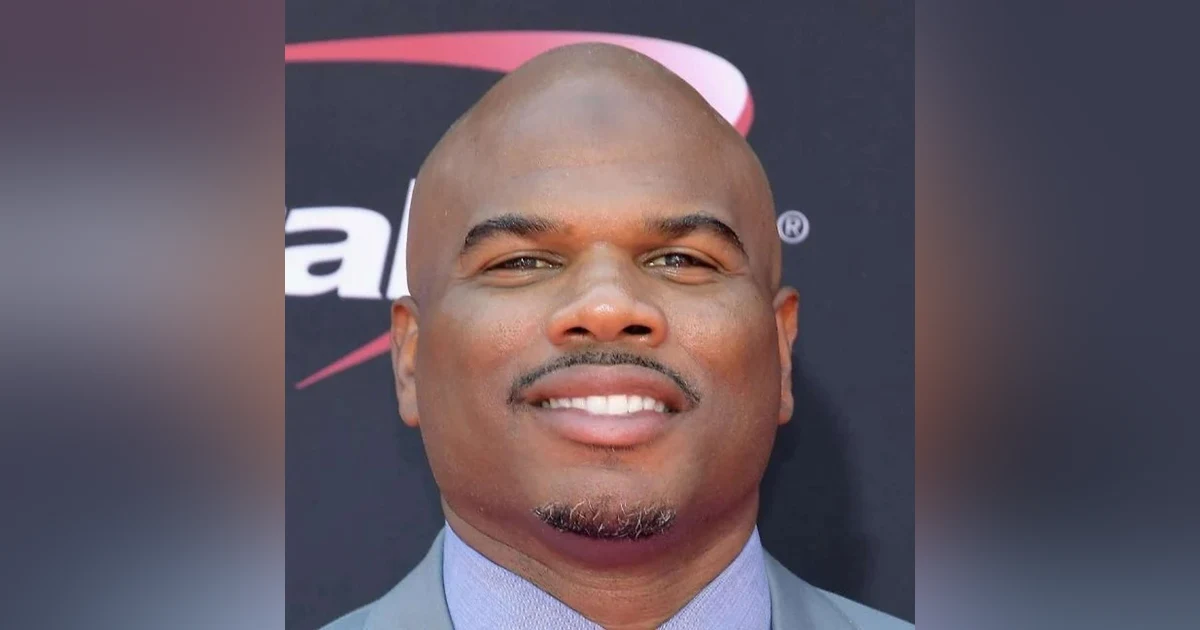
Resilience and Reinvention: Curtis Conway's Journey Beyond the Gridiron (Part 2)


 Apple Podcasts

 Spotify

 Castro

 RSS Feed

 Youtube Music

 YouTube
Dive back into the world of Curtis Conway in Part 2 of our conversation, as we delve into the pressures of the NFL draft, the complex process of choosing an agent, and his meteoric rise in the league.
Beyond the game, learn how Curtis transitioned from the roots of South Central LA, balancing immense career changes with the profound role of fatherhood. Central to this narrative is his bond with Laila Ali, a relationship that speaks volumes about commitment, passion, and building a solid family foundation. Immerse yourself in touching memories as Curtis recalls interactions with the legendary Muhammad Ali, his iconic Father-In-Law, and relive the poignant tales of their first memorable meeting.
Tune in now to explore the depths of Curtis's decision to become the family's Lead Dad, and embark on a journey of unwavering dedication, personal transformation, and the immense power of love.
To discover more episodes or connect with us:
00:02 - Curtis Conway's Career and Family
04:45 - Agent Selection and Draft Day Tips
09:51 - Navigating the Challenges of NFL Success
16:04 - Pro Football Player Life and Responsibility
23:22 - Transition to Broadcasting Career
35:00 - The Shift Towards Sports and Family
38:58 - Conway Discusses Football, Broadcasting, Ali
53:40 - Curtis' Honesty and Muhammad Ali's Impact
56:48 - Curtis Conway's Inspiring Journey and Perspective
0:02 Hello and welcome to no Wrong Choices, a podcast about the adventures of life that explores the career journeys of interesting and inspiring people. I'm Larry Samuel, soon to be joined by the other fellas Tushar Saxena and Larry Shea. For those who might be joining us for the first time and for those who haven't done this yet, please support no Wrong Choices by following us on your podcasting platform of choice and by giving us a five star rating. We also encourage you to join the conversation by connecting with us on LinkedIn, facebook, instagram, youtube and X, by searching for no Wrong Choices or by visiting our website at nowrongchoicescom. This episode is part two of our conversation with the retired NFL wide receiver, broadcaster and, as we learned in episode one, lead dad Curtis Conway.
0:48 Larry, I guess, staying consistent with episode one, why don't you lead us into this conversation as well? I think it's worth repeating, though, if you haven't heard part one, go back and listen, because what we hear in part two is amazing. But part one, I mean, it's really the beginning of his journey. That acts as the framework of what we're about to go into now Candid, genuine, I think again, the thing I'm most struck with with Curtis is sometimes, as an interviewer, you ask a question and you almost can anticipate what the answer is going to be, and Curtis just never gives you that answer. He's going to speak from the heart, but what he tells you about being a professional athlete and how he became to be a professional athlete, the mentality, the finding something that you love and doing it, you know I just they're so valuable and they can actually be a part of anything you try to do in life.
1:48 It doesn't have to be professional sports, as it was for Curtis, but, yeah, we're about to get into a conversation about much deeper things about family, about being a professional, about when it's time to walk away from being a professional athlete. You know these are difficult conversations, but Curtis makes them easy and he makes them accessible and it's just pure honesty and I love this conversation. So, yeah, there were a lot of eye popping and jaw dropping moments in that first part and show you're totally right. If you haven't had a chance to listen to part one, you should go back and listen to it Now I'll tell you what part two has just as many of those kinds of moments where Curtis now delves into his playing career when he was with the Bears and with the Jets and you know bumping around the league.
2:32 And the one thing that I was so surprised about was, you know, his attitude, his very open attitude about. You know why are other teammates of mine not as angry as I am over losses? Or you know, what do I have to do to make sure that the guy behind me doesn't take my spot? Or how can I help the guy behind me, you know, improve without him taking my spot? You know things like this, that kind of open honesty about what's it like to be a professional athlete, the grind, so to speak and then to talk very openly and honestly about life after football, because obviously for all these guys there is life after football. So it's the transition from one, from one part of life to the next, to the next, to the next, where he goes from, you know, professional athlete to professional broadcaster, to essentially being a professional family man and just hearing those answers and the thought process it was just so refreshing to hear and you can tell that he's very, very at ease and happy with all of these choices and decisions.
3:29 Absolutely, and you know, a very big theme of this conversation is family and how important family is. And interestingly, as we've mentioned before, curtis' father-in-law is Muhammad Ali and he tells a great Muhammad Ali story in this episode. So stay tuned. Here is the continuation of our conversation with Curtis Conway Curtis bringing this, I guess, back onto the path a little bit. You know, as your college career is, or as you're progressing in your college career, as you're having the success that you're having, as you start to look towards the NFL. When did you start to think about the draft and how do you start to prepare for the draft?
4:12 Are you hiring an agent Like? What is that process and what is that step in your journey? Great question, the biggest headache of my life, like, literally, it was the worst time between my last I would say two games in my junior, the last three games of my junior season until the day I got drafted. It was like the worst time. It should be a good time. The reason why is number one I'm a junior, I'm a true junior. Do I leave? You hear everybody say he'll be a first rounder, he'll be a top 10 pick. You hear people saying, man, he's only been playing the position a year, he needs more experience.
4:53 And so you got all this stuff going on with just trying to leave school. So once I decided to leave, now you got to pick an agent. Now, picking an agent is somebody you've never seen or don't know and you're trusting them with your life, basically at this point. And so you hear everybody say you got people coming on sneaking on campus. I work for this guy, I work for this guy, I'm doing it. It was so much crap going on. It was miserable, man, because you really have to make the right decision on who's going to represent you, and you've never been in a situation before. I don't have a father. My mom was a young mom and at the time she wasn't doing well.
5:36 I mean again, like my grandmother said, that I was making decisions on my own as a young man, so trying to figure out who was the best agent was so hard. How did you go through that process? Well, really, I end up trusting somebody that I knew, who knew the agent. It had nothing to do with the agent. The only reason the agent got me is because he knew the guy that I knew. And who was it? Who did you go with? I went with IMG. Okay, tom Condon. Yeah, I was an agent. Yeah, I never talked to Tom. I never saw Tom. I didn't know what Tom looked like until I actually signed my contract. Yeah, it had nothing to do with him, it was.
6:17 Who do I trust? Who am I closest to in this arena that I can actually question if something goes wrong? And it was your friend. It was your friend, it wasn't really a friend of mine. It was a guy that I was around, that I knew, and in that relationship I didn't know, it wasn't like I knew this guy and he couldn't, you know, derail me. He was just the only guy that I knew of or knew that was in that environment. Everybody I knew that was family or friends, was in my neighborhood. So people in that arena, you know had no clue about. So making that decision was really really, really difficult for me to do.
6:59 But that's the only reason why I even chose IMG is because of that situation. The other part of that was being drafted. I never really cared about what team I was going to go to until you start hearing all the media on the radio saying, well, the chargers going to pick him at 23. The Raiders won him because Al Davis loves me. And so in my mind. I'm like man, I'm standing in LA, the chargers throw the ball, the Raiders throw the ball and then all of a sudden you start taking these trips to these organizations you know that want to draft you and they interviewing you, going through this whole process and you know, all of a sudden you get drafted.
7:40 And I got drafted by the Bears and I was like wait a minute, the Bears. I haven't really talked to them the whole time. I took a trip there and that was it. I didn't speak to nobody. My agent wasn't saying anything about it. I went there and the first thing came to my mind is the 85 Bears. Like man they throw the ball. That's right, walter H and everybody else Right. Like how are you know the Bears? like really. I couldn't get over that they don't throw the ball, why would they pick? me Crowned in pounds. Yeah, so I was, although I was happy. You know it's an ego thing, man I'm the seventh pick of the draft.
8:22 I was the first receiver taken Wrong team, though. Maybe they wanted you to play quarterback, yeah probably Right, but I would have rather went later and went to a team that threw the ball. But and that was my own ignorance at the time Not really understanding man, if you went in Chicago, man, chicago was such an amazing city to play in. But yeah, but man, when I got drafted man you were not excited. No, I'm like man, I ain't never known the Bears, or throw the ball. I'm going to be blocking in Chicago. All right. So I wanted to kind of talk a moment ago about the notion of, like, you're not having a great deal of insider knowledge as a you know, as a essentially as a college student looking for an agent.
9:07 I mean, obviously, the NBA has has done a lot in terms of what they're called their mentoring programs, in terms of bringing in veteran athletes to speak to the rookie classes about, hey, this is how you should, this is how you should think about, you know saving your money and this is how you should think about. You know when you are talking about endorsements and this is how you should think about when you're looking for agents, and you know how to protect yourself, et cetera. And I think the NFL does something, does something very similar. Have you ever participated in mentoring, in mentoring programs like that in the NFL? No, I haven't, but I've definitely my phone. There's a lot of players that have my number.
9:47 I've never done it through the NFL. I do talk to players about things I love doing. That I feel like that's our job and I give them to them raw man. I'm not. I'm not a salesman and I have them. I would think they, I think they would, they would appreciate your honesty. Well, well, here's the thing Most of the guys, if you ain't telling them what they want to hear, they're not listening. They're there present. They're here, but they're not listening. I've always said you got to get to the person that's closest to them, because if you don't know, like and these were kids that I knew personally that made it, that played in the league Now for me to go and this and I'm just a lot of people think this is not not true, but in my mind this is a reality.
10:33 We've always had people come back, even in my time, to tell us man, do this with your money, don't hang around in this group of guys. Man, you need to lead him along. Man, you can't bring your own friends with you. Nobody's listening to that. Right. Like we don't know you. You know you're trying to tell somebody something and we don't know you. So they'll get guys who played in the league to come. And I'm not saying it doesn't impact players. I'm not saying that. I'm just saying for the most part, for the most part, we listen to people that we really feel like got our best interests. You know what I'm saying. Like at that time you got to think about it. You're young, you're 20, you know you're 21 years old.
11:16 You got all this money and everybody's telling you what to do with it. And I'm talking to everybody you don't know. I'm talking like even your agent. For an example. I'm going to give you an example and just think about this for a second. I hate when people say you can't hang around these guys no more. You got to get away from these guys. You got to think about this for 21 years. These are the people that's in your life, right? These are your real friends. This is who you are. All of a sudden, you meet this agent and he's giving you all the right advice. But you wasn't there at 15 when I was broke. You wasn't there at 16 when the drug de la doux gave me money so I can eat.
12:00 You wasn't there when Ms Smith, down the street, gave us two slices of bread so I can make a sandwich, because we didn't have a loaf of bread Right. So now you got this group telling you one thing and you got this group that you just meet a former NFL player. Yeah, you cool, you Hall of Famer Dude. I don't know you, even your agent. Like, okay, you're my agent, but, man, you wasn't around here when I was dealing with all this. I wanna take your advice, but man, no, I gotta help these people. So always say, man, those first three years, like those, are the prayer years. You hope you go to that second contract, because it all really is maturity, because we're broke.
12:44 The first thing we do is we go buy homes, we go buy cars, we go do all this thing. We not invested nothing, because most of the people we're around don't understand investment. It's go to work, get a check, pay the bills and go check the check, the check, the check. So we're not educated on none of that stuff. Probably now they are, but you're not educated on it. So to get through to a young guy man, people like to say all the good stuff, man, but again. I'm around these guys. I'm very, very authentic, open and real with them and I understand when the guy is still hanging around the crowd like he lives in a great neighborhood out of his neighborhood, but he has nothing in common with his neighbors.
13:30 He's 21 years old, he's rich. He has nothing in common with his neighbor. So guess what he does to have fun on off season. He goes back to what he knows and where he's welcome and where he's comfortable. He's not comfortable in that environment and the first thing outsiders say why is he still hanging around that group? They don't seem to think about really other than man, you're making a million dollars or two, three million dollars. You need to get away from them. People how this is family, these are friends. So it becomes so. I allow these guys to talk and open up and say things that they're a little afraid to say because they see I come from that man.
14:14 I'm not gonna get on you because you make a mistake. You went and messed off some money. Man, we all did. Some of us was lucky to play 12 years and recoup it. You know you gotta buy mama house. People don't realize it ain't all. You just blowing your money. It's like you taking care of people. Sure, the people who took care of you. Yeah, you the guy who made it, so it's no longer oh you need. Can I borrow $10? This is no. Can I borrow $1,000? Because I'm about to lose my house, I gotta pay my taxes. You know that old dynamic change. So I just, I, just, I'm honest with these guys. I'll allow them to make those mistakes without man.
14:55 You dumb. You hear that all the time. Man, that's stupid. No, it ain't. It's so normal. Unfortunately, people are afraid to speak truth and that's that's, that's almost everybody I will say today. Just because you have more people now with more knowledge while they're in college, you know they have a tendency to do better early, not to mention you know they're not getting $800,000, a million dollars a week Contract these guys getting a day. If you go broke today, something wrong you did something very wrong. You got a lot of money today. It's like Brewster's millions and you're getting paid in college now too, which is very different from when you played. So that a lot of differences.
15:35 So, regarding your personal journey then, was that the biggest eye-opener when you get to the Bears and make it to the NFL? Was it on field stuff? Was it the off the field stuff? What? What was the biggest eye-opener for you? Like talking to yourself, like, wow, I'm going to have to really make an adjustment here or figure this out or get this going in the right direction. Like what was the biggest thing? I never felt like I was going in the wrong direction, because you can't make me do something I don't want to do, sure. So on, this field was going to take care of itself because of who I am as a football player. Right, I knew that I didn't have a lot of experience as a receiver and I'm playing against the best of the best Because I was a seventh pick.
16:17 I had a lot of pressure on me to come and turn the program, turn the organization around. That was a lot of pressure, playing in the big city and not having the experience as a wide receiver. Who was your quarterback at the time? Jim Harbaugh was my quarterback on first year. Oh wow, that must have been fun yeah. You know well, I didn't. We didn't really communicate because I was a rookie and he was a veteran. So back then, man, it was like you know, we had the same room as a veteran seemed like the veteran was like the grown, like they were like grandpas. We were like little kids tearing up, but the football stuff I knew at some point was going to take care of itself.
16:58 Just because the confidence I had in me as an athlete not just a football player, as an athlete, I knew I was going to be capable of making an adjustment at some point Off the field was tough because, again, you know, I didn't leave South Central at all. You got to think about it. Middle school, high school, elementary college was all right there in South Central LA. I didn't leave. So my life was right there. And all of a sudden, now you got money, you move. I moved to Orange County. You know I'm speaking from experience when I say I'm that kid who lives in Orange County, in a nice neighborhood away from the neighborhood. But I'm coming. You know I went to USC. Let me, let me, let me back up my first few years in the NFL.
17:41 The only off season in the spring, I was back in class at USC finishing up my degree, oh interesting. So I would go to school After class. I would go back in the neighborhood of my grandmother's house and wait for the traffic to die down. Wow. So I'm there and I never forget. One day after my this was probably two months into going back to school I was on the freeway going back and it was crazy to, at this point, really pay attention to this. The further and further I got away from my neighborhood, the nicer it got, and it never dawned on me when I cause I never lived nowhere else. I remember being in Orange County one day and saying, man, I wish everybody I knew I could buy my house around here because it was boring.
18:30 But I'm living in a great neighborhood. You know everything is nice, big houses and clean. But it was boring cause I wouldn't. I wouldn't know these people. You're not with your friends, you're not with your people, I'm not with my friends, so I would spend a lot of time Like it was times that I was down there when I shouldn't have been down there. I mean, it's 12 o'clock at night. I'm in South Central LA as a Chicago bear, but I'm home. Nothing good happens after midnight. Yeah, and nothing happens good throughout the day in South Central. But, remember this is home Like I, like somebody driving down the street that was in the NFL and see Curtis Conway standing out there with these guys.
19:13 Man, this is dangerous. Why is he here? Like our minds at that time, we're not thinking like that, like this is home for us. What do you mean? Why am I here? Nobody can understand unless they've been through it. Was there a moment in your journey where you pivoted and I guess what I'm imagining is whether it was towards family, whether it was towards wanting something more beyond football, like after you became a pro, as you were on that path, as you were creating, you know, at least looking from the outside a more stable life for yourself? Was there a moment where you pivoted towards a different version of you, so to speak?
19:59 Yeah, when my twins were born, it wasn't. I mean, you gotta remember. I don't feel like I'm on a bad course. I feel like I'm doing because I never got in trouble. I never caused trouble. I was always the guy that held my own and did what I wanted to do, and I never was, I would say, bullied or nobody could make me do what I didn't want to do, so I never felt like I was doing something. I was never a transition period for you. Yeah, it was never a transition. Like I got to start doing this because, again, I was already on that. I was on the path. It just wasn't the path that most people would want to see. But I will say what changed me is having a responsibility of twin boys.
20:43 I mean, it changed the way I dressed, it changed the way I thought. It changed a lot because I grew up without a father. You know, I've never said daddy a day in my life. My mom was pregnant at 14 and had me at 15. Like I said earlier, I was making decisions on everything on my own at 14, 15 years old and my mom and my grandmother just went with whatever I decided to do. I didn't want that for my kid because I knew deep down inside how lost I was. I needed a man's approval. I wanted to go talk to a man about things that I didn't want to talk to my grandmother and my mom about. I not knew my grandmother and my mom loved me more than anything, but it was just certain things that I was just like man.
21:24 I wish I had a father, that I could sit down and just say, dad, what you think about this? I mean think about the draft process. Think about the agents, think about being in the streets you know who I'm hanging with. Like I never. Everything was, curtis, what you gonna do, and so I never wanted my kids to be in that situation. So, again, when my son was born, it was just. It wasn't a thought, it was just instinct. This is my responsibility and I don't want my kids ever yeah, my kids ever having to look anywhere for any advice for nothing. I almost get jealous if I find out my kids are asking somebody else. How old were you at that time?
22:05 24. All right. So you were probably like mid career at that point, actually not even probably just the, the, the, the, the, the, the, the the, the, the. That was going into my third year. I never forget it. Yeah, that was going into my third year. Um, and that's when my career actually took off. Actually, um, I had my kids, my boys, um January, the January after my second season. My kids were born in my third year. That was my breakout year. Yeah, that was your first Thursday, that was your first thousand yard season, right, right, right. So, yeah, because I know what you had back to back, back to back thousand yard seasons with the, with the bears. Uh, yeah, you're a third and fourth year, correct? Um, uh, you would know better than I don't know why I said, correct, yes, yes, yes, you are too yes.
22:54 It's all part of the lingo, yeah. Exactly. I don't want to jump too high, I don't want to jump through the career because I mean, you know you had such, you had such a good career. But at the same time it has to be, it has to be in your mindset at some point that the career is going to end, and I know that I want to. There's. There's so much more life ahead of me, right? I'm going to be probably in my thirties and life doesn't end in my thirties. So was there ever a point in the career where you said to yourself okay, I know one day I'm not going to be able to play anymore, or I'm not going to want to play anymore. I have to figure out what's next.
23:34 When did you actually say that to yourself? I'm going to look towards what's next. Never Really. You got to remember. I live in the moment, right, I didn't. I didn't know how to think about other things. I, you know, I always tell people I'm a creature of habit. If you want to, if you want to do something to me, you follow me for three days and you know for the next six months, what are you going to do. That's me. I can't do, I don't focus, I don't do more than one thing at a time. I don't even try to think about more than one thing at a time. Man, I was a football player until they told me I couldn't play. That was my mindset.
24:15 You got to remember. You can't tell me I can't play football, right, I didn't. I never thought about career injuries. I never thought about being cut In my mind. I was going to be able to play this game as long as I wanted to play it. I will say this I did think about when I retired. I wanted to be a dad. That's all I wanted to do. I wanted to be there for my kids. You know, I know a lot of people was, you know, trying to be businessmen and I grew up without a father. So I felt like man who can honestly say I mean honestly say they did exactly what they wanted to do in life and retired at 35 years old and have the well-beings to now do whatever you wanna do.
25:10 Man, I felt so blessed that financially I was stable, that man I could just be a daddy. I can be a father. I didn't care nothing about being no businessman To each his own, I just wanted to be a dad, make sure I was there for my kids. I didn't spend money when I played. I put a lot of money up because, again, I wasn't trying to do nothing. I wanted to play football and I was it. So I was fortunate enough, by fear and just by my personal, just how I am, I didn't spend a lot of money. So when I retired, you know, at the 12 years, I was good. So it wasn't about what do I wanna do next.
25:52 It was I knew what I wanted to do while I was playing. You know I wanted to be daddy, I wanted to be a father. So I'm a very simple guy, yeah. So that moment comes and you're being a dad. You're being the best dad you can be. You're fulfilling that part inside of you that knew that you needed to do that. How does the broadcasting thing come about? It was it hard for you to even take on something else, because being a dad was that important to you. Well, unfortunately that was my first marriage and I ended up. We ended up divorcing and my kids moved to Arizona. That's another story. You'd be here all night with that story.
26:36 But, when I was done, the kids would be with me for six months and then they went with their mom for six months. So what am I doing for six months? Sitting there twirling my thumb and it's you know. So you know I made some really good investments by having some great relationships with friends and people that I knew that were pretty good businessmen. That helped me out with some investments. But again, I'm the type of person that I like to do what I want to do and the investment part was it wasn't fun. It was okay, you take some money, you do some. You know you get into it and everything that I got into it wasn't fun.
27:16 It was just to make money. I couldn't coach because, again, when I have my kids, I'm still part of an organization. I can't be 100% daddy, so I couldn't coach. That's what I really wanted to do as coach. So the next best thing was broadcasting, and anybody in Chicago, any media person that covered me in Chicago, would tell you that's the last thing we thought he would do. It's being broadcasting because I can care less about the media. I didn't want to do interviews, I didn't want to talk after the game. So they're still cursing your name to this day. Well, you know it's funny because when I was broadcasting and I would travel the country and do games and see guys that covered me, they would say, man, you show matured.
28:09 You developed empathy and sympathy and whatever else, whatever other word I'm looking for. Right, but the broadcasting bought me as close to the game as I could I could be, because, again, I wasn't the type of guy that would sit there and watch a football game. I was never that Like. I was the guy doing football season. I couldn't wait until October come. So NBA start. I'm watching NBA games on Tuesdays doing football season. So that because it made me study at this point like if you're calling a game, you have to study, you have to watch film If you're broadcasting, you know, I've always wanted my draw, my own opinion.
28:49 I didn't want to wait to a producer gives you a bunch of notes, like I love the process of preparing for shows, always wanted to find something that nobody else was talking about within a topic. So it was challenging for me. I needed that challenge. But it was challenging doing something that I enjoy doing and it was football. So that's what kind of brought me to broadcasting, probably. And I didn't start broadcasting until maybe three or four years after I got out the game and I did a few investments and I started from the bottom. I mean, I worked locally, wasn't getting paid.
29:29 I went to the broadcast boot camp for the NFL, oh wow, yeah, I took that like what happens there. You learn. You know what. That was. The best thing happened to me because at broadcast boot camp some executives that worked for some networks pulled me to the side and they just gave me some real good, some real sound advice. Like you don't need to go through all these channels. They basically told me what I needed to do and it cut a lot of time out and focused on the wrong things. So if anything I got out of it was some good advice on my road. I still didn't get you know the big jobs, but at the same time I knew I didn't have to go back to school and go to communications class and do all this.
30:11 That's great. This stuff, that people was that I actually thought I had to do and I actually thought that everybody on TV just knew everything about everything. So getting there, you know, because, I mean seriously, I used to be like how does this guy know all this? Right. Like I knew nothing about broadcasting. I know Like 15 people telling them exactly what Exactly I think we're gonna say two-share to broadcast boot camp next, that's next on our agenda, so it sounds like you enjoyed it. Was it fun? Man, I loved it. I loved it, man. I mean, I think about this. To sit there doing the week and watch tape on two NFL teams, get on a plane and go call the game and you know everything about the game and you done study.
30:58 That's like literally, that's your job. Like give me a break. You gotta think about where I came from. You trying to tell me you're paying me to watch tape all week and I'm gonna spend three and a half hours in the booth talking football. That's great, man, stop. And you're gonna pay me for that. What are you nuts? Yeah, it was so cool. You know the only thing about me when I was in studio I'm a little too real, yeah, and so you know how you know our mainstream is. You know they want you to kind of tap NASA a little bit. So, you know I prided myself on being authentic and again, you gotta remember I never do things for money.
31:42 So if I was to get fired because You'd be fine, I was fine with it because as long as I can walk away and I'm standing on my morals and my principles and I'm only stating the facts based on my research and my experience, you can't tell me this is not my experience, but I understand how the machine work and you know I'm not gonna be on the machine like that too strong. So but it was weird thing. People would always say man, you're probably the nicest guy off a camera, but on camera we can't get you to not say this You're gonna say this to your mom. I'm thinking of Roy Kenford, ted Lasso right now, for all those people who watch that show.
32:22 But you gotta think about it. I'm the guy that if you give me the topics the day before the show, I'm just the type of person I can't sit there and know something not articulate. Now, I'm never gonna be crazy on TV, but I'm not gonna go with the flow because it's low hanging fruit. I'm not gonna go with the flow because in somebody else's mind, the expert like I'm the expert. Yeah, tell like it is. Yeah, I'm the expert, so I don't care who said it on ESPN, I don't care who said it anyway, I don't care if a head coach said it. My experience and what I see is my. It's coming from me, it's not coming from nobody else, and of course I always felt like doing that.
33:05 I was the guy on TV was say things that coaches couldn't say publicly, and I was also the guy that players can't say public. For an example, as a player I can watch a game and know it was terrible play calling man. I was a terrible game player when I'm studying the tape. But that player after the game can go on after in an interview after the game and said man, the coach was calling some terrible plays. Man, the game plan. We practiced this all week and we never called it. But as somebody that's been there, I can say that on TV, whereas players always get blamed for stuff, coaches never get blamed. And same thing when I was doing college football, it was certain things you couldn't say about the kids.
33:51 I'm like man, are you around, some of these kids Like you? talk about hurting these feelings. Like man, come on the way these kids be talking Like no, they gonna get it too. I'm just gonna be honest, based on what my eyes see, and sometimes that could be a little tough for a studio. So I never really I like studio, but I'm more of a radio podcast guy. We love it. It's going well so far, perfect, perfect. So, curtis, it sounds like the pivot towards broadcasting went extremely well. It was fun, it was fulfilling and everything else.
34:32 I think the other pivot we have to talk about is towards what you're doing now. You mentioned earlier that you had twins. I know that you have kids. Now again, can you talk a little bit about this part of your life? We know that you're married to Leila Ali. We have to reference that, of course on the program. You better reference it. She might confide this afterwards if we don't bring her out. Talk to us about that pivot towards sports, family et cetera, et cetera. Well, family's always been important to me and I got it wrong the first time, but that didn't deter me from wanting to be married again, so I've always liked the idea of being a family man.
35:18 Again, like I said, I was around that in my neighborhood, so that was a family. So at this point, a funny story the reason why I'm just sitting here today being daddy which I really enjoy doing is when me and Leila first got together, we were both in transitioning from our careers. I was transitioning from football. I think she may have had maybe three more fights before she decided she wanted to have a kid, and before we got married we talked about kids and the future and the main thing we came up with is we didn't want to have nannies and we didn't want to have babysitters and we wanted to be present.
36:04 And so time goes on. We have kids and we're both able to juggle our careers. We were both traveling a lot, but it never affected someone being present at home. We never, ever, ever had to have somebody at the house while we were on the road. It wasn't until my kids started to get older and they started getting into sports, where we sat down again, I like to say, we sat down at the team table and we had to change the game plan, so we sat there and I was doing broadcasting. Of course, my wife is doing so many amazing things in TV and business and work and speaking and she's a real awesome.
36:47 Your wife is her own cottage industry. For God's sake, no absolutely Absolutely. And when I mean she does it, man, I admire my wife's work ethic, man. She wakes up in the morning and after we're gone taking the kids to school, she's in the office working from time and she loves it. She loves the grind and doing what she does. And so that leads me to this that when we sat down, we both knew we both couldn't keep going Doing what we were doing. Our kids are getting older. You know, we're traveling a lot. Who's gonna be there to take the kids to practice school and all this? So you know, unfortunately but fortunately, you know, I didn't think I was gonna be the one.
37:28 When I had this conversation before he had kids, I was thinking, okay, yeah, I'm gonna be the one to keep working and doing what I want to do and she's gonna be at home with the kids. The smart thing is for her to keep doing what she's doing because, honestly, layla really loves what she she does and we, we, we, we compliment each other on who we are as people. So, although I had to, you know, swallow my pride and throw my ego away, it's worth it, man, because I got a real team player, and so I like to say that I like it because, again, I use everything for football with, even in my marriage.
38:12 I Although I don't want, you know, I don't like being in this position, because I still want to work and do what I like to do, but I like to say it like this we had a balance offense and you know I was getting eight catches, guess what? You know they're playing prevent defense because you got a block now. So You're not gonna get the statistics that you want. So Back to the Bears blocking for you. Curtis, but will you be competing for her position sometime soon?
38:53 She's amazing. And so, again, you know, we, we work together, man, so good as a team. Like I said, I had to swallow my pride and, you know, put the stuff that I want to do outside of the family To put that on hold, because the most important thing was the team. And so, in order for us to win a Super Bowl, I got a block and let her run the ball until the kids are out of school, and then I can, you know, the game plan to change again, but for now, this is the role I gotta play. All right. So you just mentioned a moment ago the notion of Layla. Your wife loves what she does, and you talked about it before the the idea that you have to love your job, whether it be football.
39:33 Will it be anything right? Yeah, there's the idea of being determined and the idea of loving it as well. Did you love? Did you love Broadcasting, or did you like broadcasting? And then I like make it easier. Did it make it easier to walk away from it because of that? No, I love the process. I love the process of broadcasting. I love the preparation. I didn't like the political part of broadcasting. Okay you know, again, I love studying and researching and watching and being authentic and you know I some of these broadcasts if they tap dance on TV. You know I've worked with plenty of guys who you know, you know on commercial break man.
40:19 You know they have a whole, totally different opinion on so they're different person. Right, there's different person and they have a different opinion. They just don't want to be on TV. There are millions of people rough on Ruffling feathers. You know, I always stand on my square because I'm always be able to go back and show you what I mean and at the same time, if I'm wrong, I've always been open to learn. So if I'm wrong, I've never been the guy. If I'm wrong, I'm wrong, and so for me, when I'm wrong, I've learned something new. Now you just gave me more ammunition. So that's always been my approach stand on my truth, stand on my research and say it. But again, you know some things you know the studios don't like and so you can't be as authentic as you you want to because, again, you represent the network also and I understand all that.
41:08 So certain things are for me, certain things are not. So I believe calling games was my deal, like you know. Going to the game, calling the game, calling the action. I love that. I Love that. I love doing the radio shows because I think it's a conversation. It's not okay. You got 30 seconds. A producer is in your ear saying you got 20 seconds left to get your point across and everybody else done took up the whole three and a half minutes Like that kind of stuff. You know it's like how do I reword all this in 20 seconds and nobody knows that a producer is in your ear telling you all this online. But but again, it wasn't.
41:50 Like I said, for the most part, man, even that was fun because you, you, you still talking ball, you you get a chance to state your own opinion on based on what you do and you get a chance to be great people. You know, you know I didn't like media people at first, but again, I don't know on personally. So you get a chance to to hang out with them and really see like man they get to see you're a regular dude. You know, you get to see that they're regular people. In like with my relationship with Mike, yeah, I mean, he's man, mike is like a brother, like man. I will hurt somebody over Mike, yeah, but that's the relationship we developed outside of being on TV, just driving in the car, going to different places, learning about each other, learning we probably have more similarities than then did not, and coming from two totally different places.
42:41 So, like I said, those are the great things about doing broadcasts for me Is I was able to, to, to meet some good people and have some strong relationships, still to this day. That's. It's very fortunate and I should point out that that Mike Yam has a who's with the NFL Network now is one of their primary hosts he's doing which show at six o'clock at night every night he does NFL Tonight or whatever it's called their big show and he was a fella years ago. He was actually on our original version of the program, so that's the person that we all have okay, we Curtis, we would be remiss as professionals if we did not ask you about your father-in-law.
43:22 Because the great Muhammad Ali, can you tell us a quick story about an interaction with him, something with him? I mean? This is a man that shaped the world in so many ways. So we would be remiss if we didn't ask you about your father-in-law. Do you remember the first time you met him? Tell us a little bit about him, if you could. Man, this is crazy, it's Wow. You know, just thinking back on it I get emotional because, you know, Growing up without a father, you know to say that the first man that was even close to being the word father was Muhammad Ali, my father-in-law.
44:03 Like my god, I think I think about that, like wow, like yeah, this how it's supposed to be. You know, growing up without a father and the first person that I can actually say was in a that that father was my father-in-law, muhammad Ali. It's, it's crazy. And Literally the first time I met him, I've met a lot of people, from Michael Jordan, magic Johnson I've been around a lot of people. It's only two people where I felt the room and the spirit change when I first met him and now it was Nelson Mandela and Muhammad Ali. It was, it was. It wasn't like man, that's Muhammad Ali, how you doing, it was.
44:45 It was really like Energy in the room. That's so undescribable that you knew God put these two people on earth for something bigger than than life. And I Remember I mean I literally ditched him out two or three times when he really yeah, I was being Laila was dating and you know he would come in town and she would say I'm about to go visit my father. You want to come, absolutely not. Right the guy that who's dating his baby girl right, that's the guy.
45:32 That's the guy. Curtis Conway, that's the guy it's. It's funny because, um, you know, it was different than any other time. Like I said, the energy when I walked in there, but before then it was like I'm not just going to meet him as a fan, like I'm going to meet him as His daughter's boyfriend. Yeah, and I know how I am as a father, you know, especially with my daughter. So it's like, okay, nah, she never knew, she just found out cuz I told this story before. She never knew it. But when I finally met him you know of course he had Parkinson's, so you had to be up close to kind of hearing and he was still able to say some things at the time and One of the first things he asked me I mean he broke the ice immediately, like I sat down and Him and Laila they have this relationship like she talks trash to him getting Going.
46:33 And when we walked in the room, you know, he just was staring at me and Laila looked at him and she saw that he was Staring. She was like, yeah, that's my man, that's my man. My heart started beating so fast and it was more people there. So once we got in there, she hugged and kissed and she left out of the room. Now it's just me and him in this room and I'm like man, you were just who. I was about to get a life sentence in jail. I'm like what do. I say what do I do? She just literally just sit, and she didn't introduce us like that, it was just, I mean, it was just crazy. So I was sitting close enough to him where I could hear, cuz I'm sitting right next to him, basically, and the only question I can remember was he said are you guys playing or having babies?
47:22 Oh. It wasn't. I don't think it was the first question, but that was the one that Rattled me. Yeah and I said, wow, like Me and his daughter got to be doing something to have a baby, yes, and I just started laughing and he starts smiling and I didn't even have to answer the question. Man, that's great, of kind of shaking me up but at the same time, like I'm just kidding because at the end of the day, man, his spirit, it's amazing. Man just being in his presence, knowing who he is, it's different man, like I wish.
48:06 I Wish everybody couldn't experience spending time with him, because everywhere I go, I could be in the airport and it could be. I mean, I don't had everybody from every nationality, every you know I'm in the airport and it's not. Oh, your Curtis Conway, no, you're Layla Lee's husband, curtis. Exactly law of Muhammad Ali and then they come with this story About when they met him. And so, man, just to just to see All the people that he touched, still to this day people have Ali stories when I'm out in public if they encountered him. I know what my experience was with him for over a decade being in his presence and learning from him.
48:53 Man, he, he was he different man, like when he say he must be the greatest, and I know at that time it was an arrogance about him and everybody, man, you know he understood what his platform was for and I don't know too many people man that's willing to give it all up. You know, I don't know nobody that gave it all up. Yep, like he did everything. Yeah. And so, man, to see that and to see what a lot of these athletes today the kind of money that that they're making Really don't really want to stand and lose anything because they're afraid to lose the money or piss a few people off, it just goes to show how special he was and still present In my life spiritually Today, man, so I guess I can be here all night talking about him.
49:42 Yeah, that's that's. That's an incredible story, you know, in Curtis. I think that is a great transition to Sort of a wrap-up question in a way, considering the journey that you've been on, the people that you've had the opportunity to know, having the opportunity to get close to Ali. There's so many different things. Incredible things happened in your life that you had to overcome, etc. Etc. If you were talking to you know, your, your son, who you mentioned earlier, is a baseball player. If you were talking to another young athlete that had great passion for what they were doing, what would you tell a young athlete that aspires to Follow that path?
50:27 What advice would you give them? Keep going until you can't go. Keep going, that's all I always tell people. Keep going, but it's tough. Keep going. What? I don't like to watch everything, keep going. I kept going. Ali kept going. Michael Jordan kept going when he got cut. Kobe kept going when he missed all those three pointers. Tom Brady kept going when he was a six round draft pig. Man, great and start, cuz. You love what you're doing. You keep going, keep going into. Like I said, when I was in the NFL, I never thought about what was next. I just kept going until they told me I couldn't play no more.
51:07 Then I thought about the next thing, not saying that's always the best thing, but man, if you got passion for something, man don't let nobody to tear you away from that. You got to keep going, keep going. I tell my son this all the time oh, keep going. And what you mean, like okay, you got a shortcoming, things didn't work out. Like okay, now what? Yeah, you know that's, that's what any. That's life. You know I Was, you know I was in a marriage. You know everybody like, oh, why you getting married again? Man, it wasn't. Marriage is not the problem. You know the, you know the team. It wasn't the right chemistry on the on that for that team. So you got to find the right players and keep moving forward, man.
51:51 And right now you know, I'm living what I've always wanted to live. I got a beautiful wife that loved me, support me, and I have a family, something I've always wanted. Only because I kept going, I didn't. I mean, I had a this that made to me. That was the disaster. Going through what I went through, you know, having a divorce and my kids being able to go and move out of town, man, that was the worst thing ever happened to me. But I just I didn't, I didn't, you know, I didn't Crawl up under rock and say marriage is terrible and didn't want to have kids again. You know, I prayed about it, I kept my faith, I stayed on my square and God blessed me with the teammate that I needed to win a Super Bowl.
52:33 That's incredible advice. And you've won the Super Bowl, curtis, yeah. Not yeah, I got more rules in Tom Brady. Do not. Yeah, that's right. You're the right, you are the game of life. Yeah, I got, I got, I got, I got, I won. I can definitely tell you that. You can definitely say that I'm winning right now. You are definitely well, curtis. I think it's fair for us to say that that we won today, because this has been a remarkable Conversation that you know we've been able to to pull so much from. Thank you so much for giving us the time that you did, curtis. Thank you so much for joining us. This has really been remarkable.
53:14 No, I appreciate you guys for having me. Man it was, it was good, I had fun I. Well, that was, fair to say, one of the more remarkable conversations we've had on this program. It's difficult to single anything out when we've had a chance to talk to so many wonderful and impressive people, but for me, I learned so much from that conversation with Curtis Larry Shea. What are your thoughts? I love his honesty. I mean I think I'm struck so much by his honesty and his answers about. You know, oftentimes athletes as we talk about say what we think they want to hear. And I think Curtis is just so candid.
53:55 Getting drafted by the Bears, he's pissed off because they don't throw the ball. You know Jim Harbaugh not going to talk to him, you know what I mean, because veterans didn't talk to rookies back then and the agent stuff. You know finding an agent and all the people around you telling you you can't hang out with your friends anymore. And he was just so candid about all of that stuff that it just really struck me and I really appreciate his honesty and his candidness about that because we often just hear players touting well, yeah, so, and so drafted me and of course I'm forever grateful for them. But he had some some gripes about it. You know he wasn't thrilled about going to the Bears but obviously Chicago is a great place if you do win.
54:36 So I don't know just his candidness, his honesty. I mean we don't often get that in an interview with a former athlete and and he really lays it on the line and it's special. I said it in part one and I'll say it again I was, I was taken back by how shockingly honest he was, and I'll tell you this I'll tell you this I don't know about you, but I don't know how I would act if I saw an icon the level of Muhammad Ali, who then asks me what are your intentions with my daughter? I don't know how I would act. I think my? I think my answer would be whatever you tell me my intentions are with your daughter, sir. But the way he acted so calm and so and like maybe not calm but definitely cool, and you know just just just the way he handled himself in that situation is obviously the way he handles himself in life, etc.
55:27 I mean, you know when you're, when you understand the level of icon that you're with at that moment, I mean, come on, you are, you're someone special, you understand that moment and you can obviously that he's carried that into later life as well and it's touching. He didn't grow up with a dad, and here comes Muhammad Ali, his father-in-law the ultimate father figure, the ultimate father figure, right. It was just so touching that, like you know, he didn't grow up with a dad, so he didn't really have that kind of male role model in his life, and then to have the reward, the gift of this incredible man in his life later on to kind of shepherd him Through some, some stuff. It's just very touching.
56:07 It's a wonderful, wonderful story about Muhammad Ali. Absolutely. And you know, for me, one of the things that that I really connected with and Curtis and I actually connected about this on the phone before we ever did this interview was was about his choice to to walk away from his career to become the lead dad and to become the lead parent. You know I've done something similar in my life. I still feel like I'm as busy as I was before. However, in terms of the big career stuff, I've pivoted a bit because I have a wife who is a physician and has a huge job and we have a little kid. So you know, I've made a similar decision in my life.
56:48 So to hear Curtis's story about what matters most to him and just to hear him talk about putting that first really really resonated with me. And you know, building upon that, you know, one of the things that also struck me was was just his journey and and how it shaped him his neighborhood shaped him, his environment shaped him, how all these different experiences along the way shaped him into this really extraordinary, really special person, and it just again opened my eyes to a different way of life, which was really really remarkable. So with that, curtis Conway, thank you so much for joining this episode of no Wrong Choices.
57:32 We also thank you for joining us. If this or another journey story inspired you to think of a friend who could be a great guest, please let us know by sending us a note via the contact page of knowwrongchoicescom, as I mentioned off the top. Please support us by following no Wrong Choices on your favorite podcasting platform, while giving us a five star rating. And then, last but not least, we encourage you to join the no Wrong Choices community by connecting with us on LinkedIn, facebook, instagram Threads and X by searching for no Wrong Choices. On behalf of Tushar Saxena and Larry Shea, I'm Larry Samuels. Thank you again for joining us and always remember there are no wrong choices on the road to success.
58:13 We learn from every experience.