Laughs, Voices, and Gourmet Choices with Bill Lobley


 Apple Podcasts

 Spotify

 Castro

 RSS Feed

 Youtube Music

 YouTube
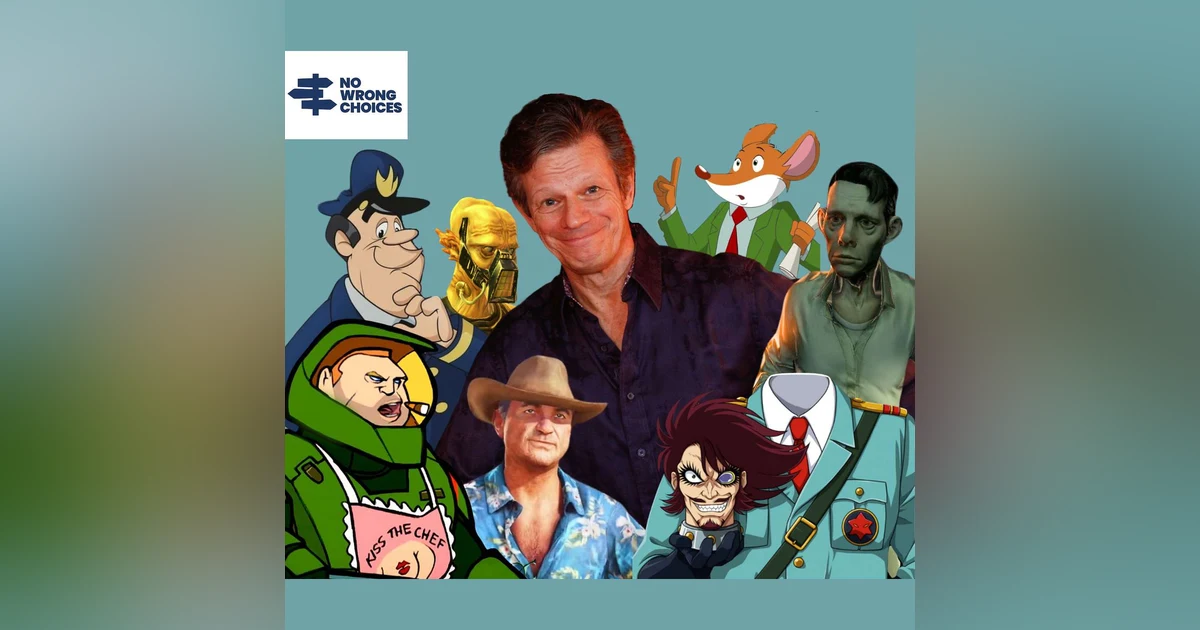
How can one person be an actor, comedian, voice over artist, puppeteer, musician, gourmet chef, and mixologist? Meet Bill Lobley, whose multifaceted career is nothing short of extraordinary. From his early days at Fordham University to countless appearances in movies, TV shows, commercials, video games, and beyond, including standout roles in “Arcane” on Netflix and Adult Swim favorites like “SeaLab 2021,” Bill’s journey is a testament to passion and persistence.
Marked by his transformative time with the legendary improv group, The Groundlings, Bill’s story offers a blend of humor and insight. Discover how he combines his love for cooking with current events in his project NewsMeals.com and hear the unexpected twists that led him to become a certified gourmet chef and mixologist.
Tune in for Bill’s hilarious and inspiring anecdotes, insights into his creative process, and valuable lessons on embracing multiple passions and navigating your own career journey with versatility and flair.
To discover more episodes or connect with us:
00:02 - Voice Acting & Comedy Career Journeys
13:16 - Journey Into Acting at Fordham
19:19 - Navigating Career Paths With Support
30:38 - Improv, Puppeteering, Voice Acting Journey
42:59 - Voice Acting and Character Ownership
51:44 - Impact of Technology on Voiceover Industry
59:17 - Passion for Cooking and Creativity
01:05:32 - Bill Lobley
01:12:29 - Bill Lobly Interview at No Wrong Choices
0:02 Hello and welcome to no Wrong Choices, the podcast that explores the career journeys of interesting and accomplished people to uncover insights that we can use within our own journeys. I'm Larry Samuels, soon to be joined by Tushar Saxena and Larry Shea. If you enjoy the stories that we're bringing forward, please support us by liking and following our show on your favorite podcasting platform, following us on LinkedIn, facebook, instagram, twitter or Threads, and by becoming a subscriber to the show by signing up at NoWrongChoices. com. This episode features the voice actor, comedian and puppeteer, bill Lobley. Bill's known for his work in hits such as Arcane on Netflix, blockbuster video games, movies, commercials and just about anything else you can think of Tushar, why don't you set this one up for us Well?
0:52 first of all, I mean, he's a Fordham guy. Obviously he's going to be an awesome, awesome interviewer, of course. So we can't go wrong there. You know what? And after researching him a bit, I mean, look, I went to Fordham but I never really thought of Fordham as a theater school. In some senses right. But Denzel Washington went to Fordham. So, yes, we have that, we have chops. People who went to Fordham went on to do big things in movies and television, movies and television. But you know, bill is probably like the, the perfect personification of, I won't say a grinder, but a guy who pretty much made his mind up at a young age that this is what he wants to do. And he's been pretty successful at it. You know, he's obviously gone through the ups and downs of anyone's career, as they're supposed to, but for the most part he's done a lot, he's done a great deal.
1:39 And look, I gotta say this is the first puppeteer we've had on this show, hopefully not the last. But you know who knew you could make a living as a puppeteer if your name wasn't Jim Henson, of all things. But look, he's going to be a fascinating interview. We've had the opportunity to just kind of talk with him a little bit in passing before doing this. And you know, he's got the guy who's got the gift of gab. We know that for sure and, like I said, he's a Fordham guy. I was he's going to be a great interview. Yeah, this is a field that I've touched on basically, and let me just say touched on because, compared to Bill Lobley, bill Lobley is acting voiceover, et cetera, on steroids. Basically, this guy has done it all, and this is not an easy field to break into and to be consistently getting work.
2:26 So I'm fascinated to see how he gets his work, how it transpired. Was he the class clown? Was this training? I think you have to be built for this to be as successful as Bill Lobley is. So I think we're about to get an education on somebody who's literally built for this kind of work and I'm fascinated to see how he got there. Absolutely, and I should call out that he and I connected. Maybe a month ago. Six weeks ago, we spoke on the phone for an hour, and then an hour and five minutes and then an hour and ten minutes. This guy is a storyteller, he's a character and he is literally, as Larry Shea said, built for this universe.
3:09 This is going to be a great conversation. Here is Bill Loeble. Now joining no Wrong Choices is the voice actor, comedian, puppeteer, certified gourmet chef and mixologist, bill Loeble. Bill, thank you so much for joining us. I don't know if I should answer. I'm drunk. You know, I've been really working hard on the mixology. No, no, I am thrilled. Thrilled to be here. And yeah, by the way, all those are true, and to hear them all in the litany like that is a little bit frightening. You are the first puppeteer we've had on this program. I can tell you this Hopefully not the last, hopefully not the last. All right, so I know that you're a Fordham guy. Yes, looking over your body, I too am wearing the hat today.
3:51 So, as a fellow Fordham alum, first of all, welcome again. I know we already said hello. I'm going to say it again as a Fordham alum. Hail man of Fordham Hill. You're darn right, bill. What have you? So? What are you doing these days? Like what is your? I know you've done a ton of cartoon work, some video game work as well. What are you doing these days? These days it is animation work, video game work. You know, of course, my own. We'll get into extracurricular stuff later, as much as I'm allowed to speak to it by the police. But the um, uh, the thing about the specific work I'm doing is, and when you get on a, a podcast or an interview with someone, quote in the field, they know there's thing called ndas which the whole world knows about this week, but, um, you, you can't talk about some things and it is very strange sometimes.
4:43 But I do know that I am working on a series right now for Adult Swim and there's no NDA with that, because we've been through it and they're in production and that's really great. So that is an adult cartoon and that's very, very funny, called OMG, yes, oh, my God, yes, and I did something that's for Netflix. That's more of a kind of like a steampunk Western that I can't talk about. Ok, we're doing a second season of Arcane, which is a big show that just won an Emmy last year or two years ago when it was had the first season. There they're making the public wait and then just regular voiceover stuff on the voice of a talking heart valve for Edwards Life Sciences, which should be on all over the Internet at some point.
5:28 So it's pretty crazy. Someone asked me recently we're having a guy's weekend, a bunch of Fordham guys, and everyone was saying, ok guys, you know, it's like we're asking all the girl questions. You know, everybody has to say what their favorite part of their job is and we're like, oh, this is a stupid game. But then you know, you learn a lot from your college friends, many of them of whom were in film, and it got to me and I I really didn't know what to say. I really love what I do, thank God, and I said I think one of the most interesting parts for me is when I wake up in the morning. I don't know who I'm going to be that day, you know Wow. So that is pretty cool. And it's. If I look at it that way, then you can't wait to get out of bed. I mean, yesterday I was.
6:09 I was a mob chef for something I read for like a guy who was who's a chef, but he's got mob ties. So it's like can you? what does that sound like? Can you give us a quick soundbite? You always give them choices and we're just kind of a guy that talks like this Don't you know what a moose boosh is? What's wrong with you, you know. And then he stuffs them full of you know, creme fraiche or something I don't know. So you know. And then I gave him one that was more erudite, like like, you know, like a more sophisticated chef would be, I'm going to kill you, you know. And then he's got moose and Rocco in the you know, in the walk-in freezer, which is convenient if you're going to put a body in there.
6:50 So, yeah, so you just never know. So in that respect, it's pretty exciting. So, yeah, that's what I'm working on now and, by the way, that could change tomorrow. Like, here's a new thing that I had read for weeks or months ago or even days ago, and it's like, oh, I'm doing that. I also do ADR, which is like looping and additional dialogue, replacement for for movies, and you know you could be anywhere for that. We're doing that. Some of that is still remote from the pandemic and but thank God, we're back in the studios now in the city with, you know, eight or 10 other actors doing all the crazy background stuff you hear that you don't think is really important, but we sure think it is.
7:31 So let's bring it, bring it back to the beginning. I mean, I just have this vision in my mind that when you were a child, you were class clown. You know you had to be right Like how did this start? Well, I don't know. The story that I like to say is when I came out of the womb and the doctor slapped me in the behind, I did a soliloquy, you know so. But you know the for. You know, for those playing along at home, that's like from birth. There's never a time when I didn't know I wanted to do that, and as I got into school, or even like with friends, it just became aware that that's what I like to do. So that's kind of how it started. And then, you know, in any elementary school other than goofing around with your friends, there's always a play.
8:15 Now it probably will surprise you that I wasn't the guy that's dipping the girls pigtails into the inkwell and turning my my eyelids inside out. In science classes, the substitute Nothing like that. In fact, I was quite well behaved. I find that hard to believe. Believe me, my upbringing was fairly strict and the idea that I would goof up in school it's like that ain't why I'm there. So you know, as we go down the road you'll see that. You know that came into play. But yeah, I was pretty well behaved. I can say it safely now because all the transcripts are like in concrete and that I was a really good student. So when you talk about like this whole thing and you talk about plays in school, et cetera, et cetera, were you the lead in the high school plays?
9:01 And yes, yeah, there's basically people who you know from the word go. They're the lead every year. You know they, they, they did Finian's rainbow and they did Oklahoma and it's like he was curly and he was 14 years old. It's like that wasn't me because, strangely, in terms of blossoming late, I was a way late bloomer when I was a freshman in high school, I was four, 11, and my voice hadn't changed. So good luck being curly in Oklahoma. When you sound like this, you know what I mean. One of my first big plays was I mean, at first I started on special effects in Count Dracula and I made a bloody steak Not the kind I cook, I mean an actual steak for Dracula that he met his demise through that steak, a steak dinner.
9:43 Dracula that he met his demise through that stake, a stake dinner. So but then I got a job. See, I got a role in Annie Get your Gun as her little brother, little Jake. So I was playing a kid because I was short. And then I get, I got older, my voice didn't change and they gave me like a smaller part. I was an English guy and you know 10 little Indians and Agatha Christie play. But then then my voice changed. I'm like, oh, this is great, but then I'm still competing against the older kids. So, finally, as we got through, you know, those long four years of personal growth for me and I mean like hormonal growth- yeah. And I was. I wound up being the lead in. A Funny Thing Happened Away to the Forum, which remains one of my favorite shows, because the script is just banging. It's like Larry Joe Barton, you know.
10:26 It's like it's like he wrote mash, you know, so, um, yeah, so, uh, so that short answer. Yeah, uh, all the plays, everything I could, the talent shows, you know, the dance review, even though I couldn't dance. Uh, you know, you get hungry for it and that's all you want to do so was that the next step then for you? then, obviously, you did what you see, did uh some small theater. Uh, you did, annie, get your gun, what actually? You're right, uh. So a funny thing happened on the way. The forum is one of my favorites too zero mustel, unbelievable in the oh in the show itself, just unbelievable when you uh. When you were then going, I guess, finish your your elementary and your high school years, you said okay, I'm going to go to another big acting school.
11:08 You're a Fordham guy and I went to Fordham too. I have not known Fordham to be a big acting school, although big actors have come from Fordham. Yes, there's going to be a U-turn here because, well, first of all, yes, denzel Washington was the year. Yes, absolutely, uh, I guess ahead of us or behind, I think ahead of us, and man, this picture is all over the place. Yeah he's pretty good hello, and he's doing, he's doing white rolls and you know he's doing. He's playing julie andrews on the sound. I basically do anything you know, so you do then that he was going to be a star well they did, because at that point he got I think his first job was a comedy, I think it was called, I want to say Ink Spot or something like that, where he was like a fish out of water black guy in a white family or something like that, and that was one of his first big roles going, approaching nowhere near what he went through with glory and and flight and all these great movies that you know.
12:05 You know what I mean. Um and uh, you know, king Kong has nothing on me. It's like way before that he was, he was just trying to get us, uh, you know, a part in a Joan Rivers movie, but, um, but the thing about my journey was that is absolutely mentally, emotionally, you know, psychologically, that's where I was headed. And then it was time to come and sit with my, my dad and mom and they're going to say so, you know you're, you're 16 years old, and they say it's not your college fairs coming up, let's talk about what you want to do with your life. And I was like, well, and he goes and I don't want to hear about this acting shit. OK, that was the next question. How supportive were they Right?
12:47 Well, the answer is they learned. I guess they grew along with me and as a 16-year-old, you know, with imposing parents who have wanted only the best for you my father very much, a nine-to-five guy, you know, get a job, you know, you go to college, blah, blah, blah, um. So that that to me was not devastating, because what I began to learn about myself is like do you think you're going to stop me, you know, I dare say that to him. He was gigantic. So I had to figure out another plan. This is where Fordham comes into play. Um, uh, I decided that, uh, I would do an end around because I'm a very smart young man, and I would say to him listen, what I want to do really is going into film and television production and I'm thinking he'll buy that.
13:39 Yeah, he's got a paycheck. He won't see what my real plan is. And as I began to tell it, tell it to him. He totally bought it. I know I'm setting it up. Like, oh, how stupid I was. He was like that's great. And then I started looking at schools and, you know, I wound up looking at Fordham. I was in Westchester County, new York, it was only 40 minutes away. I was not going to board there, I was going to commute and work at Shopwell, you know, and, strangely, the Rose Hill Shopping Center in Thornwood, new York. And after, you know, a semester at school, I basically had to say listen, I will, I will work weekends, please, let me.
14:22 It was before the semester started. I said I really want to live there and they allowed it. But after the first semester I said I have to be here full time, I'll work my ass off summers and they let me. And that is a life changer. When you're no longer the guy that leaves on weekends, it's like the street. You left college on the weekends. Do you know what I mean? It's like that's insane. Yes, I do know what you mean. For three years. I do know what you mean. Talk about an eye opener for me. I was going Monday to Friday. This is what college is all about. And listen, let me make no mistake that the Fordham uh, you know student body knows how to party all week long. But Fridays I would leave and then work in the supermarket and then come home Sunday night or back to school, say home Sunday night or Monday morning, and I will have missed all of the great stories, and after a while it's like that's not going to happen anymore.
15:13 Is this where you're developing those chops, though, those acting chops, those you know? You know they say you always have to go through repetitions and really kind of get your act together? Is it the Fordham years that you're kind of hammering out your process and figuring out your instrument and all of that stuff? It's a great question. But I found that I was like you know not to be, you know to inflate myself, but I think even a natural athlete at some point, you know, is playing great sports. And someone says do you realize that you can ABCD? And you know, do the 440 in three seconds? You know, no, it's like, well, let me show you some things. You know to answer the question.
15:54 Not at Fordham, it was Everything we did as kids, like we watch Bugs, bunny, and then I would imitate all the cartoons. Now I'd have to ask my old chums from, you know, from Milton drive and Thornwood was I the better one? You know, it wasn't competitive at that point. You're just doing all the, all the bugs, bunny, voices, um, and then, anytime there's a chance, then the high school plays and the, the, the theater program in my high school was excellent. I've seen many college with my kids in school. You know college productions and it's like man, we had good shows. But when I got to Fordham I was, don't forget faking the film and television thing. But you know, now, now it became now we're getting into the class clown area where we just laughed our asses off all the time, and then eventually I started taking the classes at Lincoln Center, not Rose Hill in the Bronx, where we saw the Denzel Washington pictures.
16:48 And I got to get the guys who, like Dylan McDermott, was one of the guys that was in, that was in class with me. Everybody just loved him and I was like the guy coming from, you know, up down from the Bronx. So here I am going to school and then realizing saying OK, screw it, what are you going to do, kick me out. Dad, mom, I am going to take theater classes at Fordham and they were fine with it. I can't say I was 100 percent honest because they didn't always check, you know. But someone asked me after that. They said wow, so for like two or three years you were studying film and TV when you could have been. Three years you were studying film and TV when you could have been. If I had, you know, faced the monster head on.
17:28 Uh, you could have been taking acting classes and living at Lincoln center and I would have been like and give up my Rose Hill friends and and that whole lifestyle. But the main point is I wouldn't trade my uh studies in film and television production for anything. I can be on a set right now and I know what everybody's doing and now, with all this content creation and stuff at home and editing and shooting and whatever we're doing. I play with a band and I'll do band videos for our stuff, but it's film stuff, it's film production, which people are playing catch-up with that right now, trying to be like oh my God, how do I create content? I thought it was an obstacle and it wound up being like it's been a benefit.
18:14 So during your time at Fordham and obviously you do a lot of voiceover work now did you see yourself coming out saying I want to be an actor or I want to be a voice actor, and back then you know, 70s, 80s was there was there a space for that over at Fordham, the idea of voice acting? Oh, absolutely not. I never heard of anything in terms of that. Occasionally you'd see a show and you know, you're watching Chicago, and you hear, ladies and gentlemen, you know, and you hear, like the actor who's doing the voice, but no, and there were no classes for that that I knew of, and it also didn't seem like a big thing. I think one of the reasons is is that the New York experience at that point, animation was generally in LA. So, in fact, even after I started working with my agent, they said, yeah, Bill, you know animations, you have to be in Los Angeles or be bi-coastal local.
19:01 And I'm like and look how that's changed. But no, when I did it, I wanted to get into acting. I don't know what, specifically, what area you know. It would be TV or film or stage, it didn't matter. You know comedy. I did some stand up. I really wasn't sure what. But at that point I was like I was like a newborn in terms of my you know my freedom point. I was like I was like a newborn in terms of my you know my freedom. It's like, or better, a fledgling out of the nest. It's like and fly, you know, and nobody can tell me what to do so, yeah, I was wide open, which is, I think, a really important choice for anybody is to just and even you know, whether you're 21 and out of school or at any point, you, you got to keep your mind wide open.
19:49 Or, um, I know I'm going, I'm going to main street, but there might be something on, you know, on second street, uh, but I think I think that applies a lot to business in general entrepreneurs, invention. So take us to when you're 21,. You know, you set the stage. You're coming out of school, you've been practicing, you've been honing your craft, you're in all these productions, but then it becomes real. It's no longer just an idea. Now it's okay. I really want to do this. I need to figure out how I'm going to make a living doing this. What did do? How did you chase? it. I graduated, I went home. Now what you should also know is that through all this taking, you know, acting classes at fordham and I was in one of their big shows on campus with the mimes and mummers, which is actually kind of the rose hill, uh, you know, uh, theater acting club, yeah, yeah, um, and they were clicky as hell, but I got a great part and brought all my friends.
20:48 So now suddenly there are football players and film majors coming to the shows. You know it is all theater people and it was great. And I think my father and mother came and I think they were petrified because, you know, the audience went for the. It was the part that I had. It was great. It was like a recurring wall that keeps coming back and on the town and by the second appearance of this character, people are going nuts for him. So my like, listen, I heard what the audience was like, but I don't want you to think that you know he got scared again. So at some point that summer I had to tell them that we were at that point. They moved to New Jersey, west, new Jersey, andover and beautiful house. But what the hell was I doing?
21:28 There was an hour to go and see all my friends, so, and I didn't have a car, you know, take the bus, but I did have to, you know, put on my big boy pants and say I want to talk to you guys about something. And it was hard. It was hard because they did not understand. And I had to go down where I had hid my you know what a contact sheet is. They don't have many. Yeah, yeah, yeah, sure. So you take, you get a roll of pictures, you pay the photographer, you get two rolls of pictures, you know, and uh, it's all little teeny thumb, you know. Uh, like the little thumbprint that you know what I mean of these, of you. And then you take a loop like a jeweler's loop, and you look at the picture, big, you know, and then they retouch it and take all your acne or errant whiskers off and then they blow it up to an 8x10, you get it printed up.
22:16 So that's all very old school, but anyway, I had them and we were talking, talking, talking. And I said I have something to show you. And I brought it upstairs and they just stared at it and I just think they were. It got, there were words exchanged and it got really quiet. And I said to my father I said so when you were 18, what did you want to do with your life? And he got really quiet, which is really weird for him, and he said I wanted to go to sea. He's a Navy guy and I said and what did you do? And he said I went to sea. And then it got really quiet.
22:57 And I'm tearing up, kind of like I am right now, and he said I want to let you know something. And I said well, and he said I want to let you know that whatever you do, you always have a home here. So it was. You know, how could I have expected this reaction, you know? And so, in other words, he knew, and they probably always knew, he's going to do it. And both of my guys are artists One guy's a jazz musician in New Orleans and the other guy was a wait for it theater major at Wagner, and he's just getting started. And I know from the word go I'm not going to discourage them.
23:37 Maybe they want to go into accounting, but you know, the scene is always like the acting family. It's like what are you going to do? What's your next show, dad, I want to be an accountant. You will do no such thing. You need to have uncertainty. You need to have worry. You need to work at a restaurant. We should make that movie and flip the whole thing around. That sounds great. I actually wrote. He wrote a scene when I was doing sketch comedy. I did a scene like that and the kid wanted. The father wanted his kid to play baseball and he wanted to go into business His father's like sure baseball. That's brilliant Sure Thank you. Oh yeah, so it was, it was, it was really funny, but anyway, so that was my moment. I mean, that was a big, big thing for me because, but, but you have to understand, I was on that path and that was going to take me off it.
24:21 Uh, and listen, my mom is well, but, but my father very much an imposing figure. If that's not clear, it should be. But, um, to be like, all right, I'm gonna, I have to stand up to that, because what am I gonna do? Not what I want to be doing to to please my, my dad, my family? No, so, uh, but it that it? It wasn't that I wasn't going to do it, it's that. It's like, how the hell am I going to do this? So, yeah, I moved to city Island in the Bronx, close to Fordham. I had a car, uh, I lived with, uh, an old fellow named Jack Singer. He was 84. He would just wanted someone young to pick things up for him. And, yeah, and I worked at a restaurant on City Island, sammy's Fishbox, where they don't tip, by the way, oh geez.
25:08 Even to this day. I couldn't tell you, yeah, but I'll see. You know, here's something you'd hear, or you're just a lousy waiter? Well, listen, I try not to think of it personally. By the way, I was working way too hard for these people. You know what I mean. My name is Bill and I'll be your waiter. And it's like, yeah, I'll have the fried shrimps. And it's like, okay, great, I'll get you your fried shrimps and the fisherman's platter. But it was crazy when I started being like I got to start doing shows, I got to figure out a way and you go and I would drive into the city to get backstage, which is a trade paper. Maybe it's online now, For some strange reason, I went to 48th Street from City Island.
25:53 I'm sure I could have gotten at any newsstand in Manhattan but. I knew the way I would go. Down a 48th Street there's a blind guy named Eddie and I, hi, eddie, hey, you know who it was. Um and uh, I would, you know, my dollar 25, whatever it was, for backstage. And then I'd go and I just look, you know, and you know, get auditions, and you know, and that continued until I eventually left city island and moved to astoria with a uh, law school. Oh, he went to law school. He's a lawyer, now Fordham Law, and I lived with him. And that's when I really started doing these weird shows. And were you, were you good at auditioning? Was it something that you embraced or you?
26:34 Know, I don't have to ask you if you have nerves or anxiety performing in front of people. We could tell you don't, it's like you know sometimes you do. You know it's like, of course, you know, you know the headaches, the heartaches, the music, the thoughts, you know, uh, yeah, uh, I guess butterflies, but I, I think there's also that process. It's like I was doing a one-man show time. By the way, there's no one else to rely on. You do it one man. Yeah, it's just you. And but I did have a technical guy that I work with some, with some other things which I'm sure we'll hit on that but, and I asked him to be my technical guy for the show running the sound and the lights, because, you know, with a one man show, it can't be just you.
27:14 You value, right, um, and uh, it was all me and I was like, fairly, and he could tell, I was like, well, after all this, you know, I wrote the show, put it together, assembled all the, the crew would book the space, you know. And uh, he just said, he said bill, he goes, you're done, you're ready, you know. And it was enough of him saying that I'm like you're damn right, I'm ready. You know what I mean. Um, and then I went to see saving private ryan and I saw the scene at normandy beach, that I'm like you're damn right, I'm ready. You know what I mean. And then I went to see Saving Private Ryan and I saw the scene at Normandy Beach and I'm like what the hell am I complaining about? Right, right, but that was for the one man show. But in terms of general, like onstage nerves, I mean, I think it's a question of not just, do you get nervous for that sort of thing when you're doing it?
27:59 What kind of show is it? Because I work with an improv company for a while and you know you're doing show after show after show after show after show, and sometimes, many times, most times, with improv, there's no script at all. So it's like, so wait a minute, you're going to give me the words that I have to say. It's like this is way easier than it's like you know, and, by the way, shakespeare wrote it, and it's kind of proven stuff you do at an improv show. It's like, just OK, what are we going to do? So that will protect you to an extent. About what am I nervous about? Even if your guy who's supposed to say Hark is that the canon, I hear, doesn't say it, it's like, well, he's not going to say it, so I would have to say something to get him to say that.
28:40 You know. So you know, I would recommend for any actors you know, take an improv class in terms of jitters and butterflies. Well, yes, anybody listen. If I'm going in for an important recording session and I'm like, oh, I have a producer is going to be there, maybe the director yeah, I get anxious about it. Or we do one of our music shows, it's like we rehearsed this out the ass, it's like we know this music, but it's like, wow, now we're going to be playing it for people. You know, it's like my fingers are thinking so yeah, so yeah, yeah, I do, I do, but it's something you manage. Or, to an extent you know, I guess used to be like good manage. Or, to an extent, you know, I guess used to be like good, because you, if you were too relaxed, what would that be like?
29:22 It's like what if you're a fighter pilot? Yeah, you know, I don't get it whatever I let the payload go and I, you know, make it. And if someone shoots at me, I don't, I don't give a crap. You know you're prepared, you know you drill, you use it as fuel. Yes, yes, jet fuel. I'm curious about your work doing improv and your time with the groundlings, which was a legendary improv and and sketch comedy group. Um, can you tell us a little bit about that experience? Were you working with other, because some huge names came out of that. I'm just kind of curious about that experience. Yeah, yeah, First of all, it's a flat out one of the best things I've ever done, Um, uh, and I think to an extent because I also felt like I found a home, not necessarily like that's going to be what all that I'm going to do, but it was like that creativity and that that genre was like this is what I kind of do anyway, you know, but then you can do it with people, so so that was all really exciting.
30:22 They were doing so well in LA for decades that they decided that they wanted to open Groundlings East and have a school in New York, Because the whole program, the best thing about it is that it's a school, there's four levels and, you know, kind of like Dante's Inferno, but vertical you know goes up. But, you know you of, like Dante's Inferno, but vertical, you know, goes up. But you know you start just doing regular improv. Then you start writing sketches, then you start doing character work and then you get into the company, if you are chosen, and then you're in the performing company, which I guess would be like the fifth level. I started doing that and that has happened to be where I met my wife. So how about that? Oh, no kidding, she's amazing and she was my teacher. I would hope you got a good grade in the class. Listen, I tried everything.
31:04 The funny thing is, and this goes to I was doing you know we'll talk about puppet work later but I was doing shows for them and part of the class that my wife Pam was teaching was the lab class. So the final exam for the lab class was you did, you took the sketches you had worked on of characters, monologues you'd worked on, and you do it in a show, put on a show, and that was that final exam. If you did not do scene night, the final exam, you can't move on to the next level? Do you still stay in touch with your members of your class? Yes, some of them. Some of them, or from you know Pam, my wife's class.
31:45 Obviously, you're in touch with your wife? Yes, as often as she'll let me. But yeah, it's, you know, I know a lot of them. In fact, I was supposed to have lunch with one of them today and he is in basically advertising. So yeah, I am in touch with a lot of them and it's and, by the way, even if you're not, if you see one of them, more likely than not, you're kind of going to pick up right where you left off. You know, um, always it's just a great feeling because you know you went through, you know, doing shows. People are like, oh, it must be so well, it is fun, but it is a very much a bonding experience, especially when you're working. You know, with the give and take, with improv, you really get to know them and you know how to set someone up for it.
32:29 Now he's going to do Liam Neeson. It's like are you Irish, matter of fact, I am, you know, and it's like, oh my God, it's like he did his Liam Neeson. It's like Bill, that's kind of a are you playing softball? Are you in the peewee league? You know Bill's doing a peewee. So yeah, and then just, you know being able to set people up and and and learn to work with them and write with them, because it also became like a writing workshop, so yeah, so I hope that wasn't too much of a departure for improv, but it's great and let me just say it remains a great thing. We have to ask you about the puppeteering. Let's get into it right now. How did this come? about. This is crazy. I saw a little teeny ad.
33:09 It wasn't even like a full ad. They took up this teeny box and it said wanted talented, humorous young men. And I figured, well, two out of three. So I I went in and it was this animated cartoon character. That was, you know, basically high technology for when it was developed in the late 60s, where you would be working a puppet, but on the screen it looked like, you know, a pen and ink cartoon character, and so it was live interaction and you'd look at it at that point in time and be like how is this cartoon talking to me? How's that being done? They have to know it's set up. And then you're at a trade show or a sales meeting and you're at a trade show and then you have someone coming up and saying here we're going to talk to Roscoe, you know, and it's like how you?
34:12 And then you're looking around like this, I have a spy camera, I can see from behind, but you're talking to the cartoon, the cartoon's talking to you. So it was puppeteering really, because you're working backstage, you know, with, like you know, doing the toilet show and for you know toilet technology, and it's like, hmm, I wonder how that's going to be. You know, with two other puppeteers and, and your nights are free, and you just laugh your butt off and at a certain point there is a script, because they're corporate clients, Basically it's corporate industrials, so people with a lot of money and wanting you to do a show for them. So incorporate their product into something that's very serious, into something that's like the audience is going to love this. So trade shows were great, and then we unleashed in Las Vegas for the evenings and then back to do the show at 9 o'clock in the morning, with maybe a hangover, maybe not, but it was just great and you can go.
35:02 You could go anywhere. I, I, I traveled from, you know, I went to england for a tour of stuff and you know, into canada and then it's all over the place, most of the 50 states, I think. Um, so it was just great. And but you are writing and also doing improv with this character constantly. So here's this writing again, you know, and here's this improv again, and then puppeteering and throw it on. So, yeah, so the puppeteering was great and, believe me, it comes in handy when you have little kids or pretty much anything else. Puppeteering is a wonderful thing. And again, another great group of people are puppeteers Just you know funny. Do you know the Sound of Music puppeteer scene backwards and forwards.
35:45 Yes, can you do that backwards and forwards? The high on a hill, the lonely goat? Yes, absolutely yes, you saw that, and isn't it funny that the puppets are in that. But yeah, we did it and I was in that scene because I played Max Detweiler in Sound of Music in high school. It was my the next step to playing pseudoless and funny thing happened away to the forum. But yeah, so that that whole scene there. Anytime there's puppets, I just love it. And whether it's, you know, cranky anchors or you know and anything, any of the Thunderbirds the. Thunderbirds, the marionettes. Best thing about the Thunderbirds was that and those shows like Fireball XL5, really old school stuff, captain Scarlet they would have the puppets and they'd walk along.
36:29 But when they did a close-up of the marionette's hand, of him pushing a button or pulling a lever, it was a human hand that came in. So they cut away and it's like that's not the puppet. The puppet's hand looks like a GI Joe hand. You know what I mean? It's like it's all cupped and it's plastic. But when they do it to press the button, it's like this hairy guy reaches it. It's like it looks nothing like Captain Scarlet's fingers. But anyway, yeah, all those puppets, I would eat that stuff up. I would just love watching that stuff. So when did you make the transition into voice acting? Well, because the character you're basically it's not just you know, you're doing the cartoon character and it was voice stuff because he's a cartoon.
37:09 And then you could tell anybody I'm doing a cartoon character, oh, you're an animation. So that was in tandem with improv, you know. They were kind of like going together and certainly helping with, you know, writing and things like that. Uh, and then realizing that, okay, I real, and I did the puppet, the puppet stuff from, you know, it was the better part of like seven or eight years and a lot of travel on the road and I'm like, well, I don't want to be doing this forever. You could, um, uh, cause there was going to be corporate entertainment. Uh, I just started looking into, well, what if I took a voiceover class? And, uh, my wife had been like you should definitely do it, and I was working with a guy who was being trained as one of the puppeteers who gave voiceover lessons, and I said I'll take lessons with you, you know, and I did, we made a tape.
37:56 Then you start, you know, you basically pound the pavement with a cassette tape. Sure, and I got into this really big agent. I mean, they had some of the voice of Wendy's. They had the voice of MTV at the time, guy, it sounded like this, you know, you know the guy's like 30. But you know, the youngsters watching MTV were probably 17 and 18. But yeah, victor Carolli. So they were great, but they were so good that they didn't know what to do with me. I was new and I got a couple things with them. You know, I think I did a Honey Nut Cheerios commercial, which is how I got my union card, but yeah, but that was exciting too.
38:38 And then now I'm also doing the improv shows. So I'm doing the puppeteering at the same time as the improv shows and I'm also taking the voiceover classes and I get an agent and, uh, but I'm doing the improv shows and some of the people in the improv show have good commercial agents. One of them brought one of them to the show a couple of times and they were like we have to sign you. And I'm like, yeah, but I'm signed with this agent who doesn't really do that much for me. Let me think about it and then and I came and I you know I kind of had to like break ranks and I didn't want to and they were a little upset. But then I started doing voiceover stuff with this commercial at voiceover and on camera and they're still my agent, so it's been. It's been a while with them. Is that when the momentum really started for you?
39:21 I mean, it sounds like the traveling, the puppeteering. I imagine you weren't getting rich doing that. You know that was for the love and doing a show you know down at, uh, you know, the black box theater on 13th street. Uh, black boxes like a room that's all black. You know black walls, black ceiling, black floor, seats and lights and it. It could have been someone's apartment 30 years ago. You know it's like let's knock this wall and make a theater and put on a show, so, and they're doing that. It's like yeah, but uh, so we'll let. Let's meet you. I'll meet you tomorrow. I'm like no, I have to do brunch. It's like no, I got to shift. You know so the idea that when I was working as a puppeteer and writing, you were acting.
40:05 You were working. Yes, but also it was a salaried position. So I have a salaried position as a puppeteer, so and it was great. And then after a while you go freelance. Somebody says you make more money doing freelance stuff, but still who? knew who would have known, someone could make a lot of money as a freelance puppeteer. It's all relative. You run into one guy who has a hit movie and it's like so you made in one day what I made. You know what I mean. So but still, believe me, my wife is no dummy. And, um, you know, I think part hopefully I would think part of my attraction is that, you know, when her dad said it's just like I do for a living, well, he's a puppeteer in a salary position, you know, as opposed to like oh, dad, he's a wonderful actor.
40:46 You know it's like can I borrow five hundred dollars for tuna fish? But it was, it was a money making thing. And then you start getting a commercials and that's a whole different thing. That were the momentum in your career really started to kick in. Yeah, I would think that it was that because you know the certain amount of momentum that happens with the puppeteering stuff because it was salaried. But then when you're getting into more show busy stuff where it's not just for a contained corporate audience, it is for you know the world. I saw your Honey Nut Cheeries commercial. Oh my God, you're in the FedEx commercial. Oh my world. I saw your Honey Nut Cheeries commercial. Oh my God, you're in the FedEx commercial.
41:27 Oh my God, I saw you. And then it's like then what else can you do? But yeah, that was like definitely, where I felt like I was more of a quote professional actor who's on Salaried a production company doing puppets, although that was very, a very professional experience for me. I mean, you're painting a very rosy picture. This is not a starving artist type of story that I'm hearing here, but I guess I'll ask was there ever a point just knowing that you had to get the gig to get paid where you're not living? You know where's that next paycheck coming from? But there's definitely that. You know, besides the one salaried position, which sounds like a godsend for any artist, was there a moment where you were like, hey, I don't know where my next check is going to come from? You know? I would think, because I had so many things going on, that's probably less.
42:10 I mean, there was a point when I could be like, well, I could do another industrial. You know there was that Right. But you know, thank God and faith has a lot to do with it. Yeah, God and faith has a lot to do with it. Yeah, there is, there is a certain you know, a certain continuum. And you said, you know, starving artist, and you know that that is certainly a term that everybody has heard. I think I began to see with, you know, industrials, puppets, commercials, that it's like that doesn't have to be a rule. And I think it's sad when people feel like I must struggle in anything. You actually have been. You said you mentioned Adult Swim like near the beginning of the interview and I got to tell you I didn't have a chance to try to jump in and you actually were on one of my favorite.
42:54 You were actually on one of my favorite Adult Swim early on, c-lab 2021. Yes, what, oh my God, was it? Jodine Sparks Jodine Sparks yes, the communication, who was always seated for some reason. But yeah, that was just freaking great and we would look at those scripts and Adam Reid and Matt Tom's just funny on the page, as we would say. And then and then we would do the script and say, all right, now you guys do it your way, and man, we laughed. And yeah, that was several seasons and I still get. I'm doing some convention work where you go and you sign prints, and Sparks is one of them. Or else you do a cameo you know what the cameo is where you basically, you know, go on it, look for your favorite celebrity and say I'd like him to wish my wife a happy birthday as jodine sparks.
43:44 Happy birthday, baby, you know, um, so, uh, yeah, but that that was great. And yeah, some of these things just video games or or cartoons, or you know, maybe I did the parquet margarine tub for a while. You know, people remembered and it's memorable. But the adult swim stuff was great and that was one of the first, one of their first big shows, very, very fun. And now the one I'm doing now is also adult swim, but a little bit of a different format and certainly edgier I guess you always stay in the family then in that sense, right. So like, once you do one, you're there, you're always in that. Yeah, but I haven't done adult swim stuff in quite a while. Maybe a couple of like roles, but not like, like you know, were you doing the whole series.
44:24 But yeah, coming back to adult swim is just really, really fun. And you know, of course it's changed because the C-Lab was, like you know, early 2000s. And here we are in the very infancy stage of adult swim, yeah, really. One of the first, one of the first one of the first right yeah it was you and harvey harvey birdman, the attorney at law harvey, birdman and uh, aquatine hunger force, which is the only one they captured at the first pass, and brack was another one. And I just go to the coast. Oh my gosh absolutely space ghost. Wait, we should watch the original space ghost when they was on. Uh, you know, I guess it was cbs, I don't know what it was. So that would be you know stuff from a while ago and again, that was still the agent that I have now.
45:06 But yeah, these things have a. You know, some of them have a shelf life. It's like you did what. I've never seen that and then some of them, you know, kind of run forever. I think you can probably still go on HBO max, I think, and watch C lab, and you should, because it's really funny. Those are very funny scripts Do you have when you look back at all the different things you've done, like favorite characters, favorite projects, like what are a couple of highlights? Um, there's a lot. Someone asked me that recently and I was like, well, my favorite character is what I'm working on right now. You know what I mean. It's like whatever I'm doing now is what I'm working on. But yeah, I did, sparks was definitely way up there. And then there's a character, jeremiah Fink, in this video game called Bioshock Infinite.
45:51 That was fun, he was just. He's a really bad guy, you know, and he was. He is the evil guy and I think in a video game or that kind of format you must have pure evil. So, you know, good triumph and this guy was bad. I mean, he was racist and I don't. I don't mean like racist, now, I mean racist, when no one was saying you're a racist. You know, it's like you cannot listen. If you play the game, I would not be surprised. It's like, yeah, they cut that part out. It's like it's my big scene, you know, anyway, yeah, and he had he meets his downfall, but that was a great character and, um, it's so funny. Uh, that one of my other favorite ones is in the geronimo stilton series, which is audiobooks, where I got to do a bunch of different characters, in fact all the characters.
46:35 When you do an audiobook you do all of the characters and you know the. If you're reading a James Patterson one, you know it's just a lot more subdued. You know the guys like the narrator's just saying sure, you walk into the room and saw Steven and Steven's like hello, how are you? You know everything is really subdued. Geronimo Stilton, he's like a mouse who runs a newspaper and you know everybody is just cartoonish and really fun but it's for kids. So uh, there, I guess what kids are a lot more forgiving and and uh, they were read alongs and uh, just a really, really great series of books that I did and uh, but that was great Cause you know you're doing seven, eight 10 characters in the book, along with the three or four that are already in the stories.
47:18 You know that are of this little newspaper group. So that was a great one. And working on Arcane as Huck, which in the first season just had two, maybe three episodes, but it was, that was just a really good one. And then it's like hey, we won an Emmy. And then all my friends are like that is a great series. I'll say that. It's a great series. Bill, I heard you won an Emmy and I. It took me a while to say thank you, but I'd be like well, no, the show I worked on won an Emmy. Yeah, happened to be the episode that I was in, but anyway. But yeah, it's like, so I'll take it and next time I go to LA I'm going to ask to hold the trophy. So you know what I mean. You didn't get. Did you get one stripped of the house? No, so, here's sort of a crazy I don't know follow up to that who owns the voice?
48:07 Meaning, you've spent all this time crafting the character, coming up with the voice. You've come up with this brilliant idea that you've brought to life. Are you then able to use that voice on podcasts? Like, are you able to? Who owns it? Are you able to imitate it? Talk about it. What are the boundaries? In that respect it's mine. But what I probably couldn't do is to say, say it was sparks and to do like you know, although now it's so much later, but something more current. First of all, you wouldn't want to because it's associated with that program. It would be out of context. But generally, yeah, I mean, if it's a mob guy talking about getting a couple of things taken care of, you do the thing that I told you to do at the place where I got to spell it out for you.
48:54 You know you could do that in a commercial, you could do it, you know. Or even if it's like, um, uh, you know, you, you do an imitation, I did some cartoon. Or it's like can you cover meaning, like, can you imitate? Mel brooks couldn't finish this because he was doing another movie, so could you cover mel brooks doing this voice? You know? Uh, you know, and it was like in a cartoon. So I did that. But that doesn't mean that I can't, you know, do a video. It's like, it's like it's me, mel Brooks. Bill Loeble is the best actor I've ever seen in my life. So, um, of course you can do it. And, uh, you know, to an extent, yeah, I think you own it, but it's also based on the scripting, so it's like say that.
49:34 But I have to. It's not like music, where if somebody hears a piece of a song and another song, everybody freaks out about copyright infringement and stuff like that. No, and I also think that you know if you do it, they know you're doing it. Like I did something recently where it was actually Johnny Carson, because in the movie Nyad they had the tape of Diana Nyad on Johnny Carson but they weren't able to get him announcing her. They said, can you do Carson? I said yeah, ladies and gentlemen, diane, and I add, you know, so I got to do that in the movie, but I just did it for you now, yeah got it, so now we're going to get sued.
50:15 Yeah, right into the deep end. Look, there's a choice for you. It's like would you like to, you know, go into litigation or go to trial? You know so, binding arbitration. But yeah, so you can do it. You know you can do the voice. No one really owns it. And then you know, I don't think that anyone would, if you're doing like Bugs Bunny, someone said like hey, that's property of Warner Brothers, maybe you know, if it's Bugs Bunny eating carrot, fine, they wouldn't allow you to do it in a commercial. So, with you know, certain things that are branded or big like that, like Mickey Mouse, good luck. But yeah, but it's essentially your character, and then it could go anywhere, especially if it's something like a New York guy.
50:55 It's like there's a lot of different kinds of New York guys. You know Right, right. So how lucrative has your career been for you? Oh, I'm loaded. Which pays better? Which pays better? Cartoon, not cartoons. But let's say, you know voiceovers for commercials, animation, video games, which pays better? You? know, I'll start with video games because still right now you could do a video game and have three sessions at whatever your agreed upon rate is, and let's just say for argument's sake, just for fun, that it's $2,000 a day. You do your three sessions, you get $6,000, right, that's it for video games. Now they're trying to work it out so that would be like one aspect of, like you know, basically called a buyout.
51:37 That's it, it's the way it's always been for video games. Commercials. Interesting about them is like that has changed. Because you used to be able to do a commercial that would run network like ABC, nbc, cbs or Fox, and you, you know the money, the money would come in and it's like, oh my God, I did one session for them for this TV thing and I'm getting I'm still getting checks throughout two years it's been running, and then they renew it and your agent says, how about? You know three thousand a cycle and then you do four cycles. You know so for one commercial one day. You know so. That has changed with cable and streaming and I don't know if you recently there was, there was a strike in 2000.
52:18 How is the strike now affected? Affected? Affected your, uh, your ability to make a living? Well, let's suppose let me just say, if there's a work stoppage, you can't, but uh, again, you could do some things like we you could do, they could. Uh, people could sign an interim agreement and we, you know, you, we did actually do some work. Uh, that was allowed by interim agreement, stuff during the strike, but the ADR people really suffered, just like the movie people suffered. So there's nothing you can do about that. But yeah, but if you're doing that now, part of the strike was that when you do something like that, the pay is better because you people will tell you an actor will open a check, a residual check, and it's like 65 cents, it's like it almost costs that much to mail this to me.
53:01 But then other ones, it's like no, this is what I should be getting, and Arcane through Netflix is an excellent example. That was a huge show and eventually they came around to paying and that's been great. So, short answer you really can't predict it. But there was definitely a time during commercials and to an extent there still is, if you get the right one where it's like this is old school running, you know, and they still do it. It's like in a cash machine, right. And that can be great. Or you're the spokesperson for Toyota, Jan, you know, or flow from progressive, by the way, in the Brownling. So you do, you know. Then you get a contract and then it's like oh, you do make money in commercials, but it has changed a lot, and that can that can spook a lot of people.
53:44 So so you're sitting there in your, in your home studio, and I have to think that that's been instrumental in just the ease with which you can do your work. We had an apartment in the city. We had a house and an apartment because, you know, commercials. Then along comes college and I'm like, hmm, these boys have to go to school. So it's like we wound up selling the apartment and that was very hard for me. It was on the Upper West Side, you know relatives would come in, let's stay with us in the apartment, you know. But we were here in New Jersey and then it was time to uh, it was awful, what am I going to do? Where's my home office? Uh, and there's a little room in our house in the basement, where I am now, and I was like I could make it into a studio.
54:28 My agent's like Bill, I don't see you having a home studio. I really don't, and this is like 2014. And then around that time, things changed so much with you know, the technology is such that you can really build something nice for yourself and have great quality, because they really expect that. So I did A friend of mine who's very, very, very helpful Fordham guy. You know he's a cameraman now, but he also does great like stuff around the house. Let's do it, let's build it? Did he go to Fordham to be a theater major and then ended up just working here? He was always filming TV, always filming TV, afford him to be a theater major. And then ended up he was, uh, he was always filming tv, always filming tv. Okay, but he has, he really. And he became a contractor. I know you're saying it's like I didn't. I told my father I was gonna be a film major and I really wanted the contract.
55:09 Um, I wanted to grout, but, um, but yeah, so he built it with me and then, uh, so that was by 2015, this is up and running, not using it a lot, uh, and then you, then, you know, a few years later, the pandemic hits and we don't have an apartment in the city and when the pandemic hit, it was like thank God. And so you're definitely in like the game changer category because, believe me, there were people that were scrambling in their closets. I got a microphone and I have to get a hookup and the well, what, what do you mean? Hardwired? Well, ethernet, what is it, you know? So, uh, but I had it and it was, it was an amazing thing. But listen, there were, there were times before the pandemic when it was February and there's three inches of snow on the ground and route four is clogged up.
56:03 It's going to'd like to think it's the envy of the voiceover community, but I'm sure there's nicer ones, but it's great. It's great and you know, and the people that help me are, you know, just saints. They didn't have to. Bill, here's what you need. You get this microphone and said that it's going to be great, and you get these pads, like these acoustic pads. It's like people like get a blanket. I'm like, no, I'm going to get the good thing, you know, but I'm always like that, a lot of that stuff already in a moment for young people trying to break in.
56:43 But before that you talked about wine and in our intro to the conversation I talked about the fact that you are a gourmet chef, so we do need to go down that path for a moment to us, about that passion, talk to us about where that came from, etc. Etc here's my thing. I, without showing you my thing, um, uh, thank you. My, yes, it's like let's keep it clean. Will you do the? Um? The thing about me is that if I like doing something that is a pure call it a pure hobby, I will always find a way to be like what if it was a show?
57:25 It's like let's put on a show. So I was just loved cooking and I also have been known to be a little obsessive, compulsive, and I thought, like would it be funny? And I started doing Oscar dinners, like for our friends with you know recipe items from the nominated Oscar movies, like we did Titanic for Titanic that year, that's when it was. So it was a gigantic seafood pie but you know, bill had to put lobster, shrimp and scallops and spend a fortune and it was great and I'd smoke stacks and the tin foil pan was shaped into a ship, you know.
58:07 So pie tannic, shakespeare in liver. It was a giant head made of liver it looked like Shakespeare with a little like, you know, carrot mustache. But so we did all this wild stuff and I'm like I should do a video. So I started doing that and, uh, a couple of you know, pitch videos, things like that, and then we would go, we went, we got before food network a couple of times and they would always say, or discovery, or whatever. And they would say, well, are you a, are you a chef? We want an expert. And I'm like no, no, no. And then finally I said you know what, why don't I just get a degree? Now, I joke that it's a correspondence class. Basically, you know, but I did.
58:47 I did occasionally bring in professionals to assess me, so, yeah, so I got you know what they call a gourmet cooking certificate. But you know, I took that to heart. You know, I did all my little practical, the tests that they give you. It's like I scored really high, except for game identification, and I don't mean football and baseball, I mean, like you know, like lamb versus veal versus elk. It's like I don't know, let me smell it, don't smell it, but let me touch it. So I started doing that and then I got the degree and I went to the producer and I said hey, great news. I said I am now a certified gourmet chef. And he said that's great. He goes, you know.
59:28 I talked to some of the people. Do you know what they're looking for? I said, oh, tell me what. He said Non-chefs. No, you know I can't go back. You know what you know once the door is open, it won't close. You know what I mean If you, if you're once a Marine, you're always a Marine, Marines and alcoholics. It's like I am a Marine, I am an Eagle Scout, I am an alcoholic, you know. It's like you can't go back. I am a gourmet chef. I can't unlearn it. But yeah, then I started doing, like you know, news meals, which I incorporated news topics of the day and I did my videos. Now we're back to like content creation. Um, who started doing that? And you know, listen, I still proudly hang my you know my certificate.
1:00:08 I've not done the news meals for a while. I did it pretty much through the pandemic and started doing like instructional stuff and really enjoyed it. But you know, they're great, they're absolutely great oh you've watched them Great. Yeah. Cedar plank. When I liked the cedar plank, uh, sam, I liked a lot. Yeah, that was one of our actual pitch videos that we did and uh, yeah, people, people really liked that one. And I encounter people that are like these are so good, you know, and I was like I think so, and some of them are really silly. I did one when there was a the shooting in Brussels and um, and it was, uh, I said I'm going to do a video. My friend said nobody's laughing about that. I said it doesn't have to be balls out funny to get a point across. So I took like a thing of Brussels sprouts and I had all the uh, the news reports of this horrible thing that was happening there, um, in Belgium.
1:00:56 And uh, it was just a little container of Brussels sprouts and with all the news things going on. However it was, I just took the American flag and my hand went into the shot and put the flag in and just said you know we're behind you. It was great. People like it's very nice. Yeah, I cried, you know, and it's like it doesn't have to be silly, but it's news and it's food. And I did one for Billy Graham when he died. I just did Graham crackers and I put him in a crucifix shape. Well, well we loved it and it was newsmealscom right. Newsmealscom. Yeah, I'm not doing many right now but yeah, the cooking is a big thing but it's a passion for me. I'll go upstairs. My wife will be like I know you're really tense today. You had a really busy day. I know you probably don't want to cook.
1:01:38 I'm like it's the opposite. Yeah, that's exactly what I love it, it really relaxes me. So yeah, and then you know, when you get your friends at a guy's week, it's like Bill, would you mind cooking? It's like you're damn right, I don't mind cooking. So yeah, it's the other thing. And it's same thing with my music and my college band. It's like I did a we're doing a pitch or it for like a show about band reunions, like, but I don't mean like you know led zeppelin, I mean like your band, you know the band that you had in school, and so that that's one of the things. But again, I hear in music which you know transports me to like the world of rock and roll, and it's like what if I did a show? that's like a great idea. I can't stop it I can't stop it.
1:02:18 So yeah, but it's like any hobby, there's always there's a show in it. Somehow, some way there's a show in there and it's not necessarily monetizing. I mean, that's great when it happens, but yeah, so you really again, I just don't know creative at heart and you've lived this incredible journey. It's so interesting talking to you because you're open-minded and you put yourself out there and you let things happen and you just enjoy them and celebrate them. Yeah, that is a big part of it and it's like why are you so down all the time? It's like, well, I got to drive to Chicago. It's like, how's the drive?
1:02:59 I don't know, it took me six hours, you know. It's like, did you enjoy the drive? But it's like I love we drive down to North Carolina to like a beach house and the family has, and it's like we go down there and I my wife says don't you want to fly? I'm like I really liked that drive, I love the drive. And, um, do we have? Uh, the journey is is something and you know. But, to be honest, you know, my working is, is is a big thing. I really I don't like to take time off, which is weird. I'm sure that's frustrating for a lot of people, but it's like if I go on the road, it's like can I bring a microphone and a rig, cause technology allows it, so I could record something from the road?
1:03:40 And I've done it and it's great and it makes me feel better. Yeah. Yeah, but that's a big piece of advice is, you know, is keep going, keep doing it. Um and uh, you know, and don't let bastards tell you no. Yeah, and that's, that's great advice. There you go, there you go. We will try In every walk of life, in every walk of life. So, bill, if people want to see your work and get to know you a little bit better, how do they find you? Well, you can Google me, I mean, and people like I'm sure I have all the websites you know and everything and the X or Twitter and Instagram, I mean Instagram, I mean I like a lot more now so, and Instagram I like a lot more now. So you'll find really what's going on with me.
1:04:23 You know, either socially or professionally, like I'm doing this convention in Illinois in September. They planned that far in advance, so I just did a video about that. Just, you know, saying here's what I'm doing, but I think that's at Bill, at B-L-O-B-L-E-Y, and then Twitter is at B-I-L-L-L-O-B-L-E-Y the full name, but if you put in my name, it should come up. And then BillLoblycom, a website that I'm told needs to be reworked. I'm like fine, and you know who says that Website designers want to charge you a thousand dollars. Hey, couldn't help but notice. It's like you know, if you allow us to, so there's that. But yeah, you've got to have a platform, um, so there's that.
1:05:08 But yeah, you can find a lot of stuff about me by Googling Um and uh and it will lead you to all of those things. But yeah, I mean I could give you all the addresses, which I did. So please, by the way. If you get there, please follow me. It just makes me feel good Hard to monetize, but follow me, and I think we all have, and I can promise everybody who's listening right now that it is well worth it. There's a lot of great stuff up there. The cooking videos are spectacular, so I feel very lucky, bill, that you connected with us. I mean you're a listener of the show, A fan you wrote us a note. He's a fan and connected with us. I mean you're a listener of the show you wrote us a note he's a fan and said hey, you know not necessarily that you'd like to come on, you just wanted to say hi, and we feel pretty lucky. You guys do it right and listen, I'll do that.
1:05:50 Anyway. My wife and I are, like a Sunday morning watching a thing and there's some local news program that's on New Jersey 12. And with all the crap that goes on with with news websites and you know you pick your side. This woman was so even handed and likable and intelligent that I found her and I'm like hi, you don't know me, not a stalker, you know, but we found you to be in public the way, and so they're not a weirdo. My wife and I were watching and blah, blah, blah, and she never, never got back to me. So I want to reveal her name, but still, it's like you've got to say these things. That's some more advice, be nice. yeah, it meant a lot and it's like it's like some guy could be who you think is the the most happy, successful person in the world, is having a rough day say, hey, I like your stuff, I like this, thank you for cutting my lawn, thank you for working on my kitchen.
1:06:41 Would you like water? You know, thank you very much. No one ever offers me water. So, yeah, I, it's, it's good, but listen, always ready for the next thing. People like I don't want to ask Bill, he's probably busy. It's like please ask me, I'll do your demo. It's like. It's like Bill, I know you probably charge a lot Like tell me about the project, let's do this. And then you know one thing could lead to another, because there are no wrong choices. Exactly and, as such, I am very happy that we asked you, bill. Thank you so much for joining us. Bill, thank you so much for joining us. So that was Bill Lobley, and I should point out that Bill is a listener of the show.
1:07:26 You know he came to us by. You know he's such a gentleman. He simply sent us a note via the website saying hey guys, I love your show, I listen, keep it up. And when I saw that, I jotted Bill a note back and said hey, you know, let's connect, which led to this conversation today. So I am so happy that I followed through on that. What a great conversation, larry Shea. What are your takeaways? Yeah, what a gifted guy. We talked about it in the beginning. He's just built for this, how he drops into different voices as he's telling stories and coming from like I mean, he must have used a hundred voices in this interview just coming from left field.
1:08:09 But he's built for this and he's so much fun and you can really see how the early improvisation stuff with the groundlings kind of set the tone for him. You know, I asked him about anxiety. You know I asked him about anxiety. You know performance anxiety and you know, do you ever get nervous going out there? And he's like, hey, I did improv. There's no safety net, there's no script, you just got to make it sing and dance and and make it up as you go along and use your mind and use your, your, your, your body, your instrument, as it were, your voice, your body, and he just does it so well and with such ease. And he talked about how, when he right, it's effortless and he gets into acting and he's like, oh, and now you're gonna give me a script and there's words. That's one less thing I have to worry about you.
1:08:50 It's just, it's so easy for him and this is a world I talked about in the beginning I tried to get into this world and I'm clearly not built for that. You know I'm built for this and other stuff playing golf but he's just so good at what he does and you could just you hear it in his voice, you see it on his face I I encourage you to watch his work because he's really fun and really entertaining you know, uh, first of all, who knew that you could make money as a puppeteer doing corporate, doing stuff for corporate like, I guess, bathroom products? who even knew this stuff existed? uh, right but the one thing I'll take away from bill is that you know, and you can tell from the conversation, the guy's always on, right, he's, he's a creative in the truest sense, that he's always thinking about, hey, what could I turn this into?
1:09:38 You know, with this little thing I'm doing to be good for a show, I, I love to cook, I can make a cooking show. I love to talk, I could turn that into, uh, you know, voice acting work. So the guy is always on and he's always creative and that's just really really kind of cool, because, I mean, it's a tough job to have, right, if your job is just, you know, like how do you put that on a resume? What's that? What's that look like on a resume? Creative, what does that mean? And and and bill's kind of showing you that, look, it takes a lot of courage to do that. It takes a good deal of courage to say to yourself okay, I, I, I obviously have to make a living, um, I'm not going to do the nine to five thing, so what can I do in its stead? And he did all the requisite work to get to that point where he can say to himself this is my job, and my job is simply being creative and creative all the time.
1:10:26 Yeah, and it's not a starving artist story, right Like I went into it thinking you know most actors voice, like you got to piece it together and like you don't know where your next paycheck is coming from. That's not the case with Bill Loeble, you know, and he built a home studio so with. So he had ease with which to do more projects and he's built for this. He's fascinating, he's wonderful to talk to. In Larry Samuels, I think you hit the nail on the head. He's a pure gentleman. Uh, you know, let me just let me say one last thing. There is that you know I know I kind of mentioned it during during the uh, during the interview itself, but he was, or he, yeah, he was part of one of my favorite adult car to adult swim cartoons, c-lab 2020.
1:11:08 He was on for the entirety of the series. I've watched some of arcane, I love that stuff. So, look, I I'll say this about him too, and you mentioned a moment about his home studio. He by far and away is the best sounding guest. That we've had on the show as well. And we have had a sound recording artist, a sound recording engineer, on the show. Bill sounded better, no, doubt, and the point that I want to touch on is his conviction. This is a guy who, from the very beginning, knew exactly what he wanted to do and he was going to do it, and he had the confidence and he had the courage to chase it. He couldn't necessarily always be open about it because of the feelings of his father, who had different expectations of him, but he never wavered, he stayed the course and I truly got tears in my eyes when he told the story of when he finally had to sit down with his parents and tell his dad what he was going to do and his father said OK.
1:12:09 I literally got choked up and, in a way, almost started crying as he told that story. Just his conviction, his talent, just really, really inspired me. And I'll say, to close this out hail men of Fordham, hail Good Fordham man. We knew he'd be good, of course. So anybody who's curious to check out his work, go to BillLoblycom. There are a ton of great clips up there and I promise you will not be disappointed. So with that, bill, thank you so much for joining this episode of no Wrong Choices. We also thank you for joining us. If this episode made you think of an inspiring person in your life who could be a great guest, please send us a note via the contact page of our website at norongchoicescom.
1:12:56 We also encourage you to connect with us on LinkedIn, instagram, youtube, facebook X and Threads. On behalf of Tushar Saxena, larry Shea and me, larry Samuels, thank you again and always remember there are no wrong choices on the road to success, only opportunities, because we learn from every experience.