Hard Work Pays Off for NBA Analyst and Coach Tim Capstraw


 Apple Podcasts

 Spotify

 Castro

 RSS Feed

 Youtube Music

 YouTube
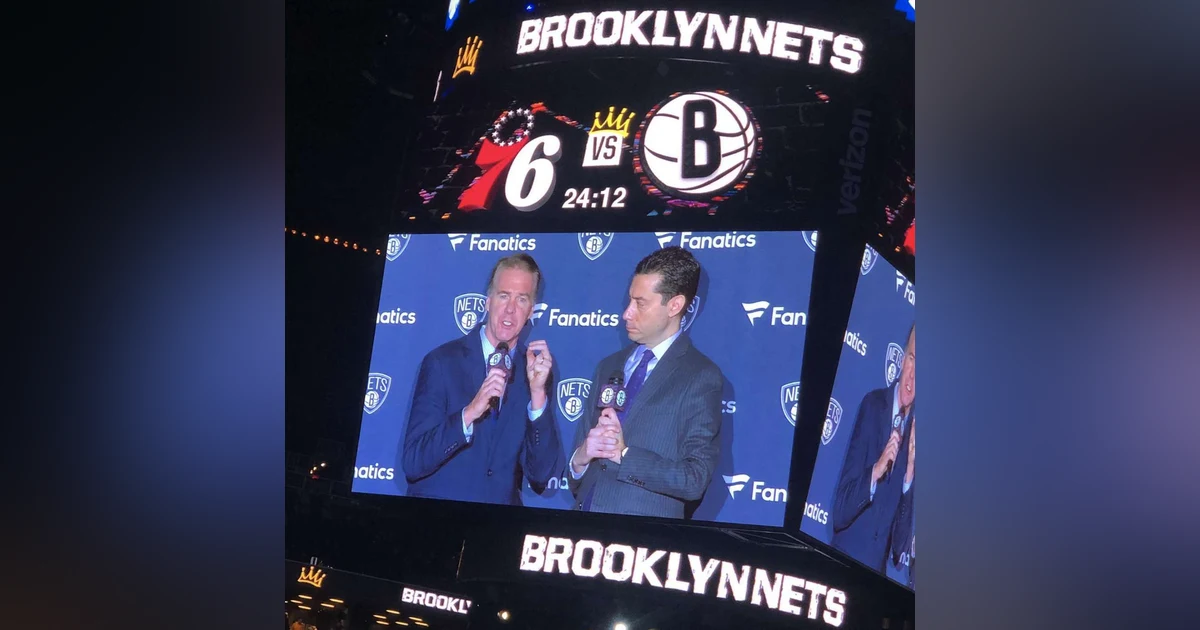
Join us for a dive into the world of sports broadcasting with Tim Capstraw, the esteemed voice of the Brooklyn Nets. In this episode, we unfold the gripping story of Tim's ascent from a college coach to a celebrated NBA color analyst. Discover the determination, grit, and insights gained along his remarkable journey.
Listeners will get an exclusive behind-the-scenes look at the sports broadcasting industry, learning about the challenges and triumphs of this dynamic field. Hear firsthand about Tim's transition from coaching to the commentator's booth and his experiences working with great talents like Mike Breen and Chris Carrino.
Beyond the world of sports, this episode is a trove of wisdom for anyone aspiring to break into broadcasting or seeking motivation in their professional life. Tim shares essential advice on creating opportunities, the power of hard work, and embracing every small step on the road to success.
Tune in for a session filled with invaluable lessons, inspirational stories, and practical tips that transcend sports broadcasting. Whether you're a sports enthusiast, an aspiring broadcaster, or in search of a motivational boost, Tim Capstraw's journey is sure to captivate and inspire. Don't miss this insightful episode of the No Wrong podcast!
To discover more episodes or connect with us:
00:02 - Tim Capstraw's Journey
11:41 - From Player to Coach
17:32 - Reflections on Coaching at Wagner College
25:30 - From Coach to Broadcaster
33:52 - NBA Relationships and Broadcast Opportunities
40:34 - Longevity and Job Responsibilities in Broadcasting
53:54 - Importance of Hard Work and Volunteerism
01:00:00 - Joining the No Wrong Choices Community
0:02 Welcome to no Wrong Choices, the podcast that explores the career journeys of accomplished and inspiring people to uncover secrets of success. I'm Larry Samuels, soon to be joined by the other fellas, tushar Saxena and Larry Shea. For those who might be joining us for the first time and for those who haven't done this yet, please support no Wrong Choices by following us on your podcasting platform of choice and by giving us a five star rating. We also encourage you to join the conversation by connecting with us on LinkedIn, facebook, instagram, youtube and X, by searching for no Wrong Choices or by visiting our website at NoWrongChoicescom. This episode features the long time voice of Brooklynette's basketball and the lifelong coach, tim Capstra.
0:44 Tushar, you guys work together for years and know each other well. I can't imagine what the stories are about to be in this episode. Why don't you set this up for us? All right. So before I even really got my job over at WFAN, my very, very first job out of college was actually as a grad assistant SID at Wagner College and that is where I met Tim Capstra as the young coach over at Wagner College. So I have known Cap for 30 years and obviously I'm not calling him Tim Capstra, I never call him Tim, I always call him Cap. So I love this guy. He's one of the funniest guys you'll ever meet.
1:26 When I actually moved on to my career, when I moved on from WFAN to my next job at WLAB, actually, I actually had him host a couple of shows with my hosts over there because he was looking for work and he wanted to get some on-air work and I was like, of course, and I knew that he would be successful. This guy is one of the funniest guys you'll ever meet. He's got an unbelievable work ethic and it shows that he has been now for at least two decades. The guy who has been sitting next to one of you know, a man I graduated or who graduated ahead of me over at Forty University, chris Carino, one of the best play-by-play guys in the NBA. He has been his partner for nearly two decades at this point. Yeah, this is exciting because usually a color analyst will be a former player or what have you.
2:10 We know Tim Capstra played when he was younger. We know he played collegiately. I'm hoping he offers some insights into both as a player, as a coach and as a broadcaster. I mean, it's kind of a triple threat here. Right, but he never made the NBA and yet he's been doing color for the NBA for so long now, seemingly decades. So, you know, super excited to talk to him. I know there are people out there who really want to get into this profession and want to know how to do it, and I think Tim's going to lay out the blueprint of how he did it and hopefully you can mimic it or at least take some parts of his story and make them your own, and that's pretty exciting. And it is a very unique journey in that sense, and you just mentioned it a little bit there. Right, shay, is that he went from being a collegiate coach and never really having that professional career afterwards, whether it be even in the pro ranks, either as a coach or even, let's say, overseas.
3:01 He really just made it from a collegiate coach at a small D1 college and then worked his way through the ranks to become one of the best color guys in the NBA. Wow, well, what a journey. That's a great story, and here is Tim Capstraw to tell it. Tim, thank you so much for joining us. Great, great to be here with you guys. Finally, I was able to handle the technology and connect with you. It's great. Okay, cap. So just full disclosure to everybody. I have known Tim Capstraw for probably near I don't know almost 30 years at this point. I actually worked over at Wagner College and got to know him over there when he was the basketball coach over there and I believe at that time he was the youngest basketball coach in the country at a D1 school.
3:43 Oh, when he was over at Wagner College coaching the Seahawks, I've had the honor of knowing this man for a million years. I want to say I'm going to say, you know, a humble brag that I was able to kind of maybe get him into broadcasting, get him started broadcasting. I'll say it as a humble brag, maybe a little bit, but I have been able to, you know, watch my good friend really rise up to the ranks to become one of the best color man in the business. So, cap, thanks again for joining us. So give us a quick like, give us a quick overview of what is Tim Capstraw doing these days. What does Tim Capstraw's life look like in terms of the job? What does it look like Not just as the next color man but overall?
4:25 Well, I have maybe a remember to show I didn't get married to. I was like 40 years old, so I have I still have relatively young children. So I have a daughter who was in college. She's a basketball player and so I spent a lot of time with that. But really what I'm doing right now is getting ready for them for the next season, and that's an NBA season starts on the 25th, 26th of October, and I'm preparing for that and doing you know, doing father things all around. I got a son who's 22,. I got a daughter who's 19. They keep me, but I got a great wife, chelsea. I think you remember her. I do.
5:06 And life is great. But you know I'm busy when I don't have the season. I run basketball camps all summer in Wayne, New Jersey. I run a broadcasting camp in, or I'm part of a broadcasting camp at, Montclair State University. So I'm really busy during that time. And then I have this good window right now where I'm kind of kind of getting it together but at the same time preparing for the season. But I can't lie to you, it's a nice time of the year for me, but I'm ready to get going also. Hey, tim, it's Larry Shea. I want to know. You know, sports seems to be part of your life, since, since you were a kid, you know everything I read about you. You were, you were always an athlete, you were always playing sports. Was it there that the dream kind of started, that you kind of got into, like this, this imagining like, hey, I'm going to be a player, maybe a coach, maybe a broadcaster, or were you not thinking along those lines?
5:57 Oh yeah, I think when you're a young kid you want to be a player. You know you want to be a player. You want to be. I worked at it. I was kind of. I was one of the great, like nine year old athletes in the country. I swear to God I swear to God my passing kick. I crushed Pimpass. I was about six, six feet and about nine and I wasn't that big, but I was much bigger than everybody. I was much more dedicated, I was much more into it. My mother, would, you know, push me to. She wouldn't push me at all, but she went and she was very supportive and I would. I was really good, as it as it, like an eight or nine year old.
6:39 I swear to God, my catcher was this guy named Andy Van Slyke from All Stars right, we play All Stars. Well, the guy who batted third that wanted to be me at the time this is eight now, this is eight and nine years old. Don't get, don't get was a guy named Andy Van Slyke. Now, I don't know if you know him. You're kidding. Andy Van Slyke. He was my catcher, so he ended up being an All Star player. He also married my prom date. There's a lot of things he did and, and, and. I was, I swear to God, at nine, 10,. I was much like Andy. You never seen a video of Andy Reed playing, doing punches and kicking I've never seen this he's a giant.
7:21 But I was massively big. But I was bigger, not like that size bigger, but I was coordinated. I was everything. I'm very good hand to, eye coordination. I was bigger. I wasn't necessarily faster. That's what held me up as an athlete as I got older. But that's everything I ever wanted to do in my life had to do with sports and I was committed to every sport. Now I played basketball and I was a walk on in basketball at Wagner I was a bass. I played baseball but I was recruited there to play football. So I was like a jack of all trades, master of none.
8:02 But in. Utica, new York, is a nine and 10 year old. I was a bass, I was a lot of. I imagine there was a lot of competition in Utica New York. I was on the line. Andy Van Sleik was there and taking my prom date, that's true. So, tip, like when you went to Wagner, like what was your thinking? If you're going to Wagner, are you thinking that I just want to play sports for as long as possible, or are you thinking maybe I've got a shot at something after that? No, I was very much like a Division III II athlete and so I was recruited upstate New York some, but I had an injury my senior year I had my knee operated on and a lot of football was my best sport, but I did not love it.
8:46 I did not love it. But the football coach at Wagner, the assistant coach, was a gentleman named Waldham. I had a two shirt, two Sharno as well, but he was going to bring it up. Yeah, he was an assistant coach. He came up and recruited me. I was not a great student. I had kind of was a like a latchkey kid. My mother worked. I was the youngest of seven but nobody was close to my age and my family, so I kind of didn't. I kind of just got through school. So they tried to get me into this school. That school, Fortunately, Wagner was your pay at that time. Now Wagner is a really good school now, but at that time it was a typical private school that probably needed students and they had a lot more leeway with who they were admitting.
9:31 I was able to get into school and then I was able to turn it around and academically. So I forget what the question is. I tend to talk a long time but Well, the question was like were you good enough? That you were looking towards the pros and it sounds like you were good enough to get into college. Good enough to get into college and not good. There was always a book out one time called Good Enough to Dream. Well, I wasn't good enough to dream, in fact. Here's another thing, though I looked like a very good pitcher when I played baseball. I looked good, I was 6'2", maybe about 200 pounds, looked like the head to set, but I threw slower than anybody. I looked great and threw slow, great form, but you have to understand the mentality of a college baseball player.
10:17 They can hit the heck out of a fastball. So I would play against guys and I would Almost worked the fact that I would even throw slower than and have frustrate guys. It was great. It was got throw a lot of curves, ought to jump, look good, but I used to win more than I should because of that. So, but that was. But I never was good enough to think, wow, I might be able to get drafted in the 20th round or in basketball. I was a walk-on, so I wasn't like there was. No, I was a walk-on for PJ Carlesimo and you know, come on, score 20 career points. I got 980 to a thousand in my career. That's what I am and you know. So I didn't.
10:59 I didn't have to think about those kind of things, but being in playing after college, that that wasn't gonna happen. I was just thrilled to be playing in college who approached you about coaching, or was that always then the the next idea, or what was? What was the career path that you were thinking about going on after college, or was it always? I'll be a coach. Well, no, I didn't know that. I didn't know that I was, I was, I was buckled down as a student. I was doing very well in school as a business major. I had done, I was doing pretty well. But here's the thing I, you know, when I was a kid, my father passed away when I was 11 years old. So coaches were my parents, you know.
11:41 You talk about impacting people like who were the most important. I can tell you, well, gerald Gilberty was my coach in this sport and I love that man, and not an omen, pincero was enough and different people that really were kind of my, my, my heroes, the people I looked up to. And then, when I got to Wagner, walt Hamline was somebody I thought was the greatest guy I'd ever met. And PJ Corlysimo, to me, was a god. I just thought he was the coolest person, although he was really tough. In practice. It was really, it was hard and he was tough. But I just watched how he Communicated with all people all around and I said, man, I really admire him.
12:25 He was always like we go to, like, say, would go to Fordham for a game, he'd know that. He'd know the janitors. You know, he knew how to, how to talk to people. So I watched him, I admired him. There are also a number of really terrific assistant coaches at Wagner. When I was there, it was on Dan Mullin was Dan Mullin, the missus in Florida coach was an assistant coach. The guy named Mike Walsh was there. I miss all these people and I was, you know, 18, 19, 20 years old. These were the people that I looked up to. So it kind of got in my mind that I could possibly be a coach. And when I graduated, pj Corlysimo went from Wagner to Seton Hall.
13:08 The assistant coach at the time, a gentleman named Neil Kennett, got the head coaching job. And then I saw a window to be a coach because I was a senior, all that. Those things were happening and that's why I approached to be a coach. I didn't really I didn't really have it as something that I was going to do. I didn't know how to plan it, but I was really thrilled when it, when it all came about, that I got the opportunity. So, tim, for our listeners who aren't sports fans, just a little bit of depth. Pj Corlysimo can you just give us, like the the 32nd or 15 description, the 52nd Description of who he is? Yes, well, he was a coach at Wagner. There's a kind of a Went to Seton Hall for a number of years.
13:48 He took him to the championship game and yet NCAA tournament and he also. Then he went to the pros and he coached in Portland. He coached in Golden State. He's kind of famously. If for people that might remember this and not know, ask about famously infamous. Yes, and famously infamous because let's try all spree. Well, choked him at oh, that's right. It remember. So he said that, right, oh yeah, remember that guy got choked. Well, that was a guy who coached me in college. So a number of players would say I can't believe it took somebody that long. Great mentor though. They also said that he was the greatest guy they've ever met.
14:29 Also, you know what I mean? There was a lot of it was very it was. It was interesting how people people view it, but that's that's kind of when. Oh then he's Gentleman who's become a very good broadcaster Coach. You know, it's very popular, well-known guy and and in New York's in sports circles. So that's that's who, pete PJ so. So let's paint this, this picture then, tim, because I think it's important to get a clear picture of like what your career path was. Here You're literally going from From graduating College to, you know, at the end of the bench or what have you and this is in baseball, I assume and then you get the baseball job. Is that right? Basketball it, basketball first.
15:10 Yeah, basketball first. Yeah, it was a coach for a couple years at Wagner and and what happened was before the season, I think the baseball coach resigned yesterday. They did it resigned and there was an opening right and they said to me Uh, kind of you know, could you? Could you do us a not do us a favor? But we, you know, would you consider being the coach? And I thought to myself, well, that might, might, be a good opportunity. I didn't. I wasn't. I wanted to be a basketball coach, there's no doubt about it, but I thought it could show that I had leadership ability, I could do a solid job but be organized, all those kind of things, and it might help me down the line in my coaching career. And, as it turned out, it and that's exactly what it did, right.
15:52 So let's get this straight You're an early bloomer. At the age of eight or nine, you're the king, right, and then you're you're About yeah, exactly, and then coaching. You go right from player to coach and you're ahead of your time again. So you know you're in the right place, right time and you're you're killing it. You're an early bloomer. It sounds like. You know like same thing about us. When I got to 1415, 16, everybody caught up to me sports wise, not Dramatically, I was still pretty good. But same thing, coaching, really good, good young coach.
16:34 He's turned it around. And then he stayed too long at Wagner I didn't go well, yeah, so and that's kind of there's a, there's a pattern for me here. I love it. That's great. What was your best moment? What was your best moment over at Wagner best moment Maybe beating Miami down in Miami. I just remember how the players were so excited. You know you know, we went down there. It's, you know it's called when they pick on the teams like the Wagner's of the world, when Syracuse, they give you money to go there. So if you got, say you got, your program gets $30,000, but you go there and then you win, that's, that's unbelievable, right, that's, that's, that's, that's, that's great stuff and really that the lowest point is when I'm not sure if you were at Wagner at the time when we played Ryder in the championship game to go to the NCAA tournament and I lost at the buzzer and I had always wanted to I was there.
17:31 Yes, I was there at that time. Yes, yes, and it was heartbreaking and I always wanted to be on Mike and the Mad Dog. You know I always wanted to be on their show. I listen to that every day. Such a big deal, I didn't know. Then the next day I become a topic of conversation because Mad Dog is going crazy on me, because you know, this might be complicated to people. But I had a strategy at the end of the game where I was pressuring the ball on the in-balance pass, the opponent called time out. I said, well, you know something, they might throw it over the top. I'm not gonna do that. So then I ended up taking a kid named Brendan Kenny off the ball, put him in the back and they were able to score the basket not easily but pretty easy and I got destroyed on the radio.
18:19 So all this time I wanted to be on Mike and the Mad Dog and here it turns out I'm getting destroyed by Mad Dog. So there was a I guess it's a highlight too in my own sick mind. But the highlights, you know a few of the good wins when you'd win on the road. We beat Rutgers once on the road, beat Miami. Good kind, nothing like winning on the road. In your conference also. It's a good feeling, but I also had some a lot of down times too, too. She know that. Of course, of course. That's why I'm a broadcaster. There's a reason why I'm a broadcaster. When did you so? Why was it that you? Why was it that you officially got the job over at Wagner? What was it that? What was that one quality that Walt saw in you Cause I think Walt was probably the AD at that time, or Walt Hamline was the AD at the time.
19:06 Yeah, what was? that quality he saw in you. To me to say, to say, Cap, you're the guy. Honestly, I was a good student athlete. You know the time at school I was good, I had good grades, I played a multiple sports and I think I was, you know, a good kid. That was a coach. And then I, like I said, the baseball job I did a good job with. Then I went to Sienna College and Sienna. So I went to Sienna for four years and we were terrific and we had a head coach there that Walt Hamline knew named Mike Dean. I was a good recruiter. I was a very good recruiter. We went to the NCAA tournament.
19:46 We beat Stanford. It was 1989 when people didn't do that, when 14 seats never beat a three. How do we ever did that? And then the job opened up and that's why I would not have applied or had an opportunity to coach anywhere else. I was 29 years old at the time. But they had known me well, they trusted me well, they knew I was a good recruiter, could figure out coaching, whatever, and that's kind of how it all evolved. All right. So Cap and I keep talking, keep throwing out this name Walt Hamline. Walt Hamline for many years was the head coach over at Wagner College. He, as Cap had mentioned, he was an assistant who eventually became the head coach and was also then named the athletic director.
20:33 If, for those of you kind of out there, maybe you can liken it to like a Barry Alvarez over at Wisconsin, he was the head football coach with Wisconsin and then became the head football coach and was the AD as well. Walt was just one of these over-the-top personalities Great guy, one of the best people to know, but also a no-nonsense type of guy. He could read people right away and if he put his trust in you, that really meant something. And he ran a really. He ran a loose ship and at the same time a very tight ship, One of the best places they ever worked, and it was great to be a young kid working there as well under his auspices. Yeah yeah, no, he was great. He was great. So much of my everything. You know.
21:14 He gave me all my opportunities. You know he got me to see. He recruited me to college there. He got me there. He's probably the guy who asked me to be a bad baseball coach. He hired me back as the head coach and then when I my team again as I started to fizzle, things weren't going that well. That had fizzled. Here's the pattern again, I was pretty good, my first year turning around. Hold on before we get to your fizzling out period. Hold on a second. I don't want to get to that too quickly, but you're 29,. You said I mean, how hard was it for you to get players to get in line and do what you needed to do? I mean, there's not much of an age difference.
21:54 I was tough, I'll be honest, and I was serious. Let me tell you he was tough I was tough. I will say this you know, I never send myself. You know, I think of myself, as you know, when I was working hard and I was glad I did a pretty good job. But I was not. I'm in the right spot right now. I don't believe that I'm a great basketball coach. If I look back at you know, and I think about the amount of kids that came through the program that I made go to class every day, I made go to study hall every night, I'm saying to myself you know something I'm proud of that you know, because I probably got in fact we've had reunions or I'm saying I can't believe I got that kid a degree.
22:37 You know what I mean. And they're doing very well now, you know, and they're doing well. So that's kind of a good feeling. But when I was 29, I knew enough and it was almost to a fault, because that's a very good, interesting question I was really distant and kind of distant, you know, friendly but not too familiar. And then I was mean during, like I had a mean streak and I remember coaching is so different now when in the 90s, early 90s that time 80s, 90s everybody was a little bit like Bobby Knight. Bobby Knight was tough. You didn't feel like you were coaching unless you were swearing in the gym Everybody talks about well, it's the good old days.
23:23 I don't think that's the good old days. I love the way coaches coach now. I love the calm demeanor on the sidelines. I love the way they communicate to people and, unfortunately, the players that I coach, because I was young and I was distant, I was stern and all this other stuff. I don't know that they ever really they didn't know me that well. You know what I mean Like and I regret that part of it and I'm really glad that coaches now are very personable and that gets you in trouble too. That can get you a little, but they're always texting, they're communicating, the door's always open. I had to have a professional distance and but if I did it again it's one of my regrets I would not.
24:06 I would be. The players would know me better if I ever coached again. How does like when you look back at that time? I know for me, when I look back at my journey, I learned something from every experience, whether I did something right or I did something wrong and then I use it later in life when you look at how you handle yourself and handle things now. What did you learn from that experience? That's a great question it's. I learned it so much. If I look back, I learned one thing that the harder you work, the luckier you get. I remember taking over the Wagner job and I would. We used to have rotary phones and I would have to put tape on my fingers because I would dial.
24:52 That's how many phone calls I would make recruiting during the day. Damn. And I would just call because they couldn't monitor our calls and we didn't have great budgets but I could call anywhere. So for about four or five, well then I guess you got a push button eventually. I can't remember, but I remember that and I remember how hard I worked and I worked so hard that the harder you worked, the luckier you get I ended up having this is a time when there was, you know, wars were going on in Yugoslavia, right? So I ended up getting a phone call from a young man saying that listen, I'm a basketball player.
25:36 I have a few guys from Yugoslavia that would want to come possibly to school. Now, nobody followed up this phone call but me and or and I end up getting a couple good, really good players. They helped us become very good. I'm really good, but good, and I remember that wouldn't have happened later in my time because I don't think I worked as hard the last first five years I was going and that second year five, I don't know. I don't think I worked as hard. I think when you're a coach, you've got to be so, or taking over any business I got to take on. You can't figure yourself, like I say this to young people work-life balance.
26:19 Now that isn't. You're not looking for that in the beginning of a job. You can't get that. You go crazy. So eventually, some day you can have that, but you can't expect that early in a job. So I did a very I got lucky then and I started cruising and you know probably, you know, I don't know, I didn't hang out, I didn't not work at all, but I didn't work as hard. So that's really the lesson I learned there and you know I'll never. You know you live and learn. You know you live and learn. What came after Wagner cap Fired, fired, I got fired. Let's talk about the fizzle.
27:00 Where was the fizzle? There was a fizzle and then a plop. It was a fizzle. Remember that Plop, plop or whatever that was, I don't know. Plop, plop, fizz, fizz or something like that. Yeah, it was that commercial. Yeah, it's like 90 years old Elkiseltzer. That's right. That's right, I was in. I'm the Elkiseltzer guy. This has never come up. This is a very strange yeah, but I so first of all walled him out again. I think at the end he's well. I got actually probably an extra year or so to try to turn it around and different things and like that, trying to get the and I've been up being I was, you know, 10 and 17 and I try to convince him that you know, listen, and we play these three or four games where you know we're supposed to lose.
27:45 You know like they're like. So if I didn't have to play these games, you know, but he wanted me to win is probably more than I did it. You know he was great, I don't so he, you know I lost my job, it was totally fair. And then I think this is when maybe I can forgive us. I thought I had a tough couple years. But what happened when I was coaching my last couple years? That people would ask me to be on TV shows for the NCAA tournament and also I should say that I would speak at weekly luncheons all the time in New York City. If people think I was kind of funny, kind of entertaining, they said, you know, some days you should be on TV.
28:30 Then I started doing some TV stuff while I was still coaching. So I got a little bit of experience, but I wasn't a big name. I was still the coach at Waggon that isn't coming from UCLA or Notre Dame and immediately go to ESPN. So I had to grind it, man. I had a couple of, two, three years where I would just go out to a friend, said they're opening up a basketball facility out in Long Island, out of New Jersey. So I drive an hour a day and this gentleman named Jim Fox would allow me to teach kids one-on-one basketball training, different things like that, and I would do that every afternoon but during the day I got my work ethic back. I didn't lose it, but I learned what made me successful when I was a coach and that was being incredibly committed.
29:18 So I would practice broadcasting every single day. So if I got an opportunity, people say, oh, what a natural he is. Well, nobody's a natural. I prepared every day. I learned my lesson from coaching and cooling out a little bit, and I would watch games, I would study them, I would understand. After a play happened, say why it happened. Beasts of Sink. I bought a teleprompter, a huge, big wooden teleprompter I would stand in front of a video. Now I try to tell kids this now because they can just do it on their phone. But you know I had to have the tripod and all that so I would work in it every day and every night.
29:59 I would go to Long Island and teach kids, and that took me a few years and I got my foot in the door doing a few games for the Northeast Conference in the Atlantic 10. And then I was able to catch a break here or there. So this is amazing, I mean we always talk about. With any career, you have to go to the wood shed and you have to practice your scales if you're a musician or, in your case, get in front of a camera and actually do it. I'm thrilled that you're bringing that to the table here, because I know that's what people need to do out there is just keep getting those reps in. Is that the best advice you could give as far as, like, getting your chops and making sure that you're comfortable in front of the camera?
30:42 Well, and you still aren't. You know it still takes time, and then you're still doing it. You're practicing, but you're practicing. You're not afraid to work, waiting for your opportunity. You know a lot of time you got to be willing to do that. And broadcasting is funny. I used to spray this quote from Miles Davis, the great jazz musician. It says it takes a long time to play like yourself. Well, it takes a long time to broadcast like yourself. And you know now I'm comfortable, but it takes a while and I'm not even great. My on camera I can get a little. You're supposed to get nervous. You know you're supposed to be there, but this is kind of all these things.
31:22 Even I teach in a broadcast broadcasting camp. But the lesson learned is you know like you want to be ready for your opportunity and you get lucky when you're working incredibly hard. Good things will happen then. But life does work in slow motion too and you can't you put. You just got to be ready and you got to, and you never know how lucky you could be. And I'll go back to I'm. So I'm training kids on one island every night and I hear I will be a whole. There happens to be one guy bringing his kid there every week. That I know because he's a kind of a very well known broadcaster.
32:04 At the time he was on. I miss him the morning he was doing the next it was Mike Breen. So Mike Breen, who does he's done 17 championships of the NBA now has his child in the, in the camp or in the clinics at night and I say, mike, the job opened at the nets. Nobody knows me there. This other gentleman, great guy, and Jack Armstrong, told, told, told me about the job. You think they would ever have a chance. So everybody respected Mike Breen. So again I was able to get my foot in the door with the, with the New Jersey Nets, because of all the time I was going out to Long Island teaching kids.
32:47 So again, working hard, hustling with the preparation for the broadcasting. I was ready for it. I was not ready and I got. I wasn't great at it, but I was better than I would have been if I had just gone right into it, which is why a lot of great athletes, when they do go into broadcasting, sometimes aren't great, right, they're not great because they take it for granted. They were. They just a lot of. But so many of the guys that go to the studio because they bet on camera so often that it's not that big a deal. But to broadcast as an analyst for a game, I think you really got to work at it.
33:30 Some guys are natural, you know. You know different football guys are natural, but but it's something that you really you want to be ready for, you want to practice and that's what really benefited me. I also imagine you have to do a tremendous amount of homework as well to be prepared for each one of those different games. What's you know game plans and philosophies are likely to come out. So, Tim, you talked to Mike Breen, you established that relationship. How does he get you in? Like, what is that big break? What's that next step? He recommended me and Chris Carino at the time, who's kind of my guy I've worked with for 21 years right now is kind of not only a best broadcaster I know, a best person, but kind of a hero of mine because he's overcome form of muscular dystrophy and it doesn't stop him from doing anything.
34:24 The guy's amazing. But I had met him. I did not know him, he did not know me. Mike Breen kind of said, hey, listen, give him a talk to him a little bit. He goes. He doesn't know anything about the NBA right now but he's really fun to hang out with, you know, and like that's a good time while he's learning how to you know, learn it, learn in the league, you know, and and that's kind of how it happened. Now I had three weeks to do a game and I had in two weeks I had to meet with a little Amarillo who was a legendary. He was the president of both the devils and the nets at the time and I had not only prepared for broadcasting but prepared for interviews and I was.
35:10 So he's very intimidating guys kind of guy Nobody's able to. You know, everybody had never cracks us, never cracks a smile. He was a straight that guy. that guy was tough, that guy was tough or intimidating, right, and so nobody could have facial hair. He was, he was intimidating, he was tough. I remember sweating out and sweating bullets going into like the interview with him and I think he liked he had a number of couple of NBA guys that were like asking for a lot of money and I was an emphasis I would take if they'd pay me anything. I wish I had done it for volunteer, you know like. So I walk in there and it's kind of happening, you know like I see a picture of him because he was the AD at Providence and he was there in his picture of PJ.
35:59 Carlysmo was in a picture and Bill Raftery, rick Pantana, saw that something happened with the picture and then he goes. You know, I just talked to him a couple of minutes and he said I, you basketball guys are all full of crap. You'll be great, and that was like my interview. I was like holy cow. I sweated out for three weeks for that, you know, but I thought he was great and I got my foot in the door. I tried to, you know, get better all the time at it. Chris Carino is is, you know, was every is everything to me as far as just the way. He is a play by play guy, but just as a person. So it's been a wonderful, wonderful ride I've had with the next.
36:40 So Cap, I mean, I asked Chris, I asked Chris. And full disclosure here too. Chris, carino, mike Breen, their Fordham guys, that's the whole connection. That's why I got in here. So again, two shots. Just like the old days you got to, you got to step in and help me out. That's exact. That's how the connection was made. Yeah, exactly so. I also, obviously I've said before I went to Fordham as well. I happened to know both Mike and Chris. I have actually asked Chris Carino this before that you know early on and this is probably not a secret to a lot of NBA fans out there, the, the, the, the now now Brooklyn Nets, then New Jersey Nets, have been a franchise that weren't always that great and in some senses they were kind of considered like, let's say, a second tier organization in this area, in the New York, new Jersey area.
37:27 Therefore, like you know, they're a big time, they're a big time, they're in a big time media market, but a small time team. And I always used to ask him hey, is it easier to broadcast for a team like that that doesn't have a lot of expectation? And you know he would hedge it a haul on that and he would never. He would never be like, yes, it's so much easier. He would never say that. But I I'd almost have to think in some ways it has to be a little bit easier, because you know far beyond for me to say that you would have a little bit more grace in terms of the learning curve, so to speak. Am I right? I don't disagree with that. I don't think. I think if I think you know, I think there's some truth to that that I probably was able to make more mistakes, kind of figure it out a little bit more under the radar.
38:17 You know the Knicks are there, were a bigger deal, nets have had some windows where they're, they're pretty impressive and you know like a lot of stories on the Nets and Brooklyn Nets and New Jersey Nets have runs here and there, but the Knicks have been there for you know forever, you know in generations. There's a Knick Town. There's a Knick Town. It's a Knick Town, so I guess you know. I guess, yeah, if I was a Knick announcer, you probably wouldn't have as much I probably be, you wouldn't have been able to develop. But I also think that because we're a little bit under the radar, maybe at for a period of time or whatever, I think you're able to be more again, be more yourself, be more creative, be so.
39:04 I think the people, the diehard fans and the decent amount of fans that listen to our games, that know our work, really, really appreciate it. And you know people say that about the Nets. You know, even now the team has been up and down. But when you look at the Nets Broadcasting team whether it be the yes Network with Ian Eagle, who is unbelievable, just the best and best guy in everything, ryan Rucco, national Broadcaster, great Sarah Kustak, richard Jefferson, all these guys, in fact, they're so, they're so national now those guys that I'll be doing a decent amount of yes Games on TV for the two, which is a nice thing for me, but that's only because it's only because they're so good.
39:49 So you know. So you know that's a legitimate point that I was probably. Also, the Nets are a little bit more. I think guys worry a little bit more about how you say certain things, although you got to constantly be smart about things these days. So good question, good observation guys. Yeah, as you say that you have to be a little bit more careful these days, etc. Etc. Like what's the dynamic between a Color analyst and the players? Like do you develop a relationship with those guys when you're covering them?
40:31 Like what is that dynamic? I don't that much, you know. I don't like hang on, I'll go ask some questions and communicate with them, but I don't really know them. Know them that well, I haven't. It hasn't. Just Again, I like the professional distance. I don't think they even they're very Like these net players now, or just in general. For the most part really terrific. I just don't want to like Say they're in the elevator with me, like they don't need to talk to me too. You know what I mean. Wow, you know what I mean. Like hey, how you doing, yeah, yeah, you did great tonight. No, they don't want to hear that guy.
41:11 Give me a what's up, I go what's up. You know, like that's it. You know top, and there's some of that. I thought guys that have been around a while, you get to know. Brookalopiz was there a long time, joe Harris is a long time, jason kid was, surprisingly, you know, I got to know it's a. Guys get older. Yeah, almost feel like some of the older players almost feel more of a connection With some of the older people that work in the on the teams. Then they do some of the workies at times. So there's, there's a little bit of that connection, but I would say that would be not a big part of my job connecting on them on a personal level. Tim, I think one of the things that you're known for is your longevity.
41:54 You know that you've been doing this job, and doing it well, for a long time and I just I wonder you know you talked about always working on your craft and getting better. You talked about you know a little bit of fear as you, as you step into that arena and you're about to do your job, and how you can use that as fuel. What would you say is the key to your longevity in this profession? Because guys don't last and you have, so you're doing something right. Thank you. I'm gonna sort of brag right now, because that's I can't help myself. I've done 1814 games in a row. Oh my good Wow. Oh, I haven't missed a day of work. You know, I haven't missed a day of work.
42:37 He's done 1800 days in a row something. That's right, that is. That I believe is good, that I believe is called an insult. Good point. Maybe now it's something different. Now, um, I, I, you're right, I, first of all. I have you couldn't meet a person that has more gratitude than I have. As far as this job, I am the luckiest guy. I, first of all. If you listen to the broadcast now, I know I hope you do, or people out there People are gonna say, my goodness, chris Carino does all the work.
43:24 Another guy just tells a joke every few minutes. He's just like oh, my shot. I could do that. It's not that it's not that far-fetched, you know like it's not, it is true. And in radio the play-by-play guy has to describe everything that's going on and you can't have two people talking at the same time. So on radio is he's painting the picture, just so I tell the people what exactly how this works. The play-by-play gentlemen, Chris Carino, tells everybody what is happening. He's describing. If you had your eyes closed he could tell you everything that's going on, that not just, not just where the ball is if they scored, but the direction, the angle, the color, the uniforms and such a beautiful rhythm that you couldn't believe.
44:16 He says what happens and then I Say, but not every moment, not every time, not all the time. I say why something happens. He says what ball goes in here, but I'm bad, basket good and I'll say terrific ball movement, excellent jobs. No, he's back into play-by-play. It's a real rhythm and it's a real dance that you've got to be able to do with a guy you're broadcasting with. And I think that I know Chris makes me better all the time. I think, because we've worked so often, we know what each other's thinking and it's become a really, really, really terrific, terrific relationship and you can tell and and you can even notice this in broadcasting you can tell if guys really like each other.
45:07 You know, like Me and him are close people, like we're friends, we are we, and jump out like that were really best friends and At least on my standpoint, maybe he may even might think differently. The um, but the um you can tell in the broadcast. And so if people are listening, the play-by-play guys on a radio, what happens, what, what say on TV? It's similar. The play-by-play guy doesn't have to do nearly as much description because you can see it Right. So that's and then that's, and then maybe the analysts can talk a little bit longer when you're watching sporting events. So that gives you a little feel for what exactly goes on.
45:48 I knew Chris Carino back in college. Chris Carino was a senior at at 40 University when I was a sophomore and I started in radio back then and you could see just back then that Chris Carino was destined to be a great play-by-play guy because he took it seriously. He was crazy serious about it back then and he made all of us serious about being in radio as well. His attitude and his and his, his concentration for what he wanted to be, his profession, it Shown through every single time he broadcast a game. All right, so cap, so cap. Tell us about your camps. Well, how long you've been doing the camps and what and which do you enjoy doing more?
46:30 The new, the broadcasting camp? Or the? Or the or the coaching camp? And which do you get more students to? Oh, now, basketball camp is, basketball camp is my, is mine. It's seven weeks in the summer and Wayne, new Jersey, at the Wayne PAL. It's great, I love it. It's hard, it's real work and I love it and it's kind of gotten a little bit younger. You know, kids when they get to be eighth, ninth grade Want to go to these other camps and move on and we keep it. We teach pretty good, bad, we teach well, but we make sure the kids play a lot of play and they have fun playing. Kids Don't coach me knew used to go to the playgrounds where kids you could pick up and play the kids don't kids kids Get.
47:15 I want to get an opportunity now to play Sports when there isn't necessarily there might be a guy organizing in a little bit, making sure it's organized, and maybe they're a prepping, but they want to make sure there's no real coach there, maybe a guy saying move the ball, move the ball, and no real scoreboard and no real parents in the crowd. So they don't get to do that as much so. But in camp they get to do that a lot and I think that's a beautiful feeling for them Because when they don't they kind of missed out a lot on going to the playground and who's gonna get winners and all that kind of stuff when they play. So camp is great. Basketball broadcasting is only one week and I do it with a terrific broadcaster in a Dave Popkin, craig de Mico, oh my god, I know pop as well, my god.
48:06 Yeah, dave Popkin is great. He's another just terrific, all-around broadcaster, beautiful man, great. Dave sorority is involved. So we did this over a month it's only one week which is intense and it's good, because I'm not. You know, when you teach people, you teach yourself the best. You know, like I'm always telling kids hey, you know, you're nervous, let's smile on camera. Well, so I'm sort of smile. I remember to smile on camera when I'm broadcasting. I think of what I invented, something called the 2020 rule, where you speak. Whenever you're on camera or into a you know, or you're basically broadcasting or doing a speech, you speak 20% louder and 20% slower.
48:53 So the 2020 rule. So I always have these things in my mind that because I have taught, I am Better, I've been able to teach myself. So it helps me when I'm on camera, because I don't do all that much stuff on camera, so I gotta be sharp when I do. We do stuff in arena, we're on a big scoreboard, but, but for the most part, I'm reminded that that week of teaching young people broadcasting actually teaches myself. Can I ask if you have a slot for two shower? I think you could use some of this instruction. Hey 2020 sounds great for two in the corner.
49:37 In the corner is the spot for two shower. So, cap, I'm assuming that you tell these, these nine, these eight, these nine and ten year olds About your, your days on the playground, that you should. They truly are speaking to one of the legendary athletes of all time. I'm great to see. Olympics for eight year olds. I would have been unbelievable, pete. I think today J same thing. You know my name, my name, my name Timmy. Everybody calls it. If you should call me Timmy, that peaks at AJ. You know old guys name Timmy, so my name Fizzles along with everything Great best moment thus far.
50:25 Best moment thus far as play-by-play guy Sorry me as color guy for the Nets. Toronto, toronto game seven, where the nets and nets beat Toronto in a game seven because I didn't say anything. It's amazing when you're a broadcaster and Highlight is that you didn't say something. Let me give you the background in this. It's the last play of the game, toronto's taking the ball out of the side, out of bounds, nets guys. Game seven. First of all, there's a lot of tension between Toronto, so there's that was like pro wrestling when we went to the Serena, people are throwing. It was wild, but anyways, it's game seven.
51:07 But we're, we was this this is like 2000 and it was. It was. It was All Pearson garnets. I don't know if that's 15. That's way back. Yeah, 16, 17. I can't. I don't know what to add for breakfast. You're telling me what the? Let me tell you what happened. So you, the game is that it's the last play of the game, and what happens when you sit on the front row is that you can be blocked from what happened by the coach. The coach can get in your way and if the TV monitor is out, like it happened to be out, chris Carino could not see what happened. So Kyle Lowry goes down into the lane and he shoots.
51:50 He knew the shot was blocked, but he didn't know who it was and he kept saying rejected, rejected, rejected. And instead of talking, I wrote Pierce quick on a piece of paper and he saw me write the name and he was able to go and Paul Pierce was able to do, able to get the block to secure the victory. So it's amazing that I've had a 21-year career and my highlight is not talking one time. Wow. But, it does go to the point of being a teammate and being teamwork and working together and you can't have your ego get in the way.
52:37 And yes me, how I've survived, I think gratitude, I think understand that. Chris is, if there's Batman and Robin, he's Batman, he's the main guy and you kind of understand that and you appreciate everything that you've got and that's kind of how I've always stuck around this long. I hope it keeps going. Wow, Tim, that's been incredible advice for all broadcasters and any young broadcaster. Before we break, one last question, just to go back to the coaching, which is a young person trying to break into that field.
53:22 Do you have any advice for them? Yeah, don't be afraid to. I don't wear any field and I try to tell your own children this. Right, your kids won't ever listen. Other kids listen, other people do. But if you know something that you want to do, don't be afraid to say, well, we don't have a job for you, but be surprised who will let you volunteer If you can volunteer somewhere. Some people, everybody's waiting for internships. I understand that and that's a great way to get to life. When you're in college, say you're out of college but you want to be a coach, I think a lot of people would say, well, we don't have a position.
54:02 If you know, something is out there a profession, a job or whatever. This six months or eight months or whatever you say, I would love to volunteer for you. Be the greatest investment you could ever make and you then might be doing the dream job or the job that you know that you would love. You've got to be willing to sacrifice money and even sell yourself to people that you would do the job for nothing. And then, when you're at a job, if you get your foot in the door and anything, no job is too small. Be the best in the world at getting coffee for people. Say thank you to everybody, be the first, be early, stay late All those kind of things you've heard your whole life.
54:49 But don't be afraid. If it's something you're dreaming about, sometimes you can wait for that opportunity, but sometimes you've got to go make your opportunity by saying you want to volunteer. Now, if it's broadcasting, you can make your. Nowadays you can make yourself like you guys Look at a tremendous podcast. You can have an exceptional podcast. You can practice, you can be doing on camera reporting from your college. Or be a social media person for your business, volunteer to be that person for the business that you're working in right now. So there's a lot of different things, but I think the thing that I've come back to is when I didn't work hard and I wasn't hustling good things.
55:36 It burnt me and I'm never going to let that happen again. That's incredible, incredible advice. Well, tim, thank you for volunteering your time to us today. No, it's not going to get paid. I don't get paid. We'll talk about that afterwards. The check is in the mail. Oh yeah, I'm talking Don't cash it for a few years. Exactly, it'll be there next week. Ok, I'll be checking, tim. Thank you so much. Yes, great time. Thank you very much. This is your life Take care. Well, that was, once again, a great conversation set up by Tushar. So, first off, thank you for making that introduction tea and building upon that.
56:19 There are so many lessons in that, and what are the big ones? Just show up, work hard, be available. I mean. Just what an inspiring, entertaining and animated conversation. Tushar, what are your thoughts? there. The other lesson to take from that is know as many guys who went to Fordham as possible, because they're going to help you get a job. Obviously right, whether it be Mike Breen, who is one of the great play by play voices of a generation, chris Carino, who is one of the great play by play guys in the NBA, or, of course, me, just a solid all around mench.
57:00 Definitely you. Of course, cap's talent is pretty much out there for everyone to see. He's one of these hard working guys who really made it on his own and it's kind of cliche to say that sometimes, but no, he really worked hard to become as good as he is and he put as much effort in becoming a let's just say he worked at it like an athlete. He really worked out to become a really great broadcast, as he said, making sure he made himself work hard to become comfortable in front of a camera, to read off a teleprompter. These are real skills you have to learn and he did it day in and day out and rediscovered that vigor, that zest for wanting to learn again, to coach again and coach himself in that sense, to become better and to become what he's become today and the longtime color guy for the Nets.
57:54 Yeah, when he worked the hardest is when he felt the luckiest right. I love how he said that. And you hit the nail on the head, tee, it doesn't just happen by accident. He's setting up the tripod, he's reading off a teleprompter, he's viewing himself reading, reading copy and making sure that it's natural and that he's comfortable and that he has the confidence to do it. And he said he gets a little scared. I love that, because everybody gets a little scared. You name whoever it is on TV, whether it be an actor or a broadcaster or what have you. You're going to get a little bit of anxiety associated with whatever you're doing and you have to use that as fuel. And you can tell the way Tim Kabstra talks that not only does he use it as fuel, he thrives on it and he considers himself like one of the luckiest guys on the face of the planet.
58:41 You can hear it in his voice that he considers himself lucky to go to the NBA arena every day and broadcast a sport that he loves and it just comes through. But he worked hard for it and he showed us, he told us exactly how he got there. So many great lessons to take from this podcast. Absolutely, and it's interesting when you mention the fear, because it doesn't just apply to being a broadcaster Somebody who was a business person for a long time. If I had a big presentation or a big meeting or I was presenting in front of a large audience, I got very excited and nervous and everything else and I would up my game. It shows that you care and it shows that it matters and it shows that you're doing the right thing.
59:26 So that was really an interesting point that you hit on. The one thing I'll add in is the volunteer stuff and the fact that he's involved with a school now for broadcasters and he's involved with a basketball camp. This is a guy who clearly enjoyed and loved coaching for the time that he did it and in some way has managed to keep that as a part of his life, which is a testament to who this guy is and his character and just his joy of teaching and giving back. So an incredible conversation. Tim, thank you so much for joining this episode of no Wrong Choices. We also thank you for joining us. If this or another journey story inspired you to think of a friend who could be a great guest, please let us know by sending us a note via the contact page of nowrongchoicescom, as I mentioned off the top.
1:00:18 Please support us by following no Wrong Choices on your favorite podcast and platform, while giving us a five star rating. And then, last but not least, we encourage you to join the no Wrong Choices community by connecting with us on LinkedIn, facebook, instagram threads and X by searching for no Wrong Choices On behalf of Tushar Saxena and Larry Shea. I'm Larry Samuels. Thank you again for joining us and always remember there are no wrong choices on the road to success. We learn from every experience.