From Headlines to Heroes with Comic Book Writer Ethan Sacks


 Apple Podcasts

 Spotify

 Castro

 RSS Feed

 Youtube Music

 YouTube
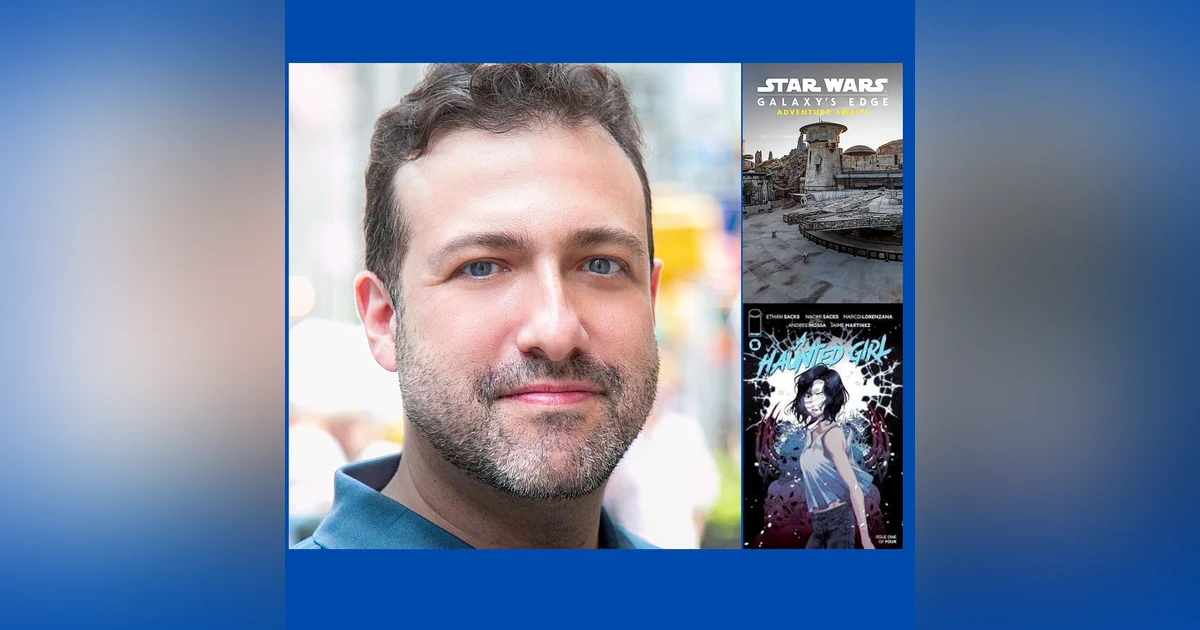
Step into the imaginative world of comic books with our latest episode, where we uncover the transformative tale of Ethan Sacks—from crafting headlines to conjuring heroes. Known for his riveting contributions to some of Marvel's classic heroes and the Star Wars canon, Ethan's evolution from a veteran journalist to a master comic book writer is nothing short of extraordinary.
What You'll Learn:
- Dive deep into the nuanced art of creating comics.
- Gain insight into the delicate dance of negotiating with publishers and keeping storylines consistent in an epic world like Star Wars.
- Discover tried-and-true methods for breaking through writer's block, and understand the crucial roles of marketing and fan interaction in the success of comic book writing.
In this candid conversation, Ethan shares the genesis of "A Haunted Girl," a project close to his heart, born from his daughter's brave fight against depression. This series sheds light on the emotional and healing power of collaboration. Additionally, Ethan provides a candid look at the economics of comic book writing, the benefits of self-publishing, and the industry's shift toward the digital age.
This episode stands as a tribute to the enduring influence of creativity and dedication, illustrating their ability to unlock new and satisfying paths in the dynamic realm of comics. For those embarking on their professional journeys or contemplating a new direction, this episode is packed with strategic advice and motivational anecdotes that will illuminate your way.
To discover more episodes or connect with us:
00:02 - From Journalism to Comic Books
11:30 - Journalism and the Daily News Experience
14:59 - Journalism to Comic Book Writing Transition
27:01 - Comic Book Creation Process and Challenges
31:40 - Building Momentum in the Comic Industry
41:07 - Personal Journey of Writing a Comic
49:48 - Profits, Careers, and Self-Publishing
01:01:55 - Power of Comic Books and Passion
01:06:21 - Journey Stories and Community Engagement
0:02 Hello and welcome to no Wrong Choices, the podcast that explores the career journeys of accomplished people. We showcase these stories to provide insights that are strategic, inspiring and, most of all, entertaining. I'm Larry Samuel, soon to be joined by the other fellows, tushar Saxena and Larry Shea. If you've been enjoying our show or are new to the program, please support no Wrong Choices by following us wherever you're listening right now and by giving us a five-star rating. We also encourage you to connect with us on LinkedIn, facebook, instagram Threads and X, or to send us a note by anoerongchoicescom. This episode features the journalist turned comic book writer, ethan Sax. Ethan has worked on several best-selling series, including Marvel's Old man, hawkeye, star Wars, bounty Hunters and Star Wars Galaxy's Edge.
0:51 He's also deeply involved with an important project called A Haunted Girl that we will certainly dig into Now. I think the intro and the setup for this one is easy for me to choose in terms of my co-hosts. Tushar, as the comic book fanatic on this show and in my life, I think you have to be the person to lead us in. I prefer to go by comic aficionado, if you don't mind. Look, you guys know me. I'm a huge comic book nut. I go out on Wednesdays to buy new books. I've been collecting for, I would say, at least 25 to 30 years at this point.
1:33 So I've been collecting a long time. I've gotten to know how a lot of writers are in terms of their styles, etc. But I've never had the opportunity to really sit down and pick the brain of one, especially one who turned from journalist to comic book writer, which is basically my dream, for God's sakes. My first question to him has to be why did my guidance counselor tell me this could be a thing? So, I'm really looking forward to speaking to Ethan for this reason alone, because obviously we're talking about the creative process here, and this is a man who obviously enjoys writing for a living. Obviously, he was a journalist who turned comic book writer. In many ways, the journey is very similar.
2:15 I'm also a Star Wars nut. A lot of the books he works on are Star Wars in that genre. So he's not really reinventing the wheel so much. He is just making a better mousetrap, which is really, really cool. Larry Samuels, how many of our Wednesday recording sessions have ended with all right, you guys? I gotta go to the comic book store, oh. I gotta go. He's in a hurry. He's got a guy. I gotta go. I got something to do. Oh my God, yeah. So, as the guy who knows nothing about comic books, it was fascinating. The other guy who knows nothing about comic books? Yeah, the other guy. That's right. That's right. It was fun to do the research, though, to figure out like oh my God, like so much goes into this and the creative process, and how difficult it is to bring something like this to life and to choose it as a career path.
2:56 I mean, I'm fascinated to hear what he has to say about getting a paycheck every week or doing freelance work, and how you find your way in this field and how it can happen. So just what goes into it was fascinating to me, and I'm excited to pick Ethan's brain and see if we can get some other people on this path and this road to success via comic books who knew and you know, as the other guy again who knows nothing about comic books. You need to get in. I'm really curious. I'm really curious to get in. Yeah. This is going to be a very educational episode for each of us. I'm very curious to hear what it takes to actually create a comic book, and I'm sure we'll dig into that at some point.
3:38 So with that, here is Ethan Sax. Ethan, thank you so much for joining us. I'm happy to be here. Thanks for the invite. Okay, so Ethan and full disclosure to everybody. I got to know Ethan just a little bit through a mutual friend of ours who actually happens to be a fan of the podcast Gentlemen named Dave Rican. He and I went to college together and you know, dave, through what? Through high school. So my friend Paul, someone else you knew from college, paul Palkonen, who unfortunately passed away a few years ago, he introduced me to Dave. Dave is now a member of our fantasy football league and fortunately I'm the only well he's the only team that's below me in the standings right now.
4:23 So I kind of want to ask you a little bit, because obviously the story of going from journalists to comic books is surprising. But before we get into that, I kind of want to get into a little bit of what you're doing currently, and obviously we just mentioned that you are a comic book writer. So what is what is Ethan Sax working on these days, aside from his series A Haunted Girl Sure? And the projects that I can tell you about. I'm doing an upcoming Star Wars comic book about Django Fett, Boba Fett's father from the prequel trilogy, and I'm trying to, in my head as I'm saying this, remember what has and hasn't been announced yet.
5:06 So there are currently three other comics that I'm working on that have not been announced. So, unfortunately, all I can say is is the Django Fett one. So is are they all Star Wars related or are they other DC related things related? Okay, at least tell us the companies you're working with. Sure One, I can't tell you I'm doing another image comic. I can't say that, I can't say what it is and I'm unfortunately I can't say the others. Okay, All right I love content that's cloaked in secrecy Exactly. Exactly the World Recordist podcast episode. I probably can talk more about other things. So what is this book you're writing?
5:47 I can't talk about that. Can't talk about that. All right, but let's okay, so let's start here then. Was it always going to be comic books Ultimately? Was that your fascination? No, okay, I mean I always loved comic books. It just seemed like you know the kind of job like Kepler, elf or Askernaut, where nobody actually has that job, you know, like if you wanted to be one, how do you even begin? You know, I mean, I know there are such things, there are such things as astronauts, so, but as far as comic book writing, it just didn't even, it was not even on my radar. I knew I always wanted to do writing and my parents raised a fairly pragmatic kid, so I early on zeroed into onto journalism because that seemed like something that I could do.
6:34 You know, in theory. So how did you, how did you act on that? Like? Were you a storyteller as a kid? Were you writing as a kid? Like how did you begin to pursue that? I mean I abroad a lot as a kid, mostly fiction. As I got older, and certainly by college level, I was, you know, in high school I was more into like the science fiction magazine. But I got. I got to really experience newspapers at the school newspaper and university, at McGill in Montreal, and I fell in love with it and that sort of you know. I did internships on my summers off for some local community papers, the kind of papers that they give out in lobbies so that you can curb your dog or read community news, whichever is like more convenient.
7:19 I came out, I taught English and Japan for a year and then after that it was perfect timing. The internet was just sort of taking off and I got hired pretty quickly, first at this startup called Metropy which became City Search, and then within nine months the New York Daily News was was hiring for their website, and this was in October 1996. My first practice, my first trial shift, was such a horror show for me. Like I was an overnight shift, I got out of the 8am. I swore to myself I need to, I need to give this six months and get the hell out of here, you know, just to get the experience of my resume and I ended up staying 20 years.
8:01 Wow, yeah so, but in that 20 years I covered a lot of everything from news, sports and, ultimately, entertainment, and one of the things I covered was comic books, since I was the reporter that actually cared about this stuff, and it was like you know, marvel was having this resurgence in the early 2000s and comic movies a few years later started coming around, and then things like the, eventually, the Walking Dead, game of Thrones I got kind of covered all of that and I don't know how much you want me to go into this now, but that sort of started it. Basically it led to my comic book career, which I can get into later if you want.
8:44 Which we're actually going to talk a little bit. We don't have to wait, we can get to it right now. So so okay. So you spent 20 years at the Daily News and obviously you know I think it's not, it's not a secret that for many newspapers readership is down. It's been down significantly, and you know most newsrooms have started to cull or have started to let go of staff etc. At the at its height, when you were there in 1996 and maybe a little bit further, how many reporters were working over at the Daily News when you were there? So when I was hired, it was about 450 reporters, photographers. Now it's somewhere around 50. Wow, Wow right. And that led to my leaving ultimately journalism, because I was in my low 40s at that point I think it was around 42, 43.
9:34 And every year we were having these layoffs and, like my mentors, were getting laid off and I knew it was one day it was going to be me. The analogy I always used is it was like we were antelope or something in the Serengeti around a watering hole and every once in a while, you know, a crocodile would come up and eat several antelope and we'd scurry but we'd have to come back. That was the watering hole we all lived around and that was what it was like to be in journalism. Like you knew, one day you'd get eaten. I was looking for other jobs. I just couldn't find anything. That either would take me Like there were places I applied for that took people I trained that were like 10 years younger than me, or the other thing that was happening is the jobs I was getting offered were like 25, $30,000 less than what I was making, and I wasn't thinking that much that that was like you know.
10:28 So yeah, and I remember the year before I left, there were like 50 people were laid off within three days and I missed the first day. And then the editor in chief at the time calls me into his office and he's given and I thought for sure, like okay, I'm laid off. And he's 10 minutes into this doom and gloom speech about how these cuts are necessary to keep the daily news functioning and all this kind of stuff. And then it's incumbent on all of us to, like you know, do this extra work or whatever to keep it going. And then I was like I thought you were laying me off. Does that mean I'm not laid off? Yeah, I know, and he offended and he's like no, this is a pep talk, Like the layoffs are happening. two doors down and three floors.
11:10 That's pretty much what I knew is like I have to leave, or I mean I'll leave either way, you know. But yeah, so that was a pep talk. The strangest pep talk you'll ever have. Yeah. You're fired. So you got to work triple as hard. Absolutely Right. Pretty much. That was the tone of the speech Before you move on from the daily news, New York daily news stuff. I mean, what was the heyday of that Like? What was a typical day like there? Because you go from what you're in college and McGill you set up in Montreal and then you come down into how did you get the daily news job and what was that like? Daily, as you like, did you pick your projects? Were? you. Eventually I had a lot of freedom over what, because, like, by the end of my tenure there, I was the movies editor and I did a lot of you know, like the celebrity interviews with directors, actors, things like that.
11:57 I did theme weeks where, like, I flew out to LA, interviewed like the cast of the Avengers, and we have like a different story every day. Probably the highlight for two highlights for me is on that front was like I got to go to New Zealand to cover the Hobbit and I did performance capture with my daughter oh my God, awesome. And Terry, who is the Oscar winning effects guy, was like directing us and you know I would share the photo but you don't want to see me in that light suit with all the you know the dots on it. But it was just a fantastic experience. And then the other thing I'm proudest of was I got to start a little charity initiative where the daily news was sort of the media partner.
12:41 I would find children's charities that sort of were thematically related to like, for example, the Avengers movies. The studio would sort of rent the theater, host a screening, or the Marvel movies rather, and then they'd fly in like one of the actors to surprise the kids. So I had, like Robert Downey Jr twice oh wow, chris Evans, and it was just really a moving to. You know, it was drawing attention to these charities. It was. The actors loved it because they, you know, felt like they were doing something good. The studio loved it because it was like great publicity for them. The newspaper loved it and it was just like it didn't cost anybody except the studio, the rental. You know what I mean. So it was, and then hopefully we raised awareness and maybe some donations for the.
13:24 So, like I was proud of that, we did like seven or eight of those. I actually did one for the Today Show as well when I went to NBC News for a bit. Yeah, so I did a lot of things I loved and I love journalism. I also did a lot of news stories I think were of some importance, like local news stories about scholarship, helping raise money for scholarship, all sorts of things over the 20 years. So I didn't leave necessarily because I was disaffected with the idea of the job, it's just. The reality was just very unstable.
14:06 The ground was unstable beneath my feet and I stumbled into comics. Right, right, I kind of want to stick one. I want to say one more second on journalism, maybe two, but for the moment let me say this did you now, obviously you said when you started there I guess it was in 1996, I was only going to be there for six months put on my resume and get out, and you ended up staying for 20 years? So outside of, let's say and you kind of just made mention of this too outside of, let's say, the charity work that you were able to kind of be a part of and get started on your way, and obviously being there for 20 years means that you moved up the ladder as well in terms of your own importance within the Daily News. Did you feel that, that type of importance of the job as well and I think that was a very, very important story but that the job in and of itself was important?
14:57 Was that what attracted you to stay for 20 years? For sure I mean. So, growing up, my father was a New York Times reader. My mother was a New York Daily News reader, so it was the paper and it was the paper that I first I started with the sports section, but as I got older I read more of it and I am somebody who very much believes in the importance of journalism and certainly we see that a lot now More than ever. Right, yeah, it's a separate topic as to whether or not outlets are doing enough or properly or whatever, but I definitely I also, like, during my 20 years from 2003 to 2005, I actually did a mid-career part-time run at Columbia School of Journalism.
15:44 So I was very, I deeply believe in the importance of it and so, yeah, I mean that was definitely one of the reasons I stayed. At various times I was like the number two person on the website in charge of breaking news and things like that. So I had my moments where I feel like I did that role. So in a comic book theme there's literally an alternate universe where, if the ground wasn't coming out beneath you, you would have stayed in journalism For sure, for sure. I think now I have like one toe dipped in that world. I still work very, very part-time for NBC News Now, mainly doing obituaries, but yeah, so like when I left.
16:33 It's a gig. It's a gig, no, it's a gig. I love it. It's their mini biographies. Yeah. It's weird because I'll write them and then like four, five, six, seven, eight, and it's usually a celebrity or public figure that is, you know, old or has a series of health problems Like I've. You know, when Bob Barker died, the obituary came out and I was like, oh, that looks familiar. And I'd forgotten that I had written it because I, oh jeez, I was like four years. Whoever wrote this was a genius, Absolutely. I never see the good. I critique my own writing. Well, I think any professional does that. No matter what they do, they're going to critique everything.
17:14 So, ethan, as you're working at the Daily News and you're working, the beat that you worked for so long from an entertainment standpoint is that when you started to develop the network, that puts you in a position to cross over. Inadvertently. Yes, I mean, I was not anticipating that, you know I you work long enough on a certain beat and you just get a million contacts, you know, just over time. And actually one of those contacts was this guy, joe Cassata, who became a friend over the years. He was like one of my first big feature stories because it was when the first Spider-Man movie was coming out in 2002, marvel was just emerging from bankruptcy and one of the creative reasons that they were sort of, you know, coming back into the sort of the peak of the industry was these two people.
18:05 The publisher was Bill Jemez and the editor chief at the time was Joe Cassata, who was this hot shot comic book artist who, long story short, had been given this role and really ran with it. And so I become friends with him over the years, and that inadvertently and I can get into that story if you're ready for it. Yes, this is exactly what we're going to go next, that is the show. Yes, okay, so what happened was in 2016 for May the fourth, which is that fake. Yeah, the fourth star with you, absolutely Exactly. May the fourth be with you. So I always would do an online story for the daily news every year on a Star Wars thing, because I'm a nerd.
18:50 And this particular year there was this actor, paul Blake, who played Greedo, the green bounty hunter that is doomed to be killed by Han Solo in the Cantina in the first Star Wars Spoiler alert. Yes, spoiler alert, spoiler alert I haven't seen this movie in more than 50 years. We'll have to edit in a big yeah, so. So I'm old enough, because I'm 50, and I was four years old when the movie originally came out, and I remember seeing it that Han Solo just unceremoniously shoots Greedo under the table and so yeah, there is a spoiler alert, because there are going to be a lot of kids that have no idea what you're talking about. But it's surely afterwards George Lucas decided that's like not really heroic enough, you know, even though it's, it was perfect.
19:39 Perfect to the character Right. So then he has Hans, he has Greedo shoot first, somehow miss and Han Solo shoot in the subsequent edits. So I don't know why, but when I was talking to Paul Blake he was so funny, it was like a standup comedian. It was talking about Greedo's bulging eyes and being myopic and being unable to you know he was talking, you know, just say you just had one line after another. But he did say in the script it says Han shoots alien. So I don't know why it stuck with me and I had this. I just couldn't let it go and I had this idea It'd be funny to see the murder investigation, but framed like Rashomon, like the Kurosawa classic, which is based on a Japanese novel, and for those listeners out there we don't know what I'm talking about.
20:27 It's a very classic movie by Japanese director Kurosawa, who basically it's a murder story in feudal Japan that is told through the accounts of four witnesses and none of them match, the fourth witness being the ghost of the murder. None of the accounts exactly match up and I thought it'd be funny, because these accounts don't match up, to have the murder investigation into it. So then I was at a Mets game shortly thereafter With Joe, who is a big Mets fan and he would frequently take his friends to games, and I was like, hey, I have this idea for a story I cannot get out of my head. I think it's funny. That's the only reason I want to do it. Can I pitch a script to you guys?
21:08 If you don't use it, I mean if you, if you use it, I'll just donate the money to charity or whatever. And I'll be upfront about it, because, because I'm a reporter and you know, and he was like fine, whatever, it was not enthusiastic at all. Right, it was a really whatever dude yeah. And so then I got, I took it seriously and I never in a comic book script, never thought about writing a comic book script, but I'd read so many and I reverse engineered the, the ones I liked, the pacing and the structure and all this kind of stuff. And I had contacts in Lucasfilm publicity, so I somehow use them to get a hold of Pablo Hidalgo, who was one of the people on the story group that sort of is essentially like air traffic controller for the canon, the mythology so and he very much said Greedo has to shoot first.
21:55 That's what, that's what George wanted, kind of thing. So I ended up use putting this all together, putting together a script, sending it by email and not hearing anything for a while, like for months. So I thought, okay, well, he must really have hated it. And then I fly to Japan my, my wife's, japanese, so we were visiting my in-laws. The plane lands back at JFK on September 7th 2016. And I know the date because that is really the date that changed my life. Obviously, right, I turn on my phone and there's an email from from Joe, and the subject line is F Greedo, since this is a family podcast, and so I, before reading the email.
22:37 I was like wow, he really hated it. But the gist of it was F Greedo, you can actually write and I'm angry that I've known you for 20 years and this is like the first like I put this together, kind of thing and I think you could do this for a living and a long story short. He started the ball and he was no longer editor-in-chief at that time, he was chief creative officer, so he was not like directly involved with the comics, but he put me in touch with the then current editor-in-chief, axel Anzo, who also love the script. They started the ball rolling and about in November of that year the Daily News announced, instead of another batch of layoffs, the annual pre-Christmas layoffs.
23:19 They were going to do buyouts. So I've been there 20 years and that was seven months pay. So like, if you're going to do a career change, yeah for sure. The runway is right yeah. So so I applied for the layout for the buyout and they rejected it Because at that time it laid off all the other people that could get the celebrity interviews, and so I was like the last one left, oh geez. So irreplaceable, the one person who's irreplaceable? Well, for now. You're the one who survives the purge right, yeah. So I broke her to deal with them, like I would stay till the end of the year, train up somebody else like help, you know.
24:03 And so like I got my protege ready and he was like mostly ready anyway, and then I left it and I got a part-time gig, first for todaycom and then for eventually, for NBC News, so that to help, because you're essentially a freelancer when you jump into the comic book world and it's not high paying, so you know I've got to keep multiple things going. But yeah, and the rest is sort of history. When you said you reverse engineered writing a comic book script, what were some of the things that you keyed in on and what were some of the key elements that it takes to write a comic book script? Well, for starters, I needed to like look at scripts for some of the comics that I loved and just see how they were put together.
24:46 You know, what were some of the books you loved? Say again. What was some of the books for the? Well, I mean, I love a lot of this stuff from the that are sort of touchstones from the from the 80s, which was my heyday. So, for example, you know Watchman and some of the other. Returns anything to write. Yeah, and then the old alien legions, x-men, days of Future Past is like a big one. You know just a lot of stuff like that. And then you know more recently, in the 90s, a lot of the Vertigo books, and I think what I did was I would find scripts for some of the books that I loved, like Sandman number 50 as an example, and see, okay, well, how was this put together?
25:31 Like, what does it look like? And then matching it to the so that I could know how to write it without looking stupid, because I'd never written one before. So I wanted to know the format, so that was key and like how the art description works. And then I looked at the ones that were paced in a slightly like action comedy, which was the tone of this particular issue, and then also like how it was paced, cause I think that's a big thing, for comics is sort of pacing from page one to page 20, you know, to keep people interested, you know where the page turns are, or things like that. I mean, I know that we're getting into the weeds a little bit, but I think it was like I didn't want to look like a complete amateur when I was handing in that script, even though I was.
26:16 So I wanted to fake it, you know, by at least talking the talk correctly. Gotcha. Patrick, you know I'm a complete amateur. I'll readily admit that. So I'm not a comic book person. But in doing this research and looking into your life, I was actually shocked to learn how many people are involved with bringing a comic book to life, you know. So I guess you're learning this process. Did you have to learn that? I always thought that the person who wrote the comic did all the drawings and the words and the everything. And it turns out there's a creator, a colorist, a letterer. I mean, just tell her people who listening, like me, who don't know a thing about it, how you're involved in it and what else is involved in it.
27:01 Sure, and there are some sort of writer, artists, like do it all, type people that in manga, japanese manga, that's usually the case, where there's like one storyteller, essentially who it's their story, but no matter what, like the North American model is more, it sort of breaks it up a little bit more and think of it like an assembly line. So I'm the writer, I'm sort of the start of the assembly line. I will start with an outline which I send to. Well, first of all, I'm commissioned by an editor, usually if it's short or higher and I can. That's a whole other subject, but I will say for most of what I do for Marvel, dc, it's work for higher and if you don't mind me taking a step back, because I probably should, expose it, please sure, please yeah please I will.
27:48 Just to show you how hip and young I am. I'm gonna use Taylor Swift as my metaphor. Whatever my analogy Work for higher you're a session musician for Taylor Swift. You're paying for your time in the studio. That song sells a billion copies, doesn't matter, you're only paid for your time in the studio. It's Taylor Swift song. It's the same thing. Work for higher work for Marvel, dc I'm paid by page for the script. They take a character that I've created for the script and they put it into a movie. I don't have rights to that character. That's theirs. There might be some little bonus, there might be some royalties if you sell a certain amount, but for the most part you're paid for your time in the studio. Creator-owned it's your tune, right, it's your like a haunted girl, which we'll talk about soon.
28:35 That is creator-owned my daughter-. That's yours. I'm paid by the line. It's my daughters and Marco. The artist. We are the co-owners of that. So in the case of work for higher, I'm commissioned by an editor. Usually it tells me hey, we wanna do this book, we'd love to have you on it. Can you come up with a story? I come up with an outline to pitch. They send it back to me with notes. Once we agree on it, I start writing the script. There's a back and forth with the editor and then, when the script is ready to be sent to the artist, it goes to an artist who's basically an illustrator, who then will do layouts and ultimately, you know, back and forth with the editor, ultimately finished art.
29:22 Then there's a colorist who, as the name would suggest, supplies color, and then finally a letterer that takes the dialogue and puts it in the word balloons and the sound effects and all that kind of stuff. And then I get one last look at it for a lettering draft and then it goes off and there's a couple of proofreaders and then also there's usually a separate artist that might do some different covers. So North American comics usually there's more than one cover, or often there's more than one cover. So yeah, so however many number of people are involved in that, it's usually like-. That's a lot of people. Yeah, small army, small army. And so in a matter of like, let's just take, for example, like this great Greedo story.
30:05 You know that's a Star Wars story, so now you just pitched that idea to them. But obviously you need permission to get into the Star Wars family. This is negotiated, right, and then you work for Marvel. It's probably easier because they own the rights, things of that nature. But when I could just pick a character on Star Wars and just write a comic book about them and then it's about what negotiating with the Star Wars empire to make it happen? So Marvel is the publisher of Star Wars comics, marvel and Dark Horse. Dark Horse is more the all ages section. And then Marvel is like sort of the real and the tricky part with Star Wars is, unlike any other or almost any other franchise, everything matters.
30:48 So, like, the comic book story is part of the canon. That is the same canon as the live action and the video games and all that, it's all part of one big story. So then you, the permissions are actually very important and actually Lucas liked the story, but they ultimately said no, so the Greedo story was never published, but I was on their radar and eventually I did do Star Wars work. And of course, lucasfilm is very involved for several reasons, like one is the quality control, but also nothing can contradict it's canon, right there's many projects going on at the same time, so they literally they have people whose job it is to keep track of everything and make sure that that doesn't happen Is that amazing.
31:29 They have people archiving this imaginary world. I mean it is amazing. It's, you know, and everyone loves it. That's the thing. So it's. It really is a labor of love for these people. I want to ask you in a second about momentum. You know, when you started to get traction, when you started to get picked up and when you felt like you were really getting into this world and becoming an established figure. But before I ask you that question, which will be right after this one, you know, I'm curious because you talked about the process of creating the comic and the colorist, et cetera, et cetera. What happens afterwards, meaning as the writer, with things like Comic Con, et cetera, et cetera?
32:10 You know, is there an expectation that you are going to be part of the marketing process and that you are going to be in the spotlight after the release? Yes, there is because you know, I mean it's an important part of your job. I, as of now and I'm going to expand it a little bit more I go to no matter what two conventions of your Star Wars celebration and your Comic Con. I'm not at this, it's very rare that I get flown into a convention, so those are on my own time. So that's why I'm a little limited. But now that I have my own creator-owned comic to sort of, you know, help spread the word on, you know, like I just did in a 11 city signing tour Well, actually I have two more cities within that left to go next month, but for a haunted girl and that's all you know, on my own dime, to help, you know, get attention, to encourage fans, that kind of thing.
33:09 So, yeah, it is part of a thing you know. I certainly do that for my Star Wars comics. You know, for the few DC stories that have come out so far. You know other things I do it's. I did a couple of non-fiction journalism related comics called Climate Crisis Chronicles and COVID Chronicles. I enjoyed COVID Chronicles. Yeah, I liked it a lot. Thank you. And you know, for those at the behest of the publisher, I was going to like meetings and things like that to see, you know, to sort of get it out wider. So there's always like that is a part of the job, because you know you want people to read your work. Was that, you know, difficult for you?
33:50 I mean, as an editor, you were working in a newsroom, et cetera, et cetera. Was that a big adjustment, or did it come naturally? I mean, I'm not great at you know, I'm by nature a little self-deprecating, so like I don't, I'm not, you know, I don't have that sort of confidence like. This is the greatest story you've ever read. But I used myself deprecation, you know, like as an asset I guess you know I have. So there is this. So the main character of Star Wars, bounty Hunters, which was my main series, went on for four years and it's ending in January. The main character is named Valance and there's this whole it's a cyborg, and there's this whole fan base and they call themselves Valance Nation and they're online and I think you know they I'm a little cruel to this character, so they're always, you know, like hashtag, ethan, damn it, and all this kind of stuff, and so I'm very much, I very much play along with it, you know, and I'll drop little and like maybe one third of these little clues I say will actually happen, like you know.
35:00 Oh, I, you know I hope in issue 29 is Lover doesn't shoot him in the face and he falls off a cliff and that's what happened. But in, you know, I also put other things, like you know, and like they'll put a, someone will post the fan art of the character and I'll say that's how I always want you to remember him after he's gone, you know. And then that sets off a whole other. You know a whole other. How dare you kind of thing. And they're onto me by now. But but yeah, it's so, I use that. So, ethan, I guess a very basic question here is how long does it take you to cut to put together a story? How long does it take me to put together a story? Well, I mean, it depends If it's like part of an ongoing arc where we've had the outline approved and things like that, it can be as little as the initial script.
35:48 I would say three days. You know, if I sit down and just do it, if it's something that I'm really struggling with, it can be a week or two. You know, I usually have at least like three comics going on at the same time, so I have to be at least a little efficient. And there's like several processes, like there's looking over the lettering draft and, like you know, going. So I'm often like at different stages on different things and I will say like the greatest thing, because you know, as a reporter at a tabloid where you had to work fast, you weren't doing, I wasn't doing too many long investigative. You just told my next question actually, oh, I did so like that helped me.
36:29 I'm very deadline oriented and I think that's one of the reasons editors do like me is because I'm very I'm almost never remotely late on a I haven't just churned it out. So like I do think that that has helped me focus. But the other trick I do I have two tricks I do Like. One is if I'm stuck on one script, I move to another script. Oh, like I'll play a song or something and sort of clear my head a little bit and then I'll start on like another script and then go back so that I'm never just twiddling my thumbs. Or I will walk. I'll take a long walk and while I'm walking I'll try to work on a plot device just to sort of get the blood going.
37:10 When you're first creating a world let's say even right New story from scratch, like cause, obviously some of these characters have been created. When you create the new episode or would have you you kind of know what to expect visually. But when you're going into it and you just create a new story, are you ever just amazed at what comes back at you visually from what you created? story wise I teared up the first time that happened. When I cause you write something down for the artist, the artist looks at the script for the first time. They don't know what's in your head. The script has to be the instructions for them. And then when you see something that comes back and it's even better than whatever rudimentary picture was in your head, it's pretty powerful, you know, and that is very moving.
37:59 So, yeah, so the first time that happened on Old man, hawkeye, marco Cichetto was the artist and it was just like I just it's just beautiful, it was just amazing. When did the momentum set in and really begin to take off for you? I'm auditioning for the fourth regular role here. That's fine. To be frank. To be frank and you're not a jury. I think that's helpful. You absolutely know the questions that were gonna come up, so you're in our notes. You're in a good place. So momentum, I really felt it when I was like a few years in, a couple of years in, when I was, when I got Star Wars bounty hunters like this regular, I'd gotten a couple of smaller Marvel projects I really felt like I was in a good place.
38:46 I was a little secure financially because I was doing one or two days a week at NBC News, kept my foot in that world. So I really felt like, oh, I'm doing great. And then, and also it looked like we were nearing a deal for a haunted girl and this is right back in the beginning of 2020. And then the pen oh, and I had this big Marvel project that was part of a secret project. That was really cool that I was invited to do this spin-off series and everyone else involved with these season like big name writers. So I really felt like in that moment, like this is pretty good. And then the pandemic hit and the deal that we were approaching for a haunted girl fell through.
39:31 They paused two of the Marvel projects that I was working on and I was left with just bounty hunters. And for a while afterwards I did get COVID Chronicles, which spun out of because I was doing COVID reporting for NBC News as well, and I can get into that separately. I don't want to go on a tangent, but there was a long period of time through 2020 and into 2021, where I was like, oh my God, was this it Like, did I did? Is my comic career more or less done? Wow, it was just so sudden and I lost so much that and I just wasn't getting offers, because you're at the end of the day, you're a freelancer and sometimes it's feast and sometimes it's famine, and it's only within the last year that things have really picked up and it worked out well with the time.
40:28 We have a haunted girl, and I can talk about that when we get to that. But so it's only now that I feel like the momentum is sort of back to some extent, but so much of it is beyond your control. Like you can think, like I'm working as hard as I can, I hope I'm giving off good vibes to editors, I hope they like my work, I hope they like my work ethic and my ability to turn things around, and then you can go long periods of time without anything. You've brought up a haunted girl a few times which we obviously wanted to spend a meaningful amount of time on. Can you walk us through that project and the significance of it? Yes, so basically in early 2019, my daughter was hospitalized for depression and was suicidal, and I was actually the good part of not being at a full-time office job anymore, as I literally was at the hospital all day and I was between visiting hours.
41:28 I would be writing scripts in the hospital cafeteria for a Star Wars comic, but obviously I was a little distracted. I was very upset. You feel guilty, like how could you miss so many warning signs? And you're worried about what the future is going to be after she gets out of the hospital, all these things and so I thought I want to come up with a story that inspires my daughter to keep fighting, and maybe other people too. And that was literally. I wrote down one line in a reporter's notebook. I still have my daily news reporter notebook. I stole a ton of them before I left, so We'll let it down out, don't worry. Yeah, I'll get it down. If anyone's there who cares anymore.
42:08 So I wrote down a line which was the Fate of All Life rests in a girl who doesn't know if she wants to live. And I didn't really have a story, I just had that line, and that took me a while. I contacted Marco Lorenzano, who is this Mexico-based artist who I've worked with before, and started working on an idea. Like I said, we were close to a deal in the beginning of 2020, and by the time last year rolled around, we were close to another deal that we had to walk away from just because, essentially, they were going to give an advance and control the rights kind of thing, and it was so personal.
42:49 But the timing was perfect because about a year ago at this time, I approached my daughter and I was like she was in a better place where, you know, not cured or magically, but no longer suicidal and certainly working through her issues away at university, and so I asked her if she wanted to write it with me and she did, and so we, not that long after that, got a deal with Sizzigie Publishing, which is an imprint of Image Comics, which is the largest creator-owned We'll get back to that and so we were able to write it together and I reached out to the American Foundation for Suicide Prevention.
43:32 They, along with this other group called Broadcast Thought, which is basically a therapy advocacy group for pop culture where they make sure that mental health is depicted correctly, so we had sensitivity readers and the AFSP contributed a resource guide to the back. So you know hitting the road. So the first two issues are out. The third issue, it's a four-issue miniseries. The third issue comes out next month and I'm, like you know, hitting the road. We got to meet, or I got to meet, lots of people, or at New York Comic-Con as well, we all did, and you know some individual stories like this meant a lot to me and I've gone through this or you know things like that, and so, yes, this is the most personal thing I've ever done and I get to do with my daughter.
44:23 Obviously, so many people who are reading this book, who are reading this series, are going to say that they see something within the book that helps them right. So, and I'll maybe turn it back a little bit to you and say obviously this is a very personal project for you, but how is your daughter, or what kind of therapy has it been for you and your daughter in this sense, to write this series? I think, like you know, for me because I've been sort of working on it for four years, I've sort of been working over those four years, I think, for her writing. It has been both empowering and cathartic on one hand, but also sometimes she's had to walk away from it for a bit because it's revisiting things that she didn't necessarily want.
45:04 It was too personal, right? Yeah, you know the character is not her per se, but, and certainly you know, the supernatural apocalypse part is not she didn't experience, fortunately, you know, because the sort of the plot of the story is this girl who is going through similar things finds out that she's the only one who could stop this supernatural apocalypse. So she has to sort of persevere and fight through this to save everyone else, and so is the. Is this sort of the gist of the story, and so you know the supernatural part. I think that was fun and then the personal stuff. I think it was cathartic and at the same time it was, you know, sometimes it was rough.
45:53 Yeah, I imagine you guys spent a lot of time together if she's, you know, co-writing it with you and and and that big of a part of it. I was going to ask about how much of yourself you put in maybe a character here and there, a father figure or something of that nature, but there can't be any more fulfilling thing in the world than doing something with your daughter that is so important and can affect so many other people. I was so happy to hear you talk about Comic-Con and how you felt that directly from people who come up to you. If you could talk a little bit more about that. Sure, I mean, you know, as far as me putting any, I think it was less like there's a character that says some sort of a father character that might some of the things that maybe I said that weren't the best things to say in the moment, not realizing that I put in.
46:39 I don't know that. The characters, you know, it wasn't so much that the character was me, but some of some of the experiences that we both had made it into the book, like something a teacher said or whatever, but they were very much unique characters. And then, as far as the, just the fulfillment of it, I guess, yeah, it's, it's, it's been amazing. And also, you know, this is the biggest creator-owned thing that I've ever done. And just having something that's yours and being responsible because, like the, my role in the band, besides being the co-writer, is, you know, when it's this kind of creator-owned. There's different types of creator-owned, not to overcomplicate things, but the image models.
47:21 Essentially, you keep the rights and in order to do that you have to pay for the or account for the art costs. So you know, for example, I pay the artist half a page rate so he gets a percentage of the ownership but also gets a, you know a floor, so like he's going to make something of it because artists spend so much time on the book. You know I pay the colors, I paid the letter, the, the variant cover, so like it's. And I'm also very much like doing a lot on the publicity side. You know I hired a publicist for the comic book publicity but like you know, using contacts from journalism, you know we we got interest from CBS News and some other places and so like I've been really working hard and I've hit the road.
48:03 You know using miles and using my own, you know, credit card or whatever, so like it's yours and it's and it's you have to be responsible for it. So like I'm doing literally everything I can think of. You know I was the one who reached out to the AFSP because I thought, hey, if we could have them on board, they'll actually do something very positive besides just tell a story that there's no nothing that they can do afterwards. You know what I mean. Like if this, if they're in a similar position, like here's some numbers, here's some information, and so like we could do that. So like you know everything I can think of I'm doing. And you know, when the trade paperback comes out May, I'm probably going to hit the road again for more.
48:45 So, yeah, so I think, because it's yours and because you're responsible for it and it's not going to be successful by itself, you literally do everything you can to get it on people's radar, you know. I don't know how much you want to. You want to delve into this, but you and I had talked before this, this interview about. I had asked you whether or not the, the book itself, was done for charity, and we had we talked a bit about no, this was not going to charity, but that the elements that are in here, obviously from the ASFP, you know some of the other elements in there they're meant. They're meant for a very specific reason and I mean for those, for those, for those other fans of, for those other folks listening to the podcast who want to check out the book.
49:33 You know, some may some may think that the proceeds are going to charity, but you kind of explain why that's not the case. Yeah, it's not the case because, to be blunt, the chances of us actually making the money back on this book are very remote. Margins are very slim, right, very very slim, so like you know if you're going to say like, ok, 10% of the profits go to whatever. If they're not, you know the profits aren't there. It's it's kind of like a hollow gesture and I'm kind of you know. And to say, like, if it's a huge sales success, yes, we will make some money off it, but it won't be much. It could, in theory, be option for a movie like that is possible, but the vast majority of comics, unfortunately, is certainly at this level.
50:15 Just don't make that much money. Like it's certainly once all the costs are taken out right. So you know, so I think you know it's certainly like I need to make some of that money back. But what I've tried to do, you know I did this with climate crisis chronicles, where we put in a at the end of the book. I had Terry Taminin, who's a big climate activist, and like, and his, his organization, put together a list of here's things that you can do right, and the same thing, like, I wanted to have the AFSP in that, in information in the back, because I kind of feel like a something more tangible that we can do is get good information out there, get help from a shot there, like as it being a sort of delivery system for that kind of information.
51:07 You know, I think if we were, you know, if I knew going in that we would definitely make money back then I could say, yeah, we'll do 10%. But, like to be blunt, you know, we're not even going to come. I don't mean I shouldn't say that I hope we come close, I hope we do it. It's just not something I could guarantee that would happen and I don't want to put that on the cover with some sort of false expectation that, yeah, you pay this money and you know, out of every dollar that this comic gets, it's going to go straight to that charity. Like to me, to me personally, and I think getting that information out there is just that, if not just as, if not more important, because that's something we can actually guarantee doing.
51:50 You know what I mean. Like I can promise that we put this information in the book and get it out there. I can't promise that we're going to earn X number of dollars for a charity. It just I just don't know what the sales will be. All right. So let me ask you this which which business is harder to get into or which is harder to stay in? Journalism or comics? Comics, for sure, you know, I mean, I guess right now, so much of journalism is freelance. So they both suffer from the same thing, which is, you know, just the instability and the and the thing is to like, I'm lucky because my wife has an adult job, not a real job, a banking job where, where, where you know, we have health care, so that's not something I have to worry about because that's, you know, more and more of journalism is done by freelancers and basically so corporations can save, benefit, money, and you know it's, it's it's very hard to make a living like that, and so I would say they suffer from a similar instability in that way.
52:58 And I would tell anyone who wants to get into comics, the vast majority of people working in comics have side jobs Like it's just, it's just, you just don't earn enough money to pay. You know, and you know, even I, whom not quite at the top level of success, for sure, but successful enough where I can mostly do I still have the part-time work elsewhere. So there are writers who do it full-time, and I think one of the keys is they have enough creator on things and enough options, so, like when, one option. And for those of you out there who don't know what I'm talking about when I say options. Often what will happen is a producer will see a comic book they like and they're like oh, comic books are hot, and so they'll go and an option essentially squat on the rights for like two years.
53:50 So they'll pay like 50,000 or something like that and that buys them the rights for two years and they hope to put together a package that interests the studio so that they can make a movie. But most of these options don't end up going anywhere. So, like there are comic books that are options and then it might revert back to the creators after X number of years. So I think a lot of creators have multiple things optioned and I think that's how they cobble together a full-time life out of that. But it's a tough road. Yeah, it sounds like a tough road, I mean. So that's one way to do. It is to squat on options, but obviously you need a resource to pay for those rights and to hold on to them.
54:33 If someone has a story like you, if they wanted to follow in your footsteps as a creator of one of these things, is there a resource? Or is it just sending scripts everywhere and hoping something latches on? Or even if you're a colorist or a letterer or someone who wants to get into the world, like, what would you recommend somebody do? Is there a way to cold call certain companies and be like here's my resume, I need to get in there. I need to do this. Cold calling is like does not work and in fact you can't really send unsolicited stuff. I was lucky because I knew somebody and I was too stupid to you didn't just know somebody, you knew the guy.
55:13 You knew the guy and I was too stupid not to know. Like, oh, that's not how things are done normally. I think one of the benefits about being any kind of comic book creator nowadays whether it's a writer, artist, colorist, whatever is there are more ways to self publish and specifically like online comics. Like if you go to webtoons as an example, like there are these vertical comics that you online comics and there are a few people who partly that into some sorts of publishing deals and things like that. But if you can get some examples of your storytelling out there, then you can get some more attention.
55:54 There was also comic book anthologies periodically. So, like the key is to get to actually create something that people can see. You can partner with other people. You can. There are forums and things like that where you can find each other. So you get a writer, an artist and a colorist all paired. It can be black and white, frankly, like what you need is to start showing people your serialized like storytelling sequential I'm sorry, sequential storytelling capability, because no one is gonna take a chance on you just based on an idea you have. And it's just these editors, especially at the big two, marvel and DC, are like super slammed and they're not gonna take a risk on an unknown.
56:42 They're gonna wanna see something. But just to give you an example, there's this guy at Brisson who is a friend of mine, who was a very successful comic book writer. You know he started making his own comics and I think he like Xeroxed them or whatever, and he would hand them out at conventions. And you know, one day one editor saw it and was like, hey, this is pretty good, and that led to one thing, it led to another, or whatever. So, like it is, they do look for new talent, but you have to be talented as something to show and that is in your power to do, because they, like you, can do a little searching, find what's platforms or sites you know can host something like this. But if you can actually show case your work, you have a chance of getting some editors excited.
57:28 And you have a couple of examples of some of these platforms or sites that people might wanna look to. You know. I have to look up like what's currently they are, because I didn't go up this route. There is, if you do a search, for Jim Zub is a writer and he's somebody who knows a lot about the industry and he did a blog post on breaking into comics. That is fantastic and I read. There's also a Gamal Hennessey is a lawyer and he has done he did one book a comic book lawyer and he did one book called the business of independent comic book publishing, but he's currently doing a new one that's more for freelancers, like how to break in work and you had a budget, your time, and it's at the Kickstarter level right now, but it is.
58:26 If people search it out, they can find it and get on that waiting list, because it is like a Bible of useful information. Very, very cool. So if people wanna search you out who don't know you after listening to this episode and they wanna get to know you and really see your work, and the work that you're most proud of, where would you send them? That's a good. Like I don't have a website currently or a particular book we're storing. Yeah, we are putting together a hauntedgirlcom to be sort of a resource center for this. Oh, that's great, but yeah, we're a little behind on that. Has haunted girl been optioned? Has haunted girl been optioned?
59:08 No, but we do have a manager who was interested in it and has taken our cause, and so I don't know where that all leads to. It's not my world, but there has been like I have had a studio sort of cold reach out to me on Instagram, but I think part of it is like whenever they think they can get the rights for cheap because what you're doing, they'll reach out to me about how much is like legit. A horror movie with a theme you know of an important theme like this is great, or it's just like, hey, maybe these idiots don't know much about it, which is true, which is why we have a manager, so yeah, so I think you know, I'm cautiously optimistic that there would be some interest, because horror is the type of genre where they like to make movies that aren't necessarily super expensive, and I think this could be done relatively inexpensively Not my world.
1:00:12 So people should look for a haunted girl and what else. Pop three. I'd like to find me Find you. I mean I'm on X for now. Every time Elon tweets I would have part of my soul. I was there. You can't control yourself. JSAX and yeah, I'm also on Blue Sky, Ethan Sax, and I'm on Instagram, EthanJSax and yeah. So for now, I guess social media is where I announce new things. Perfect. Well, Ethan, this has been fascinating. As the you know, Tushar is the comic book nut on the show, so we definitely hear a lot from him.
1:00:54 Everyone's alive and well. I think the two laries learned a tremendous amount during this conversation. Thank you for enlightening us to the degree that you did. Oh, I had fun with this conversation. Yeah, thank you. So that was Ethan Sax, such a fascinating conversation, and it was fascinating for many different reasons One, how do you become a comic book writer and what is that process? And two, it was interesting to discover and learn that Tushar Saxena has 20,000 comic books Nearly 21,000 now Nearly 21,000. I don't know if I have 21,000 of anything.
1:01:36 Let alone comic books You're damn right, you don't. Where do these live, tushar? I really want to know when 21,000 comic books live. Many of them do live in my apartment. Some of them have become makeshift furniture. It's not easy to keep these things in line, wow. But one thing I'll say about and actually I think Ethan does a great job of kind of describing to us the power of comic books in some senses is that obviously, for many of the books that are out there, they're there to entertain, but there are books that are out there by folks, and he's done some. He did a book on COVID.
1:02:18 He did one on climate called the Climate Chronicles. He did one called the COVID Chronicles, which actually, if you ever have a chance, you should read those. It's terrific. But not all comic books have to be about nonfiction. Some can be about fiction, some can have a real bend in the real world and in this sense I've had the opportunity to read the first few issues of A Haunted Girl and it's fascinating to see that. You can see how the care that he took to put this book together, the story together, and to have his daughter to do it with his daughter, who is overcoming her own issues in terms of mental health that must be so satisfying.
1:03:01 I'm actually proud to own this book and I can't speak enough law. I can't law it enough If you have the chance to read it. It's only going to be four issues. If you have the chance to go out and get it, you should do it. You should do it today. Yeah, it must be so rewarding for him to be working with his daughter on such a special project, something that means so much to them, and to get to work with his daughter. I mean that's amazing. I learned so much from this interview. Did you From research? I really did Just the involvement and what how? I always thought I always thought you pick up a comic book and you open it and, like one person, did all the illustration and did the story and did the word bubbles, and I don't know. I was an artist.
1:03:41 As a kid it was one of my things. I had to draw cartoons and stuff and I always considered like, oh, if I ever get into comic books, I have to do all that. And that's not true at all. So I really did learn a lot T. I mean, come on, that's like saying, if I had, if I would ever make a movie, then I have to shoot it and I have to write it, I have to direct it, I have to do the sound. You're right? Oh, of course not, you're right. Naive of me to think that one person is doing it all and it would be amazing and I'm sure there are people that do it all, but that's not the norm in the business and I really did learn that. I just found it fascinating that he, you know, you ask him for advice, like how to get into this industry and how to do this, and he's like I don't know. He's like. I knew a guy, you know.
1:04:22 I don't even know a guy. He knew the guy. That's how you get in. Know the guy who makes all the decisions. That's how you get in. Exactly, exactly so and write a story, have it be interesting and let it sort of develop from there. We talk to so many people who sort of not fall into opportunities but sort of find their way to where they belong Just by making themselves available, being open, being passionate, being interested in different things, and I've mentioned this on an episode recently that I really believe that if you put yourself out there, people over time begin to wind up kind of where they should be, and it seems like that's exactly what's happened to Ethan.
1:05:06 Yeah, and it's about, in his case, the interest of one idea. He became fascinated with the Greedo Han Solo thing and all of a sudden he finds himself with a totally different career path, and just the magic of that, I think, is purely fascinating. Yeah, I mean, look, there's an entire cottage industry around offshoot stories from scenes just in Star Wars, I mean, and it's amazing that this is the one story that hit and it's a great idea. It's just a really funny offbeat idea and, yeah, if you have the time and you have the creativity, go out there and put yourself out there. The only way people are going to know that you have great ideas is to put those great ideas out there for people to see.
1:05:48 That's really what the lesson is here from Ethan Sacks is that he had a really good idea. He thought he had a really great idea and he was willing to put the courage into it and put pen to paper and say, hey, look, I have this idea. I'd like you to read it. If you think it's lousy, tell me it's lousy, but I think it's really good. And that's really what this episode was about. Absolutely. It's just a great story encouraged willingness to put yourself out there, and the breaks can go your way from time to time and once you get them run. So with that, Ethan Sacks, thank you so much for joining this episode of no Wrong Choices. We also thank you for joining us.
1:06:28 If this or another journey story inspired you to think of a friend who could be a great guest, please let us know by sending us a note via the contact page of nowrongchoicescom, as I mentioned off the top, please support us by following no Wrong Choices on your favorite podcasting platform, while giving us a five star rating. And then, last but not least, we encourage you to join the no Wrong Choices community by connecting with us on LinkedIn, Facebook, Instagram Threads and X by searching for no Wrong Choices. On behalf of Tushar Saxena and Larry Shea, I'm Larry Samuels. Thank you again for joining us and always remember there are no wrong choices on the road to success. We learn from every experience.
1:07:09 Go right ahead.