Embracing the Call of the Wild with Matthias Breiter
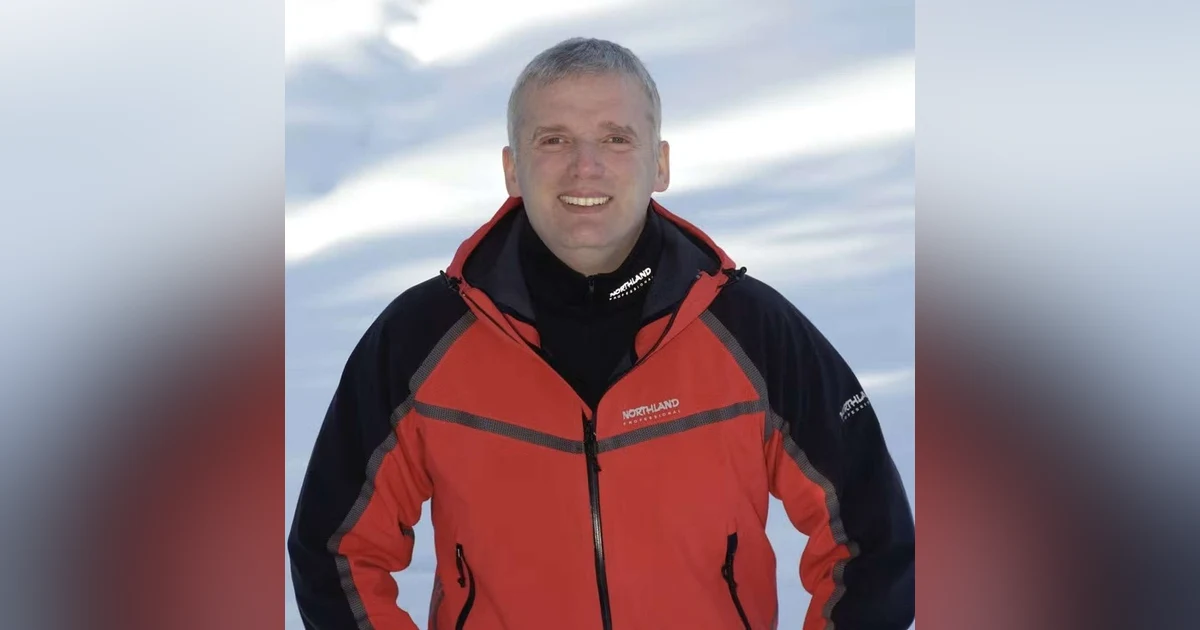

Discover the enthralling connection between passion and profession in this riveting episode of "No Wrong Choices," featuring the acclaimed Wildlife Documentarian and Biologist Matthias Breiter. From his early days nurturing exotic finches to becoming a leading authority on bears, Matthias's journey is a masterclass in following one's heart. In this episode: Dive into Matthias's captivating tales from face-to-face encounters with grizzlies and polar bears.Uncover the artistic process behind h...

 Apple Podcasts

 Spotify

 Castro

 RSS Feed

 Youtube Music

 YouTube
Discover the enthralling connection between passion and profession in this riveting episode of "No Wrong Choices," featuring the acclaimed Wildlife Documentarian and Biologist Matthias Breiter. From his early days nurturing exotic finches to becoming a leading authority on bears, Matthias's journey is a masterclass in following one's heart.
In this episode:
- Dive into Matthias's captivating tales from face-to-face encounters with grizzlies and polar bears.
- Uncover the artistic process behind his stunning wildlife photography and films.
- Learn about his impactful work with National Geographic and the National Park Service.
- Explore the pressing issues of climate change and deforestation with an expert's insight.
Matthias's story is more than a tale of environmental conservation; it's a powerful endorsement of chasing your dreams with conviction. Tune in for an inspiring session that will leave you with a profound appreciation for the wild and a reaffirmation that pursuing your passions is always the right choice.
Listen now to join Matthias Breiter's quest to conserve the beauty of our natural world and find your own path to success.
To discover more episodes or connect with us:
00:02 - Career Journey of Matthias Breiter
17:08 - Grizzly Bears
23:02 - Photographing Bears and Building Trust
29:06 - Becoming an Expert and Published Author
36:05 - Solo Travel and Bear Encounters
40:25 - Bear Encounters and Photography Transition
46:15 - Conservation Work and Climate Change
54:28 - Climate Change and Economic Value of Wilderness
59:26 - Wildlife Photographer Matias Breider's Incredible Journey
01:06:17 - No Wrong Choices With Matthias Breider
0:02 Welcome to no Wrong Choices, the podcast that explores the career journeys of accomplished and inspiring people to uncover secrets of success. I'm Larry Samuels, soon to be joined by the other fellas, tushar Saxena and Larry Shea. For those who might be joining us for the first time and for those who haven't done this yet, please support no Wrong Choices by following us on your podcasting platform of choice and by giving us a five star rating. We also encourage you to join the conversation by connecting with us on LinkedIn, facebook, instagram, youtube and X, by searching for no Wrong Choices or by visiting our website at NoWrongChoicescom. This episode features the author, photographer and cinematographer, matthias Breiter, who is considered one of the world's greatest authorities on bears.
0:49 Larry Shea is the person who found him in the woods of Alaska. I think you're the right person to set up this conversation for us Not quite in the woods of Alaska, but in Alaska, not in Alaska. I recently did a two week, two and a half week trip to Alaska. It was a kind of bucket list item been looking forward to it my whole life. I'm 51 years old now, so my legs don't work like they used to. It was time to go. I had to do it before I could no longer how you can move around, you know, reaching those ages. But yeah, we were waiting. My wife and I, Susan, were waiting in a hotel for a guided hike through Denali National Park.
1:32 We were going to go on a hike. We had a guide. We got there very early to this particular hotel. My wife found a nice puzzle to put together, because that's what she likes to do, and I kind of walked around and twiddled my thumbs and I come around the corner and there's these amazing wildlife photographs all over the wall and a gentleman doing a book, signing A lot of coffee table books, like several books. I'm like, oh my God, did you take all these photos? And it was Matthias Breider, of course. And he says yes, and we just get to talking. Turns out he is the preeminent bear specialist in the world. Kind enough to give me his information. I come home and here we are we have a biologist cinematographer, author, wildlife photographer.
2:16 I mean, how many hats can you wear? So, yes, super excited to share this conversation with everybody. It was fascinating and I think you're all going to really enjoy it. Now be prepared. When we spoke, to this man he was basically hanging off the side of a glacier trying to get three bars, because you just can't get a good signal in the entire state of Alaska. You have to go to extreme measures to get a signal anywhere. So this is what it's going to sound like from time to time. But look, when you can speak to the preeminent expert of anything in the world and how many times do you get in.
2:57 How many times in your life do you get to say you know what? I spoke to the preeminent expert of X, y or Z ever in your life. No doubt. Absolutely so. It doesn't matter if he's hanging off the side of a glacier trying to find three bars. We're going to speak to this man and do whatever we can to do so. I know we had a ton of fun with this interview and I know you'll enjoy listening to it. Absolutely so. With that, here is Matias Brighter. Matias, thank you so much for joining us. Well, thank you for having me Now, Matias, before we get too far into our conversation, we always like to give our guests the opportunity to tell us who they are and what they do in their own words, rather than us making assumptions.
3:39 So can you sort of set the stage for us and tell us a little bit about yourself? Well, so most people always refer to me as a photographer, a geophotographer or filmmaker, etc. I refer to myself as a biologist and what I do, or what I see myself as doing trying to bring nature, biological world closer to people using various media, meaning photography, cinematography, writing it really doesn't matter to me what media it is. I see myself more as an interpreter, as a bridge between nature and people.
4:21 I see myself a little bit more like in a teaching position or a bridging society and nature, as there is a certain alienation that is happening between our environment and our society. Many bears I'm just being specialized around bears, which has just happened to my career. So let's begin at the beginning. I think it's always the best way to go. I know you had an interesting childhood. Talk about where you grew up. Did you have pets as a kid? Like, where did this start? Was this the dream? I grew up in Germany, heidelberg. We always lived near the forest and apparently from the earliest age on, like a three-year-old, I was running all through the woods on my own, exploring, and I think this connection to the environment was always strong and grew over the years.
5:22 Then we didn't have a dog. What I had was actually exotic finches and I bred exotic finches. And then from early early on there was a dichotomies Like I was very interested to art. My grandfather was a painter, so I was always encouraged to express myself artistically. I was even an art prodigy for a while, painting and drawing. And then there was biology. There was this fascination for nature and classical biology, meaning I loved to be out in nature, observe animals, just spent time out there.
6:02 I was never a city boy. I never really enjoyed being in a more urban environment. Matthias, I'm going to ask the ignorant question what is a finch? A finch is a small bird. It's a group of birds and exotic finches. They're like in Africa and Australia and they're very colorful. Some species are reasonably easy to raise, like zebra finches that you find in pet stores, and others are a little bit more exotic and I went more towards the more exotic ones that I found more interesting, and then, years later, when I actually worked in Australia on a project, birds that I used to breed at home were then in my garden, so that was for me quite an exciting thing.
6:54 Very cool In the context. I live in New York City, so it's probably not a surprise that I did not know what a finch is. So is it safe to say that growing up you had your own zoo at your home outside of the forest? You had your own zoo in your home in Heidelberg. Well, yeah, restricted to birds, but yes, obviously right. All right, so then your own aviary. You had your own aviary in your home in Heidelberg. Oh yeah, I did. I actually had several aviaries, so it cost a bit of a problem at home because there's always some dirt involved with having any pet and we were living in an apartment and I think at the peak we probably had about 40, 50 birds.
7:43 Oh, wow. Oh my. God. Oh my God. So basically you were just living in the apartment, sharing the apartment with the birds. It's really, it's really, oh yeah. And my siblings and my parents which had. My mother was very supportive, but I think my siblings were always quite as thrilled. I'm sure they were not. I have to be quite honest with you. Now you mentioned a moment that you were, as you said you were a classical biologist as a child, observing nature. Was there one kind outside of birds? Was there another type of animal that you observed as a child that, then, I would say, sparked your interest in other animals as you grew up, as you saw your career taking flight?
8:26 I mean, it's probably rough to go that far, but is there something that really sparked you as a child when you would go out in nature? Well, less going out in nature, I think, like you would see deer, but there was no wolves and very few foxes around, no bears. Where I grew up, I just was fascinated like watching certain shows on TV and from pretty early on my dream was like being like a veterinarian in Africa and working on predator-prey relationships, that kind of stuff Something that wasn't really attainable in Germany at all. So I'm fascinated. We just went to like 10 places too.
9:08 You also said you were an artistic prodigy at one point. Was that at that point in your life, or does that come later? That was in my early teens. One of my classmates her mother was a professor at Art College and the high school had issues getting art instructors and because she was the mother, she volunteered to be a substitute art teacher in school and she saw my work and then she drew me in. She took me to Art College, she took me to her courses and was really supporting me to how to well learn to properly paint, learn to properly draw.
9:55 My parents were always supportive, but we were four kids, so there was more like a passive support or encouragement, and so this art professor then really took me under her wing and for several years I went to Art College, which was a very restricted school. They were like 5,000 applicants and 50 would be taken and I as a 12-year-old went there and that ended when she unfortunately was diagnosed and then passed away. But it was a formative period for me, just to actually learn that people are appreciating what I am creating and think it's good, like your parents always think it's good Whatever you do, your parents always think it's good.
10:46 But to actually have from some outside Right. Right. I find that fascinating that you had both an artistic mindset and yet a scientific mindset, and I'm just curious. I could see how they run in parallel and they help each other, because you're studying animals and you want to draw them, take pictures of them, study the anatomy and things of that nature. Is that how you thought of it back then, or did they work hand in hand, or were they two separate things that were happening in your life, I guess? Well, at that point it was to some degree separate, and I drew a lot of things that I saw in the environment, but I wasn't really thinking about like using that as a career in that shape it was.
11:34 I think what you Learn as an artist and maybe as a scientist, or hopefully as a scientist, is thinking outside the box. You're not just copying. You're supposed to be creative, and so, if I think that's probably where the connection comes in, as a now, as a Writer, as a photographer, as a biologist, there is a creativity that has to go in you. Otherwise it's just always a copy of someone else's work, and so I think that's where really then the when things kind of blend together into one profession. And so, at what point does the art end?
12:16 At what point do you Walk away from the actual medium of drawing and painting and those things? Or have you never walked away and it just became not as much of a focal point in your career? well, the, the Creative art like drawing, painting basically stopped within a year of my Professor passing away from cancer. Really, I I did, just didn't get the support anymore. It wasn't. It is positive feedback, like I remember vividly, I did one drawing that I thought was the best I've ever done and I showed it to my grandmother and her response was why did you do it like that?
12:58 And? And For me, I I just did not want to defend why I created things a certain way. So then the it went more than towards the biological part, and Then, like when it later on, after I finished my degree in biology, and then I was asked to write my first book and I had to illustrate it, that's really when, then, the creative part came back into it. It was, it wasn't really planned that way, and I didn't really think too much about photography or never thought about writing a book.
13:39 I was just asked to write one thought actually that was going to be my next question when? When did the, when did the scientists officially take over and when did you find that happy medium between those two sides? But obviously that happened in your college years as well as to when the, the scientists took over. So when was that first time you finally picked up a camera? Well, the first time I picked up was like 18 or 19, but I didn't know what I was doing. It was. We did a vacation trip through Alaska, actually as an 18 year old, and I decided I need a camera, and I think none of the Images have any value in any shape or form nowadays.
14:20 I didn't know what I was doing and Then photography really became well. It just evolved. Like I Was had no real formal education and photography then. It was still film days. Everything was kind of you Like. Very often you didn't see the result of what you were photographing until a month later. So there was a bit of a sure if there was a disconnect, there was a disconnect between when you took the image and when you saw it, which made the learning curve pretty slow. But over time, obviously and I think that where the artistic Education mindsets comes in, people really like my photography and Particularly then also very established high-end agencies, and it became much well.
15:15 For a while then I was more known as a photographer. Then I got more known as a writer than more as a cinematographer. It's kind of Changed back and forth, for sure, and I and I don't really consider myself any of it, I just do what I do to portray the beauty of nature and try to bring it across to to people. Well, let's sort of head in that direction. So you know, you're in school, you're developing all of these different skills. You're an artist, your photographer, you're a biologist. When he came out of school I guess in advance of your first book coming out, you know what path did you take? How did you focus all of those talents that you were developing?
15:59 well, it was already towards the end of my school year, so I was in grad school and you try to get a thesis going on something that interests you. I mean it's it's not like there are these is just lying around that are interesting. There's a lot of these. Is that that's just there? Because someone needs to get a degree? And I at that point I was at the University of Massachusetts and I didn't really want to do a lab job and the opportunity arose to work in Glacier National Park on winter wintering habitat of elk, which Wasn't really what I wanted to do what was better than being a lab and I was out there and then this was by Coincidence, the first year that the wolves that were usually staying in the winter up in Canada would actually winter in Glacier Park and I Got to study then wolf predation on on elk.
17:07 So with the wolves, wolf predation, you basically never actually see the predation. You see more the aftermath. You see a kill site and if you're lucky, you see some wolves around, but they're often very shy. But what happened then is that grizzlies came into scavenge to wolf kills and the grizzlies would hang around and you could actually observe them, and I just got stuck on the grizzlies because they were actually the most visible off the predators and and after then being a few years In Glacier Park, I then moved back up to Alaska, which I knew from a previous travel, because there you actually see the animals way more than you.
17:48 You see them in like in Glacier Park, but we do see a grizzly occasionally but there's still a lot of vegetation cover, there's forest and you know the viewable time are very limited most often like you work more like with radio-colored bears and then Watch blimps on a computer screen. And I was more interested actually observing the animal. That was really my fascination. From the start it was, but at the time In biology everything went for a microbiology, in genetics and the classical biology. Actually observing what is happening in nature, observing wildlife was like out of vogue. People thought it wasn't really proper biology.
18:32 It was seen as as anthropomorphizing behavior. It was seen as Not really data that you could use in any these seasons. So I was a little bit the oddball in the whole scientific community because that's what I was interested in. Is what really what people thought wasn't proper biology. Anymore it has come back a little bit, but in those days, so in the 80s it was not considered a career that would produce anything. Everything went out microbiology and genetics. So I'm so curious when you were in Glacier National Park and you're there to study the elk, I mean, did you have any idea that that moment, when you got fascinated with the grizzly bears, was going to change your life Significantly over the next decades?
19:21 I mean because that's a pivotal moment. Oh no, I had no idea. I Was so struggling with just trying to fit into the university system and what they wanted from me, and there was not really any like how do you make a living, how do you fit into a system that really doesn't really Want to do what I want to do? So it was, I had no idea. I was just going from one step to the next and I went to Alaska Basically because I could see the wildlife in the open terrain much better right interesting that when I was in in Alaska, what happened was spent month in this in the field, camping and all.
20:05 And I was asked by a Friend that I met there whether I'd be interested to write a guidebook for the tourists and particularly they wanted it bilingual because I spoke obviously German whether I could do it in German and in English. And I really never thought about it but To do anything like that, and so I said, okay, I'll give it a shot. And that really started the book writing. That led to another book that in Australia Then I met to coffee table books and on and on and on, and the bears were always done on the lying. Everything like that was always the. The basis for everything I did Was was bears so I'm gonna assume this.
20:51 As you said, as a child you like to spend a great deal of time in nature and Obviously, if you're gonna do that as a child and you didn't like being in the city, it meant that you enjoyed your own company, you enjoyed the idea of solitude, and if you're in Glacier National Park you're following these, the herds of elk. You're obviously out camping by yourself much of the time. I would assume the solitude never really got to you. Ah well, it gets to you, but it's one of the things that's like the price you pay. It didn't get to me to the degree that it stopped me. There was that the things to. I had to learn like I, you have a self image, you build up a self image and Then you go out the first time on your own, on a solo trip, and you really discover that the self image and who you are is not really the same and the and I think the biggest step then is actually recover from that and then, with the new self image, go out again.
21:53 And Then it became easier and you get total emotional highs being on your own. It's so intense, so I wouldn't say it's an adrenaline Rush, but there is. There's certain moments out in nature when everything comes together, like the light, the scenery, the wildlife, and there are like Probably, I would imagine, similar to having like a drug-dosed high. It's it's totally like Overwhelms you and for these moments it's worth all the hardship. And do you get them with other people? Well, if you have the right person with you, I think it can't even be better.
22:37 The problem was always having the right person with you. Can you describe a moment that really took your breath away? This. It's usually Well. There was one moment but it took my breath away. For a lot of people it sounds Either weird or it brings across the wrong impression. I was photographing Bears fishing. That was like 20 years ago and I was just sitting with another person Behind my tripod along the river's edge and I've been there for about three weeks. So the bears really know you bears.
23:19 If they really know you well and you know you never approached them and you never do anything to them, they just ignore you. You're just like a rock to them. And so I was sitting there and there was this bear fishing with a cup Fishing in the river, and she always went down the middle of the river and Then got out of the river with a fish or without, at the lower end of the current section, then walked up the opposite side of the river with her cup. She did that about ten times and after the tenth time she came out on my side of the river and walked by me and I mean totally ignoring me, walked by me within inches.
24:00 There was nowhere I could go that quickly and it basically ended up. You did that three, four times that she walked by me like towering over me Like almost walking over me. I didn't move, I didn't go anywhere and After four times or so she Then you could see that all of a sudden she was getting interested, investigating me. There's just a different body positioning, so then I changed my body position and she walked off and that was it. And the overwhelming sensation for me was not to be that close to bear. The overwhelming Situation feeling for me was that this bear trusted me so much that it would not worry about me interfering with it, even being that close.
24:46 But it was that trust relationship that was overwhelming me, not the adrenaline of having a bear that close. That's amazing. Well, this is like I'm not trying. I've never approached a bear. I always let the bear do the approach. Then you can do assess whether he's curious, whether he ignores you. If you Approach you you don't you really lose control, because you put the bear on a spot and the most Instances to bear will move off. You can only photograph the south end of a northbound bear. But if he doesn't move. I like that, but but if you don't, if he doesn't move off, you may have a problem there that really Tries to engage you, and I mean there's physically nothing you can do.
25:30 If a bear what goes after you, that's it. I so Not approaching. Having leaving to bear the option of what to do then Also gives you a certain amount of control because you can assess that behavior. And I've I've had thousands of bear encounters and including polar bear. I've walked with polar bear and I had maybe two, three aggressive encounters, and that's it and and it's that includes polar bears. I mean, I have polar bears walking by me very close. It's a bit different, but overall it's the same as with brown bears and brown bears, just for people who are out there.
26:14 I know because I just got back from Alaska. Brown bears and grizzly bears are essentially the same creature, correct? In North America. They're essentially the same, like brown bears. The overall term and the North American brown bear, essentially, except for the bear John Kodia are, is the grizzly it's. It's more a convention naming convention than anything else. So, as I said, I just got back from Alaska and this is where we met. Thank you so much for joining us and giving us all this information. This is amazing. But when I went on my bear watch hike, there was protection Involved with the back end, in the front end and and what I'm hearing from you is more it depends on the bears Personality.
27:00 You called it a problem bear, right, or just a curious bear. So it's actually personality kind of related. Is that what I'm hearing from you? Am I translating that correctly? Well, hugely personality Related. It's related to the experience of an individual bear. It is related to like the conditions at the time, like is there a lot of food sources available? Aren't there? Is it a stress bear? Is it a relaxed bear? So there's a lot of variables that come in but generally speaking, like you put, it's like a person. You give two different people the totally is the same Circumstances.
27:44 They don't react necessarily the same and bears are similar. Under the very same circumstances, one bear may behave shy, the other one boisterous, the next one aggressive, and some of it is how their experiences in life. But some of it is just inherent personality, wow, and like as a, as a biologist or as me working with bears, so much it is recognizing what type of bear do I have and how do we have towards it. It's really not any different than you have dogs or people. I, the same approach for two different people may not result in the same Well end result in the same interaction.
28:30 And if you have kids I mean you're usually a kid, said if they're different. I have three daughters. They're every one is different and every one of them needs a different approach how to get the best out of them, how to make them happy, how to make them content and comfortable. They're different, and bears are too. I feel that way about my four and a half year old son. I think he changes every other day and he requires a different approach. So I understand from a from a different point of view, matias, sort of Bringing this back to the career journey a little bit. You know, as as you're developing this expertise, as you're building all of this Experience, you know, earlier you referenced, you know, your first book.
29:15 When did the momentum of your career if that's the right word begin to set in? When did you become that expert? When did you start to get published most frequently and how did, how did that momentum begin to to build for you? well, and in retrospect it probably came with the first big coffee table book I produced, where then publishers publishers always look for a book project that they can bring out and to have to then recognize there is a person, we can give them that project and we're going to get a certain quality of product.
29:59 So in retrospect so that would have been in the mid 90s, like 96 or so People always have the idea that you have this one breakthrough moment and everything afterwards comes easy. I never found that to be really the case. I find it is more like a journey driving down the road and you have your obstacles, you have your problems, you just keep on driving despite the obstacles, despite the problems, and the volume or the kilometers you've driven just increases. Your portfolio increases your project you've done usually get bigger because you have more funding available and it's more like a trajectory.
30:47 It's not like that once point in time where all of a sudden everything works easily. So what you say that was, let's say, the impetus for publishers to seek you out. Was that what did it? The fact that I got? To be honest, I don't know how many other biologists, conservationists, were out there like you taking pictures of wildlife, but obviously you had a quality, you had an eye to what you were doing. And then it was noticed by others who had seen this, whether it be publishers, whether it be others within the scientific community. Who said Matthias is one of these people who has not only become an expert simply in his own field of conservation and biology, but simply as an artist, has elevated that to an artistry.
31:39 Is that what essentially got you on that path of becoming a published author? Well, I think everyone has a niche and my niche was that I could combine a high quality. Like I have the scientific background, I can produce the content, but I also can produce the content in a way that is interesting and is appealing. Like my father was a language professor and he very much drilled into me correct German, and correct German is really it's less about grammatically correct or something that my dad always called language.
32:26 Logic is that you actually create images in a language that are correct and not just some obscure incorrect vision. And as a rule and this is part of my problem, but probably part of what also made me successful like National Geographic really wants to have a photographer and a writer. They don't necessarily want to have the person being one and the same person doing both, and I think my strength is actually that I do both. So publishers they know if they hire me to write a book, they're going to get high in writing, they're going to get high in photography in one package.
33:08 They don't have to shop around, they don't have to worry about whether it's scientifically correct, and that probably started very early when I brought out the first books, that they were just a quality that people were not used to seeing in these kind of coffee table books. Coffee table books were usually just simply based on images. The text was often not going to great depth. I can remember I had some of those coffee table books as a child. And I brought the scientific depth to it, which then resulted that the National Park Service made me their ambassador and do books for them, as they could trust that scientific information was correct, that the images were taken ethically and that the quality overall was good.
33:58 And I think that's what they all look for, is this kind of reliability. Well, I can also say this, that it wasn't simply that the publishers were looking for the fact that they wanted someone who was quite adept at being a photographer and also someone who had the scientific chops to back it up. They were also looking to save a couple of bucks, so you could do both, trust me, that also helped as well. But no, I mean that's an incredible accomplishment the idea that not only did your books become obviously top sellers, but then it was noticed by a large organization, as you said, as you became associated with the National Park Service.
34:43 So what is that relationship like? What does that relationship mean? It's never quite easy because the staff at the Park Service changes differently, so you have a good relationship with certain people and then four years later they're gone and then you have to redevelop it. But overall, like I, have a number of people within the National Park Service that really appreciate my work and push more and want me to do more projects for them because yeah, it's basically because it's easy for them, they know what they're going to get and they know not going to have any trouble.
35:24 And it's a big thing for any kind of government organization the predictability. So these days, when you plan to go out and take photos and observe and do your thing, obviously it's weather related, right, there's certain times of the year you're going to go out, but how long are you out there? Do you bring any support people with you? And I mean, I know I'm getting older, how treacherous does it get? I mean you're out there in the middle of nowhere and you sometimes have to be there for very long periods of time. I know you said you developed a method and got smarter as you did it, but tell me what that learning curve was like and what it's like now when you go out.
36:05 Well, I used to do a lot of solo trips simply because I couldn't find anyone that would come out for any length of time. People were always willing to go for like five, six days, but anything longer than a week was usually problematic, and I never wanted to go for less than two or three weeks. It just takes too long to get familiar with areas and the cost for like travel is basically the same whether you go for three weeks or for one week, so I was also cost factor in it. I did a lot on my own, which today I would consider to be too risky because there was really no backup.
36:45 Nowadays you have in reach, so you have these emergency transmitters that didn't exist. Then I still do projects on my own if I can't find anyone to go with me, but I don't do bear projects on my own. You always want a second person with you at least, and the reason beyond safety is also if you're on your own, the bears want to interact with you. If you have just one person with you, they usually ignore you. Interesting. So when they're bears to some degree work as individuals. They don't really work as a team unit, and so whenever there's two people, a bear feels outnumbered, so they just generally leave you alone.
37:31 If you're on your own, you have all these juveniles who want to interact with you and you don't get anything done. You spent your entire time just trying to stop bears from interacting with you. So there is that aspect. The other one is safety With bears. Ultimately you're totally overpowered. This is an animal that is in every way highly superior to you physically. So I always have some like either bear spray or a flare with me for protection. That's just plan B. If you don't have that, I mean I would consider this pretty much a suicide mission.
38:14 Sooner or later you're going to run into a bear that really wants to push the limits. So you have to have plan B. But yeah, I usually have one person with me and I go out as well. The longest I've been out was six weeks, but generally it's three to four weeks. If you go longer than three or four weeks, food becomes a real problematic issue. It's tough to go longer than like three to four weeks with the food you can bring. So earlier you described a positive experience with a bear who was fishing, came out of the water, walked by. You Can you describe and hopefully you can't, I'm hoping the answer to this question is no, but can you describe a negative encounter with a bear?
39:05 Well, there is two that spring to mind A bear encounter which was really independent of my actions, likes. I had a couple of encounter where your surprise a bear and the bear just gives you a warning and I don't really consider that aggressive interaction. It's. It's spooky at the moment because you never noticed the bear was there, but it wasn't really that the bear was truly aggressive, it was just defensive. I had two bears and I think they're the only two, and sometimes you wonder whether you blend out some negative experiences, but I think it was only only two instances when I had truly an aggressive bear.
39:49 One was doing the mating period, where there was one male grizzly around who, for whatever reason, saw people and then including me as competition in his armor is endeavors you would. He would go after you and he, like you, would try to give him as far as you could stay far away from him, because he would only go after you if he doesn't have a female and then thought you were like encroaching on his female. I was one case where I was camping and I would need to get water and I went through the brush, made noise, went through the brush to get to the creek to get water, and I come out of the brush and I look to the left and I see the female.
40:40 That dark, aggressive male was with like 30 yards away and I said holy crap. And then, right, the next second, the next second, I saw the male behind that female and as soon as he saw me he just went at the dead run for me. You always say. You always say that you could, you should never run from a bear, which is true in almost all circumstances, but you can't stand up to this bear. So I actually then ran the other way and the bear only wanted to get me out of his way and as soon as I took off he stopped. That was very spooky.
41:24 That also can go really wrong if you do the wrong thing. And the other one was a polar bear and the polar bear. I was camped on an island and I was there because I knew the polar bears. That polar bears travel in the summer along the coast and look for food and stuff. They don't just lie down and wait for ice to return a particularly if they're younger bears. They also need food. And so I was camping on that island because I knew these polar bears would come by and I was hoping to get them and the flowers there, which I got. But then we had a big storm and the storm took down our tent and all of that.
42:06 And when the storm lifted we saw a bear coming behind our campsite and then he was just behind some rocks. We couldn't see him and wondering what he was doing and the bear moved off and then we moved over to where that bear was, because he couldn't figure out what that bear was there for about an hour and it turned out there was a dead beluga washed up on shore. Oh, wow, oh, my goodness. Which. So then we had within a hundred yards from our, of our tent and a major food source for polar bears and within two days we had twenty seven polar bears on that beluga. And so this was then when I started walking with polar bears, because initially I thought this would be really bad because, like, if you have a moose carcass, you have grizzly on it, you have one happy bear and a lot of unhappy bears around it, and but the polar bears actually shared the food sources so they were not more aggressive.
43:07 But then one bear came up and he saw us from with me and one more guy. He saw us from easily a mile away and he started running at us and then I ended running at him to stop him from running and make him think and he went sideways and he kept running at me and ran at him. So this went back and forth for about half an hour until he was about fifteen yards away and I mean he was still really pushing and trying to get in right on us and the guy next to me had a shotgun alarm and I told him OK, he becomes closer. So you don't have an option like I dropped to the ground.
43:47 You try to hit him and not me. And that's when the bear gave up. And then later on I showed the images to to a local conservation officer and that was a garbage bear from a town 60 miles away who had learned to associate food with people. So when he got the smell of the beluga and he saw us, he thought we are where the food is and again, something wrong. It would have been either bad for us or bad for the bear. I mean, we had a shotgun along, but it doesn't necessarily mean that you can, that you get out of it unharmed.
44:31 Even if you have got along, people have the tendency to think if you have something like bear spray or a gun along, you automatically save. Well, theoretically, but most bear attacks are surprise encounters and so you would never even get anything up in that short of time to defend yourself. It's much more important that you stay alert and that you actually have something along to defend yourself. All right. So, matias, when, when did you make that transition from the camera to to, or from photographer to cinematographer, and what was that transition like? Or maybe it's even, maybe that's even the wrong question to ask.
45:11 Maybe I should really be asking have you ever really transitioned from photographer to cinematographer, or is it all just the idea of the image? Well, I do both, so it's not really necessarily a transition that I stopped doing one to do the other. The ultimately filming and photography is still trying to get some appealing message across, as photography in some ways is harder than cinematography or otherwise cinematographer can be harder than then. Photography is cinematography, you always need a sequence and photography you need only individual images.
46:00 But you can hide stuff in a sequence, you can't hide an individual image and vice versa. So it's not really one is easier than the other. It's just a different medium and around 2000. I was asked to work on a conservation project with a friend and I was photographing, she was filming, and then we ended up both filming which was related to the Arctic National Wildlife Refuge and from that on I've always been to some degree involved with documentary. So it's documentary work for discovery, for a geoforce Smithsonian Channel and ultimately it's a similar thing.
46:48 You try to get a message across that attracts people and I was hoping through filming I would just reach a larger audience and hopefully I did, but and I'm assuming that the documentary we're talking about is Nature First correct. The documentary like I did like Polar Bear Summer for Smithsonian right I worked on like the Grizzly Empire for the world west for my geo, so there was a number of that. Did for Polar Bear Show, for Angry Planet. I showed George Corunas how to walk among Polar Bear. So there is a bunch of shows.
47:30 I was involved with Wait, so expound on that one. What was that all about? So I'm less of a hired gun when it comes to cameraman. Most cameramen are really hired guns. They are good camera people and someone has a project and they hired a camera person to shoot that particular sequence. Animals doesn't necessarily have to. They're usually not fixed on like bears or a heart taker, so they work all around the world Well. For me it's the opposite. I am really very much focused on specific projects, that where I try to get a message across and what I try to get across from my experience walking among Polar Bears, showing that you can actually interact with Polar Bears, you can coexist with Polar Bears without having to shoot the bear.
48:19 If you get into contact with one like there have been a number of fatalities in the Arctic involving Polar Bears and which then people get hurt, people get killed, then way more bears get killed afterwards and it usually is a result of wrong actions in an interaction or leading up to an interaction. And I wanted to produce a show that would actually show people that Polar Bears are not these man hunters people believe they are. They actually are way more social than Brown Bears and you can interact with them on the ground and control an interaction without aggression, without resulting in fatalities or well, yeah, someone getting injured.
49:11 Yeah that's amazing. I've always I've always been told Polar Bears, grizzly Bears and like cobras with the three things that will attack you without provocation. Is that totally? It's obviously. It's false. We've just determined that in this whole interview. Right? I'm entirely false. Like all, wildlife has really no interest in in getting into a situation that is potentially harmful to them. And so, like a grizzly basically all grizzly attacks they're rare exceptions, but 99% of grizzly attacks are defensive attacks. So the bear feel threatened and is defending himself, its cubs, its food source.
49:53 And that is the same really for Polar Bears. Polar Bears are curious about any kind of creature in their environment, but they learn that they can kill a person. They're going to be careful because anything they run into could also be harmful to them. They don't know that. So you get curiosity but you don't really get hunting pressure, like if. I always say like that if polar bears were really man hunters, either would be no polar bears or no Inuit, because for the Eskimo have lived there for a thousand years and whatever was good habitat for polar bear was also where the Inuit were and they've coexisted for thousands of years.
50:37 If they were a man hunter, you don't have a coexistence, that's right. They would. One would have eliminated the other and most likely people eliminate the polar bears. So anyway, what? happens was that I knew George Corune. He was doing a global climate change project in the Arctic. I was working on the polar bear summer film. We met each other we really get along very well and we discussed actually that you can walk with polar bears and he said, oh, this would be a great show. And for me this was. I wanted to do a show that can show people that you actually can control encounters peacefully with polar bears, and I did that.
51:20 That's amazing and I don't think anyone ever watched it. I've never heard this kind of single comment. I thought this was the frustration of this Well, now we're going to all run out of time. This is a frustration of mine. I guess I'm not going to be nominated. I guess I did my research improperly. Oh, pull up there, pull up there. Someone was out there. Oh, okay, I'm mixing them up. I'm mixing them up. My frustration with my work is that I really want to change attitude. I want to do something for wildlife protection, environmental protection and now climate change, and it very often is preaching to the choir. So the difficulty is how do you reach people that are like they're on a different plane of experience, or people who have their preconceived ideas?
52:08 No matter what you do, you can't necessarily change that, and that's the difficulty of my job. I keep on motivating despite that. Sometimes it seems whatever you do has no impact at all. It's a good mission, though it's a valuable mission. It's exactly where I was going to go is climate change. I mean, in your decades, you've certainly, I'm sure, seen so much change across the landscape, from when you started in Glacier National Park till now. I mean, talk a little bit about what people need to know about climate change. I, indeed the changes in the environment are huge, and it's not just that there is like glaciers retreating yes, it's retreating by as much as 70 miles in the last 30 years.
52:58 It is. It changes everything. It changes like ocean currents, like there used to be. We used to have a research project, or was supposed to start, on how bears avoid getting red tide toxic, and well, did they get you know the red tide issue? in the clamps. So bears used to clam quite a bit on, like the Alaska Peninsula, and we were always trying to figure out how does it happen that they can eat the clams and don't get red tide and die of it? And well, right when we were starting the project, the bear stopped clamming because there's basically no clams anymore.
53:48 And there are no clams anymore in all likelihood because the pH levels in the ocean changed to the degree that it wouldn't support clams anymore. So there has been a total collapse of clams, we hear. Now there's collapse of crap fisheries. We had a few years ago that was a very warm spring and we would find I mean there were hundreds of thousands of dead mures on the beaches here in Alaska and what had happened was that feed fish for the mures because the surface water was from went deep.
54:28 Yours couldn't get to them and start, and this is all that has been going on for the last 30, 40 years and the last 10 years I feel that it has increased in speed dramatically, like all of a sudden even going to the high Arctic you have, where before temperatures in the 40s would be a nice summer day, now you all of a sudden get temperatures that are in the 70s and you see vegetation. There's a different vegetation, there's different animals. There is certain animals that all of a sudden, like the muskox, is having no severe problems, and it's probably related that it's too wet so they have more precipitation up there in the summer, where before it was very dry climate, and so there is massive changes all over the place and I think nobody can deny them.
55:23 The next question is what causes the changes? I think the ones that deny that there is climate change always goes like oh yeah, that's just natural cycle. Well, all indication by science it is not natural cycle. It is deeply impacted by what we are doing and that one owns a lot of stock in an oil company. It's short term thinking and short term benefit instead of long term thinking. And what I'm working now on with projects which hopefully we'll get the funding going, is trying to do a show on ecosystem services which is like years ago, 10 years, 15 years ago I was asked by a researcher for the United Nations to do a project on ecosystem services, which is the economic value of wilderness areas.
56:23 To explain it like there is a value to like an old growth forest that you can take a lumber value or you can take there is a value how much it has soil retention, water table retention and all of that. How much does that impact? Like what we have to put back into the system economically, like if you drain a swamp, you can turn it into a farmland or you can turn it into housing, but then you have to put potentially a water treatment plant in to treat the water which before the swamp would have done. So there is an economic value to wilderness and so we're trying to do a TV series on the economic value of wilderness to make people understand that it is not as simple as a luxury.
57:14 There is actually direct economic results with taking down wilderness areas and like if you take down forest. Deforestation has an impact. Everything has an impact. So, matias, obviously we're all about the idea of not only just asking about the career journey, but then also imparting advice. So it's all about how would you explain to someone who came to you, like the three of us, at some point the three of us and say, okay, so we want to follow, in some ways, your footsteps and say we want to follow the path that you're on. So what is that? One or two pieces of advice that you would give us and say, okay, this is what you need to do to, let's say, start your journey down a path of biology, whether it be conservation, whether it be the idea of just being a better citizen of the planet.
58:11 I think to follow anyone's career mine is just one type of career I think to be successful, whatever you do, you have to be passionate about it, and I just think to be passionate about it also means to follow your dreams. And it's very often a hard journey because there is often the not really financial security involved early on. But I mean that is my advice when people ask me, like how do you get into, like, being a geophotographer, I think every geophotographer has a different route, how they cut there. I think it needs a tremendous amount of passion and commitment to get to the point that you actually are able to do these projects, and I think that's the difficult part To emotionally be able to do it.
59:07 For sure. Well, passion drives everything, and if you're lucky enough to be able to channel your passion towards your career and to really your life's work, you're very lucky and you've won the game in a way. Now, matias, we did a lot of research on you coming into this conversation. You've had the good fortune to see a lot of your work and to do a lot of discovery. For those people who are curious about you and curious about your work, where should they go to learn more about you and to see some of your incredible photographs?
59:48 Just type in my name and the internet comes up. I'm currently revamping my websites, which I really have neglected for a long long time. That is my goal till Christmas to revamp some of the websites because I feel like what I have now is hugely better than what I had like 10 years ago. The images and the footage I've taken in the last 10 years, I think are way higher quality than what I did before. I find them hugely appealing to me.
1:00:29 I hope they're appealing to other people as well. It's in dire need that I redo my websites to actually have current images and not old stuff. I know they're appealing to a lot of people, including Larry Shea, who recently purchased one of your books. I believe it's on the way now. But yes, your work is amazing and we can't thank you enough for giving us this time. We really do appreciate it. Not often we get one of the preeminent experts in the world on anything on this show, but here you are and we can't thank you enough. Well, thanks for having me. Well, that was Mattias Breider, one of the more unique conversations that we've ever had on this program.
1:01:12 I'd like to thank him if he does indeed listen to this Hopefully he will for teaching me what a finch is. I truly had no idea. So, mattias, thank you so much for opening my mind to a new world, Obviously the man. if he did not become one of the preeminent conservationists in the world, he would have become a bird smuggler or he would have been out there teaching people in the world what birds are. For God's sakes, larry Samuels, what are you doing so? many fascinating parts of this interview, though, right For real, where he grew up, you know, like he's painting an art prodigy and then he has no idea this is ever going to be a part of his life.
1:01:55 He's from Heidelberg, germany. Not a lot of grizzly bears or polar bears hanging around there. So fascinating that he just he literally goes from one path and ends up on a completely different one, even to the point of when he goes to Alaska he's studying elk, elk leads to, you know, the wolves on the carcass and then ultimately grizzly bears, and then that's the pivotal moment in his life. But he didn't know that. He said point blank I had no idea this was going to be my life, basically. But what a talented man, what an amazing life. I can't imagine going off into the wilderness for six weeks and shooting wildlife and just carrying, you know, whatever the food you can for those six weeks and that's kind of it, right, you're just out in the element.
1:02:44 So very brave, a lot of perseverance to find something that he had no vision of when he was a child. So I think it a very unique tale in that sense as well. So I hope you enjoyed that conversation. We know we did and what a fascinating man. And I'm just lucky I bumped into him in a hotel lobby, pretty much. That's the. The happenstance behind that is amazing to me. But you know, obviously Matias has worked for so many networks, right? So he said for Discovery, for Nat Geo, with his discovery work. I'll say this to if anyone from Discovery is listening forget Shark Week, let's have Bear.
1:03:26 Week because he sold me. I got to tell you I would watch a week of programming about bears now, about I never really thought about this with all the different personality, because you see all these shows about sharks where they talk about every shark has a different personality. They have different way they act and move, and the same thing here, right, the same thing with with bears. They all have different personalities and actually it kind of goes further to the rest of the animal world that every one of these animals have their own kind of distinct way they act amongst themselves, the distinct way they act in the environment they live in. And that is what's so fascinating and I got to be.
1:04:07 I got to be honest. Most of the time when we interview someone, we're usually pretty prepared about how we're going to. You know, have a game plan on how to speak to them. This is one of the few interviews where I can honestly say I really didn't have a great plan involved and was really kind of asking him to lead me along the way and was wondering what question would come next, because I've never had a conversation like this before. It's so it's so truly unique in that sense Once again, when you have the opportunity to ask questions of a preeminent, of a preeminent expert like this in the world you should have. You should be as inquisitive as possible.
1:04:48 Absolutely. You know, and it's funny that you said about the preparation going into the conversation. I certainly was prepared and I watched a couple of YouTube interviews that he had done and everything else, but I went in there with a very open mind about bears. I was very curious to learn about the polar bear. I was very curious to learn about how close you can get to bears, because I had no idea. So I certainly wanted to explore a lot of that stuff, which we had the chance to do. And, you know, the other takeaway for me kind of reinforces the title of our show. You know, this is a guy who had a lot of talent, put himself out there and sort of went from spot to spot to spot on his journey and just developed this, this really unique and rare skill set that has positioned him for, you know, a great deal of success and a fascinating life.
1:05:38 So if you open your mind to different possibilities and follow a passion, who knows where that will lead you, and for Matthias it led him to an absolutely fantastic spot. And I would just say, be careful trying this at home, because if you're not prepared, you know. But this is a fascinating career journey and, hey, the outdoors is out there for you. Go go learn how to take pictures, go learn how to, you know, be one with nature. But be prepared because, yeah, it sounds a little dangerous. It ain't easy. It ain't easy, that's for sure. Yeah, definitely be prepared and be passionate. Matthias Breider, thank you so much for joining this episode of no Wrong Choices.
1:06:21 We also thank you for joining us. If this or another journey story inspired you to think of a friend who could be a great guest, please let us know by sending us a note by the contact page of nowrongchoicescom. As I mentioned off the top, please support us by following no Wrong Choices on your favorite podcasting platform, while giving us a five star rating. And then, last but not least, we encourage you to join the no Wrong Choices community by connecting with us on LinkedIn, facebook, instagram Threads and X by searching for no Wrong Choices. On behalf of Tushar Saxena and Larry Shea. I'm Larry Samuels. Thank you again for joining us and always remember no wrong choices on the road to success.
1:07:01 We learn from every experience.