From South Central-LA to NFL Stardom: The Untold Journey of Curtis Conway
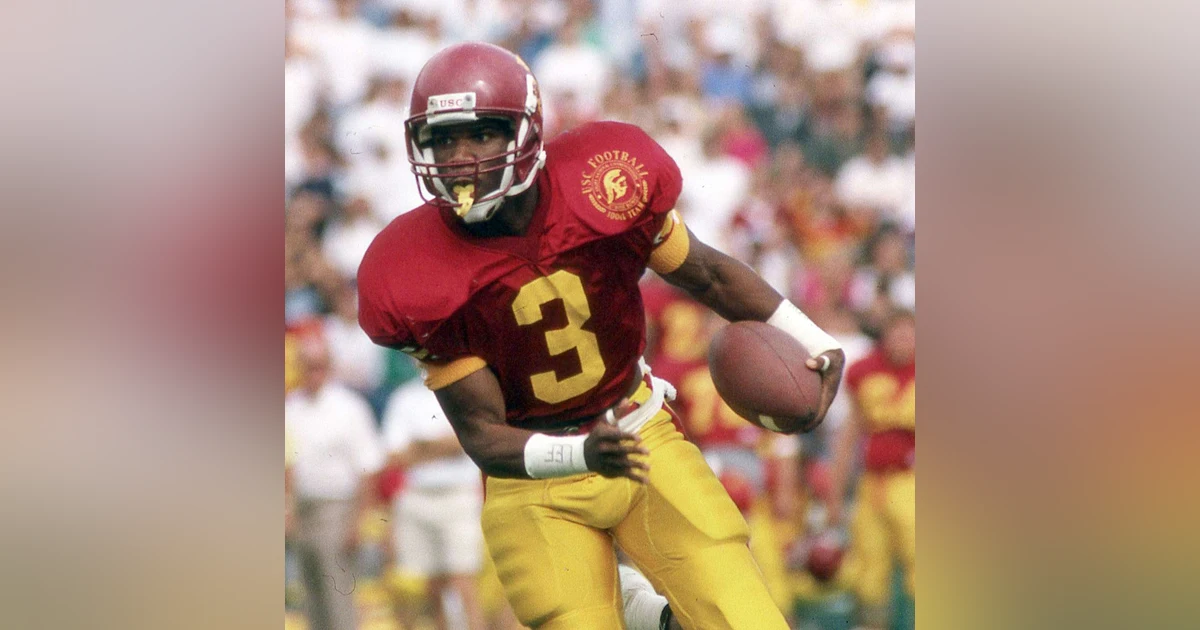

From the gritty streets of South-Central LA to the NFL's zenith, discover how Curtis Conway's passion for sports became his compass. Learn about the challenges he faced, his ascent to USC, and the grit it took to shine both on and off the field. Beyond touchdowns, delve into Curtis's life post-football: a committed father, shrewd businessman, and dedicated husband to the iconic Laila Ali. Uncover the sacrifices they made, prioritizing family over fame. Listen now and immerse your...

 Apple Podcasts

 Spotify

 Castro

 RSS Feed

 Youtube Music

 YouTube
From the gritty streets of South-Central LA to the NFL's zenith, discover how Curtis Conway's passion for sports became his compass. Learn about the challenges he faced, his ascent to USC, and the grit it took to shine both on and off the field.
Beyond touchdowns, delve into Curtis's life post-football: a committed father, shrewd businessman, and dedicated husband to the iconic Laila Ali. Uncover the sacrifices they made, prioritizing family over fame. Listen now and immerse yourself in a tale of resilience, fervor, and an unbeatable drive that defines Curtis Conway's legacy.
To discover more episodes or connect with us:
0:02 Hello and welcome to no Wrong Choices, a podcast about the adventures of life that explores the career journeys of interesting and inspiring people. I'm Larry Samuel, soon to be joined by the other, fellas Tushar Saxena and Larry Shad. For those who might be joining us for the first time and for those who haven't done this yet, please support no Wrong Choices by following us on your podcasting platform of choice and by giving us a five star rating. We also encourage you to join the conversation by connecting with us on LinkedIn, facebook, instagram and X, by searching for no Wrong Choices or by visiting our website at NoWrongChoicescom. This episode features the retired NFL wide receiver and broadcaster, curtis Conway.
0:45 Curtis was in the league for 12 years, starting with the Bears before pivoting to odd airwork with providers such as the Pac-12 and NFL Networks. Larry Shad, I guess we're all football fanatics on this show, but if I had to make a pecking order, I think I might put you first, so with that why don't you leave us into this? conversation. Yeah, curtis. You know this was a conversation that I really looked forward to. Curtis helped me win a couple of fantasy football leagues way back when. Very nice, so I had to think of directly for all of that, but what a compelling guy, what an interesting guy he's. You know, football, I think, is just a part of his life. Right, it's a small part of his life and, yes, he was an NFL football player, and a successful one at that.
1:28 But there's so much more to this guy and I think this conversation reveals that. So super exciting to talk to him and we can't wait to share it with you all, because there's so many life lessons in everything that he says. Yeah, I think that's a great point, Shay. I think in many ways, when we just look at athletes, we just think of them as exactly that, what we see on the field, that you know the sensory, that they wake up their football players they have lunches, football players dinner they go to sleep with football players. But no, that's not the case. They're really human beings and their stories are so compelling. So, you know, obviously everybody comes from different backgrounds and his background and his upbringing are going to be so much different than the rest of us. I mean, in some senses, like you know, we all kind of grew up very much, you know, kids in America, but our, our upbringings are so much different and his is a story of one of, like you know, in many cases, perseverance and then just simply keeping an eye on the prize and, you know, getting that ultimate prize of making it to the NFL.
2:25 It's just so, so, compelling, absolutely. You know he grew up in South Central LA and he's he's very open about that experience and it was for me an unbelievable learning experience and incredibly riveting. So with that, here is Curtis Conway to tell his own story. Now joining the wrong choices is the retired NFL wide receiver, curtis Conway, who spent 12 years in the league with the Bears, chargers, jets and 49ers before pivoting towards a career in broadcasting and other responsibilities that likely take priority over everything that I'm sure we'll get into. Curtis, thank you so much for joining us. Thanks for having me, guys.
3:07 You know. I think I should also thank you for joining us on a Thursday evening and working us into your football calendar. Yeah Well, really baseball, my son, he just had practice a little training, so but it's all part of the deal. You know, we, we figure it out, see what works and we go from there. Thanks, and you guys also. You know you guys made some magic happen in order to make this happen. So I think that goes both ways. Well, I know this that before this interview started. It's lucky that you have your son slash in-house IT guy able to help us out.
3:47 Get this interview off the ground. So that's very lucky for us. So, once again, hey, and look, once again hey. Thanks for taking the time for us. So, Curtis, I'm going to ask. You know you spent so much time in the league, right? You had 3000 yard seasons. You were considered one of the one of the toughest guys in the league. You were, you know, one of the. You were one of the better, one of the better whiteouts. Obviously, you know you're, you're, you were such a great player with the Chicago Bears, you know, obviously one of their great receivers of all time. What is Curtis Conway doing now? Man right now. Today are just postseason. After every title Well, I mean, we could probably go with today if you'd like, but post career, we'll go with post career.
4:29 If somebody were to meet Curtis Conway for the first time, what would you tell them? Or who would you tell them? You are. I'm a little bit of everything you know, at this age. I'm a dad, I'm a coach, I can I mean, you name it business man, so many different hats that I put on is just a matter of what day and time you, you, you know I'm in, but for the most part, I would say I've kind of dedicated myself to just being a husband and a father until until my kids are out of school. You know, I was broadcasting and I really enjoyed that. But me and my wife, who's really busy, before we had kids, we sat down and talked and we said, you know, we're both going in our second careers Once we have kids.
5:17 We don't want to, you know, do the nanny and babysitting thing all the time. So somebody's going to have to, you know, shut it down. To be quite frank, I didn't think it was going to be me. I'm like, oh, I'm going to be right here in my broadcasting career or coaching or doing something, so the wife is going to be the one staying home. But then turned out that way. So, but I enjoy it. You know, I enjoy being a father and being able to help my wife with, you know, a lot of the things that she's doing. I feel, like, god blessed me with what I really wanted to do in life, and that's play football and be able to give back to my community.
5:58 And I was able to do that at such a young age to where I feel like now I can enjoy the fruits of my labor. We love that answer and, by the way, his wife is a household name, leila Ali. Let's put that right there on the table. But we love that answer that you're a family guy and that comes first. Let's bring you all the way back to the beginning, though, because we want to start your journey from the beginning beginning and make it linear. So we know you were an athlete as a kid, but from just reading your bio, reading about you, learning about who you are, you were more of a track guy. Were you not then a football player? They get that wrong all the time. They think because guys are faster. Football track was the thing.
6:39 I didn't start running track until I was in high school, so I'd already had five years of pop wonder football up under my belt before I put on spikes. So you started as a football player. Like, when did you get into sports as a kid? When did it start to have meaning to you? Take us through that progression. Well, since I was a kid I'm talking like six, seven, eight Sports was always important because that's what we did as kids. You know, Saturday morning, elementary school, when recess we played basketball, we played kickball, we played football. So sports was always important. We always looked forward to doing something sports oriented as kids and, of course, once you start playing organized sports.
7:24 As a kid I played pop wonder football for Inglewood pop wonder, starting at nine years old, and it was so fun. My mom didn't want me to play but I bugged her enough to where she couldn't deny me from playing. And then, once I got out there and she saw what I was able to do my first year, the rest was history and I don't think the coaches wouldn't, wouldn't allow me to stop playing with my mom, would have tried to. They made sure. I was what happened in that first year. What did you do? Well, I was. I was really good. I will say that my mom, of course, never saw me play football.
8:05 Of course I'm just playing in the street with all the kids and all the older kids. But I was always fast, so the older kids will always pick me and we would play in the street and we had this rule called sideline tackle, which meant it was a little strip of grass by the curve and if you're on that sideline you got tackled on to that grass from the street. Well, I was probably the smallest kid but I would get picked all the time because I was pretty athletic and I was fast. So the bigger boys, you know, they used to punish me pretty good on the sideline, but it made me so, it made me tough, mentally, physically to.
8:46 When I got to play with kids, my age in my mind and this went throughout high school and even throughout college my mindset was always these, these guys that I'm playing with, is my age or either three or four years older than me. So my confidence level was so high because of what I experienced playing in the street with the teenagers as a kid. So is that, what is that? That confidence that you took then when you played more organized sports whether it be or not, I shouldn't say organized, but when you were able to play on the high school level, let's say when you got to, when you got to LA, and you're playing, you're playing more, you're playing more varsity and you're you know, you're obviously excelling on the field.
9:28 You know, I want to talk, to talk to us a little bit like how important it is to have a coach who is influential on you, or or has a good influence, or how influential a coach can be on a young athlete. You know, I'm going to be very honest in this, in this interview, or whatever we want to call it. A coach that had to influence me. It was never a coach, it was no one. I naturally was a natural competitor and I really got it from the guys in my neighborhood. Like really it was that mentality that I developed was my surroundings growing up I say this all the time and it's funny people think I'm crazy when I say it, but when I was playing literally Pop Warner, my coaches were so tough on us to where, when I got to high school and college, when coaches would try to get tough on me, it was like a joke Like I done already been through the worst that you can be around because we had a certain standard that we had to live by growing up in South Central LA.
10:34 So you know hard work and being tough. Once I got to high school and college it was already built in. So if anybody that I would give credit to, it would be the teenagers and the guys that I grew up around that were older than me, who and it wasn't verbal, it was by action. You know you had to be tough, you had to have a competitive mentality. Growing up where I grew up. So it was like competing was easy, being tough was easy, Motivation was easy. I was always self-motivated, just based on what we went through playing in the street, and so that translated over into organized ball right.
11:16 You get to what the high school level and you start taking it a little more seriously. Describe serious, Because I know some people when they say serious, it's like I start training, I start thinking about the NFL. I started, you know, working on my body and all that. I did none of that Like. I love to play sports Like it wasn't about okay, let me get a trainer, like everybody got a trainer. Now Everybody wants to lift weights and look a certain way. It was really just kids playing sports. It wasn't like. On the off season of football in high school, for an example, I was a varsity quarterback as a sophomore. When football season was over, you couldn't get me to talk about football because it was track season.
11:58 So I wanted to. I was running track. I wasn't trying to run track to get fast To play football, I was running track because I was fast and I wanted to win races. So it was really like I always just lived in the moment, if that makes any sense. Like it was never. Like okay, I'm taking this serious. Like everything that I did competitive, I took serious Like I did. I'm a sore loser and what I mean by that is I hate to lose and if I lose I'm gonna figure out a way to come back and win. So, to be honest with you, I can't say there was a time where I was like, man, let me get serious about this sports stuff.
12:38 Because I was always in that mindset Once I started playing organized sports, like I played for a really good Pop Warner organization where they won, and so I was a huge part of it when I got there also and losing wasn't an option. So we competed, man, and I tell my son this all the time. I had friends when I was at SC, when I moved from quarterback to wide receiver. I had friends that were playing the position. Oh well, you know they got me. I'm here now. I'm here now. So you in my spot.
13:20 So that was always my mentality. So I wanna ask then, because you know, actually you brought up a really good point about the idea of you know, season to season, once football ended, then it was track season and then when track season ended it was another sport. Now you know full disclosure, you're not the first athlete we've had join us and the one thing that we've kind of noticed when it comes to like great athletes, that great athletes are great athletes and are great at athletics. So obviously you had a love for sports and you had a love for competing. Was football always your first love or did you have other sports that you really enjoyed? Like? Randy Moss always said that he actually he thought he'd be a better basketball player, dave Winfield often said that that he wanted to be a football player and was actually drafted by the Minnesota Vikings.
14:07 So was football always the sport that you wanted to play? I mean not say you wanna be a professional in it, but was that always your sport? No, not at all. I was a basketball player man, you know. You couldn't have told me back in the day I wasn't a little Magic John, you know. Especially in LA yeah especially in LA. I grew up right down the street. If anybody knew, the park that I played in in Pop Warner is literally probably 200 yards from the Los Angeles farm in Inglewood. So you know I was Magic Johnson and so, funny story, I played basketball up until my sophomore year in high school and I stopped because our basketball team wasn't that good and everybody was saying man, you should rock track.
14:57 We travel, we go out of town, we compete on a whole different level to basketball team not that good. So my coach, my football coaches and track coaches didn't know. But by basketball season and track season being at the same time, I was still young enough as a sophomore to play rec ball. So I was running track in the ninth grade and the 10th grade is still playing rec ball when I was in high school. So once I got to the 11th grade I was too old to play basketball rec. So that's when I ended up stopped playing basketball. But then basketball was really my first love. I like on Friday nights after a game in high school and I'm talking about all the way up to my last game of the season, you best believe Saturday morning I was in the neighborhood playing basketball, pick up basketball somewhere either at the school or at the gym.
15:53 So it's funny because people will be like man, you was just balling last night on the football field and here you are in the neighborhood playing with a bunch of dudes that can possibly hurt you out here. It's great. But again, it wasn't like today, where I can't do this cause I might get hurt. It was like, okay, we plan against this neighborhood, we plan against these guys. I gotta get up to the park. It is a different world. Yeah, so rec ball was like the why or something like that, or was it organized? Yeah, it was organized. It was park leagues, it was the park league. So I continued to play with the park league. Got it Now when you were playing at the playground on a Saturday and you're going down there and it's pick up basketball.
16:36 You know in LA, you know in the area you're describing like what were those games? Like how? rough were those? It was real rough. It was like again. So just, it's growing up in the hood of South Central LA at a time where gang violence and drugs was at an all time high. So this is the type of atmosphere I'm playing in, but I grew up in that, so it was normal for me. It wasn't like an outsider looking in. This was normal life. So again, you don't think twice about oh, I'm a high school football star, I might get hurt. It's like, nah, it's game time, I'm at the park, we, I'm a dunk on you. If you try to block my shot, I'm a.
17:18 Still, you know it was. It was. It was that atmosphere. So when I think back on it, it's just like we like getting getting hurt and, you know, worrying about the things that could happen never crossed my mind. Like I said, I always live in that moment. So if I'm playing basketball at the park Friday, not after a game or after school, guess what I'm trying to stay on the court, cause if you lose, well, you might get picked up if you're a good athlete, but if you lose you're not getting on the court. So once you get to, five it's like we are here to win. We're not. I hear worrying about almost staying the corner and shoot jumpers, cause I don't want you to. You know, foul me and I hit the pole or I hit the concrete like no we we, we playing ball.
18:00 That's awesome. Now, curtis, I have to ask this question cause cause you brought it up and sort of went down this path, growing up in the neighborhood that you were in at that time, you know with, with the gang life that you know we would see on the news and everything else. I mean I mean, clearly that was close to you, that was around you. How did that that impact you? Oh, you know it was a way of life. Man, I can go in so many directions with this. You know, as crazy as this sound, I survived it. So I could take a lot of the positives. That most people that didn't survive would say it was a negative for them.
18:43 I would say the best thing for me was I was always a leader. So it didn't matter if my friends at eight years old playing football at 13 decide they wanted to tow guns in gang bang, I was still Curtis and I still hung with those guys. It's just when they decided to do certain activities I wasn't involved in it and I never had to be involved in it because I guess I mean we were friends. A lot of people don't really understand that culture, especially back then. We grew up in that situation. So these are the same guys. That's in and out of jail that I'm talking about. We were playing football on the street.
19:23 So I don't look at the drug dealers and the gang bangers the same way outsiders may do, because I really know who they are deep down inside Certain circumstances and situations and decisions that they made based on our environment and choices that they may went that direction. So I never I'm not that one who say I'm better than the guys that made it out of my neighborhood. I just love football, so there was nothing going deteriorating me away from the game. They didn't love football. They were talented and they could play football, basketball. They were just as athletic as I was. They just didn't love it as much as I did. To wear gangs and selling drugs and doing all these things would take them away.
20:09 I was okay with not having a lot of money and not having the nice clothes and not doing all those things. For some reason I can't take credit for it. It was just who I was growing up. It's still who I am today. So I will say this I'm not Curtis Conway, the man as a father, as an athlete, I'm nothing. Without growing up on 56th and Central and South Central LA, I draw everything from those experiences, even today my mentor, who was a real, he was a really good dude but he was a drug dealer and he sold drugs.
20:53 But watching him, he was a family man. He's married still married to the girl he was in high school. Today he just did what he had to do to make a living. But I know the man and so he's the reason I'm the father I am, and the husband I am because I saw how he treated his wife. But on the outside, looking in, you would think this criminal, this guy. But I knew who he was inside, but I knew what he had to do to provide for his family. So again, I mean I can take a lot of the things that people see as negatives. I can take them as positive because I experienced them and I can speak on it. And so, man, it's, you know it's.
21:37 I wouldn't trade anything from what I experienced growing up in South Central. Nothing. I love that you say that it defined you, it made you who you are and you wouldn't change a thing. That's important. I guess my question would be it built your mental toughness? Obviously, the street ball built your physical toughness. I think toughness is probably one of your best professional qualities, but I would say, how easily could it have slipped away? I mean, you're with these people all the time and your friends like is it possible that it could have gone in a different direction? Or you were just never going to let it happen because football was too important? Yeah, I mean because you, this is your everyday life Like it's been plenty of moments in my life where my life could have been taken.
22:24 It's been plenty of times in my life where I could have been set up by the police because I'm around the wrong crowd and they just want to plant drugs on you to get you to talk about who's the big drug dealer in the neighborhood. Like it was. It was. You know we call it a concrete jungle. You had to experience like every day. You know this was, this was. If you go back and you look up the 80s, in the 90s and South Central LA, just wearing a red shirt or a blue shirt in the wrong neighborhood can get you killed not beat up, not shot, but killed. So my high school was red. So if I'm wearing my red sweatpants on the bus going to height, going to school, and the bus is going through another arrival neighborhood, someone gets a kid gets on the bus, or a teenager or a young adult get on the bus with a gun.
23:12 He had no problem with shooting. Like shooting was fundamental back then. So it wasn't. It wasn't, but to us it was. We understood how to for lack of better terms we understood how to move and what to do in situations. We knew all this because we were almost a product of that. I just chose not to do that, but I'm around it every day, Like I mean I've seen it all. I mean I've seen guys get shot right next to me. I've seen friends get in, go in and out of jail. I've seen the, the, the, the good, the nicest kid at eight, nine, 10, 11, 12, 14, 15, 16.
24:00 He's a murderer, it has no problem with, you know, going to kill somebody for the neighborhood. So you know, growing up in that environment, like I said, we don't look at it. No, we didn't it just it was different for us. That was life. So it wasn't a wild situation, it was. This is what it is. You either choose to be or choose not to be and you live your life and you try to survive as you're, as you're growing up and, and you know, luckily I made it out. But trust me, man, I didn't got hit by you know, I didn't got hit with Billy clubs, by the police man, just being a kid walking down the street with my friends and they think we're gang members, but we just kids that live in the neighborhood and you know who's going to believe us versus the police, Right, you know so.
24:55 We had to, but we understood that it wasn't like, oh man, they like. We understood that the police had to upper hand and they didn't care and cause, we seen it so many times that it became normal to us. You know what I mean. We just had to. Again, we didn't, it was just, it wasn't a second thought, it was life. Did you have a burning desire to get out Was? Was that part of sports and looking towards junior college, looking towards what eventually became USC or what like what? Was that dynamic? You know what I love my community. I loved it to the point to where I went to the closest university to my house, usc.
25:37 Yeah, like USC is right in the heart of South Central. It's probably eight minutes from my driveway. There was nothing about my community and it was bad, but that was my community. It was home. It was home. You know, my friends was there, my family was there. So I never my story is not the typical man I got to make it out to buy my mother a house and all that I. It happened because it happened organically, because I love to play football and I did whatever it took to play football and get better. So, okay, I'm a senior, I got to. You know, I got to do all these things to get to college.
26:19 So if this is going to prevent me from playing football, then I'm going to do it, whether it's get good grades. You know, past the SAT, which was a huge, pivotal point in my life, my senior year, not passing the SAT, but I did whatever I had to do to play the game and it just kept going from one year to the next to being the best on this, being the best at this position, now getting drafted to the Chicago Bears. You know, at that point the love for football was my driving point of everything I did All right. So I was going to ask you a bit about the notion of and I understand that.
27:01 You know, I understand that USC is in Compton and it's very close, obviously, to where you grew up, so but I was still going to ask the question of was USC something of an oasis from from where, from your neighborhood that you grew up? But maybe that's maybe that's the wrong question to ask, because in many senses it didn't really matter. Let me ask you this You're two years, two years at your Juco. Was that more important to you than your two years at USC? Let me explain that situation just so a lot of people don't know that story. I didn't spend two years at a Juco. I didn't even spend a year at a Juco. Okay, how much time you got, no.
27:43 Because as much as you're willing to give us nobody knows the truth. Nobody. People that know know. But the media, they messed the story up all the time because they don't really know. They just take bits and pieces and I never really talked about it publicly. So you guys are basically getting this first hand Okay Out of high school. My senior year in high school, I took the SAT. I didn't take the SAT until the second semester of my senior year. Now, mind you, I'm an all American as a track guy, as a knife grader, I'm a starting quarterback. As a 10th grader, I'm getting letters all over the country since my 10th grade year and the SAT wasn't presented to me in a serious manner until the second semester of my senior year.
28:29 With that being said, I'm running track Every Saturday. We got a big track meet. Every Saturday is the SAT. I failed the SAT three, four times, wow, and didn't go to USC. I signed a letter of intent in January for USC and didn't pass the SAT. So my first year out of high school I was back in the neighborhood. I didn't go to Juco. That September I didn't go to junior college. That September after I graduated, I was working construction. I was working construction that first semester while studying for the SAT.
29:12 I passed the SAT the first time. I took it because I finally got an opportunity to study for you. I remember back then. You know you had to pay to go to a SAT course. Yeah to Princeton. Yeah, prep course. They didn't have it at the high schools so it wasn't available. The preparation wasn't available to me, and once I got out of high school, I got a job and I was able to afford Princeton Review, which was like a incredible story. Yeah, it was like a eight week course and after eight weeks, that Saturday after the eight weeks, you go and take the test.
29:53 So I did that and I passed the test. A lot of people don't realize I went to Nebraska that summer when Nebraska was actually better than USC. They wanted to prop 48 me, so out of high school, you know, I couldn't go to that seat because I didn't pass the test. I went to Nebraska Because they was willing to bring me in on the Pro 48, which meant that I couldn't play football, I couldn't be around the team, but I can go to school and I lose my red shirt year and my medical year, but I still have three years to play. So because of my ego, I Went, you know. But being a Trojan was always in my heart and so the day I had to. So I'm in Nebraska, lincoln, nebraska, and I don't know if you guys remember running back by the name of Derek Brown.
30:40 No, I don't, I don't, yeah he played for the Saints for a minute. I went to Nebraska. We both go there on the Pro 48. We were like two of the highly ranked athletes coming out of California that year and I Never forget we were in line to turn in our classes and he went first and it was my time and as I was getting up I went to him and I told him I said, man, I think I'm going back home. And he's like what? Like go we, like we're here, we've been there like two weeks. Long story short, I went back to the dorm. I called my uncle and I told him I didn't want to. I didn't want to play here, I wanted to come back and try to study for the SAT, to get in the USC.
31:22 I'm like I'm a Trojan, always wanted to go there, not because of no other reason other than I wanted to go. There Wasn't a coach, it wasn't the players, it was. I wanted to go to that seat. So Everybody tried to talk me out of it because, like you, about to come back to the neighborhood, are you crazy? You finally got out of here. So I end up, you know they end up getting me a ticket. I went talk to Tom Osborne and told him that I wanted to be released. He released me and I went back home and I got a job and that's when I started studying for the test. I Passed it on the first one in September. Now I'm thinking because I was a dual sport guy and I was gonna do both of them at USC that they would at least bring me in in the spring for track. They was like USC said no, they wasn't gonna bring me in.
32:06 So now I passed the test in September. I'm working construction, and so what happened was the second semester I started taking courses that were transferred into USC at El Camino College. Okay, so that was, that was my little spin into to junior college. I didn't play ball, I wasn't training, I wasn't running track, wasn't doing nothing. I was just trying to get credit, just getting credits. Gotcha, gotcha, all right. So how important, how important to you was, was the USC experience? Forget, forget the football part of it, forget the. How important was it being at USC? It was it wasn't what I thought it was gonna be. Be quite Frank, you had to grow up a lot.
32:50 You know you. I learned a lot in terms of, like, just time management alone. Yeah, that's college trying to show the football around classes. You know we right, you know we had to schedule our classes around football practice. It wasn't the other way around. So you know you might be from eight o'clock to ten o'clock you might be at the school going to class, practice, weightlifting, watching tape. That was a crazy experience because you know, in high school you go to school, you practice, you go home. You had to grow up a lot. You have nobody telling you. You know you had to get up and go to school. You. If you didn't want to go to class, you didn't have to go to class. You had to go to class but you didn't have to go to class. If that makes sense. No that makes perfect. I was in college once too.
33:34 How many hours a week did you have to put into football? Like, like, like. What was that commitment? I don't think it was. It was a normal practice. You know you go to practice. I think practice was like an hour or 40 minutes. Film was probably 30 minutes before practice and you probably had to lift at some point During the day. You had to find time between classes to go live and that was probably 30 minutes of lifting. It wasn't so much. It wasn't a Lot of time that we had to spend with football. That was hard. It was juggling the schedules because, like, say, for instance, you have a class that you need to take, but it's during the time you got film, or you have football practice.
34:16 Now Either you can't take the class or you got to. Mean, those were the hardest things, is you know? And at that time you're thinking school's supposed to be so important yet and still we have to schedule our classes around football. And I mean, being honest, the coast don't eat on. You don't want to hear that he's trying to win football. So you know the notion to think that a coach really cares about school. Trust me, let one of the star players say well, my class is doing practice. You won't be missing practice, that's for sure. So I think that was the hardest part is is, you know, having to go from class to practice, to film and Just do all these different pockets, whereas in high school you went to school.
34:57 School was out the way. You go to practice, you practice and then you go home and you do homework. It's so funny. As you're talking about this, it sounds like playing football was actually the easiest part of this time of your life. You know, the other stuff was hard the organization, the, the independence to becoming a man. But you're obviously plying your trade. You're getting better every day. At what point do you say to yourself I think I could play on the next level? Never, never, never and it sounds crazy up man, anybody that knows me. No, I never talked about the NFL. I never talked about I'm gonna do this, I'm gonna do that. I always lived in the moment I went to.
35:39 I went to USC as a quarterback. I Went to USC. So my first year I was in the quarterback room and I was returning kicks. Tom Marenevich was the quarterback when I shot him. I haven't heard him forever, my god. Who was an? Um, he was an amazing quarterback, like I mean, that's a whole another story. But Uh, you couldn't. You couldn't have told me by myself more year that I wasn't gonna beat him out right, Hmm and I probably wouldn't have, but you couldn't have told me that I wasn't. So I was playing quarterback. My son would happen with Todd end up leaving. So I was talented enough. Where they was like, we got to put him on the field. So they allowed me to return kicks as a backup quarterback.
36:22 Wow, I'll create a right. That's how much I love playing football. I told the coach like man, I'm not sitting on the bench. It's too many things that I can do, so if I'm not the starting quarterback, I gotta do something. And so again I was fast, they allowed me return kicks and I was in the quarterback room myself. More year. Todd left for the For the draft and ended up getting drafted in the first round by the Raiders. And so now me and a guy, we're competing for the starting job in the spring and in the in the summer. But what ended up happening was SC, because we were both athletic. They wanted us to run the option and they wanted, and everybody just assumed, because I had a lot of rushing yards, I was an option quarterback and you can't go anywhere in my high school film and find me running the option, right, right, I was good.
37:12 I was the modern-day quarterback now I was a guy that dropped back and I was fast enough and had the Mobility enough to break the pocket and make things happen. And so when I got to SC of course myself more year they wanted, they wanted to run the option and and a true story. I remember after the errors on the state game, I scored on the option play that kind of solidified me. I and I went to the office of coordinator and I told him I didn't want to play quarterback. Oh, that's interesting really. Why Like? you could be an all-packed 10 quarterback. And I said, well, I've seen the likes of Jamil Holloway, Turner, Gill. Right, right. Yeah, I remember those guys Major.
37:53 Harris. Yeah. I saw these guys be meant amazing and they didn't get a shot at the pros. I'm like that's not going to be me. And he was, he sold. You know. Of course at this point he, like your quarterback, is telling you he don't want to play, he want to do something else. And so for weeks he kept trying to get me to play. Of course I was playing, but I was reluctant. And finally, by midseason, in mind you, we're still me and the other quarterback we're still going back and forth. Nobody has solidified the job, but I was out there and they wouldn't put me in other positions, but I was still able to return kicks because I was really good as a freshman. So you couldn't take me off a kickoff retire or punt retire.
38:36 So, long story short, I run back a punt return for a touchdown against Stafford and you know, all of a sudden I go in the meeting room and I was like I want to play. Wide receiver Coach was in denial, like no, no, no. And so I told him I'm a transfer if I don't, if I don't move. Oh wow, I was wondering what leverage you had for these conversations. So you pulled that car. You say you're going to drive into Nebraska. Well, I told him I was going to transfer and he thought I was playing. So he ended up calling my grandmother and my grandmother said man Curtis has been making his own decisions since he was 14. You talking to the wrong person. If he decides he's going to leave, trust me, he's going to leave.
39:20 So what ended up happening was two weeks later. They moved me to wide receiver and I was probably like the fourth or fifth wide receiver and you can tell that they were trying to make it tough on me. Oh interesting? Yeah, because it would have been easy for me to go back to quarterback and get on the field. But again, I'm the ultimate competitor. And that's when I had friends in front of me, that you know, and I was just like, come on, man y'all. In my mind these guys are not better than me, even though they've been playing receiver in high school, and this is my first time playing wide receiver and you know, a couple weeks I was a starter, wow. How are they making it difficult for you? Were they sabotaging you somehow? Well, you know, at wide receiver is up for the quarterback has to get you the ball.
40:04 So they, you know, I don't think they were trying to sabotage me. I think in my own mind, because I felt like if they wasn't throwing me the ball, oh, they want me to play quarterback. That was my mindset. But it was a lot of times I was opening, I wasn't getting the ball and I was like come on, and I'm a quarterback, so I know where the ball should go. I was just back there, right. So you know so I was a little, you know I was. I was a little minutes, for a second, I would say that, but it ended up working out. You know a lot of people don't realize, man, I only play wide receiver a year and a half at USC. That's amazing. And I was just showing my son the other day that somebody sent me something where they were talking about me.
40:51 If I was to stay in school I definitely would have been enough for the Heisman going into my senior year. So you know I played a year and a half I ain't gonna say a whole year and a half, I'll say a year and a couple games at wide receiver and left school as a true junior. And you know it was a top 10 pick, number one, wide receiver taken. So again, it was just football. It had nothing to do with the NFL. It's like okay, you think this guy is better than me, let's compete. When we got on the field, it didn't matter who we were playing in, it mattered Like I didn't even take a lot of stock in oh, these guys are all American cornerback, we're playing against this defense. None of that ever mattered to me. You gotta remember. My mindset was these guys are my age or maybe three or four years older.
41:33 They didn't. My mind was my conditions as a kid was way worse than any organized football game could ever be. So I was never afraid of anything and I've always in my mind, felt like I was going to succeed because I had that competitive drive and I felt like I've already been in the worst conditions that I can be in and, like I said, there's no cement there. I got a uniform on Right. This guy. Yeah, this guy is my size and I'm 19. He's 20. Yep, like that's how I approach things. So it didn't really matter if you were all American at my age you my age, and I'm an all American. So good luck for you, you're built for this Everybody better pray for you.
42:17 Yeah, somebody better pray for you, that's right. All right. So I mean, obviously this podcast is about trying to give advice to others and all we've done thus far is talk about your life, which is just unbelievably fascinating beyond belief. So the one thing that I think we can all kind of take away from this is just your pure determination, like your inner drive and your pure determination. So I guess, as we before we kind of get back into your story a little bit, that is there like. Is that like the main, let's say the main piece of advice you would give her and I wouldn't say just for any young, up and coming athlete prefer any young and up and coming student or person is that look.
43:00 Part of part of success has to be the inner drive. That's. There's nothing other than that. What does Kobe always talk about? The Mamba mentality had nothing to do with his talent. Remember Kobe Kobe said I remember something where I saw Kobe said that in high school they had in ranked 50 something. So in his mind he was like who are these guys in front of me? Right? And every time he played against him he went at them. Think about the mentality that Kobe had. Remember Jordan got cut in high school. Yeah, he wasn't. So look at his chip on his show to remember. Tom Brady was a six round draft pick so everybody just assumed the great athlete as a kid.
43:45 Because he's talented, it's going to be that man. No like, if it ain't in you, it's just not in you. I've seen, I mean, I've grew up with some of the most talented athletic people, but they didn't love it enough. It wasn't. It didn't mean enough to him. You know it meant a lot to Tom Brady. It meant a lot to Michael Jordan. It meant a lot to Kobe. Had nothing to do with our physical gifts. God blessed us with some physical tools that we were able to work with man, but everything you do is about mentality and how you approach it and the will and what are you willing to do when the chips are down? Because in everything you do in life, you're going to have sometimes where things are not going good.
44:27 What keeps you in, that keeps you in that field, is the fact that you love it. I tell people all the time. I can tell if you love it or not. Like everything I told you, everything I did centered around if I had to build a house and you said I couldn't play football if I didn't build a house, I was going to build that house. That's how much I love. Like you couldn't keep me off the field. That's just what it was. If you were like and that I believe that is the driving force. Some people will get away with talent, but the ultimate goal, the ultimate goal, the ultimate the real dudes man, trust me, they got something in them. You can't teach. It has to be in there already and unfortunately, a lot of people can say a lot of things and try to motivate people.
45:14 If you train hard I know people who train harder than most people and still didn't make it the advice I would give people is find something you love, don't find something you like. Don't find something that make a lot of money, because in this country we're so that the rich is the way of life. So everybody's trying to like in my community, everybody wants to be the athlete, everybody wants to be the rapper, everybody wants to do these things. Man, find out what you really love and be the best at that, because everything else, man, there's gonna come times where, if you in it for the money or if you in it for the fame, man, it's gonna be times where it don't feel too good and you know you're gonna have to be able to fight through it.
46:00 And that's just spirit and mentality right there. It has nothing to do with how fast you can run or how you can jump, how many touchdowns you scored, man. Or can you go out there and play when you injured? Can you go out there and play when a coach is telling you you know, we just drafted this guy at Y receiver, we need you to help him out. Like people don't really understand that about. You know professional sports, especially football. You know you supposed to have this mentality of oh, we're a team sport, okay, they draft the receiver, and then the coach was telling you Curtis, you gotta get him up to speed. So you're teaching a guy to take money out of your pocket? Yep, think about that for a second. We need him to help the team, curtis.
46:41 So you gotta bring him up to speed, you gotta teach him the ropes. So after you show the guy everything you know, you look him in the eye and saying, bro, you still not gonna take my job. So I'm still completely. Which theoretically makes both of you better, I guess. Yeah, again, pray for him, You're not getting my job. You know what I'm saying, so again that was my mentality. So it still comes down to a mentality, because you always got young talent coming up trying to take your job and you know you gotta be willing to go out there and fight through a lot of stuff, man. So will for me is number one. Will for me is number one.
47:21 I like to tell people, you know, getting a quiet space and just find what you love, like, what do you love to do? Naturally, take the money out of it. Cause again, like I told you guys, it was never about money, it was never. I played more basketball, I watched more basketball. I had more. I liked more basketball players than I did football. I didn't even really watch football. I was always about basketball, but I love to play football. That makes any sense. I just love to play football. I didn't care. I didn't care about watching it, I wanted to play it. If I watched one series of football, I'm going outside with my football trying to round up everybody. Come on, let's play football.
48:02 I loved it. You know that was in me. So I can sit up here all day and fluff it, man, but I know for me, I can speak for myself and a lot of guys man, you gotta have some kind of mentality, you gotta have some kind of drive and ultimately, you gotta love what you do, to be the best. And only because there's going to be times where you fail. What are you going to do in those moments when it's not good? And most people you know everybody, say everybody. I tell people this all the time everybody want to make it to the NSL, aspn. They show highlights. They don't show the guys training on the off season, throwing up on the sideline while they training. Nobody gets to see none of the hard work.
48:44 You know, thank God for the cameras now, so you can see these guys, the work that they put in on the off season. But, man, it's not easy. It's not easy at all. And again, you know it's talented as you can be, if you don't have that inner drive to say man, I'm going out here no matter what. Oh you trying to take my job? Okay, you can talk much, these are your teammates that you're still competing with every day. Iron sharpens iron right. I mean, that's the way it is. This seems like a great time to talk about losing, like not succeeding. I mean, you know you're talking to three hosts right here who just had our fandom football teams' asses kicked this past weekend, so we're all licking our wounds a little bit and it's hard, like as a fan, to like lose and watch your team lose.
49:33 How is that, as a player, do you get over it? How long does it take? What do you do? I mean, this is your livelihood, or is it? Hey, this is a job. I gotta turn the page, get better and move on and try a different way or work a little harder. Like what is the mentality there? I can only speak for myself Without putting any names out there. I've played with players that really didn't care man they getting the paycheck. Yeah. You know, a lot of people drive is the money, like I said, and they're talented enough to make it. Like I said before, I'm a competitor and I'm a sore loser, so I always ward on my shoulders If we lost to a team.
50:13 You guys believe I was trying to get them back. I will even develop some kind of hatred in my own mind because I know it's just a game and we shaking hands afterwards and you know. But for me, you know I had to develop some kind of negative something to you because you beat me. Yeah, that was the Jordan thing, right. He used to get mad at someone on the other team and make a story up. Whatever it was didn't have to be true, yeah exactly. Yeah, I didn't know that, but man, that's what it is. It's like, wait a minute, they beat us, they got the upper hand, like you know, and I had some pretty bad seasons in Chicago, but, man, you don't, you started to hate the other team, no matter who's on the team, you hate them, you know.
51:02 Yeah, it's not until the off season where you can kind of digress a little bit and get over it. But especially when you play in teams in your division, if you lose to them the first time and you got another opportunity to play them, man, it's like the Super Bowl. Of course. It's like the Super Bowl Wait, y'all beat us to laugh. Oh man, y'all not doing it. I don't care if I got to play against everybody. You know it's that mentality. So I would say, man, losing it's tough man. And I've been on teams where our leaders, some guys, would be on the back of the plane laughing and talking like we didn't lose. And you know, you have some players that go back in the back and have a word or two and maybe a hand or two Like how are y'all back here acting like we didn't just lose?
51:47 Right. So you talking 53 different personalities. You know, on a plane ride after a loss, everybody is different. So like I said for me, man it, you know, don't call me, don't talk to me, you know, and don't let me have a bad game. Yeah, and that's why you became a great player. Well, I don't really know where to go, coming out of that conversation, which was one of the most insightful and eye opening discussions if not the most eye opening discussion we've had on this program. I mean, we just came out of a long discussion about Curtis not liking to lose, but everything he dug into, from where he grew up to how he established himself, was just eye opening to me to to share.
52:34 What are your thoughts? It was shockingly honest as well. Also, you know how he grew up in Gangland, la, gangland, south, south Central Los Angeles, as he said. You know, grew up in in Watts and Compton, right around, right around USC, where he wanted to go to school. It's so inspiring, you know, to come out of that environment and say to yourself, okay, I'm going to, I'm going to, you know, make it, I'm going to be one of those who come out of this situation and survive, knowing that where he was was. You know you hate to say that it's kind of cliche that there was death all around him, but yes, there was all the. He lived the gang life. Right, he, and not that he lived the game, but he lived in that environment and it was dangerous, right, he would talk about, hey, look, you know, I would go play football and then the next day I would go play basketball on the rec courts and there were gang members there and there would be tough battles in those games and, as he said, you know that really tempered him to when he would go on and play college ball or when he would go on to play professional ball.
53:34 This is his story is so inspiring I cannot get over. And this is just part one. I mean, this is just the first part. That's what's so surprising. The second part is just as good, and it's so refreshingly honest to hear an athlete talk about his playing days and his upbringing in such an open forum like this and so relaxed as well. I'm so glad you opened with that T, with this closing here, because honesty is key to this interview. It was compelling honesty. I think what I appreciate the most about Curtis is he never answered a question how I anticipated him to answer the question. Yeah great, oh my God great way to say that. Right, like everything I asked him.
54:15 I'm like you know, I know what he's going to say and he would. He didn't do that. It was not predictable. You know, he really gives compelling and honest answers to these very serious life questions Like, yes, football was there, but when you think about all he had to deal with growing up from the neighborhood and that these were his friends, these were people that he cared about and loved, and how it could have gone differently. But then when you think about it and you hear his answers, it couldn't have gone differently because Curtis Conway's heart wasn't going to let it go differently. Right, it was going to compel him to the finish line, no matter what. I can't wait to dig into that in part two, but just appreciating the honesty and the forthright nature of his answers was really really interesting to me and I really appreciate it.
55:03 Absolutely. You know one of the. I actually relayed this story to somebody the other day before airing this episode, One of the moments that really caught me. I asked a question about did the neighborhood you grew up in drive you to get out and to move on and to create a different set of circumstances? And the answer was no. This is home, this is my family, these are my friends. This is. I am who I am because of my community and where I grew up, and I just thought that was such an eye-opening and incredible statement that I learned from.
55:45 So you know, that was one of the things that really struck me, and, beyond that, the decisions that he's made with his family and to pivot away from everything that he had been doing to focus on who's number one, which is his family and his children, is really just a remarkable testament to who Curtis is. So, with that, episode two is just as good as episode one, or just as interesting, I should say. So make sure you tune in for that next week. Curtis, thank you so much for joining us. We also thank you for joining us. If this or another journey story inspired you to think of a friend who could be a great guest, please let us know by sending us a note via the contact page of Noterongchoicescom, as I mentioned off the top.
56:33 Please support us by following no Wrong Choices on your favorite podcasting platform, while giving us a five-star rating. And then, last but not least, we encourage you to join the no Wrong Choices community by connecting with us on LinkedIn, Facebook, Instagram Threads and X by searching for no Wrong Choices. On behalf of Tushar Saxena and Larry Shea. I'm Larry Samuels. Thank you again for joining us and always remember there are no wrong choices on the road to success. We learn from every experience.