Dive Deep with US Navy SEAL Commander and Robotics Pioneer Doug Horner


 Apple Podcasts

 Spotify

 Castro

 RSS Feed

 Youtube Music

 YouTube
What does it take to become a US Navy SEAL Commander? What does it take to become one of the leading minds in robotics and AI? What type of person can achieve both? Meet Doug Horner.
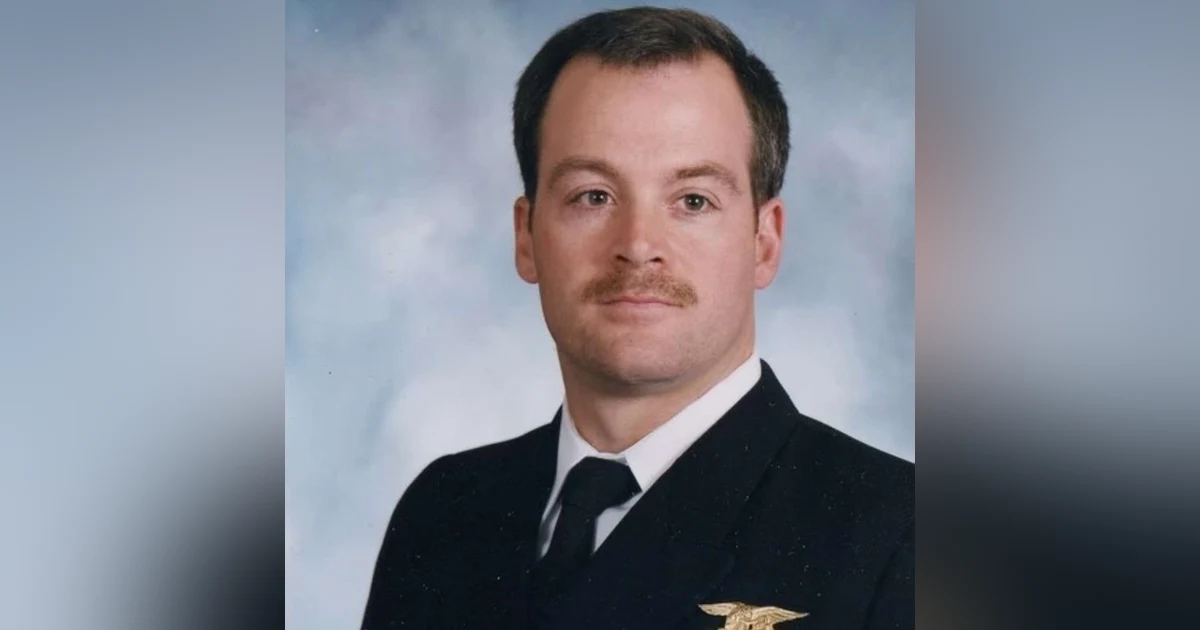
Doug Horner is a retired US NAVY Seal Commander, current Chairman of Undersea Warfare at the Naval Post Graduate School, brilliant robotics engineer and PhD who has dedicated his career to helping others and “pushing the limits” of what’s possible for both him and technology. During this fascinating episode, Doug shares the story of his journey from the world of finance through SEAL training, discusses what life is like as a SEAL, shares how he pivoted away from active duty towards academics and touches upon some of his biggest achievements in robotics – highlighted by the exploration of Mars and an Arctic adventure that led to an appearance on 60 Minutes.
To discover more episodes or connect with us:
0:02 Hello and welcome to the season three premiere episode of no Wrong Choices, a podcast about the adventures of life that explores the career journeys of successful and interesting people. I'm Larry Samuels, soon to be joined by the other fellas, tushar Saxena and Larry Shay. I want to start off today by thanking everybody who has come along on our journey to date. Our podcast is growing beyond our expectations, which has really been great, and y'all are making that happen for us, so thank you. Thank you so much For those who might be joining us for the first time and for anyone else who hasn't done this yet. Please support us by following no Wrong Choices on your podcasting platform of choice and by giving us a five star rating.
0:43 We also ask that you join our community by following along on LinkedIn, facebook, instagram threads and now X, by searching for the no Wrong Choices podcast. You can also connect with us at wwwNoWrongChoicescom. This episode features retired US Navy SEAL and the current chairman of the Undersea Warfare Academic Group at the Naval Post Graduate School, doug Horner. This should be a fascinating discussion. Larry Shay, why don't you lead us into this one? You set a mouthful if titles have anything to do with it. Yeah, this is a guy who we're super excited to talk to because he doesn't just have one area of expertise, he has a couple, and they're both top level.
1:27 Fascinating things, fascinating careers, right? I mean people spend their whole life in the military. He's a Navy SEAL. People spend their whole life in robotics. He specializes in underwater robotics and other fascinating things. So you're talking about a guy who is super physical to be a SEAL, super smart to be a SEAL and then uber smart to be in the world of robotics. This is someone I want to meet. This is someone I want to find out how they got to where they are, and someone who's at the top of a lot of fields. So fascinating to talk to. Doug Horner. So there's a couple things that we're going to talk about here. Is that one? We're going to have the opportunity to talk with someone in the special operators field, right? So these are like the elite of the elite when it comes to warriors in our military.
2:13 But it's not just that. When you look at this guy's resume and you see that this man is now involved in the idea of robotics and artificial intelligence and machine learning, well, he's on the cutting edge, the absolute cutting edge of the future of the military. So it's not simply what he did as a warrior, he continues to be a warrior and taking that idea of what is warfare into the future, and that is fascinating beyond belief. That's sci-fi stuff. Yeah, I mean he's got a 30 plus year perspective. That began in the field in the most advanced of ways and now he's literally creating the future of robotics for the military in a way.
2:58 So with that, this should be absolutely fascinating. Here is Doug Horner Now joining. No wrong choices is the retired US Navy SEAL and current chairman of the Undersea Warfare Academic Group at the Naval Post Graduate School, Doug Horner. Doug, thank you so much for joining us. You're welcome. I said so eloquently. It's the second time as well. Well, it's very funny. I was going to say it took me so long to get that out of my mouth. What does that actually mean? What is your role? My role at the post graduate school. There's a curriculum that is called the Undersea Warfare Academic Group, and so what happens is students come typically submariners, but also a variety of students from different warfare specialties.
3:44 They come to this curriculum that's known as Undersea Warfare and they get to choose between 10 different curriculum programs master's programs at the post graduate school. It includes stuff like mechanical engineering, physics and electrical engineering, and then they add to that courses that are associated with Undersea Warfare, so sonar, tactical oceanography, which deals with the very interesting space of the ocean, and robotics, and so I'm kind of in charge of that. You sound like you have the coolest job ever.
4:25 Okay, so I love this job. It's a great job. It sounds great and first of all it might be a bit insulting but, like you know, like Hunt for Red October is one of my favorite movies in those Tom Clancy books and a lot of what you're saying sounds a great deal of like what obviously, like those books were about. There was a book that's one of my favorites. It's about the Silent Service. It's about the Silent Service, submarine Service and a great deal of those, a great deal of the tales of submariners and you know the great tales during the Cold War, et cetera. So it just sounds like one of the best jobs ever. I think you're talking about Blind Man's Bluff, aren't?
5:05 you. Yes, blind Man's Bluff. Thank you for reminding me. Oh, my God, that's one of my favorite books. One of my favorite books. So let me get back to my original question, which was as a younger man. So you obviously are an unbelievably smart person. This is not this is without doubt Were you always into? Were you always into, let's say, tinkering with you know, whether it be robotics or just tinkering in general? And you wanted to be, you wanted to be, you wanted to have, like that, an athletic background and you wanted to have a background of you know, I want to do something more with my life and then incorporate that into my future. Or was it just that, look, I kind of need, I just love to tinker with stuff and then I'll find my way later on.
5:50 Yeah, so there's small elements of each of those. But I wasn't really like a mechanical kid growing up, but I did like take apart a telephone. I was super interested in those dial up telephones and you know how they worked. And so my mom gave me a telephone and said have at it. And I, you know, obviously I still remember that. But you know, growing up I didn't matriculate towards engineering. My undergraduate was at Boston University in mathematics and a second degree in economics and I was thinking business and I went from there over into an investment company called Colonial Mutual Funds in Boston and did sales for them for three years.
6:35 So I didn't start off with the idea that I would be ending up where I'm at right now. It's been kind of a strange, fun progression. And that's a good thing, right, because sometimes that rounds us out and makes us who we are. I do want to go back to the beginning, though, because you know, this is a show about the genesis of where our dreams come from and achieving them, and I think it's important to kind of go back and talk a little bit about. Before you know it sounds like you had both, you know a mind for becoming a Navy SEAL, and there had to be some physical ability. So take me back to the beginning, obviously, what kind of led you down to the SEAL path? You could tell that story in your own way, but also the physical aspect of it, because you know, just in preparing for this interview, to read what it takes to be a Navy SEAL is just superhuman.
7:24 So, just, I want to start from the beginning, maybe to when you were a child or a teenager. What have you? And, in your own way, just tell your story about how you went on that path. Yeah, I think it starts with all the time that I spent in or near the water, and so for years I grew up in a place called Lewisboro, new York, and our mom would drop us off at the pool and I would spend my summers swimming and playing ping pong and playing a little bit of tennis in there as well, and I just really enjoyed that, had great friends set and did that for probably five or six years growing up, and so that transitioned over into becoming a competitive swimmer and as a competitive swimmer through high school I graduated as an all state swimmer and then that kind of got me into collegiate sports with swimming again.
8:19 But I didn't do it very long because I was so burned out by that time. Anybody that's a swimmer knows that you put so much time in the water to be good, and I wasn't that good. So the rewards from coming from swimming. You know I wasn't winning races, so I was looking for something to something else to do and I found water polo and so the combination of yeah. so for me the combination of swimming and the physicality that's associated and the competition that's associated with a team sport in the water was really transformative for me. I really enjoyed that. I became president of that club and we traveled around New England playing all kinds of teams and having just a great time, and that has stayed with me over the years.
9:02 Wow, that's really really cool. So post college, you get into finance and you're working a few years out. When did you start to get the bug and start to think about, you know, pivoting, transitioning? Where did the whole SEAL idea come from it? came about because of the economic realities of a crash in 88. So I was working for again that company, colonial Mutual Funds, and a great company to work for, and I was doing something known as bank sales, so trying to get banks to sell our group of mutual funds. And that was based on the Glass-Steevill Act. That was new legislation that allowed the flexibility of banks to go ahead and sell mutual funds.
9:47 And so I went from Boston and moved down to Tampa. But it was tough going. It was a new marketplace and I was making a lot of money as a 24 year old. But I also kind of was like, hey, I could be doing this 20 years from now. Is this really what you want to be doing with your life? And so, you know, I was looking inward and started, and I think Top Gun was out at that point in time. I was like, man, that looks pretty good. It seems like a place where I could learn some leadership skills and some life skills. And so I went into the recruiter and I said what do you got? And he said and he took a look at what I've done in the past, right, and saw the water polo stuff and said, hey, I want you to watch this tape.
10:34 And he showed me this seal UDT tape and I was like holy smokes. They were doing scuba, right, and there was no bubbles coming out of their scuba rig. I was like how in the world are they doing that? And I was hooked. So that was the naval recruiter. Yeah, the naval recruiter in Boston and I had three choices. I had to take a battery test and I said I want to be a seal first, and then the second one was an EOD explosive ordinance disposal officer, and the third one would have been a diver a Navy diver by far. I also talked to some other folks that were seals and I was all over it.
11:17 I thought this was the best way to live my best life. So how does that work? Like I'm imagining you're a naval recruiter and people walking off the street all the time saying, hey, I'd like to be a seal. That sounds really cool. Like how do they know to take you seriously versus somebody else that passes through? I don't think they do. They just were desperate at that point in time. You got to understand this. This is like before. They couldn't have been that desperate. Come on, this is a very average student at a good college, but not a great college. But the demand to be a seal at that point in time, when we're talking 88, was not like it is today.
11:58 I don't think that I would get into the seal program today given my academic performance and my athletic performance. The level has just increased so high the bar is high. So I want to ask you a couple of things here. Now one when you were still doing your finance work, were you still involved in water polo at that point? Yeah, I would still play a little bit with some masters teams. And I could hear how much water polo and you even said like water polo as it's, as a team sport was very influential on you. What were some of the things that you gained from from water polo and just, let's say, team sports or being part of a team in general?
12:39 Obviously, being just a swimmer itself, it's a very individualistic sport. It's all about you competing against others or even competing against just the clock for the most part, but obviously with water polo you have to rely on others. What were some of those things that you pulled away? from that. So the first thing that you come away with it is a sense of Toughness, right, because you get there is the above water game and there's the underwater game and you can get a lot. You could get away with a lot under the waters if you knew how to play correctly, right. So there's a physicality that was associated with it. That was a lot different from anything that I'd done in in swimming before.
13:19 The second thing was, you know, the reliance on your team and the, the, the kind of person that a water polo, that people gravitated towards, that played water polo, was the kind of person that I kind of wanted to hang out with. They were fun people, right and how did that then carry over to you saying, okay, I can take some of these. Or did it even, let's say, like when you were thinking about it, you so I did you say, some of the Some of these skills that I had I did in with water polo, they could carry over into my training as a seal, or did that even come into mind? It really didn't come into mind. I think it was one of the reasons why you maybe the recruiter thought of you know, putting me into Into the seal application process.
14:07 The thing that, more than anything, that I would like to share is that at that point in the time of my life I felt like I I had a confidence, but it was an unrealized confidence. I didn't feel I felt like I could be a leader of people, but I didn't know how. And In comparison to the jobs that I had, I had the confidence that I could do a better job, but I wanted to fill myself out in life experiences, to do more than just say I thought I could do it right. Does that make sense? Yeah, absolutely, yeah, yeah, and you said that before that you were looking inward, you know. So you were looking for a way to harness that leadership ability and, from what it sounds like to us, the seals just seemed like a perfect way for you to Fulfill that inward goal of becoming a leader.
15:01 Is that right? Is that? It did it just fit the bill? It was just all of a sudden like boom, this is perfect, just what I need, yeah. Yeah, and the other thing that really it was the notion of service right and in the for the nation that that really was kind of missing within business and for me that really was a Strong reason to go there because I was taking a pay cut of more than half Right right and, and so I was going from you know a nice style of living to to something that definitely took me down a step and but it was worth it as far as I was concerned at that point in time in my life.
15:45 So how, how difficult was that? Reflection though. I mean, was this a series of you walking into the office in the next few hours? You're on a plane to get trained, or did you take a couple of weeks and figure out? Yeah, this is really gonna be the best thing for me, because it's gonna make make sure that I'm Taking care of that fulfillment aspect of things. Yeah, what happened was is that I left the job and I actually traveled in Europe for six weeks. And, yeah, I went to Ireland on my own Ireland all the way down to to Germany and Greece, and while I was there, I found out that I got into the program. Oh wow in In Greece did you find?
16:25 Out, because that's a beautiful place to find out. Yes, yes, to celebrate. Yes, absolutely awesome. And how do you find out? So you're in Greece. Did they send a telegram like how does that work? They call my parents and I said he's got to come home. Oh, that's great Wow. So how long? Before that from that point was it before training started? So the first thing that you do is you go to officer can at school, officer can't schools in Newport, rhode Island, and I reported I think it was on the 25th or 26, right after Thanksgiving of November 1988, and that's then for three or four months and then I go straight, went straight out from there to Coronado, california, for basic underwater demolition school.
17:16 So when you get out to California, you know I think of the the great story when you start college they say take a look to your left, take a look to your right. Those two people will not be standing there at the end. Well, I think, with the, the Buds program, that that it's a legendary thing that that people don't make it through. How many people did you start with? Yeah, 103 and graduated. We officially graduated with I think it's 40, some number Approximately. Wow it was also one of the things that the number of your, of the guys that you started with, that you finished with was 20, approximately 20, and the rest of the other 20 were guys that rolled into the class Because they had previously been injured and classed up with, in my case, class 163.
18:06 Oh, wow, that's amazing that many injuries. Because that many injuries? Because you have to remember it's the toughest sport on earth, essentially right. I mean you are training to become, you know super human, super human. Yeah, destruction proof really. I mean, from what, what I've read? the thing I'd share with you guys is it's not during buds, it's actually after buds that you really learn your craft, and it becomes Harder. I mean, that's a wicket that you have to pass through, but that's just really the beginning. So take us through training. You know what is that process, what are those days, what are you learning like it.
18:49 Can you sort of take us through that journey? Yeah, absolutely. So you get there and you have about six weeks. There's three phases. Okay, there is. You wait until you class up. So that was about again Don't quote me on exact time frames and dates, but this is the general feel for it. You wait to your class up, then you class up and be part of this group of a hundred guys and and then and you get ready through physical training on To be part of that class. Once you get part of that class, you go through three phases. There is the first phase, which gets you ready for hell week.
19:31 Where in hell week you are, you're tested to your limits and part of that testing is staying up for four nights in hell week and Then after that, after you get through hell week, you go through. Let's see, there's a land warfare phase and there's also a diving phase, and For the land warfare phase they take you out to a place called San Clemente Island. You do small arms training and also demolitions, underwater demolitions, and then for diving you get qualified.
20:12 You start with open circuit and then you transition over into a closed circuit, which was that difference between scuba and no bubbles bubbles versus no bubbles so you can become a tactical combat Diver. All right. So just, but just so that we can explain to folks when we keep sick We've mentioned the word a couple of times bud school, what that really? But what that really means is basic underwater demolition, seal training. So that's where it buds comes from. So, okay, so now you've done, you've done, let's say that's why, that's what six weeks you said. So the the total time for buds is is approximately eight months. Oh wow. Okay, wow, geez, all right, so. So that's eight months of just what seems to be intensive training at this point.
20:58 It is, but you get. So for me, the mindset was is If I don't make it through here, they're gonna have to take me out in a body bag, and the sounds kind of extreme right there. But you kind of kind of have that mentality when you go in because otherwise you're gonna wring out, and that's not that. That leads me right to my next question All right, so I think a lot of us have seen kind of movies about seals and seal training. Is that true? The idea of the bell to ring out? Yes, that's absolutely true, absolutely true. And I'm assuming that you have seen other guy, other other candidates in there who you would say are probably just as superhuman as you or you know you would.
21:43 You would think, and they ring out and you and you're probably your joy drops, I'm assuming. Yeah yeah, and not superhuman, obviously it's. It's it's Persistence and it's over overcoming adversity as you look back and and you compare yourself to the others. Was there something Different about you in eight Lee that you think helped get you through this process? Yeah, if I'm being honest with you, it's that I'm not great at anything, but I'm really good at a lot of things, and so when, when you are in the top 20% of a lot of things, then you gravitate overall to being good.
22:24 I you just made my my hair stand on end with that kind of stuff, man, because what you're doing, I mean there must have been, and Help me, help me understand it. There must have been days where you're like I can't do this anymore. So how did you push through? What was that mental struggle like? Or were you always just Going to go into the end? That was it. I mean you said bring you out in a body bag. There's things called drownproofing, somebody is trying to drown you, you know, and you have to like, not drown. Basically, you've won if you don't drown. What was the mental part? And I know it could be very sensitive and I'm not trying to make light of it. So, please, like, help us understand, because it's a special person that I'm not trying to make light of it.
23:04 Understand, because it's a special person that goes through this. It's funny that you bring that up, because I failed the first drownproofing so I had to go through a second time, and so the first. What do they do they? They have you in a pool and they have you in open, in open circuit. Uh, so scuba, and they take they your mask. They take your mask off, they take what is an octopus rig which is connected on both sides of the tank, and they bring it over your head and they tie it in a knot and then they toss you around a little bit and then you've got to untie the knot and bring it back over the top of your head and start breathing again, and I couldn't get the knot out.
23:46 I had gotten to my limit the first time and so so you had to under water when that happened. Obviously right, yeah, you've got to be comfortable in the water, oh my God. And so the second time I trained and trained and trained and there was. For me it was kind of a strange part in aspect of my life because there was just no way that I was not going to not make it. I didn't want to live with myself if I didn't make it, and that's for those folks that don't make it through. It's not a reflection on that person either. I don't want to make that quick. So when do you know? You made it Like what is that moment, what is that last step where you know?
24:32 you've made it. I mean when you're walking across the stage and you get your orders to your next command. But is there a moment where you're walking out of a drill, out of a test, out of a water, where you've just kind of left it all on the field and you recognize that you've crossed the finish line, where it's really not until your score comes in and you get your certification. So you get all these scores as you're going along. So you know how you're doing, but you never know when you're going to get injured. You never know when you're going to get a fracture, a shin splints, to the point where you can't run anymore. So it's always a process.
25:12 You don't want to take anything for granted. And then what are the emotions afterwards? I think about all those people who were messing with you throughout the process and making it hard, etc. I mean, you recognize why you're doing it, but are there any hard feelings afterwards? Do you leave that behind? What are the emotions after you've finished? So you don't have any animosity towards your instructors I didn't. They were terrific and they're just trying to teach you the lessons that you need to learn when you get into serious circumstances and how do you be a leader, and so, in a sense, that's what I was kind of looking for.
25:59 It was the first step along that path, and so they were tremendous. Of course, I was proud. I was proud of myself, and that doesn't go away. I still look back on that right now as we're talking. I'm extremely proud of my performance during that time frame, as well as you should be. You talked about injury before and guys that get injured and you said about 20 rejoined your group. How does the injury thing work, because it's such a big part of this. Can you step away, rehab the injury, jump back in right where you were? Is there a waiting list? How does that end? You just get a year and then that's it. You're done. So you know this is back in the day. This is 30 years ago.
26:41 So I don't know, it may be different today, sure. Yeah, exactly, but back in the day what happened is, if you've made it through Hell Week, then you could class up and you got injured. You could then pick up another class. If you didn't make it through Hell Week or you got injured before Hell Week, then you would have to go through that first phase all over again. Right, and so those three phases the initial phase, the diving phase and land warfare is that you would then class up at one of those. Does that make sense? Yeah. Yep. Sure yeah. So what was your first assignment coming out of? Coming out of Bud's, yeah? 1989. And I got assigned to SEAL Team 4, which was my first choice, and that is they had an area of operations of the Southern Command which, if you guys remember, was when the invasion of Panama happened, and with Noriega Yep, then Panamanian general Noriega, and so I thought that was the best place to go at that point in time.
27:44 So, okay, we're entering the tricky part of the interview. Let's talk about it for a second. Yeah. You were a SEAL, for you helped me with the number of 10, 11 years, yeah, 12 years, 12 years. I'm sure there are things you could talk about. I'm sure there are things that you can't talk about. We certainly are not going to know the difference. So we want to go as far as we can without you breaking protocol. So what were some of those missions that you're super proud of? If you could talk about them or be vague, but what did you do in that? time. What's an example? Yeah, 12 years Tell us a little bit about that. I'll give you three snapshots.
28:25 The first one is the time that I spent down in South America, and so there I was as an officer. I was assistant officer in charge and then also eventually an officer in charge of a platoon, and that means of 16 guys that deployed together. What was your rank. My highest rank was a commander. I attained that after I left the SEALs as a reservist, as an active duty SEAL, my highest rank was a lieutenant commander, which is an 04. So for the first five years I was deploying down to South America to places like Columbia and Honduras and stationed in Panama right on the Panama Canal, which was amazing.
29:11 And then doing counter narcotics training with partner nations like Columbia and going into those areas, remote areas like the Putamayo River down in Columbia, which is between the border of Columbia and Ecuador, and seeing that beauty and seeing how the countries worked, being able to get fluent in Spanish was a really terrific time. The next phase that I'll mention is 97 through 99. And there I got qualified as a SEAL delivery vehicle pilot. So I don't know if you guys are familiar with, but the SEAL delivery vehicle is a wet submarine and it comes out of the back of a what's known as a dry dock shelter on the top of a submarine and you go and do naval special warfare missions from there.
30:07 Interesting so, oh boy. So being a pilot and doing things like just looking at the dry dock shelter out the back and seeing. You know, we used to do training in a place called Vieques in Puerto Rico and looking out the back of the proverbial submarine garage and seeing the bioluminescence coming off of the back of the submarine propeller with a hundred foot visibility was just absolutely amazing, wow. Oh my. God. Okay, that's two. You have a third. Yeah, persian Gulf. There I was the task unit commander, so in charge of about 21 or 22 guys on an aircraft carrier and that was the USS Roosevelt and we went over to Bosnia through the Mediterranean and then through into the Gulf Persian Gulf where we were doing, you know, operations there, and that was extremely rewarding as well.
31:13 Yeah, I'm sure I mean all of these things. It sounds like I mean you are a pilot. I mean you're doing various functions in those three snapshots too, which is what I find most fascinating. So what kinds of things? Don't even talk about mission exactly, but what kinds of things did they have you doing? Were you going behind enemy lines? Of course you're driving vehicles. You're in a sub vehicle with the sub single man, like, are you like going in and like going under and jumping on land? essentially, yeah, let me give you an example. One of the things in the Persian Gulf that we used to do is something called visit, board search and seizure, and what we would do is take over a ship, a cargo ship, and the way that we would do that is, at night, by fast roping from helicopters onto the back of the moving cargo ship.
32:04 Oh, my God. That's like we would have weapons. We would have. I was going to avoid saying that's like the movies, but that's like the movies. It was crazy. Yeah that's crazy Fun simultaneous. Yeah, I'll bet and you have to at some point. I mean, I Kate Harpen on this point, but I'm going to do it again At some point. You're like staring into the abyss on the back of some vehicle about to jump into God knows where. You must have said am I making good life choices right now? Actually, that really is a really good question because, like you, have to be a little bit crazy to do this job. I don't think so. I think more than anything when I hear you guys say that is the the, the thing that that I think about is you know, Lord, just let me get it right.
32:51 I mean, that's yeah, there you go. So you know, tushar asked a very good setup question for for where my, my, my mind was going, which is you know what is the lifestyle of a Navy SEAL Meaning? You're going off on these missions, you're living in different parts of the world, you're giving all of yourself to your country and to a cause. Can you have a normal life, like how much notice do you have before a mission? How long are missions? Can you date as a Navy SEAL? Like, what is the lifestyle of a SEAL? So what tends to happen is is you get assigned to. This is again old information. Okay, it's not organized the way it is now, but from my standpoint, my historical basis is that you would get assigned to a platoon and that platoon would have somewhere like an 18 month workup where you would do all this training in submarine operations, in air operations like halo, high altitude, low opening land warfare, all these different components in order to qualify the platoon to be able to be, to deploy and be a capable unit.
34:05 Then you would deploy for six months and then you'd come back and you'd stand down for a while and then you'd repeat that process, especially for enlisted and for officers. You typically stay at a command for, you know, two to three years and then you move to a different command to try and check off a lot of your responsibilities as you matriculate and become a more senior officer. So do you still consider yourself at this point now, retired so many years, still a member of the special operators community? Like, are you still very welcomed in? And I mean, obviously, look, you're teaching it. We were teaching at the War College in California, but you're and I wouldn't say buts, it's wrong for me to use the word, but in this case because you are still obviously teaching in the Submariner community but in this sense, like, do you still consider yourself part of that special operators community as well?
34:59 Absolutely, but I don't make you know I'm not in contact with everybody as maybe I could be. There's a little bit of separation that has happened over the years. You don't, you know, hang out with as many of your buds as you want to, so there is a little bit of a separation. Why is that? The responsibilities associated with, you know, having a family, raising the family. Sure, your priorities change a little bit. So to that point, doug, when you talk about priorities changing, how do you know it's time to pivot away from being active and to pivot towards something else? Does that moment reveal itself to you?
35:42 Yeah, yeah. So let's see, in 1995, after five years at SEAL Team 4, I came to the Naval Post Graduate School in Monterey and met my wife then, julie Franson, and spent two great years here and then we left and we always thought that we kind of wanted to come back here and maybe raise a family. And so then fast forward to 1999 and after the Persian Gulf, with the Task Unit Commander is, I did a job in Washington DC at Naval Sea Systems Command and knew at that point in time that we just wanted to transition back.
36:30 It was too hard on us in our particular relationship to spend the kind of time apart that we knew we would if I continued to be a SEAL. So were you married as a SEAL? Yes, and what was that like for her? Meaning you're going off on a mission. Are you going to come back Like what was that like for her? It was tough. It was tough, it was tough. You'd have to talk to her about that, but it's. You know, the not knowing and not being able to discuss stuff was always difficult. How old were you at that point? Let's see in 32, which, when I got married, so I have to think this is an issue with a lot of your colleagues too.
37:17 I mean, everybody you know, I would think, goes through this in one form or another. We all have relationships in our life, whatever they might be. How you know, how long did it take, for instance, your wife to, like you know, get into that because you signed up to be a SEAL. She didn't, so at a certain point she's signing up to be a SEAL's wife, right? So was that a long transition for her? I'm not sure it was ever a transition or she entirely accepted that right, because you know I can give you a story. As with the SEAL delivery vehicle is that I got stung in. The short story is that I came out of the back of the submarine and came up to the surface and while I was coming up to the surface I got stung by a sea wasp and I went into anaphylactic shock.
38:04 Oh, my God. And she didn't find out about it until a couple of days later when I was in the hospital, and so you know that happens, yeah, and it's not easy to deal with, right? So, doug, when you decided that it was time, what was your thought process? What did you think could be next for you? Well, I didn't know at all. I just when I started getting interested in was robotics, because my last job in the Navy was at the again the Naval Sea Systems Command, and I was in charge of a program that was introducing the first autonomous underwater vehicle into the Navy and I really enjoyed it because it got me smarter on aspects that I knew about under sea with respect to the SEAL delivery vehicle, like why was it navigating, what does an autopilot mean, what's the position estimation as a function of distance, those kinds of fundamental questions I got better understanding to and it just got more fascinated about and kind of realized that the future for unmanned systems was right there, that it was going to be something that I could enjoy over a 20 or 30 year period.
39:25 So we left the Navy and we had one thing in mind and that was return to Monterey. I didn't know what I was going to do. My wife is a speech therapist so she knew what she was going to do, but I didn't know what I was going to do. So I came back without a job and found my way to the postgraduate school and have stayed there ever since. So how did that happen? How did you find your way back to post-graduate school? At that point, Was it just like, essentially like who did you speak to? You say you know what, I'm looking, I'm trying to find something. This is what I'm interested in now. What should I? do. Yeah, there was a professor, a guy by the name of Don Bretsman, that took me under his wing, and there's also. I worked for a company that was working for MPS and they saw my work and then they pulled me into the school and then I started working for what was my one of my strong mentors over the years.
40:15 I got by the name of Tony Healy, who was the chairman for the mechanical engineering department, and I've kind of stayed in that department ever since and he got me even more interested in on robotics. So you mentioned something a moment ago about you know your understanding of being a pilot yourself and how these crafts moved through the water etc. Got you into robotics etc. Did you? At that point you said you knew this would take you through like the next 10, 20 years. So you're thinking that far down the road as you're making this decision. I kind of was it's kind of interesting that you bring that out, because I kind of looked at it from an investment standpoint. It's like what's my return going to be for personal satisfaction?
40:56 Not monetary return, but personal satisfaction over a long history. Yeah, I kind of took a look at that and I was like, wow, there's a lot of stuff that I could really get into right here. It just kind of made sense to me and who I was at that stage of my life. Yeah, that's. That was a moment of insight for you that really blossomed your career into an entirely different second half, which is that blows my mind, you know. So kudos to you. So what's your first step? You start teaching. Did you enjoy teaching at that point? No, it was all about research. So for the next five years or so I just did research programs where we would try and instill autonomy as computer algorithms on board the vehicle to try and give it more capability than it had.
41:44 So to try and give it more, so quote unquote independence. So one example of that would be obstacle avoidance, that the underwater vehicle by itself didn't have the ability to recognize and avoid objects forward of its position, just like the seal delivery vehicle doesn't, and so what we did was do the computer processing on board using forward looking sonar that would recognize objects and go around them, which sounds pretty rudimentary, right. But to institute that as a system you combine together sensor information with position estimation, with path planning and with mapping, and you've got to bring all those things together to get them to work properly, properly together.
42:25 I mean it sounds like a way to build an unmanned Navy under this. I mean that sounds like the direction that you're heading it. Yeah, yeah, there's a lot of effort right now into developing unmanned systems. You know I always make fun of people and say you know, it's not rocket science. This sounds like rocket science. Yeah, yeah. I don't think so. It's pretty straightforward. But well there, it is right there, so that it comes easy for you. Was that? Part of it is that you were seeing rewards, you were seeing projects you know fulfilled and you were being fulfilled because of that and that fueled you more like how then do you have the next two decades of your career in robotics where you're a giant?
43:07 I mean, what you've done with underwater robotics, from what I've read, is astounding. So how does this, how does this matriculate from from this point? So the first of all, it's recognizing an opportunity, when one exists that feeds to what you think might be your strengths, not now, but in the future and then it's then it's knowing who you are and the places that are going to keep you interested. So, for me, the things that keep me interested is the ability to find my own future, and so, within research, I put out proposals, but I get to choose what I want to do.
43:47 So one of the things that is important to me is to travel to interesting places with good people. So one of those things was known, as it's called Nemo. Your listeners can look it up, but it's NASA Extreme Environments Mission Objectives and what it is is. We got together with NASA astronauts that go into a facility known. It's off the Key Largo and it's Aquarius is what it's called underwater habitat and so they go into this underwater tube and live there for a week, and what they're thinking about is being in space and doing missions in space and maybe even in Mars.
44:35 So the question becomes is how do these aquanauts, which they call themselves, interact with robots on Mars? And so we took our vehicles there. We had torpedo-shaped vehicle and also a box-shaped vehicle that was much more able to work closely. The torpedo-shaped vehicle turned out to be the search vehicle. It would do a survey of the larger area and then come back with the information about recommendations as to where to go, and then the aquanauts would go out on their air systems and go with the other underwater vehicle and they would then grab samples and that robot would help them get those samples.
45:26 You know, normally we tell people hey, how do you get a job like this? I don't want other people to get a job like this. I want you to have a job like this because you're the only person Like this. Blows my mind to have a conversation like this. So I got to give you one more story. Can I give you one more, please, please? We got a chance to go, so the Navy, once every two years, has an exercise on the Arctic ice it's known as icex and so we took our underwater vehicles actually our aerial vehicles as well took a team up there and we deployed the vehicles under ice with submarines that show up.
46:08 And the way that the submarines show up is that they find the location they come from, like Groton, connecticut, come all the way up within 800 miles of the North Pole, and they come surfacing up and their mast breaks the ice right next to our ice camp. So we were there for three weeks I think it was just doing ice operations with underwater vehicles in minus 20 degree temperatures, and it was just awesome. Sounds incredible. It sounds difficult. It sounds like you're seal trading game it yet.
46:49 And so there's a piece on 60 Minutes called Arctic Frontiers with Leslie Stahl, who was amazing what a national icon and she was just amazing, so she interviewed us. I'm curious. So all three of us watched the segment at 60 Minutes preparing for this. Oh, did you? And the way she positioned it was as if she lived there for a week. Was she actually there? Was she flying to the Hilton somewhere nearby? No, she was there. Wow. That's great. And I'd have breakfast with her and she'd be talking about her grandkids and I'm like oh my goodness. I'm on the North Pole talking with Leslie Stahl and we're having a great, great conversation over breakfast.
47:33 That's great. It doesn't get any better than that when what was she? Living in A tent. Yeah, wow so. I'm telling you right now Leslie Stahl was saying to herself I'm talking to Doug. Horner Right. It's unbelievable. I'll tell my grandkids this later on. Seriously, seriously. Doug, I got to ask. So I mean, look, it's hard to kind of transition then from saying obviously you love the research, You're a researcher. We can hear that. So what is that transition then, like, do you prefer being a researcher or do you now enjoy the idea of being a teacher and being more of a class teacher at this point? What I really enjoy is teaching students that have a background within the Navy.
48:19 Like, a lot of times we get these Navy lieutenants that have maybe five to seven years in, so they have good ideas on what they want to improve, and then they come to you and say, why don't we do this this way? And I'm like, yeah, that's a great idea, let's do it. And so we come up with a research program and I've got one student right now that is an oceanographer and he's got experience with underwater vehicles and he wants to understand sediment transport and we're going to use the underwater vehicles to understand sediment transport near the interface between rivers and oceans. Let me ask you, let me actually that's a really good kind of question, a great question to kind of ask there the notion of generational change there, right?
49:03 So we talk a lot about here and joke a bit about how, like you know, kids today maybe don't understand what it was like for us growing up without cell phones, without computers, etc. Now, how do you see, how do you, let's say, incorporate the ideas of some of the kids that you meet now, the younger, these younger officers that you meet now, and incorporate that into the work that you bring, that you're doing, and do they? Is there a good synergy between, let's say, new and old, so to speak? Yeah, I think that the students that I interact with are amazing. They are smarter, they have a great head on their shoulders.
49:45 I'm constantly impressed by the comparison between where I was at the Asian, where they are, and so you know, being the chair of the USW academic group is that I want to make sure that they have a good experience, because I see the level of effort that, by and large, they're putting forward and how much they care. That's great. I mean, we need smart people, right, we need smart people to lead us to new things and go further. You keep talking about an aspect of what you do now that I really want to just know a little bit more about, and that's like the research proposal.
50:28 Like, I'm listening to you, you're clearly, like probably the smartest person I've ever talked to, and it's incredibly successful. So how do you get paid? Is this a government contract? Is the government paid? You put out a research proposal, somebody decides yay or nay, but if they say yes, they do the funding. How does it work? How do you make a living doing this? I guess, is my question. You're going to all places and all over the world doing amazing things and, as you said, you decide what you want to research. So yeah, like, how does that? work? It's a great question. So, first of all, I am a department of the Navy civilian employee for the Naval Postgraduate School, so I get a portion of my salary that comes from the USW academic group, but the majority of my salary comes from research initiatives, and those research initiatives are obtained through proposals that I write on a yearly basis to organizations like the Office of Naval Research and DARPA and some other various organizations, but those two are the dominant ones and you have a sense as to because you're attending robotics conferences, because you're attending the conferences that are associated with the development of capabilities within the Navy, and that you have all these operational folks that you're engaging with at the school, you have a notion as to what is needed to go forward for unmanned systems and especially autonomy on unmanned systems.
52:08 So that's kind of the process in a nutshell. Yeah, all right. Oddly enough, before we were talking to you we were talking about hey, how much interaction do you have with DARPA? So it seems like a great deal, to be honest with you. But I want to ask you a question about this notion of the future, and obviously you talked a great deal about seeing this career for you as 20, 30 years out. Has this changed your viewpoint on the future of war and warfare? Yes, if I was in a policy position which I'm not, is that my threshold to enter war as I've gotten older is higher I would.
52:55 I just wanna make sure that we avoided at all costs and that wasn't necessarily my view at twenty seven or twenty eight years old, I know I wasn't really my position or place. If I thought like that, I wouldn't what have been dangerous for me and the people that I work with, I think, and so that mentality has shifted over time because of the damage that would be done had if you entered war. Yeah, yeah, I mean you look at the concern with with china right now, and it's a peer versus peer potential conflict that would reek a significant damage all around.
53:41 That's a heavy price to pay, with no victor. So you know, doggie, that this brings up a similar question for me when it pertains as it pertains to the climate and our planet. You've been in a very unique position to be underwater, to be so deeply immersed in nature, to be in the arctic, to have seen all these different things. What type of change have you seen over the past thirty years? And when it comes to a tipping point, you know from your vantage point, you know where are we from a climate perspective? so I'm no subject matter expert in that domain. All would be anecdotal based upon, you know, what we've all witnessed, and it is from a generational standpoint.
54:29 It is very worrisome that we're leaving this to our children and our children's children. So, doug, last question you know, as we, we look forward. If there's one more huge thing that you want to achieve or accomplish before you one day retire, what would that be? I want to excel at retirement. I wanna you know when the times right, I wanna go out and and Do some traveling with my wife and enjoy that to its fullest. So I want to be of an age where I've got the mobility and the Inquisitive about different cultures and learn different things and maybe pick up an instrument.
55:23 Oh yeah, and with that you know. It's right advice for young person, somebody coming into you know the the work world today, if they're inspired to be a seal, if they're inspired to be in robotics, what advice do you have for young people in today's environment? guess the first thing I'd say it's not about the money, at least for me, never was. Then the next is is to find people that you generally enjoy working around, if you can get those two right. And the third one would be is to find a process or a field that allows you to be engaged, that interests you.
56:09 those, those are the three really core things well, it certainly sounds like you've achieved all of those things and, doug, this has been a remarkable conversation. Thank you, you know, a for your service and be. Thank you so much for joining us today you guys made it easy. So that was a great way to kick off season three of no wrong choices. What a remarkable person. What a fascinating conversation with Doug Horner. We could have spoke for another two hours and probably still not have scratched the surface of what we really wanted to get to.
56:53 I am fascinated by this notion of you know, and I absolutely believe what he said is that, having worked now in robotics and and autonomous and essentially autonomous war, that it's absolutely changed his viewpoint on what war is now right, and he even spoke about it like how he's transition from what war meant to him as a young man, what it meant to him as a middle aged man, what it means to him now and what war would truly mean to all of us. On that state. It's so fascinating in so many ways, but what I really was actually, you know I, what I really took away from that whole discussion, was a. I know this, I know that and I know I joked about it with in the, in the, in the interview itself about how they look.
57:39 We. You know I don't want everyone doing this job this man is doing, because there are very few people who should be doing it, but at the same time, we need smart people to do jobs like this because, yes, we need people who are futurists, and he is a futurist yeah, I. There's so many things we learned in this interview. I think the most important thing is what a genuine guy he is. You know he answered questions thoughtfully, honestly, but I mean the guy's fearless. I mean the guy's fearless. The guy was so determined. I mean talk about failure is not an option when he's going through seal training. And we're asking him Like your darkest thoughts in those moments, and he's like I was not gonna fail, like I just it wasn't even in his thought process.
58:21 So the determination is what I take from this. There are also so many parts about his youth that you know him switching swimming, competition and then going into water polo and being part of a team. I mean we all think that him being a part of a team and seeing how important that was in his life lent itself to the seals. Later, I mean it was a brotherhood with the seals, right, you know that's the biggest team there is, the best team you know there is. So I found that fascinating and I think that was an important part of his life. Even playing ping pong, you know reflexes, things like that. He just mentioned so many little things that you could see why it added up to. This guy is going to be a very successful guy and you know, I think we also learned about when he switched to robotics how he's able to make that a career.
59:12 I mean, there's no Path that I've read in any book of. Okay, you're gonna do this and then you're gonna make, you know, arrangements with the government to better understand underwater robotics and you're gonna make a living at it. Like where's that manual? like so yeah yeah, where was that? Where was that in the high end? I never got that. My guidance counselor miss that, so here's a guy who is determined this could be super smart, obviously physically imposing, but fearless, and failure wasn't an option. I love that you know, there's an old saying that that I use every once in a while I've heard other people uses that it's good sometimes it's good to be a jack of all trades and a master at none.
59:54 And really he, he basically said I, I know a lot of things really well and I don't really know any one thing very well. But you know, if you know at least a bunch of things really very well, eventually it all kind of comes together and you and you became, and you can become, a master at certain things, which is what he knew it was a strength. He knew the strength. And that's really what kind of maybe. Maybe was the most fascinating part of this entire interview just the idea of maximizing as many portions of your knowledge as you can. Yeah, you know, and that sort of leads me into what I'm reflecting upon, which is composure and perspective.
1:00:37 You know, when I think about what is a seal like, like, what is that person who's able to put themselves out there in this way and to endure so much and to to hang in there and to achieve the things that you have to? In order to get to that point, like you have to be wired in a really unique and different way, and the way he talked about his journey, the way he talked about his life was, was very matter of fact, meaning I did this. I didn't like that, so I did that. I didn't really, you know, necessarily want to do this, so I did that and everything was. I just did it like like there wasn't this major revelation, there wasn't this major oh my God, moment.
1:01:20 It was just this is what I did next, and he just seemed to have that. That, that that composure and just great perspective about this is my journey and putting myself out there and this is where I'm at it, which I just thought was absolutely fascinating. And working with good people, like he mentioned that too right. We talk about that all the time. You want to be someone who people want to work with and have a good time, no matter what you're doing building robots, navy seal, like it doesn't matter you want to be someone people want to work with and that's how I feel about the two of you every single time. I hear your voices so with that, doug, thank you so much for joining this episode of no wrong choices.
1:02:00 We also thank you for joining us. If this or another journey story inspired you to think of a friend who could be a great guest, please let us know by sending us a note by the contact page of no wrong choices dot com, as I mentioned off the top, please support us by following no wrong choices on your favorite podcasting platform while giving us a five star rating. And then, last but not least, we encourage you to join the no wrong choices community by connecting with us on linkedin, facebook, instagram threads and X by searching for no wrong choices. On behalf of two share Saxena and Larry Shay. I'm Larry Samuels. Thank you again for joining us and remember there are no wrong choices on the road to success. We learn from every experience.