Championship Drive with Matt Pazaras: Milwaukee Bucks Chief Business Development & Strategy Officer


 Apple Podcasts

 Spotify

 Castro

 RSS Feed

 Youtube Music

 YouTube
How can a person thrive and survive in the highly competitive world of sports marketing? Matt Pazaras, Chief Business Development and Strategy Officer of the Milwaukee Bucks, shares the game plan that drove him from dreaming of being a professional athlete to leading a World Championship organization on the latest episode of No Wrong Choices. This is an inspiring story of a young man with big dreams and a fire inside who never took his eye off the ball, built an incredible network and embraced the growth mindset to achieve BIG dreams – highlighted by his life changing Championship journey with the Milwaukee Bucks.
To discover more episodes or connect with us:
0:02 Hello and welcome to no Wrong Choices, a podcast about the adventures of life that explores the career journeys of inspiring and interesting people. I'm Larry Samuels, soon to be joined by the other fellas, Tushar Saxena and Larry Shad. For those who might be joining us for the first time, and for anyone else who hasn't done this yet, please support us by following no Wrong Choices on your podcasting platform of choice and by giving us a five star rating. We also ask that you join our community by following along on LinkedIn, Facebook, Instagram Threads and now X, by searching for the no Wrong Choices podcast. You can also connect with us at NoWrongChoicescom. This episode features the Chief Business Development and Strategy Officer for the Milwaukee Bucks, Matt Pizaras Tushar.
0:49 I believe you have a long history with Matt, so you were the perfect person to set up this conversation. Yeah, I've known Matt since we were kids and actually he was one of the best friends of my cousin and I could see the young age like this guy was going to be somebody someday. And you know, matt was a natural athlete, is a natural athlete. He was a huge basketball nut, a great baseball player, when we were all young. Actually, he probably wanted to be a professional athlete when he grew up. To be quite honest, yeah, we all talk about what he wanted to be when we grow up. He wanted to be. He probably wanted to play for the Yankees. He was a huge Yankee fan and he and my cousin and all his group of friends they're the reason why I really got into fantasy sports, whether it be baseball or basketball or football.
1:33 They were the reason why I really got into fantasy sports as a kid. So I am so happy as to where Matt has ended up in his career path because I know he's done things the right way. He started out as an intern with the NFL and then used that and leveraged those relationships to get where he is today. I'm telling you you're going to love the story of my buddy, matt Pizarro. Yeah, I'm excited to talk to Matt because I think a lot of athletes out there dream of being in a front office and running an organization and I'm excited to see if he gives us that playbook, you know, if he gives us that script of how you go from being an athlete and enjoying athletics as a child to you know, obviously one rung at a time, building his way up to what is now one of the most highly coveted positions in all of basketball.
2:21 So, yeah, I'm excited to talk to him and see if he gives us that playbook, because I know a lot of people are out there dreaming of just doing exactly that. Absolutely. You know, and from my perspective, as somebody who you know worked within the entertainment, advertising, marketing industry for a very, very long time, at different moments I crossed over the sports marketing industry, so I have a unique perspective as to how difficult it is to get into that space, how low paying it is at the very beginning. You know how you have to pay your dues for an extremely long time to get anywhere and there's a huge, huge number or amount of attrition before you know anybody can really establish traction within that space.
3:03 So Matt is an example of somebody who who did it, pushed his way through and became incredibly successful. So I'm very eager to hear what his formula was and what approach he took. So here is Matt Pizarra. Matt, thank you so much for joining us. Thank you for having me All right. So thanks for the disclosure to everybody, including you two guys. I've known Matt for a long time. When I mean a long time, I've known him since we were kids. He's actually one of the best friends of my cousin and when we were kids, obviously you know, I would get together with them. They lived very close to me. He's actually one of the reasons why I got really into basketball as a kid. Matt, thanks for joining us. It's great to speak to you after all these years.
3:44 All those. That's true, I've known you for a very long time. Sanil, your cousin is a, is a, is as good of a friend as it gets, and I'm thrilled to be on the phone with you guys today. So thank you. All right, so let's let's talk about way back when. Way back when did you see yourself where you are today? I mean, obviously, huge sports nut like me, did you always want to be in the realm of sports? No, I definitely did not say any of this and it's not something that I that I deemed was possible until, maybe, post college and my first experience, which was as an intern at the NFL offices in New York.
4:30 So let's take you back to the beginning, though, even further, though. What was the dream if it wasn't this? I want to play center field for the Yankees. Perfect, there you go. Me too. Now you're speaking our language. That's what. I wanted to do. But you played sports as a kid too. You played baseball, I assume. What else did you do? Baseball, basketball ran cross country. Love sports, love as a fan, love participating, loved it all. So when you were in grammar school you thought what? Obviously you're trying to be a New York Yankee, but what's the realistic goal? Do you want to go into business? Do you do marketing? You said, doesn't happen until college and later.
5:11 The realistic goal is I'm going to be center field for the Yankee, clearly. I really didn't know what I wanted to do. After high school I went to Boston College and I wanted to be in business. And it was as general as that. I really just wanted to be in business. I was my interest. I went to the Cow School of Management at Boston College along with Sunil, and then I had this opportunity after my junior year and I never, obviously I knew that sports was a business, but I certainly wasn't what it is now and I never thought of that for myself. My cousin randomly said to me one day hey, I know this woman who works at the NFL League office.
5:53 Do you want to meet her? And I went to the city and I met her and that was kind of my first step. She offered me a job as an internship at the NFL League office. It's so funny. Relationships are always how these things happen. It seems right. You knew somebody, who knew somebody. Is this a paid internship or are you doing it just to gain experience and get into the business? So you guys will love this. So you know, I imagine, because I know how competitive our internship program is here and they are all over the place At that point. This is 1995. This woman says to me I'll never forget you know, we've never had an intern at NFL properties, or interns are on the football operations side, but on the business side of NFL properties, would you want to be our first intern?
6:41 I go, yeah, that would be great. Wow, wow, that sounds good. It wasn't like there was a strict, a structured program, and so she hired me and I thought it was great because I took the ferry in from Cliffside Park, new Jersey, into the city, took the bus across town and they paid. They did pay me and they gave me free lunch every day. So I thought I had me, that's fantastic. I was like this, is it that? was it. This is the greatest internship. I've ever heard of. I interned for four years. None of this stuff ever happened. So I'll give you more. She I won't push the sentence, she gave me a journey, I got a hat, like I thought I had it all, and so you'll love this. At one point she says to me you know, we have this program where all of our national partners get an in market day at a training camp.
7:30 So, for example, every single NFL market, miami, whatever it's Cleveland they have a day where the NFL hosts their local people from Pepsi or whoever, at that local training camp. She said would you like to be our representative in a few at a few days? I'm like, yeah, that sounds great. Absolutely that sounds great. So they give me my little NFL golf shirt, my hat. I'm like, wait a second, how do I get there? I don't know, I don't know anything, I don't know we pay for it. I had to rent a car. I don't even think I was old enough to rent a car to drive to these places and I'm like this is I got it made. This is the greatest thing ever. Years later, as I thought back on it, I was like, oh, now I get it, the one I went to.
8:12 No offense against any Cincinnati, cleveland and, by the way, they weren't in Cincinnati and Cleveland. I had to drive to Kentucky and they were like on Friday and Saturday in the summer, I'm like, oh, I get it, these people want to go to the Hamptons and go to their pool parties and they put the interns to Cleveland. They weren't thrilled about it because I was thrilled. That's great. That's well worth it. I think back on my internship. I interned at NBC Sports in New York and a little bit before you 92, and my pay was zero and I worked. I busted my butt. It was an incredible experience, but help was not something they were providing, they were very. I was supposed to be happy to be there, which I was, but sounds like I had it pretty good.
8:56 You do that internship and what kind of doors does that open? I guess what year were you when you did that? Junior or senior that? was the summer between my junior and senior year. So you go back senior year. You've now had a taste of the real world and you've had a look at what could be. Did you then focus solely on sports marketing from that point forward? Yeah. So I went from I don't know at all what I want to do to this is exactly what I want to do. I was enthralled with it, like the everything that I want, why we love the business of sports. I loved all that went into it that I had no idea about and I was focused on doing it.
9:36 And this is early internet, so it wasn't like I could do a bunch of research. So I remember this guy at the NFL gave me this. I remember this big blue book. It was massive. I basically had contact information for every single company involved in sports, from agencies to leagues to teams, you name it. They were in there proper brands, and I just spent the whole entire year writing handwritten letters to all these places and I sent it to everybody to try to open it, open doors. And I would mention that I had this internship with the NFL. First sentence Over the internet of the NFL. How many people did you hear back from?
10:16 How long did it take? So I got a ton of letters, the standard thanks, we'll let you know letters, and it's so funny they were saying letters, not emails, but they were physical letters. And one day I got a call from forget, my favorite basketball team at the time obviously not now, but at the time my favorite team period the New York Knicks and I remember getting a letter on Knicks letterhead and they said, hey, we want to talk to you. And they said you have experience. And I called them back and I ended up getting a position on their game night marketing staff. So game nights only, wow, look at this, all right. So let's take a let's.
10:56 Let's put aside the fact that you know you've been able to. You have to put aside the dream of playing center field for the New York Yankees. Did you now come? Did it now come into play? That, hey, if I, if I do a really good job for the Knicks, I could be out there playing point for the Knicks at this point. Let's see, we're talking what 90. So you're going to back up Greg Anthony at this point. Well, at that point I had four years at Boston College, so my physical well-being wasn't as good as it was. When I was dreaming about playing Centerfield for the Entries, I was like 207. What does the nightly marketing person do? Like, are you the guy on the floor with the t-shirt, cannon, shooting things into the crowd?
11:38 What is that role? You name giveaways, stuff on the court Because basically the operations of the game can't happen with just their full-time staff, so they bring in people to help supplement that. And it started out that I would get one game a month. Then all of a sudden I would do a good job two games a month and so on and so forth. And it was funny a lesson for anybody listening to this. You know I always get calls and I'm sure you guys do from younger people. It hit me right away I mean the Knicks were my team at that point and the fact that I'm walking into Madison Square Garden without a ticket at these Knick games and they are hot at this point, they're a great team selling out every game and my parents are huge Knicks fans and I would come home and they'd be like, oh, who won?
12:25 I have no idea. I've got all these things to do. I wasn't about that Exactly. I'll tell you the amount of people that I saw weeded out, that lost their job immediately because they were more focused on watching the game and, like to me, that seemed obvious that I was there to do a job, but to a lot of people it wasn't. I tell people right away when they contact me it's great to be a fan, but if you're not a fan of the business, then this isn't for you. All right. So let me ask you is that what was going on Day one, when you were there, you kind of noticed that the staff was evaluating the game day staff on a game to game basis, that those who didn't cut it, they were gotten rid of.
13:07 As you said, they were fired. So is that how you approach it every day or every time you were called in? This is my next job performance test. I didn't really, because to me it was obvious. It wasn't like I was noticing that they were observing people, it was just that hey, what happened to Bob? How come he's not here? Well, he was just, he just watched the game, he didn't do anything. So it seemed obvious to me that if you're there to do a job, just do it. And by nature I started benefiting from that. So talk to us a little bit about what the day-to-day job was for a young person, starting in the marketing department of the Knicks.
13:48 I have friends who have worked there and I've heard horror stories about having to be at every game, the hours being completely crazy. What was that experience? What were you doing when you walked in the door? So I would get there three hours before tip off. They have what they would call the game night marketing script, which is basically it's like a TV show, everything that's going to go on the whole night and you get assigned to different things. So this giveaway or this promotion, and your assignment would be to run that promotion and be responsible for it. And the more that I went along, the more responsibility I got. Like what promotions? Let's say, for example like what promotions were you responsible for on a night-to-night basis?
14:31 Hey, tonight we're giving out 20,000 towels. Make sure that the towels get to each tower. Make sure that the people giving them out are doing it right. Make sure that there's enough stock that if tower A runs out, we move some over from tower D. Just make sure that it runs smoothly. So how long were you at Medicine Square Garden? What do you take from there? And because obviously your path moves on, but I think you were there for quite a while, right Like seven or eight years. Yeah, because I was able to turn that experience of being on the game night staff. At the end of my first season they said hey, it's time for the playoffs. Would you want to? We need a lot of extra help. Would you want to work in the office and we'll pay you? You know, I was in full time, we'll pay you a per diem to work in the office during the playoffs.
15:14 So now I'm like geez, not only am I working for the Knicks, they want me in the office all day during the playoffs, like I was in heaven. And then, shortly after that, they offered me a full-time job. So and I ended up being there for seven and a half years. So I have to think, when you're doing something from the grassroots up like that and you're at the position you're at now with the Milwaukee Bucks which we'll get to in a little while but that you're taking lessons, you're honing your craft, you're kind of fine-tuning, oh I would never do that again if I were in that position. Or I'm going to take this and learn from that. Are you taking notes mentally, in terms of business-wise, how you would handle things at this point?
15:54 No question, I was a sponge and I was fortunate to meet a lot of amazing people who I have relationships with to this day, and they took the time to mentor me and give me knowledge and guide me and it's pretty incredible and in fact, the amazing thing and we won't kind of bury the lead here but two of the people that I worked with at the Knicks are here in Milwaukee and we moved here together. There you go, that's what it's all about. So I was going to ask. So, like, who are some of these people? Who are you saying, who you would say, who you would credit for your rise and have given you direction throughout your career, and now they're with you.
16:34 No question. So number one clearly not even a question is Peter Fagan, who's the president of the Bucks. So I'm there a little while at the garden and one day my boss says, hey, you're going to have a new boss. And here comes this guy, peter Fagan, and we met in late 1998, he came to the garden Meanwhile we're in the middle of a lockout, which was fascinating, and so Peter is my new boss. That's again 1998. And we have had an impact on each other that I couldn't even possibly quantify in words, but I guess I'll get to the story of how I got here, because it is.
17:17 It's really amazing. So Peter's twin brother is an educator, so he's a teacher, and he has run this Saturday morning basketball game like clockwork at the Jim and Trevor Day School every Saturday for almost 30 years. They call it Saturday morning run. He's the commissioner, treats it super seriously. If you're a jerk, you get kicked out. If you're not, if you don't show up, you get kicked out. It is no joke. And it's also like the best networking ever. It's been featured on CNBC, the New York Times, you name it. It's been everywhere. And I started playing in the game when I started, when Peter came to the mix and one day in 2004, peter says hey, one of Dan's Dan's twin brother, one of Dan's student parents are going to come play in the game.
18:11 Great. And he introduces us to a guy named Mark Lazarie, and at the time I had just gone from the Knicks and the Nets. And Peter says oh, mark's one of your new bosses. I said what are you talking about? Mark had bought into the. It was a minority investor of the Nets, and when they were playing I moved to Brooklyn, so he played in the basketball game. And as the years went on, mark said you know, I'm I invested in the Nets because one day I want to buy an NBA team and that's the best route to take, and so so some years later, he ended up buying the bucks. And that's how we all end up Wow, oh, wow. It's so funny relationships.
18:52 I mean, we just get back to it all the time. It's about people you know and being a good person. I have to ask you, before we get onto the Nets though I mean, it sounds like the, the MSG, the Knicks stuff was your dream job. Was it difficult for you to leave there and put that behind you? Or or were you just capped off? You knew that if you were going to move further in your career, you had to take that leap and go somewhere else. How difficult of a decision was that for you? It wasn't, because it was not based on emotion. It was based on simply opportunity. So what happened was the Nets in 2004 are sold to Bruce Ratner. Jay-z is an investor. They announced they're going to move the team to Brooklyn. They are looking for somebody to lead their marketing and it just so happened that Coca-Cola was a common partner of the Nets and the Knicks and the representative from Coca-Cola said to the Nets you should look at this guy, matt Pizarra, who's over at the Knicks.
19:51 And the reason that it was that it wasn't that hard, it was a little bit hard but not that hard was number one. I was more on the corporate sale side when I was at the Knicks versus marketing, and I was going from a much bigger pond to a smaller pond and I was able to have a real effect, so that the ability to help move the team to Brooklyn and bring pro sports back to the borough for the first time since the Dodgers left, combined with really being able to have my stamp on it, like at the Knicks we were a big company or the garden was a big company. All of a sudden, the Nets. It was like myself Bruce Ratner, sky, leo Erlion it was a few guys and it was like, oh my gosh, now I'm at the table, so that ability was too much to pass up.
20:38 So you tell me so your time with the Nets, even though it's a big market being New York, how much of a small market did Brooklyn feel like? Well, I actually never made it to. Brooklyn. Really yeah, because remember I went there just when they announced, so I was oh that's right. So I was in Jersey and I was part of the team that did the Barclays center deal. It was Barclays, but it was very different. It was really really different, and that's exactly what I wanted. I wanted that opportunity. Well, I imagine going into that type of an environment it's almost like going to a start-up in a way. Obviously it was an existing franchise, but to go through that type of a transition to be in a smaller organization, you're going to get the opportunity to wear a lot of hats and do a lot of different things.
21:27 I mean, was that one of the breakthrough moments in your career that really positioned you to do what you did next and really opened you up? No question. So there was a couple of things and you hit on them. Number one the idea of taking this smaller market team, and one that hadn't been really on the big stage, and move it to the big stage was super attractive. My second year, a guy named Brett Yormark came in as our president. I don't know if you've know Brett. Right now he's the commissioner of the Big 12 and he is. He's a tornado. He's an incredible guy and he challenged me every day and made me better, and I'll never I can never thank him enough for that.
22:16 How do you challenge you? Because his expectations are through the roof every day to. He has the highest level of expectations, maybe bordering on unrealistic sometimes, which him and I discussed, that's how you get better. Yep, and by doing that. And also he trusted me, so he had high expectations, but he trusted me to meet those expectations. So he had set high expectations but he wasn't a micromanager. Before we dig into the build that you did in Milwaukee, because it's remarkable really the stress. I want to talk about that for a second because it's something that I feel like we don't address fully.
22:56 This is a high level job with a high level of stress. How did you manage that stress? Were you ever afraid of it? You never say to yourself maybe I'm making the wrong decision and I'm not built for this. What are the conversations you're having with yourself to know that you can do this job and perform it well? That's a great question and something that I talked to our. You know I haven't really thought about it in terms of the past, but now that you bring it up, I talked to our younger employees about confidence. I'm not talking about false confidence. You have the capability, but you have to bring it out of yourself. We don't hire you unless we're confident in you.
23:37 Of course, we're going to train you and we're going to grow you, but we believe in you from day one. That's why we hire you. So have that confidence. And a lot of times you have to have people show that confidence in you to bring it out. So I had people like Brett, like Peter, say, hey, I believe in you, you can do this. And that allows you to say you know what I can, I do belong the fact that Brett said, hey, we need to rebrand this team, we need to brand what became the Barkley Center, you're in charge of it. It's like, okay, so there's nobody behind me, like, no, you're in charge of this. And when people have confidence in you, it builds confidence in yourself.
24:19 Yeah, something we don't talk enough about on this show is imposter syndrome, right Like that. You are the guy right and you're tasked with doing this and you can do it and you're capable. But you must have felt some doubts, right, because you've never done it before. So obviously you're being put in positions that, hey, I've never done this, I have to do my research. I got to work, you know, 20 hours a day, whatever it's going to be to accomplish this goal. When you step out of the office every night, are you working on that stress management and anxiety, or is it not there and you're like I got this man, like my confidence is through the roof. You're building me up. What is that struggle like? What is that back and forth like in your own head? It's a double-edged sword, because I'd be lying if I walked out every day and said, oh yeah, I killed it Like that's not the case.
25:06 On the other hand, if you know exactly what you're doing, you're not challenged. At least myself, I'm bored, like. I don't I don't, I don't. You're always growing. You should always be growing. There's no age that you stop growing. So I want to be doing different things that I've never done before. So it really is double. If you don't have a pit in your stomach about what you're doing at all, then you're really not trying. I'm the same way that fear has always driven me, without any question. Yep, all right. So then let me ask you all right, I get the idea of the fear because I mean, I think in a lot of ways you're right that in some ways the fear, and maybe the anxiety has to be a driver. It must be a driver, but do you ever then get to really enjoy the job?
25:51 Oh, yeah, because, yeah, yeah, that's the fun part of it about building something new is you see progress, whether it be, and you see physical progress. So there's a lot of milestones and, by the way, wins for me are seeing people grow. I love managing people and that was one of the best things about that. Next job is my first experience of building a team. I really didn't manage people at the Knicks, at the Nets, I inherited one person and then when I left, our department was 14 people. So seeing people grow is incredibly rewarding for me. So what's your philosophy as a manager? Higher, amazing people.
26:32 Give them strategy, give them direction, but let them do their jobs. I always tell people, my job is to tell you do this, do this, do this, do this, and you do it. If that's, if that's what you're expecting, you have the wrong guy. I trust you to make decisions. In fact, I trust you to make mistakes. That's the other thing. If we're not making mistakes, that means we're not really trying anything. Yeah, no doubt. All right. Actually, that kind of leads into my next question, which actually should have been the question I asked you before this one, which was, as they gave you the keys to the castle to rebrand, were you making more mistakes or were you having more successes and were you happier making more mistakes? I think we had more successes because we hire the right partners.
27:16 You need the right people to help you along the way, and having the right brain share, peter and I call it collecting people, which doesn't sound very nice, but it's great. You get a bunch of smart people that you can lean on. We always say, hey, we might not be the experts in this, but we know the right people to call and then we can make the right decisions. So I think we made a lot of the right decisions in New Jersey on our way to Brooklyn, because we got the right people, and I don't mean just internally, but I mean externally as well. Are the people skills the most important aspect of being successful in that job. I think so, I think so, I really do. Just your communication and how you handle the staff and empowering them to do what they need to do to get the job done.
28:03 Yeah, even our team on the biz dev side of the bucks, we say, of course our job is to drive revenue, but if we're not thinking about what our partners needs and what's important to them, like that's ultimately our job, our job is to is to ask the right questions and find out everything about our partner's business, their competitors, their industry, and then come up with solutions with all the things we have available to us. And that's the way, ultimately, our biggest partners, whether they be FIS or Motorola and 還是 Bush, feel like we're a part of their extended team. for sure, and building upon that, you're also building your own little army in terms of the people that you trust, that you can rely on and that you want to take forward with you.
28:45 So, after the Nets, you've developed this new skill set. You're now a leader. You now have a community around you. Where did you take that talent and where did you take that skill set next? So to stop number two with Peter, which was I don't know if you guys know the company called Marquis Jet Partners Private Aviation. Private Aviation yeah. So they had two co-founders, a guy named Jesse Itzler and a guy named Kenny Dichter, who are probably two of the most dynamic people on the earth. They started a business called Alphabet City Sports Records that they sold, and then they got into the private aviation business and started Marquis Jet and we started and it was funny.
29:37 The way I described the business that we started, which is called MGX Lab, was I said everybody walks around New York or around the United States saying, man, I have a million ideas. If I just knew the right people I could kill it. I said we had all the right people, we just needed the ideas. Because one was crazy was if you're Tom Brady, he's one example of many. He was a Marquis Jet client. So Tom Brady, I'm pretty sure, doesn't know who delivers his water, doesn't know who maybe changes his pool, but you can be sure all those people know who handles their private jet business.
30:19 So we had all of them on speed dial, musicians, athletes. We have access to business leaders, we have access to everybody. Who said why don't we form a company to leverage our relationships? So I went over there to do that. That's really interesting. How long are you there? How long did that run take? I was there for four years. Interesting. And what was the end point? Was there an exit? Was there a sale? What happened? with the company. There was a sale actually yeah, there was an exit. And I went to something similar after that, which was an owner, a minority shareholder I'm into these minority shareholders of teams of the Celtics had started a business.
31:09 He was invested in a lot of businesses, so he grabbed a couple of people that he had known and I hooked up with some people from the sports industry. He organized them into a hospitality vertical, a sports vertical, a consumer products vertical and a technology vertical and said, okay, all of my investments, I'm going to hire these people to look after them, take board positions and hopefully, make my investments smarter. And I was a part of that company in the sports vertical and when it ended up happening very quickly is he ended up buying AS Roma, the soccer team, a few months into the engagement and all of a sudden it was like, hey, you guys are going to run the soccer team in Rome, besides all the other stuff we're doing, which was an incredible experience and one that really helped my development Because, as I say, with MGX Lab, with the Marquis Jet thing, we met a lot of people.
32:09 That was kind of the second renaissance of technology, when the iPhone came out and a lot of the second social media, the social media like Twitter and those things came out, and so we worked with a lot of those companies and I got what I call my digital MBA not official, just kind of on the side. With Roma, I got my global MBA. I learned how to look at the world and sports from a global perspective and I kind of knew with those two things at that point I was out of the MBA for seven years. I didn't know if I would ever get back in, but I said, boy, if I ever do, it's going to make me a lot stronger because I'm going to look at the business from a completely different lens. So that Roma experience, in terms of focusing on a global brand and a global experience, must have really teed you up for your transition to the Bucks, when considering how the MBA has become such a global entity and the fact that it's become such a major priority of the league.
33:07 So why don't you pivot over to that? Tell us how you got into the Bucks and how this other experience helped you. Sure thing. So, as I told you, we met Mark Lazarie in 2004 and he had gotten a great relationship with Peter. Myself and Pat McDonough knew him as he would look at teams that were available for sale. He would bring in Peter, who would bring in myself and a few others, but to do the due diligence and kind of look at it because we knew the business of basketball. And in late 2013, peter said to me Mark's looking at the Bucks, can you come in for a few days?
33:51 We both were working in the city. Can we get together for a few days and kind of download on and go through the business? And I said yes and we did so. We had done this a few other times, not knowing if Mark would get the team, and in this case, obviously Mark bought the team along with Wes Eans and Jamie Dynan, and then, all of a sudden, peter is the president and we're off to the races. Very nice. It's good, you know the king. So, when you buy into the Bucks, what are some of the primary markers that you're looking for? Is it that you're looking?
34:31 Obviously you're looking for a bargain, you're looking for something of a bargain, but knowing that there is a window for improvement and for, obviously, return on investment. So what are the markers that you're looking for when you're making that big of an investment? So the, the bucks, as we call it, were the ultimate distressed asset. So great history. You know that, oscar Kareem, great fan base. But when you look at the business metrics, they were At the bottom or close to the bottom, and and nearly every single one of them. So there was a lot of upside played in it, played in an arena that was outdated. The physical space that the team occupied, whether it was where they practice, whether they played with their offices, work, the brand, everything was near the bottom.
35:20 So there was clearly an opportunity, if we put our plan into effect, to To raise the value of the club greatly so. what was your role in this process? So you know, and it involved along the way, like, as we say, at our first few years, while we're, we had kind of side jobs, your number one, our side job was we felt like we were like almost lobbyists and politicians because we had to convince the state of Wisconsin that all of this was, it was a good idea. It was interesting because In our minds like, oh my god, what a great opportunity.
36:00 Because we had been in the business of basketball, we knew the power of the NBA, the Bucks. Despite having great success in the late 60s, in the 80s they had two generations of people go through where it just was off the map, loath as low, the attendance was terrible, everything was bad. So it was like, hey, we're here, this is great news, we're gonna reinvigorate the Bucks. It's like, well, why? I'm not kidding. I would meet people and I would say, oh, I moved here to work for the Bucks, you moved from. Why, why would you do such a thing? That was one of my questions, by the way, oh yeah, oh yeah, and Don't get me wrong, there were a lot of people in Wisconsin, a lot, that saw the vision and understood it, but there were a ton there's like wait and see like you'll get it, but they did not get why?
36:52 Because, honestly, on the on the list of things to do it was like hackers, packers, packers, brewers, badgers, getting a haircut, going the movies. Maybe, the Bucks. And we knew that we had an opportunity and and so what's happened? That, through a lot of hard work, a lot a great vision and Some luck, which which we will get to you know, it is a totally different deal now. You remember? I mean you saw the movie major league, right? You remember? That's the scene where Jake kind of walks in on his girlfriend. They're having a dinner party and he says he plays for the Cleveland Indians and one of the guests says the Indians?
37:34 I didn't even know they still had a team. Yeah, right here. So you have this laundry list of things that you have to rectify with the organization, like how do you even get started? They set priorities like how does that begin and how do you go about it? And what's the biggest thing on your list? Obviously, it's to make money. But but beyond that, what are we looking at? So, like I said, there was the political side of because we were on a very tight timeline. Basically, what Adam Silver and the league did was the covenant on the deal, because previously, when the when the sonics were sold, they're just were up and moved to Oklahoma City, as you know.
38:18 So they didn't want that to happen. So the the covenants put on the deal were if these owners Don't build or make significant progress towards building an arena within three years, it will go back to the league and go on the market to sell to somebody else, which presumably would have moved them to to somewhere else, to some other city. So we were on a tight timeline to get political capital, to get construction plans. Meanwhile we're trying to resurrect the business. So we felt like we were doing ten years of work for every year and priority number one was Convincing people that this was worthwhile.
38:58 As I said I'm not even joking when we first got to to Milwaukee To show you where the brand is we're top five in merchandise sales right now we would have sleeves of hats in our cars and if Peter and I drove around we saw somebody walking around with bucks gear, we would stop the car and say, hey, you're a bucks fan we see you're wearing. Oh yeah, I like the bucks and kind of like, well, why? What do you think about the brand? And we would give them a hat. So, wait, what year is that? Where are we in the timeline of the Yanis apocalypse that's about to commence here? So where, where are we in this rebuild? basically, Yanis was drafted in 2013. Okay the ownership change happened in April 2014.
39:43 So we were okay for his rookie year. We came during a second year. So he's there, but he's not Yanis yet Definitely not. Right in his mind he was yeah, it is mine, he was right. But you literally get there and you start to see that that must have buoyed everything that you're doing tenfold. Not even a question. So we had so many, so many pivotal moments. I remember I'm a huge NBA fan. I've had league pass since it came out and I'm sitting there at my first game with Peter and I said who's this guy? They think he has a shot at being pretty good. Okay, never heard of him. And I remember the game. I remember it like it was yesterday.
40:24 I don't remember what year it was, but I think it was a year his first year ended up being an all-star and right off off the bat we played Cleveland, I the brawn, and we played Indiana of Paul George and Yanis was like a different. He got better every year, but that year it was like, oh man, this guy is is going to another level and you could see it happen. And but from a brand side. I would say the moment for us Was when we went on 60 minutes with the honest. Oh, interesting that that was like nothing I can describe. So 60 minutes. I remember talking to his agent and he's like you know, he's like we have this opportunity. You have to tell Yanis how big 60 minutes was and convinced him to go on it.
41:08 And I had never been part of a production like that before and it is so in-depth. They came here for weeks at a time. They flew to Greece, they flew all over the place. It was incredible. The producers were here for a while and they said, hey, this was in September that they did the start doing the production. And they said we want to. The episode is going to run in March as a lead-in to the NCAA. Sorry, the NCAA tournament, the regional final will lead into us. So we're going to use the, the basketball audience, to build audience for the episode, which makes sense. So the week of the, the week of the Episode running, they called us and they said, hey, we have some shifting around in the production Because we just landed an exclusive interview with Stormy Daniels.
41:57 Oh, geez and so. And so we said, oh, so we're gonna get bumped. We said. They said, no, the episode is gonna be only two things Stormy Daniels interview and then our Yanis story and we sort of great and we all love, we all looked at each other and we go, oh my god, this is gonna be the biggest audience they've gotten yeah exactly in 20 years, which is what they said to us. And so I remember the episode starts and I said I'm just gonna show you guys something. I put my phone on a table. It's like I'm not even exaggerating with my kids. I said, watch, when this episode starts going on, and it was like text, text, text. It was like Everybody was watching this and the cool thing about it was we got all these messages and we got messages from everywhere the organization.
42:42 We said it was so cool to see this One story. And then the contradiction of this beautiful story and this uplifting story. It couldn't have worked out better for, oh, even better, and we were like blown on to the landscape. So what was the impact? I mean because I'm thinking about it from two different ways. You know one, what is the impact of the team, but also what was the impact to the community for for Milwaukee to be on a national stage like that. So it's what we call the Janus effect. And what we describe as a Janus effect is, you know, sometimes, because we live it every day it the fans kind of come behind it. Even, like I said when I was in New York before I moved here, I would tell friends and family in those couple of weeks before I moved, hey, the box, you know, the box were just bought by these guys.
43:32 And I'm go, oh my god, that's so exciting. And I got to Milwaukee it's like, well, why would you do this? It was kind of the same, it was kind of the same thing where we got to a point where you know the bucks had been one of those things where you almost hey, come to see us play the cabs, come to see us play the Lakers and we're. We were at a point where we were telling the community, you don't come see the other team. We got the guy but but they didn't know. You are hardcore fans, of course knew, but the casual fans didn't know. Like no, no, come to see our team, we've got the guy and and and so the Yanis effect was to us, it was from the world in like it almost was like Milwaukee in some ways was the last to know. Like Greece knew and other places knew, milwaukee had to know the.
44:15 So we started marketing the team from the outside in. And was there a feeling of civic pride that built around it as well? Well, I mean, what happened next, of course, is beyond our wildest dreams and what this guy means to the city like I've never seen, you know, like compared to when I talk to people from the Spurs. It's dunking, it's rare air, it's dirt in Dallas, but you can't imagine how much this guy is beloved in this state, in the city. It's beyond your wildest dreams. So clearly your role changes as his success grows. I mean, part of me wants to say did your job become harder? But part of it may be that it became easier because he's just doing all the heavy lifting for you in some ways.
45:01 Is that, is that true, or do I? Do I have it backwards? It makes it harder in that the expectations go up. But he changed him and the success of our team changed the conversation. All of a sudden we're having conversations with overseas coming out. We're at a point where we have clients, multiple clients London, the Philippines, you know the Middle East. That's almost become old hat, but at that point it wasn't, because our first job, like my first job, you asked what the priorities were was to educate the corporate community in Milwaukee that we had value. Right, people didn't even understand I'm talking about CMOs of companies didn't understand the power and you can't blame them because if you're just, if your experience is just Milwaukee, you look at the box as this kind of like.
45:51 It was almost looked at as a charity case. Yeah, you know, we support the box because it's almost like supporting the Boy Scouts and I would go into offices and Peter would go in and say no, no, no, you should invest in us because we drive value and we had to. We went, my go to line went on. Our first run through corporate offices was I don't think you understand the power of the NBA. If I go into a, at that point we had just drafted Jabari Parker, who had a name for himself, of course, because it was his high school career in Duke. I said if you go to an NFL, was King here and so big, it's big everywhere, but the Packers, of course.
46:32 I would say to them that this is my shock and awe technique. If you go to Shanghai right now and you show a picture of an NFL football player and you show a picture of Jabari Parker, they're going to know who Jabari Parker is, and which seems obvious to us. But no way, no, there's no chance. I'm like yes, the NBA is massive in other markets and some people believed us and some people didn't, and over time they certainly bought into it and we've got to a place now where they understand the global impact that we have. All right. So, matt, at this point you've you seem to have kind of conquered a lot of the biz dev world in terms of the NBA. So what's next, in terms of your, your next career journey?
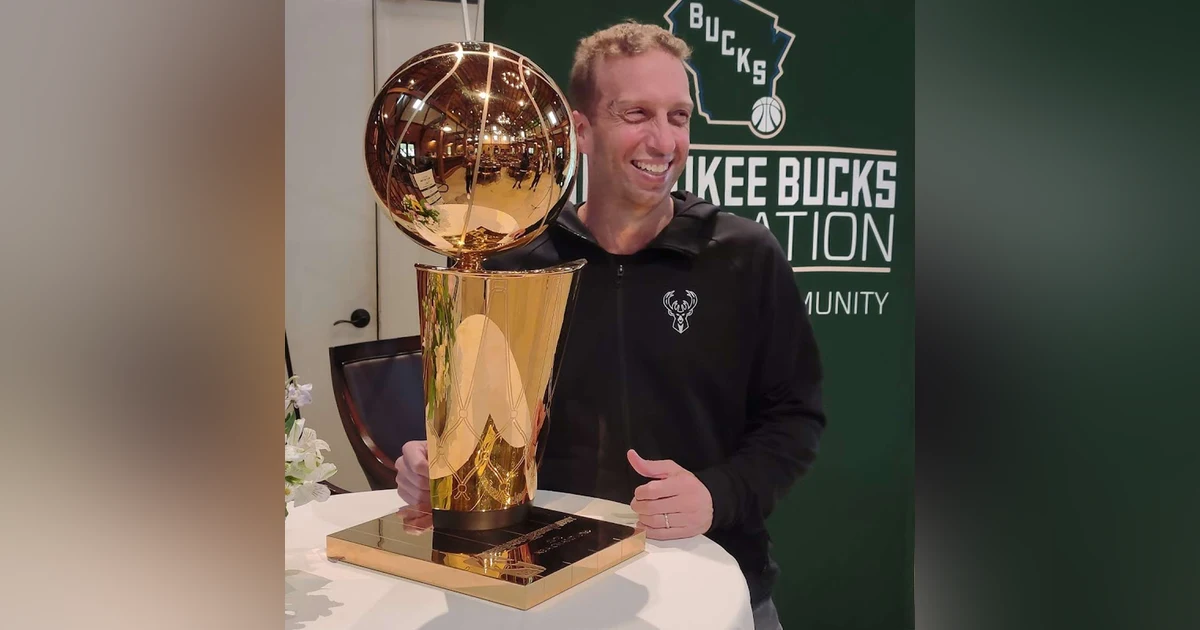
47:15 I mean, look, I've seen, I've seen the videos of you with the NBA trophy on the island, on the breakfast island of your, in your home, like eating cereal next to the trophy. It's ridiculous. So what's next? I mean, I mean and I'm going to be serious Is it to become president of a team? Yeah, I never thought of it that way. I always thought that if you, if you do well and do the right things, that opportunities come about you. I like where we are now because I like that Peter Peter as the president of the team, I like working with him every day and as long as we're not bored and we feel challenged, we're good.
47:57 And we're certainly nowhere near that point. Number one you know you always talk about sports in terms of insulating yourself from team performance, and the reason for that, I think, is a because it's true, because for the most part, I know only four teams and professional sports in the US win. Most teams are not good. The fact that we have this runway to build this brand globally while we are have a super team is is a great opportunity for us, but also building the brand on a global basis, getting more global partners. Also, our other challenges as you know, the media landscape is changing and while it's scary, it's an exciting challenge for us.
48:40 And then the third thing so it's big, it's media, it's global and, as you might know, jimmy Haslam, who owns the Browns, bought into our group this past year or earlier this year, and so now our family consists of the Browns, the Columbus crew, the Nashville Predators, and we're having a good time sharing breast practices and kind of taking the first steps towards having a bigger sports group rather than just a singular team. Also, wes Eden owns the Aston Villa of the EPL. So Tushar mentioned the trophy there. I have to ask this quite, did they give you a ring? Do you get a ring? You got a ring. Oh, very nice.
49:20 Oh my God. I mean, listen, you're as much a part of it as any other team member, right? So why wouldn't you? But I honestly don't know who they give those out to. Yeah, I will say this I loved my job at the Knicks, I loved my job at the Nets, but the fact that the guy bought the team who bought the team, brought us here and basically said, hey, here's a piece of clay molded from the ground up. Winning that championship was, I mean, we felt as much of a part of it as anybody. The other important thing is teams deal differently with their sporting operations. Here we are lockstep with our, with the people who are on the team.
50:03 So John Horst is our general manager. From him on down we are connected with our basketball operations every day. So we really feel like we're totally on that court every night. What an incredible run. You know it's a long way from shooting t-shirts out of a cannon when you first started with Knicks all those years ago. I think the question that we'll leave you with is this you know, sports marketing is such a difficult industry to get into. It takes a long time to make any money and to make a living, and it's so tough to reach the point that you've gotten to. If you're a young person in college today, or just getting started, what advice do you have for them in terms of just, you know, trying to get in?
50:50 So some things I always tell them are obviously network, network, but John has network like superficially, network with purpose. Start building your base. If somebody I get I get hit by high school college students all the time If they have substance in a specific asset, I'll always help them, rather than I just want to get my foot in the door, I just want to work in sports. I don't care what I do. And that leads to number two, which is build your knowledge base. Yeah, I tell people, subscribe to Sports Business Journal, sports Business Daily. Prepare every day for the opportunity. You know there's the two wide spectrums are.
51:30 I've had people, I interviewed people while we literally could look out the window and see the arena, if I serve for them going up and they didn't even know that we were building an arena, right? So how can you expect me to take you seriously, versus having some base level of teams, leagues, media, probably showing that you, because all it's all it's showing is that you care, that you like the business of sports and that's the most important thing. Like I love my job because I love sports, but I love the business of sports, and I think one of the Larry's said earlier he talked about the hours and being at games. I get energized every time. I walk inside the arena every single time, right, because I love the energy, the fans, seeing our partners.
52:14 I make my family part of it. They love coming to the games and so I never look at it as wow. I got to the office at eight o'clock in the morning and I left the arena at 10 o'clock at night. Because to me, yes, it's work, but being at those games we're making people happy. I've been able to give people lifelong memories and if you don't love that, then it's not for you. You know it's as we wrap this up. You know, I think the best part of everything you just said is that I could hear your smile coming through the microphone. It was really clear. Totally, yep, 100%. So, matt, congratulations for absolutely finding, you know, your right spot.
52:58 You're calling man, you did it, it's, it's, it's been. This in particular, has been the greatest professional and personal experience of my life. Because, again, to build this from the ground up with friends and then and then, by the way things happen, do you think we knew we wanted to win a championship? We didn't know we're gonna win a championship. Let me give you one more, because Mark Lazarus say this, who used to be one of our owners we have this dear district I'm sure you saw it on TV during during our finals run and we built this area in front of Fiserv forum and it's become all the rage in sports when people watch games, and we said at the time wouldn't it be cool if one day, like 5,000 people Watch the game on TV outside of the arena while the game was going on inside?
53:44 And remember at that time we had trouble getting 5,000 people to come to the actual games. Yeah right so to stand there in June of 2021 While 75,000 people were outside of the arena Wow during a game was unheard of and and is like you can't help but shake your head. That was one of those seminal moments of I can't believe this. We actually did it. Wow, and that you actually did it. That's really really cool. Well, Matt, you know. Congratulations on all your success and thank you for joining us today. Thank you guys. This goes fast, time flies, we're having fun.
54:27 Yeah, we could have talked to you for another hour. Right, thank you, guys so much. Well, that was a inspiring story for anybody who wants to get into sports marketing, as Matt Pizarra's proved that it can be done. What a wrote, an interesting guy and what a great journey. I'll tell you what. If there is a guy who's going to run an organization, that is the guy. He has made every right move right. He's made, he's done everything you want to talk, he's done. He's done everything right along the path. He's he's. He has leveraged every proper relationship. He was definitely part of the vetting process as to see how you, you know whether or not it's feasible to purchase a team Like the box.
55:09 And when you're part of that inner circle, guess what they mean? That means that you are probably the guy who they think can run an organization in the long run, whether or not he believes it. That is that. That's the blueprint for how you run organization. There's a reason they're keeping you around. Yeah, we talk about it all the time, and relationships is so key to this interview, right to his career. So many little things along the way, but the people he met and again being somebody that people want to work with is so important. But he did give us that playbook. He did exactly what I was hoping he would do, which was talk about the rungs of the ladder, the steps that he took, and he even gets his dream job at MSG and then has the foresight to say you know what I'm not done here, there's more to accomplish, and he moves on to bigger and better things.
55:54 I'm super impressed with this man and I really. There's a playbook out there for people who want to get into front offices. This is exactly how you do it. He showed us the right way and it's all about relationships. You know you use the, the phrase moving on as you were talking, and I can't help but think about the, the move that he made going from, you know, the New York metro area, from New York City, to To Milwaukee. You know that's not, it's not an easy thing to do. You know, I grew up in Buffalo, new York, so I've done the opposite, and when I imagine going back, as much as I do love my hometown, I do wonder how challenging that would be for me now that I'm used to this environment in this world.
56:39 So you know he was willing to do whatever it took and the really great part of that suggestion that I just brought forward is that not only did he make it through, he embraced it, he loved it, he's happy and he's part of something incredible and really, really special but the one thing that you know we talk about foresight a lot, a lot on this show and the one thing you have to have is courage, and we talk about courage a Lot on this show as well. You know he having worked in a number of different industries for Matt, and especially in on the international stage. You get that worldview and understanding that you know what being in New York, while it is a great thing, it's not everything.
57:22 And you understand Sometimes, when you work outside of, outside of big markets, that there is another world out there and that Sports, in this sense, is global and that industry is global, yep, and that when you use that type of insight, you can say to yourself, while people in a town like Milwaukee Might say to themselves, well, you know what the bucks are just good in Milwaukee or in that type of region. No, no, no, no. You got to think globally. This is a much bigger brand and that's the way he thought about it when he, when he went to that organization and look what they've become now. They're one of the most popular teams in the world, with one of the most popular players in the world and he got a ring. At the end of the day he got a ring.
58:04 I mean that's yeah. That's what it's all about right so good for him. Great conversation. A lot to learn from this conversation. Absolutely. What a great success success story. So, matt, thank you so much for joining this episode of no wrong choices. We also thank you for joining us. If this or another journey story inspired you to think of a friend who could be a great guest, please let us know by sending us a note via the contact page of no wrong choices Com, as I mentioned off the top, please support us by following no wrong choices on your favorite podcasting platform while giving us a five-star rating. And then, last but not Least, we encourage you to join the no wrong choices community by connecting with us on linkedin, facebook, instagram threads and X by searching for no wrong choices.
58:47 On behalf of two-share Saxena and Larry Shay. I'm Larry Samuels. Thank you again for joining us and remember there are no wrong choices on the road to success. We learn from every experience.